Disjointed efforts by Tahoe transit officials

By Kathryn Reed

The future of transportation is not going to be a smooth ride in Lake Tahoe.

While four speakers last week focused on technology and transportation, they all sounded like they are working in silos and not together.

What the public wanted based on questions was information about what is being done to lessen the tourist traffic, especially in residential areas on get-away day, and public transit in general.

None of the four speakers could deliver much in the way of satisfactory answers. They did acknowledge that without a functional transit system, people are going to stay in their individual vehicles. And without that local system, there is no reason to engage people in the Bay Area or Sacramento regions about taking some form of transit to get here or working on developing what the transit might be.

George Fink with Tahoe Transportation District, which runs the South Shore BlueGo bus system, admitted that Uber can do a better job than his agency. This is because BlueGo barely goes into residential areas.

As far as neighborhoods being overrun by tourists looking for a shortcut, the panel said that is a law enforcement issue and not something they will be dealing with. The only suggestion was to change the Caltrans owned reader boards.

Joe Marzocco with the Tahoe Regional Planning Agency talked about all the data that is collected from people’s cell phones. A lot of this is done via Google maps and other apps people are using.

“A lot of third parties are collecting data, mostly from cell phones to track and forecast travel across the region,” Marzocco said.

TRPA will use the data as it updates its transportation plan.

Tahoe Transportation District collects data through an app called Swiftly. TTD collects data from riders who have the app – where they get on, off and how long the ride took.

TTD’s seven cameras on nearly every bus help collect data too. They aren’t just a safety tool. They register bumps and can tell when drivers take a corner too narrowly.

Lake Tahoe Bicycle Coalition’s technology is a bit more static. Through its website there is a bike map with different tools that allow users to find out where various types of trails are, if bike parking is available and other relevant information. Users may also add information.

Sherry Hao with the bike group said a new version of the map may come out this year.

Danielle Hughes, a land planning expert, spoke about the Connect Tahoe concept. It’s an idea she is trying to get people interested in that involves putting sensors in the ground and people then using an app to find open parking spaces. She talked about how much time is wasted finding a parking space and the emissions associated with that endeavor.

None of the four talked about the Living Lab at UNR that is being created in Reno, Sparks and Carson City. UNR researchers are using advanced-autonomous systems, computer sciences, synchronized mobility, robotics and civil engineering. Public transportation is the primary focus.

The initial research will explore how vehicles sense their environment and communicate with other vehicles, infrastructure such as traffic signals and systems, and individual people through their mobile devices. Researchers are working toward safe, synchronized, zero-emission mobility systems.

The other technology that is new is being offered by Uber. The ride share company in mid-February plans to launch a website called Movement which will use Uber’s data about routes and travel time from various cities.

1 in 45 Calif. residents attended Women’s March

By Phillip Reese, Sacramento Bee

The Women’s March on Saturday drew historic participation across California, with 50 cities each drawing more than 100 protestors.

Crowd estimates put the cumulative turnout in California between 531,000 and 1.2 million, according to nationwide data compiled by Erica Chenoweth of the University of Denver and Jeremy Pressman of the University of Connecticut.

Read the whole story


January snowfall in Lake Tahoe not a record

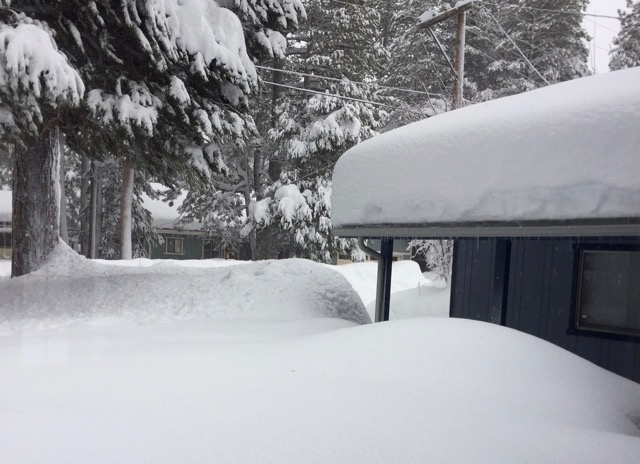
People are having a hard time finding places to put snow. Photo/LTN

People are having a hard time finding places to put snow. Photo/LTN

By Kathryn Reed

It seems to depend on how long one has lived in the Tahoe-Truckee area whether the snow brings a smile or a grimace.

For those who have been in the area for decades, the January storms trigger memories of winters gone by – about how this feels normal. For those who are more recent transplants, they are used to the drought years being normal.

With only one week left in the month and based on the current forecast, it’s doubtful any records will be set in the Lake Tahoe Basin for moisture – at least for January.

Records have not been kept that long for South Lake Tahoe, so meteorologists look to numbers in Tahoe City as their gauge.

This January is the second wettest on record for Tahoe City. As of Jan. 23 Tahoe City had received 21.29 inches of liquid precipitation. This is a combination of rain and snowmelt. The record of 22.82 inches was set in 1969.

Tahoe City this year has received 135.5 inches of snow (11.29 feet). That’s good enough for fifth place in the record book for a January. The record is 238 inches, set in 1916. Fourth place is 162 inches. Forecasters don’t believe that number will be touched this month.

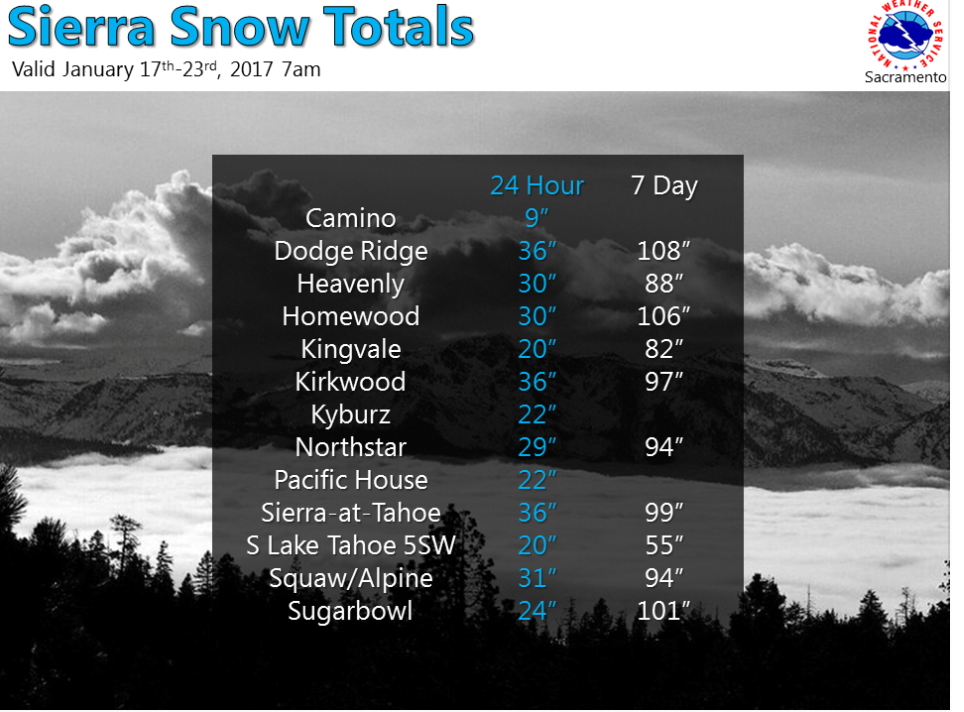
Ski resorts will have even higher totals. For example, Sierra-at-Tahoe is boasting about 24 feet of snow in the first 24 days of 2017.

Source: National Weather Service Sacramento

                                                                         Source: National Weather Service Sacramento

The last wave of storms was more typical of Sierra winter storms, while earlier this month it was a strong atmospheric river that engulfed much of the West.

“Right now there are no big systems on the horizon for the end of the month,” Dawn Johnson, meteorologist with the National Weather Service in Reno, told Lake Tahoe News. “There are some weak ones, so maybe we’ll get a couple more inches.”

A few snow showers will be found throughout the region on Tuesday, with a weak system touching the area on Wednesday, according to Johnson. Sunshine should dominate the weekend. An inversion could make the valley areas colder than at higher elevations.

“The really long range forecast is probably the first week of February we are going to get wet again,” Johnson said.

It’s too early to know where that storm will land and what amount of moisture it might bring.

For the immediate future, temperatures will not be increasing to the point where flooding is a concern. But wet roadways are likely to become icy each night with the melt-freeze ritual. Expect black ice. The daytime highs through the weekend are not expected to be much above freezing, while overnight lows could be in single digits in various parts of the Tahoe-Truckee area.


Water conservation hard with snow in Tahoe

By Kathryn Reed

It’s hard to want to conserve water when it keeps raining and snowing.

That was part of the message delivered to the South Tahoe Public Utility District board last week by Donielle Morse. She is the district’s water conservation specialist.

“The sense of urgency is no longer there,” Morse told the board.

Participation in the turf buyback program dropped significantly last year and water conservation dropped dramatically from 2015.

2013 was the benchmark year the state of California used for basing water conservation numbers. This is how South Tahoe PUD stacked up against the base year in terms of reducing water use:

screen-shot-2017-01-22-at-6-17-24-pm

Complaints about water abusers dropped from 158 residences in 2015 to 41 in 2016.

“My goal is not to fine customers. It is to work with them and educate them,” Morse said.

Fines are reserved for those who defiantly refuse to comply. Two residential customers were fined last years. Ten commercial properties were talked to.

The state is still claiming there is an emergency. Reps from STPUD were in Sacramento this month advocating the state rescind that declaration.

“There are so many agencies stressing to them that they not call it an emergency when it’s not,” Morse said.

The state water board will meet Feb. 2 at which time a decision on the emergency status is expected. While this area of the state is no longer in a drought, parts of Southern California still are. It is up to the governor to declare when the state is and is not officially in a drought. Gov. Jerry Brown has yet to declare the multi-year drought is over.

Despite STPUD customers returning to wanting green lawns and long showers, the district is continuing to remind people water is not an unlimited resource even if it seems like it, especially this winter.

The district has embraced the state’s campaign from 2016 touting efficiency and reducing waste.

Instead of focusing on getting people to remove their grass, for the upcoming season there will be a “suite of options” wrapped into a landscape water efficiency program. The district will work with residential and commercial properties on using less water and perhaps doing less dramatic changes than eliminating all turf.

The district continues to offer rebates for people getting rid of old washers and toilets as ways to incentivize less water use.


Pension costs limit local government services

By Brad Branan, Sacramento Bee

In South Lake Tahoe, roads are crumbling, and the city is struggling to find ways to repair years of damage caused by harsh weather and snowplows. Orangevale residents worry that fire crews won’t arrive quickly enough in an emergency after their local fire station was closed during the recession.

Despite an economic recovery, local government leaders in California say rising pension costs have made it more difficult to restore some programs they cut during the recession.

Those plans will cost local governments an average of 42 cents for every dollar in current employee salary costs next year, a 25 percent increase over two years ago, the Sacramento Bee found in a review of records for 26 of the largest local governments in Sacramento, El Dorado, Placer and Yolo counties participating in CalPERS.

Read the whole story


SLT liquor store roof collapses; snow shuts schools, businesses, courts, roads

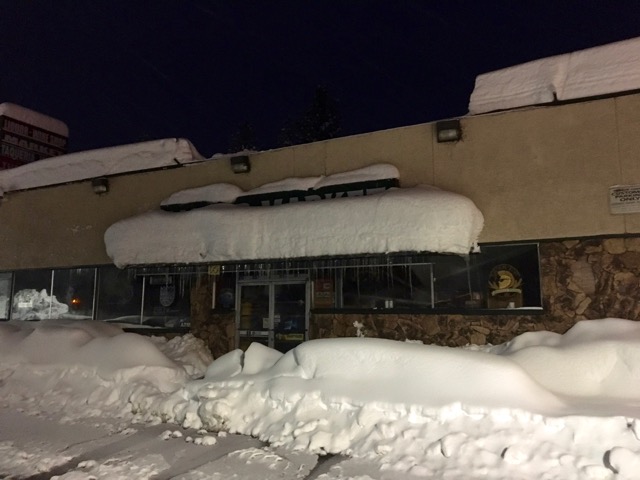
The liquor store at Harrison Avenue sustained substantial damage when the roof collapsed Jan. 23 because of the snow load. Photo/Provided

The liquor store at Harrison Avenue sustained substantial damage when the roof caved in Jan. 23 because of the snow load. Photo/Provided

By Kathryn Reed

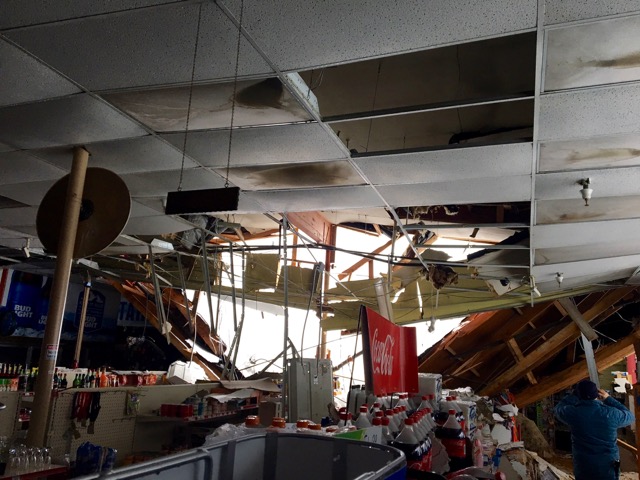
The roof at the liquor store on Harrison Avenue collapsed early this morning from the weight of all the snow.

Another foot of snow fell overnight in South Lake Tahoe, with Meyers reporting 2 feet.

Fire and police officials have been at the commercial complex since the call came in at 2:45am Jan. 23.

“When we arrived there was water coming out of the rear of the liquor store,” Fire Chief Jeff Meston told Lake Tahoe News. “We determined the roof had collapsed and broke the sprinkler pipe. There is a ton of water on the street. STPUD had to come out to dig through the snow to find the main shut-off valve.”

Cracks in the façade and near the windows are visible from the outside.

People are being asked to avoid that area of South Lake Tahoe.

Building officials will assess the amount of damage to the neighboring businesses. Until they get inside the extent of damage remains unknown. Meston, though, said, “It could be significant.”

Animals at the veterinary clinic that is adjacent to the liquor store have been evacuated.

The liquor store could be a total loss after the roof collapsed Jan. 23. Photo/Provided

The liquor store could be a total loss after the roof collapsed Jan. 23. Photo/Provided

Water was also coming out of the massage business. Rojo’s restaurant, which is a bit west of the liquor store, may have been spared.

So far this is the only known roof to have collapsed in town.

Officials are urging people to clear snow off roofs if possible. With the rain, freeze and now snow, the weight just keeps getting heavier. Flat roofs, like the liquor store’s, are most problematic.

Any house built after 1970 had more substantive codes to follow. Current loads are supposed to be able to handle 100 pounds. With the assumption 1 foot of snow has 1 gallon of water, some roofs could technically handle 12 feet of snow. But with the weather Tahoe has had and the wet snow and rain earlier this month, the actual load on roofs could be heavier than that calculation.

The good news is this last storm brought light snow.

It is the flat roofs that concerns officials the most.

“They hold the snow. It becomes like a swimming pool; if the drain clogs, it holds all that wet snow,” Dave Walker, South Lake Tahoe building inspector, told Lake Tahoe News. “People with flat roofs, please get up there and clear drains and see if it’s holding a bunch of water.”

Fire and building officials will be going to some commercial buildings and inspecting city offices later today.

People are also encouraged to get rid of icicles because they are heavy and can contribute to bringing down a roof.

In other weather news, Lake Tahoe Unified, Douglas County, Tahoe Truckee Unified, Lake Tahoe Community College, Incline Village, and Sierra Nevada College are closed Jan. 23. Non-essential South Lake Tahoe and El Dorado County employees don’t have to report to work. Tahoe Regional Planning Agency, the U.S. Forest Service office in South Lake Tahoe are closed. 

El Dorado County Superior Court in South Lake Tahoe is closed on Monday. All matters in Department 3 will be continued until Tuesday. Cases in Department 4 will be rescheduled. More info is online.

South Tahoe Refuse will only service commercial customers today. Residents with Monday service may take trash to STR’s facilities for free or wait a week.

Incline Village and Crystal Bay remain under a shelter in place order because of the threat of avalanche.

Not all ski resorts will be open because of avalanche danger and needing to dig out. Call before you go.

Sierra Avalanche Center says conditions are “considerable” for Monday. That translates to no one should be in the backcountry.

Snow is expected to linger today in the basin and beyond. There should be a partial clearing on Tuesday, with more sun as the week progresses.

Roads on Monday will be difficult to navigate because most are not plowed. For current highway conditions, click on the state icons on the home page of Lake Tahoe News.

Highway 89 from Tahoe City to Squaw Valley Road is closed because of an avalanche. The California Highway Patrol is reporting two cars were struck buy the snow, but no one was injured.


Second lawsuit filed against Squaw project

By Kathryn Reed

Did Placer County violate California’s open meeting law, the Brown Act?

A lawsuit filed by Sierra Watch says that is exactly what happened last year at the meeting where Placer County approved KSL Capital Partners’ development plans at Squaw Valley. 

The development was approved on a 4-1 vote Nov. 15.

The conservation group contends the county added things to the agenda at the late minute. Per state law the public is supposed to have access to agendized documents at least 72 hours before the meeting.

The lawsuit also contends that Placer County failed to give notice in the agenda that the Board of Supervisors would be considering a different version of the proposed project’s development agreement.

“People can’t participate if they don’t know what’s on the agenda, and they can’t express an informed opinion if the background materials aren’t available,” Sierra Watch attorney Isaac Silverman said in a statement. “When our government acts like this, it’s more than just a really bad way to run a meeting—it’s illegal.”

Placer County could not comment on the lawsuit because according to DeDe Cordell, director of communications and public affairs, the county has not been served yet.

Squaw, though, has strong opinions about the latest lawsuit.

“The fact is there was no Brown Act violation. The development agreement was on the agenda, and the DA was publicly available to anyone who wanted to review it. What is rather striking is that Sierra Watch would attack a voluntary commitment to pay an air quality fee of $441,000 to the Tahoe Regional Planning Agency,” Whit Manley, environmental attorney at Remy Moose Manley LLP on behalf of Squaw Valley Ski Holdings, told Lake Tahoe News. “If Sierra Watch’s latest claim is designed to intimidate the county, we doubt it will work. The county has very able planning and legal staff, and we are sure they will provide a thoughtful response to this misinformed claim.”
 
Andy Wirth, president and CEO of Squaw Valley Ski Holdings, told Lake Tahoe News, “There was a vigorous public debate about the project. We had our say. So did Sierra Watch. So did everyone else. Then the board made a decision. This claim by Sierra Watch is unfounded, and is simply another attempt by that organization to mislead the community.”

This is the second lawsuit Sierra Watch has filed pertaining to the Squaw’s plans. The Dec. 14 lawsuit centers on California Environmental Quality Act, specifically issues with the environmental impact report.


Diversity is lacking in the ski industry

By Julie Brown, Powder

Of the 9.4 million skiers in the United States, 72 percent are white. More than half earn a salary higher than $100,000. For some context, only 20 percent of American households have a combined income of $100K, and 63 percent of the country is white.

Skiing is a homogenous, insular experience. For the sport to be healthy and robust, it should represent the country as a whole, which includes socioeconomic and racial diversity. To ensure future generations are able to enjoy it, we must reach new participants by lowering the barrier to entry and making the sport more affordable and accessible.

Born between 1982 and 2002, Millennials came of age when technology boomed and the economy tanked. To engage with this group, some resorts have merged skiing with other popular interests, such as technology and music, hosting festivals like SnowGlobe in South Lake Tahoe and MusicFest in Steamboat. The Millennial-powered sharing economy has arrived in ski towns to make access more convenient for an ownership-shy generation.

Read the whole story


Resorts closed, travel in Tahoe dangerous

A Heavenly ski patroller digs out the protective pad Jan. 21 from a lift tower. Photo/Heavenly Mountain Resort

A Heavenly ski patroller digs out the protective pad Jan. 21 from a lift tower. Photo/Heavenly Mountain Resort

There is such thing as too much snow.

“Due to these blizzard conditions we will not be opening Alpine Meadows and only very limited terrain will be available at Squaw Valley,” these two resorts said early Jan. 22.

Sierra-at-Tahoe and Sugar Bowl are also closed for today. Homewood has limited offerings.

Check with the ski resort before going there to make sure it is open and has the amount of terrain open to your liking.

Sierra Avalanche Center says, “High avalanche conditions exist at all elevations.”

Placer County Office of Emergency Services has deemed certain streets in Alpine Meadows at risk of high avalanche danger. In the storms earlier this month a dozen homes in that area were struck by avalanches, but with no injuries or serious damage reported.

More than 150 NV Energy customers at the lake are still without power. The transformer problem is expected to fixed Sunday morning.

Liberty Utilities had 52 customers without power in the Tahoe Keys of South Lake Tahoe on Saturday, with that problem being fixed.

Roads are expected to be difficult to travel on throughout Sunday-Monday; this includes highways and streets in residential areas. For highway road conditions, click on the the state icons on the home page of Lake Tahoe News.

Most agencies, including the National Weather Service in Reno, are saying to not travel at all today in the Sierra.

A winter storm warning for the Tahoe basin and Truckee remains in effect through 4am Monday. Several more feet of snow are expected on top of the multiple feet already on the ground. Wind is also going to be a factor.

— Lake Tahoe News staff report


Truckee couple creates dining app

By Alexandra Spychalsky, Moonshine Ink

A craving for crab cakes is to thank for the creation of a new dining app that stands to revolutionize the restaurant industry. Truckee residents Thao Doan and John Doolan were in San Francisco with their family, when their daughter, a notoriously picky eater, decided she wanted to try crab cakes for dinner. Fisherman’s Wharf would seem to be the perfect place to satisfy a seafood craving, but when they tried to search online for specific restaurants in the area that had crab cakes on the menu, they were disappointed — a 42-minute search was fruitless. It was from that crustacean-based struggle that the idea for Kynbo was born.

Kynbo is an app that links restaurants and customers like never before. The service Kynbo provides is two-fold. For locals and visitors, the app provides an easy one-stop shop to view restaurants’ menus, and even search menus for exactly the type of food they are in the mood for. For restaurant owners, Kynbo offers access to a back-end portal that grants a direct line of communication with customers, and provides unprecedented analytics about their restaurant and clientele.

The first step for Doan and Doolan was to get Tahoe restaurants on board.

Read the whole story