Nev. bridges strong, but upgrades needed

By Art Marroquin, Las Vegas Review-Journal

The majority of Nevada’s bridges are in good to fair condition, but the state faces a $133 million shortfall to upgrade a handful of spans, officials said this week.

Of the 2,008 bridges maintained or receiving assistance from the Nevada Department of Transportation, only 31 are considered to be in poor condition, said Reid Kaiser, NDOT’s assistant operations director.

Federal laws require all structures to undergo assessments at least once every two years, leading to $17 million in repairs for 27 bridges across Nevada in 2015 and 2016, NDOT officials said.

Read the whole story


Water a key issue for Nevada Legislature

By Sandra Chereb, Las Vegas Review-Journal

CARSON CITY — State lawmakers got a crash course Tuesday on Nevada’s complicated water laws as they prepare to consider several bills dealing with the most precious resource in the driest state in the nation.

State Engineer Jason King, whose office has proposed four bills this session, said more proposed laws are expected, including one to address Nevada’s long-standing doctrine of “use-it-or-lose it.”

He also tried to dispel concerns by domestic well owners that his office wants to take away domestic well rights.

Read the whole story


Myriad ideas spill forth for SLT at vision session

By Kathryn Reed

Could South Lake Tahoe become the outdoor capital of the world while at the same time providing enough affordable housing for those working here?

The answer, according to some residents, is a resounding yes.

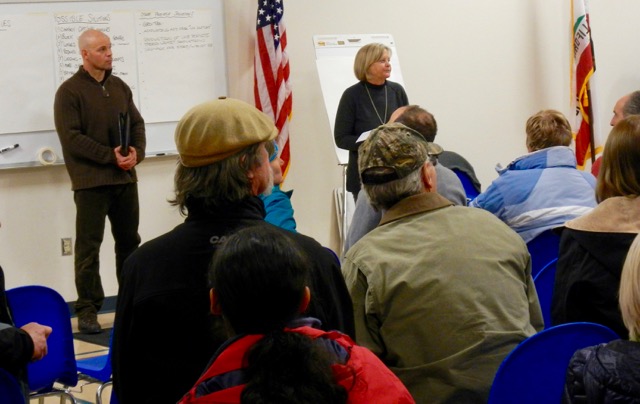
The future of the city was the focus of Tuesday’s City Council meeting. It was a workshop in advance of the Feb. 25 strategic planning session where decisions will be made. On Feb. 14 it was about hearing ideas from more than a dozen community members about their vision for the city.

Each councilmember was asked to invite three people who would each give a 15-minute presentation. The idea was to give more voices to the discussion. It also allowed the electeds to promote their own agendas. Councilmember Jason Collin told Lake Tahoe News he invited two people, but neither could make it.

Speakers in order:

·      Jude Wood, director of Lake Tahoe Boys & Girls Club – invited by Councilmember Wendy David

The agency is losing its location at Al Tahoe Elementary School because Lake Tahoe Unified School District wants to return the building to a school. The Boys & Girls Club recognizes the need for its own building. Talks are under way with the city to move El Dorado County’s vector control, with the idea of the club erecting a building on that site. This location would be walking distance to the rec center. Wood would like the building to be a community center. Architecturally it could complement the new recreation center.

·      Chris McNamara, owner of Outdoor Gear Lab – Councilmember Austin Sass

McNamara’s 2030 vision for the city includes making Tahoe the outdoor capital of the world. Several speakers after him seized that sentiment with gusto. He wants Ski Run Boulevard, where his business operates and where he owns property, to be a downtown hub. He plans to have a pilot project on Ski Run for affordable housing. He asked for more flexibility with how commercial floor area is allocated so it is more predictable for those wanting to build or renovate.

·      Duane Wallace, South Tahoe Chamber of Commerce – Councilmember Tom Davis

Housing needs to be the No. 1 priority. Wallace called it a crisis in the area with people not able to find a place to live that they can afford. He’d like to see less taxes and fewer regulations, especially for businesses.

·      Bonnie Turnbull, Nick Exline, Devin Middlebrook, sustainability proponents – Councilmember Brooke Laine

Their message was about how climate change is already impacting the Lake Tahoe Basin. They want the city to operate on 100 percent renewable energy. This in turn could lead to branding and economic gains for South Lake Tahoe.

·      Brooke Hernandez, real estate agent – Davis

She touted all the benefits to vacation home rentals, and the negatives if they were to go away. Hernandez said a problem is that no VHR permits have been revoked. Enforcement is critical.

·      Cheyanne Lane, Tahoe Youth & Family Services – David

She spoke about the homeless situation in the area. With her were two South Tahoe High School students who gave firsthand testimonials about what homelessness looks like. Lane would like $20,000 from the city to match what El Dorado County has given to create a single point of entry process to collect data countywide.

·      David Orr, Tahoe Mountain Lab – Sass

He believes jobs is the No. 1 issue for Tahoe. But Orr also said that without housing, there is no chance of attracting those jobs. Bandwidth has to increase, too, for people to relocate. He mentioned how Mammoth has faster download capabilities than Los Angeles. Orr would also like the town to have an identity, and embraced McNamara’s idea. He wants electric vehicle stations to be throughout the region.

·      Tyler Cannon, owner of Sprouts – Sass

Housing is an overriding issue for him, pointing to how he’s lost employees because they couldn’t afford to live here. He believes VHRs are contributing to the housing woes. Cannon wants tourist traffic out of neighborhoods. He would like better wayfinding signs, and bike paths that connect to destinations. While he was against paid parking when the city initiated it, now he wants to stop people from parking in front of his business all day if they aren’t in his restaurant. Cannon also would like fines for people who don’t pick up after their pooch.

·      Brooke Laine, Dave, Kurtzman, Jose Henriquez – Laine

The trio spoke about creating a Tahoe County and what that would entail. Kurtzman gave some history from having been on the county redistricting committee. He pointed out that in 2020 or 2030 Tahoe is likely not to have a local representative on the Board of Supervisors based on population distribution. Henriquez, who heads LAFCO, outlined the details for this county conversion process. Laine touted all the benefits that could come of creating such an entity.

·      Jason Drew, Lake Tahoe South Shore Chamber of Commerce – Davis

He talked about the need to have economic vitality, and embrace the chamber’s 2020 vision. Chamber leader Craig Schmidt said the housing crisis and poor customer service are his main concerns.

·      Bill Roby, El Dorado Community Foundation – David

He would like to take 3 percent off every home sale (so, out of the seller’s pocket) to create a land bank, which would then buy old motels and convert them into long-term housing. The land bank would own the land and the people would own the structure/unit.

In the afternoon City Manager Nancy Kerry stirred the collective creative juices by showing videos of other locales. Dilapidated areas were repurposed into thriving destinations. This takes vision, dedication and collaboration.

Kerry talked about how the city has been visionary – pointing to the gondola coming into the middle of town and Harrison Avenue.

Opposition should not be a roadblock because not everyone is always going to agree on everything.

“Keep the long game in mind,” she said.

Department heads were more reality based instead of visionary, informing the council about what they are doing and the future they see.

·      Finance: CalPERS is the biggest threat to the city’s coffers, as the retirement agency keeps taking more from jurisdictions to pay for a defined benefit for retirees.

·      Recreation: Need more staff, right now there are only four full-timers. This will especially be needed when the new recreation center is built; construction should start in 2018. Pickleball has been a huge success, generating new recreation users. Last season Campground by the Lake had 50,000 campers.

·      Development Services: Proud of community design guidelines. Hopes council makes Bijou Park Master Plan a priority. Studying commercial project trends to use it as a budgetary basis.

·      Public Works: Praised how well Bijou erosion control project is functioning, how the bike park is a destination. Seventy-four percent of the city’s fleet is beyond its service life; this doesn’t include police and fire. A dedicated source to fund roads needs to be found. Vehicle replacement and road rehab need to be the priorities.

·      Police Department: Property crimes are increasing. In terms of being a safe city, it is in the 37 percent level, with 100 percent being the worst.

·      Fire Department: Responded to 3,239 calls in 2016. Second smallest department in basin, but the busiest. Three radio systems in the city between fire, police and public works is old and not working well. They should be updated so they all can talk to each other.

·      City manager: Creating three new teams – talent and career development team because fewer people are going into government; strategic communications team; City Council priority team.

The next step is for the council to digest everything they heard on Tuesday. Nine days from now they will hash out the city’s strategic plan among themselves. This will be the time they come forward with a blueprint for the immediate future, and possibly more long term.

As City Manager Kerry pointed out not everything the council or community members want to do can be done. Time, money and resources are limiting factors. That is also why the strategic plan needs to be flexible, because priorities can change.


South Shore survives Hwy. 50 road closures

By Kathryn Reed

It isn’t until the roads close that residents and business in Tahoe realize how isolated it can be living and working here.

Fortunately, Highway 50 on the California and Nevada side were not closed for very long. Both reopened on Feb. 14. But there is a lot of winter left and no guarantee the roads won’t be closed again this winter or into spring, especially with the slopes so saturated and rain in the immediate forecast.

Strawberry Lodge in the American River Canyon had to close on Monday after the last guest checked out because of the road closure.

Tom Davis was mayor of South Lake Tahoe in 1997 when Highway 50 closed that January. He didn’t accept Caltrans’ declaration the road would be off-limits for eight to 12 months. With Duane Wallace, who was then executive director of the South Tahoe Chamber of Commerce, the two worked with then Assemblyman Tim Leslie to persuade Gov. Pete Wilson to put pressure on Caltrans to open it sooner. It worked.

California’s highway storm damage this winter totals $401 million at 190 locations.

For businesses that have been here through the more serious slides of 1982 and 1997, when Highway 50 in California was closed for 75 and 27 days, respectively, they have protocols in place to contend with the adverse conditions.

“In anticipation of the blizzards and floods, Barton Health ordered additional and back-up supplies. Patient care and hospital operations were not impacted,” Barton spokeswoman Molly Coolidge told Lake Tahoe News.

Emergency vehicles were able to get through on the Nevada side even though passenger vehicles could not. Most patients are transferred to Nevada facilities.

“At times, when routes were closed, patients were transported using the closest alternate route and, as appropriate, transported by air,” Coolidge said.

Grass Roots in South Lake Tahoe had an issue with a produce delivery that arrived hours after normal, but otherwise was faring OK. The small market gets deliveries four days a week.

“Right now I don’t feel like we are out of a lot of things. It was synergistic with not a lot of people coming to Tahoe so we didn’t run out of a lot of stuff,” Stephanie Hrbacek, Grass Roots’ beer and wine buyer, told Lake Tahoe News.

Raley’s, which has two stores in South Lake Tahoe, has been using alternative routes to bring goods to the South Shore, relying  on the California Highway Patrol for the most up-to-date information.

“We are delivering less because there is less tourism,” Raley’s spokeswoman Chelsea Minor told Lake Tahoe News. She said the goal is to make sure residents have enough food.

Safeway would not comment, nor would their corporate offices.

Conditions never got to the point where businesses in town needed to shutdown, unless it was for storm damage.

During the previous road closures there were times when hotels were not able to provide clean linens because laundry service is out of town and it wasn’t happening. People back then lost their jobs, store shelves were empty. For the 1997 closure it was estimated that the impact was a $1 million per day loss to the South Shore economy.

This week residents were talking about filling up on gas just in case trucks could not make it to the South Shore.

One item that is still hard to find in the area is a sump pump. Those were flying off shelves earlier this month.

Lake Tahoe Visitors Authority took the approach that it was still possible to get here, it was just going to be more scenic via Highway 88. With Emerald Bay reopening, it meant Interstate 80 traffic could easily get down here. With this being a three-day weekend, it was even more critical to get the roads open.

The U.S. Postal Service was using Kingsbury Grade to service the post offices on the South Shore in California and Nevada. Mail that goes to and from this area goes through Reno. However, many people who use the Glenbrook Post Office didn’t receive mail for about a week or took about a three-hour drive to retrieve it.

“In the spirit of Snowshoe Thompson, there are no delays,” David Rupert with the USPS told Lake Tahoe News. “We continue to encourage residents to keep their mailboxes clear so we can continue to deliver the mail in a manner that is safe for our employees.”

For those who went to Sierra-at-Tahoe last weekend it was glorious. A winter weekend without crowds, awesome snow and sunshine. The resort coffers were not as flush, though, because so many people come up from the Sacramento area and they couldn’t do so via the most direct route.

“This year, the few days Highway 50 has been closed, we relinquish our position as best location to Sacramento and the Bay Area. Which is tough for our guests, especially when conditions are incredible with all the new snow,” Thea Hardy, Sierra spokeswoman, told Lake Tahoe News.

During these few dry days it has meant cleanup time as water has been receding. South Lake Tahoe crews this week have been: Cleaning up streets as needed, filling potholes, inspecting basins, rivers, creeks for obstructions, repairing and prepping heavy equipment in preparation, clearing drainage areas, inspecting and checking drainage pump systems at Colorado Court and Bijou area, and documenting issues.

Staff will be before the South Lake Tahoe City Council in March to address overtime issues. Public works crews have been working almost without a break since the start of the year.

Now it will be up to Mother Nature to determine if the roads stay open and commerce continues a normal, after all she always has the last word.


Bill would prevent sanctuary cities in Nevada

By Colton Lochhead, Las Vegas Review-Journal

Senate Minority Leader Michael Roberson wants to prevent any city or county in Nevada from becoming a sanctuary city for undocumented immigrants.

In response to recent comments from a Clark County commissioner, Roberson, R-Henderson, plans introduced a bill Monday aimed at blocking local municipalities from being declared as sanctuary cities and counties. The law would allow the state to withhold funding to jurisdictions that refuse to cooperate with federal immigration authorities.

Sanctuary jurisdictions typically refuse to cooperate with federal immigration enforcement by not detaining undocumented immigrants for federal agents when those agents don’t have a warrant.

Read the whole story


U.S. dams aging; many don’t have emergency plans

By Benjamin Spillman, Tracy Loew and Jill Castellano, USA Today

As the nation’s 84,000 dams continue to age, a growing number of people downstream of these structures are at risk, according to experts and data of the nation’s dams.

It’s a problem highlighted this week as nearly 200,000 people evacuated the area near Oroville Dam, which suffered a potential failure of its emergency spillway.

The USA Today Network reviewed the latest data in the National Inventory of Dams, which is compiled by the Army Corps of Engineers and shows 15,498 dams across the United States are characterized as high hazard, meaning the loss of at least one human life is likely if the dam were to fail.

The average age of the 84,000 dams in the country is 52 years old, according to a 2013 report by theAmerican Society of Civil Engineers. 

Read the whole story


Hwy. 50 open in Nevada and California

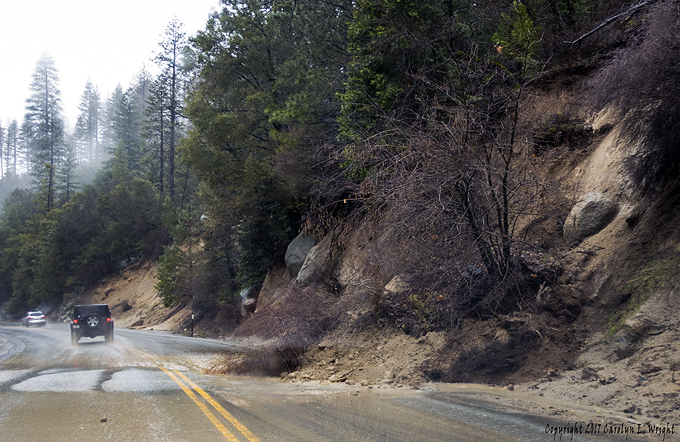
Minor slides on Highway 50 didn’t stop traffic early Feb. 10. Photo Copyright 2017 Carolyn E. Wright

Update Feb. 15, 6:25am:

By Kathryn Reed

Highway 50 on the Nevada and California sides is open.

One lane of Highway 50 in each direction is open on the Nevada side, allowing traffic to flow between the South Shore and Carson City. 

The Nevada route had been closed since Feb. 8 because SUV-sized boulders had fallen onto the road and others were resting precariously on the hillside.

According to the Nevada Department of transportation, “Travel speeds are reduced to 35 mph. The traffic shifts are anticipated to be semi-permanent until a full-scale improvement project to stabilize and reinforce the roadside slope where the slides occurred is constructed.”

Crews put two rows of concrete rail on the eastbound side in an attempt to be a barrier if more rocks come cascading down.

While this current road closure in California has been an inconvenience, it is nothing compared to 1982 and 1997. In 1982, Highway 50 was closed for 75 days and was off-limits for 27 days in 1997.

“We are working on the cleanup. Most areas are buttoned up,” Bob Ericksen, Caltrans engineer, told Lake Tahoe News on Tuesday afternoon. The road opened late Tuesday night.

The highway had been closed since Friday when several sizable slides crossed all lanes of traffic. Most have been in the Whitehall, Kyburz areas. The most problematic one involves sand coming down from the hillside.

“It’s basically a giant sand dune in the mountains,” Ericksen said. It has been pushed back as far as possible and stabilized to the point crews believe it’s safe for traffic to resume. 

The sand kept coming down as crews were clearing the area. Ericksen said 14,000 cubic yards of debris have been hauled away in the last few days. In 1997, 80,000 cubic yards were removed.

“Mud has reached the river, but not enough to cause any blockage. The water is running with such force there is very little possibility of blockage without a massive slide like what happened in 1982 and 1997,” Ericksen said.

Sixty people had been working to clear the area, with work occurring 24/7. It has involved five large excavators, four loaders, 25 semi-trucks, one paver, one grinder and other support equipment. 

Ericksen, though, is concerned that another storm is just hours away.

“More rain is going to be a challenge up here. We are staging equipment up and down 50 in case we have more problems,” Ericksen said.

NDOT is worried about the oncoming storm systems as well.

From the National Weather Service in Reno: “A series of weak to moderate storms is expected to impact the region beginning Thursday and potentially lasting through the middle of next week. Current projections don’t indicate any strong storms. However, with very wet antecedent conditions in lower elevations and exceptionally deep snowpack at higher elevations, even small amounts of precipitation could create renewed flooding concerns.”

The rain in the basin is supposed to start Wednesday night and turn to snow by Thursday night.

Road closures can happen at any time. It is important to check the respective state departments of transportation websites for current info, or click on the state icons on the home page of Lake Tahoe News, or call 511 in each state for road info.


Alliance aims to make Nev. esports hub

By Richard N. Velotta, Las Vegas Review-Journal

A group of businesses, advocates and academics have formed an association focused on advancing the development of Nevada as a global hub for esports.

The Nevada Esports Alliance is a new non-profit organization that plans to boost the state as the center of the convergence of video gaming and the casino industry.

Nevada regulators approved rules for skill-based gaming last year and that has led to growth in esports competitions and wagering on game outcomes. In addition, the first esports lab opened last year at UNLV’s International Gaming Institute.

Read the whole story


Residents want to put a stop to tourist traffic

By Kathryn Reed

MEYERS – El Dorado County is in the process of crafting a “traction ordinance” that could help keep tourist traffic out of neighborhoods – at least in the winter. It would not solve the summer traffic problem.

The ordinance would allow the county to require chains, snow tires and/or four-wheel drive on county streets. This in turn would mean law enforcement could cite anyone who is violating that law — even locals.

However, with how slow the wheels of government work, the ordinance is not expected to be in place to make an impact this winter.

Residents – especially those in the Meyers area – are tired of sharing their neighborhoods with tourists looking for a short cut. Not only do these wayward drivers want to avoid the backup on Highway 50, many want to bypass the chain inspection at the base of Echo Summit.

What these people don’t realize is often the side streets have more snow and really are where two-wheel drive vehicles without chains are going to be the most problematic.

The advent of navigation apps has people going places they have no business being. Some roads are narrow, others are steep, all are residential streets that were never designed to be a thoroughfare. Topography isn’t part of the information that is given out, though it may not matter even if it were a feature.

Local authorities have spoken with Apple. Old Meyers Grade is no longer listed as a viable route. Google officials, though, have been unreachable. Novasel said San Francisco was able to get Google to change some things. The City, unlike El Dorado County, has leverage with Google because the tech company does business there.

Of the 100-plus people who attended the meeting Feb. 13 convened by El Dorado County Supervisor Sue Novasel, more than 30 voiced their frustration about what has become a chronic issue on Sundays or the last day of a holiday period. Questions were asked. Ideas were shared.

One person suggested a class-action lawsuit against the app makers. It was then pointed out even if the more than dozen apps out there affecting the local situation were shutdown, there is nothing to stop someone from creating something else.

One of the more popular ideas was to fight technology with technology. One man suggested using the FasTrak device used on Bay Area bridges so tourists are paying for the use – then ideally upkeep – of local roads. Cameras would record the license plate and the person would be sent a bill if they didn’t have a transponder.

Novasel said toll roads have been talked about. Doing so would be reviving a practice what was popular more than 100 years ago.

In addition to Novasel on Monday night there were reps from the California Highway Patrol, El Dorado County Sheriff’s Office and county transportation department. The latter had nothing to contribute to the discussion.

Law enforcement pointed out how the roads are public so it’s not possible to legally close them to some of the people and keep them open for others. Audience members, though, questioned if public safety were an overriding concern, then perhaps that would be reason enough to regulate who comes and goes.

One of the more immediate and basic things that could be done is better signage. Even the chain requirement sign on Highway 89 toward Hope Valley was covered with snow for about two weeks. New signs were suggested for residential areas to tell people it’s not a suggested route, or warning them of the grade/conditions ahead.

Part of the backup problem is farther west beyond Echo Summit. People making snow play areas along Highway 50 are creating traffic problems that reverberate back to the basin. Dealing with those landowners is one strategy. Other ideas included talk of eliminating passing lanes because, according the CHP, they cause more problems with people jockeying for front position. Another idea is to stop eastbound traffic at Sierra-at-Tahoe for a bit and let multiple lanes of traffic go west to clear things out.

Getting hotels to not all have an 11am checkout, to offer discounts for another night, for restaurants to entice people to stay longer for meal – those are all ideas that have been brought up in the past, but either aren’t implemented or don’t work.

Long drives from Tahoe to the Bay Area aren’t new. It’s been happening for decades. And the people making the drive keep doing so weekend after weekend. These people presumably sit in traffic during the week going to work so this isn’t much different.

But it isn’t the norm for people living in Tahoe. Being caught in Highway 50 traffic in one thing, taking hours to drive a few miles home is another. What those gathered Monday night really want is to be able to get around their neighborhoods and not be delayed by tourists who have no business being on side streets.

Novasel said she’d take the suggestions, concerns and questions back to Placerville where all the real decisions get made.


Nev. Dems touting state rights to fight feds

By Colton Lochhead, Las Vegas Review-Journal

Donald Trump set a feverish pace at the outset of his presidency by signing nine executive orders in his first 21 days in office.

Some, like those on immigration and health care, hit at the heart of Nevada’s political atmosphere, but the Trump administration said this month those orders could take months, or even years, to be fully implemented.

Democratic lawmakers in Nevada have expressed concern over the actions. They say roughly 400,000 Nevadans could be left without health insurance, undocumented immigrants will deported and marriage equality could be targeted if all of Trump’s policies go into effect.

With Democrats in control of the Legislature, several lawmakers are exploring the power of states’ rights to rebuff the president.

Read the whole story