Study: Calif. worst state for first-time home buyer

By Alessandra Malito, Market Watch

 California has beautiful beaches, plenty of sunshine and the Terminator for a former governor, but it doesn’t have many homes for the first-time buyer.

In fact, the state is the toughest to break into for those looking to get their first homes, according to a report released Tuesday by personal finance site Bankrate.com, followed by Hawaii and New York.

California was ranked with low home affordability and availability and simply put, has not kept up with housing demand, despite the qualities it has to attract many to its coastal scene.

Read the whole story


California likely to see more extreme flooding

By Lauren Sommer, KQED-TV

Californians are in shock that after five years of too little water, the problem now is too much.

All eyes in California have been on Oroville Dam, where a broken spillway forced major evacuations. But the damage from winter storms has gone beyond the dam in the northern part of the state. Downstream, rivers are running high and levees have been breaching.

But this shouldn’t be a surprise, says Noah Diffenbaugh, a climate scientist at Stanford University. He says California is likely to see more extreme flooding with climate change. And the reason is pretty simple. If it’s warmer, storms produce more rain instead of snow.

Read the whole story


Sierra snowpack well beyond historic average

The entrance to Tahoe Keys is wide and deep — something that could not be said the last several years. Photo/Kathryn Reed

By Lake Tahoe News

In years’ past a March Miracle would mean a deluge of snow to make up for a dry winter. This year, a March Miracle for most people in Northern California would mean more sunny days than ones filled with moisture.

While the snowpack measurement on March 1 near the entrance to Sierra-at-Tahoe wasn’t a record, it is substantial enough that those downstream should not have to worry about water allocations this spring-summer.

The local measurements showed 113 inches of snow, with a water content of 43.4 inches. This is 179 percent of average. The record, set in 1983, is 56.4 inches.

The March 1 average at Phillip’s Station is 24.3 inches. The April average is 25 inches, so this location near Echo Summit has surpassed that marker. April is the last reading of the year.

“January and February came in with some really quite phenomenal atmospheric river storms, many of which were cold enough to really boost the snowpack,” said Frank Gehrke.

He performs this monthly ritual of hand collecting data for the state Department of Water Resources.

The snowpack is likely to get deeper this weekend.

Statewide, the water content of the snowpack is 45.5 inches, or 185 percent of average.

In February the water content was 28 inches, and in January it was 6 inches.

The snowpack provides water to municipalities and farms throughout California. And while Northern California has come out of the five-year drought, those in Central and Southern California can’t say the same.


Caltrans’ Donner Pass chief tweets a blizzard

By Adam Ashton, Sacramento Bee

Dave Wood

With a white helmet and ash-gray beard, Caltrans Superintendent Dave Wood exudes old-fashioned charm from his post at the snowy summit of Donner Pass. But his favored method of communicating with drivers is decidedly modern.

He’s the voice behind regular mountain traffic updates dispatched on Twitter by Caltrans, where Wood provides a close-up look at the nasty conditions that can snarl Interstate 80 in an instant. He’s often funny, and always himself.
 
“If you drive your car on the roof, we can’t keep this road open. Please slow down,” he implored in a video post this week.

Read the whole story


Sierra’s terrain enhances learning experience

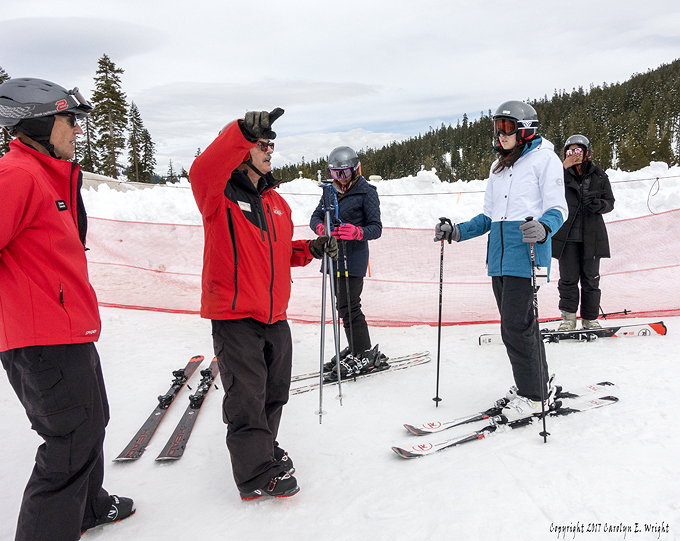
Sierra-at-Tahoe instructors Claude Gunsch and Neal Hamilton explain the basics. Photo Copyright 2017 Carolyn E. Wright

By Kathryn Reed

TWIN BRIDGES – Straight-lining isn’t an option for newbies learning to ski at Sierra-at-Tahoe. And that’s a good thing because turning is often one of the most difficult things to learn.

A serpentine has been built into the slope of Broadway to ease first-timers into turns in a more controlled environment.

“Sometimes the most rewarding thing is when they come up and can barely walk, and they go down this and smile,” Claude Gunsch told Lake Tahoe News. This is Gunsch’s 28th season instructing at Sierra, something he has done part time all these years. “The serpentine gets people skiing automatically.”
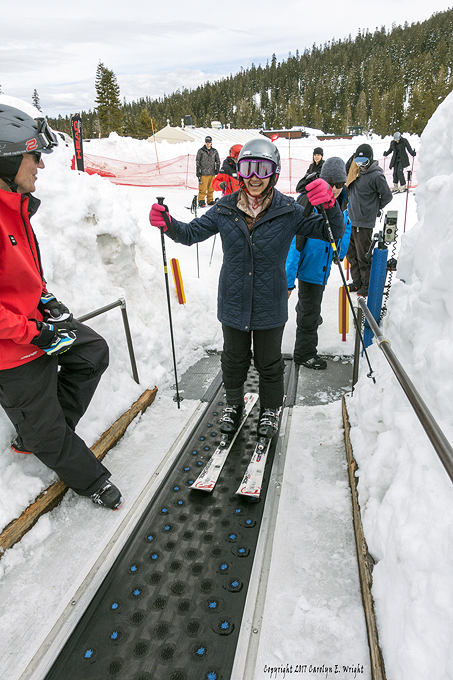
Sana Pandey takes to skiing — and the magic carpet — fairly quickly. Photo Copyright 2017 Carolyn E. Wright

In many ways it is less daunting than the main ski hill where it’s wide-open, full of lots of people and turning is optional. Snowplowing – or making a pizza or wedge in today’s vernacular – eases beginners into the turn.

“You have the need for speed and the need for control,” Gunsch said in explaining why it’s necessary to make different size wedges.

All the basics are still part of the lesson – it’s just the terrain that makes this so unique.

Terrain-based learning is what it’s called, and aptly so. The terrain is as much a teacher as the person in charge. It’s about a 3 to 5 percent grade, a football field or longer depending on what the groomers developed.
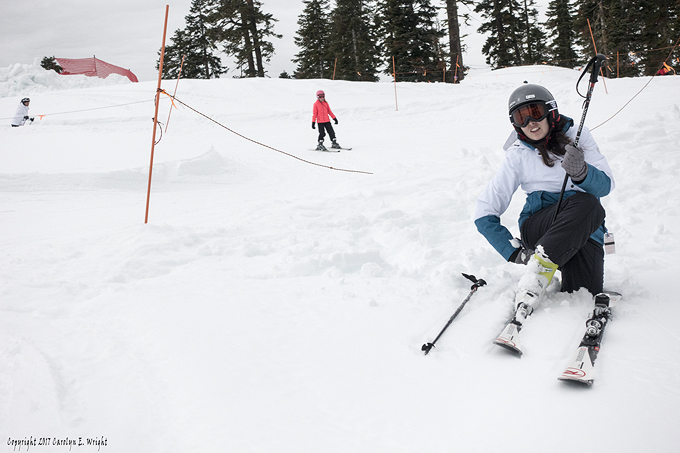
Courtney Ceccato went through the rope instead of around the curve. Photo Copyright 2017 Carolyn E. Wright

For Sana Pandey, 14, of San Jose having ice skated before helped her immensely with balance and the sense of gliding on snow.

“I love it. It’s so much fun. It’s different than other sports,” Pandey told Lake Tahoe News after descending the serpentine. Her first day on skis was last month. She was quickly getting the feel for how to maneuver the two planks strapped to her feet.

Courtney Ceccato, 24, of Sacramento was happy for powder off to the side because that’s where she landed after taking one of the turns too sharply.
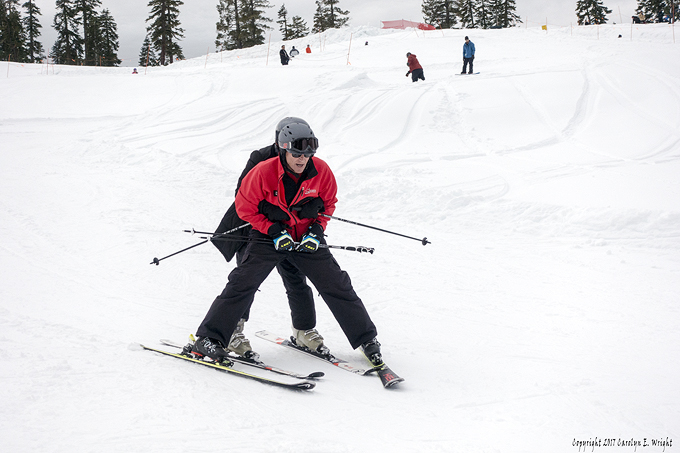
Claude Gunsch helps Sinda Potluri make it through the serpentine. Photo Copyright 2017 Carolyn E. Wright

“I just have to learn how to get my balance and how to stop,” she said with a smile as she was also learning how to get up after falling.

Even though it’s possible to get to the serpentine from the Easy Rider chair, the initial route is via the magic carpet. If a group progresses well, the chairlift is an option. The advent of these “carpets” allows for more actual ski time and no longer having to walk up the slope.

This area is reserved for teens and adults, while younger kids are on the other side of Sierra’s base lodge. They, too, have contoured routes to learn on, but scaled down.
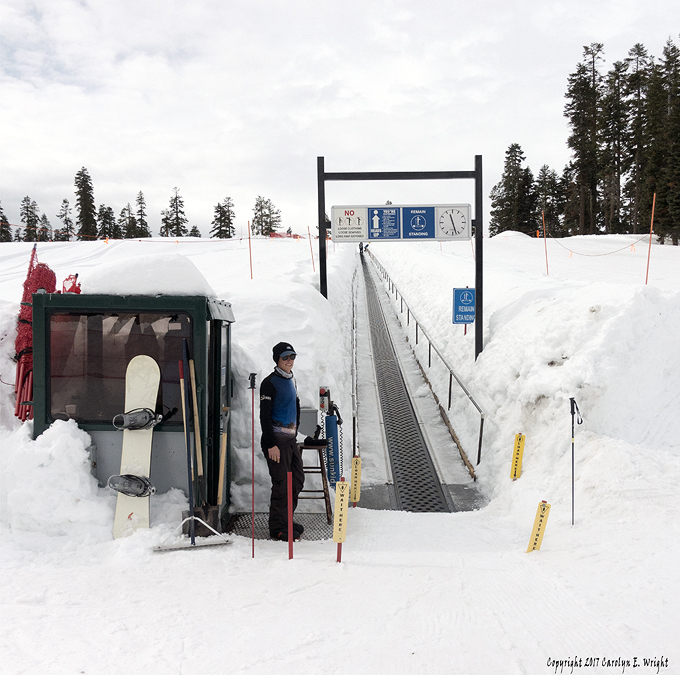
The magic carpet makes it so beginners have more time actually skiing. Photo Copyright 2017 Carolyn E. Wright

While most people might think a honeymoon is supposed to mean being locked together with your spouse, not so for Wendy Kodur. The 30-year-old from Newark was excited to be on the bunny slope.

“He got me the lesson. I want to be able to catch up to him,” Kodur said of her husband.

Sinda Potluri, 29, of Tampa might be sticking to warm weather sports. After the initial instruction of going down the smallest halfpipe ever built she was having a hard time getting the feel of the skis and balancing. And this was before the serpentine. “I keep falling,” she said, so she wasn’t sure if she liked skiing.

But as anyone who has skied knows, falling is part of learning.

With the serpentine, the theory is it’s more fun and a faster progression to more advanced terrain.

What’s next for Education Savings Accounts in Nevada?

By Thomas Moore, Las Vegas Sun

CARSON CITY — Some opponents of Education Savings Accounts say Nevada’s version of school choice is dead. But the Legislature continues to discuss the program’s budget, and two new bills — meant to shore up the ESA program — are anticipated to be introduced before mid-March.

The program, the first of its kind nationwide to be passed that doesn’t limit applicants based on income, would deposit upward of $5,100 in state education funds into a bank account to be used by approved families for private school tuition, tutoring and other expenses.

The program was put on hold last year after the Nevada Supreme Court ruled that ESA funding couldn’t come from the state school budget, but supporters are hoping to resolve lingering issues and revive it.

Read the whole story


High-tech race to make adventure sports safe

By Steven Kotler and Jamie Wheal, Outside

In their new book Stealing Fire ($28; Harper Collins) Steven Kotler and Jamie Wheal investigate the many ways people are now seeking out the heightened awareness of flow states—those ecstatic zones of pure focus where humans achieve ultimate performance. Some use psychedelics, others meditate or dance, and daring athletes practice extremely dangerous adventure sports. In this exclusive excerpt, the authors recount the tragic death of BASE-jumper Dean Potter, question why he and others are willing to risk everything in the pursuit of elevated consciousness, and explain how innovative technologies enable us to reach the same state without the without the life-and-death stakes.

The why was never in question. What happened? How it happened? Those answers remain unclear. But the why? For Dean Potter—it was never in doubt.

It was May 16, 2015, in Yosemite Valley, California, a nice spring evening, right on the edge of dusk. Potter, a record-breaking rock climber, slackline walker, and wingsuit flier, got ready for the evening’s adventure. He was 3,500 feet above the valley floor, standing on the summit of Taft Point. Alongside his friend and fellow flier Graham Hunt—considered one of the best young pilots around—their goal was to leap off the edge, zip across the canyon below, and sail through a V-shaped notch in a neighboring ridge, above an ominously named cliff, Lost Brother. 

Read the whole story


Mice invasion in parts of Lake Tahoe

By Kathryn Reed

It’s not just people’s homes that have been flooded in the Tahoe area. All that water is making mice seek higher ground, too.

“It’s the worst I’ve seen in decades,” Jim Cecil, owner of Boulder Exterminator in South Lake Tahoe, told Lake Tahoe News of the rodent infestation.

Mice are the biggest issue, with chipmunks and squirrels next. The latter are more prone to get into

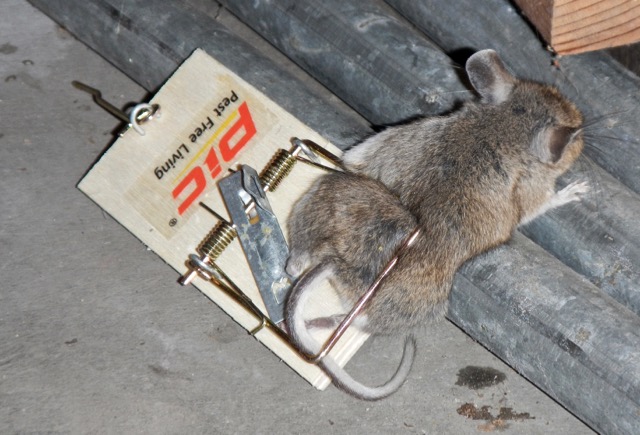
One less mouse in as South Lake Tahoe garage. Photo/LTN

walls, while mice scamper about garages and inside houses.

A large number of calls have come from the Tahoe Keys area because it’s on such a high water table. All the rain has flooded the burrows where the critters had been spending the winter. They want someplace dry, and that someplace is where people live.

Ben Gardner, service manager for Lakeside Termite & Pest Control, said he’s getting calls from around the lake about rodent problems.

“The rain flushes them out of their hiding spots or where they make their nest or home. They are being more aggressive about getting into homes,” Gardner told Lake Tahoe News.

The goal is to find where they are coming in from and to seal up that location. That’s hard to do because mice, even chipmunks, can squeeze through a quarter-inch opening.

And it’s never just one. They bring their family and friends. The females can leave a scent behind. This draws the guys. Mice can have upward of a dozen babies. Then it’s pretty much an infestation.

For Joe DeCasper, owner of Paragon Pest Control in Tahoe City, he was getting more rodent calls two years ago with the drought conditions. Normally in winter mice are pretty lethargic creatures. But when it was a warm, dry spring the mice were more active and much friskier.

He did say in the last couple of weeks there has been a mouse outbreak in his region.

Mice don’t discriminate – they hit up residences and commercial structures.

All of the pest control businesses Lake Tahoe News spoke with said poison is frowned upon. Some is still used, but not like the old days.

As of July 1, 2014, California banned the sale of most d-Con products. The federal Environmental Protection Agency reached an agreement with manufacturer Reckitt Benckiser that production stop nationwide on a dozen d-Con products in 2014, with distribution prohibited after March 31, 2015.

“Bait stations are required for consumer products to protect children and pets from contact with bait pellets,” according to the EPA.

Some Tahoe pest control businesses use live traps; some have traps that kill.

For the do-it-yourselfers, steel wool can be a good plug for holes. Mice have scissor teeth, so it’s hard for them chew through it. Check for gaps around interior plumbing. Anywhere there is daylight under doors a mouse can come in. Outside vents can be another entry point.

While some people are reporting ants as being an issue, that’s usually more of a spring problem in Tahoe. Carpenter ants are the issue here.

“We get little sunshine and they think spring,” Cecil said of ants. “Right now all you can do is bait.” This is because the best solution is an outside treatment, and that’s impossible with all the snow.

Spiders are also making their way indoors. The pest guys say to call them for help.


More skiers turn to short-term rentals

By Hugo Martin, Los Angeles Times

In search of some extra cash, Jim and Janet Dooley started renting out a spare bedroom in their Big Bear home to skiers and other outdoor enthusiasts.

“This has brought us a couple of hundred dollars a week,” said Janet Dooley, who listed the room about two years ago on the online booking platform Airbnb. Most of the guests have been young travelers, heading to the slopes at the nearby Bear Mountain and Snow Summit ski resorts.

For ski resort towns, the growing popularity of Airbnb, VBRO and other online booking sites has become a mixed blessing.

Read the whole story


Taxes on table to fund California roads

By Jim Miller

The way California raises money to maintain and repair state highways and local roads has largely been the same for more than two decades.

Gov. Jerry Brown and Democratic legislative leaders want to change that, and Californians would pay more as a result.

In what would be the biggest shakeup of state transportation funding since the early 1990s, they are trying to craft a package that would raise billions of dollars for road upkeep, goods movement and public transit, mostly through a mix of higher taxes and fees.

Read the whole story