International travelers rethinking visits to U.S.

By Rebekah Sager, Fox News
 
President Trump’s proposed travel ban of citizens from seven majority-Muslim countries is weighing heavily on the tourism industry. Whether it’s individuals who want to see the U.S. or companies planning travel for corporate events, many in the industry are expecting fewer people to visit America in the foreseeable future.

Ally Bolour, a Los Angeles-based attorney who immigrated to the U.S. from Iran as a child in the 1970s, said he has friends overseas who now say they won’t come for a visit.

He added that he is advising his clients not to travel to the U.S. unless they absolutely must.

Read the whole story


Study: Humans cause 84% of U.S. wildfires

By Amanda Hoover, Christian Science Monitor

Over the past two decades, humans triggered 84 percent of all wildfires and tripled the length of the fire season, making it a nearly year-round phenomenon under drier, warmer conditions, according to a new study.  

The findings come from a team of researchers at the University of Colorado and University of Massachusetts who examined wildfire data from 1992 to 2012 to conclude that humans had started 1.5 million fires during that period, expanding blazes into new and larger territories. The rest, researchers say, were sparked naturally by lightning.

And even as climate change makes conditions ripe for fostering blazes, the actions of humans in drier, warmer climates are mostly to blame for starting the fires.

Read the whole story


Skunk Harbor on snowshoes — breathtaking

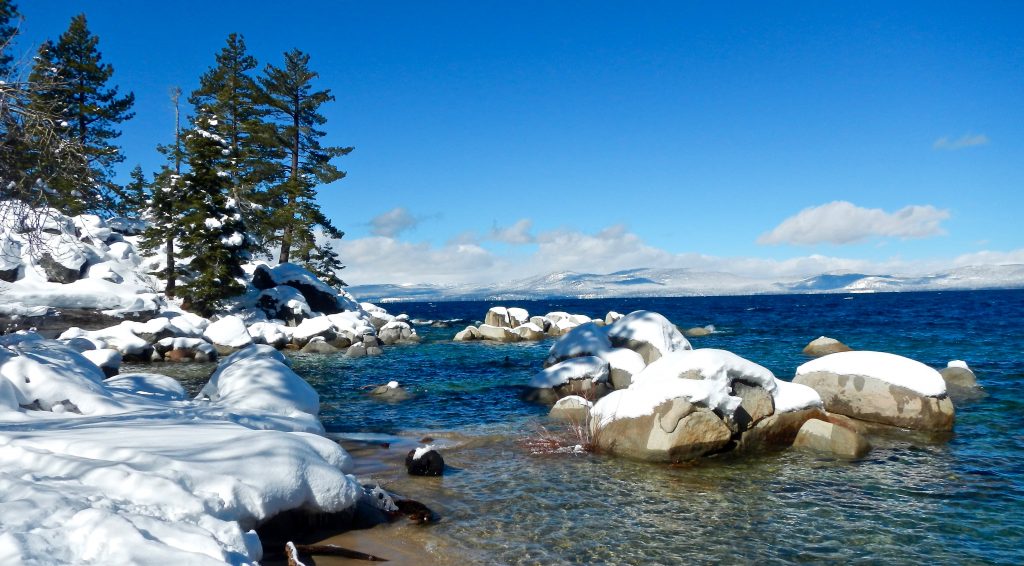
Snow looks like frosting on the top of rocks at Skunk Harbor. Photo/Kathryn Reed

By Kathryn Reed

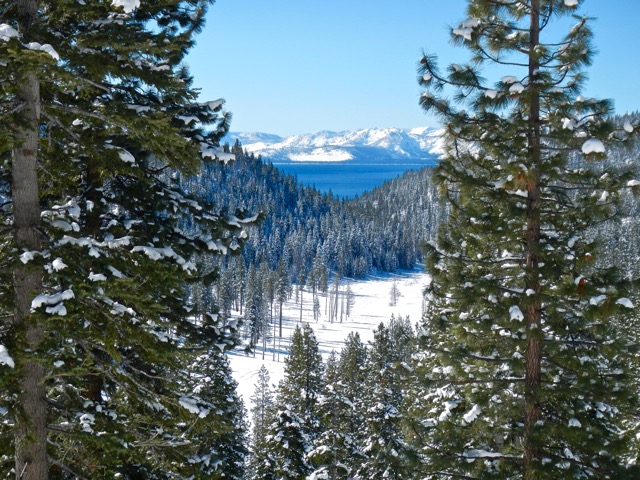
In the distance a deep sapphire blue Lake Tahoe looked majestic. Up close the emerald cove was more rugged as the white caps hit the shore.

Seclusion mixed with vast views of Lake Tahoe – that’s what the trek to Skunk Harbor is all about.

If only it had been warmer. But warmth and snowshoeing in winter are often elusive. Lingering on the beach this time of year is much different than in summer, not so inviting. Ice hangs from some of the rocks along the shore. About a foot-wide stretch of sand is exposed.

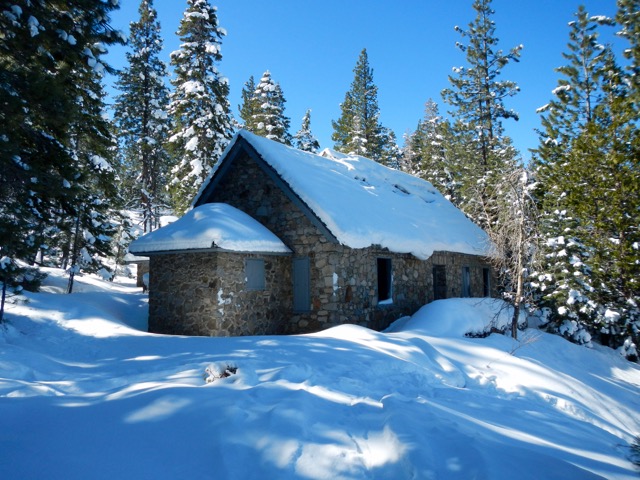
The structures at Skunk Harbor are not open to the public. Photo/Kathryn Reed

Remnants of Skunk Harbor’s past are visible. While the U.S. Forest Service now owns this swath of land on the East Shore, that wasn’t always the case. Stone buildings near the waterfront once belonged to George and Caroline Newhall. They used it as a second home for their San Francisco friends in the 1920s.

George Whittell then became the land owner. He once owned most of the East Shore down to Zephyr Cove.

Pilings for what once was a pier protrude from the water.

Last weekend there was no clear starting point with all of the snow. It was a pretty steep first 15 feet, then it flattens out.

Lake Tahoe in the distance near the start of the trail. Photo/Kathryn Reed

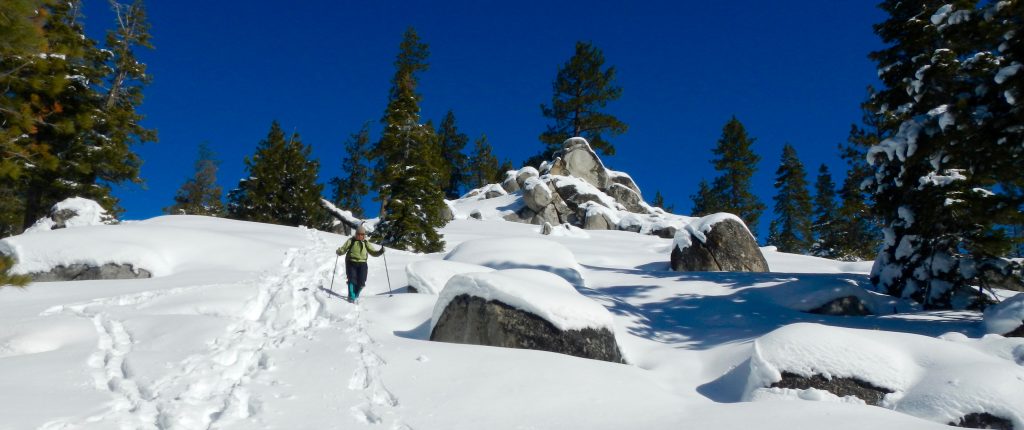
Fortunately, a snowmobiler had laid a track for us, as had other snowshoers and cross country skiers.

While I try not to go off trail for erosion reasons when it’s dirt, with all this snow it was so inviting at times to break trail, traipsing through the virgin snow. Sometimes it was fluffy, other places it was crunchy.

No matter where one looked, it was a winter wonderland. It doesn’t take long for Lake Tahoe to come into view. The openness of the trail in many ways made me feel like I was much farther removed from civilization than I was.

Tracks led up a knoll that we scampered up to get what was a stunning view of much of the lake.

It’s unfortunate such a lovely place has such a smelly name.

It’s a gradual 1.5-mile descent from the highway to the beach. The uphill ascent doesn’t feel so gradual. The elevation change is 560 feet.

Sue Wood makes her way through mounds of snow down to Skunk Harbor. Photo/Kathryn Reed

—-

Getting there:

From South Lake Tahoe go east on Highway 50, up Spooner Summit.

Turn left onto Highway 28.

Parking is on the left in 2.4 miles. Nevada Department of Transportation clears the area so parking is not right on the highway.


Calif. flood control called a life and death crisis

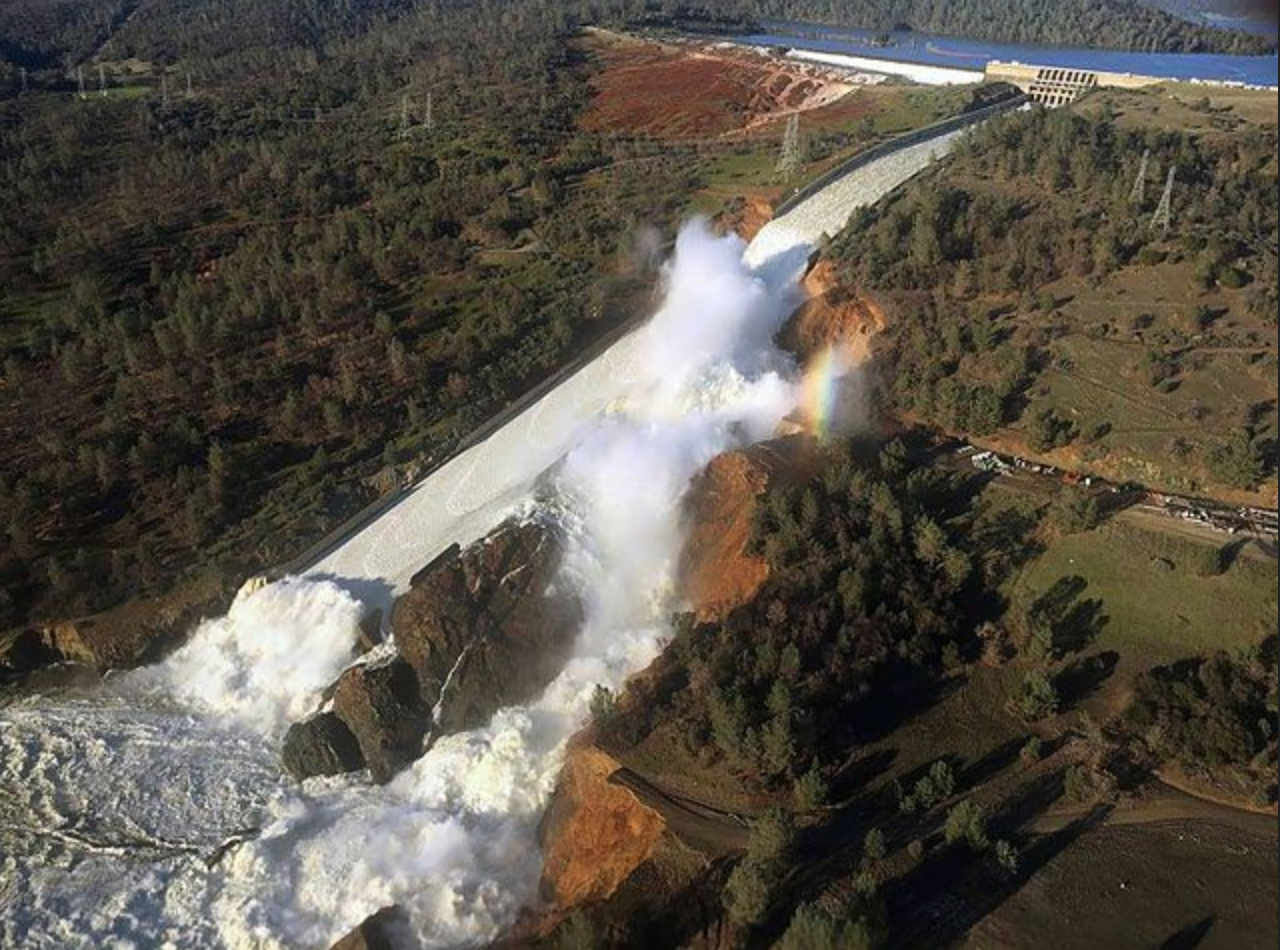
Water flowing from the eroded overflow spillway of Oroville Dam in February. Photo/California Department of Water Resources

By Sean Cockerham, McClatchy

Experts say California’s Oroville dam crisis demonstrates the life-and-death urgency of federal spending to upgrade aging dams. But there are doubts about whether President Trump will agree.

California Natural Resources Secretary John Laird told the U.S. Senate Environment and Public Works Committee on Wednesday that further deterioration of the nation’s aging flood control and water infrastructure systems will put lives at risk.

“We should use the opportunity presented by this situation to invest in existing infrastructure and fund innovative projects that leverage science to meet the challenge of extreme weather,” he said.

Trump told Congress on Tuesday that he would ask for a $1 trillion package “financed through both public and private capital” to improve the nation’s infrastructure.

Read the whole story


Report: End federal ban on sports betting

By Richard N. Velotta, Las Vegas Review-Journal

When President Barack Obama rolled out his March Madness college basketball bracket predictions on television every year, he acknowledged his participation in an illegal activity commonly enjoyed in workplaces nationwide.

Now, a nonprofit Washington think tank is criticizing the federal ban on sports wagering, joining the chorus of organizations seeking repeal of the Professional and Amateur Sports Protection Act of 1992.

The libertarian-leaning Competitive Enterprise Institute planned to issue a 14-page report Thursday that questions how alcohol and tobacco consumption are banned in most businesses while another “sinful” activity, sports gambling, is embraced by workers and their CEOs, especially around Super Bowl Sunday and the kickoff of the NCAA tournament.

Read the whole story


Rethinking pain management to curb drug abuse

By Kathryn Reed

Understanding drug addiction – by the user, health care professionals and loved ones – is the first step.

Terri Cherry, retired pharmacist from Barton Health, this week gave a talk about prescription drug abuse. She emphasized that it is a disease, not a weakness – and certainly no one makes a conscious decision to become addicted.

“Addictive habits have common physical attributes. They release the chemical dopamine. It’s a feel good drug; a euphoric feeling, positive reinforcement so you want to do it again. That’s part of the addiction cycle,” Cherry said.

In 2015, 10.3 million people in the United State were using opioids for non-medical reasons, Cherry said. Between 2004 and 2011, visits to emergency rooms for misuse or abuse of opioids increased 153 percent.

Opioids are both legal and illegal. They include OxyContin, Vicodin, codeine, morphine, fentanyl, and heroine.

One of the problems with pain management is that people want to get to where they don’t have any pain. That, according to Cherry, can be an unrealistic expectation. It is also one of the ways to become addicted – people erasing the pain with just one more pill.

“People need to accept there may be some level of pain. They need to work toward regaining function rather than strive for being pain free,” Cherry said.

People also need to take some responsibility. It starts with family and friends often being the first supplier. They have some leftover meds and willingly share them. Cherry said that must stop for a variety of reasons. When those run out, it’s a trip to the doctor’s office. Patients need to ask questions – to question the dosage and quantity, to make sure it’s appropriate for them.

“Start low, go slow” is Cherry’s mantra for drugs. She also advocates for non-pharmaceutical practices such as massage, using heat and/or ice, aromatherapy, music, anti-inflammatories and anti-depressants.

Naloxone is a drug that reverses an opioid overdose. Pharmacists are allowed to prescribe it without going to a doctor.

“It effectively blocks opioid receptors. The goal is to try to save some lives,” Cherry said. Seeking immediate medical care is still necessary.

She said the pharmacies in South Lake Tahoe require a prescription because the pharmacists have not gone through the training to be able to dispense the drug on their own. Rite-Aid, Cherry said, will administer it without a doctor’s prescription, but it must be ordered.

Cherry said those more prone to becoming addicted to prescription meds have a family history of abuse, use multiple providers, take multiple drugs, have medication with high doses, have a mental illness, are low income, lack education and live a rural area.

Addiction, though, is a disease that can strike anyone – any age, ethnicity, income level or profession.
Tools not adequate to measure Sierra snow

By Benjamin Spillman, Reno Gazette-Journal
 
One sure sign the Sierra Nevada is experiencing a historic winter is the snowpack is getting too deep for devices scientists use to measure it.

It’s a problem that cropped up Wednesday when researchers sought to confirm snow depth at a data site on Slide Mountain at Mount Rose Ski Tahoe near Reno.

“We’re not even close,” hydrologist Jeff Anderson said after jamming an aluminum tube more than 16 feet into the snowpack hoping to reach the ground below.

Read the whole story


Court: Public officials’ personal email not shielded

By Maura Dolan, Los Angeles Times
 
Texts and emails sent by public employees on their personal devices or accounts are a matter of public record if they deal with official business, the California Supreme Court ruled Thursday in a unanimous decision hailed by open-government advocates.

But the court provided only general guidance on where the line would be drawn, posing a challenge for cities and counties forced to balance employees’ privacy against the public’s right to know. 

The court said that communications sent on personal cell phones and computers must be disclosed to the public if they “relate in some substantive way to the conduct of the public’s business.”

Read the whole story


Remnants of SnowGlobe staying until snow leaves

By Kathryn Reed

SnowGlobe has gone from a noise nuisance to a visual eye-sore.

Remnants from the three-day musical festival in December are beginning to make a section of Al Tahoe Boulevard look blighted. And it’s bound to just look worse as the snow melts.

City officials and the promoter are saying the snow after the conclusion of the last show on Dec. 31 prevented vendors from picking up their stuff.

“We are working with our South Lake Tahoe based production team daily, monitoring for changes in the snowpack that will allow us a window of opportunity to safely continue our load-out as planned,” Chad Donnelly, SnowGlobe promoter, told Lake Tahoe News. “It’s hard to know exactly when that will be — but as soon as that day arrives, we’ll be on it.”

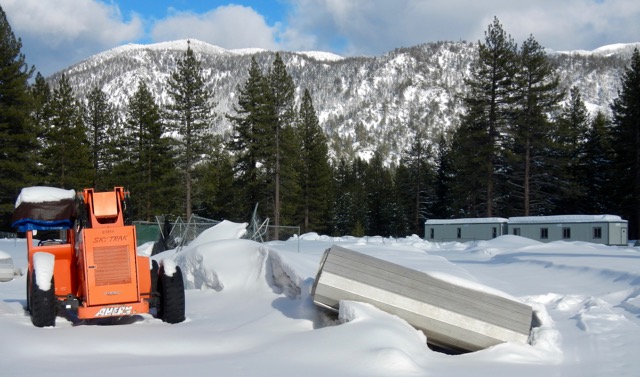
SnowGlobe items, including the structures in the back, remain more than two months after the event. Photo/LTN

According the promoter, the stage was down Jan. 2 and the shipping containers were removed approximately one month ago.

May is likely when everything will be removed. That is what the city has previously said.

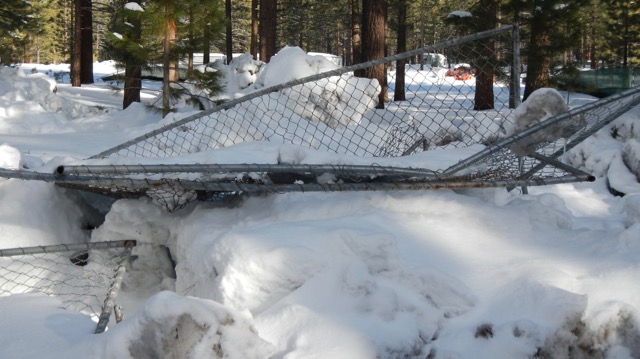
In the meantime, residents get to look at what’s been left behind from this city-sanctioned rave. The chain link fence that was put up to keep people out is falling. In places it looks like dangerous twisted metal.

Just inside the grounds, which are not completely fenced off, is a pallet of bottled water. Empty wood pallets are stacked nearby. Machinery and portable buildings are also inside the event space.

Then there are the orange cones that had been put near the school district’s bus barn and the entrance to the jail for those walking to the venue. They are starting to show as the snow melts. It’s obvious some of have been chewed up by snow removal equipment.

Donnelly placed responsibility for leaving behind a mess on one of the vendors.

“The modular offices are property of United and I’ve been told they aren’t able to transport them in inclement weather due to CHP regulations. The vast majority of the issues are attributed to one vendor’s inability to get to the site on the scheduled load out days, remove their assets without damaging them and finally transporting them,” Donnelly said.

The fence for SnowGlobe is a pile of metal in many places. Photo/LTN

This is a brand new field that taxpayers paid for with the assumption it would be used for sports. So far, it’s only use has been for the music festival.

The sod won’t go in until the garbage beneath the snow that SnowGlobers left behind is picked up. Then the local residents will finally get to use what it is theirs.

The city said no environmental hazards are expected from what is sitting on the field.

“The contract states that the applicant must return to the site following all snow melt to ensure complete clean up. We have a $25,000 deposit from the producer to ensure this is complete,” City Manager Nancy Kerry told Lake Tahoe News.


Property taxes an issue for Nev. legislators

By Thomas Moore, Las Vegas Sun

CARSON CITY — Homeowners may not think about property taxes often, but Nevada’s county and city government officials do. During this year’s Legislature, they’re busy asking state lawmakers to change the property tax abatement, or the cap, that limits how much larger your property tax bill can grow from one year to the next.

The cap, enacted in 2005, those officials say, has caused revenues from property taxes to stay at roughly the same levels they were before the recession even though — as the economy improves — the demand for services from local governments has grown.

As they testified before legislative committees, local government representatives listed services they said are suffering from flat revenues, chief among them education and public safety.

Read the whole story