Signs of El Niño on the rise

By Kurtis Alexander, San Francisco Chronicle

If you don’t think California has seen enough rain this year, just wait. There may be more to come.

Federal forecasters said Thursday that the chances of an El Niño developing by fall are on the rise — now between 50 and 55 percent —an outlook that could skew the odds in favor of yet another wet winter.

“There are a lot of players on the (weather) field,” said Emily Becker, a research scientist with the Climate Prediction Center, the federal agency that released the latest report on the El Niño climate pattern. But “El Niño is associated with an increased chance — not a 100 percent chance, but an increased chance — of higher-than-average rainfall in California.”

The state is already seeing some of its wettest weather in recorded history.

Read the whole story


How Vail Resorts conquered the ski industry

By  Josh Dean, Men’s Journal

Since it was installed in 2010, the “orange bubble” chairlift at The Canyons in Utah has become the resort’s most iconic feature. The high-speed quad, which whisks skiers 8,700 feet to the summit of Lookout Peak in just nine minutes, was the first in North America to have heated seats and a plastic shield — the bubble — to protect riders from frigid air and snow along the way. It’s just like a gondola, but you don’t have to take off your skis. Any skier would love it.

But Robert Katz is not any skier. He’s the CEO of Vail Resorts, the $1.4 billion resort powerhouse that owns The Canyons. Vail bought the resort in 2013, and then — through a mix of luck, lawyers, and shrewd business — snatched up neighboring Park City Mountain Resort in 2014, merging the two into a single mega-resort now known as Park City.

Vail now owns 14 resorts, which have a total of 305 lifts, and Katz thinks long and hard about all the little things that go into making the properties successful — check-in times at the ski school, why this lift line is a minute longer than that one.

Read the whole story


Squaw crowd cheers Shiffrin onto victory


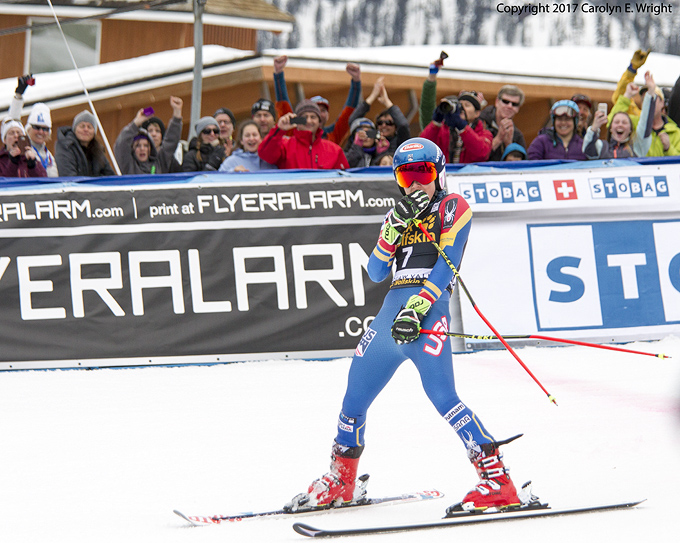
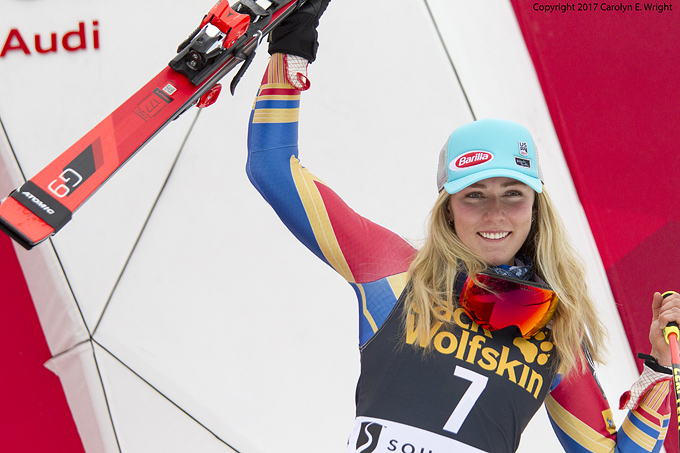
Mikaela Shiffrin reacts after completing her second slalom race. Photo Copyright 2017 Carolyn E. Wright

By Susan Wood

OLYMPIC VALLEY – Steeped in tradition and prestige, the women’s World Cup at Squaw Valley delivered a grand, heated environment for thousands of festive fans who turned out Saturday to see on-fire American ski racer Mikaela Shiffrin on top of the podium.

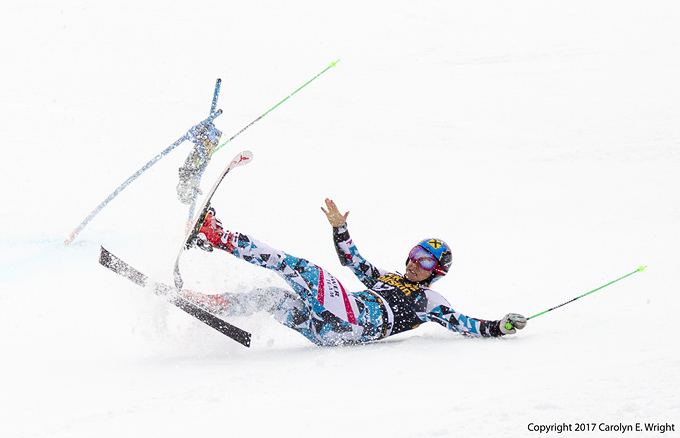
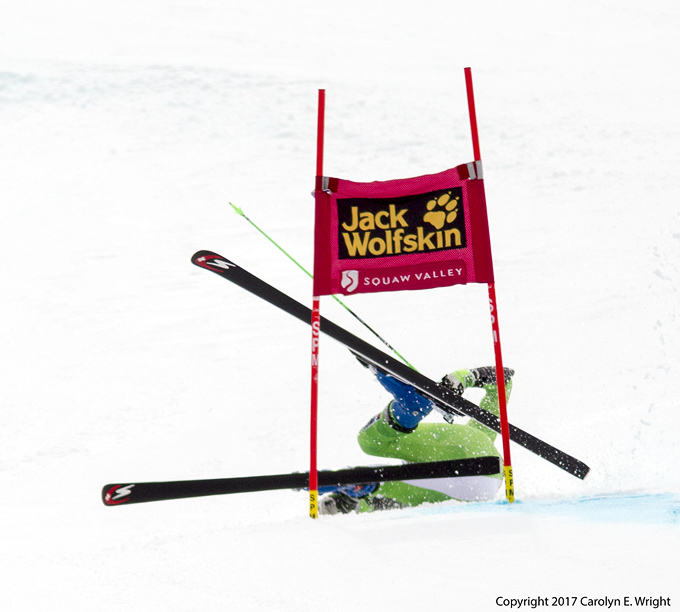
The season wraps up in Aspen next weekend, where Shiffrin is expected to clinch the World Cup title. She has 1,523 points, with Ilka Stuhec of Slovenia having 1,145 points. Stuhec was originally scheduled to race March 11 but did not. On Friday Stuhec crashed on her first run in the giant slalom.

Elisabeth Kappaurer of Austria competes in the slalom race March 11 at Squaw. Photo Copyright 2017 Carolyn E. Wright

If Shiffrin wins the World Cup title, she would join Americans Lindsey Vonn, Bode Miller, Tamara McKinney, and Phil Mahre.

The second day of competitive ski racing at Squaw ended with a fourth overall slalom title in five years for Shiffrin — quite a prelude to celebrating her 22nd birthday Monday.

Fans have massive cow bells on Saturday to make noise to root on the athletes. Photo Copyright 2017 Carolyn E. Wright

After raising her skis and getting high-fives from friends at the finish, a red-faced Shiffrin panted and shook her head as Lake Tahoe News asked what she thought of the course, which is considered the toughest on the race tour this year.

“Woo,” Shiffrin yelled out after realizing she won.

The Colorado skier’s second run of the day capped the weekendlong races that resulted in a cliffhanger at the finish, with Shiffrin’s second-to-last run and Swiss racer Wendy Holdener missing a gate near the finish. In the first run on March 11, Holdener was 0.02 seconds ahead of Shiffrin.

Bernadette Schild of Austria celebrates her third place finish on Saturday. Photo Copyright 2017 Carolyn E. Wright

As Shiffrin walked from the staging area, spectators chanted: “Mikaela, Mikaela, Mikaela.”

On a spring-like, sunny day that had many spectators stripping down to one layer or less, many cowbell-toting, costume-clad enthusiasts – and their dogs – lined the sidelines to see the big-time spectacle set on the Red Dog course – the same setting as the 1960 Winter Olympic Games.

Thousands of people cheer on the racers March 11. Photo Copyright 2017 Carolyn E. Wright

The 38-degree slope proved challenging for the competitors, with only 38 of 57 finishing the slalom course in the first run, in which Shiffrin shined with a time of 47.46 seconds.

Shiffrin also won the giant slalom Friday. GS is known for more sweeping slope carving, which resembles downhill racing, while slalom is more characteristic of sharper turns.

Mikaela Shiffrin reacts to Wendy Holdener of Switzerland falling at the third to last gate after being in the lead. Photo Copyright 2017 Carolyn E. Wright

Shiffrin said she had a tough time near the top of her second slalom run.

“I don’t think I found a rhythm. I was fighting to stay in it the whole time,” she said.

Still, the racing phenom pulled it off – winning back-to-back disciplines on the same weekend.

The last time the granddaddy of all ski events graced Squaw was in 1969.     

On the podium Saturday were from left Sarka Strachova from Czech Republic (second), Mikael Shiffrin of Colorado (first), and Bernadette Schild of Austria (second). Photo Copyright 2017 Carolyn E. Wright

The World Cup was an up and down emotional roller coaster for the competitors and their fans as the balmy weather conditions created a slushy surface that had the slipper volunteers cleaning the course after each skier.

By the second run it was so slushy the snow splashed some of the competitors’ goggles.

When some racers fell, the crowd bellowed a loud moan in unison. When others crossed the finish line or when announcer Olympic freestyle champion Jonny Moseley called out an American competitor, the crowd erupted.

Squaw last hosted a World Cup in 1969. Photo Copyright 2017 Carolyn E. Wright

“I was bummed. I just hooked the gate,” American Resi Stiegler from Jackson Hole, Wyo., told Lake Tahoe News at the bottom of the course. “I love this hill.”

People crowded around racer Erin Mielzynski of Canada asking for her autograph. She fell on her run as well, but continued to smile as she signed helmets, shirts and posters.

Lena Duerr from Germany is dejected after not being able to complete the first run. Photo Copyright 2017 Carolyn E. Wright

“It’s pretty cool to be here with the fans and being in North America,” she said.

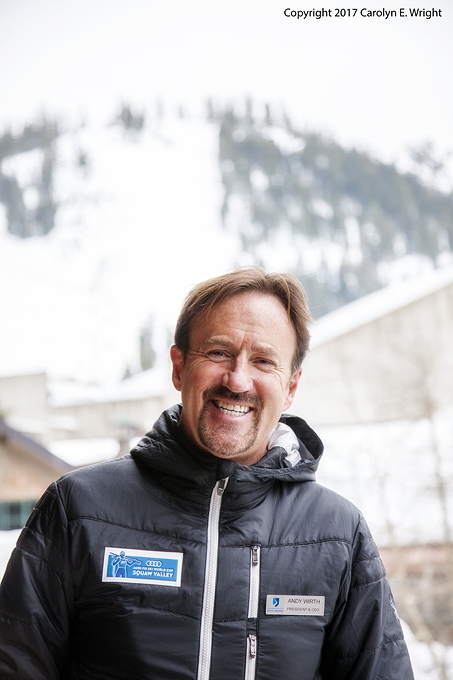
This is precisely why Squaw Valley chief Andy Wirth said he wanted to bring World Cup back to the Lake Tahoe-area resort. Having it here was like a gift, especially for the youth who grace Squaw slopes.

Wirth told LTN he was pleased that everything was going as planned, minus a less than favorable forecast that earlier had predicted rain for Saturday.

Fans show their support for their respective countries. Photo Copyright 2017 Carolyn E. Wright

“That would have been daunting,” Wirth said.

As it was, a lot of effort among 2,500 paid staffers and volunteers went into the event. At the Red Dog chairlift, one could tell crews had to dig out about 10 feet.

Megan McJames of Park City missed a gate on the first run. Photo Copyright 2017 Carolyn E. Wright

Shiffrin commended crews, noting in a post-race press conference that workers did an “incredible” job.

“I’ve never seen so much snow in my life,” she told LTN. “I imagine people here are sick of it.”

She equated the drive up to Squaw as a trip “back into history” in which old photos highlight walls of snow.

Sarka Strachova of Czech Republic finishes second on March 11 in slalom. Photo Copyright 2017 Carolyn E. Wright

The racing sensation also said she respects the history associated with meeting the likes of American legend Tamara McKinney, a former World Cup alpine ski racer from Squaw Valley who won four World Cup season titles, and still lives and works in the area.

Shiffrin called her “a great inspiration,” and added she hoped to carry on the torch in the same way to the youth of today.

Bringing on a new generation

Jake Keil, 10, of Incline Village couldn’t be happier at the prospect of witnessing such a monumental event. He hiked up the snowy hill to find a place along the course ropes on crutches. The youngster competes on the Squaw team. He hurt his knee a year ago at Mount Rose and is trying to recover.

Bernadette Shild of Austria screams to third place in the slalom. Photo Copyright 2017 Carolyn E. Wright

“We wouldn’t miss this,” his father, Kirk Keil, said with a beaming smile.

“Got your bell, right?” Keil said, turning to his son.

The father-son duo showed up to watch Shiffrin and Lila Lapanja because “she’s from Incline,” the patriarch said.

The crowd erupted when Shiffrin launched out of the gate.

Resi Stiegler of Wyoming crashes March 11 on the slalom course. Photo Copyright 2017 Carolyn E. Wright

“She should be extra careful (with these conditions),” Keil said.

“That was so fast,” the young Keil said, looking up at his father.

Eleven members and two coaches with the Mammoth Ski Team came up to witness their first World Cup event.

“It’s awesome that it’s so close to home – especially since we raced the same hill,” Kendall Lach, 15, said. The California ski team was pulling for Shiffrin, the star of the weekend.

The Colorado skier comes across as a natural who at age 7 won her first slalom event.

Her success was something notably expected by her agent Killian Albrecht, an Austrian racing legend in his own right.

Albrecht, who started representing Shiffrin at age 15, told LTN the course can be tricky. And it was.

That didn’t spoil the spirits of all who enjoyed the festivity-filled weekend.

“Anytime I get to see the best in the world, I try to do it,” said Berkeley resident Andy Bennett, who bought a VIP package that qualified him for early-morning first tracks. Bennett, who has a house in Tahoe City, often skis at Alpine Meadows, but loved Squaw.

There’s something about Squaw.

Slippers make sure the course is smooth as it can be between racers. Photo Copyright 2017 Carolyn E. Wright

Coming in third in the slalom event, Bernadette Schild of Austria told the press she relished returning to a place where she has quite a connection. Her family is close to the Poulsens. Wayne and Sandy Poulsen were founders of the ski resort.

“It’s like coming home. I spent so many summers here,” Schild said, adding she appreciated the warm American welcome.

“The American crowd is amazing. They knew our names. I never heard anyone thank me in Europe for giving me a show like they did here,” she said.
Fearing threat to Calif. emissions law, lawmakers plan a fight

By Sean Cockerham, McClatchy
 
The Trump administration could move at any time to revoke California’s right to impose stricter auto emissions standards than the federal government does, and the state’s senators are already mounting a fight.

Congressional sources are hearing conflicting information on whether and when the Environmental Protection Agency will revoke California’s waiver.

Initially the EPA action appeared imminent, but now there is some uncertainty, in part because the action would set up a legal showdown with California that President Donald Trump could lose.

Read the whole story


Congress could dump wilderness bike ban

By Benjamin Spillman, Reno Gazette-Journal

Some of America’s most pristine wild places could be opened to mountain biking under a proposal before Congress.

A bill by Rep. Tom McClintock, R-Elk Grove, would lift a decades-old national ban on biking in federally designated wilderness areas.

It’s similar to a bill that died in the previous session of Congress.

Read the whole story


Shiffrin top dog in GS at Squaw Valley

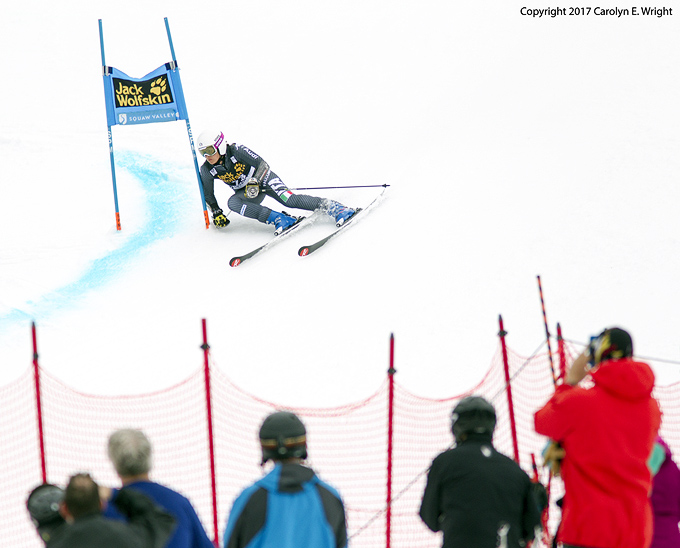
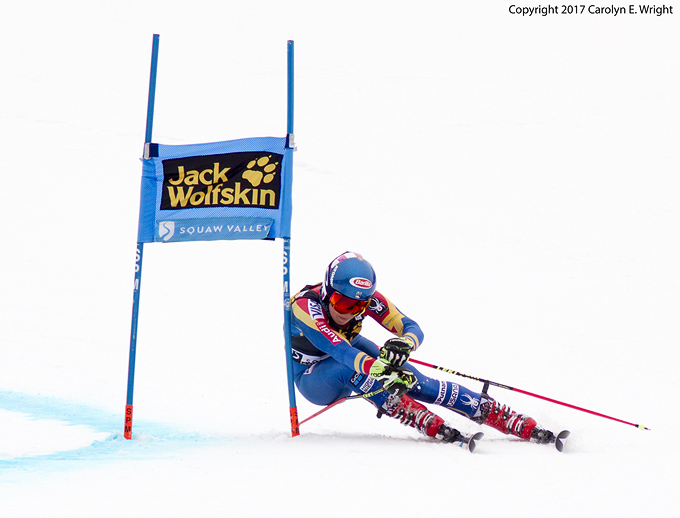
Mikaela Shiffrin speeds around a gate in her first run of the giant slalom on March 10 at Squaw Valley. Photo Copyright 2017 Carolyn E. Wright

By Kathryn Reed

OLYMPIC VALLEY – Mikaela Shiffrin tamed the Red Dog giant slalom course at Squaw Valley on Friday much like she has been doing throughout the world this season.

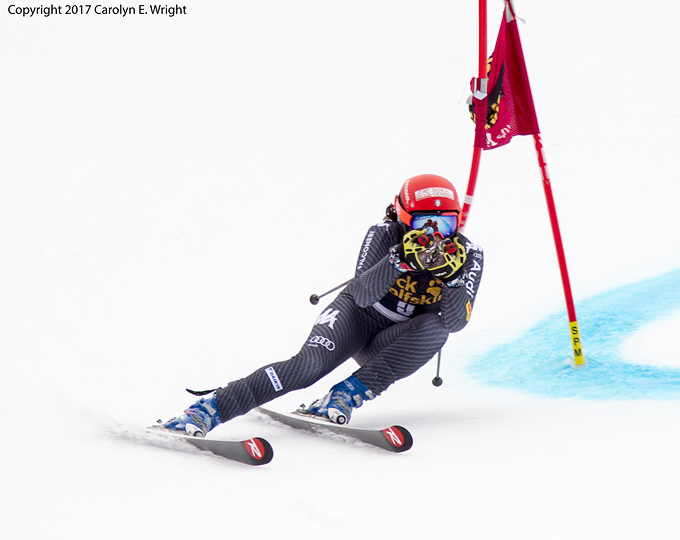
Three days shy of her 22nd birthday, the Colorado native on March 10 won with a time of 2:16.42. This was 0.07 seconds ahead of Federica Brignone of Italy. Tessa Worley of France rounded out the podium, 0.86 seconds off first place.

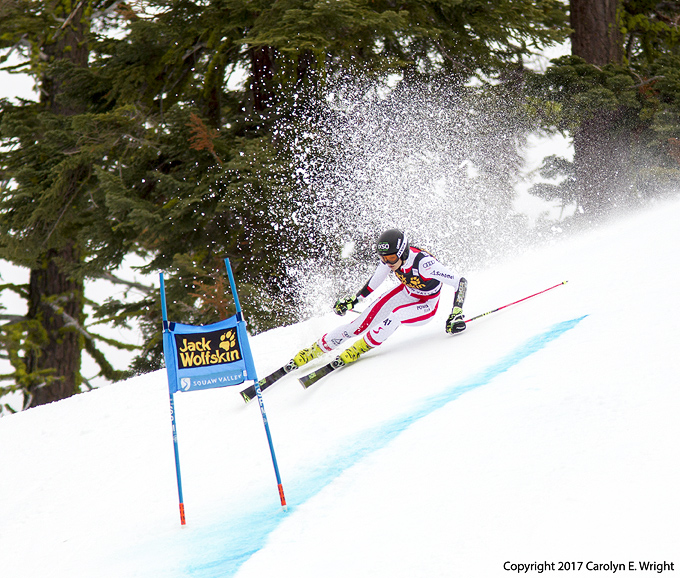
Elisabeth Kappaurer of Austria kicks up snow near the top of the course. Photo Copyright 2017 Carolyn E. Wright

Ninety athletes representing 19 countries are in town competing in the Audi FIS Ski World Cup GS and slalom. The slalom course will also be off Red Dog chairlift, with races at 10am and 1pm on March 11.

After coming out of the starting gate fast in her second run, Shiffrin lost time in the middle of the run, but was able to make it up near the last third of the course.

“In the middle pitch I got bumped around. I tried to change that in the last eight gates,” Shiffrin said.

Known more for her prowess as a slalom racer, Shiffrin has been making a concerted effort to be on the podium in GS as well. The training has paid off.

Federica Brignone of Italy takes second March 10 in GS. Photo Copyright 2017 Carolyn E. Wright

“I definitely feel my GS has picked up a lot. Getting that repetition is going to be huge,” Shiffrin said. “I know what I have to do to be fast. Now it’s a matter if I can do it every single day. In my training I feel very good.”

It will come down to next weekend’s races in Aspen, Colo., to determine the overall winner of the GS this season. Worley is leading in points with 80 more than Shiffrin.

With the win on Friday, Shiffrin solidified her lead for the overall World Cup title. Ilka Stuhec of Slovenia, who crashed on the bottom third of the course during her first run, is in second place for points.

Ilka Stuhec of Slovenia crashes on the first run. Photo Copyright 2017 Carolyn E. Wright

Fierce competition

On Friday all eyes were on Shiffrin. This was her fourth career GS win. The crowd was definitely on her side, with numerous U.S. flags in the stands and along the race course.

She was one of three U.S. racers. Megan McJames of Park City finished in seventh. Resi Stiegler of Jackson, Wyo., did not qualify for the second run.

Mikaela Shiffrin is joyous after winning the GS. Photo Copyright 2017 Carolyn E. Wright
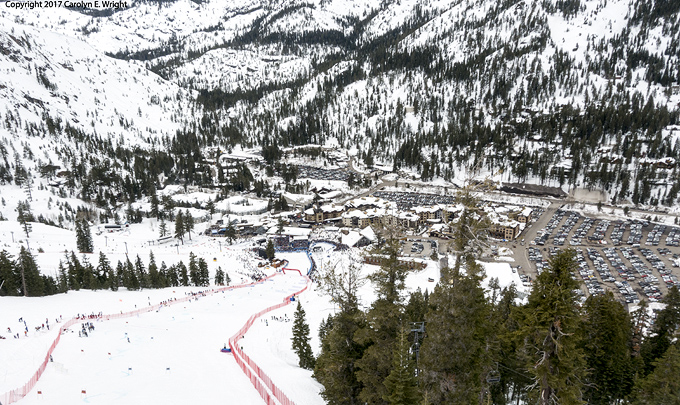
Right out of the giant slalom starting gate you gain speed across No Name Face, a relatively easy pitch but no indication of what’s to come. Less than 15 gates into the race you hit the Dog Leg where each turn keeps getting steeper and steeper. This is where the athletes encounter the steepest part of the course. Within five giant slalom turns it goes from relatively flat to extremely steep and it’s quite challenging for athletes to create a rhythm due to the technical terrain and changing trail directions. After the upper portion of the Dog Leg, there’s a false flat at the top of Far East Express. This is where the Slalom course starts. Right from the false flat, athletes are forced to tackle a big change in direction at Coaches Corner. The course bends around to the left and there’s a saddle before you exit Coaches Corner, onto The Face, which has a view straight to the end of the course, the finish and the base village.
Trevor Wagner, director of snow surfaces for Squaw Valley

After the first race Stiegler told Lake Tahoe News, “I need to let it go on this hill and be charging all the way to the bottom.”

Italy has been a powerhouse on the circuit this season. They made their presence known at Squaw, with four racers making it in the top seven.

“In our country everything starts with GS. We are pushing each other. You don’t want to lose even in training,” Brignone said.

Racers started the giant slalom course at the top of Snow King Peak – elevation 7,250 feet. It’s 1,267 feet to the finish line.

Red Dog is where the women competed in slalom and giant slalom in the 1960 Olympics. It is considered one of the most difficult courses on this year’s tour. It has four major sections: No Name Face, Dog Leg, Coaches Corner, and The Face.

World Cup back in California

The last time an Alpine World Cup event was in California was in 1988 at Mammoth.

1969 was the last time Squaw hosted a World Cup event, which came nine years after the resort first became known to the world when it hosted the Winter Olympics. Snow was a huge factor in 1969 just like it has been this year. Nine feet fell in three days. So much that the men’s downhill was canceled. (Billy Kidd, who took gold in slalom that year, was on hand Friday to watch the women.)

“It looked way different Monday,” Andy Wirth, CEO of Squaw Valley, told Lake Tahoe News on Friday morning. Four feet of snow had fallen and the winds were howling that day. It’s been a record season, with more than 600 inches falling – and more to come.

The resort’s chief admitted to Lake Tahoe News that he was skeptical when Julia Mancuso first brought up the idea of having a World Cup event at Squaw. While Mancuso hoped to be a contender on her home slope, she is still recovering from hip surgery that has sidelined her the entire season. She did speak to the crowd in between the two races Friday.

Mikaela Shiffrin in a rare moment of exuberance at clinching the GS. Photo Copyright 2017 Carolyn E. Wright

“It’s atypical to see a midseason World Cup in the States,” Wirth said.

The skiers all praised the conditions even though spring suddenly showed up, with temps reaching 50 degrees and the snow starting to melt.

“We injected 10 days ago and re-injected it Tuesday and Wednesday,” Wirth said. The point of this is to make it consistently slick.

This is the first time in 48 years that Squaw has hosted a World Cup event. Photo Copyright 2017 Carolyn E. Wright

Prepping for World Cup

Bringing the World Cup to Squaw has been quite an undertaking. It started about 2½ years ago, got more intense in the last nine months, with Tuesday of last week beginning the final push.

According to Wirth, teams have been working practically around the clock since Monday.  

“The most visual preparation has taken place over the last four weeks as our team has been hard at work to prepare the Red Dog course and finish area, including the removal of huge amounts of snow from the course in order to restore its naturally challenging contours,” Liesl Kenney with Squaw told Lake Tahoe News.

Squaw Valley CEO Andy Wirth is proud to bring World Cup back to the Tahoe area. Photo Copyright 2017 Carolyn E. Wright

Last month the groomers started to build up the natural features. It is groomed without the tiller so there is no corduroy. Red Dog is extremely steep and takes tremendous skill to maneuver the snowcat. The pitch at times is 33 degrees.

“Under these circumstances where we actually have to remove snow from the course to rebuild the natural contours, we are pushing the extra snow off into the woods,” Kenney said.

Crews removed two to three feet from more than 250 yards of the course. With a base of more than 20 feet, there’s a lot of snow to contend with.

Irene Curtoni of Italy flies around a gate. Photo Copyright 2017 Carolyn E. Wright

Grooming came to a halt four days before race day. In the last few days everything has been done by hand.

In many ways the course is like an ice rink. Crews used hoses from the snowmaking system.

 “A designated coach from one of the competing countries drills in the gates using a laser range finder to maintain a specific range for the distance between gates and the ‘offset,’ or how big the turn is. After that, paint goes down to highlight terrain changes and direct the racers in poor visibility for flat light conditions,” Kenney explained.

Katharina Gallhuber of Austria is unable to navigate the course. Photo Copyright 2017 Carolyn E. Wright

Last summer finish area pylons and underground conduit went in, as well as upgrades and additions to the timing and race services buildings.

It’s not just the two days of race event planners have to contend with. There are four days of free events that run through Sunday. Designing the course, putting in signs, coordinating transportation, and dealing witha cadre of media, spectators, and coaches are part of details many take for granted.

Wirth highlighted traffic not being an issue, saying this coordinated effort should happen every weekend. But then again, during the 1984 Olympics in Los Angeles traffic wasn’t a problem, but returned to its normal gridlock two weeks later.

On top of the event, the mountain is still open to the general public, so there are all the normal operations to contend with. However, Red Dog and Squaw Creek chairlifts are closed to the public through March 12.


Global warming is slamming California

By Sean Cockerham, McClatchy

The drought has been declared over in most of California, with heavy winter rains sending water over the Oroville dam and forcing the evacuation of nearly 200,000 people.

But climate change is still in the air, and the recent weather pattern is a harbinger of what’s to come. The abrupt shift to record rainfall is the kind of extreme weather forecast for a warming planet.

Parched earth could soon return, say climate scientists, who predict a worsening spiral of intense California drought followed by periods of flooding as the planet gets warmer.

The extreme weather is making it increasingly difficult for California to manage its flood-control and water management infrastructure.

Read the whole story


Storm water goals being met in Tahoe

By Kathryn Reed

The quality of roads in the basin and Lake Tahoe’s clarity may be more closely tied together than previously believed.

That is the belief of El Dorado County officials.

On the day the Lahontan Regional Water Quality Control Board voted to approve the next five-year Lake Tahoe municipal storm water permit for South Lake Tahoe, El Dorado County and Placer County, there was talk of looking at new ways to curb the sediment load.

“There is some new information we have showing roads contribute upward of 30 percent of the sediment into the Lake,” Russ Wigart with El Dorado County told the state agency.

The county does a significant amount of in-house research. The plan is to study the relationship between the pavement index condition and runoff. The pavement index condition goes from 0-100, with 100 being the best. Tahoe’s roads are anything but the best.

“Our roads this year were completely annihilated,” Wigart said. Winter weather has made some still impassable.

The plan is to study different surfaces to see what might be best for Tahoe.

While this is actually the 25th anniversary of the Lake Tahoe storm water permit program, the current iteration with the credit system just completed its first five-year cycle, which also incorporated the total maximum daily load requirements.

The atmosphere at the March 9 meeting was 180 degrees different than in December 2011. At that meeting the hostility was palpable between the jurisdictions and Lahontan. All five El Dorado County supervisors stood at the podium to denounce the plans.

At Thursday’s meeting the jurisdictions and Lahontan had praise for each other. While the jurisdictions still believe money will be an issue to accomplish the goals and that they are not easy measures to meet, they believe in the cause.

Despite the animosity at the start, all three locales met their goals. South Lake Tahoe needed 190 credits and achieved 209, El Dorado County needed 163 and hit 164, and Placer County needed 260 and earned 277. These credits equate to a 10 percent sediment reduction from the 2003-04 base year.

One credit is equal to 1.0 x 10 to the 16th fine sediment particles with a diameter smaller than 16 micrometers.

This permit that was just approved mandates another 15 percent reduction.

According to Lahontan’s staff report, “To achieve the transparency standard, estimated fine sediment particle, phosphorus, and nitrogen loads must be reduced by 65 percent, 35 percent, and 10 percent, respectively. Given the magnitude of the needed load reductions and the current available understanding of load reduction options, achieving the load reductions needed to meet the transparency standard is expected to take 65 years. A 20-year interim transparency goal, known as the Clarity Challenge, requires basinwide pollutant load reductions to be achieved within 15 years, followed by five years of monitoring to confirm that 24 meters of Secchi depth transparency has been reached. Implementation efforts must reduce basinwide fine sediment particle, phosphorus, and nitrogen loads by 32 percent, 14 percent, and 4 percent, respectively, to achieve this goal.”


Longer ski season means higher risk for injury

By Claudia Buck, Sacramento Bee

As record snowfalls extend this year’s skiing and snowboarding season, a Los Angeles children’s sports doctor is reminding kids and parents to be aware of injury risks. Children are more at risk than adults for injuries from skiing and snowboarding, especially for beginners, said Tracy Zaslow, director of the Children’s Orthopaedic Center Sports Concussion Clinic at Children’s Hospital Los Angeles.

“Because of the high speeds that are traveled, it can go from a mild injury – bruises and sprains – to severe fractures that require surgery or head injuries that lead to bleeding in the brain,” says Zaslow, in a statement.

She said novice skiers and snowboarders are less likely to have mastered the skills needed to avoid obstacles and fall down safely.

Read the whole story


Preparation key to playing in back country

By Benjamin Spillman, Reno Gazette-Journal

Skiing, snowboarding or snowshoeing the Sierra Nevada back country can be a magical experience.

Getting away from highways and crowded ski areas is a great way to find untracked lines and spectacular, unspoiled scenery.

It also carries plenty of risks.

They include avalanches, sudden changes in weather, extreme cold, deep snow and early sunsets.

That’s why anyone who wants to head into the backcountry should plan for those risks by packing accordingly.

Read the whole story