Publisher’s note: This is one in a series of stories about affordable housing in the Lake Tahoe-Truckee region. All articles may be accessed via the home page under Special Projects, 2017 Affordable Housing.
By Susan Wood
When it comes to millennials and home ownership, the 30s could arguably be the new 20s.
The 16- to 34-year olds (per U.S. Census Bureau), aka millennials, have hit the pause button on certain aspects of the all-American dream.
 With some exceptions, many demographic studies in the United States have pointed to a delay in home ownership among a generation known for its computer wizardry, independence and mobility. The findings coincide with their apparent hesitation about raising children and even getting married in their coming of age period.
In 2015, the younger set numbering 83.1 million, according to the Census Bureau in 2015, appear more diverse than any other generation in minority status, goals and view of the world. (California tops the list with 61.5 percent among minorities.)
Whatever ethnicity or locale, millennials have brought home ownership to a record 30-year low at 34.1 percent compared to the overall U.S. population coming in at 62.9 percent.
Despite the generation splitting that number in half, Business Insider among other observers keeping a close eye on the demographic group, reports that 65.3 percent of these youth associates buying a home with the American dream. That’s the plan for a majority when the time is right.
Timing is everything
The waiting by millennials says as much about their view of social norms in the world and rejections of climbing the corporate ladder as their income status and cautious optimism about the nation’s finances.
Millennials are less likely to get married as they’re coming of age than previous generations. According to the Pew Research Center, only 42 percent of millennials were married and living with their spouse last year. In 1963, that number exceeded 80 percent.
Moreover, the majority of millennials – 56 percent – was childless. By contrast, more than half of Gen Xers and Baby Boomers reared children at that similar stage of life.
Alongside mounting student loan debt, sources like SmartAsset have cited labor market opportunities as a key factor in jumping into life-altering moves. Millennials were hit hard by the recession of 2009, which ran parallel with a weak jobs recovery in subsequent years. Then, there’s simply a lack of desire early in life to sign on to a spouse or children, much less being roped in to such a large investment like a home.
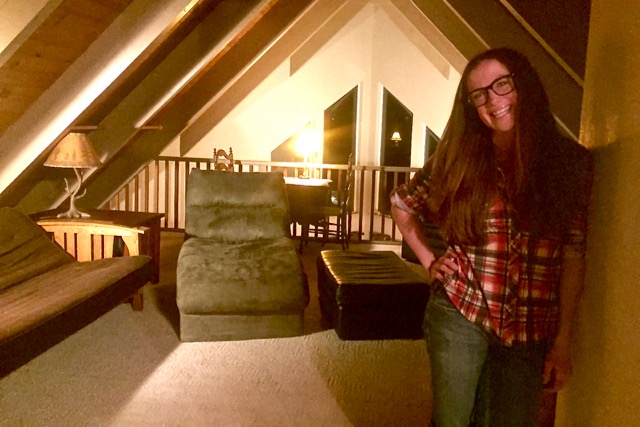
Brianna Biller is making ends meet by subletting her rental to tourists via Airbnb. Photo/Susan Wood
Home is relative
“Because a lot of us entered the workforce during the recession, I don’t know anything but living paycheck to paycheck. We’re overworked and underpaid,” Brianna Biller told Lake Tahoe News while in her rental off Pioneer Trail.
Biller works in sales for Sierra-at-Tahoe at a job she loves in paradise. The 29-year-old knows the ropes. She grew up in Tahoe and left to attend a performing arts school to become an actor.
She’s resided in a few different living arrangements here, including sharing space with her best friend in a place she affectionately referred to as the “ghetto in the meadow.” The term plays right into the longstanding nickname for Tahoe housing – “poverty with a view.”
Tahoe is known to test the will of even the steeliest of residents. For years, ski resort employees would bunk up, sometimes 10 people to a house to make ends meet.
With such a low inventory of rentals, those not buying a home are forced to stand in long lines to compete for places. Biller recalled going to an open house and seeing prospective renters standing there “with folders” to sell themselves. To top it off, scams exist. She later found her place because she knew the right person.
“I can’t do (permanent) roommates anymore. One of them turned the heater on and left the window open,” she said in disgust. “It’s just stuff like that.”
But good rentals aren’t cheap.
A light bulb was turned on
Biller discovered the clear advantage of her generation’s advancements in the digital age.
She rents out her upstairs loft on Airbnb, the increasingly popular online home sharing website. She has renters but on a temporary basis, most often on the weekends because who doesn’t want to visit Tahoe?
Biller has found a lifestyle so pleasing: “It makes me want to open a hostel.”
She established a little seating area similar in looks to the front lobby of a bed and breakfast. She assembled a binder full of hikes, bike rides and other activities visitors may partake in while they share a roof with her for a few days.
“I love waking up here and hearing people laughing in the morning,” she said.
Plus, money is not the concern it was.
“Now I can afford good wine,” Biller said.
This is the lifestyle Biller wants, even though living through the recession has been challenging. Nonetheless, millennials have learned to do what they need to do to pay the bills, given their diverse views of the working world.
“My generation is getting creative in getting corporate America dethroned. Our generation is all about the experience and not collecting stuff,” she said. “This is our generation’s response to wasted resources.”
Smart, single and savvy, this Tahoe woman doesn’t necessarily buy into a certain protocol of falling into line.
“Not everyone has to have kids. I have no desire to chase that ideal and move up to a bigger house,” she said.
Instead, her golden retriever Cody fills in the gap nicely. They love romping in the woods steps from her humble abode.
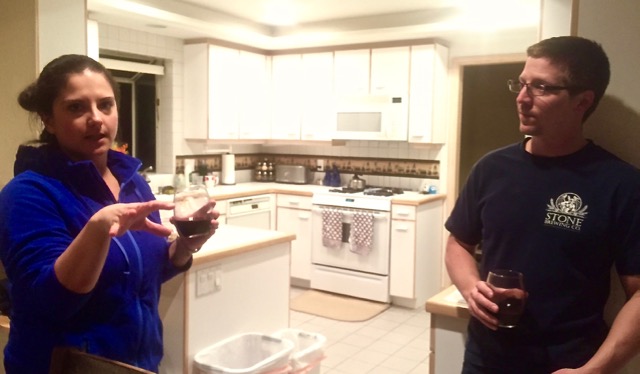
Dondra Biller and Ryan Elson are new homeowners on the South Shore. Photo/Susan Wood
Stages and outcomes vary
Biller’s sister, Dondra, 30, returned to Tahoe a few months ago after a stint in Colorado, but she took on a different living arrangement.
She bought a home here with her 35-year-old husband, Ryan Elson, and got a job in her environmental science discipline selling water quality products for General Electric.
“I look at working for corporate America as a means to an end,” said Dondra Biller, who travels a region and calls Tahoe her work-home base. “Colorado was nice, but I really wanted to live in Tahoe.”
The Earth science/oceanography major met Elson in Santa Cruz. She graduated from college in 2009.
Like her sister, Dondra’s attitude about being responsible with money but skeptical about what it can do were somewhat formed by the financial crash and consequential ailing jobs market.
“One thing that has shaped the millennials is we literally came out of the age of recession. For me, I keep waiting for the other shoe to drop,” she said.
“We wanted to buy a house so we could do what we want with it,” said Elson, who works for Bentley Nevada in engineering.
The two rely on each other greatly in a world filled with insecurity, doubt and mistrust. While they’re being creative with their home, creating life in their household might be on hold.
“A lot of my friends have the pressure to be perfect like having a child,” Biller said.
Instead, they’re focusing on their careers and want to contribute to their community.
“Millennials want everyone to have what they need. We’re willing to pay for the greater good,” she said. Call it a new sense of socialism.
“In Tahoe, things crashed, but came back. Still, we don’t buy into that you must have kids and the bigger house. Millennials are not stuck on that at all. We can make our lives what we want them to be,” said Biller, noting how the couple wants to develop an energy-efficient home.
And like Brianna, Dondra stated they’re well aware of a lack of short-term housing and good-paying jobs “but we were hell-bent on being in the community here.”
Think globally, act locally
The Biller sisters aren’t the only ones who grew up at Lake Tahoe and returned upon leaving the nest.
Many say Tahoe has a draw.
Millennial Devin Middlebrook reinforced this notion. At age 27, he has a job in the basin at the Tahoe Regional Planning Agency.
Having graduated in business and sustainability at Chico State in 2007, Middlebrook is now using his studies to protect the lake he grew up loving. This is so appropriate, given his friends and family are here.
Still, Middlebrook wanted to be independent. He shares a home with his girlfriend, something he admits he’s “lucky” to be able to do.
“Tahoe was always home. I always had a plan to come back,” he told Lake Tahoe News.
Having endured the recession while in school, he crossed his fingers he would find a job here. He returned in 2012, going to work for the Tahoe Resource Conservation District before landing the job at TRPA.
“Tahoe can be very tough on young people. I had my parents’ house to come home to. Some are not as fortunate,” he said.
Middlebrook recalled how a friend had to move away because she couldn’t find a place that would take a dog.
“It’s a humble house (we have), but it gives us what we need,” he said. “You don’t make a ton of money here, but that’s the trade off of experiencing life in Tahoe.”
And there lies the common denominator expressed by numerous millennials. It’s all about the experience – not the prestige.
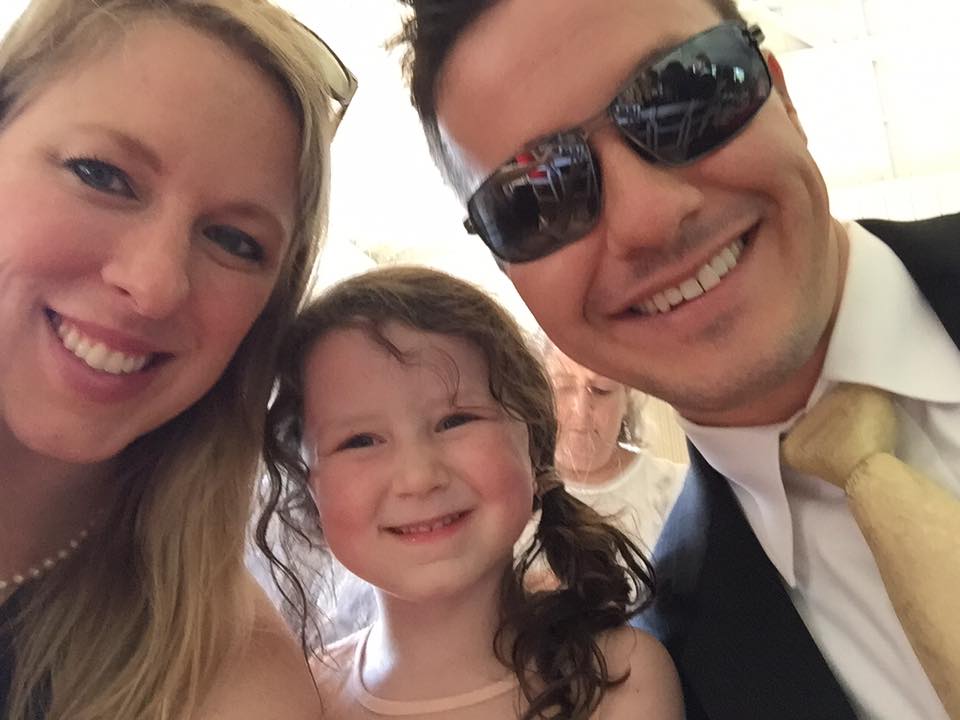
Jamie, Annika and David Orr are living the Lake Tahoe dream. Photo/Provided
Seize the day
One could say David Orr understands this better than most.
Bucking the millennial tradition of delaying marrying and having kids, Orr, 33, prides himself on establishing a life for he and his wife, Jamie, 35, and their daughter Annika, 5, within a one-mile radius.
Again, living is about seizing the most out of it – opposed to wasting time, for example sitting on a freeway in the San Francisco Bay Area to get to a corporate office.
Orr had that life and shows no plans of returning. In fact, he’s taking all those idea-building brain cells and creating a sense of community for not only his family, but for others.
He opened Tahoe Mountain Lab on Harrison Avenue with his wife as a way to provide a commercial space for the mobile worker. He recently expanded the operation to the restaurant at the top of the Heavenly Mountain Resort tram.
He’s seen his fair share of what’s being referred to as “digital nomads” in his generation. Those workers provide a service online and can live and work anywhere to accommodate most any whim.
“The old ideals are in question. It’s the experience that’s important – not collecting possessions,” Orr told LTN that he’s come to realize about his age group. His claim echoes the Biller sisters’ assessments.
Of course, everybody’s different. However, he has noticed a disproportionate number of millennials choosing to move around without having an anchor on their heels.
“Most millennials these days don’t want to be tied to a mortgage,” he said. “If they are buying homes, they don’t want a ton of space.”
There’s a movement going forward that bills those modular spaces used commercially and personally as the wave of the future.
“At the Mountain Lab, there’s a place where we’re trying to solve problems in our lives besides being in these four walls,” he said, motioning to the building he’s running. “It’s designed to spur the South Shore economy.”
The Mountain Lab houses many business professionals just needing ample, minimal office space. There are attorneys, financial consultants and real estate agents. The building remains full.
Orr would like to see the commercial idea in other buildings expand into living spaces. Developing this further would take a lot of effort, especially given regulations and the structural layout of Tahoe.
But this is a new day, with a new groundswell to accomplish progress.
“There are experience-driven places, and that’s what makes Tahoe special. That’s why the millennials are moving here,” he said. Orr almost sounds like a prophet when he talks about his vision for the South Shore.
It’s all part of a cycle
South Lake Tahoe Association of Realtors spokeswoman Theresa Souers has seen many trends as a longtime Realtor in this market area.
She’s noticed a slight uptick about the latest adult generation buying homes, but not necessarily a huge increase.
“I am noticing my kids’ friends coming back,” she said.
Of those who do, some will get their parents to co-sign like the Gen Xers did – while the Baby Boomers are downsizing in their moves.
“Those that can’t afford the high rents, buy,” Souers said. “Today, millennials are yesterday’s Gen Xers.”
Some like the Orrs made their mark in the lucrative Bay Area and can afford it by utilizing their highly demanded computer programming skills and creative sense.
Beyond housing, Souers has also seen a rise in the number of small businesses popping up with a young influence at the helm. These businesses are providing products and services that are unique. Even with the companies that have been around town for a while, there’s a sense of more profitability to be had.
It’s only a matter of time when more millennials buy into that dream of owning a home, if anything because their “experience” may become more grounded in home and hearth.
Zillow and Realtor.com are predicting 2017 will be the year it all turns around as millennials make the plunge. Estimates indicate that home prices will increase by 3.9 percent, according to a Reuters report. Realtor.com believes much of the sales will be driven by that age group.
Of the top 10 metropolitan areas in the United States, Sacramento ranks No. 4 with a projected sales growth of 4.9 percent. Perhaps, there could be spillover to Tahoe.
The state of home ownership needs a jolt
Making the big move into home ownership is long in coming for millennials – especially in California. Just ask Troy Matthews.
The 32-year-old South Lake Tahoe man admits that if he and his wife had not qualified for a USDA loan through El Dorado County with no down payment required, they’d be renting.
“For a lot of millennials, that’s an issue. We just don’t have the money,” he said, comparing Tahoe to major cities like Los Angeles and San Francisco. “If we lived there, I guarantee you we would not own a home.”
Matthews works for Tahoe Youth & Family Services and is the civic engagement chairman of the Tahoe Regional Young Professionals, a social group at 250 members strong and growing.
He’s witnessed other young professionals struggling with the same challenges.
Matthews understands the interest in waiting for the bigger milestones in life. He just got married a few years ago and has no children.
“Many millennials don’t want to be tied to mortgages. Renting offers mobility, and we came out of the recession,” he said. “It’s really hard to save money.”
Putting away the down payment with home prices what they are may seem like a daunting task for someone entering the housing market. But their sheer numbers in the population carry clout.
That’s why the California Association of Realtors is studying the demographic.
“A lot of them are living at home for various reasons – with a lot hit by the recession,” CAR spokeswoman Lotus Lou told LTN.
In its 2016 Millennial Survey, CAR discovered that 44 percent of millennials live with their family. The household annual income rounds out at $49,000 a year. With that money, CAR found out millennials in the Golden State plan to buy in the next five years. Half rent now because “they cannot afford to buy,” according to the survey.
Notably, “an affordable home price would be the No. 1 motivator” to get millennial renters to turn the key. In the meantime, 10 percent of California millennial respondents have used home sharing services such as Airbnb.
“The Lake Tahoe real estate market is very desirable for cost and also lifestyle. You can’t buy a house in the (San Francisco) Bay Area for under $300,000, let alone a home that’s at the base of a ski resort, close to world class mountain biking trails and in a top-notch school district,” Jenna Palacio explained.
Palacio, who is also active with TRYP like Matthews and Middlebrook, has noticed a shift in millennials moving into the Tahoe area for the active lifestyle – and in doing so, have reshaped the culture to a sharing and collaborative society.