Sullivan helping future American downhillers

By Megan Harrod, USSA

Not only does Squaw Valley’s Marco Sullivan have the most inviting smile and demeanor on and off the mountain, he’s a four-time Olympian who has stood on top of the Audi FIS Ski World Cup podium in Chamonix, France.

He also holds the record among American downhillers for the most downhill World Cup starts, with 105—Bode Miller (Franconia, N.H.) has 104—locked in during the Kvitfjell, Norway World Cup in 2016 and he is the mastermind behind the American downhiller concept. He also might have the biggest and most dedicated official fan club there is. Because he’s just that darn likable. Seriously. He has a heart so big and a spirit so warm he could melt the snow off the mountain.

Like many other hard-charging U.S. Ski Team athletes, Sullivan grew up in Squaw Valley, crushing Lake Tahoe and skiing for the Squaw Valley Ski Team. In fact, one of his earliest memories was crushing it down a snow-covered gravel hill in his backyard at the age of 3. That’s where his passion for the mountain all started, and it carried him through a 15-year career with the U.S. Ski Team.
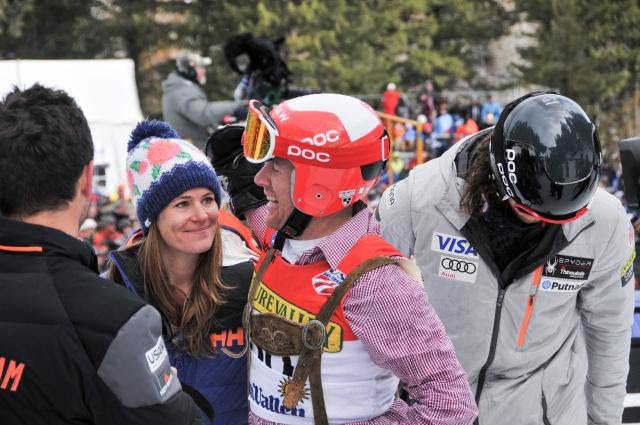
Marco Sullivan celebrates with teammates and fiance Anna Goodman following the final run of his career at U.S. Alpine Championships in Sun Valley, Idaho, in 2016. Photo/USSA

While he was on the team, Sullivan created his personal website, americandownhiller.com. Little did he know that website would grow into something much bigger than himself, including a series of webisodes created by Ski Racing and POC, a line of clothing and accessories by POC, a Spyder speed suit for the American downhiller men, and now, a business—with the introduction of the American Downhiller Speed Skills Camp at Mammoth Mountain this spring. 

The American Downhiller crew’s mission? To empower young ski racers to approach their career with champion-grade passion, genuine curiosity and formidable tenacity. Sullivan and teammates came together in this endeavor in an effort to pay it forward to the next generation of American Downhillers.

“My ex-teammates and I have spent the majority of our adult lives learning how to ski fast and practicing those skills over and over,” said Sullivan. “We are part of a small group who have lived that journey and we feel the need to pass along what we have learned to the next generation of kids who want to represent their country as downhill ski racers.”

Those “ex-teammates” Sullivan speaks of? None other than the legendary Daron Rahlves (Sugar Bowl), Steven Nyman (Sundance, Utah), Alice McKennis (New Castle, Colo.), Leanne Smith (North Conway, N.H.), Bryce Bennett (Squaw Valley) and former U.S. Ski Team World Cup downhill coaches Johnno McBride and Chris Brigham. Talk about an all-star staff.

Their vision for the camp stems from the fact that competing at the World Cup level is extremely difficult, and lessons learned by athletes and staff en route to becoming the best in the world are invaluable. As Sullivan noted, “The whole American Downhiller crew is very enthusiastic about passing those lessons on to the next generation of racers. Ultimately, I want American Downhiller to be the link between current World Cup racers and the kids who are chasing that dream of becoming the best.” 

Sullivan is looking forward to creating that bridge and staying connected to the sport that has helped him grow into the special soul he is. After one year of retirement, Sullivan has reflected on just how special it is to live the life athletes experience, traveling the world and seeing places most would only dream of. What does he miss most about traveling the “white circus”?

“It was always cool rolling into town and being part of the show,” Sullivan reflected. “Nice hotels, all the best amenities, racers on the World Cup are definitely spoiled and that was always fun. I skied a ton this winter, mostly with powder skis and mostly when nobody was watching so that was fulfilling in a different kind of way.”

Indeed it was a good year in California, with record snowfall and a ton of opportunity to get some good skiing in with former Alpine Canada World Cup athlete Anna Goodman—also his future wife.

Sullivan ended his career with the U.S. Ski Team in style, donning lederhosen and that signature Marco Sullivan grin in Sun Valley in 2016. Plus, you can also find him as a NASTAR pacesetter – inspiring kids to ski as fast as he can. We asked Sullivan our three questions on what he believes makes a champion.

U.S. Ski Team: In your words, what makes a champion?

Marco Sullivan: A champion to me is someone who fulfills their dream. We all have something that we want, but to go after that and make it a reality takes courage, confidence and hard work. Champions have the ability to find their own path, amid all of life’s distractions, and achieve their dreams.

U.S. Ski Team: Do you remember the first time you felt like a champion?

MS: At the 2002 Olympics, after a great result in the downhill, I was standing in the finish area with my parents, family and friends. We were all so happy, and I understood then that it was not about me, it was about the moment and the journey that everybody had taken to get there. Champions have the ability to make everybody around them a better person and that moment inspired me through the rest of my career.

U.S. Ski Team: What is the biggest piece of advice you have for U.S. Ski Team athletes who want to be sitting where you are today?

MS: Set your goals high and surround yourself with people who will inspire you and help you along your path. Whatever you truly want in your heart you can achieve it. Don’t get distracted, but also don’t take yourself too seriously, and have a lot of fun along the way.
SLT attempting to fix some dilapidated roads

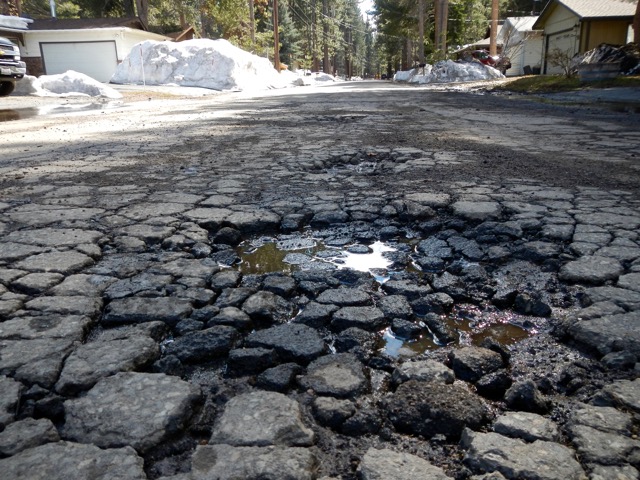
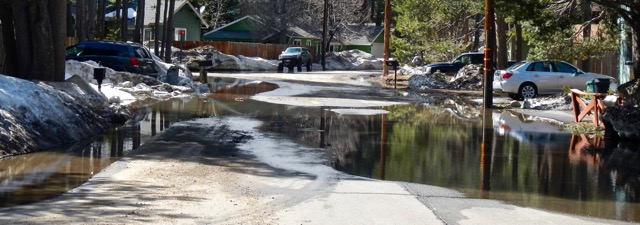
Roads in South Lake Tahoe are crumbling at a rapid rate. Photo/Kathryn Reed

By Kathryn Reed

The obstacle course known as dodge the pothole will eventually go away – at least in the city limits of South Lake Tahoe.

An additional $300,000 was allocated for roads at Tuesday’s City Council meeting to deal with the nearly 400 potholes. And with water still covering some roads and more runoff coming, the damage is not done.

The money is coming from revenues being higher than what was projected when the 2016-17 budget was approved last fall.

Because everything is still wet and the water table high in many locations, the work can’t start until things really dry out.

What will be different with this fix is that the road will be cut out and filled, as in a complete fix and not just a patch. A 4-foot-by-10-foot area will be dug out to a depth of 6 inches.

Jim Marino, assistant public works director, said it is imperative to get the pot holes done as soon as possible because it is going to be a busy construction season between what the city and Caltrans have planned.

The money was part of the April 4 midyear budget adjustment. Sierra Nevada Construction was already under contract to do $1,602,947 worth of repairs last fall but the cold temperatures prevented that work from occurring. The amended contract is for the maximum amount allowed without having to rebid the project or have separate contracts.

Potholes on Sierra Boulevard will be fixed, but nothing substantive will be done to that road because it is slated for a massive overhaul in either 2018 or 2019. That will be a complete streets project, with it looking somewhat like Ski Run Boulevard.

“The city’s Public Works Department is adept at milling and repairing potholes and minor to moderate roadway surfacing, however, the magnitude of the impacts from this winter are above the production capability of in-house staff combined with all the ‘normal’ spring roadway tasks such as striping, sign work, curb and gutter repair, sweeping, etc.,” the staff report says.

With water still covering some roads and more weather coming this weekend, the full extent of road damage is not known. Photo/Kathryn Reed

Beyond the potholes, sections of town will see significant improvements to streets. Those projects include:

·      The No. 2 lane of Lake Tahoe Boulevard from Glorene Avenue to Viking Way

·      Glenwood Avenue from Woodland to North Rancho

·      Fairway-Glenwood Avenue from Johnson Boulevard to Cloverdale

·      South Avenue from Fourth Street to Melba

·      Eloise Avenue from the cul de sac to Dunlap Drive

·      Primrose-Chonokis from Glenn Road to Montreal Avenue

·      Tahoe Island Drive from Third Street to Peter Avenue

·      Aloha Drive from Venice Drive to the cul de sac.

“This winter showed what we are so susceptible to without a dedicated roadway program,” Marino told the council.

He has been an ardent advocate for annual spending of between $2 million and $3 million for roads. The council acknowledges the problem, but has yet to do anything substantive.

The city is hoping for emergency storm relief dollars that could be used to enhance or build drainage basins where needed.

Bike trails will also see upgrades this construction season. They include:

·      El Dorado Beach to Alta Mira site – it will essentially be a whole new path

·      Campground class 1 path

·      15th Street trail to bridge

·      Trout Creek (Meek’s) to Edgewood Circle.


California faces $860-million repair bill for roads

By Joseph Serna, Los Angeles Times
 
There were many dramatic images from California’s extreme winter: interstates flooded, bridged buckled, highways covered in mud, snowbanks blocking key highways.

In Topanga Canyon, the lasting memory for many locals was the massive boulder that blocked Topanga Canyon Boulevard in January after one fierce rainstorm. The huge rock became a popular spot for selfies and social media posts.

The boulder has been removed, but the storm has left a costly legacy in the canyon and on roads across California.

Officials estimate it will cost more than $860 million to repair the state’s roads, bridges and highways damaged from this winter’s storms.

Read the whole story


Driving while stoned — not a party for anyone

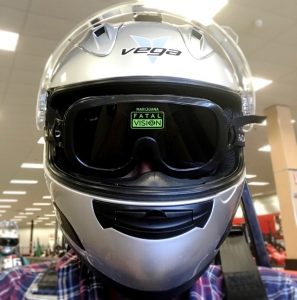
Goggles simulate what it’s like to driver under the influence of marijuana. Photo/Michael Rohm

By Michael Rohm

RENO – I could see the sharp S-curve approaching, but my vision was blurred and I hit the wall on the first corner. My body recoiled with the shock and I overcorrected, striking the opposite wall. With my peripherals reduced and the walls seemingly amorphous, I continued to bump my front fender, jolting  my car and body during the final hairpin turn. On a straightaway at last, and on the verge of vomiting, I stopped the car and sat quietly, willing the world to stop spinning. I waited with my eyes closed as two uniformed officers approached the vehicle.

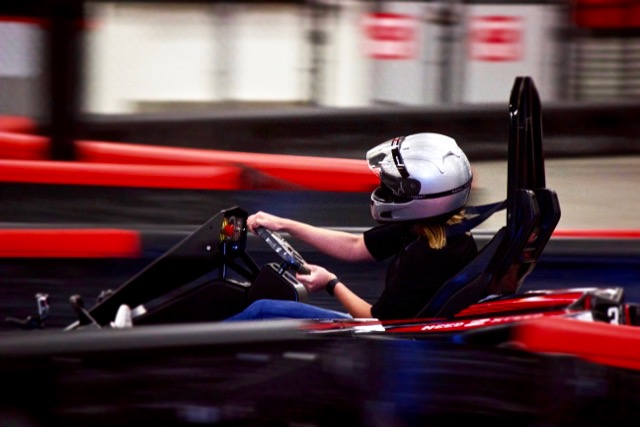
“That was some bad driving,” Lt. Kevin Honea with the Nevada Highway Patrol said. Still reeling, I unbuckled the harness straps and stepped from the go-kart, then pulled off the green-tinted goggles and padded helmet.

“Did you notice the difference?” asked NPH Trooper Dan Gordon.

He was referring to the goggles I had just removed; large, snowboard-style ones with the words “Marijuana: Fatal Vision” emblazoned on a green sticker dead center of the forehead.

A padded helmet protects those trying out the pot goggles while driving. Photo/Michael Rohm

To put it mildly: yes, I noticed the difference. The first lap around the go-kart course I completed unimpaired. For round two I was very, very impaired.

This zero fatalities event coordinated by the NHP gave people a chance to see and feel what it is like to drive under the influence of marijuana without lighting up or ingesting anything.

This difference between unimpaired and impaired driving is exactly why the NHP partnered with Need 2 Speed, an indoor go-kart track – to get the message out that pot affects one’s ability to drive. Now that the use of recreational marijuana is legal in Nevada, and in preparation for the dispensaries that are planning to open for business as soon as July 1, officers want to remind people that impaired driving is and always will be unsafe and unlawful.

“It doesn’t matter what you’re on if you’re driving,” Gordon said. “Anything that impairs your ability to drive a car will get you arrested.”

Unlike alcohol, where the legal limit is clearly stated and easily defined, marijuana impairment is more misunderstood. According Gordon, many people think eating edibles, food items cooked with THC, does not count as using marijuana. Others think marijuana doesn’t impair one’s ability to drive. Some don’t even know there is an age restriction for the use of marijuana.

“It’s very clear,” Gordon said. “You must be 21 years old to use marijuana, including edibles. And if you are 21 or older and you decide to legally use marijuana, please don’t get behind the wheel.”

Despite the information campaign, Gordon knows there will be an increase in marijuana impaired driving.

“When the use of marijuana was legalized in Nevada, we began to look at states that had legalized marijuana prior to us. We saw a clear pattern in the increase of impaired driving and we knew we were going to see a rise in marijuana impaired drivers here in Nevada. That’s just a given.”

To meet the increase in marijuana impaired drivers, officers are trained to identify drivers who are under the influence. Unlike alcohol, where breathalyzers can pinpoint the exact level of intoxication, marijuana intake is harder to measure. Instead, officers learn techniques in field sobriety tests aimed specifically at marijuana impairment.

When an officer pulls over a driver suspected of marijuana impairment—usually one who fails to stay in his lane at consistent speeds—the officer will request a field sobriety test to determine signs of marijuana inebriation. The Rhomberg Balance Test is one component, in which the driver is asked to hold his hands at his side, tilt his head back, close his eyes and silently count to 30. Because marijuana is a depressant, impaired drivers will often count much longer than 30 seconds.

Another test unique to marijuana inebriation is Lack of Convergence. An officer will hold an object—his finger or pen—in front of the driver, moving it back and forth before moving it closer to the bridge of the driver’s nose, forcing the eyes to cross or “converge.” If the eyes do not converge, it is an additional component in building probable cause for the arrest of the suspected impaired driver.

“These tests are very accurate,” Honea said. “If we pull you over and you show signs of impairment, we will request a field sobriety test.”

As I drove home after the event, I found myself looking at the cars around me and wondering if any of the drivers were impaired by marijuana. With weed legal, it seemed plausible that I was sharing the road with a high driver. Wasn’t that blue Subaru in front of me driving a little too slow? Hadn’t the black Charger beside me switched lanes a time too many?

But then I thought of Gordon’s parting words.

“We’re prepared, we’re getting the word out,” he told Lake Tahoe News. “We will continue to do our best to curtail negative decisions about impaired driving.”

And in the words of Honea: “Individual responsibility is imperative. Don’t drive high.”


2 SLT youth hockey teams win state titles

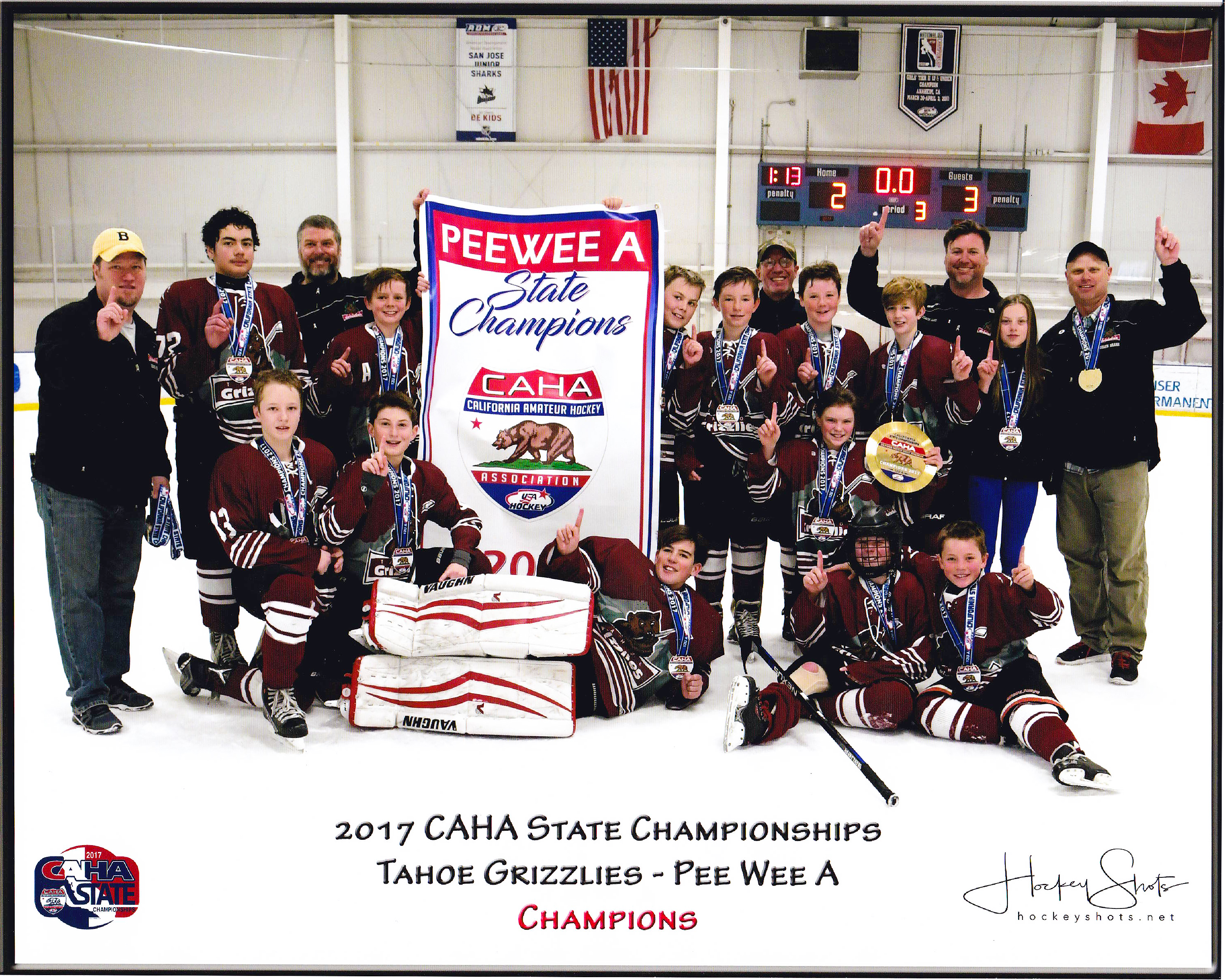
Lake Tahoe Grizzlies – Pee Wee A Team: (l-r, first row kneeling and sitting) – Drew Gunderson, Will Posey, Tadi Wright, Charlotte Sonntag, Blaise Broadhurst, and Brennan Monroe; (op row, l-r) Head Coach Mike Gunderson, David Salcido, Assistant Coach Jeff Posey, Carson Oleson, Hayden Cannon, Health Fellows, Assistant Coach Dave Monroe, Jacob Pratt, Patrick Webster, Assistant Coach Jake Pratt, Lauren Romsos, and Assistant Coach Shane Romsos.

The Lake Tahoe Grizzlies Pee Wee A and Bantam B hockey teams won their respective divisions at the state tournament last weekend at Sharks Ice in San Jose.

The wins represent the first time in California state championship history where two teams from one hockey club took home the gold in the same year.

Mike Gunderson, head coach of the Grizzlies Pee Wee A Team, said, “These kids worked their tails off all year long and it really paid off for them. It’s easy to lose focus over such a long season, especially with the ski season we just had, but they never lost sight of their goals. You’d be hard pressed to find a more diverse group of personalities anywhere but they bonded and pulled it together when it mattered most. I am super proud of each one of them and their families should be too.”

Assistant Coach, Shane Romsos, remarked, “These young men and women deserved this after leading the regular season standings in the Northern California. I can’t wait to raise the banner at our home rink!”

Lake Tahoe Grizzlies – Bantam B Team (l-r, front row) Goalies Tammer Bohatch and Devon Cole; (second row) Andrey Shemyakin, Adin Burns, Quinn Proctor; (third row) Head Coach Ken Wood, Diego Honda, Pablo Honda, Noah Sorrenson, Petey Sullivan, Nate Cimino, Mason Croskery, Wallace Sonntag, Ty Gunderson, Assistant Coach Gary Gramprie.

The Pee Wees regular season standings were 10 wins, two losses and three ties.

The Bantam Team had a dominating regular season as well going 11-2-1.

Their performance at the state tournament was similarly amazing, going undefeated for the tournament. Bantam Head Coach Ken Wood said the team played as a team, everyone contributed, and that makes a huge difference in this sport, especially considering that nearly half of the players commuted from Mammoth and Bishop to participate this season. 

Assistant Coach Gary Gramprie noted the team’s statistics as a reason for success: “Our team’s power play broke other team’s backs, scoring about 80 percent of the time during the regular season, and 100 percent in the state championships.”

He also recognized that the team only had 11 players this season – “all contributed in different ways.”

South Lake Tahoe Ice Arena operator, Van Oleson said, “The success of both teams will further help to put Lake Tahoe on the hockey map.”

Pee Wee A is a division of youth hockey that includes youngsters aged 11 and 12. Bantams are ages 13 and 14.

— Provided to Lake Tahoe News


Trump approves funds for California relief

By Christopher Cadelago, Sacramento Bee
 
President Trump announced Sunday more than a half-billion dollars would be coming to California to help cover the damage from the winter storms, including $274 million for repairs to the Oroville Dam spillway.

The fulfillment of the fourth presidential declaration for damage from the winter storms totals an estimated $540 million.

Trump’s fourth declaration makes available money for hazard mitigation measures statewide. It covers 42 counties, including Sacramento, Yolo, Amador, Yuba, El Dorado, Merced and San Luis Obispo. The White House said additional designations can be made later if requested by the state and warranted by further damage assessments.

Read the whole story


Donors enable SLT Library to expand offerings

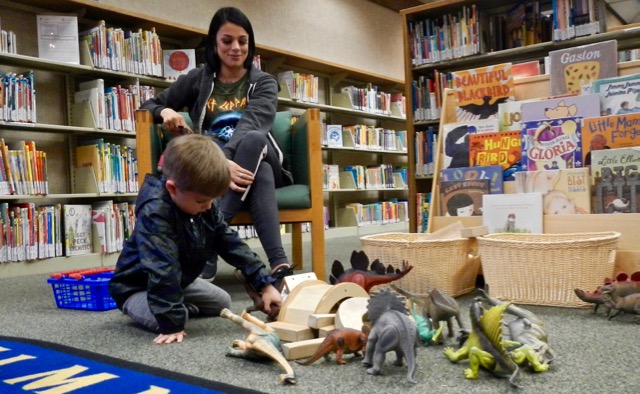
Shelby Hadjes watches her son, Connor, play at the South Lake Tahoe Library. Photo/Kathryn Reed

By Kathryn Reed

South Lake Tahoe’s public library is about to be transformed.

Two generous donors are allowing the facility to rethink what it offers patrons in terms of materials and programs, hours of operations, and what it looks like.

An anonymous donor wrote a check for $30,000 with the sole purpose of revamping the children’s section.

“We are still examining what is available to us and what possible changes we can make,” librarian Katharine Miller told Lake Tahoe News. Improving and refurbishing the area in some manner to make it more fresh and flexible are goals.

For 3½-year-old Connor Hadjes he likes things the way they are – plenty of dinosaurs to play with and read about. His mom, Shelby, tries to bring him to the library as much as possible.

“They have good dinosaur books. That’s what he is obsessed with,” Hadjes said. She, too, likes what is offered today, but is intrigued by how the space might evolve.

While this donation came as a surprise to the library, a large endowment has been promised since the late 1990s. The $150,000 a year that will start arriving this year is from the Jean P. and Stephen D. Myers Trust. The local couple set this up years ago, with payment to start after both died. Steve Myers passed away last summer, and Jean Myers in 2008.

Beyond the legacy they will leave at the library, Steve Myers is known for starting the Tahoe Drive-In in 1947, and together the couple bought the Echo Summit Ski Area in 1957. Then they opened a series of retail stores. She was also a renowned stained glass artist.

“Their primary goal was to increase access to the library for the community. That may result in an extension of hours and services we offer,” Miller said. “We just have to look at the costs of possible changes and make sure they are sustainable in the long term.”

A group is working to come up with ideas on how best to spend this ongoing gift. A decision is likely to be made later this spring, with implementation possible in the summer.

Miller had met Steve Myers before his passing. They spoke a few times about his interest in the library remaining a viable part of the community. Now she is working with a trustee of the estate to ensure Myers’ vision comes to fruition.


Is Nevada’s death penalty a ‘broken system?’

By Marcella Corona, Reno Gazette-Journal
 
In the last 40 years, 160 Nevadans have been sentenced to death.

Only 12 were ever executed.

That’s a key argument proponents of a bill to effectively abolish the death penalty are using now that Assembly Bill 237 is making its initial steps through the Nevada Legislature. In short, the death penalty costs too much and isn’t delivering results.

The future of the state’s death penalty is being debated in the Nevada Legislature, and the bill got its first hearing on Wednesday. Supporters argued that a death penalty case costs half-a-million more than a non-death penalty case, and it’s rarely used because the state lacks the lethal drugs it needs.

Read the whole story


The West is moving away from coal

By Daniel Rothberg, Las Vegas Sun

Southern Nevada’s last coal plant closed March 16. That same day, a New Mexico power company said a plant on Navajo land might be next to shutter. And in a somewhat unexpected decision the month before, regional utilities announced the early shutdown of the West’s largest coal plant, also on the Navajo Nation. President Trump might have pledged to invigorate the industry, but most economists agree on one trend: Western coal is unraveling.

The outlook was different in 2010, when the Sierra Club launched its Beyond Coal campaign. It deployed lawyers, mobilized supporters and lobbied state legislatures to shut down coal-fired power plants across the U.S. in an effort to curb carbon emissions. Then something changed. The argument against coal expanded from one about the environmental costs to one that cited economics.

“The economics of power generation don’t support replacing coal-fired generation,” said Robert Godby, who directs the Center for Energy Economics and Public Policy at the University of Wyoming.

That’s a primary reason why utilities across the West are retiring old coal plants instead of building new facilities or investing in modern infrastructure.

Read the whole story


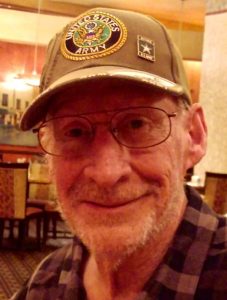
From the trenches to retirement for SLT doc

By Linda Fine Conaboy

You might not expect a vascular surgeon to be dressed in a plaid, flannel shirt, with shirt sleeves rolled to the elbow and a bill cap hugging his head at a jaunty angle. But Irwin Berman isn’t your regular surgeon.

And you probably wouldn’t expect the good doctor to call MontBleu casino home either. But Berman, like we said, isn’t just a regular guy and MontBleu is a temporary residence, at least he’s hoping so.

At 87, Berman is now retired. And in late December he was firmly ensconced in his South Lake Tahoe home in Trout Creek Meadows, waiting for his kids to arrive from Southern California to spend Christmas with him.

Unfortunately, just before the holiday (and his children) arrived, the sewer system arrived too, backing up into Berman’s home and eventually forcing him out of the house and into the Stateline hotel-casino.

Irwin Berman of South Lake Tahoe has watched the field of medicine evolve. Photo/Provided

For one armed with a seemingly unassuming ans soft-spoken disposition, Berman’s life so far has been one of bumping into and making the most of golden opportunity.

He and his twin brother, Stanley, a thoracic surgeon, were born in 1929 to immigrant parents in the small west Texas town of Colorado City—that’s Colorado with a long A, about 70 miles from Abilene.

His father, from Lithuania, and his mother, from London, met and married in the early 1900s.

“The reason I’m from Texas,” he related somewhat incredulously and still with a discernible Texas drawl, “is that my dad’s ship from Lithuania landed in Texas. I found the ship’s log where the captain had written that dad’s family was on board, all the way from Lithuania, with less than one dollar to their names.” His mom, he said, landed at Ellis Island.

Although his parents didn’t have a particularly long life, the Berman boys have; there is an older brother, Harold, who at age 90 is still a practicing attorney in Dallas.

According to Berman, while at the University of Texas where both twins studied medicine, they were drafted into the Korean War; however, with the dean running interference, the duo was deferred from active military service until after graduation.

Irwin entered the Navy as a lieutenant (junior grade) and was stationed at the Naval Medical Center in Bethesda, Md.; at the same time, Stanley, also a lieutenant, joined the Army and was stationed at Walther Reed Army Medical Center. Because of the close proximity of the two health centers, they saw each other often.

After their tours in Maryland, Irwin became a flight surgeon and moved on to the Alameda Naval Air Station, while Stanley was assigned to a MASH-like unit, which was not nearly as hilarious as the unit portrayed on the TV show. “Not at all,” Berman laughed.

During his two-year stint in Alameda, Berman said if the injuries troops sustained during the Korean conflict were serious, they were flown to the States, but if not, transportation by ship was the order of the day (the General Mann, a troop transport that served in WWII, the Korean War and the Vietnam War). It was on this ship that Berman spent his time tending to the injured on the return trip from Korea.

While on active duty, both brothers, unbeknownst to each other, applied and were accepted to the residency program at the Mayo Clinic in Rochester, Minn., a grueling program that included 36 hours on duty and 12 hours off.

“We got $150 a month, but the GI Bill supported us for four years at Mayo. My brother and I went to Houston to work with Dr. Michael DeBakey and Dr. (Denton) Cooley, both pioneers in heart and vascular surgery,” he said.

Cooley is well-known for the first heart transplant and DeBakey for inventing the roller pump, a central component of the heart-lung machine.

Although he was a genius and becoming well-known for his amazing skills, DeBakey was not a man who inspired a companionable feeling within his students. “He was terrible to work with,” Berman said. “He was an excellent surgeon, but just not a people person. He stood behind us and would literally kick us, while calling us names.”

Additionally, Berman and his brother trained in surgery with Charles Mayo, the son of the founder of the Mayo Clinic.

With families to think about now, the Berman brothers concluded it was time to settle somewhere they loved and open their joint practice. In tandem, they selected California as their landing place—Santa Cruz.

In the seaside town the twins happily practiced surgery for 10 years; Irwin working in his specialty and Stanley in his. But when the Cuban missile crisis became a looming and frightening threat in 1961-62, Irwin, who was still in the naval reserves, decided it was time to make his exit from military life.

Sending a resignation letter to his superiors prompted a return missive from President Lyndon Johnson congratulating him on his promotion to commander in the Navy. It seemed that Irwin was not to become a civilian after all.

While he was still in the naval reserves, and still practicing in Santa Cruz, surprisingly, the Army came calling, seeking him out and asking if he would become an Army surgeon stationed in Europe for three years.

“I thought this was the biggest joke,” he said. However, the Army was serious in its bid to pre-empt this Navy family, and the Bermans, now including two children, packed up and moved to Nuremberg, Germany, where he remained as chief of surgery in a military hospital for three years.

“My wife and kids liked it in Germany,” he said. “Dad was home more.”

From Germany he went to Fort Huachuca in Arizona, where Berman decided to move from the Army reserve to the regular Army, leading to his promotion to a full colonel.

Taking it all in stride and continuing to practice medicine, the colonel and his wife took another post in Seoul, Korea, where he was named chief of surgery in 1989. By this time, the peripatetic doctor was beyond the Army’s mandatory retirement age of 60. Not a problem, he said, the Army simply extended him beyond retirement age.

Three years later, at age 63, Berman finally returned stateside, retiring from the Army at Fort Hood, Texas.

Fast forward to his life as a full-time resident of South Lake Tahoe, which began while the family still resided in Santa Cruz with the building of a summer home at Tahoe. During those busy years, with his wife and kids ensconced in their Tahoe home, Berman established his regular summer-time commute between the lake home and his seaside residence.

Unfortunately, divorce upended Berman’s retirement plans to spend the winter in Arizona and warmer months at Tahoe where he planned to assist other practicing Lake Tahoe surgeons.

“Come to find out, at South Lake Tahoe, where I had become a full-time resident, I had to carry full malpractice insurance, which in 1994-95 was $100,000 and which [the local hospital] refused to cover. So I went to a Harveys casino job fair, where I was hired and for eight months to work the 2-10am shift when the high rollers were there.”

It may seem surprising that a renowned surgeon, a retired Naval commander and a retired Army colonel would wind up at Harveys, but listening to him talk, Berman has no regrets about his job as a keeper of statistics at a local casino.

Although he said now he’s doing exactly what he wants to do, he intimated that he would have liked to keep the casino job, but not on a full-time basis, which would have been a requirement.

Nevertheless, now, after a couple of surgeries that require him to walk with a cane, Berman is a happy man with time to feed his growing interest in geology, fostered by his life in the desert at Fort Huachuca.

“I’ve taken all the courses in geology that Lake Tahoe Community College offers,” he said, with perhaps a longing for warmer climes. “The least thing I like about Lake Tahoe is the winter and the cold and snow. But the best things are the beautiful scenery, the clean air and the small town atmosphere. I’ll leave this place when I die.”

And what does he think about the state of medicine today?

“In Santa Cruz there was no Medicare. I thought when the government got into medicine, it would ruin it. I think this has proved true. I don’t blame the young doctors for putting in their hours and not being on call like I was,” Berman said. “Now there are so many government regulations”

However, he quickly added, “Technically, healthcare has advanced far more than I anticipated, but I think that perhaps doctors don’t care about medicine as much as we did.”