
California’s public pensions breaking the bank

By Judy Lin, Los Angeles Times

More than 20 times in the last 15 years, political leaders looking to control California’s fast-growing public pension costs have tried to put reform initiatives before the voters.

None of the proposals has made it onto the ballot.

Often, advocates could not raise enough money for signature gathering, advertising and other costs of an initiative campaign. Some of the most promising efforts, however, ran into a different kind of obstacle: an official summary, written by the state attorney general, that described the initiative in terms likely to alienate voters. Facing bleak prospects at the polls, the sponsors abandoned the campaigns.

Taxpayer advocates contend that the attorneys general — Democrats elected with robust support from organized labor — put a finger on the scale, distilling the initiatives in language that echoed labor’s rhetoric. Labor leaders say the summaries were neutral and accurate, and that the problem lay with the initiatives — which, they contend, would have diluted benefits already promised to public employees.

Read the whole story


Truckee woman making her mark with family wine

Lori Barra of Truckee is bringing her family’s Mendocino County wine — Mia Bea — to the greater Lake Tahoe area. Photo/Kathryn Reed

By Susan Wood

Family traditions mean the world to Lori Barra, a Truckee woman who’s pouring her heart into her family’s wine business.

When she’s not helping travelers fly the friendly skies at the United Airlines ticket counter at the Reno-Tahoe International Airport, Barra, 61, is marketing her family’s Mia Bea varietals.

Created from a small vineyard on 60 acres, Mia Bea gets its name as a tribute from Barra’s father, Pete, to her mother, Beatriz, who died in 2012. Pete Barra is the 89-year-old son of an Italian farmer-grape grower who turned his love for his wife and decadeslong work growing premium wine grapes at the headwaters of the Russian River in Mendocino County into a lasting legacy for his children and their children.

Mia Bea Chardonnay is crisp and a bit fruity. Photo/Kathryn Reed

Mia Bea’s Petit Syrah is winning awards. Photo/Kathryn Reed

An image of a red rose dominates the Mia Bea label, signifying the romantic flower Pete often gave to Beatriz.

“He always had a thing for roses,” Barra said of her sentimental father. Now when she visits the farm in Calpella near Ukiah, her father puts a rose in her room as an extended gesture of her Dutch mother’s presence.

The tender loving care of the actual winemaking is paying off with accolades. The 2014 Chardonnay has raked in six awards in six competitions, including a silver medal at the Grand Harvest Challenge Wine Competition in Sonoma County in 2016. Last year, it won bronze under the unoaked category at the 2017 San Francisco Chronicle Wine Competition.

A recommendation of Barra’s winemaker, the unoaked nature of the Chardonnay rolls off the tongue with more of an earthy, slightly fruity richness not found in traditional, buttery, oak-barreled Chardonnays.

“I’m over it,” Barra said of the trendy buttery Chards.

She likes her Chardonnay with spicy food, especially Asian dishes. (This reporter discovered it pairs wells with Mahi Mahi tacos.)

Pete and Beatriz Barra’s love continues to shine through Mia Bea wines. Photo/Provided

Barra said friends who don’t usually like Chardonnay have been transformed by trying Mia Bea. For Barra, that’s the satisfaction of her work. She enjoys the pleasure of introducing the wine to people she knows and meets.

Nonetheless, she also realizes the wine business needs to grow and extend its reach from the small operation run by her father, the winemaker and her two sisters. Mia Bea has averaged between 200 and 250 cases in each of its two years in existence, with plans to somewhat expand without losing its small vineyard appeal.

While the family has been in the grape growing business for decades, the actual wine making side is a new endeavor. No tasting room exists – yet, but Mia Bea wines are available through a couple of wine clubs.
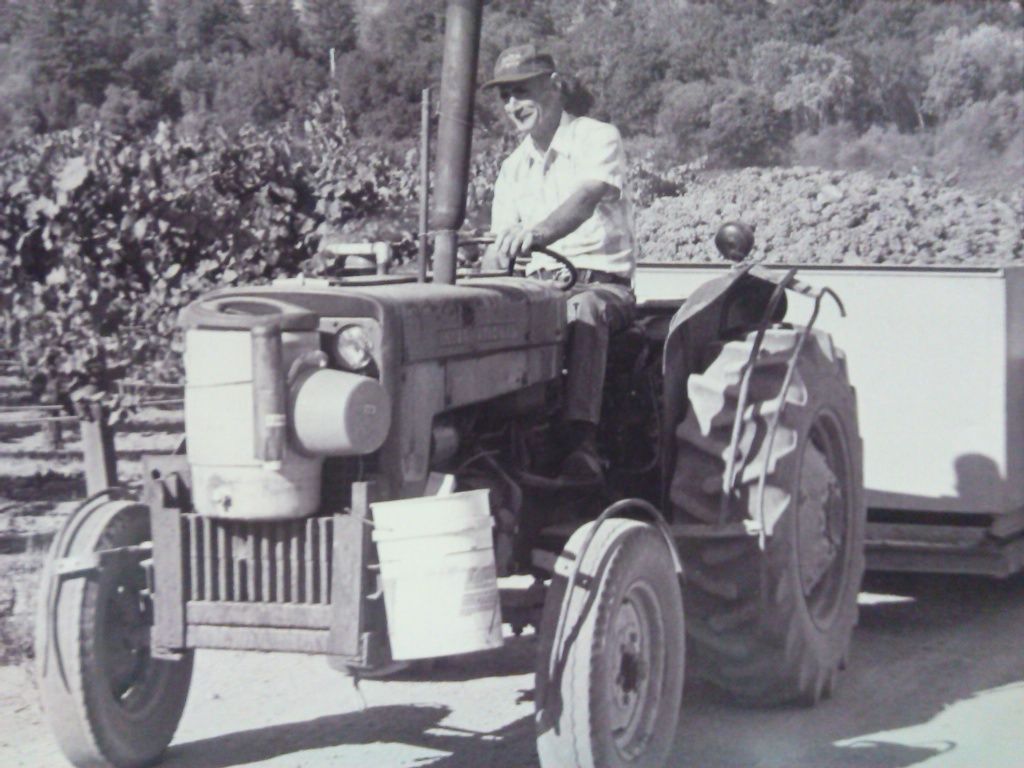
Pete Barra is happiest when he is working in the vineyard. Photo/Provided

Beyond its white wine, Mia Bea’s Petit Syrah is also gaining its own acclaim, winning the same awards in the same competitions under the estate grown certified organic fruit designation. Barra admitted that her father – who doesn’t use chemicals – was eco-friendly in his vineyards before it was cliché.

Forging ahead, the family and its winemaker are experimenting with a Pinot Noir, which often thrives in the moist coastal ranges.

The family patriarch has shown little sign of wanting to slow down, content that his children are chipping into a business that essentially got its roots in Italy over multiple generations.

“My sisters and I are committed to keeping the business going,” Barra said, realizing that her father is aging.

The U.S. Barra clan went back to Europe to research and trace the extended family history. The elder Barra found his relatives and shortly thereafter returned for a large family reunion in Italy. It was pure joy for him to receive that type of validation to 60 years of his life’s work in the United States.

“He would rather be in the vineyard than anywhere else,” Barra said.

The life of the grapes and the process involved is something Barra grew up with and never tires from.

“I like seeing how wine complements food and how we always had big family gatherings to celebrate that. As an adult, I enjoy seeing other people enjoying the wine,” she said of the most amazing thing about running a wine business. 
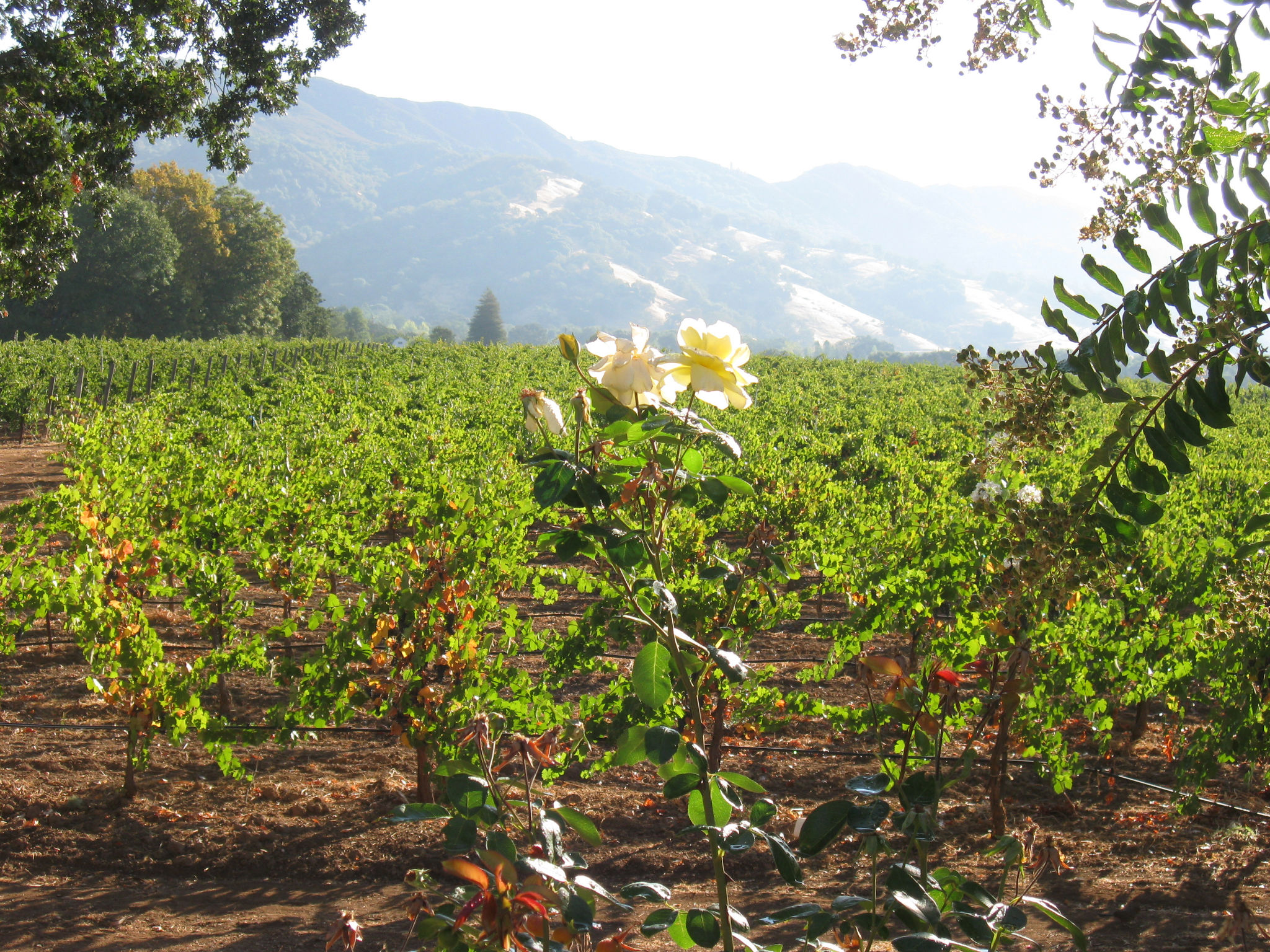
The morning light shines on the Barras’ vineyards. Photo/Provided

How Barra ended up in Truckee is a familiar tale. After leaving the farm and attending college, she came to Tahoe “to ski for a winter and fell in love with the area,” she explained. That was 30 years ago.

The settling down in a mountain town represented quite a departure from Mendocino County, where she grew up knowing the Fetzer family “just down the road,” she said.

In charge of sales, Barra would like to do expand its market in the Lake Tahoe area. 

“We’re feeling confident about the wine. But the challenge we face right now is since it’s not familiar, how can we get people to pick it off the menu?” Barra said since the wine received award titles.

Currently, the Barra family has nine accounts carrying Mia Bea wine – three markets and two restaurants. In the Tahoe basin, Spindleshanks at the Brockway Golf Course in Kings Beach where her son lives and the River Ranch in Tahoe City have the Chardonnay. With the marketing help of her daughter in San Diego, she hopes to find new locations. Both restaurants have expressed interest in selling the Syrah.

So far, Spindleshanks manager Steve Marks who buys the wine for the restaurant likes what he sees from the Chardonnay.

“It’s a crowd pleaser – fruity and easy drinking. It stands on its own,” Marks said. He added the appeal is with a certain patron that likes an unoaked variety.



1862: California’s most devastating winter

Sacramento under water, circa 1862. | Photo/California Historical Society

By Mark McLaughlin, Tahoe Weekly

There’s been a lot of talk about weather records being broken this winter, but it was only January’s epic snowfall totals that have made it into the record books so far. In January 2017, the Central Sierra Snow Lab near Donner Pass and many Tahoe Sierra resorts set new monthly snowfall tallies ranging from 20 to 25 feet.

But the current seasonal snowfall total of about 42 feet at the CSSL means we still have a long way to go to reach Top 10 status at Donner Pass, let alone exceed the 68 feet that fell in 1938. We are, however, closing in on the wettest year in the precipitation category, currently holding at third place behind 1982 and 1995, the first- and second-ranked water years since 1871. Remember, precipitation is rain and the water content of snow combined.

There have been plenty of weather-related issues across the West this winter, but even if this year manages to exceed the all-time precipitation record of 112 inches measured in 1982, it won’t compare to 1861-62, the most devastating winter in California history. The predominant weather characteristic in 1862 was also an onslaught of powerful atmospheric rivers, but significantly more intense. The mega-flood that they caused took thousands of lives and destroyed 25 percent of the state’s economy. The devastation forced California into bankruptcy.

Read the whole story


Brown: California drought officially over

By Bettina Boxall, Los Angeles Times
 
Startlingly green hills, surging rivers and the snow-wrapped Sierra Nevada had already signaled what Gov. Jerry Brown made official on Friday: The long California drought is over.

“This drought emergency is over, but the next drought could be around the corner,” Brown said in a statement. “Conservation must remain a way of life.”

The five-year drought won’t just be remembered for its stubborn severity. It produced a historic groundwater use law and the first-ever statewide restrictions on urban water consumption

Read the whole story


Allergy season could be a doozy in Tahoe

Each year pollen collects everywhere in Tahoe, including on the lake. Photo/LTN file

By Kathryn Reed

It’s coming, and may arrive with a vengeance. We’re talking about allergy season.

“The wet weather will bring a lot more vigorous plant growth, which means more pollen and more allergies,” Ronald Roth, otolaryngologist at Barton Ear, Nose & Throat, told Lake Tahoe News. 

The one good thing about all the snow is that it could delay the onset of allergies. And if it snows early in the fall, it could be a really short season.

As soon as the snow melts those in the Tahoe-Truckee areas can expect allergies to kick in. They already are in lower locales like Carson City, Reno and the foothills. While those places have some similar triggers that are found in the basin, they also have olive trees, eucalyptus, and grasses.

“A general rule of thumb for the start of allergy season is when it stops snowing in May or June or when flowers start to bloom. I like to say when you start to see your lawn, allergy season is starting to ramp up,” Roth said.

What strikes first, according to Roth, are allergens that come from “dust on the roads and other areas drying out. After that, in maybe June or July, pine pollen, sage, and other plants will strike.”

Allergy Facts
• There is no cure for allergies. You can manage allergies with prevention and treatment.
• Researchers think nasal allergies affect about 50 million people in the United States.
• Allergies affect as many as 30 percent of adults and 40 percent of children.
• Allergic disease, including asthma, is the fifth leading chronic disease in the U.S. in people of all ages. It is the third most common chronic disease in children under 18.
• In 2012, 11.1 million people were diagnosed with allergic rhinitis.
• In 2010, Americans with nasal swelling spent about $17.5 billion on health costs. They have also lost more than 6 million work and school days, and made 16 million visits to their doctor.
• Many people with allergies often have more than one type of allergy. The most common indoor/outdoor allergy triggers are: tree, grass and weed pollen, mold spores, dust mites, cockroaches, and cat, dog and rodent dander.
Source: Asthma and Allergy Foundation of America

It’s not that the allergens will change because of the snow that fell this winter, it’s that it makes for a more intense experience for those who suffer because there is likely to be more of everything that blooms.

The Asthma and Allergy Foundation of America says, “An allergy is when your immune system reacts to a foreign substance, called an allergen. It could be something you eat, inhale into your lungs, inject into your body or touch. This reaction could cause coughing, sneezing, itchy eyes, a runny nose and a scratchy throat. In severe cases, it can cause rashes, hives, low blood pressure, breathing trouble, asthma attacks and even death.”

Roth has a few tips for trying to prevent allergies:

·       Use a hepa filter in the house.

·       Wash hair at night after a day of exposure to pollen in the air.

·       Replace the air filter of a heating and air system.

·       For spring cleaning, wear a dust mask.

·       Wearing a dust mask outside can help as well, though it may not be practical.

Roth recommends starting with over-the-counter remedies such as Zyrtec (cetirizine) and Claritin (lortadine), while Nasacort (triamcinolone) and flonaze (fluticasone) are nasal sprays. These come in children and adult dosages.

When those don’t work, it’s like time to see an allergist or an ear, nose, and throat doc.


Banking problem for legal pot in Nevada

By Colton Lochhead and Nicole Raz, Las Vegas Review-Journal

Following in the footsteps of Colorado, Washington and other states which have legalized recreational marijuana, Nevada is bracing for an influx of cash — cash that will have no bank to call home.

Because federal law prohibits banks and credit unions from depositing marijuana money, the state’s legal marijuana industry has a banking problem.

Marijuana companies can’t get loans or have a company bank account. No banking means businesses can’t take debit or credit cards, forcing customers to pay in cash. And when it comes time to pay taxes and licensing fees, some businesses do so with bags of dollar bills in tow.

Read the whole story


Fight over California rent control is coming

By Angela Hart, Sacramento Bee

A Santa Monica lawmaker is preparing to battle California’s powerful real estate industry, going after a state law that for two decades has blocked cities from adopting stronger rent control measures.

A report released this year by California housing officials indicated the state’s housing crisis is unprecedented. So Democratic Assemblyman Richard Bloom decided to target a state law passed in 1995 that curtails the type of housing covered under local rental control laws and prevents cities from strengthening tenant protections for renters.

In California, when a tenant leaves a rent-controlled unit, landlords are allowed to raise the rent to market rate, raising the rent-control floor. The number of housing units covered by any local rent-control ordinance is severely restricted. Single-family homes, duplexes and condominiums are also exempt. Under current law, rent control doesn’t apply to housing built after 1995. Cities that adopted rent control prior to 1995 cannot strengthen existing ordinances.

Read the whole story


California’s drought is over. Now what?

By Taylor Kate Brown, BBC News

At the height of California’s multi-year drought, Rafael Surmay’s well – the only source of water to his house – went dry. For two and a half years, Surmay, his wife, and his four children showered, cleaned, drank and cooked using a water tank and 10 gallons of bottled water per month. They depended on monthly deliveries to refill their water tank

Over the past several months, rainstorms have brought relief to parts of California, which has been suffering from drought since 2012. Some areas have had record rain, and snowpack across the Sierra Nevada is close to 200 percent of normal.

But several years of widespread, deeply dry conditions have extracted a toll on the state that will take more than one wet season to fix. In some cases, the landscape may be forever altered.

Read the whole story


The problem with U.S. marijuana DUI laws: science

By Jenny Kane, Reno Gazette-Journal
 
Gagan Singh rolled a “fat blunt” before he hit the slopes at Lake Tahoe on a sunny Wednesday morning.

By the end of the day, he needed a refill, so he drove to Reno and stopped at one of the local medical marijuana dispensaries. With his Patagonia jacket and bleached-blond man-bun, Singh was eager to head to his hotel and smoke.

The only reason he wouldn’t be smoking while driving to the hotel was because he believes Nevada cops are stricter than the ones in the Bay Area.

“Yeah, I roll my blunts while I’m driving. I smoke while I’m driving,”’ said Singh, 26, who owns a logistics business and a “party bus” in Oakland, Calif. “I don’t get high after two blunts. I just get tired and lazy.”

With the passage of recreational marijuana in November, Nevada is grappling with questions of how to handle the issue of driving while stoned. And while driving high is still illegal, determining what exactly constitutes “high” is not as easy as it sounds.

Read the whole story


SLT finances in the black; raises for workers

By Kathryn Reed

With more money rolling in than originally planned for this fiscal year, the South Lake Tahoe City Council on Tuesday opted to invest in the city and its employees.

The city has $721,000 more in tax revenue than anticipated from when the 2016-17 budget was approved in the fall.

Hotel, sales and property taxes are the three main sources of cash for the city. The hotel tax is up 7 percent from the previous year, though that is down from the 15 percent spike a year ago. The hotel tax is $250,000 above projections, property tax is up $200,000 and sales tax is $125,000 higher.

Councilman Tom Davis said to expect transient occupancy tax collections to be down significantly in February because “we had too much weather.”

Debbie McIntyre, chief financial officer for the city, said the city is being cautious as things move forward. This spring could be more of a true shoulder season compared to the past few years. This is because the South Shore ski resorts will be closing this month, but all that snow has the mountain biking and hiking trails off-limits. This may mean fewer people will be coming to town until summer sports are playable, so to speak.

A significant amount of discussion centered on the overtime pay for the fire department. While OT is budgeted, an additional $220,000 is needed. This is the first time since at least 2011 when Jeff Meston became chief that the department has exceeded its overtime budget. The reason is mostly because a couple people are out on workers comp and some are gone on family medical leave.

The three capital improvement projects receiving mid-year funding include:

·      Bijou Park Creek (aka Knights Inn) — $870,000

·      Pot holes — $300,000

·      SLT Police Department remodel design — $30,000.

Also on April 4, the Placer County Board of Supervisors approved paying South Lake Tahoe $800,000 for some of the tourist accommodation units associated with the Knights Inn.

Councilwoman Brooke Laine questioned whether the 25 percent reserves should be reconsidered, especially when it was not needed during the recession. She likes the idea of being able to tap that fund for one-time expenses.

As the city’s operating budget goes up, it means that pot has to keep increasing. It could possibly become more of a flat amount. Many cities do a three-month reserve, which for South Lake Tahoe would be about $8 million. It would take a four-fifths vote of the council to change the allocation.

The midyear budget adjustment uses $1,411,582 from the undesignated reserves. This in large part is for the Bijou-Knights Inn project.

Included in the revise was a salary increase for employees.

This is the final year of three-year contract the city has with its four bargaining units. A contingency said if the city coffers were flush for two years, the employees could reopen the contract to discuss salaries.

The council agreed to give everyone a 2 percent raise that is retroactive to March 11. The city manager and city attorney are not included in this and will be evaluated separately later this spring.

The money to pay for these increases will not impact the General Fund for this fiscal year or in 2017-18. The city set aside money in the last two years when the memorandums of understanding were adopted three years ago. That pot is at $724,000.

A problem that will be rearing its head is the ongoing pension costs that the city has no control over.

“These pension costs are the problem. Let us negotiate,” City Manager Nancy Kerry said. The Legislature would have to change the law to let jurisdictions change CalPERS.

The city’s unfunded CalPERS liability will be a separate agenda item at a future meeting. This will include the possibility of trying to pay down the debt a bit, possibly with the undesignated reserves.