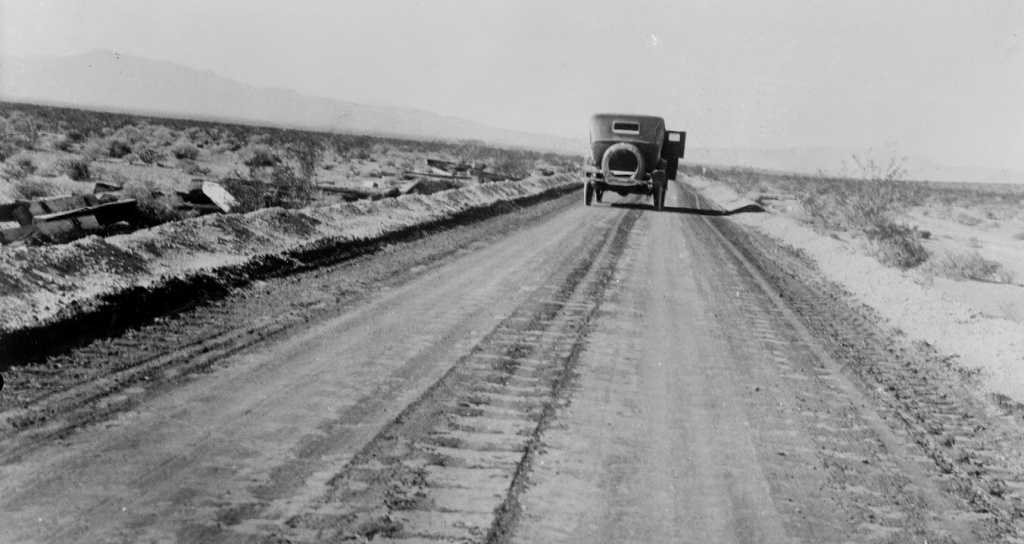
A completed sand and oil surface except for the final dragging, circa 1919. Photo/NDOT
By Susan Wood
The Nevada Department of Transportation turned 100 last month, and amid challenges and opportunities construction engineer Steve Lani has spent about a quarter of that time paving the way for a more improved Silver State.
It’s not a bad day’s work for a 47-year-old civil engineer who essentially matured with the agency while relishing the responsibility of building things. Lani jokes he still plays with Legos, a building-block toy set carried over from his childhood.
“I don’t think I necessarily thought of myself ending up with NDOT, but once I landed here, there was no question I belonged here,” Lani told Lake Tahoe News.
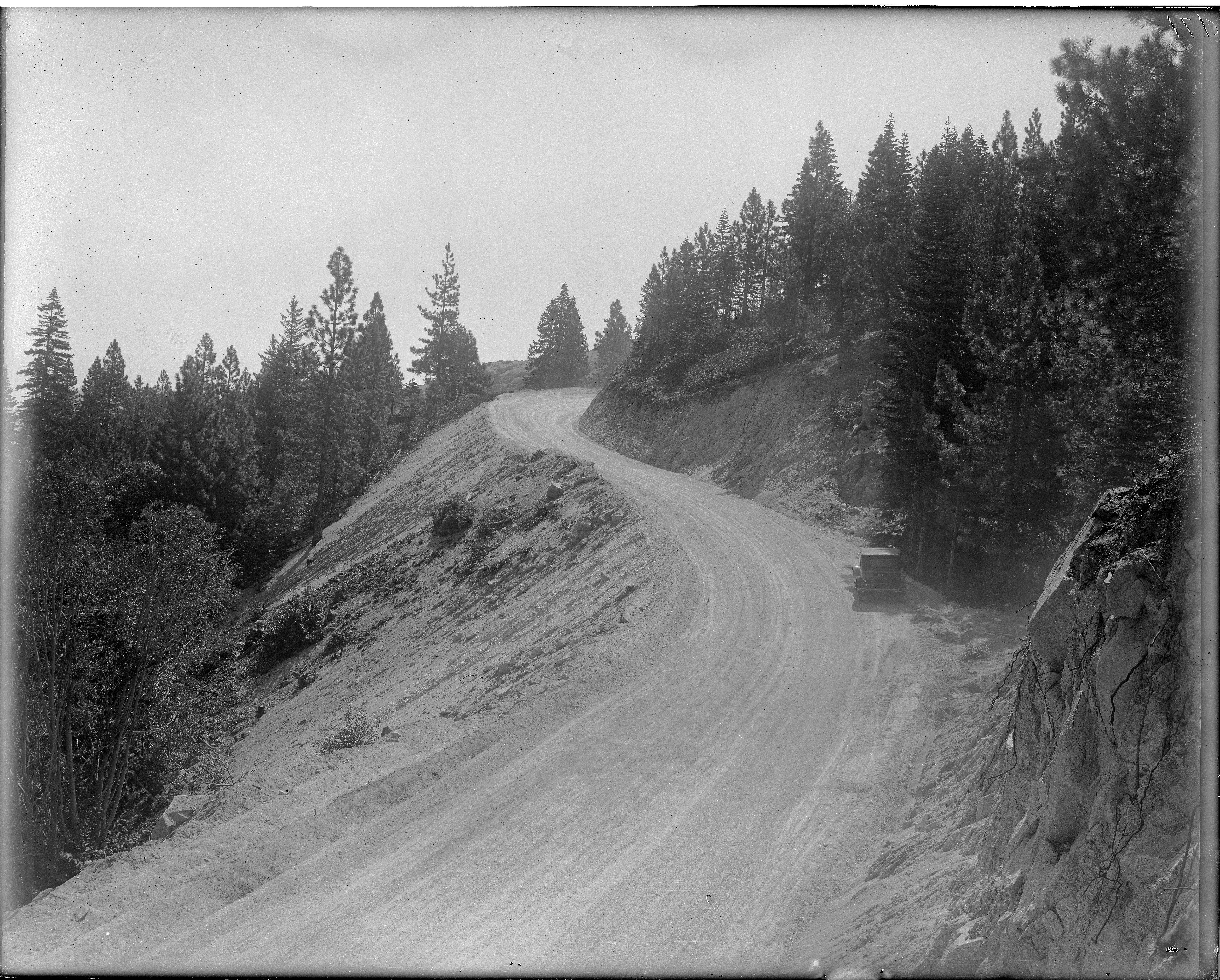
Paving trails through the mountains took special engineering, circa 1920. Photo/NDOT
The builder who since 1998 has been in the construction division is a quasi-chip off the old block. His father was a maintenance highway supervisor for 30 years in Austin where Lani grew up. He moved to Carson City in 1994.
His most memorable moment on the job revolved around his discovery that the concrete structure making the Highway 50 interchange at Tahoe Country Club Drive on the Spooner climb just “didn’t fit” halfway into the job. The crew had to conduct a logistical, mathematical scramble to adjust the dimensions and work backward. If this sounds easy, it’s not. A state highway department must always meet design criteria.
How has the world of transportation changed in an expansive state known as much for its “don’t-fence-me-in” attitude where horses roam as modernized infrastructure improvements?
“When we started we were known as the highway department. Now we’re multi-modal, evolving to being a full-blown transportation department,” Lani said. This means caring as much for water quality, storm water and bike paths as overlaying or snowplowing a highway.
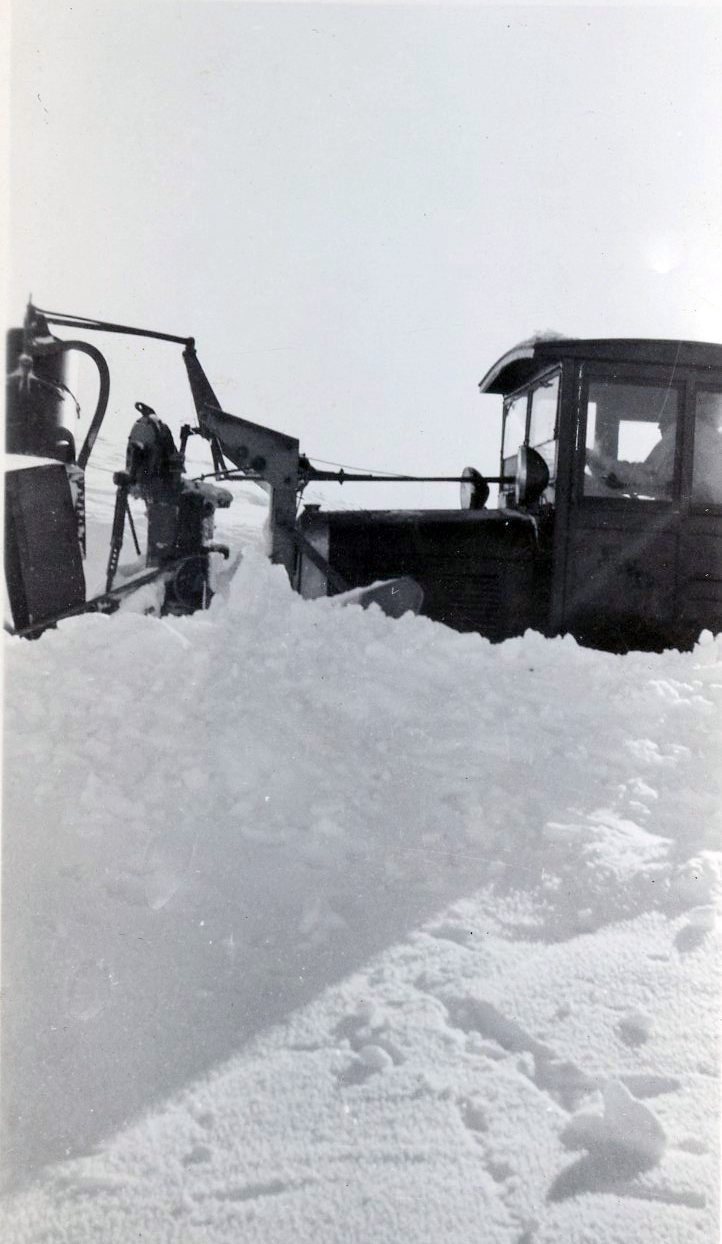
Early snow plow equipment. Photo/NDOT
Evolution of the department
One of Lani’s personal favorites is putting up horse crossing signs so motorists know to be aware of four-legged pedestrians.
He also shared a fondness for the aesthetic improvements that enhance the grey, black and brown world the department is exposed to every day. Even concrete comes in varying colors now – which Lani calls “eye candy.”
Another aspect to the department that has evolved involves the critical need to have partnerships.
“We’ve made it a point to juggle the public and TRPA,” he said of the Tahoe Regional Planning Agency, Lake Tahoe’s bi-state regulatory organization that dictates most of what happens in the basin.
“Lake Tahoe is kind of unique with all the stakeholders, and we’re proud of these relationships,” he said.
For example, it is no longer considered the norm for NDOT to tear up the road or put in an improvement without considering what other agencies and government agencies and even businesses and event planners might have to say about the matter.
Case in point, NDOT makes an effort to not conduct work on the roads during the heavily populated week in which the American Century Championship golf tourney occurs since it’s an already busy summer month for Tahoe.
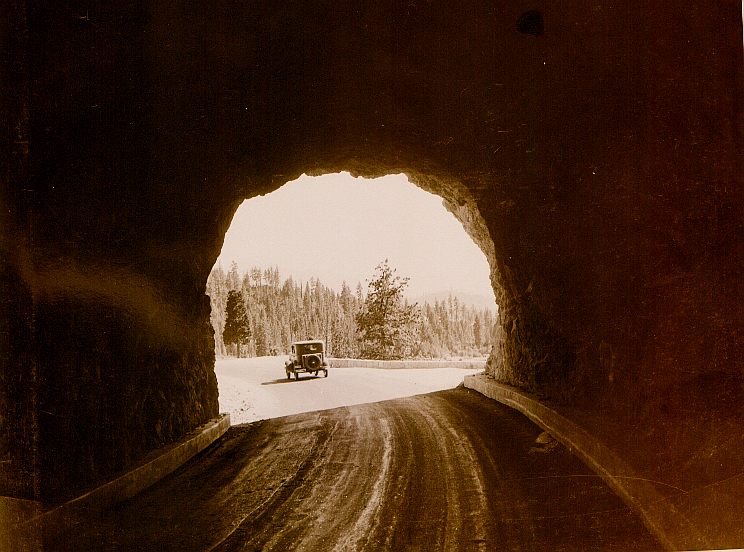
Cave Rock tunnel, circa 1930s. Photo/NDOT
Working as a team
Through the years, Lani has noticed the public being more receptive to times when the agency is forced to close the road or level restrictions on travel.
“You can never make everybody happy,” the engineer said. “But we’re doing more public outreach.”
It’s as though people just want to know ahead of time what to expect. They also realize there’s a tradeoff in having their state look better and run better.
And when the department’s employees are on – they’re on. Take this winter. Many endured inconveniences – including staffers.
Even as adrenaline junkies, Lani pointed out how a hopping snowplowing crew wondered: “Do we ever get a break?”
NDOT counted 18 emergency projects it put into place over this unprecedented, drought-breaking winter.
“With all that Mother Nature has to dish out, our guys do an amazing job,” Lani said. At last count, the department numbered 1,788 employees divided between administration, pre-construction, construction and maintenance. The latter represented the majority of staff.
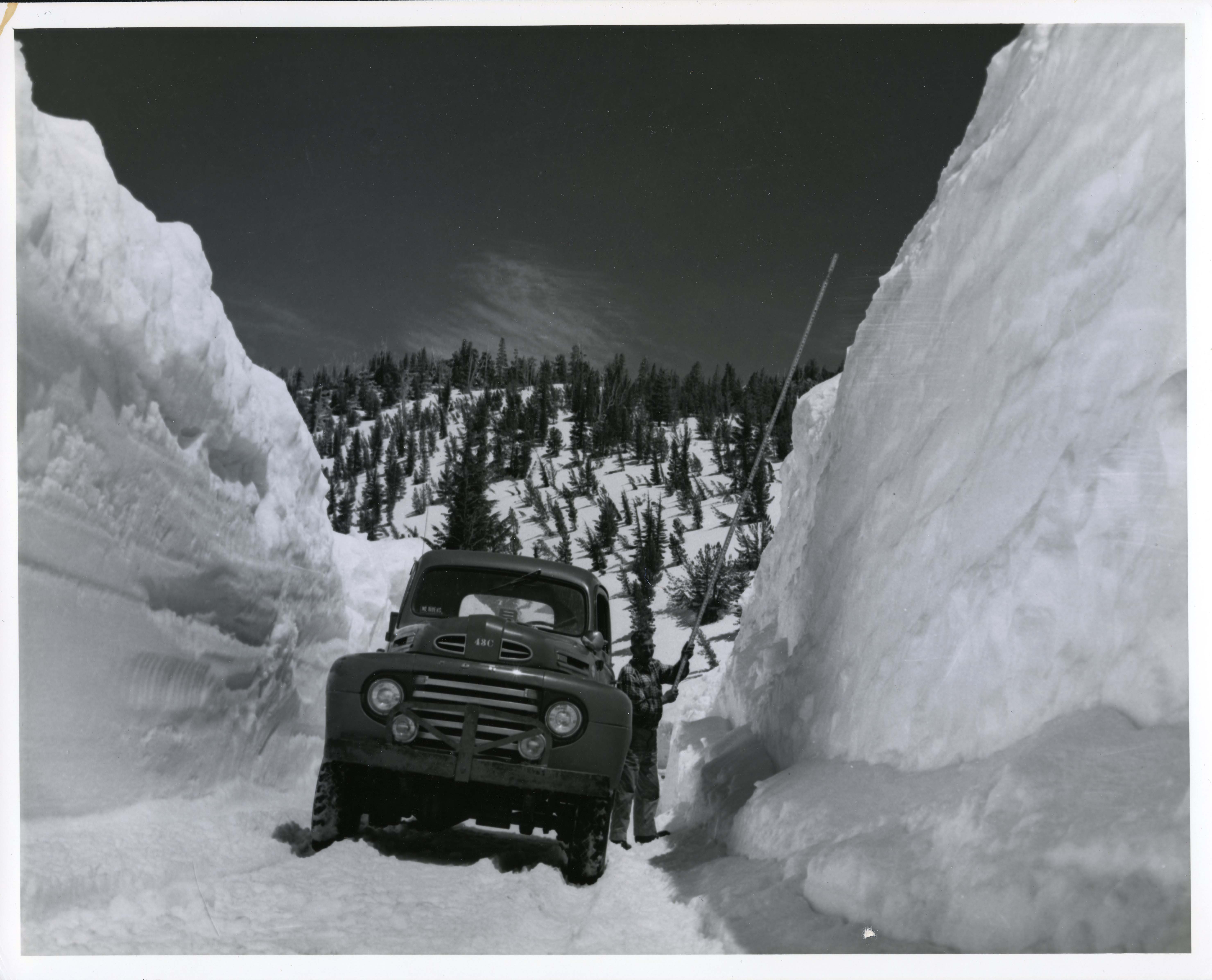
NDOT employee measuring the snow, circa 1940s. Photo/NDOT
And such being the nature of construction, everything costs more than expected, requiring in some cases for allocations divvying up over time.
Revenue is largely generated through fuel tax, while construction spending at NDOT exceeds about $800 million. The widening alone of Highway 50 east between Dayton and Stagecoach needed a cool $22 million.
“It used to be a two-lane road,” he said. That’s progress for you.
Lanes are always on the wish list of motorists, and NDOT knows it.
That’s why Carson City travelers are eagerly anticipating the completion of the project Lani is proudest of – the Carson City I-580 bypass. But don’t call it a bypass in front of Lani. He wants the businesses along Highway 395 in town to know the state supports commerce in town.
Nonetheless, the connection linking the Spooner grade to the freeway at Fairview Drive will reduce a lot of time for motorists traveling from the lake to Reno.
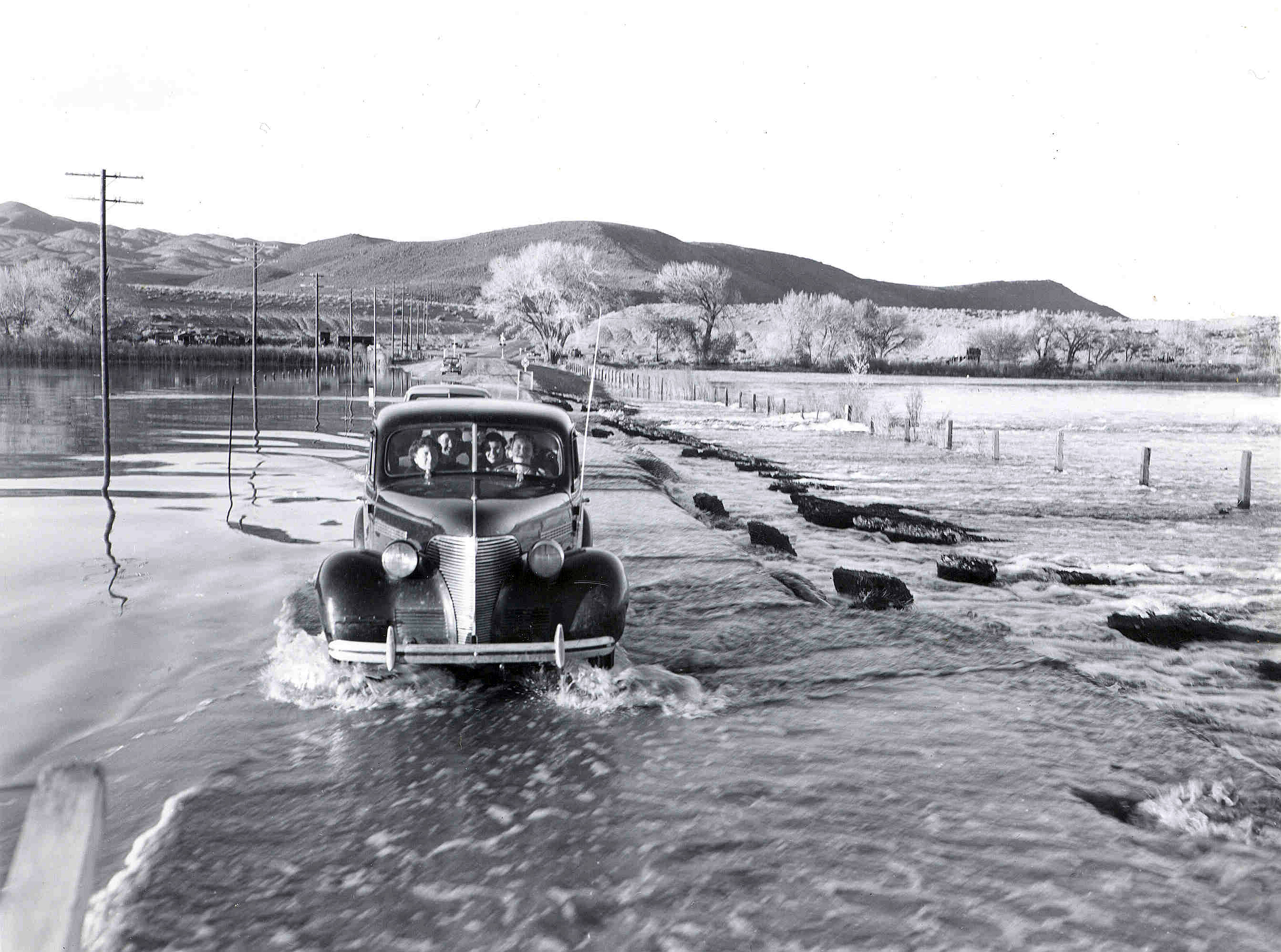
The flood of 1950 in Reno. Photo/NDOT
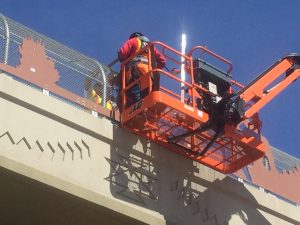
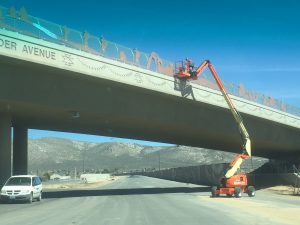
The project is due for completion in six months – not a minute too soon for Lani. He toured the site about a week ago to check on the progress. One layer of asphalt has been laid in most places. Iron accents ranging from covered wagons to a fish run were placed on bridges marking the crossings of Koontz, Snyder, Clearview and Fairview drives. Artist designs blanket concrete barriers. Detention ponds were dug out.
“I can remember when we dug these bridges out,” Lani said in a trip down memory lane.
“I’m pleased to see it. Unfortunately, it took a while to get here,” he said. The project underwent at least seven contracts to accommodate the funding stream.
Lani and public information officer Meg Ragonese expressed awe over the progress at the 2-mile-long jobsite – occasionally pointing out the window and jumping from the truck to get up close and personal with heavy equipment. And for Lani, the tour represented a nostalgic trip.
He recalled another memorable moment occurring on this very jobsite. Work crews witnessed a hang glider landing on the site with no incident.

Building Interstate 80 near Reno in May 1972. Photo/NDOT
Changing times
You may even see boulders the size of trucks plunge onto the road. Such is the case east of Cave Rock on Highway 50 next to Lake Tahoe, which endured a winter for the ages this year.
“We’re always aware of rock fall hazards. We’re working our way around the basin,” Lani said. Crews have come to know the slope just west of Spooner Summit, among other frustrating sites.
What’s the biggest upcoming challenge?
“Given the age of our infrastructure, it’s being able to take the revenue we’ve got and keep the system in place that we have,” he said.
What’s the future of the state transportation department?
Like many aspects of professional and personal life – in a word, technology.
Gone are the days of the pencil and gridded notepad. And even the substances used on the ground require technology to result in a perfect blend of materials to make the ideal, durable overlay.
“Old-timers would probably argue that the old asphalt is better, but we’ve adapted,” Lani said. What was once a simple sand, rock, water mix has transformed into a “chemical soup.”
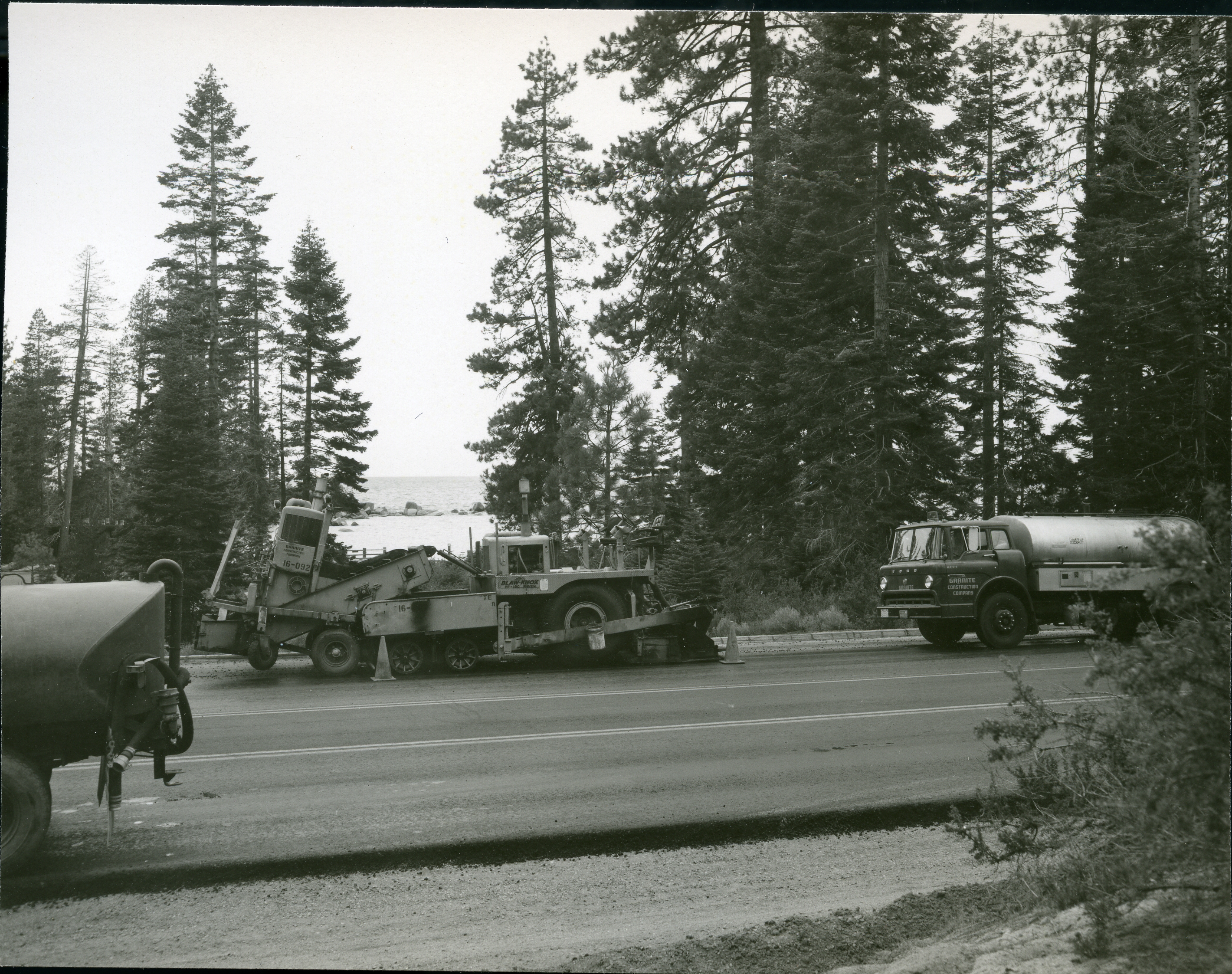
Paving of Highway 28 in August 1985. Photo/NDOT
In the construction office, doing away with manual practices has cut the manpower in half, thus allowing crews to work on other things.
“Our long-term objective is to be paperless and stay ahead of the power curve,” Lani said.
Of course, to know where you’re going is to embrace where you’ve been.
Pride rises to all levels
“As governor of the great state of Nevada, I am proud to congratulate the Department of Transportation on its 100th anniversary. Since its inception, NDOT has provided invaluable service to our citizens and visitors – maintaining more than 5,400 miles of highway and more than 1,000 bridges, providing rides in hour rural areas and supporting regional aviation and railroad services all across the Silver State,” Gov. Brian Sandoval told Lake Tahoe News.
The governor tipped his hat to NDOT staffers’ commitment to making travel in Nevada safe.
Sandoval also took note of the agency’s many historic transportation projects, singling out the section of Interstate 80 at Lovelock as contributing to a highway that eliminated “the last traffic signal on Interstate 80 coast to coast.”
To commemorate its century-old anniversary, NDOT is posting historical photos on its website and social media along with an invitation for residents to share their transportation memories.
“We’ve been helping keep Nevada safe and connected for 100 years,” NDOT communications director Sean Sever said. “Nevada has a rich transportation history, from the dirt paths of a century ago to today’s interstates carrying as many as 300,000 vehicles every day.”
A timeline of major milestones will also be on display to reflect on a highways department formed on March 23, 1917. The nostalgic project comes a few years after the state itself experienced a 150-year birthday.

Interstate 580 in Carson City will be open later in 2017. Photo Copyright 2017 Carolyn E. Wright
——
An overview of NDOT history:
- The Nevada Department of Highways was formed on March 23, 1917, with a mission to surface what were often rutted dirt paths first forged by pioneers. Highway construction of the time was an arduous undertaking through Nevada’s desert expanses, with teams of horses grading the roads.
- In January 1919, the department’s first construction project built a trestle bridge over the Humboldt River in Pershing County at a cost of $10,953. In the same year, a $72,000 project kicked off to build a concrete roadway from Reno to almost six miles south.
-
Photo/Susan Wood
In the mid-1920s, the state’s 45 mph speed limit was removed and replaced with a guideline to limit speeds to that of “sane and safe driving.”
- In 1923, another vital source of transportation funding was forged as the state gasoline tax came into being as an important resource for developing the state’s transportation system.
- In 1929, the last Nevada link of Highway 91 near Apex was oiled, providing a smooth highway from California across Nevada between the California and Arizona state borders. In later years, it would pave the way for Nevada’s busiest interstate, I-15, which now travels alongside the iconic Las Vegas Strip.
-
Photo/Susan Wood
In 1931, a 124-foot-long tunnel was blasted through Lake Tahoe’s Cave Rock to create a roadway, bypassing a previously harrowing drive alongside the lakeside rock face.
- A traffic safety program was launched in 1936. Within two short years, the department’s driving safety literature and programs became so popular that 12 safety committees were formed across the state to spread the word.
- As World War II erupted, many highway employees left to fight the war. The department’s 1940-42 Biennial Report was dedicated “to those very fine young men who have left the department to go into the service of our country, and with the sincere hope that they will all return to resume their duties with the department as soon as the world is safe for decent-living people.”
-
Photo/NDOT
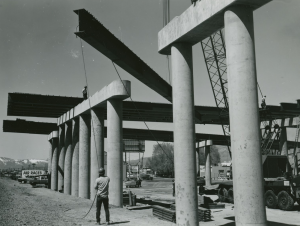
In 1956, President Dwight Eisenhower signed the Federal Highway Act to build 41,000 miles of interstate highway across the nation. Nevada then had a pivotal role in completion of the interstate system when a new section of interstate in Lovelock was completed, eliminating the last traffic signal on Interstate 80 between the Pacific and Atlantic coasts.
- While there had been no speed limit for decades, a speed limit law established lower speed zones on certain sections of highways in 1955.
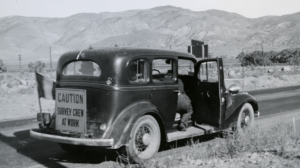
- In the 1960s, a hard hat and safety vest program was implemented; requiring NDOT employees to wear safety vests while working on the roadway.
-
Photo/NDOT
The original Las Vegas Spaghetti Bowl was completed in 1968. The interchange connected Interstate 15 to the new, crosstown Las Vegas Expressway.
- On Sept. 25, 1975, the I-80 Carlin Tunnels west of Elko were opened to traffic. The tunnels provide smoother, safer interstate travel by bypassing a sharply curvy stretch of Highway 40 alongside the Humboldt River.
- As the 1970s ended, the Department of Highways changed its name to the Nevada Department of Transportation, seeking balanced transportation policy and planning and incorporating state social, environmental and economic goals.
- In 1985, NDOT led the transportation industry by installing a Road Weather Information System along Mt. Rose Highway south of Reno. System sensors transmit road condition information and temperatures, allowing NDOT to better control when, where and how much sand and salt is used on winter roads.
-
Photo/Susan Wood
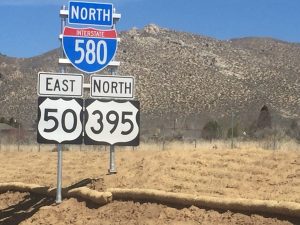
Highway 50 was officially named the Loneliest Road in America by Life magazine in 1986.
- In the 1990s, NDOT embarked on a list of “super highway” construction plans totaling $1.5 billion in response to a statewide population explosion. The super highway strategy included widening Interstate 15 between Las Vegas and the California state line, widening Highway 95 in the northwest Las Vegas Valley, extending Interstate 580 between Reno and Carson City, improving Highway 93 through Boulder City and starting construction on the Las Vegas Beltway.
- In 1991, the Nevada Legislature established a bicycle and pedestrian planning position within NDOT responsible for integrating the needs of bicyclists into NDOT road projects and programs.
- In January 1997, downtown Reno/Sparks streets flooded and bridges across the Truckee River were closed as water surged across roadways. Westbound lanes of Interstate 80 near the Helms Pit in Sparks crumbled. Large rocks and 125,000 cubic yards of material were dumped into the south end of the pit and the roadway was stabilized in six days.
- In 1998, the department implemented the Freeway Service Patrol, a fleet of vans that cruise the freeways to help keep traffic safely flowing.
-
Photo/NDOT
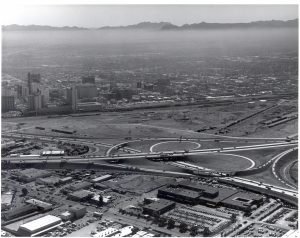
A makeover of the Interstate 515 and 215 Beltway interchange, known as the Henderson Spaghetti Bowl, broke ground in September 2003.
- The first segment of the Carson City Freeway, consisting of a 3.5-mile-long freeway from Highway 50 to Highway 395 north of Carson City, was completed in 2006.
- The department began using technology to better manage congestion by building the Freeway and Arterial System of Transportation in 2005. The $15 million complex in southwest Clark County was launched to manage and monitor traffic in the state’s three largest cities – Las Vegas, Henderson and North Las Vegas – through 600 cameras and a network of pavement, Bluetooth and microwave sensors.
- Statewide traffic fatalities reached an all-time high in 2006 with more than 430 lives lost on Nevada roads. Collaboratively with traffic and safety stakeholders across the state, the department launched the Strategic Highway Safety Plan in 2006. To this day, the plan identifies targeted strategies to save lives on Nevada roads through its Zero Fatalities program.
-
Photo/Susan Wood
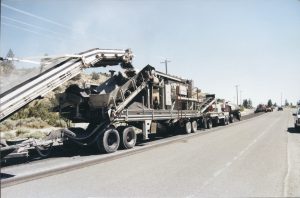
The Hoover Dam bypass bridge opened on Oct. 19, 2010. The four-lane bridge, soaring nearly 90 stories above the Colorado River, eliminated the narrow switchbacks and low travel speeds that had long plagued Highway 93 crossing the dam.
- In 2012, an 8.5-mile extension of Interstate 580 between Reno and Carson City was constructed including a 1,722-foot-long, 295-foot-tall cathedral-arch bridge traversing Galena Creek.
- In 2015, NDOT broke ground on the first phase of the long-awaited Interstate 11 in Boulder City. Interstate 11 will improve motorist safety and convenience while reducing travel time by 30 minutes with a direct link bypassing Boulder City. The project marks the first new infrastructure to the Interstate Highway System since it was deemed complete in 1992. Construction is scheduled for completion in late 2017.
- In 2016, the state embarked upon an even bigger undertaking with “Project Neon” – the largest and most expensive public works project ever undertaken during Nevada’s 152-year history. The nearly $1 billion project will widen 3.7 miles of Interstate 15 between Sahara Avenue and the Spaghetti Bowl interchange in downtown Las Vegas.
- Today, the department builds, maintains and operates 13,000-plus lane miles of state thoroughfares — roads that have been ranked among the nation’s smoothest. More than 1.5 million bus rides are provided every year on federal transit money NDOT administers to rural Nevada transit providers. Meanwhile, by rail and air, NDOT supports regional and rural aviation and railroad services to safely heighten Nevada’s transportation and tourist options.
Source: NDOT