Mobile devices gain popularity over PCs for casino gaming

By Todd Prince, Las Vegas Review-Journal

International Game Technology may have sold its online gaming business Double Down Interactive at just the right time.

Social casino players are shying away from apps like Double Down that offer a wide range of games in favor of single-genre apps, according to a report this week by SuperData Research, a provider of market data for the digital games industry.

The Las Vegas-based slot manufacturer sold Double Down — which gives gamers the opportunity to play slots, video poker, blackjack, roulette, bingo and poker — for $825 million last month to a South Korea-based company. Double Down’s revenue declined in 2016.

Read the whole story


Power struggle between Placer County, NLTRA

By Kathryn Reed

TAHOE CITY – Placer County is making substantive changes to the contract it has with the North Lake Tahoe Resort Association. Something is broken, but county officials aren’t saying exactly what is wrong.

Change – Placer County plans to rescind NLTRA’s power when it comes to capital improvement projects and transportation. NLTRA wants to keep negotiating. The county says the changes will save $300,000 a year; money that can be spent in the Tahoe region. NLTRA disagrees about that dollar figure. The county wants to create a 15-member committee, which the NLTRA and chamber would be part, to make recommendations for how to spend the money going forward. The plan would be for member groups to appoint people, not the county.

Control – Placer County and the North Lake Tahoe Resort Association want it. The county believes it can give a bigger voice to county residents. NLTRA believes more control in Auburn, the county seat, can never be a good thing for those in the eastern part of the county. The county believes with the increased role it has had with transportation and the goal of creating a more regional system, that it is better for it to be in the driver’s seat. NLTRA believes it is more innovative and thinks outside of government constraints.

Access to the public – Placer County wants more. NLTRA wants to be that conduit. The county doesn’t want a middleman. The NLTRA board is elected by NLTRA/North Lake Tahoe Chamber of Commerce members. Members do not need to live in the county. NLTRA believes it has the ear of the business community, and says it listens to non-members. The county wants to hear from more than businesses, as well as non-member businesses.

“We want to communicate directly with the community, not just a microcosm,” said Jennifer Merchant, deputy CEO for Placer County.

“I believe the resort association is better equipped to engage the community in these projects,” said Adam Wilson, NLTRA board president.

History – The relationship has been in place for about 20 years, and started when the county had about zero presence at the lake. In that time all but one project the NLTRA recommended to the Board of Supervisors has been approved. Each year the two entities renew the contract to carry out work in the Tourism Master Plan. The county tells NLTRA what its budget is based on revenues it has collected. The money comes from hotel taxes. Elsewhere in the unincorporated areas of Placer County the transient occupancy tax rate is 8 percent. In 1996 it was increased to 10 percent for the North Lake Tahoe area. That extra 2 percent is to be spent on tourist services in the Tahoe area. In that time about $37 million in TOT money has been spent in Tahoe on nearly 100 projects, with about another $265 million able to be leveraged.

Many people are suspicious of the county, especially when the electeds have been backing projects like Squaw Valley, Fanny Bridge-Highway 89 realignment and Martis Valley West that were opposed by hundreds of local residents. At the same time, the county – elected and staff – is there to make the tough decisions, ideally without personal, political or financial gain, and putting emotions aside. In theory they make decisions for the greater good.

It was the North Lake Tahoe Chamber of Commerce that called for the meeting last week for both sides to air facts and opinions, and for the public to ask questions and make comments. About 50 people filled the room at Granlibakken.

One question was: Does the county feel there have been problems with how the things have been run?

“In some cases, yes,” Merchant said. She added, “I don’t want to be in a position to bash the organization.”

Some in the audience are worried about transparency or the lack of it, especially if the county has more control. NLTRA questions why it wasn’t given any warning, especially since it has been in an 18-month process studying how to be more efficient and looking at ways to make improvements. County reps were part of this process since they have a seat on the board. The resort association didn’t know the changes were coming until it received the 2017-18 contract on March 31.

A contract needs to be finalized by June 1 so it can be on the June 13 Board of Supervisors agenda.

To give a broader voice to constituents, the county has scheduled meetings about the changes:

·      May 8, 5-8pm, North Tahoe Event Center, Kings Beach

·      May 11, 4-6pm, Placer County Administrative Center, Tahoe City

·      May 12, 8am-noon, Squaw Valley Public Service District, Olympic Valley.


Climate change means snow is disappearing

By Porter Fox, Powder
 
One degree makes the difference between rain and snow falling in the mountains. And one decision is all it takes for a ski industry executive to help save snow for its patrons, board members, investors, and every other creature, plant, and soul living near the mountains. The right decision is to use the influence and resources of the $60-billion snow-sports industry to aggressively push for meaningful state and national climate change legislation.

At this very late stage in the game, large-scale policy change regarding how we create and consume energy is the best, and perhaps only, way to save winter. It is natural that the ski industry—which is already hurting from the effects of warming—take a leadership role in doing that. Awareness campaigns, Renewable Energy Credits (RECs), recycling, and efficiency improvements are commendable, but they will not move the needle. For many executives, touting these initiatives has been a way to say they are doing something, while not doing nearly enough. Snow is melting at a historic rate, and it will only get worse if we continue on a business-as-usual track.

An exec from a trade group told me flatly, “The climate is changing. We are becoming four-season resorts. Skiers will just have to get their mountain bikes out.”

Read the whole story


Heavy lifting begins for Nevada legislators

By Sean Whaley, Las Vegas Review-Journal
 
CARSON CITY — It’s crunch time at the Nevada Legislature, with 30 days and counting to a mandatory June 5 adjournment.

Based on legislative history, 75 percent of the work of the 120-day session will be accomplished in the remaining 25 percent of the time available.

Weekends off will become a distant memory.

But a big stumbling block remains in the rush to sine die: The party-line disagreement over funding for Education Savings Accounts.

Read the whole story


High-end bikes key to racing in Tahoe’s elements

The width of handlebars is one thing that differentiates women’s and men’s bikes. Photo/Provided

By Susan Wood

One could say Canadian professional rider and Amgen competitor Kirsti Lay has kept pace with the evolution of the bicycle.

That’s because the Montreal cyclist has diversified her lifelong riding habits through the years. Though subtle in geometry and operation, a bicycle’s materials have changed quite a bit in the century-plus it’s been around.

And in her mere 29 years, Lay has made a point of trying out different variations. Her latest version will be featured competitively in the Amgen Breakaway from Heart Disease women’s race slated to start in South Lake Tahoe on May 11-12 and finish in the Sacramento area the following two days.
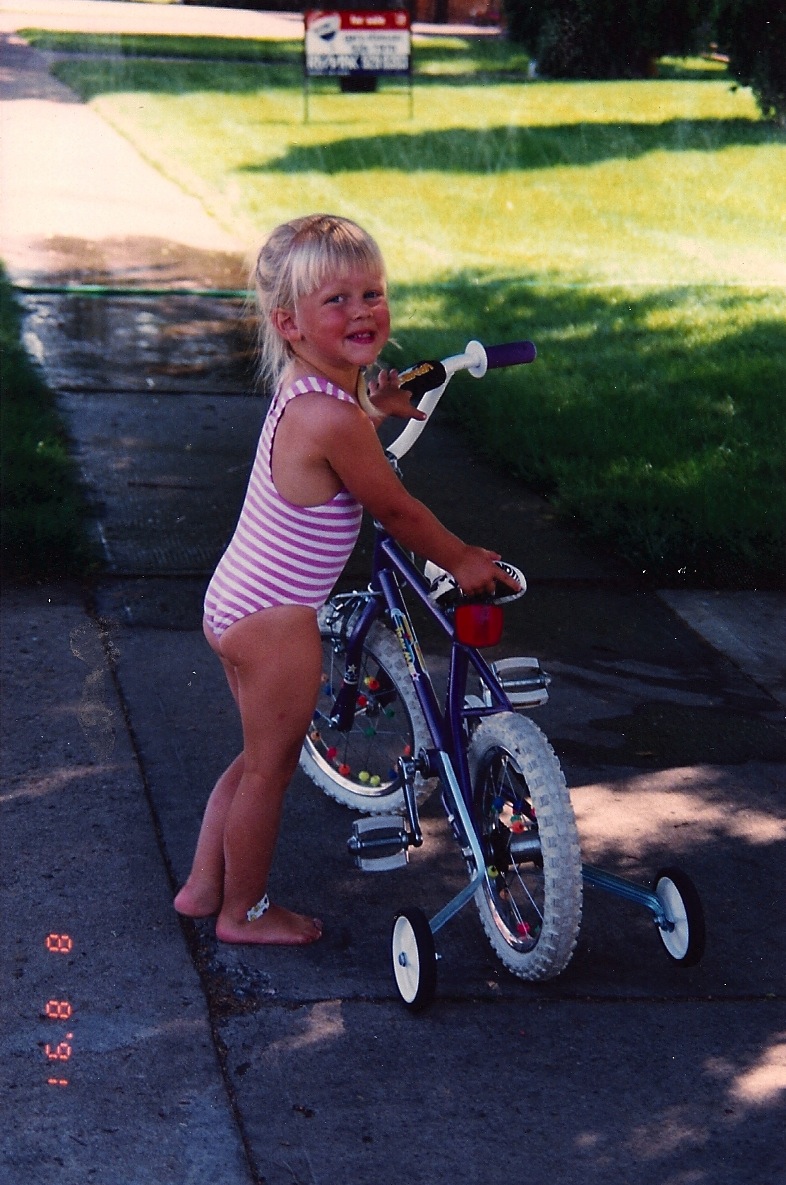
Kirsti Lay has come along day since her training wheel days. Photo/Provided

“I’m excited. The Tour of California (aka Amgen) is the No. 1 race on the calendar. It’s the biggest race in the United States, especially for women,” Lay told Lake Tahoe News.

This year’s ride for the women is Lay’s third – which holds the distinction of having the highest summit in race history at 7,740 when the 300-plus riders crest Luther Pass. Moreover, climbing Daggett Pass over Kingsbury Grade represents no slouching either.

Lay crashed last year on Stage 2 in Folsom, sustaining a back injury. So, she hopes to make a big showing this year when she slings out of the pack from drafting to lead in the finish.

“It’s so beautiful, but it’s not like you’re really looking. You have to pay attention,” she said of the Tahoe legs, in a remark that resembles what a mountain biker says about the Flume Trail.

“I like that it’s a little bit of everything. You have the altitude, making it a hard race. You can’t really hide. You have to race smart, especially when the lactic acid puts you in the pain cave with its super intensity and you need oxygen. You just have to recover.”
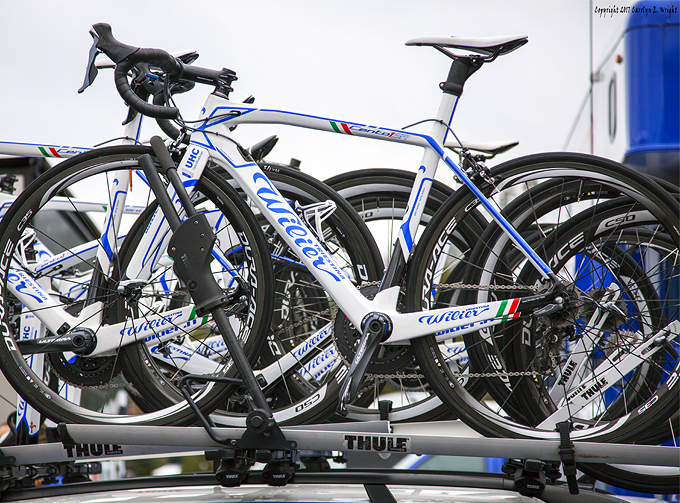
The weight of professional bikes continues to decline. Photo Copyright 2017 Carolyn E. Wright

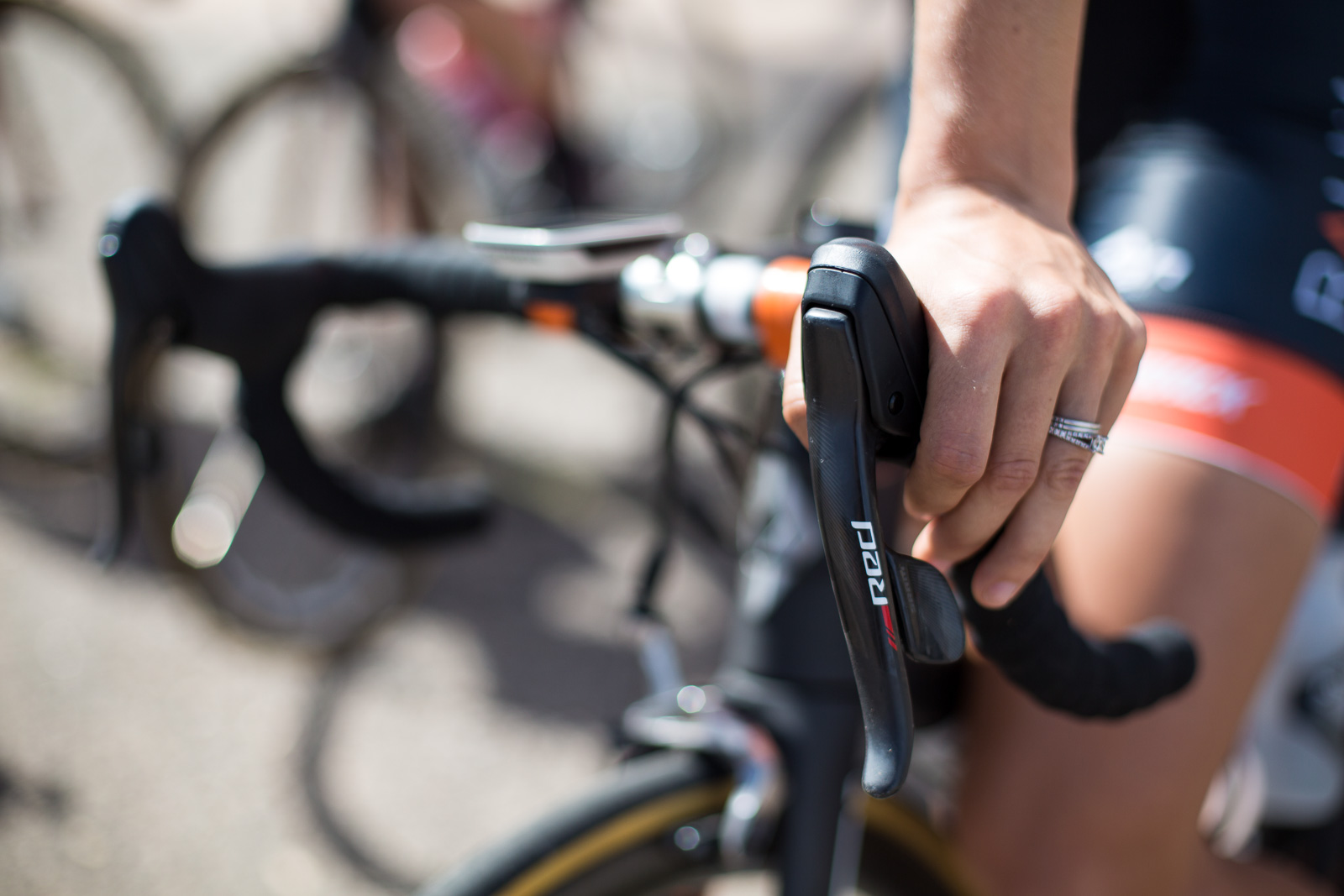
That’s when those 22 speeds running off an 11-ring sprocket on two chain rings that racers now traditionally use will help Lay, who is laying down her strategy with her Diamondback provided to her Rally Cycling Team by SRAM, her sponsor.

Not bad for a little girl known for routinely roaming her small-town neighborhood in Medicine Hat, Alberta. Lay has been on one of her many bikes for as long as she can remember, leaving training wheels at age 3. She spent most of her childhood on her “purple” bike – the proverbial 10-speed most serious enthusiasts used up through the 1980s.

She enjoyed being out on her bike so much as an adolescent, her mother had to corral her to get her to the dinner table.

Move over computerized gadgets that occupy today’s youth. This fascination would come later to her as an adult with a power meter on her competitive bike to mark one of the biggest differences in bike technology.

Lay deviated from cycling between the ages of 10 and 24 by taking on speed skating on a track. She got so good at it she earned an Olympic bronze medal for Team Pursuit at the 2016 Rio de Janeiro Games.

When a debilitating ankle injury sidelined her speed skating career, she traded in her blades for wheels and elevated her passion for cycling. The Cycling Canada Federation recruited her for track racing, in which she came to excel in the no-holds-barred pursuit of the Velodrome for National Team Track Cycling. Talk about a different type of bicycle – one gear, no brakes.

Kirsti Lay is motivated to do well in this year’s Amgen bike race that starts May 11. Photo/Provided

In the summer, Lay would take to the road, racing competitively for more than three years. With that, she even met her hubby, Mathieu Girous. Roadies in competition run in close-knit circles.

“Cycling ended up being more fun,” she said, comparing it to speed skating. For one thing, competitors don’t have to always turn left. “It was better on my body.”

She also improved her bicycle components along the way.

Racing bikes have evolved quite a bit from her training wheels and steel “purple” bike and the 1970s Norco 10-speed her parents loaned her to take to college.

“I used it because no one would steal it,” Lay joked about its age. Then, there were the snowy spring conditions it had to endure. “It was pretty indestructible.”

Now people have asked to buy the family bike because it’s a collector’s item.

For racing, Lay found herself riding on what would be considered “men’s bikes” – even though those in the industry consider the gender differences slight.

Size makes for the most significant difference between how a man’s versus woman’s bike operates. Men have wider shoulders, so the handlebars tend to be a few centimeters wider. Women have wider hips, so the seats may be a little larger.

“There’s not a lot of difference, but the companies may sell them that way,” she said.
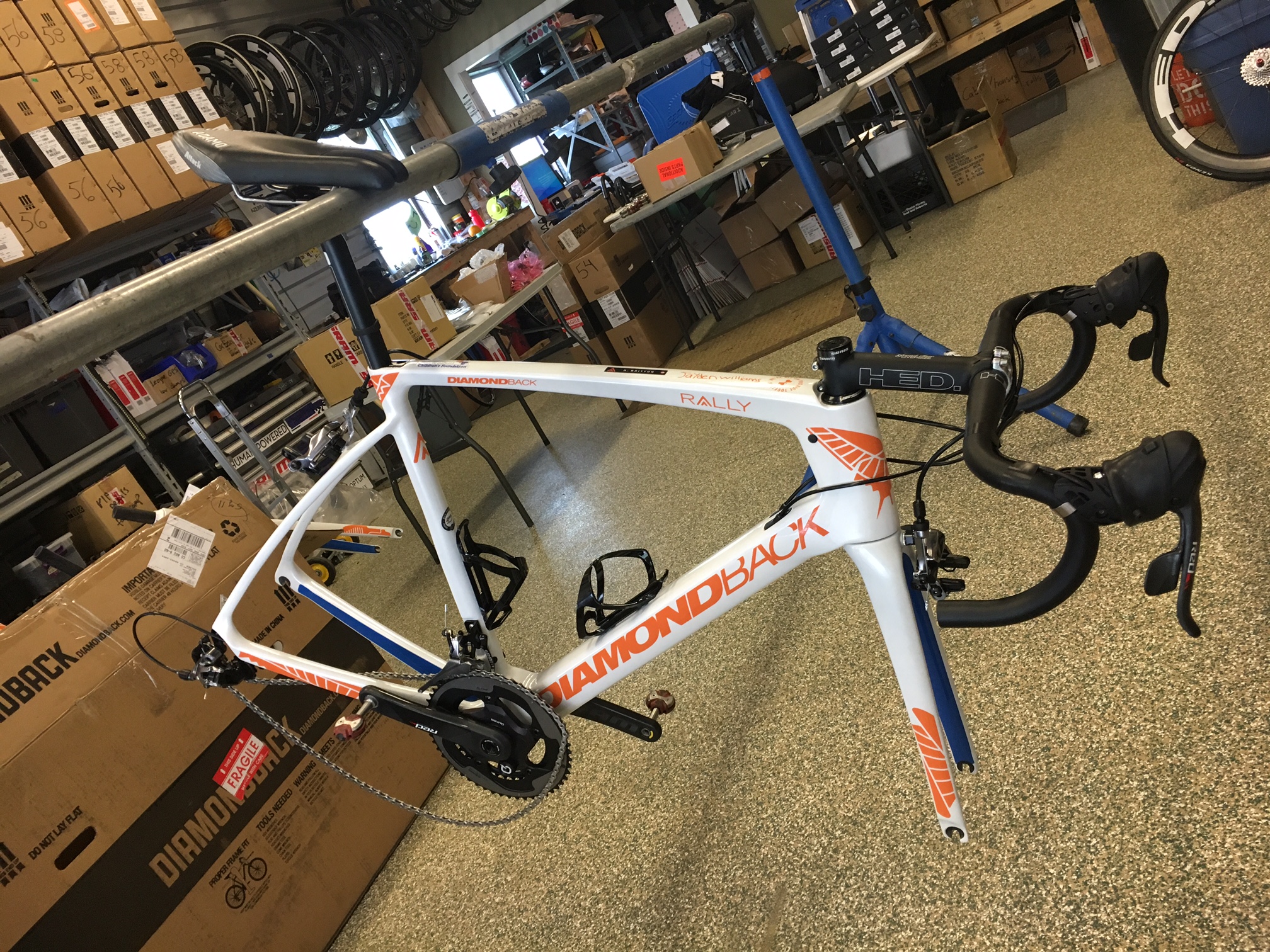
Frame technology has changed the most through the years. Photo/Bob Gregorio

Laying the framework

Her first racing bikes were designed for men, but she admitted to “liking the colors,” she joked. But when she moved to a smaller version of racing, it didn’t feel as bulky.

“I felt like I was driving a school bus,” Lay said. “When you’re fit properly, you know the difference.”

The biggest difference in the evolution of bicycles is the frame, which moved from steel to aluminum to carbon fiber – the latter becoming the choice of many serious cyclists. The latter two materials are lighter, with the carbon variety installed as a single part instead of the steel tubes welded together.

In some cases carbon bikes weigh as much as 10 pounds lighter than even a light steel. Carbon also withstands vibration better than aluminum, as Lay discovered and the experts attest to.
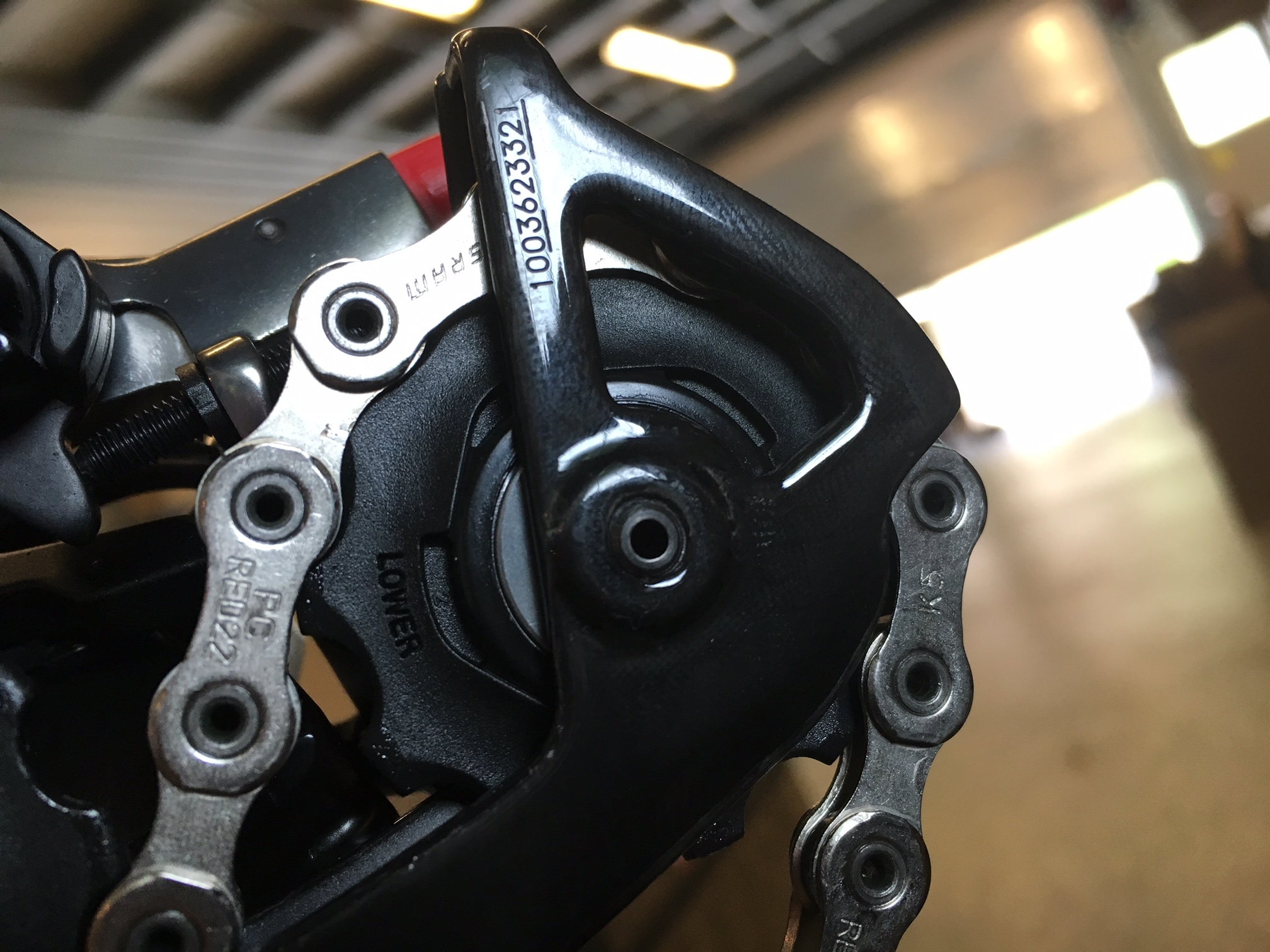
Bike components keep evolving. Photo/Bob Gregorio

Lay’s teammate on the men’s side, Evan Huffman, pointed out how his race training Diamondback bike lets him soar up the hills – a necessity to prepare for the taxing Amgen race. Lake Tahoe enthusiasts may witness the men’s legs of the race in the Sacramento area with the women on the same weekend. The men finish in Pasadena on May 20.

“I feel I can climb anything with this gearing,” Huffman told Lake Tahoe News while out on a ride in Folsom. At 27, the El Dorado Hills resident recalled how his evolution into cycling also aligned with the changes to bike technologies. He likes what he sees now.

He rode seriously as a child, competing in triathlons as early as 10 years old. Moving from aluminum to carbon fiber frames elevated his status in the cycling world.

Evan Huffman embraces the changes in bike components. Photo/Susan Wood

Shifting gears for the next generation

The shifting components may be an area of change to come. The shifters have already moved from the drop tube on the frame to the handlebars. Huffman anticipates the mechanical gear shifting with its full cable to move to more electronic with a short cable where a touch of a button will sense and signal what gear to be in for the terrain. All the manufacturers including Shimano, SRAM and the old European favorite Campagnolo “Campi” are making electronic versions, but some in the industry agree the technology is prone to be temperamental in moisture.

Then, there’s wireless – which would come with no cable of course.

The computer technology would match one of the other monumental changes to the evolution of bicycles aside from the frame and the shifting system.

Racers insist on power meters planted as a small sensor on the bike, much like a heart monitor used at the gym.

“At the elite level, competitive cyclists choose to monitor their power with this valuable training device. You can see how you’re doing from week to week, while mapping out a ride,” said Bob Gregorio, a top-notch racing mechanic who’s an inventory cycling parts specialist for Circuit Global Sports Management in Golden, Colo. “And with GPS expanded, you can measure how much wattage you put into the crank and how hard you’re pushing. Then, you can download and see it later at some point in the day.”

For pedals, Lay and Huffman ride on the lollipop-shaped Speedplays because they’re light, allow for more power with a push and pull action and are easy to get in and out of with their dual sides. Weekend warriors doing triathlons tend to use these pedals similar to ski bindings.
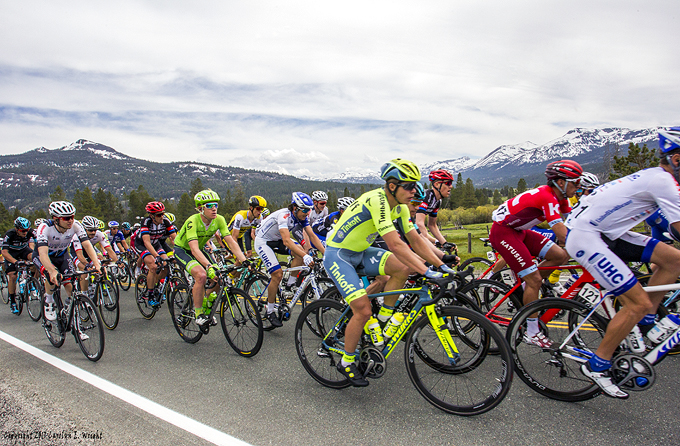
Few differences separate the various bikes at the top level of racing. Photo Copyright 2017 Carolyn E. Wright

Sprockets, chains, derailleurs, cranks and clips — Gregorio makes it his business to keep up with the latest bike technology. He defines steel bikes as fine for the weekend warrior with their durable yet heavier material, but the material is unheard of now for racers who have graduated from aluminum and titanium to carbon fiber.

Technology exists for disc brakes, but it’s seldom used and not at all in elite racing.

“They’re banned because they’re dangerous. There were too many crashes. Then you have a sharp piece of metal. It could be a thing of the future, but they’ll have to make them safer,” Gregorio told Lake Tahoe News.

Hydraulic brakes have become more common with mountain bikes, but the change for roadies hasn’t been “driven by the marketplace,” Gregorio insisted.

An area of noticeable change with bicycles is simply in the price of them.

As a youngster in the mid-1960s, Gregorio used to visit his local Schwinn shop as he had “already been bitten by the cycling bug.”

“I entered one day to get a part for my coaster brake hub, and there on the wall was hanging a Schwinn Paramount with full Campagnolo Nuovo Record components and silk tubular racing tires,” he said as though seeing a gorgeous girl. “It only weighed 21 pounds. It was the most beautiful bicycle I’d ever seen – a highly functional piece of artwork. But it’s price tag was outlandish to me at the time — $350.”

Now road bikes for the consistent rider can run $1,000 to $7,000. At the pro level, high-end bicycles cost $7,000 to $10,000.

One can see these high-quality machines in action when the women take to Lake Tahoe’s South Shore roads. The Amgen Stage 1 race starts at Heavenly Mountain Resort’s California Base Lodge for the ride around the lake. Stage 2 features the climbs on this 67.1-mile route, running through Meyers, over Luther Pass into Hope Valley along the Carson River around the Washoe Reservation before heading west onto Foothill Road in the Carson Valley and up Kingsbury Grade. The latter represents an 8-mile climb that gains 2,700 feet.

Both stages finish up Ski Run Boulevard to Heavenly. It’s recommended that spectators hoping to vie for position and enjoy the bike expo at Heavenly to get there at least by 10am.


Fight against invasive species goes high-tech

By Seth Borenstein, AP

WASHINGTON — A robot zaps and vacuums up venomous lionfish in Bermuda. A helicopter pelts Guam’s trees with poison-baited dead mice to fight the voracious brown tree snake. A special boat with giant winglike nets stuns and catches Asian carp in the U.S. Midwest.

In the fight against alien animals that invade and overrun native species, the weird and wired wins.

“Critters are smart — they survive,” said biologist Rob “Goose” Gosnell, head of the U.S. Department of Agriculture’s wildlife services in Guam, where brown tree snakes have gobbled up nearly all the native birds. “Trying to outsmart them is hard to do.”

Read the whole story


Suspect named in ’04 killing of EDC counselors

Jason Allen and Lindsay Cutshall

By Bill Lindelof, Sacramento Bee
 
A man has been identified as the suspected killer of two El Dorado County camp counselors who were shot and killed while in their sleeping bags on a Sonoma County beach nearly 13 years ago.

Sonoma County Sheriff Steve Freitas said at a May 5 news conference that Shaun Gallon, 38, of Forestville in Sonoma County is suspected in the deaths of Lindsay Cutshall, 22, of Ohio and Jason Allen, 26, of Michigan. Gallon has not been arrested in their killings but is in jail as a suspect in an unrelated homicide.

On Aug. 13, 2004, Cutshall and Allen left the Rock-N-Water camp near Coloma, where they served as rafting and climbing leaders. When they didn’t return three days later, a search began.

Read the whole story


STPUD water, sewer bills expected to rise

By Kathryn Reed

Aging and inadequate infrastructure are the big reasons South Tahoe Public Utility District continues to raise rates.

The massive sewer line failure in the Tahoe Keys that is still being fixed is one example. Generators that failed during the January floods is another. Twenty-five miles of water lines are too small to handle a massive fire.

July 1 will likely mark the fourth of five years’ worth of rate increases – 6½ percent for water, 6 percent for sewer. This will raise quarterly residential bills by about $16.35. Today it is $260, while the average rate in the basin is $351.

The board had a public hearing regarding the 2017-18 budget on May 4, but only Lake Tahoe News showed up. The electeds are expected to vote on the budget on May 18.

The current budget was approved a year ago on a 4-1 vote, with board member Jim Jones voting no because he believes rates should be higher. He is a staunch proponent of being on a more aggressive schedule to fix the infrastructure.

The district has identified $242 million in water projects and $137 million in sewer. The 10-year plan addresses $97.4 million of those combined needs.

To fund the ongoing infrastructure needs the district anticipates future rate hikes. In fiscal year 2018-19 it will likely be a 5 percent water increase and 6 percent sewer.

In fall 2018 South Tahoe PUD plans to engage the pubic in discussions about another multi-year Proposition 218 notice. The 218 notice is a mechanism by which if enough ratepayers protest the proposed increases, the district would not be able to go forward with them. Locking in the rates allows for the district to be more strategic with its planning. The annual rates can always be decreased by the board, but not increased once the 218 figures are approved.

The district is adamant the rate increases are strictly for projects – not for salaries. That is all well and good to say, but if employees didn’t get raises, then there would be more money for projects and the rate increases could be less.

The district just started negotiations with employees. The current contract expires June 30. The long-term budget – South Tahoe PUD goes 10 years out – includes potential 2 percent annual salary increases.

Compared to 2009, the district’s operations and maintenance costs are 12.57 percent lower today. In the same time span, inflation went up 11.5 percent.

“The district can operate another 10 years with the current rates in place if we eliminate the capital improvement projects,” Paul Hughes, chief financial officer, told Lake Tahoe News.

Halting projects isn’t going to happen. For one, things break and have to be fixed. Secondly, the state mandates some projects – like water meters. The final 5,000 should be in the ground in the next three years.

Like most public agencies in California, South Tahoe PUD is expecting more money to have to be allocated toward employees’ retirement. CalPERS has told government bodies it needs more money to make up for investments that didn’t perform as well as they needed to in order to have the cash to pay retirees.

STPUD expects the PERS cost for fiscal year 2017-18 to be $1,477,325. By fiscal year 2022-23 that number is projected to increase to $2,512,000. STPUD’s share of the risk pool’s unfunded accrued liability is $7,254,597.


Hospitality industry faces shortage of passionate workers

By Todd Prince, Las Vegas Review-Journal

The hospitality industry is facing a shortage of passionate workers and the need to upgrade appearances more frequently, according to a panel of hotel chain executives at an industry conference in Las Vegas.

“Talent is something that does keep me awake at night,” Bill Walshe, chief executive officer of Viceroy Hotel Group, told attendees at the Hospitality and Design Expo in the Mandalay Bay Convention Center on Wednesday.

“I think it is going to be increasingly hard for us to find people who want to work in our industry because they have a passion for hospitality,” he said.

Read the whole story


Super snowpack could be deadly summer hazard

By Benjamin Spillman, Reno Gazette-Journal

Summer is when Sierra Nevada hikers and bikers transform dreams of warm days and magical mountain vistas into reality.

This year an extra helping of snow survival skills might keep those dreamy, high country trips from turning into nightmares.

That’s because the many thousands of vacationers who surge onto Sierra Nevada trails in the coming months will need to cope with the biggest snowpack in decades.

Creeks they remember as a mere hop, skip and jump to cross could require serious strategy to survive.

Read the whole story