Downsizing in Truckee an expensive endeavor

By Sage Sauerbrey, Moonshine Ink

When the housing market crashed about a decade ago, one of the results was a trend toward downsizing. The phrase “tiny home” emerged, people scaled down to smaller homes, RVs became potential retirement properties, and an overall tendency toward living within or below one’s means began to take shape. Here in Truckee/Tahoe this trend toward living small has been presented as one of many potential solutions to our housing issue, but it is up against a series of obstacles in the form of ordinances and fees that are still catching up.

More than one year ago, Moonshine Ink spoke with a couple who had moved to Tahoe with the dream of living small, tiny, that is. In February 2016, Sean and Tara Flanagan were exhausting all possible avenues to find a home for their 140 square foot tiny home on wheels. Now, after more than a year of moving from place to place, researching tiny home regulations, and speaking in public forums on the subject, their wheeled tiny home is gone, and Sean and Tara are living in a 450 square foot home in Carnelian Bay. Sean said they are in the process of drawing up plans for a tiny home of their own that is on a permanent foundation, and built A-frame style to help accommodate snow load requirements.

“The main constraint that we’ve encountered, or at least the public has seen as a constraint, is that we require any home on a single-family lot to be on a permanent foundation,” said Yumie Dahn, associate planner for Truckee. “Tiny homes, generally we just see them as — if they’re stick built and on a foundation — they’re just like any other home. If they’re on wheels, then they’re considered RVs or mobile homes and would need to be in a mobile home park right now.”

Read the whole story


Retiree obligations sucking SLT coffers dry

By Kathryn Reed

In five years, nearly one-quarter of South Lake Tahoe’s General Fund is expected to be allocated for retiree pensions. This doesn’t even include what goes out for health benefits, let alone current salaries.

It’s normal for employees to be the No. 1 expense for public agencies. The amount though, is getting to be astronomical.

The California Public Employees’ Retirement System, or CalPERS, has warned jurisdictions that what they must contribute is going up. Today the city of South Lake Tahoe pays $4.7 million a year to CalPERS. By 2022 that figure is expected to more than double to $9.7 million. That’s for current employees and those who have retired.

The spike has to do with bad investment choices by CalPERS, believing at one-time the agency was superfunded and therefore didn’t need members to contribute, the change in retirement age (making it lower), and pay increases to workers when everyone thought CalPERS was flush with cash.

It was bad math and illogical. The superfunded status was really a blip in time in about 1997. By 2000 funding levels had already started to drop. When the dot-com bubble burst thus began the freefall for CalPERS. While the evidence was there to prove the meteoric rise of the fund could not be sustained, the powers that be chose to be enraptured by these larger numbers.

The largest public pension fund in the country in 14 years went from superfunded to having a $241 billion deficit by 2014. Superfunded is defined as being 120 percent over the amount needed to pay retirees at that given point and time.

And while retirees like to say they are on a fixed income, those drawing on CalPERS and CalSTRS (the education equivalent) all get an annual cost of living increase that averages 2 percent each year. This annual raise is paid for by the taxpayer with no benefit to the taxpayer.

All of this will be explained by South Lake Tahoe City Manager Nancy Kerry on May 16 at the City Council meeting. This is part of the five-year business plan review.

While the presentation is not expected to be all doom and gloom, it is a bit of a punch in the gut – especially for taxpayers who are the ones footing this bill.

In the narrative of Kerry’s presentation she goes over the history of the city’s finances, and what has been done to make it solvent. It includes conservative budgets, not spending money until it is in hand, realistic revenue and expense projections, refinancing bonds to lower debt, and overhauling the health plan.

She will also explain that the city is handcuffed to CalPERS.

The problem with being a CalPERS member agency is that it’s impossible to get out. And what’s worse is that jurisdictions per state law are not allowed to negotiate a different payout with employees.

But it is possible, through talks with bargaining units, not to offer CalPERS to future employees. While no one is saying that is on the current negotiating table, it’s not out of the realm of possibilities in future years.

What is likely to happen first is for the city management team of about a dozen people to have a drastically different compensation package.

“The executive team is working on a wages and benefits package to present to the City Council that offers defined contributions to 457 retirement plans based on years of service, encourages employee contributions to 457 retirement plans by offering additional 457 matching amounts, offering contribution to health reimbursement arrangements, elimination of city-sponsored medical insurance,” the staff report says. A 457 is similar to a 401(k) in the private sector.

The goal is to reduce the pensionable compensation, which means lowering the city’s obligation to individuals post-employment.

Because the city is obligated to pay whatever bill CalPERS sends, staff and the electeds must come up with the cash. The five-year forecast shows a structural deficit by 2020. A possible solution is to use the reserves and/or restructure the maximum amount in that pot of cash.

Today the city puts aside 25 percent of the General Fund into reserves. It has not been tapped – not during the Angora Fire, not during the Great Recession. Kerry will talk about having a set amount in the pot or a lower percentage that would still protect the city in an emergency. It would take a four-fifths vote of the council to alter the reserve allocation.

The staff report goes on to say, “If CalPERS projections hold, reduction in staff and services may become necessary by 2020.”


Altering the energy market in the West

By David R. Baker, San Francisco Chronicle

For several years, officials in California and states throughout the West discussed merging control of their electricity grids to create one vast, integrated power market that would span the entire region.

A unified grid, they reasoned, would be more efficient, keeping costs down. It could also help states more easily tap renewable power generated outside their borders.

 Then Donald Trump won the presidency.

Suddenly, California legislators started wondering whether combining grids could expose the state’s climate and energy policies to a new line of attack from a hostile administration. Interstate commerce, after all, falls squarely under federal control.

Read the whole story


Launch mode for world-class whitewater

By Tom Stienstra, San Francisco Chronicle

You can hit launch mode on a rafting trip this summer and feel like you’re being shot out of a cannon.

Light the fuse and stand back.

As the rafting season gets under way, the outlook matches or exceeds the biggest water seasons in the past 30-plus years, including 1983, ’86 and ’98. Coming after years of drought, conditions are beyond euphoric for those who love rafting, kayaking and river running.

 Ratings for many rapids have been upgraded to the highest level and — in a new industry trend — several rafting companies have raised minimum age requirements from age 7 to 12 until flows recede to more traditional levels.

“With all the water, we’re treating Class III runs like Class IV,” said Nate Rangel of Adventure Connection out of Coloma.

Read the whole story


Monterey Tides awash in ocean splendor

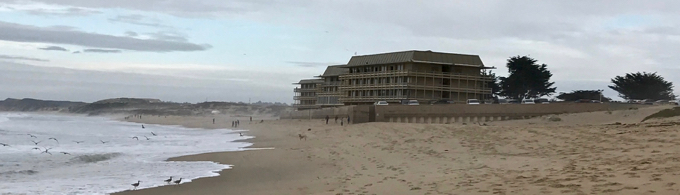
Monterey Tides’ selling point is its location right on the ocean. Photo/Kathryn Reed

By Susan Wood

MONTEREY – From the moment a guest enters the front lobby, waves of serenity and relaxation beckon.

This is how one knows the power of place.

In the case of staying at Monterey Tides, the 180-degree view of the crashing surf onto the beach just below makes it an ideal spot for ocean lovers and families seeking recreation and rejuvenation together. Being there is reflective of knowing that the ebb and flow of life’s ups and downs will roll away – if one adapts and learns how to go with the flow.

Location, location, location. The Tides, a Joie de Vivre hotel since 2015 when it ceased to be a Best Western, is nestled right on the beach off of Sand Dunes Drive. The 196-room boutique hotel comes with the distinction of being the only one smack dab on Monterey Bay. The views are out of this world.

“It’s a best kept secret,” said one hot-tubbing guest who returned for spring break with her Napa family. They rotate their time between the beach and the pool patio.

A San Jose woman used her time at the pool to reminisce about coming there as a little girl with her mother.

“They did a lot of renovation. The rooms are good now,” she said.

The bar area at Monterey Tides is family friendly; offering stellar views of the ocean. Photo/Kathryn Reed

The San Francisco-based hotel chain immediately embarked upon a $12 million renovation when it took over. The pool area of the hotel grounds is notable as it is warm, inviting and improved. This includes having a new privacy wall that serves as a windbreak from the parking lot. The chaise lounges have special cushions adjustable for either the back or head. Composite decking, the hottest, new surface combining wood and plastic, covers the patio. In early April, the heated pool may be a little too nippy for some – except if you’re comparing the water temperature to the ocean or you’re 10 years old and don’t care.

A few guests tried out the ocean with boogie boards in their wet suits before rinsing off with the convenient outside shower. Most guests opted for the welcoming hot tub at a comfortable 100 degrees considering the air temperature in the mid- to upper 50s can be pervasively chilling.

And that’s why staying at the Tides is highly recommended for May-June and September-October. The summer can be chilly with the inland heat drawing the fog in on the Pacific Coast.

Upgrades are most notable in the lobby and adjoining Bar Sebastian as well as the Vizcaino Waterfront restaurant.

New windows in the rooms should be added to the “to-do” list. The single-pane windows make it impossible to turn off the roar of the ocean and keep the room on the cool side. Or maybe it was just an inefficient heating system that had the thermostat perpetually turned to 80 degrees to maintain a livable room temperature.

As for the mechanical, two-layered blinds they were wonderful They allowed guests to watch the ocean, but no one could see in.

Escaping the cold dampness from the room requires good timing. Most who ventured into the bar next to the lobby had jackets on. But the lobby with its cushy seating and floor-to-ceiling full frontal view of the ocean is the place to be. One never knows when a seal, dolphin or even whale might cruise by.

The ahi tuna at Monterey Tides is highly recommended. Photo/Susan Wood

Seeking a higher-level of culinary experience

The views continue to impress upstairs at the remodeled Vizcaino Waterfront Food + Drink, which made its debut on the fourth floor this year. Vizcaino was named after the Spanish explorer Sebastian Vizcaino, who in adding to Monterey’s extensive historical pedigree sailed into Monterey Bay in the early 1600s. The restaurant’s Spanish heritage was inspired with a tasteful décor, larger-than-life ocean view and one of its own at the kitchen helm — Chef Jose Velasquez.

“Chef started at the restaurant over 30 years ago and worked his way from dishwasher to the head spot in the kitchen. He brings his passion for the hotel and the food that he loves to cook to this exciting, new restaurant,” General Manager Brent McNally said.

The restaurant offerings for breakfast, lunch and dinner are innovative, influenced by the chef’s upbringing and, according to Monterey diners, attracts a local clientele.

The ahi tuna was perfectly seared and was delicious with the butternut squash lemon grass puree. And even for a red, the locally-grown Belle Glos Meiomi Pinot Noir paired well with the hardy tuna the server recommended.

The restaurant staff seems a bit rough around the edges, though.

Six interesting cocktails top the beverage menu, but the restaurant ran out of ingredients for two of them. What? Isn’t this Monterey? How about sending out a runner from the numerous staffers watching the open front door?

When asked about vegetarian options, the waiter’s response was: “I don’t know” — a cardinal sin to any restaurant. Apparently, for all the creative oomph the chef gives to the restaurant, he couldn’t have been asked to come up with a vegetarian dish thrown together at the spot? The 12-year server consequently pointed to the one vegetarian item on the appetizer list – the Jicama tacos. Albeit interesting with a beer-battered veggie tempura, they crumbled into a tray that a diner would question whether to eat off of.

At the start of the meal, it’s a nice touch the guacamole served with house made tortilla chips was made at the table – and came in a plentiful batch. Otherwise, the veggie-only diner at the table might have gone away hungry.

However, out of nowhere more than halfway into the meal, someone delivered bread to the table as if it was afterthought. Also forgotten was the beet salad – crisp and tasty – but heavier on the strawberries and lettuce than the main ingredient.

At the end of the meal, try dessert. The crème brûlée hit the spot for two.

A disorganized wait staff aside, the ocean view, décor adorned with old-style barn wood and quiet atmosphere add to pleasantries.

The Monterey area — even Pebble Beach — caters to dogs at hotels, parks and restaurants. Photo/Susan Wood

Monterey: It’s a dog’s life

Four-legged friends are not only welcome at the Monterey Tides, they thrive in and out of the hotel.

First, a welcome board with water and treat bowls for canines is set up near the front entrance. It’s definitely a sign of the times as more and more vacationers seek opportunities to travel with their pets.

Dogs at Monterey Tides have two playgrounds – one out the front door and another out the back. For the latter, watching a dog romping in the sand dunes is like returning to one’s childhood beach experiences.

Out front – which is situated next to Seaside State Beach, a pet area has been established for guests staying at Monterey Tides.

On the other end of the property, a ridgetop bike path that’s ideal for pedestrians giving their pet a change in scenery may take a walker south into town where a host of fun places to go and things to do await a Monterey visitor.

First on the list for a typical tourist is Monterey’s famed Cannery Row with Fisherman’s Wharf, named after its historic industry.

(Note: At Cannery Row, eat out at Louie Linguini’s for a tasty, pleasurable meal and feel free to take your pet.)

For those who appreciate the fine wines of Monterey County, venture into A Taste of Monterey for a flight of tastings by Cassie – who knows a multitude of varietals and wineries like the back of her pouring hand.
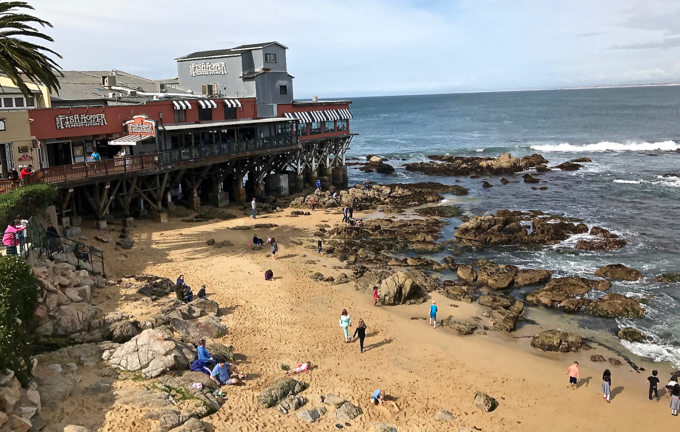
Several Monterey restaurants have outdoor dining with great views. Photo/Kathryn Reed

Out and about on the Central Coast

Beyond the world-renowned Monterey Bay Aquarium, many choices await a Monterey County visitor seeking activities besides eating, drinking and lounging.

Among them, cycling off Carmel Valley Road is always a favorite – with its scenic rolling hills dotted with barns, vineyards and quaint villages. If you’re without your bike, there’s no need to worry. Just call Bay Bikes Carmel off Carmel Valley Road, and they’ll accommodate you with a supply of road, mountain and cruiser bikes for reasonable rental rates.

Hiking is all the rage in the county. And this year’s wet deluge has made checking off waterfalls a sport. Fern Falls at the eastern edge of Garland Ranch Regional Park off of Carmel Valley Road to narrow, winding Hitchcock Canyon Road sets the scenario for one’s sense of adventure. (Note: You must register for a permit two days before from the Monterey Peninsula Regional Park District to enter the easiest way from the privately-owned Hahn Ranch trail easement.)

The 25-foot fall drapes the head of the box canyon and fills a small, crystalline pool at the foot of the cliff. Along the way, look out for newts, as the signs say they may be crossing. A babbling brook runs alongside most of the half-mile trail. 

This spring’s other notable quests with the wet winter are the wildflower hunts – with Monterey County write-ups promising a grand season.

Also at the midpoint of Garland Ranch, lupines abound on the 1.4-mile loop named after the colorful, purple flower.

The 3,464-acre park provides beautiful views and various terrains at the northern tip of the Santa Lucia Range. Terrain ranges from riparian forest to grasslands. Along the 50-plus miles of trails, historic landmarks such as farming and logging remains as well as homestead ruins dot the landscape.
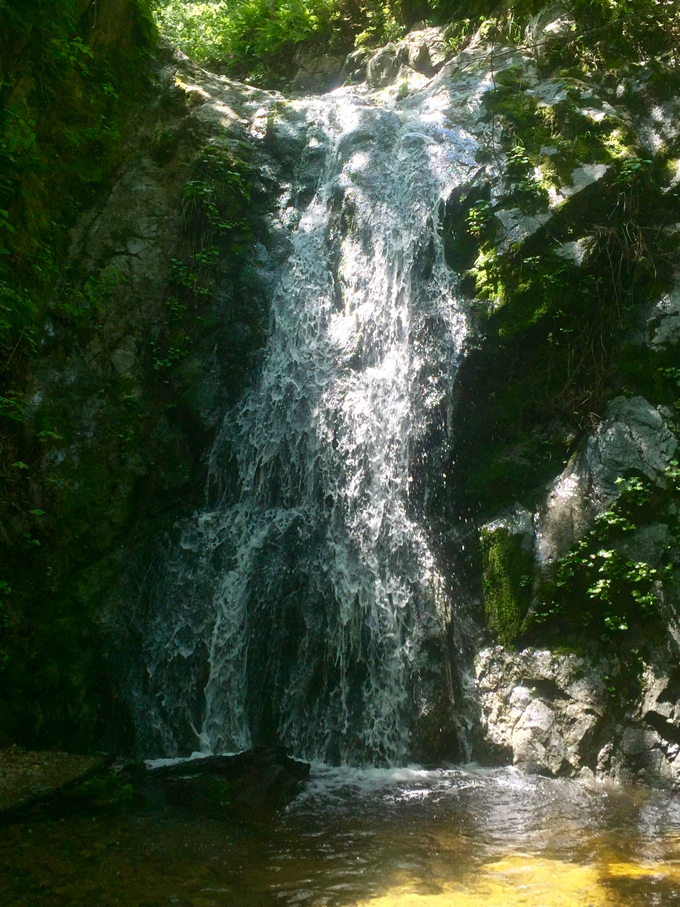
Fern Falls at Garland Ranch Regional Park. Photo/Susan Wood

—–

If you go:

·      Monterey Tides is located two hours south of San Francisco off Highway 1 at 2600 Sand Dunes Drive; call 831.394.3321.

·      Garland Ranch Regional Park is located 15 miles east of Monterey and Carmel off Carmel Valley Road; call the Regional Park District at 831.372.3196.
Tahoe bursting with iconic rock climbing terrain

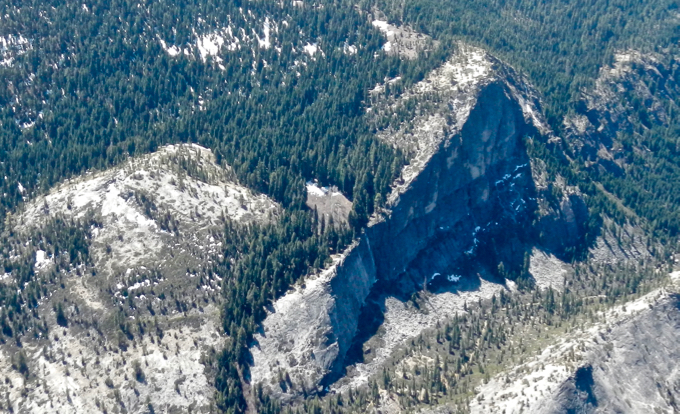
Lover’s Leap is a popular destination for rock climbers. Photo/LTN file

By Matthew Renda, Tahoe Quarterly

With Yosemite as its epicenter, the Sierra Nevada is unquestionably the mecca of rock climbing.

Some argue the sport was born in the Sierra when John Muir performed an on-sight free solo of Cathedral Peak in Tuolumne Meadows in 1869. Muir’s climb, without the benefit of advanced planning or ropes, typifies the adventure, self-reliance, courage and hunger for glory inherent in the sport.

The Lake Tahoe area’s role in the founding and development of modern rock climbing has traditionally been cast as a bit player—a practice facility for climbers looking to refine the skills needed for the daunting big-wall climbs in Yosemite and the High Sierra.

This traditional and dismissive view of the cliffs stretching from Calaveras Dome to Donner Summit has come under recent reconsideration, however, with more and more asserting the area is replete with an array of compelling climbs that factored heavily into the sport’s advancement.

In fact, ask any Tahoe climber and they will agree, perhaps with a hint of annoyance—there is no shortage of climbers testing their mettle on the various routes in the greater Tahoe area.

Read the whole story


LTCC not clamoring to renew SnowGlobe contract

By Kathryn Reed

SnowGlobe’s future in South Lake Tahoe is murky.

Lake Tahoe Community College’s board of trustees on May 9 heard a recap about the 2016 music festival. Promoter Chad Donnelly asked to be able to talk to the board and give a presentation, so he did.

The board is most concerned about protecting the new grass fields. Last year the ground was just dirt. Wear and tear on the college campus, a timely demobilization (unlike this year) and a larger deposit to protect the college are what the electeds mostly talked about.

Donnelly said he’s willing to purchase turf insurance for the fields.

However, Donnelly didn’t have adequate enough answers for all the questions, so the electeds are hoping in the next month he provides more robust solutions.

This last event, in addition to annoying locals with the booming bass, irritated a whole new crop of people because the remnants remained into April, making that stretch of Al Tahoe Boulevard and the roads into the college looking ghetto-like.

“The common thread for the board was the desire and need to protect the college and the asset that was entrusted to us,” LTCC President Jeff DeFranco told Lake Tahoe News. “There is a much deeper look being taken at SnowGlobe now.”         

No action was taken at Tuesday’s meeting. The topic is expected to be on a June agenda, at which time the board will be asked if the three-day music festival should be given another contract. The college has had a year-to-year contract for the last six years. The city of South Lake Tahoe has a three-year contract that expires this year.

“Our goal is to develop a meaningful and lasting partnership that is mutually beneficial to both parties,” Donnelly’s presentation said. “With that in mind, SnowGlobe respectfully requests a multi-year partnership agreement that is aligned with the multi-year contract we are seeking from the city.”

City Manager Nancy Kerry told Lake Tahoe News there is no time line for the city to entertain any such contract with Donnelly.

Donnelly was so bold in his written material provided to the board to call SnowGlobe the “largest New Year’s Eve event in North America.” Apparently he hasn’t heard of Time Square, which has about 1 million revelers compared to his 10,000.

Three members of the public spoke at the LTCC meeting – Steven Denzler, Peggy Bourland and Tami Wallace – all in opposition of the festival.


Grueling ascent up Kingsbury challenges cyclists

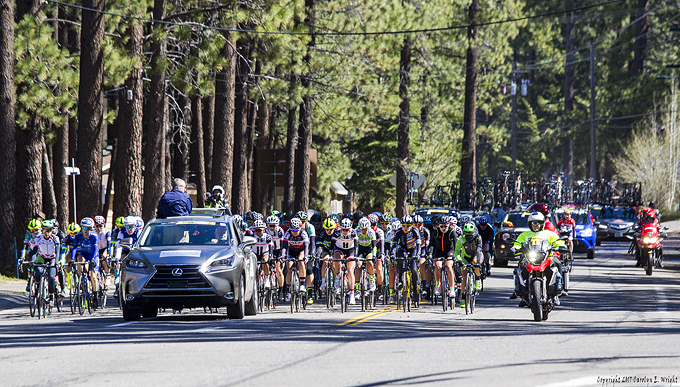
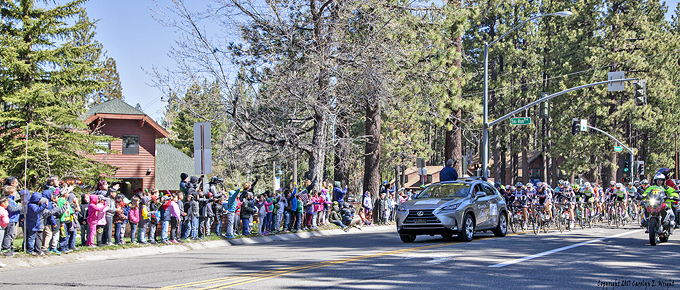
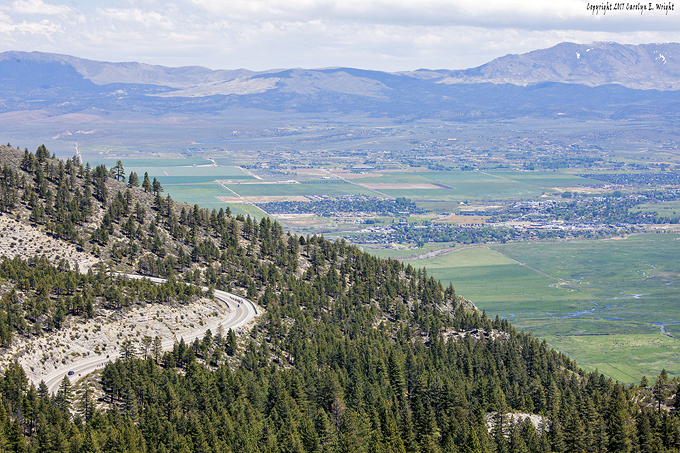
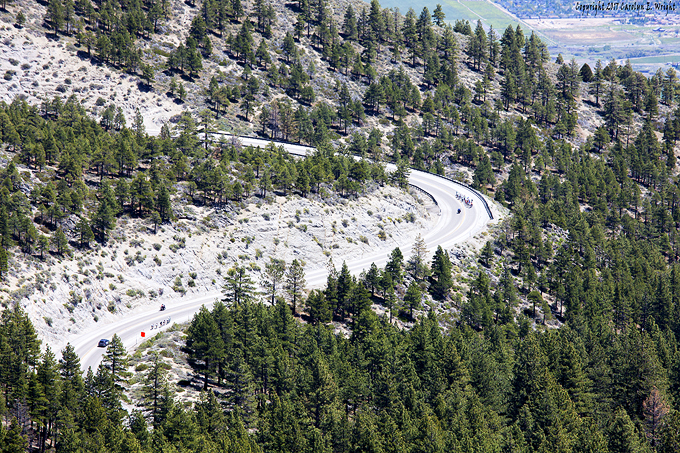
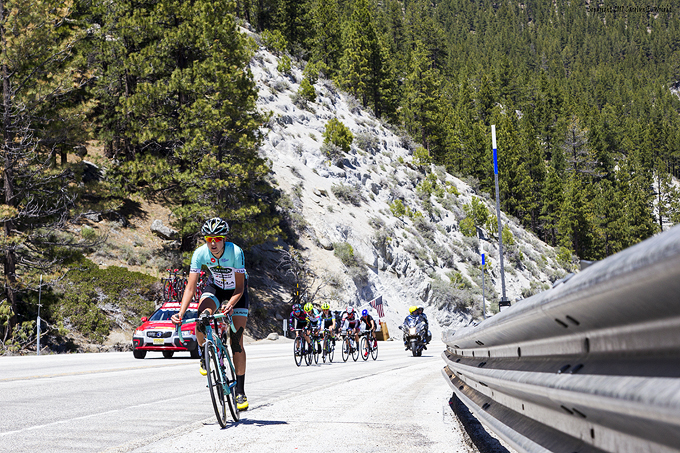
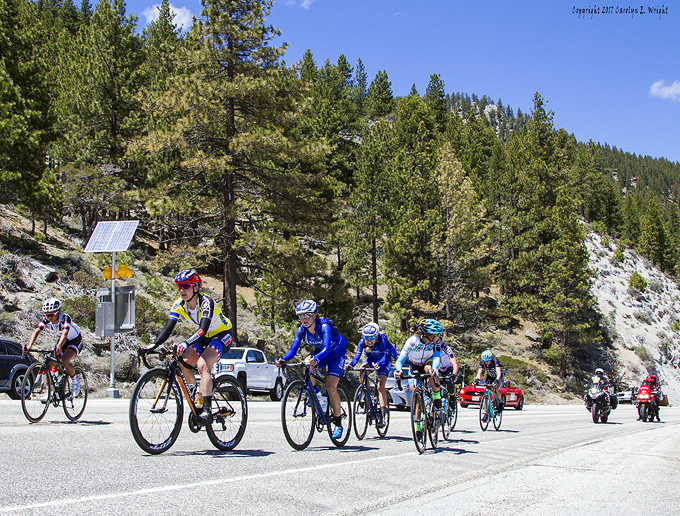
Cyclists weave their way up Kingsbury Grade on May 12. Photo Copyright 2017 Carolyn E. Wright

By Kathryn Reed

A yellow jersey may have figuratively brought Katie Hall warmth, but she was literally shivering after riding for more than three hours to win stage two of the Amgen Tour of California.

“It was definitely cold at the start. There were some flurries,” Ruth Winder, who earned the best young rider jersey, said at the press conference after the May 12 race.

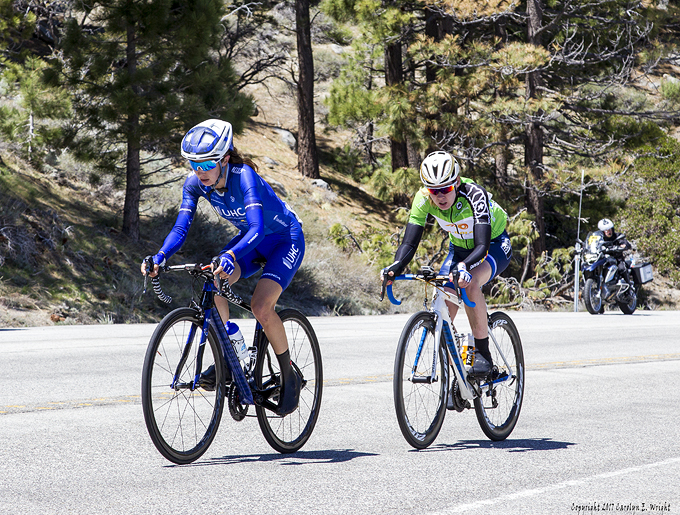
Katie Hall, left, and Anna van der Breggen fight for the lead. Photo Copyright 2017 Carolyn E. Wright

It was 37 degrees when the 17 teams left Heavenly Mountain Resort’s California Lodge at about 10:30am, and 46 when they came back after the 67-mile grueling course. Heavenly had about an inch of fresh snow on the top of the mountain.

A Colavita-Bianchi rider pulls away from the crowd. Photo Copyright 2017 Carolyn E. Wright

Hall, who rides for United Healthcare, finished first. On her heels was Anna van der Breggen. Van der Breggen, who rides for Boels-Dolmans, was second in both stages. Kristabel Doebel-Hickok with Cylance Pro Cycling was third.

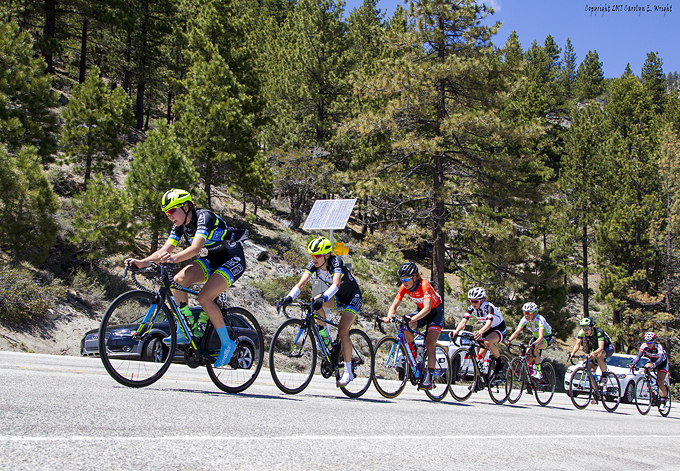
The 8-mile climb up Kingsbury separates the cyclists. Photo Copyright 2017 Carolyn E. Wright

The overall standings have Hall in first with a time of 6.13.54, van der Breggen second at 6:13.54, and Megan Guarnier (Day 1’s top finisher) in third at 6:14.23.

The peloton as it comes down Pioneer Trail at the start of the race on May 12. Photo Copyright 2017 Carolyn E. Wright

After Hall and van der Breggen made the turn off Pioneer Trail onto Ski Run Boulevard it seemed like minutes before a group of 11 came through the intersection. Guarnier was in that bunch of riders.

A pack of cyclists endures the pain together. Photo Copyright 2017 Carolyn E. Wright

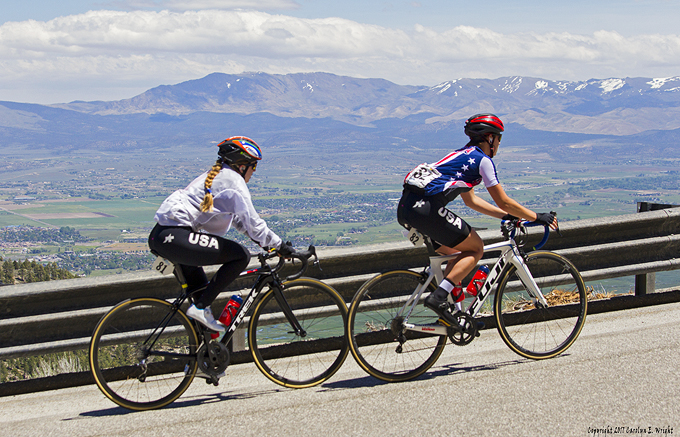
Friday presented a new route for the tour; one with the most elevation gain for either the women or men. From the ski resort they went to Meyers, over Luther Pass (7,740 feet), through Diamond Valley and the Carson Valley, and then up and over Kingsbury Grade (7,375 feet). Going up Kingsbury is an 8-mile climb with a 2,700-foot elevation gain.

This part of the course was built for Hall.

Skylar Schneider, left, and Allison Arensman of the U.S. National Team grind their way up Kingsbury Grade. Photo Copyright 2017 Carolyn E. Wright

“For me, the longer hills are better,” she said. “I thought I would probably get second because I didn’t think I could shake Anna and I’m not much of a sprinter.”

She rightfully earned the Queen of the Mountain jersey, and van der Breggen the sprint jersey.

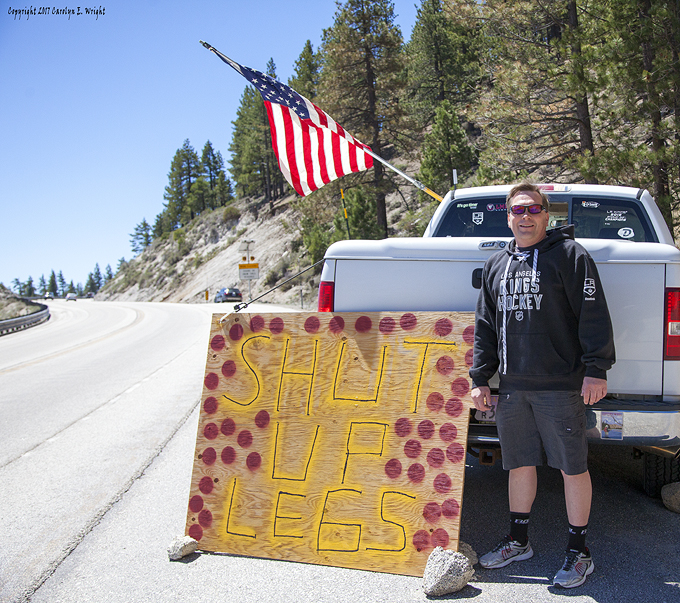
Shawn Peterson of Gardnerville encourages the women to ignore their leg pain. Photo Copyright 2017 Carolyn E. Wright

It was a sprint to the finish between the two of them.

In the valley, Lindsay Myers with the Tibco-Silicon Valley Bank crashed, but is reportedly fine.

One by one the women push to the top of the hill. Photo Copyright 2017 Carolyn E. Wright

In the morning the peloton was greeted by about 200 excited students from Bijou Community School who lined the course at the corner of Ski Run Boulevard and Pioneer Trail.

Bijou elementary student ring cowbells and shout support for the cyclists. Photo Copyright 2017 Carolyn E. Wright

Melissa Bornstein has brought her second-graders out the last three years. This year there were five second-grade classes, two first-grade and two fifth-grade.

Marie Soleil Blais struggles up the long climb. Photo Copyright 2017 Carolyn E. Wright

“It gives the kids an awareness of what fit women can do,” Bornstein told Lake Tahoe News. It is also a chance to see a high caliber event in their hometown. Some of the youngster were there both days.

“I like seeing the bikers. It’s very interesting and very cool,” Natahly Rodriguez, 10, told Lake Tahoe News.

Caitlin LaRouche has enough energy to smile near the top of Kingsbury Grade. Photo Copyright 2017 Carolyn E. Wright

For race officials, they were not worried to wake up to wet roads on Friday. And for the racers – just another day at the office.

“They are absolutely not concerned about rain or water on the roads, or even our crappy roads,” Mike Frye, events manager for the Lake Tahoe Visitors Authority, told Lake Tahoe News. He added how most of the roads in California are filled with imperfections, as is the case in Europe where the majority of the road bike races are contested.

The expanse of Carson Valley unfolds below the riders. Photo Copyright 2017 Carolyn E. Wright

Before the start of stage two some well-known South Shore cyclists offered Lake Tahoe News their perspective of the route:

·      “The wind in the Carson Valley will be a factor. Luther-Kingsbury is a great loop and not overly challenging, but wind can make a ride much more difficult. The key is not to get dropped from the pack. You don’t want to ride solo into a Carson Valley headwind.”   –Nancy Harrison

·      “It’s obvious to me that the hardest part of stage 2 is the Kingsbury climb. There are a couple of sections with less percentage grade and if the teams were scouting the route, there could be multiple attacks from the middle section to the top.”— Curtis Fong

·      “I think the climb up Kingsbury will be the hardest. Already one day in, the women will tackle Luther, the highest elevation yet, I believe. Kingsbury at 6 percent grade is after all of the Carson Valley mileage. And we don’t know how the wind will play into the entire route. This will be a very strategic stage I think!”— Carol Chaplin

Sofia Arreola Navarro concentrates on making it to the top of Daggett Summit. Photo Copyright 2017 Carolyn E. Wright

The next two days will be much different than riding at Lake Tahoe; climbing won’t be an issue, nor should near freezing temperatures. (Day 1 was the loop around the lake.) The women will start in Elk Grove and go to Sacramento, with Day 4 all in the state capital where the 256.6-mile course concludes.


Lake Tahoe benefits from Antarctic research by UC Davis

UC Davis engineering Professor Alex Forrest with the recovered underwater glider. Photo/UC Davis

By Kat Kerlin, UC Davis News Service

To outer space and the deep ocean, add “beneath the ice” to the list of rarely charted frontiers of science exploration.

There have been very few expeditions where robots dived beneath polar ice shelves to characterize and measure them. UC Davis engineering Professor Alexander Forrest recently returned from one of them.

Their mission? Deploy two robots, or autonomous underwater vehicles (AUV) — one to dive beneath the sea ice to map the bottom of the Nansen ice shelf, from which two Manhattan-sized icebergs broke last year. The other, a glider with wings named Storm Petrel, to patrol the front of the ice shelf for 10 days, looking for evidence of fresh water and capturing change over time.

When not swimming alongside polar ice, the Storm Petrel glider trades the ocean for freshwater. It’s currently settling in to its new home at Lake Tahoe. The UC Davis Tahoe Environmental Research Center plans to deploy it in the lake early this summer. The plan is for the glider to take continuous measurements, provide real-time information to TERC’s network of instrumented buoys, chase storm events, and ultimately help round out the picture of the processes and impacts affecting Lake Tahoe.

Read the whole story


Noise polluting large swath of protected U.S. lands

By Katie O’Reilly, Sierra

Noise pollution is typically considered an urban problem. However, new research shows that the invisible threat found in the din of human activity (also known as anthropogenic sound) is increasingly taking its toll on the natural world.

A first-of-its-kind study, released last week from scientists at Colorado State University and the National Park Service (NPS), shows that anthropogenic noise pollutes 63 percent of all U.S. protected lands—that includes city and county parks, state and national forests, and national parks, monuments, and refuges.

After culling more than a million hours of recorded data from 492 protected sites across the continental United States, researchers concluded that anthropogenic noise doubled background sound levels in most of these areas. They also detected elevated sounds in 14 percent of endangered species’ critical habits. Protected areas with the most stringent regulations, such as national parks and designated wilderness areas, suffered the least noise pollution.

The issue does more than disrupt the natural serenity of protected places like parks, forests, and historical battlefields. According to George Wittemyer, a Colorado State University conservation biologist and one of the authors of the study, the impact of excessive noise—which has been steadily mounting since the Industrial Revolution—includes increased heart rate in humans, as well as disrupted sleep, irritability, negative cardiovascular and psychophysiological effects, and even shortened life spans. He’s not the only one to say so. The World Health Organization considers noise pollution to be an environmental burden second in scope only to air pollution.

Read the whole story