Opinion: Expanding Memorial Day’s definition

By Kathryn Reed

Someone is missing. That’s what Memorial Day is all about; remembering those in the military who have died.

This year I’m broadening the definition of Memorial Day. I’m mourning the loss of my 32-year-old cousin who died last month, and whose services will be in June.

She was an alcoholic.

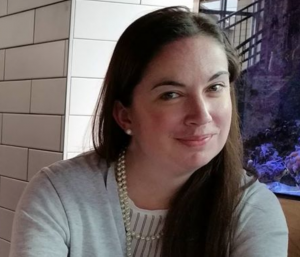
Christina Reed

No one knew this until it was too late. She was admitted to a Denver hospital on a Tuesday and died that Friday. It was in that brief time that the truth, or at least a small amount of it, spilled forth.

Answers to so many questions are buried with her. So many whys. Why did she start drinking? – Was it her mom’s death nearly five years ago? Why didn’t she tell anyone about her pain? – Did she feel embarrassed? Why didn’t she ask for help? — Or did she and no one heard her? Why wasn’t her life enough to make her happy? Why? Why? Why?

From what I have learned in these few weeks, she had to have been drinking an incredible amount of liquor. It may have started a handful of years ago, maybe it was going on in college.

Christina was so bright and funny; she graduated from Wellesley College, was an attorney for the Bureau of Land Management, a beautiful skier who gracefully schussed down even the most difficult runs at Vail Mountain.

She was loved. Her dad, cousins, aunt and uncle all lived nearby. She had a cadre of friends at work and throughout the country.

No one, though, knew about what turned out to be a lethal secret.

She was a functioning alcoholic. But at the same Christina created a web of lies that only now are starting to unravel. It proves that even those who seem to have their lives together are fighting demons we don’t know about.

I last saw Christina in January 2011. I had the opportunity to ski with her at Vail, to spend some time getting to know my youngest cousin just a tiny bit. We were never close; age and distance were the big obstacles. But she was family and we had a bond that even in death cannot be broken.

I ache mostly for my relatives in Denver who are left sorting through the fragments for answers that may never come. The “what ifs?” that linger; that eat away at you, making you believe you could have saved this troubled soul.

Life isn’t easy – for anyone. Perhaps a death like Christina’s is a reminder to really check in with people who mean something to you. Don’t let canceled get-togethers become the norm without real probing; don’t let questionable answers about health issues be easily dismissed; check in on the person where they live; stop the judgment as much as possible; and start listening – sometimes all it takes is being in a safe place to open up. But also know you can’t always solve someone else’s problems – and that is what can be so painful.


Struggle for women to enter the military

By Elizabeth Cobbs

In 1917, U.S. Secretary of War Newton Baker disliked the idea of female workers on Army bases so intensely that he didn’t even want to build toilets for them. They might tarry. Females did not belong in the Army, Baker thought, though the more forward-thinking Navy already had welcomed women into its ranks to replace men in landlubber assignments.

Many adventurous and patriotic young women longed to defend their country during the Great War. They discovered that if they wanted to serve in uniform, they could not merely perform as well as the young men in the American Expeditionary Forces, who sailed to Europe in 1917 to help the Allies defeat the Germans. Women, still denied the vote, would have to perform better. They would have to do something the men could not. America’s ongoing Industrial Revolution gave the “Hello Girls,” as the first female recruits came to be known, their opportunity to serve the nation and earn full rights as citizens.

In May 1917, the month after Congress declared war on Germany, Gen. John Pershing sailed for France. He stuffed his ship’s hold with the newest technologies: Military tackle had undergone a revolution since Pershing served in the Indian wars of the 1880s. Planes had replaced horses. Trucks had overtaken mule trains. Telephone wires had outrun flares and semaphore flags.

Invented in the United States, American telephones reached farther, conveyed more messages on the wire, and reproduced sound with greater fidelity than telephones anywhere else in the world. They were the only military technology in which America enjoyed superiority over both allies and enemies. When the British commanding officer in World War I used an American-built line to place a call from France to England, he exclaimed, “Would you believe it? They actually recognized my voice in London before I told them who I was!”

Commands to advance or retreat, and to fire or stand down, were relayed by phone during the Great War. If America was going to position its immense armies quickly and effectively, it needed experts to handle this critical technology. “The importance of intercommunication in warfare cannot well be exaggerated,” wrote Brig. Gen. George Squier, chief signal officer for the U.S. Army Signal Corps. Without communications for even an hour, “the whole military machine would collapse.”

At home, telephone operating was sex-segregated. Callers rang female operators, who connected nearly every call made. Their job was demanding. With hands darting like hummingbirds, operators connected hundreds of impatient callers each hour. Diligent and quick, they talked with customers while manipulating plugs in a constantly changing pattern.

When Pershing arrived in France, he found male recruits ill-suited for this work. They were inefficient, and prone to frustration when dealing with rude callers. Few doughboys possessed the foreign language skills necessary to cooperate with French telephone operators when making long-distance connections. Necessity required innovation, so Pershing—an innovative thinker who had been nicknamed “Black Jack” after he commanded an African-American regiment on the frontier—departed from precedent, law, and the wishes of the Army itself to recruit women. Before most doughboys arrived, and well after they left, bilingual women served in France. They withstood submarine warfare, cannon fire, influenza, aerial bombardment, and petty-minded bureaucrats to send the word, over there.

Most worked behind the lines in safer regions of France. But one small group, led by Grace Banker, a 25-year-old graduate of Barnard College, followed Pershing from the short but intense Battle of St. Mihiel to the desperately extended Meuse-Argonne Offensive, lasting 47 days. The women ran switchboards 24 hours a day within range of artillery fire that lit up the horizon and shook their equipment. Enemy planes buzzed overhead. A German prisoner of war overturned an oil stove and burned their barracks to the ground. Yet the indomitable women embraced every challenge. The highest aspiration of nearly every female Signal Corps member was to serve as near the battle as possible.

Their efforts, along with those of female Army nurses and private volunteers, helped shape another great debate: whether or not to grant women the vote. World War I altered expectations about citizenship globally. Not only did the Russian, Ottoman, Austro-Hungarian, and German Empires fragment into a dozen new nations, but cracks also ran under the British, French, and Dutch Empires as diverse peoples claimed a right to popular sovereignty. Within older democracies, groups who never had much voice raised theirs with new conviction.

Women, in particular, leveraged the conflict for suffrage. By war’s end, Australia, Canada, Denmark, Finland, Germany, Great Britain, New Zealand, Norway, Russia, Sweden, and 10 other countries had enfranchised females. Not surprisingly, the nation latest to the war was also late to the vote. Accustomed to congratulating itself as the vanguard of democracy, the United States brought up the rear. Its suffrage movement had struggled for 70 years without producing victory. Founders like Susan B. Anthony and Elizabeth Cady Stanton died without seeing their life’s work fulfilled.

But the war—and female recruits’ efforts in battle—changed the mind of one crucial U.S. leader: President Woodrow Wilson. Prior to his election in 1912, he told an aide that he was “definitely and irreconcilably opposed to woman suffrage; woman’s place was in the home, and the type of woman who took an active part in the suffrage agitation was totally abhorrent to him.”

Six years later, at the height of American fighting in France, Wilson told the U.S. Senate that the women’s vote was vital to the “realization of the objects for which the war is being fought.” He hoped America might eventually organize an enduring democratic peace, guaranteed by a League of Nations. But how could the United States lead the free world if it was behind everyone else? Once women’s suffrage was entangled with Wilson’s foreign policy goals, it became necessary, not discretionary. The president made two arguments: The United States could not hold itself aloof from world opinion, and women had amply earned the privileges of citizenship.

“Are we alone to refuse to learn the lesson?” he asked the conservative Senate. Wilson made scant reference to suffragists in his speeches to Congress. Militant activists continued to irk him. But he had come to admire female citizens doing their duty “upon the very skirts and edges of the battle itself.” The war could not be fought without them. “Are we alone to ask and take the utmost women can give—service and sacrifice of every kind—and still say that we do not see what title that gives them?” the president asked. “Shall we admit them only to a partnership of sacrifice and suffering and toil and not to a partnership of privilege and of right?”

When the war ended on November 11, 1918, Grace Banker received the Distinguished Service Medal for assuring “the success of the telephone service during the operations of the First Army against the St. Mihiel salient and the operations to the north of Verdun.” Only 18 out of 16,000 eligible Signal Corps officers received the medal. Grace Banker was one of them. Thirty other women received citations for “exceptionally meritorious and conspicuous services” in the war zone.

Sadly, such recognition was transitory. Once operators returned home in 1919 (two died in France), the Army denied them veterans’ bonuses, victory medals, hospitalization for disabilities, and even a flag on their coffins. As a result, the Hello Girls commenced a new struggle for recognition as veterans that eventually caught the second wave of feminism. In 1979, assisted by the National Organization for Women, thirty-one survivors received their World War I Victory Medals at last.

Yet, every Hello Girl had the satisfaction of knowing she had demonstrated women’s willingness to fulfill the hardest duty of citizenship. As testimony in the Congressional Record for 1918 and 1919 shows, the men who helped pass the Susan B. Anthony Amendment—which finally gave women the right to vote—understood this, too.

“Women have performed more than their part in this great struggle for democracy, freedom, and liberty,” Sen. William Thompson said, echoing many others. In the United States, France, and England, female citizens had produced food, guns, ammunition, planes, and trains. They loaded baggage, drove trucks, operated switchboards, and were ready, “if necessary, to shoulder the gun and march to the front themselves.” Thompson had traveled throughout the war zone. Women, he found, were praised everywhere.

Women’s activism laid the basis for women’s suffrage. World War I secured it. The Hello Girls fought on both fronts.

Author of “The Hello Girls: America’s First Women Soldiers,” Elizabeth Cobbs is the Melbern Glasscock chair at Texas A&M and is a research fellow at Stanford’s Hoover Institution.
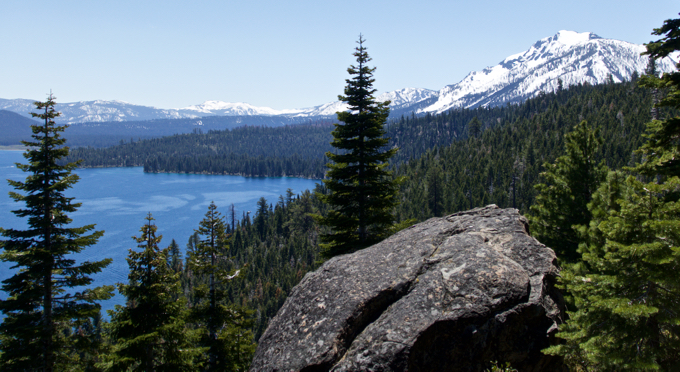


Vandals keep defacing Tahoe with bad graffiti

By Laura Anthony, KGO-TV

Lake Tahoe residents are fighting back against those who would desecrate the beautiful landscape.

It’s a war against graffiti that’s increasingly popping up in places known for natural beauty.

A team of volunteers, brushes in hand, have spent many hours scrubbing rocks at Lake Tahoe, natural scenery that’s been defaced by vandals.

Read the whole story


Deal allows West Slope tribal gas station to open

By Joann Eisenbrandt

The controversial gas station/convenience store complex on tribal lands of the Shingle Springs Band of Miwok Indians near Red Hawk Casino will be moving forward to completion soon. 

El Dorado Council, a local nonprofit advocacy group, had filed a lawsuit against El Dorado County disputing the county’s approval of the project’s environmental documentation. On May 23, El Dorado Council (EDCI) and the tribe filed a settlement agreement with the court which will end the lawsuit against El Dorado County that has kept the project on hold. The agreement came just one day before El Dorado County Superior Court Judge Curt Stracener was to hear the case. The county supports the settlement agreement, but is not a party to it.

In a press release, Shingle Springs Band of Miwok Indians’ Chairman Nicholas Fonseca said, “This settlement enables our tribe to continue to do its good work to benefit the community, our tribal members and our employees.”

The project is adjacent to Highway 50 on Shingle Springs Drive in a largely rural area.  

County residents on surrounding rural residential parcels have been vocal about their dislike of this project and with what they see as the failure of the county Board of Supervisors to do more to protect their rural lifestyle. The construction of Red Hawk Casino and the subsequent conversion by the tribe of private parcels into trust with the Bureau of Indian Affairs upset residents because of their lack of control over how these parcels could then be used.

El Dorado Council was co-founded in1992 by local resident Carol Louis to give voice to residents’ land use concerns in the Shingle Springs area. Louis is not happy with the settlement agreement and resigned May 22 from the group she helped start because of it. She believes it did not offer enough mitigation measures for the Shingle Springs community from the impacts that this commercial complex would create. She wanted to let the court decide on the merits of the lawsuit.

“The Shingle Springs neighborhoods have been under siege for 20 years by the tribe,” she told Lake Tahoe News. “I am disappointed that the El Dorado Council has not done its due diligence in securing a better outcome for the residents.”

A resident of the area near the gas station complex who wished to remain anonymous said, “We had a lot of folks go to (El Dorado Council) meetings and contribute personal checks to finance the lawsuit. None of us wanted to settle; we wanted to wait for the judge’s decision. It is my understanding that the majority of people were never notified as to the intentions of the three (board members) who signed off on it. We were left totally in the dark.”

The EDCI board consists of Mike Doran, Kelly Rosco, and Lori Parlin.

Because lands held in trust for tribes are not subject to local planning and land use regulations, local jurisdictions have less control over what is built. The tribe did not need El Dorado County’s approval or permits to build the gas station complex. But to get access off the property, the tribe had to obtain a county encroachment permit for construction of the driveway entrance to the gas station property and for the installation of pipeline extensions and connections for water and sewer service to the property from El Dorado Irrigation District (EID).

The El Dorado County Board of Supervisors approved the tribe’s encroachment permit in June of last year. EDCI filed a lawsuit alleging the county’s environmental review was insufficient under requirements of CEQA (California Environmental Quality Act) because it did not fully analyze the environmental impacts of the entire project. In addition to the gas station and convenience store, there is also a potential second phase that could include a restaurant, retail and office space, fast-food establishments, an entertainment venue and an 80-room hotel and conference center. El Dorado Council believed a full environmental impact report needed to be prepared to identify impacts of the much larger second phase on traffic, noise, aesthetics, water quality, and sewer capacity.

Mike Doran, CEO and chairman of the board of EDCI, believes the settlement agreement was a good choice.

“We believe that after many meetings with the tribe on this settlement agreement, it covers a variety of issues important to the community that would not have been addressed had we pursued the litigation.  There was no guarantee that we would have won the litigation. The settlement agreement has environmental mitigations for storm water runoff, inspection of the underground storage tanks, tax equity issues important to stakeholders and provisions to make life easier for residents near the gun range,” Doran said.

A gun range the tribe opened on trust lands across Shingle Springs Drive from the gas station complex has been a volatile issue with residents because of noise and safety issues. There are many rural residences, schools and churches in the immediate area.

The gas station complex has been completed for some time and has just been sitting empty waiting for the outcome of the lawsuit. Under the settlement agreement, EDCI will ask the court to dismiss its lawsuit against the county. AmyAnn Taylor, attorney general of the Shingle Springs Band of Miwok Indians, said the tribe will try to take advantage of summer vacation when children are not in school and road traffic is lower to do the needed three to four months of outside road construction needed to complete the driveway access. Completions of the hookups with EID also have to occur before the gas station can open.

In its press release, El Dorado Council pointed out what it believes were key components of the agreement. “As part of the settlement,” it states, “the tribe agrees to study and perform feasible mitigations to bring the gun range within the bounds of the county’s noise ordinance. Mitigations could include enclosing the gun range to create an indoor range or installing a sound wall around the outdoor gun range.”

Another issue is what some called the tribe’s unfair tax advantage. EDCI’s press release notes the tribe has agreed to charge non-Indian customers approximately the same tax rate that other non-Indian businesses in the county charge for gasoline and for the goods and services at the new complex. Tax equity was included in the 2006 memorandum of understanding (MOU) between the tribe and El Dorado County. This MOU was part of the settlement of the lawsuit against the initial construction of Red Hawk Casino. This provision has not yet been put into effect by the county.

Doran told Lake Tahoe News that, “We are taking the tribe at their word at this point that they will in good faith accomplish these things that are part of the settlement agreement.” 

One of the stipulations of the settlement agreement is that Judge Stracener retain jurisdiction over the settlement agreement. Either party could then return to the court to request action if the other party failed to live up to the terms of the agreement. The court has not yet issued the minute order outlining the terms of the settlement, including whether or not it agrees to retain jurisdiction.

The settlement agreement also indicates the tribe will perform an environmental review before any further development takes place on the parcel, but it is not entirely clear at this point precisely what form that review would take.

Carol Louis is not ready to take the Tribe at their word. She told Lake Tahoe News that the tribe has been given too much “wiggle room” regarding compliance with the provisions of the settlement.

El Dorado Council will also be dismissing its lawsuit opposing the tribe’s request to put 25 additional acres of land contiguous to Red Hawk Casino into trust. The tribe indicated in its application to the BIA that the land would be for tribal housing. Housing was originally the stated purpose for the 32-acre parcel where the gas station complex now stands. Changing uses is allowed after lands are put in trust as long as the new use still meets federal guidelines. Louis believes the tribe intends to now build their hotel on the 25-acre parcel next to the casino.

AmyAnn Taylor said this is not true. She told Lake Tahoe News that the Tribe had already mapped out this land into 5-acre residential parcels and that there were 90 tribal members on a waiting list to live there. She added that the tribe would “rather spend its money for the community instead of fighting lawsuits.” 

With regard to one of the community’s biggest concerns, Taylor noted the tribe will be doing an economic analysis in the next few months to see if it would be financially feasible to convert the existing outdoor gun range into an indoor range.

Right now, neither of the parties has released a copy of the final settlement agreement. Doran said it will most likely be made public by EDCI once the court has published its final order.


Study: Heat a major contributor to rock falls

By Lisa M. Krieger, Bay Area News Group

When rocks get hot, they do what people do: shed a few layers.

And the hottest hours of the day — during the hottest months of the year — are prime time for unexplained rockfalls and cracking, according to a study of the granite domes and cliffs in the Sierra Nevada, which finds that hikers, tourists and wildlife are at less risk of being flattened during cooler times.

“Cliffs move in and out, and detach,” said Menlo Park-based U.S. Geological Survey scientist Brian Collins, who uses instrumentation to measure restless rocks at Twain Harte reservoir and Yosemite National Park.

“People look at landscape as static, that it will be there forever,” said Collins whose study, in essence, is explaining what turns mountains into molehills. “But it’s changing all the time.”

Read the whole story


Pot shop property thrown out of bankruptcy court

By Kathryn Reed

The future ownership of the strip of land that houses South Lake Tahoe’s lone medical marijuana dispensary is in limbo.

Patty Olson, who owns that retail area in the Bijou Center, had filed bankruptcy earlier this year. Tied to that case was whether Tahoe Wellness Cooperative owner Cody Bass’ allegations that he had the first right to buy the property were legally correct.

The bankruptcy judge in Reno this week threw out the case. This is because Olson had received rent payments from Bass for a business that is illegal under federal law. It doesn’t matter that medical pot is legal in California. Per federal law that rent money would be deemed illegal cash. Rent was $10,200/month.

Bass is still operating his business there, and Olson still owns the property. Bass is operating without a valid city permit. He must have the owner’s OK to operate. While that had been obtained in the past, it could not be secured last year. That is a separate legal issue tied up in local courts.

Bass can’t just rent or buy another place because of the city’s pot shop ordinance. It limits the number of such businesses and where they can operate. It would take the City Council’s approval to open elsewhere.

The bankruptcy filing occurred after the commercial property and Olson’s nearby home were foreclosed on. The bankruptcy halted the foreclosure hearings. (Olson now lives in Sparks.)

The bankruptcy judge put a 60-day stay on the foreclosure process. This gives Olson time to decide if she would want to appeal the bankruptcy court’s decision. If no appeal is filed, the legal wrangling would resume to where it was before bankruptcy court.

Bass believes the agreement he has with Olson to buy the commercial and residential properties for $4.2 million is still valid. Not true says Olson’s lawyers. Bob Hassett, who owns a neighboring apartment complex and operates the Timber Cove Marina, has offered Olson $2.35 million for the commercial property with the contingency all matters with Bass are resolved and that the property not need more than $400,000 in repairs. He also wants the residential property.


Rubicon trail delivers exquisite views of Tahoe

Rubicon trail has stunning views in all directions. Photo/Kathryn Reed

By Kathryn Reed

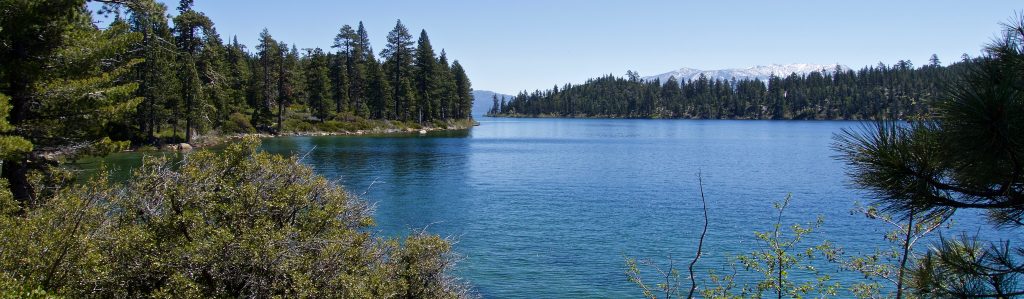
EMERALD BAY STATE PARK – Fifty shades of blue; that’s what you see along the Rubicon trail.

From Emerald Bay to D.L. Bliss State Park the spectrum of color is breathtaking. It seems to change every few feet; the hue altering with the sun and depth of water.

With so much terrain in the Lake Tahoe Basin off-limits because of lingering white stuff or impassable water, it’s necessary to find trails below the snow line. This is one of them.

What makes this trail so special is that either Emerald Bay or Lake Tahoe is constantly in view. As the elevation of the trail changes, the perspective alters from it seeming to be within reach to being a scary dive.

Emerald Bay shimmers on a warm spring day. Photo/Kathryn Reed

The Rubicon Wall is where some of the deepest waters of Tahoe exist. In the summer, when the water is warmer, people are often jumping off rocks.

This trail was not immune to the ravages of winter. One section before reaching the tip of the bay is covered in water. It’s passable to the right where hikers have put down limbs to walk across.

Trees cross the path at times, but all are easy to maneuver over or around.

The waterfall midway along the route is passable, but slow going as people watch their step on the rocky-watery crossing. (What was more amazing was all the water coming out of the hillside along the paved path from the parking lot to Vikingsholm.)

While there were several people on the trail last Sunday, it was by no means crowded. Besides the four us, only two people were at Calloway Cove at D.L. Bliss. It was truly blissful.

The colors of Lake Tahoe are dazzling. Photo/Kathryn Reed

—–

Getting there:

From South Lake Tahoe, take Highway 89 north, through the hairpin turns, and around Emerald Bay. Park in the Vikingsholm lot on the right. Cost is $10. Go down the paved trail toward the castle. Before reaching the castle, the Rubicon trail is to the left. Round trip it is 11 miles.


Boat with quagga mussels stopped near Tahoe

By Lake Tahoe News

Quagga mussels were found on a boat wanting to launch at Lake Tahoe this month.

The boat was being inspected at the Alpine Meadows station May 14. California Department of Fish and Wildlife quarantined the boat for several days, and Tahoe Resource Conservation District staff performed multiple decontaminations to ensure all invasive species were removed before the boat was released to the owner.

Quagga mussels like these on a boat prop leaving Lake Mead are what scares water managers elsewhere. Photo/TRPA

This is not the first time quagga mussels have been found at a Lake Tahoe area inspection station. In 2011 a boat with 37 mussels were discovered at the Spooner Summit station.

In 2016, there were 7,689 boat inspections, 2,689 decontaminations, with 39 boats intercepted. The last figure means a boat that had an aquatic invasive species. Eight of the 39 were mussel species.

A study done in 2015 by UNR and Desert Research Institute scientists proved that quagga mussels could survive and thrive in Lake Tahoe. To date, none has been found in Lake Tahoe or Fallen Leaf Lake.

Quagga mussels have caused billions of dollars in negative economic impact to waterways nationwide, including areas in Southern California and Lake Mead.

Once they enter a water body there is no way of eliminating the invasive species. They glom onto water in-take pipes, leave craggily shells behind and disrupt the ecosystem.

As part of increased prevention methods approved by the Tahoe Regional Planning Agency Governing Board this week, motorists towing boats in the Lake Tahoe Basin will be required to remove drain plugs from their watercraft after leaving the water. This is to help prevent the spread of existing aquatic invasive species within the lake.

Removal of drain plugs while traveling will assist boaters in arriving at boat inspection stations across the West clean, drained, and dry—an effective way to prevent the spread of invasive species.


Interactive experiences seen as big part of casinos’ futures

By Wayne Parry, AP
 
Getting new customers involved in more interactive experiences is going to be a big part of the future for casinos in the United States and around the world, participants in a major gambling conference predicted Wednesday.

Casino executives, digital experts and payment processors at the conference in Atlantic City agreed casinos need to offer new experiences that directly involve the next generation. This involves new, non-traditional products such as competitive video game contests, skill-based slots, and daily fantasy sports and sports betting in states that allow it.

These would allow casinos to bring in new customers and revenue, the executives and experts said.

Read the whole story


LTUSD board wants to have louder voice

By Kathryn Reed

Communication. It was a dominate part of Lake Tahoe Unified School District’s board of education’s discussion this week.

There are some board members who want to get their message out to parents and the broader community in a more proactive way.

Communication from the district, though, has usually been through the superintendent’s secretary who acts as the public information officer. An email is sent out to a large group (anyone may receive the email) that talks a bit about the upcoming meeting, school happenings, larger education topics and community events.

It is nowhere near the professional correspondence that Tahoe Truckee Unified sends out, nor as comprehensive in terms of being district specific.

LTUSD’s presence on social media is almost non-existent. The last Facebook post was on Feb. 14, and that was from a member of the public at a board meeting. LTUSD is random with its 241 tweets; and only has 179 followers on Twitter.

It has been the board’s policy to have the president speak for the five even though they are all elected officials with the same weight on the board. Lake Tahoe News finds this to be problematic when the president doesn’t return phone calls, even for a benign story like a feature on the new high school principal.

At the May 23 meeting it was agreed that other board members could start writing guest columns. There was talk of having them be vetted by the district office. It remains to be seen if this is for fact checking, substance, tone or some other reason.

This is the first board in more than a decade that has members who openly don’t want to be subservient to the district office and understand they are the boss of the superintendent, not the other way around.

The conversation Tuesday revolved around some members wanting to have a voice in the accreditation process, and to at least make it easier for the public to get information.

It was noted the information on South Tahoe High School’s website is not easy to find and what is there is not written in a manner that is simple to understand. Staff agreed to place it more prominently and have it written with less jargon.

STHS is in the middle of a two-year probation from the Western Association of Schools and Colleges. This was the first time the school had not receive a six-year accreditation. Staff and administrators this last year have been making changes in hopes of securing that longer accreditation when evaluated next school year.

While the electeds can help disseminate information, their actual involvement in the WASC process is limited. They can monitor time lines and be aware of the scope of work, as well as set any policies that would help the school achieve its goals, but too much active involvement is a red flag to WASC officials.

Even so, the electeds agreed that they want their voices to be louder going forward – no matter the topic.