Sierra wildflowers will bloom through August

By Debbie Arrington, Sacramento Bee

In the Sierra and other California mountain ranges, the big bloom is coming. But unlike the flourish of flowers that opened in March and April at lower elevations, mountain “spring” arrives in summer.

So far, 2017 has been a spectacular wildflower year. As if celebrating the end of California’s epic drought, vast expanses of wildflowers covered swaths of the Central Valley and southland deserts this spring. At higher elevations, more wildflowers are expected to put on their own prolonged show well into August.

First, the snow has to melt.

Read the whole story


Strong opposition to NDOT Hwy. 50 lane reduction

By Kathryn Reed

ZEPHYR COVE – Safety, according to transportation officials, is the primary reason they are looking at reducing the number of lanes on Highway 50 between Stateline and the intersection at Highway 28.

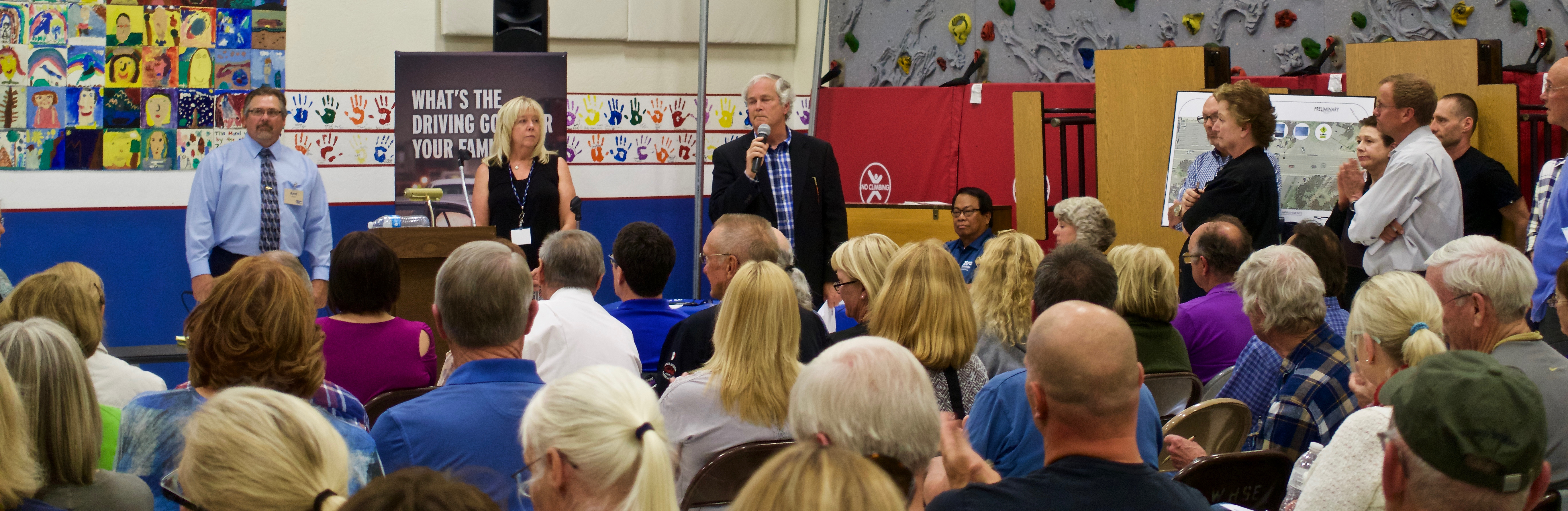
For many of the nearly 250 who attended a meeting Wednesday night about the proposals, the idea of one lane in each direction seemed counterintuitive to increasing safety. Twenty-five people spoke at the May 31 meeting.


Bill Killebrew, center, on May 31 echoes the sentiment of most at the meeting — don’t reduce the lanes on Highway 50. Photo/Kathryn Reed

Comments included:

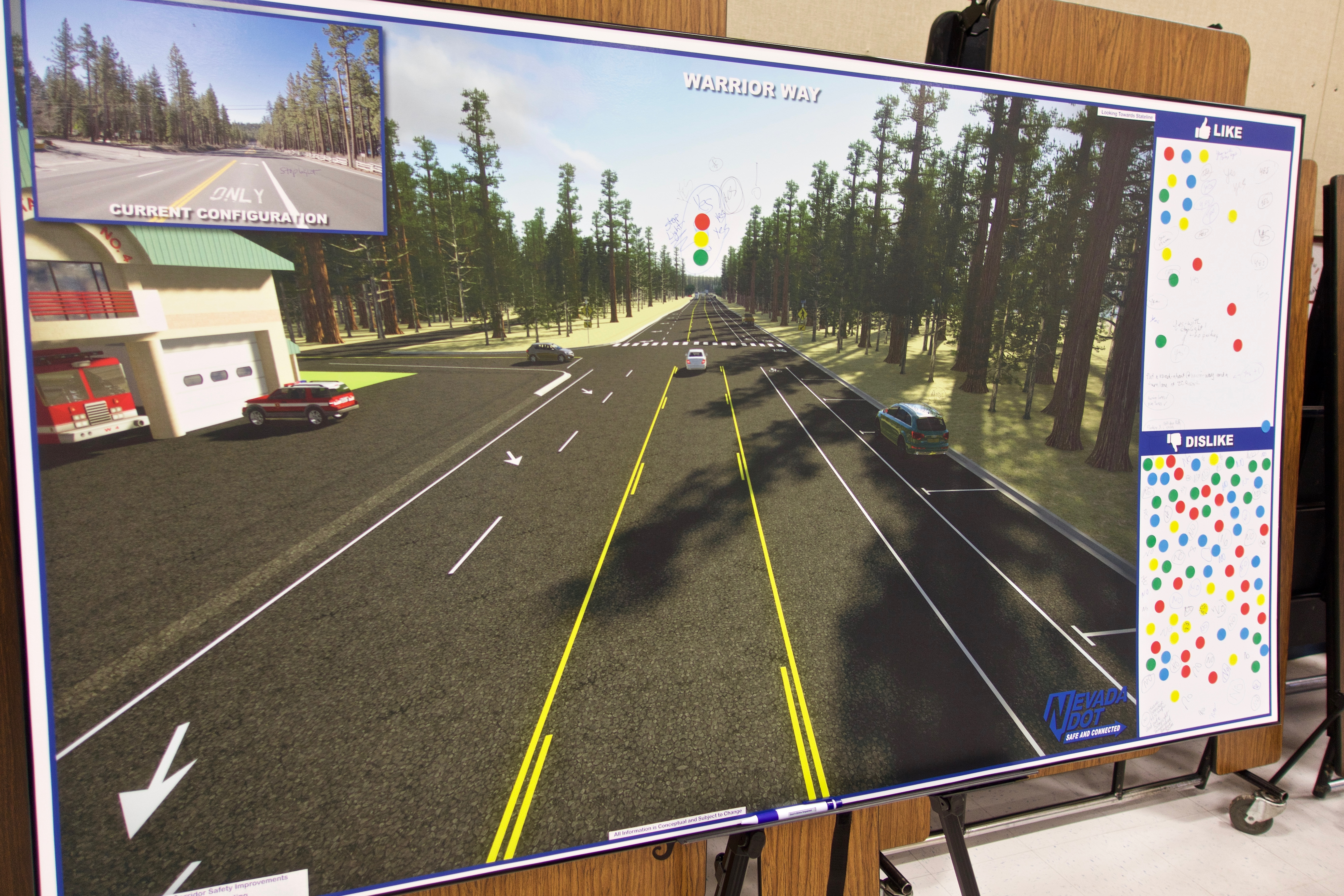
·      Needing a light at Warrior Way. (None of the diagrams showed this as a potential reality.)

·      Wanting the data by NDOT to be more detailed; as in where did the accidents occur, what were the conditions and more.

·      Work with the U.S. Forest Service to build bike trails out of the vehicle travel lane.

·      Pilot options before they are permanent.

·      Praise and criticism for roundabouts.

·      Make the highway function like Skyland with turn lanes and frontage street.

·      Being worried about future bottlenecks with projects like Edgewood Lodge, Zalanta, Tahoe Beach Club and Sierra Colina coming on board.

·      Concern about emergency vehicles getting through on smaller roads and through roundabouts.

·      Belief the crash numbers are low because many don’t report accidents, especially solo spinouts.

·      The need for chain enforcement.

·      Remembering when the second tunnel at Cave Rock was built because there was a need for more roadway even in 1957.

·      Believing a reduction in lanes will increase congestion.

·      There are areas where the highway should be widened.

·      Addressing parking in the beach areas will alleviate problems on the highway in summer.

·      Left turn lanes are needed without sacrificing other lanes.

·      Build a pedestrian overpass.

·      This is a cycling destination, but the current highway is unfriendly to those on two wheels because of non-existent bike lanes and drains in area where cyclists ride, thus forcing them into the vehicle lane.

·      Frustration with no options presented keeping the four lanes, and none without a bike lane component.

·      Public transit is needed.

·      Add concrete medians.

What wasn’t brought up is the Stateline-to-Stateline bike trail that will go from the South Shore to Crystal Bay. Right now it ends at Round Hill Pines. It is and will continue to be a multi-use path set away from the road.

Nine poster boards scattered about the multipurpose room at Zephyr Cove Elementary School showed different stretches of this roadway and what they could look like in the future. All received more no votes, but, still, plenty of people supported the concepts.

NDOT’s ideas range from a roundabout at highways 50 and 28, and one at Zephyr Cove Resort; to one lane through the tunnel that would include a bike lane; to revamping access at Cave Rock.

Possible lane reconfiguration on the highway at Warrior Way. Photo/LTN

Plans call for acceleration and deceleration lanes to get motorists onto and off of the highway in a safer manner, especially for residents with streets and driveways along the highway. Designated parking would be constructed. Left turn lanes would be added. Right hand storage lanes are proposed; this would allow traffic to flow around the bottlenecks, which are primarily at beaches.

NDOT doesn’t have one plan. It’s possible components of the various proposals will be used, along with the public’s ideas.

According to Nevada Department of Transportation officials, on this section of Highway 50 in the last seven years there have been:

·      682 crashes

·      404 involved property damage

·      382 involved injuries

·      12 were fatalities.

“This is why we are here tonight – the crash data,” Kent Steele, senior designer with NDOT, told the packed room. “If we implement some of the components, we can potentially decrease crashes by 40 percent in some areas.”

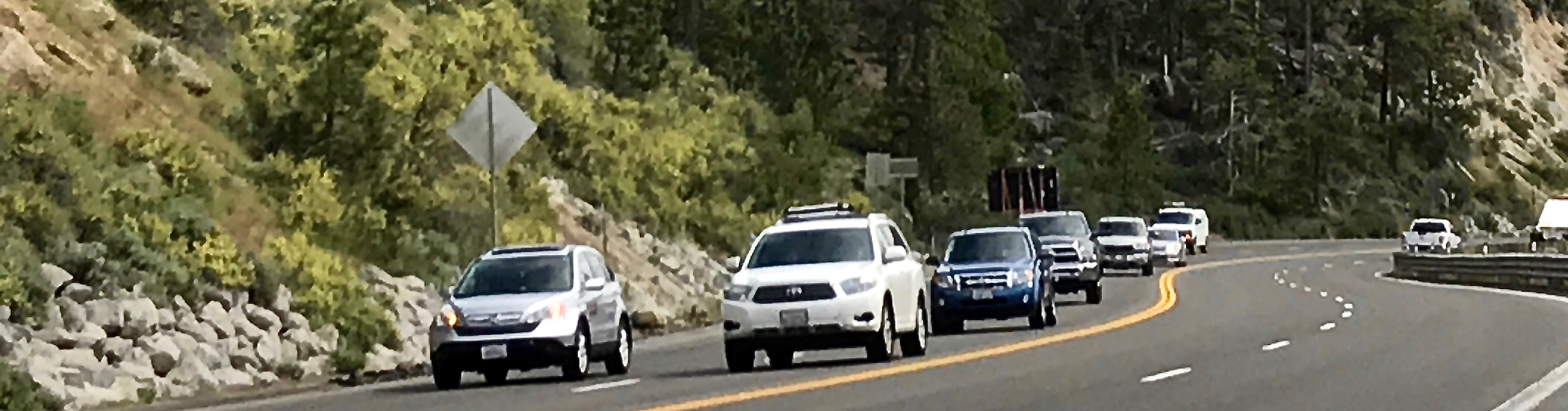
Traffic on Highway 50 on May 30 in mid-afternoon. Photo/Kathryn Reed

—–

Notes:

·      Send comments before June 16 to ksteele@dot.nv.gov.

·      This scoping period could last nine months.

·      NDOT will have another public meeting, probably in the first quarter of 2018, to share ideas based on public feedback.

·      The design phase will take one to three years, with construction another one to three years.

·      Repaving of Highway 50 will occur in the next three to five years, and NDOT wants some of the news ideas implemented at the same time.


Why some slot machine themes just don’t work

By Thomas Moore, Las Vegas Sun

You would think it would be a sure-fire hit in Nevada; a slot machine with a Frank Sinatra theme.

It was unveiled in 2001 when then-Las Vegas Mayor Oscar Goodman, along with Sinatra’s daughter, Tina, made Dec. 12 Frank Sinatra Day.

But sometimes, what seems like a great slot theme just doesn’t pan out, industry experts say.

Olaf Vancura, vice president of game development for slot maker Mikohn Gaming (which eventually became part of IGT) and other gaming companies, said gameplay is paramount. To be successful, a slot machine must offer players entertainment and escape, Vancura said. If it doesn’t, no theme will save it, he added.

Read the whole story


Why are coyotes so polarizing?

By Lawrence Lenhart, High Country News

First things first: Coyote. When you read the word, how many syllables do you hear? Your answer, according to Dan Flores, author of “Coyote America,” may be “immediately diagnostic of a whole range of belief systems and values.”

The ki-YOH-tee versus ki-yote divide is one of the best indicators of a person’s coyote politics, a nearly hard-and-fast way that we subconsciously identify ourselves: as defenders of the species, in the case of the former, or as a manager, shooter and/or trapper, in the latter.

In “Coyote America,” Flores occasionally assumes the mantle of coyote’s head of public relations, demonstrating how the species, once “dead last in public appeal — behind rattlesnakes, skunks, vultures, rats, and cockroaches,” overcame its stigma as “varmint” to become a darling among the very people who most infrequently encounter it — modern-day urbanites. More often, though, Flores is content to serve as a guide to the species, relaying the coyote’s complicated natural, cultural, political and mythological histories. It is why Flores describes his book as, “in most respects, a coyote biography.”

Read the whole story


Educators grapple with youths’ suicidal tendencies

By Kathryn Reed

“I hope you are ready, because I’m about to tell you the story of my life. More specifically, why my life ended. And if you are listening to these tapes, you’re one of the reasons why.”

And so begins the provocative Netflix series “13 Reasons Why.” It is based on the book with the same name by Jay Asher (2007 Penguin Group).

It has been generating a ton of press, and has brought an otherwise taboo subject – suicide – out into the open.

Tuesday night was an opportunity for parents to speak with educators and agency reps about the TV show, suicide in general, bullying and what is going on locally. While the nearly two dozen people who gathered at South Tahoe Middle School were there to dispense info rather than gather it, for two hours people had an opportunity to learn and share. (Not a single school board member was part of this circle of concerned community members.)

Even the experts in the room differed on the merits and criticism of the television show. Consensus was for parents to watch it first, then decide if their child is up for the subject matter. It was acknowledged even if parents don’t want their kids to watch “13 Reasons Why,” access to it is readily available.

May 30 gathering at South Tahoe Middle School. Photo/LTN • Suicide is the second leading cause of death for ages 10-24. • Suicide is the second leading cause of death for college-age youth and ages 12-18. • More teenagers and young adults die from suicide than from cancer, heart disease, AIDS, birth defects, stroke, pneumonia, influenza, and chronic lung disease, combined. • Each day in the United States, there are an average of more than 5,240 attempts by young people grades 7-12. • Four out of five teens who attempt suicide have given clear warning signs. Source: Jason Foundation • U.S. National Suicide Prevention Lifeline –800.273.8255

A suggestion was made to start with what is essentially episode 14, the behind the scenes look at what the directors went through, the experts they consulted, and the intent behind the show.

Watching the show with one’s child will allow for discussion: it could be why consent to have sex is vital, it could be about what is being shared on social media, it could be about hiding behind an electronic transmission of meanness, it could be about their fears. The bully and the bullied need to be heard because both are hurting. Happy people  aren’t bullies, and those who are bullied can be traumatized to the point they see no way out but to end it all.

Suicide, rape, bullying – the series depicts them all in a raw manner. Topics are neither sensationalized nor glorified. It’s life. And that’s the hard part for many to comprehend; just how horrible being a teenager can be in this digital age.

In the 12 years Jim Tarwater has been superintendent of Lake Tahoe Unified School District he has seen the stress go up for kids.

“The bullying bothers me the most – the social – it’s gotten out of hand,” he said. “It’s in the middle school.”

Tarwater told Lake Tahoe News it’s not unusual for 20 kids to attempt suicide every year. Middle school students are not immune from wanting to end their life. It’s gotten so bad that the older kids in elementary schools are showing signs of depression and negative behavior more characteristic of older kids.

Kris Robison, a counselor at Douglas High School, had two students on Tuesday with suicidal issues. One was transported for care, the other not. Douglas County School District has a strict script to use to gauge the level of care a youth may need.

Safety is the No. 1 concern for educators and others when dealing with people who are contemplating suicide. They look at whether the person is likely to harm themselves, harm someone else or is in imminent danger.

But the schools can’t do everything. A suspension for the bully could mean retaliation for the victim. It can be a nasty cycle.

Even though phones might not be allowed during the school day, they are weapons at other times. Pictures and words are shared – mean, hateful things. People film fights and send them to others. This is real – not something just reserved for a TV show.

Suicide, depression, mental illness – these are societal issues. Tarwater and others would like the community to be more engaged, and for students to have a passion for life. The social and emotional pieces need to be part of the curriculum. Starting next school year in California there must be a policy in place for grades 7-12 regarding suicidal issues.

It was noted that 20 percent of the population is living with a mental health condition, and 80 percent of that 20 is genetic. That is why knowing one’s family tree could sound a warning alarm.

Mental health was not addressed in “13 Reasons Why,” which was criticized at the Tahoe gathering.

THC, the active ingredient in marijuana, can be a trigger for a mental illness episode. A South Tahoe High School administrator said THC levels at the school are “off the charts.”

“There is only so much we can do,” Tarwater said. That’s why parents, other family, friends and the community at large must be part of the solution.


Late amendment could crush Uber in Nevada

By Seth A. Richardson, Reno Gazette-Journal

Ride-hailing companies say they are under assault again from Democrats in the Legislature after an amendment was added to a bill that the companies say would effectively end the services in Nevada.

Uber and Lyft, the largest ride-hailing companies in the state, already faced controversial legislation earlier in session they, including one bill that would have required a 15-minute wait time when a person requests a car.

Assemblyman Richard Carrillo, D-Las Vegas, proposed to amend SB 226 late Friday night. The amendment that the companies have called a “death blow” requires drivers to hold five times the amount of insurance coverage as a taxi cab driver.

Read the whole story


Tahoe-area climber summits Everest without oxygen

Adrian Ballinger of Olympic Valley stands atop Mount Everest on May 27. Photo/Adrian Ballinger and Emily Harring

By Benjamin Spillman, Reno Gazette-Journal

Tahoe-area climber Adrian Ballinger on Saturday joined elite club of people who climbed to the top of Mount Everest without using supplemental oxygen.

It was Ballinger’s seventh time to the top of the mountain and his first without using supplemental oxygen. He attempted a non-oxygen climb last year but suffered hypothermia and stopped just 300 meters from the peak. 

Only 200 people have summited Everest without oxygen according to Eddie Bauer, a Ballinger sponsor.

Read the whole story


Cloud seeding may increase near Lake Tahoe

Cloud seeding would ideally increase water flowing over Slab Creek Dam. Photo/SMUD

By Joann Eisenbrandt

Cloud seeding over the upper portion of the American River watershed from Fresh Pond to Twin Bridges in El Dorado County may be expanding next winter.

Sacramento Municipal Utility District (SMUD) is having a public meeting in Strawberry on June 1 to discuss its plans to increase the cloud seeding area of its Upper American River Project (UARP) from 190 square miles to approximately 400 square miles for the 2017-18 wet season. The expanded cloud seeding area would include small portions of Placer, Amador and Alpine counties, but the majority would take place in El Dorado County over mainly U.S. Forest Service land.

Not everyone supports cloud seeding. Questions have been posed regarding the safety of the silver iodide used in the process, its effects on plant life and especially on fish and aquatic wildlife in affected areas. Others dispute whether cloud seeding really enhances snowfall at all. Some believe it takes away needed snow or rainfall from areas downwind of the seeded area.

Not a new idea

SMUD began cloud seeding in El Dorado County in 1968. The goal of the Upper American River Project is to augment snowfall and subsequent snow melt. The increased spring flows of water into its system of storage reservoirs and hydroelectric power plants would meet the electric power needs of the Sacramento area’s growing population. SMUD estimates its cloud seeding efforts have increased snowfall in this targeted area by an average of 3 to 10 percent.

Last winter, SMUD actually ceased its cloud seeing operations mid-winter due to the record snowfall produced by Mother Nature. But as the recent drought years have shown, that’s not always the case. SMUD believes cloud seeding is of value in wet and dry years.

The project does not require state or local permits or approvals, but it does require the preparation of an environmental document under the California Environmental Quality Act (CEQA) to analyze any potential environmental impacts. This document, a mitigated negative declaration, has been prepared. The 30-day public review period ends on June 16. During this time, comments from public agencies and individuals are gathered and then included into the final document which is then voted on by the SMUD board of directors. Thursday’s meeting in Strawberry is part of this process of gathering public input.

Recreation opportunities are offered at SMUD reservoirs like Loon Lake. Photo/SMUD

How cloud seeding works

Cloud seeding goes back to the 1940s after a discovery by the General Electric laboratories in Schenectady, N.Y., about how snowflakes form. As Dudley McFadden, principal civil engineer at SMUD, explains, “When a cold winter storm is actively producing snow which is falling to the ground, some of the moisture in the cloud remains in liquid form, even way up in the sky where it is below freezing. So, instead of turning into snowflakes and dropping to the ground, the moisture stays in the cloud … ice crystals require a tiny solid particle to attach to in order to start forming a snowflake. Every snowflake you would find on the ground has microscopic particles which formed a base for the water to freeze into the snowflake.”

Once all the natural microscopic particles in the cloud have been used up, there is still enough moisture in the cloud to form more snowflakes. That’s where silver iodide comes in. Microscopic particles of silver iodide inserted into the clouds give the remaining sub-freezing moisture in the cloud something to adhere to and create additional snowflakes.

The Upper American River Project

Why is SMUD generating power for Sacramento residents through a project situated mainly in El Dorado County? “The hydropower project is partly on federal land, owned by all Americans and not by residents of a particular city or county,” McFadden told Lake Tahoe News. The economy of El Dorado County is interconnected with Sacramento, and the rest of California and Northern Nevada. We are all interdependent and work together on our American River watershed to provide food, housing, and quality of life for everyone living here.”

SMUD has an entire system of reservoirs and hydroelectric plants in El Dorado County’s Upper American River watershed. It received permission in 1957 from the Federal Energy Regulatory Commission (FERC) to build this system with a 50-year license. A second 50-year license was granted in 2014. The expanded cloud seeding project will focus on the watersheds of Ice House, Union Valley and Loon Lake reservoirs, the South Fork American River watershed that drains to Slab Creek Reservoir and their associated hydropower facilities. The cloud seeding “season” runs from November 15, 2017, through April 15, 2018.

When SMUD began establishing this power generation system, most of El Dorado County was open land. As McFadden explains, “SMUD and the capital city wanted to grow and recognized the water resources available in the mountains. It had the money and the ambition. It is federal land, national forest land.”

Basically, they got there first.

The hydropower generated by the UARP (Upper American River Project) provides from 15 to 20 percent of the energy supplied by SMUD to its customers. It generates clean power and helps them avoid using “peaker plants” during high usage peak summer periods in the middle of the day. These are power-generation plants that stand ready to be used as needed, but are operated by natural gas which is as McFadden terms it, “the negative side of the emissions spectrum.”

Public benefits are mandated under SMUD’s FERC license. Their system provides boating and other recreation opportunities on Sierra Nevada lakes as well as whitewater rafting in Coloma. As part of the current license, SMUD will set aside 30,000 acre-feet of water and hold it in storage in their Union Valley Reservoir to be released for customers in El Dorado Irrigation District’s service area during drought conditions.

Here is a map of the project area.

The mechanics of cloud seeding

Silver iodide is dissolved in a flammable solution or combined with other flammable solids to produce “seeding flares” which are then burned. They release microscopic silver iodide aerosol streams into the atmosphere. These “silver iodide ice nuclei” then fuse at below-freezing temperatures with the moisture in the clouds. SMUD dispenses these silver iodide nuclei either with remotely controlled or mobile ground-based units, or from aircraft. SMUD usually does cloud seeding for about 10 storms in an average winter. Storms to seed are selected based on wind direction, wind speed and cloud characteristics, including how much precipitation they are predicted to produce. There are controls built in to avoid cloud seeing during major storm events or when there are avalanche warnings. Cloud seeding already in progress can be stopped quickly if needed.

Does it work?

SMUD estimates that cloud seeding will increase snowfall by an average of 3 to 10 percent. Opponents of cloud seeding dispute that. McFadden admits, “We can’t directly prove it.” There is no way to say how much snowfall seeded clouds would have produced on their own. McFadden added that SMUD believes numerous tests in the field and in lab settings across the country prove that it does.

Critics point to the dangers of messing with Mother Nature’s balance in the atmosphere between evaporation and precipitation. Cloud seeding in one area, they say, may lead to a decrease in rainfall or snowfall in areas downwind of the seeded area. This would increase the chance of drought conditions and high fire danger in such areas. SMUD disagrees, stating, “Although cloud seeding increases the amount of precipitation in the target area, it has not been found to reduce naturally occurring precipitation in downwind area. Clouds continually regenerate and release only a portion of their moisture in rainfall or snowfall.”

Is it safe?

SMUD believes cloud seeding is safe. McFadden explained that silver iodide is insoluble in water and is not bio-reactive if ingested by aquatic wildlife or by humans. He compared it to a microscopic grain of sand which just passes through an organism but does not react with it or form any other potentially harmful compounds. There are a number of endangered or protected species in the cloud seeding target area. There is no danger to fish or wildlife, SMUD’s environmental document concludes, because silver iodide’s small accumulations in soil or vegetation would not be above natural background levels.

Not everyone agrees. Concerns expressed by Texas rancher, Johnny Micou, in an article for ranches.org back in 2003, is representative of the concerns heard from many over silver iodide’s safety both then and now. “To effectively monitor the levels of silver toxicity, at the very minimum, water samples should be taken on a monthly basis from every dam, creek … and other water capture places in the respective district while cloud seeding is being conducted. Also, soil samples should be taken. If private land or public health is compromised, then the program should be held liable … the question is not that is cloud seeding harmful, but how harmful.”

Excessive exposure to chemical compounds of silver by humans can produce a condition called argyria—a grayish-blue discoloration of the skin. Whether or not the amount of silver iodide dispersed during cumulative seasons of cloud seeding can produce such levels or is toxic to humans and wildlife, remains in dispute. An April 11, 2016, article by Christian Cristiano in Los Angeles City Watch, expresses the general unease of cloud seeding opponents. “In spite of claims that the long-term effects of this procedure are said to be harmless,” he says, “it still feels like we are something of test subjects in the area of cloud seeding.”

The SMUD board of directors will consider approval of the environmental document for expanded Upper American River Project at its Sept. 21, 2017, meeting in Sacramento.  More information on the June 1 meeting in Strawberry, on the overall project or on how to submit comments is available from SMUD by contacting Jerry Park at 916.732.7406 or jerry.park@smud.org.

Bridge could have changed Tahoe forever

By Tony Bizjak, Sacramento Bee

Lake Tahoe’s Emerald Bay is perhaps the most spectacular nook in one of the world’s beautiful alpine basins. But it can be an elusive nook. This winter, avalanches closed the highway above the bay for weeks, severing the loop road around the lake.

What if the highway didn’t have to make that tight-rope walk across the steep mountainside behind the bay? What if it simply ran straight and low along the lake shore instead, like it does elsewhere in the basin? Of course, that would mean a bridge across the mouth of Emerald Bay.

The idea seems heresy, like putting braces on the Mona Lisa.

It almost happened.

Read the whole story


Nev. sports books expand NBA betting options

By Todd Dewey, Las Vegas Review-Journal

Add the NBA Finals MVP Award and the NBA draft to the growing list of off-field events bettors can wager on at Nevada sports books.

The Nevada Gaming Control Board granted approval Wednesday to offer prop bets on the NBA draft, which will be June 22, and on the winner of the NBA Finals MVP.

William Hill, which operates 109 sports books in Nevada, petitioned the board for approval to take wagers on both events and quickly became the first book to offer betting on the finals MVP.

Read the whole story