Angora memories: Living with the forest

Publisher’s note: Lake Tahoe News this month will be running several stories leading up to the 10th anniversary of the Angora Fire on June 24, 2007.

A scorched tree in Joanne Marchetta’s back yard is a constant reminder of the Angora Fire. Photo/Tom Lotshaw

By Joanne Marchetta

Ten years later, I recall it like yesterday. “Hey Joanne, come look at this.” I stood on our deck and squinted. I could see a wisp of smoke, maybe five miles distant. It was Sunday, hot and hazy with strong winds. It reminded me of the weather when I was living in the San Francisco Bay Area on the afternoon of the Oakland Hills Fire.

Even though it was a thin wisp, I had an uneasy feeling. Ten minutes later, a more urgent, “come look at this.” I climbed on the boulders across the street and could now see a plume of smoke. My uneasiness grew. I went back inside, feeling distracted. Five minutes later, back up to a vantage point for a look. All the neighbors were congregated, shifting and restless. We could see flames now. Someone said, “This is bad.” Someone else said, “I’ve lived here 30 years, never seen anything like this.” Another scrambled down and headed to the fire station down the road to see what they could find out.

In 20 minutes, the situation went from concerning to dire, thin wisp to billowing plume, and now a menacing crown fire in trees just two blocks from where we stood. We all gave each other one last silent look and one spoke for the rest, “It’s time to get out of here.” 

I sprinted off the rocks and into the house. Without any conversation, we agreed quickly on what we needed—the dog and the fire safe box with crucial documents. With no time to spare, it was grab and go. From the closet, I grabbed blindly without thought only what I could collect on hangers with one hand. With the other hand, I grabbed one pass of clothes from the dresser drawer. That was it. As I walked through the kitchen to our garage door, I saw the roof of the house behind us on fire. I yelled, “We have to leave now, the house behind is on fire.” We each threw our one load in the car with the dog. We didn’t have an evacuation pack or emergency grab bag then. We do now.

The neighbors had said, “Let’s meet at Raley’s parking lot.” But when we arrived, we realized it was no safe haven. We exchanged phone numbers and kept driving. We were relatively new to Tahoe and the moment was disorienting. Where should we head? We drove to the Tahoe Regional Planning Agency parking lot near Stateline. As I got out of the car, the first thing I noticed were the burning embers and ash floating erratically in the wind. The haze was now smoky air, making it uncomfortable to breathe. We regrouped, gathered our wits, what little we had in the midst of emotional shock, and said this time, “we need to get out of the basin.”

Only two years new to Tahoe, we didn’t yet have a deep network of friends to call on. We headed to the only friends we knew in Carson Valley. We didn’t know at the time that they were returning from a visit to Placerville and could see the smoke plume from a different vantage coming into the basin. No answer when we called, but we went anyway. That night as we gathered in front of the TV, on the screen was an image I recognized: “I think that’s our backyard on fire.” I could barely sort my feelings: Fear, grief, loss, sadness, shock, and more.

The Angora Fire ignition point, above, on June 26, 2007. The fire started from an illegal, abandoned campfire near Seneca Pond on June 24, 2007. Illegal and abandoned campfires continue to be the leading cause of wildfires in the Lake Tahoe Basin. Photo/U.S. Forest Service

Lying in bed, sleepless but exhausted, my phone rang. Norma Santiago, a TRPA Governing Board member and a lead El Dorado County official who monitored the fire response from its start and through the night, had called earlier to ask for my street address. She knew I lived in the county. The call in the middle of the night was beyond kind: “We are inventorying houses still standing. Your house number is on the list.” I was incredulous, but relieved. I wondered what condition I would find it in.

It was 10 days before we returned to the house. We stayed two nights with friends in Gardnerville and then checked in at MontBleu, one of the businesses offering help to those displaced and homeless. It became our home away from home, with only the dog and the clothes we carried out. It was laughable what had made its way with us. Sports bras, but no underwear. Mismatched everything. Shorts and one pair of jeans. Dress clothes of little use. The dog was bewildered but goofy, greeting people in the elevator as her new pals. 

We were among the lucky ones. Our house was still standing. Insurance covered the smoke damage and the $32,000 dry cleaning bill. We had to have every piece of cloth and clothing in the house laundered to remove the smoke smell. But that was nothing compared to friends, colleagues, and strangers who now felt like friends who were left with nothing. People who lost lifetimes and had to start over. For me, it was miraculous, really. I thought I would return to nothing. There were clues when I did return home what luck means. My and my neighbor’s garden hoses were strung together, still extended out across the length of the backyard. Someone, a good Samaritan or firefighter—I’ll never know—fought the fire at the back end of our lot and prevented it from reaching the home and the deck. Thank you. I will pay it forward. Where once I could only see a dense thicket out the back windows, now the view is open so we see through clear to the nearby road and a trail behind the house. The whole landscape morphed. It was almost unrecognizable. 

There was no pattern to who was lucky. Two houses across the street burned to the ground. On another, the siding melted. At the house behind us, the roof burned. The fire had moved so fast, stoked by high winds and tinder dry conditions. It is almost unfathomable how an ember did not ignite our house. There was a house with an old cedar shake roof across the main road, still standing like ours, defying all odds. How could that be, when just next door there was nothing but a pile of ash left of a new home built the year before. Fire is humbling, capricious, mean. Terrifying in its strength. 

Joanne Marchetta on the boulder pile where she and neighbors watched the Angora Fire. Photo/Tom Lotshaw

The outfall from the fire also consumed TRPA and its employees. We concentrated on nothing else for well over a year. It brought all other work to a stop while our employees, just like the rest of the town, picked up their lives, recovered from the terror, and brought life back to some semblance of ordinary. We had been working toward forest policies that would help prevent and protect against wildfires like Angora. But it was slow. The Angora Fire kicked everyone into high gear. TRPA and other agencies improved regulations and practices. And TRPA organized with nearly two dozen other agencies to better collaborate as the Tahoe Fire and Fuels Team to improve forest health and reduce wildfire risk. Now it’s easier for property owners to remove trees and brush for defensible space, and fire preparedness and forest health are top priorities for the agency.

We saw and experienced all sides of humanity after the fire. Mostly we saw a community come together to help those most in need, to make sure all were cared for and had something to fall back on. Care and concern from all corners emerged. There was the other end of the emotional spectrum, too. Anger and hatred as people searched for someone to blame for the fire. TRPA and its staff absorbed a lot, publicly and privately. The agency received death threats by phone, causing us to take special security precautions for the safety of employees and our building.

During those early days after the brave first responders brought the runaway blaze under control, the aftermath set in. I went to public meetings. And it was my first feel of the decades of pent up hatred against TRPA. We didn’t know then that an illegal and abandoned campfire started the wildfire that perfect storm winds fanned into an unstoppable conflagration. It was this early experience that caused me to question why some people in Tahoe are so angry. It also led me later to champion remaking the agency’s reputation into a partner rather than an adversary. We have changed ourselves over the last decade for the better, becoming part of and a supporter of our community, not it’s foil. 

The Angora Fire changed everyone it touched. I can still recall the feelings like they were yesterday, smell the smells, hear the sounds, see the sights that are pressed into my memory, imprinted like a reverse image on the insides of my eyelids. My beloved dog Zin died last year. But I still recall the years after Angora when we’d return from a long walk to Angora Creek through Washoe Meadow when I’d have to wash the finely ingrained soot off her paws and fur. It rose like fine dust, permeated everything, even years later. The fire burned so hot it left inches of nothing but ash, with no organic matter to bind the earth together. 

The lessons I have taken from Angora are deep and enduring. We live in the forest. We came to make this home after the trees had grown up. It is our responsibility to live fire safe, to create defensible space, to prepare our evacuation pack, to live responsibly on a sensitive and fragile landscape that we all call home. I learned that we at TRPA are part of this community. I committed myself to make an agency that serves the community and protects the special environment we call home. I committed to dedicate myself to make it better for all of us. And Angora showed us all that fire is part of Tahoe’s life. It will remain long after we are gone. All we can do to live in harmony with what will inevitably be the next fire is to change ourselves and adapt.

Joanne Marchetta is executive director of the Tahoe Regional Planning Agency.


Sandoval calls for changes in House health bill

By Thomas Beaumont, AP

DES MOINES, Iowa — A group of Republican and Democratic governors are echoing President Trump’s criticism of a House GOP health care bill, saying it threatens coverage for the most vulnerable. Instead, they’re asking Senate leaders to work together on an overhaul of Democrat Barack Obama’s health care law.

In a letter to Senate Majority Leader Mitch McConnell and Minority Leader Chuck Schumer, seven governors, including three moderate Republicans, argue that “true and lasting reforms are best approached by finding common ground in a bipartisan fashion.” The governors implore the leaders to focus on stabilizing the individual insurance markets, give states flexibility and ensure affordable cover.

The Associated Press obtained a copy of the letter Friday.

The governors said they oppose the bill the House narrowly passed last month, citing its deep cuts to Medicaid, the federal-state health insurance program for low-income Americans.

Read the whole story


Popular elementary principal leaving LTUSD

Ryan Galles’ truck in 2010 went from brown to pink. Photo/LTN file

By Kathryn Reed

Ryan Galles is returning to Davis where he moved from in 2008 to become principal of Sierra House Elementary School.

On Friday he announced his plans to his staff and students.

“He is really the main reason I chose Sierra House. I could tell he loved his school and the students. He was so welcoming,” parent Jen Hart told Lake Tahoe News. “I feel like Sierra House is losing a really special person.”

Her daughter, Scarlett, won’t be affected by the departure because she is a fifth-grader. (The last day of school is Tuesday.)

Galles let his school know that on June 15 the Vacaville Unified School District board voted to hire him as director of Educational Services-Elementary. His wife has also secured a job in the area. They will be moving with their two children back to Davis.

In a letter to parents, Galles said, “It is with a heavy, heavy heart as I make this announcement. It has been my honor to serve as principal of Sierra House Elementary School the past nine years. I will count my time at Sierra House as my best years in education. However, there are exciting new opportunities that lay ahead for both my family and me.”

Galles helped turn SHES into the Mountain Academy, with the focus on outdoor education. This came in many forms – from the growing domes to working with Heavenly Mountain Resort to the swim programs through the city.

Galles has never been one of those stuffy principals who only the really good or really bad kids knew. He was able to balance being a leader and a friend.

One year when the students exceeded expectations on the statewide test score he shaved his hair into a Mohawk – as promised. Another year he kept his promise to allow the students to paint his brown truck pink if they did well.

“Ryan Galles has been a very successful and much loved partner in the continued growth of LTUSD. All of the students, parents and staff of Sierra House and the entire district will miss Ryan and wish him and his family the best,” LTUSD board President Barbara Bannar told Lake Tahoe News.

Now LTUSD will be scrambling to find Galles’ replacement before the start of the school year on Aug. 28. Normal hiring time for a position like this is in March-April-May. It’s possible someone could be an interim principal before it is filled permanently.


Barton rethinks offering suite of oncology services

By Kathryn Reed

It would be hard to find someone on the South Shore whose life has not been touched by cancer.

Treatment, though, has usually required patients to travel to at least Carson City or Truckee; often farther depending on the type of cancer and one’s financial means.

Barton Health wanted to be a bigger player in helping care for cancer patients, so the oncology department came into being in January. But those desires have been dramatically scaled back. This means people are back to having to leave the basin for most of their cancer care.

“I was disappointed to learn Barton was closing the oncology department. I can still keep the same doctor and go to Truckee or sometimes have a teleconference through Barton,” a South Shore man told Lake Tahoe News. He is no longer in the treatment phase, so it’s easier to travel just for follow-up visits.

The original plan was for Barton to partner with doctors Laurence Heifetz and Thomas Semrad of Sierra Nevada Oncology, which is tied to Tahoe Forest Hospital in Truckee. Patients are still referred to them and can be consulted via telemedicine.

At the same time Barton was working with UC Davis Health to be part of the statewide Cancer Care Network. This is still in place. This allows Barton patients access to virtual tumor boards and clinical trials.

“We assessed Barton oncology after the first four months of operations and recognized additional considerations were needed for the service line to be sustainable. This includes researching the requirements and regulations for expanding our current pharmacy to offer chemotherapy,” Clint Purvance, CEO and president of Barton Health, told Lake Tahoe News. “We are continuing to explore options to expand oncology services in the future, including a focus on developing a comprehensive cancer wellness program supporting patients and their families. The goal is to offer expanded oncology services in the future through a sustainable model.”

Purvance told LTN that economics is not the reason for the change in local oncology services.

“Given the uncertainty of the Affordable Care Act and federal program reimbursement, we are paying close attention to the national health care landscape and will assess our programs and resources as appropriate,” he said.

In May, Purvance sent a letter to staff explaining the oncology changes.

For now, patients have access to family nurse practitioner Janet Goodall. She helps coordinate care for local residents who have been diagnosed with cancer. This includes helping schedule telemedicine visits, radiographic tests, lab work, diagnostics, and infusions.

Barton’s cancer wellness program is designed to help patients in non-medical ways through exercise, yoga and nutrition. The Barton Foundation helps fund it.

“Expansion of the program will be phased in over the next year and we are looking at services that include meeting with a navigator to understand the support services available, including financial, transportation, and psychological, to name a few,” Purvance said.

The wellness program is free for oncology patients. Once the Robert Maloff Center of Excellence opens there will be more room for the oncology wellness program.


Bet your bottom dollar chairs matter in casinos

By Thomas Moore, Las Vegas Sun

The bulk of Nevada’s economy rests on one unglamorous, taken-for-granted object.

It supports most of the state’s gaming win and resultant tax revenue, as well as a large portion the quarterly earnings for publicly traded gaming companies and as a result, sometimes their stock prices.

To a large degree the fortunes of gaming establishments from the smallest neighborhood tavern to the largest Strip resort literally sit on this item.

We’re talking about chairs — the kind seen in front of almost every one of the 166,855 slot and video poker machines in Nevada.

“If you look at a typical slot chair, what you’re trying to do is to get people to stay for extended periods of time to play,” said Skip Davis, president of Reno-based Gary Platt Manufacturing, which builds slot and video poker chairs.

Read the whole story


Study: Wildfire pollution worse than thought

By Doyle Rice, USA Today

Monstrous wildfires not only devastate communities and sometimes kill dozens each year in the U.S., but they also release a toxic brew of hazardous pollution, a new study found.​

That pollution, often in the form of microscopic specks known as aerosols, is “a hazard to human health, particularly to the lungs and heart,” said study lead author Greg Huey from the Georgia Institute of Technology.

In fact, the study found that fires emit these fine particles — which are much smaller than a grain of sand or a human hair — into the air at a rate three times as high as standards set by the Environmental Protection Agency.

Read the whole story


Barton Health faces lawsuit from former CFO

By Kathryn Reed

Steve Neff, who was the chief financial officer for Barton Health from August 2014-March 2015, has filed a lawsuit against his former employer that is scheduled to go to trial in July.

The lawsuit sites 11 causes of action. They include violation of labor law, fraud, breach of contract, harassment, unlawful termination and defamation.

Steve Neff

“I can give no comment on the case at this time. The allegations in the complaint are public record and the case will be decided based on the evidence presented at trial,” Patricia Kramer with Neasham & Kramer law firm in Folsom told Lake Tahoe News. She is representing Neff.

The case will be heard by El Dorado County Superior Court Judge Steve Bailey. There is still a chance for the parties to settle out of court, but at this point those efforts have failed. However, a settlement conference is scheduled for June 23, with the trial slated to start July 17.

“It’s a complex case with a lot of legal issues,” Tom Perry with Kroloff, Belcher, Smart, Perry & Christopherson legal firm in Stockton told Lake Tahoe News. “We dispute the allegations in the complaint.”

Perry is representing Barton Health and the employees involved.

Before coming to South Lake Tahoe, Neff had been a partner with Renaissance Healthcare Partners in Massachusetts for 17 months. He has been in health care for more than 32 years. He is now running the BrightStar Care home care franchise in Carson City.

Court documents state that Neff had expressed a desire to relocate only if Barton’s intent were for him to be with the organization for a number of years.

“During the interview process, Barton representatives Don Whiteside and Clint Purvance also told Neff that the current CEO would soon be retiring, that Purvance, the CMO, had no desire to fill that position and that the CFO position Neff was being recruited for would be the perfect segue for Neff to become CEO of Barton. Purvance told Neff that if he accepts the position, Purvance would personally mentor and groom Neff to fill the position as CEO once [John] Williams left,” the lawsuit says.

Five months after Neff’s departure it was announced that Purvance would take over as CEO when Williams retired.

The lawsuit talks about how Neff and Purvance were both vying for the top job. Neff is alleging slanderous comments were made about him to hospital board members who would be part of the hiring process, as well as to Whiteside, who is a recruiter.

The lawsuit questions Williams’ leadership and accounting methods.

Allegations include Purvance preaching Christianity on multiple occasions to Neff; Neff made it clear he was Jewish. This relates to the harassment claim. Purvance was Neff’s immediate boss and in charge when Williams was gone. 

Neff is also fighting for severance pay he claims he is entitled to.

While no dollar amount is requested in the lawsuit, Neff wants compensatory damages, general damages, statutory damages, punitive damages and attorneys’ fees.

The suit says the CEO job at Barton that Neff never got was worth $900,000/year in salary and bonuses. The CFO job came with a three-year contract, an annual base salary of $285,000, and an incentive plan worth up to 36 percent of that figure.


Drowning fears surge as snowmelt fuels raging rivers

Rafters this month paddle through the class V Maytag rapid on the Yuba River. Photo Copyright 2017 Carolyn E. Wright

By Scott Smith and Hallie Golden, AP

Massive waterfalls in Yosemite National Park and rivers raging in mountains throughout the western United States are thundering with greater force than they have for years – and proving deadly as warm weather melts the deepest mountain snowpack in recent memory.

Record snowfall on towering Western peaks this winter virtually eliminated California’s five-year drought and it is now melting rapidly.

But it has contributed to at least 14 river deaths and prompted officials to close sections of rivers popular with swimmers, rafters and fishing enthusiasts.

Read the whole story


Climate change could burn a hole in USFS budget

By Anshu Siripurapu, McClatchy
 
Climate change appears to be fueling more wildfires as U.S. Forest Service officials are increasingly concerned they don’t have the funds to effectively handle another devastating season.

While Forest Service Chief Tom Tidwell told senators last week he’s got enough budget funds to deal with most of the 7,000 fires that occur annually in national forests, “it’s that 1 to 2 percent of our fires, that when we have a very active fire season, that goes way beyond our capability to handle within our appropriations.”

In 1995, 16 percent of the Forest Service was dedicated to fire, according to a 2015 agency report. Now, it’s more than half. Tidwell said the Forest Service predicts that fire programs will be 67 percent of the budget by 2025. In an op-ed in July of last year, Tom Vilsack, former secretary of Agriculture, the agency that runs the Forest Service, lamented that the agency was becoming “the Fire Service.”

Read the whole story


Ski Run pier extension allows new passenger boats

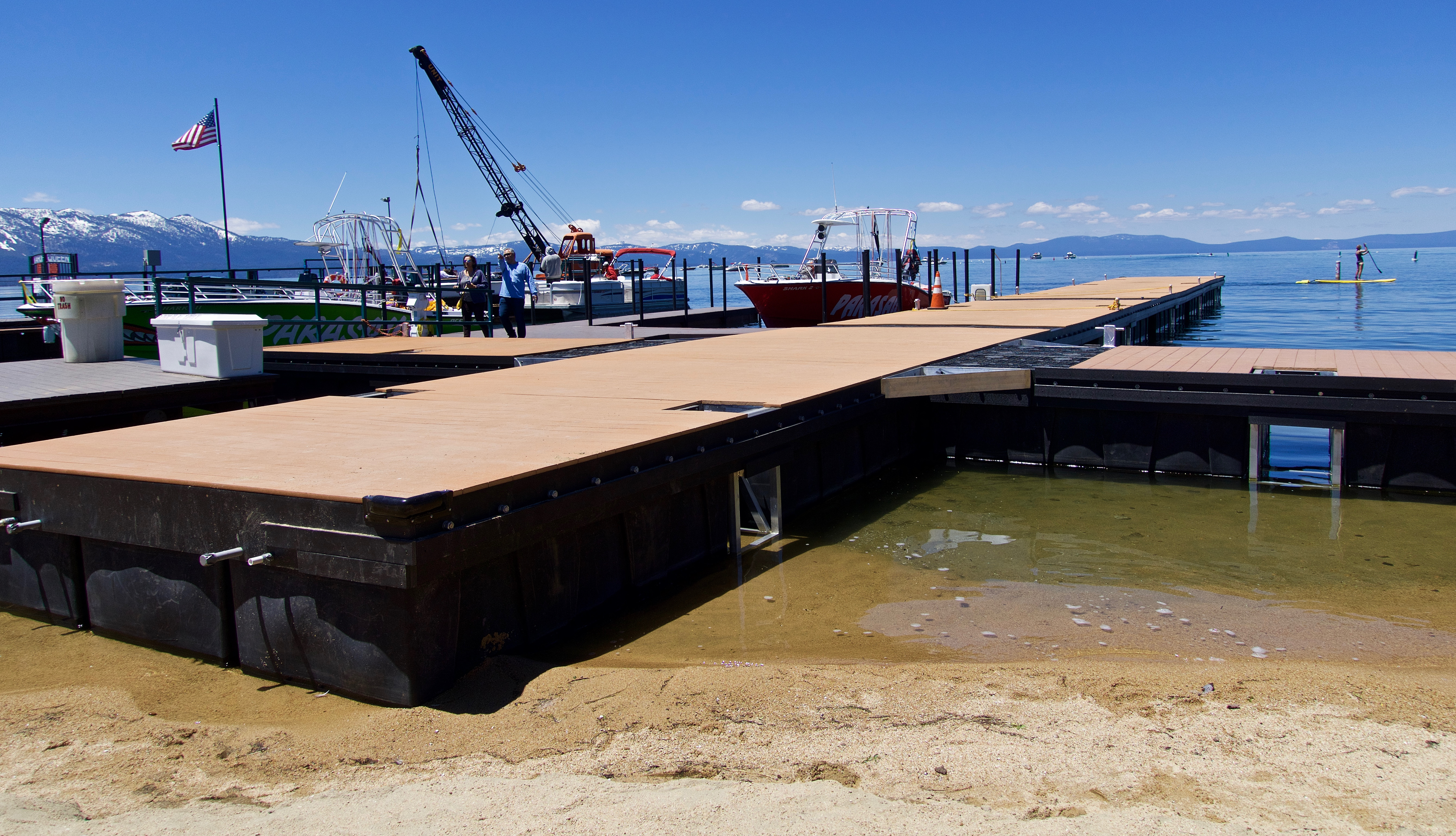
The pier installation at Ski Run Marina was finished June 14. Photo/Kathryn Reed

By Kathryn Reed

A new era in the tourism boat industry at Lake Tahoe starts today with the Safari Rose’s maiden voyage from Ski Run Marina.

Marina owner Elie Alyeshmerni has paid for a new, longer dock in order to accommodate the vessel that until now had been based at the Tahoe Keys Marina.

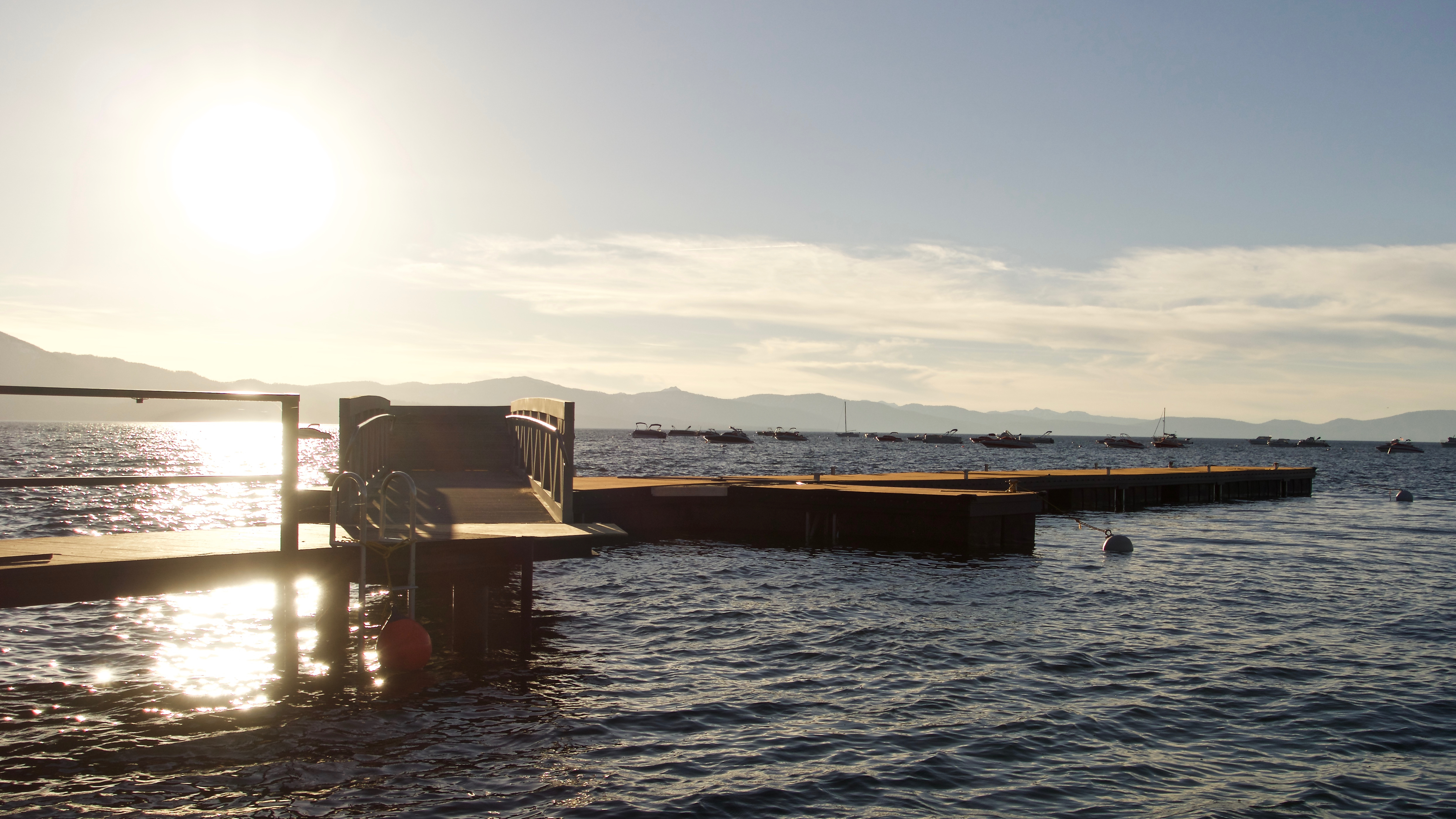
For years he has been looking to install a pier that would be unique to Tahoe in terms of being environmentally superior, aesthetically pleasing and functional.

Work started earlier this spring, with everything being completed on June 14.

“It’s like a Lego set. You put it together and it can be changed,” Alyeshmerni told Lake Tahoe News of the new dock. “The nice thing about this is that it’s floating and goes where the water is.”

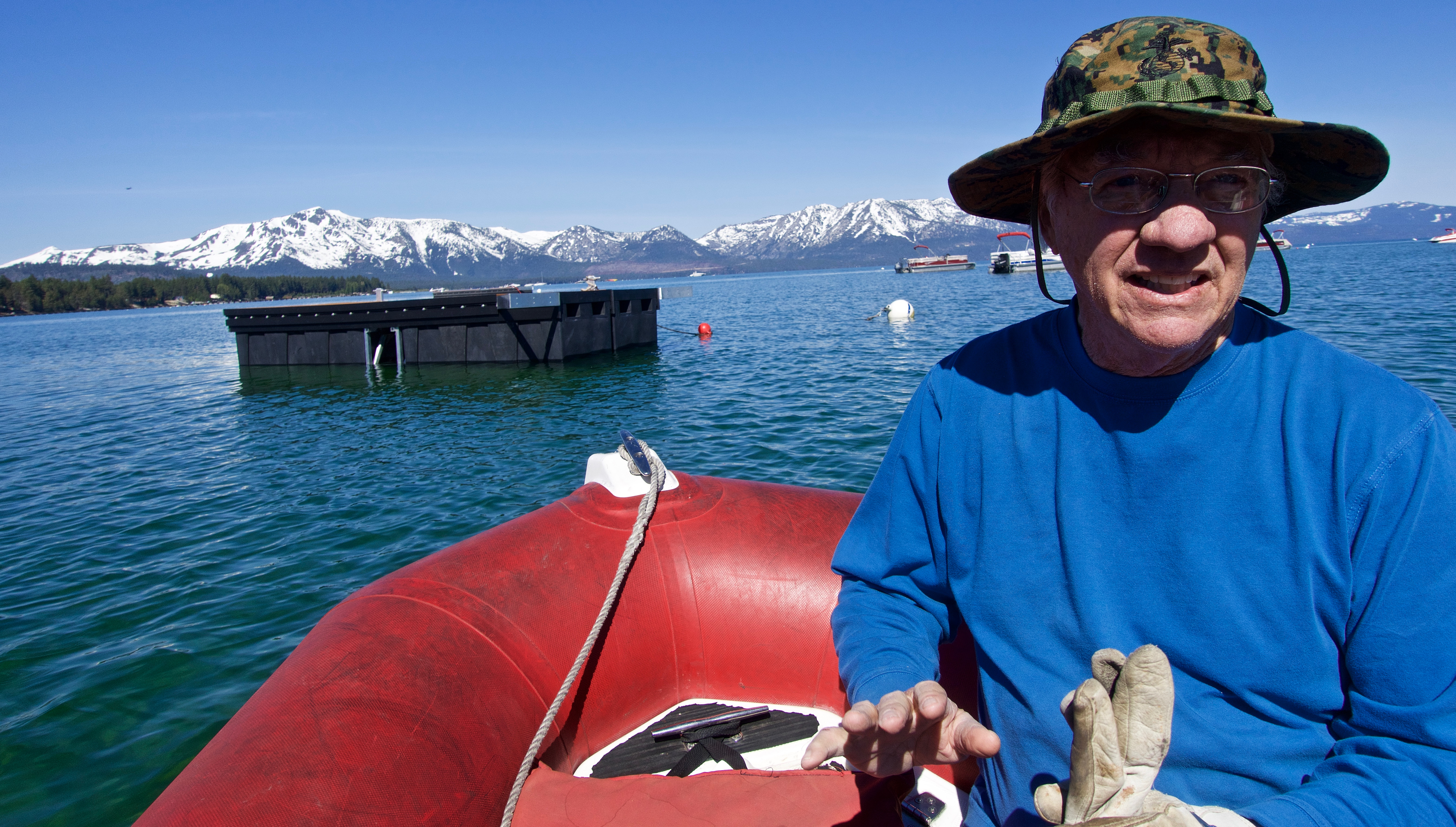
Arnold Finn of Global Dock Marine System approaches a finger float that was place in the lake in May. Photo/Kathryn Reed

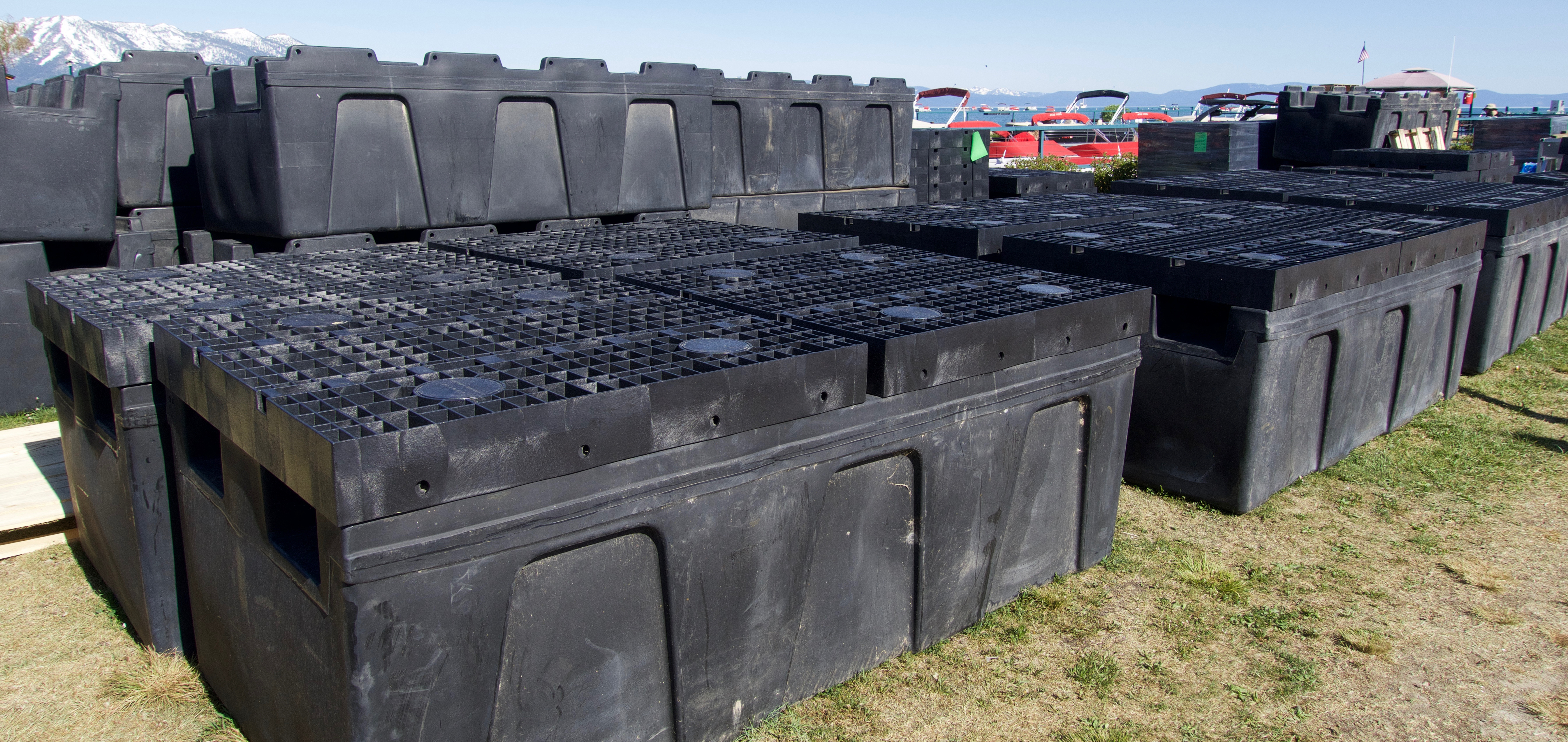
Global Dock Marine System designed and installed the dock. It’s a green system, as in being environmentally friendly for the water and shore. It is made from recycled material. It’s polyethylene plastic that should last 50 years. (The company had been based in Florida, but is relocating to Reno.)

Twelve steel beams were installed to accommodate the 126-foot-long, 12-foot-wide pier. A 40-foot-long bridge connects the old dock to the new floating pier. It shoots to the west at a 30-degree angle.

There are no hinges. Three-quarter-inch steel rods tie it together. It was all assembled with hand tools.

Special bollards are on the dock that are better for boats. Photo/Kathryn Reed

“Once it’s in the water it is inert. Nothing can leach out and go into the lake,” Arnold Finn, part owner of the dock company, told Lake Tahoe News as he started work in May.

Each vertical float can support 3,600 pounds, so it would be possible for a vehicle to drive on it. Each float is 8 feet by 4 feet.

The Tahoe Regional Planning Agency granted a permit for this project on a temporary, one-year basis. A one-time extension is possible for another six months.

This recycled plastic is what is floating in the water after being put together like a puzzle. Photo/Kathryn Reed

The Tahoe Queen had operated out of this South Lake Tahoe marina since 1983. During the drought when the lake level got low it could no longer dock there. Aramark, the owners of the paddle-wheeler, turned it into scrap after it caught fire last August.

When the boat no longer existed Alyeshmerni told Aramark its lease would not be renewed. That company had not honored its contract to dredge the marina nor did it operate the required number days.

“As you know, the Tahoe Queen was damaged beyond repair due to a fire last year while it was being renovated. We are in the process of looking at future vessels to replace the Tahoe Queen and hope to look at future opportunities at Ski Run Marina,” Dave Freireich of Aramark told Lake Tahoe News, even though he acknowledged the company no longer has a lease with Ski Run. 

Steve Dunham now has a 10-year lease at Ski Run, with an option for another 10 years. He brought the Safari Rose to Tahoe in 2003. It is an 80-foot-long mahogany and teak yacht that will operate in the summer season. 

Dunham will be using a steel boat year-round, which will be docked across from the Safari Rose later this summer. One can carry 70 passengers, the other 110. Both will operate during peak times.

The floating dock on June 13 before being put in its “permanent” home. Photo/Kathryn Reed

Ski Run is permitted to have 1,950 passengers a day, but does not intend to even reach half that number.

The hull of these boats is V-shaped, unlike the Queen’s.

“Basically most boats other than the Tahoe Queen (could not) operate off of the (old) Ski Run pier because it is short and the shelf is relatively shallow. The Queen was able to pull up to the existing pier head to allow for loading and unloading, where most other boats have to pull up to the side of the pier for loading and unloading and is not feasible,” Tom Lotshaw, spokesman for TRPA, told Lake Tahoe News. “In order to make the pier serviceable, without an extension, dredging would have been requested by the applicant.”

If dredging is required in the future, that is now the marina owner’s responsibility.

The extension makes the marina as a whole less congested when it comes to boat traffic

Alyeshmerni hopes to make the pier a permanent addition to his marina.