Calif. economy will suffer plenty from climate change

By Dale Kasler, Sacramento Bee

Higher crime rates and electric bills. Crops and laborers wilting in the sun. A new study says California’s economy is going to lose billions of dollars a year to climate change.

But hey, it will be a picnic compared to states like Florida and Texas.

The groundbreaking study, led by two UC Berkeley scientists, says global warming will punish some areas of the country more severely than others. California will suffer, but not as badly as the national average. The situation will be far worse in Gulf Coast states, which can expect to get ravaged by increasingly frequent hurricanes, and areas of the Deep South and Midwest, where agricultural yields will plummet.

Read the whole story


Safety a concern at SLT jail, juvi center

By Kathryn Reed

The lack of bullet proof glass in the lobby of the South Lake Tahoe jail as well as in the administrative office of the juvenile treatment center are a concern.

The adult facility had a full body scanner that was inoperable for more than a year. The youth facility doesn’t have one.

The lack of bullet proof glass separating visitors and inmates was another red flag.

The culinary program at the South Lake Tahoe jail received praise. Photos/LTN file

These were some of the findings in the El Dorado County Grand Jury report that was recently released.

The civil grand jury each year looks into a variety of issues that are usually driven by citizen complaints. The jails, though, are always on the inspection list. The grand jury operates July 1-June 30.

While there have been no deaths at either South Lake Tahoe facility since the last inspection, two adult inmates tried to commit suicide and one juvenile.

“Ninety percent of inmates currently incarcerated at the SLT Jail are housed on felony charges. Twenty-five percent are there as a result of Assembly Bill 109 which is the Public Safety Realignment Bill. This resulted in some inmates who had been incarcerated within California’s State Prison system serving their time in county jails throughout the state,” the report says. “Inmates received under AB109 pose a hardship for the general population of the jail. These inmates are often hardened offenders, gang members, and/or more violent, and are housed in county jail for longer than the 12-month maximum prior to AB109. Many inmates contained within the jail system have mental health problems but they are not segregated unless a safety and/or behavioral issue arises.”

The jail continues to have a difficult time retaining people, with 10 open positions.

Another safety concern is that the cameras in the gym area don’t work. The South Tahoe jail only has an indoor gym because of weather. Inmates may exercise for one hour at a time, two to three times week.

At the juvenile center there is an indoor exercise room, but because it doesn’t have heat or insulation it cannot be used year-round. An outdoor facility is also available.

The adult facility is aging and looks like it even though the maintenance log doesn’t capture all the needs, according to the grand jury.

While the culinary program received high praise, that is the lone vocational offering.

“Lack of vocational programs does not serve the rehabilitation needs of the inmates. Availability of additional vocational training programs could lessen the chances that an inmate will re-offend upon release,” the report says.

The sheriff and county as a whole have until Aug. 15 to respond in writing.

It was noted by this grand jury that Sheriff John D’Agostini never responded to the 2015-16 grand jury report.


Term limits change complexion of Nev. Legislature

By Yvonne Gonzalez, Las Vegas Sun

Term limits have helped make the Nevada Legislature more diverse in the almost 20 years since they were implemented, though the higher turnover has come with some costs.

Experts say term limits have brought in new faces but reduced institutional knowledge as veteran lawmakers are pushed out. They say lobbyists have more power and the Legislative Counsel Bureau is even more vital both in educating new lawmakers and keeping the legislative process moving.

Voters decided in the 1990s to limit lawmakers to 12 years (six terms) in the Assembly and 12 years (three terms) in the Senate.

Read the whole story


Climate change could mean a much wetter Calif.

By Carolyn Wilke, Sacramento Bee

Californians have been bracing themselves for a drier future accompanying a warming climate. But research by scientists at the University of California, Riverside, suggests that the state may actually get wetter in the event of severe climate change.

The study, published July 6 in Nature Communications, reports that more years in the state could look like El Niño ones, when California typically has wetter winters.

The authors found that average annual precipitation in California could increase by about 12 percent if nothing is done to curb carbon emissions. Average precipitation in the winter could increase by as much as 30 percent. A wetter climate, however, might not offset the overwhelmingly negative effects of a warming climate.

Read the whole story


Pray Meadows dazzles with its verdant beauty

Pray Meadows can be seen looking west from Highway 28. Photo/Kathryn Reed

By Kathryn Reed

It’s always an interesting hike when you have to flag down a truck to ask where you are.

And so it was late last month with Rosemary. We knew where we wanted to go. And we got there. We just didn’t know where we were when we went a little farther.

We were in Glenbrook, on Lands End Road.

We got there by going through Pray Meadows, which was our original plan.

I just figured we could get to Lake Tahoe through the meadow. I didn’t realize there would be a subdivision in between the two – and a private one at that. We opted not to even try to deal with getting to the lake; partly because we didn’t know if we’d be breaking some law, and partly because we had gone far enough for one day.

It was about 9.4-miles round trip from the starting point at Highway 28.

Fortunately, there was a creek running through the meadow so the dogs could cool off their bodies and lap up the water. Still, it was good we brought water for them because it was a warm day and we ended up going more miles than expected.

AJ and Cody are content to stick with the trail and not run in the meadow. Photo/Kathryn Reed

At least on June 29 there were no signs of wildflowers, but as the meadow dries out a bit that will change, and may already be doing so.

The lush green meadow is so incredibly vibrant. It looks like it would be wonderful to run through, maybe even bring a blanket for a picnic.

We stayed on the trail, though, which got a little buggy. I can only imagine how bad it would have been in the thick grass.

Tall conifers surround the meadow on all sides. Aspens are in abundance as well, which makes me think this would make for a beautiful fall excursion.

This area of Nevada was once a bustling timber haven that provided wood for the mines in Virginia City during the silver rush in the late 1800s. There are remnants of the old railroad grade. It was nice having it so wide so it was easy to have a conversation. The one mountain biker we saw made us think we might want to revisit the area on two wheels.

According to “The Saga of Lake Tahoe” by E.B. Scott, Capt. Augustus W. Pray was one of the first settlers in Glenbrook in 1860. The two volumes of this book reference Upper and Lower Pray Meadow.

Interestingly, most modern day references for the meadow spell Prey with and E. However, in Glenbrook there is a Pray Meadow Road.

At one time Pray owned hundreds of acres in Glenbrook and was instrumental in the lumber business.

“Pray and his associates — N. E. Murdock, G.W. Warren and Rufus Walton — felled, barked and faced sugar pine to build a crude log cabin, splitting cedar for the shake roof. They harvested the wild hay that grew abundantly on the rich bottom land of the meadow and planted grain and vegetables,” the book says. “In the rarefied mountain air a yield of 60 bushels of wheat and 4 tons of timothy hay per acre was not unusual, while oats grew 7 and 8 feet tall.”

Going to Pray Meadow is the long way to get to Glenbrook. Photo/Kathryn Reed

—–

Getting there:

From South Lake Tahoe take Highway 50 east. Turn left on Highway 28 toward Incline Village. Go about 2.3 miles, park on the left. There is a gate leading down. A trail will intersect with this one, take it to the left. If you go straight, you will hit Skunk Harbor.


Why are coyotes so polarizing?

By Lawrence Lenhart, High Country News

First things first: Coyote. When you read the word, how many syllables do you hear? Your answer, according to Dan Flores, author of Coyote America, may be “immediately diagnostic of a whole range of belief systems and values.” The ki-YOH-tee versus ki-yote divide is one of the best indicators of a person’s coyote politics, a nearly hard-and-fast way that we subconsciously identify ourselves: as defenders of the species, in the case of the former, or as a manager, shooter and/or trapper, in the latter.

In “Coyote America,” Flores occasionally assumes the mantle of coyote’s head of public relations, demonstrating how the species, once “dead last in public appeal — behind rattlesnakes, skunks, vultures, rats, and cockroaches,” overcame its stigma as “varmint” to become a darling among the very people who most infrequently encounter it — modern-day urbanites.

More often, though, Flores is content to serve as a guide to the species, relaying the coyote’s complicated natural, cultural, political and mythological histories. It is why Flores describes his book as, “in most respects, a coyote biography.”

Read the whole story


Staffing shortage plagues Tahoe-Truckee kitchens

Finding restaurant staff in Tahoe-Truckee is getting difficult. Photo Copyright 2017 Carolyn E. Wright

By Ally Gravina, Moonshine Ink

At the bottom of its beer and wine list, Pianeta, a 19-year-old Italian restaurant in downtown Truckee, presents diners with the option to buy a six-pack as a gratuity for the kitchen staff. When customers place the order, a ticket not only prints at the bar for accounting purposes, but also prints in the kitchen; to which the kitchen staff then responds by banging pots and pans so loudly that the purchasing patron (and the entire restaurant) hears the acknowledgement.

Tom Beckering, managing partner and owner, says the celebration creates a snowball effect as more and more customers purchase rounds for the hard-working staff.

Creative incentives like this come from the heart of Truckee/Tahoe restaurant owners, but these sorts of programs are being put into place as solutions to the severe lack of kitchen staff in the area.

Local restaurant owners, managers, and chefs say the dwindling pool of back of the house staff is a crisis. “It’s gone from never having been a problem to always being a problem,” said Bill Arnoff, who has been a chef at Pianeta for 17 years.

Read the whole story


CHP shutting down Truckee dispatch center

By Susan Wood

Come next May, the California Highway Patrol will have silenced its voice out of Truckee – moving the communications dispatch center to Chico.

The move is part of a five-year infrastructure plan by former Gov. Arnold Schwarzenegger to consolidate dispatch centers labeled PSAPs – Public Safety Answering Points.

CHP manages 25 dispatch centers throughout the state as an essential tool backing up its 109 offices with more than 11,000 employees.

The 40-year-old Truckee dispatch center – which handles South Shore 911 cellular calls – averages about 200 calls a day unless a major snowstorm prompts a surge in call activity. Landline calls are channeled through sheriff’s and police departments.

In comparison, a large dispatch center such as Chico or Sacramento takes in about 3,000 calls a day, CHP Truckee Capt. Ryan Stonebraker told Lake Tahoe News.

Stonebraker assured the public the shutdown would be fairly seamless and explained how larger dispatch centers could manage the calls more efficiently based on their large staffing levels. If Chico becomes inundated with calls, some will be forwarded to Sacramento. In Northern California, other cities with dispatch centers include Eureka, Redding and Susanville.

“I think we’ll have some growing pains. But with resiliency, redundancy and continuity in taking the calls, it will work out. We’ve had these calls in Sacramento before. There are certain advantages to moving resources around,” he said, adding that technical changes will need to be adjusted in the radio frequencies.

The captain, who runs CHP Truckee operations, pledged to have at least a few dispatchers from Chico and Sacramento familiarize themselves with the unique nature and terrain of the Lake Tahoe region.

CHP Capt. Ryan Stonebraker of the Truckee office is losing his dispatch center in 10 months. Photo/Provided

CHP dispatch took a critical hit a decade ago during the Angora Fire aftermath when South Shore witnesses – one with a distinct view from the Lake Tahoe Golf Course – called in to report the blaze early on and were told it was a prescribed burn that they shouldn’t worry about.

At the time, it took South Lake Tahoe police dispatch Supervisor Leona Allen telling CHP Truckee dispatch it was not a controlled burn. The miscommunication led to a subsequent investigation about whether the devastating fire that consumed 254 homes could have been doused sooner. Results of the investigation have never gone public because the state labeled them a “personnel” matter.

Whatever the case, Stonebraker said dispatch is a very tough job and feels sympathy for the staff in Truckee being upended – especially since severe damage to its center and offices this winter sent staff to modular, portable facilities.   

“I love my dispatchers. This is hard for me. I care about the center. I care about them,” he said.

Truckee employs one dispatch supervisor and a dozen dispatchers who work varying shifts. They will be offered jobs at other dispatch locations, posts that are often readily available, according to Stonebraker.

Turnover in Truckee is high, with no staffers lasting longer than two years. To no surprise in a tourist town, housing is apparently as tough to deal with as the job, according to city and state officials.

CHP could not provide the amount in cost savings to close the facility, assuming there even is a savings.

Outgoing Truckee Town Manager Tony Lashbrook pointed out how the state is planning on investing about $20 million in a new CHP building at a different site in town; it just won’t have dispatch. Come 2019, the new offices will be built in the old U.S. Forest Service structure on Pioneer Trail.

The public resisted the new towers the CHP intended to erect on Highway 89 because they are in the scenic corridor of Interstate 80; however, towers already exist at that location.

“I wouldn’t presume to second guess the CHP. Consolidation is the state of industry today. With technology, I’m not convinced it’s super important where the dispatch center is located (in terms of call efficiency). But one factor in the proposed closure is the cost of housing, and the town didn’t want the towers,” Lashbrook summed up his assessment. One factor facilitated another.

The whole proposal was met with mixed reaction from external and internal forces.

“We’re sad to see that happen. We like the dispatch here,” CHP Lt. Cmdr. Terry Lowther of the Meyers office said.

CHP Chico also intends to rebuild with about a quarter of its 33,000 square-foot facility dedicated to dispatch.


Scenic meadows near Lake Tahoe preserved

By Paul Rogers, Bay Area News Group

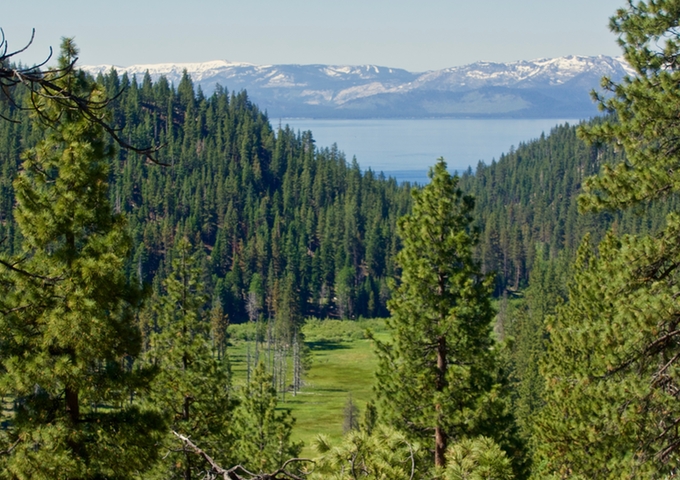
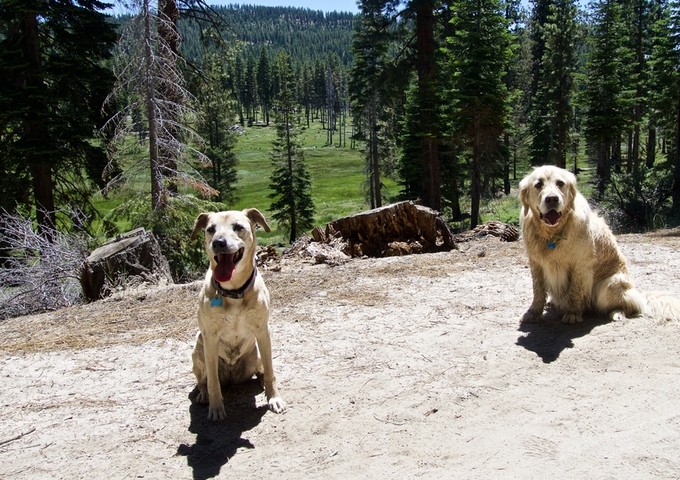
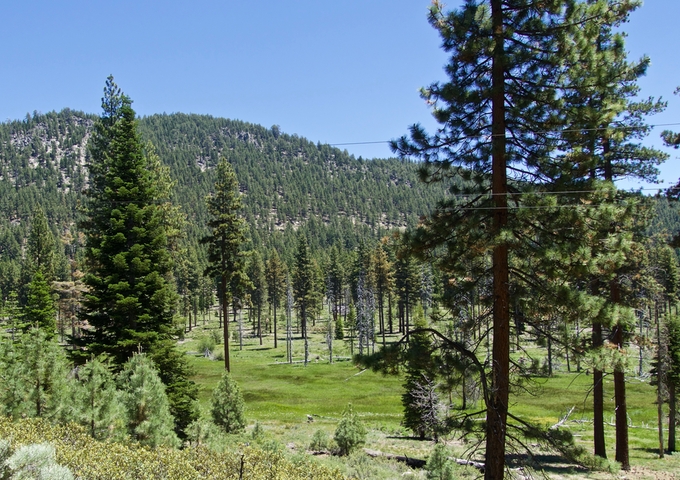
TRUCKEE — A breathtaking landscape of Sierra Nevada meadows, forests and wetlands larger than San Francisco’s Golden Gate Park — located 20 miles north of Lake Tahoe — will be preserved from development under a $10 million deal that closed Friday.

The Carpenter Valley is 1,317 acres, a hidden valley one ridge over from the Tahoe Donner ski resort that is home to bald eagles, black bears, carpets of wildflowers and an unspoiled stream — all flanked by snow-capped peaks.

A coalition of conservation groups known as the Northern Sierra Partnership, which is based in Palo Alto and funded in large part by donors from Silicon Valley and the rest of the Bay Area, feared that the land would be developed as a golf course or housing subdivision. So the groups stepped in to acquire the property when it was about to hit the market.

Read the whole story


Mother Nature naturally restores Truckee River

By Jamie Wanzek,  Moonshine Ink

The Truckee River has returned with vigor. In addition to creating rare whitewater conditions and easing concerns about the recent drought, the raging cobalt flows have done up to $1 million worth of restoration work naturally, says David Lass, Trout Unlimited California field director.

The estimate is largely based on the amount of woody debris that has been swept into the river in the Tahoe-Truckee area, which creates fish habitat, feeds aquatic insects, and establishes “structure.”

Based on projects that TU has organized doing exactly the same thing — placing dead trees on the river bottom — he estimates that the high water has done the equivalent of $600,000 to $1 million of restoration work along the Truckee River watershed.

Read the whole story