Sandoval wants to protect transgender soldiers

By Mike Higdon, Reno Gazette-Journal
 
Gov. Brian Sandoval said as commander-in-chief of the Nevada National Guard, he will do what he can to protect transgender service members even though President Trump proposed banning their service in the U.S. military.

“I support Guardsman (Sam) Hunt and am thankful for his longstanding service to our state and country,” according to a prepared statement from the governor’s office referring to the Guard’s first openly transgender service member.

After learning of the three-part tweet from Trump that said the Department of Defense wants to reinstate a ban on transgender soldiers, Sandoval said he “immediately requested information on what protections the state could put into place.”

Read the whole story


Study reveals how wildfires create their own weather

By Linda Lam, Weather Channel

Wildfires can create their own weather and a new study gives more insight to understanding what actually takes place.

This deeper insight is beneficial to firefighters and the communities at risk for wildfires.

A recent study published by Neil Lareau and Craig Clements from San Jose State University explains how they were able to gather data from inside wildfire plumes, and it was determined that wildfires can create their own weather, which influences the behavior of the fire.

This is the first time information was obtained from inside wildfires. Previous data was obtained from computer simulations, according to the National Science Foundation, which funded this research.

Read the whole story


Rules being devised for Tahoe’s shore line

By Kathryn Reed

Bringing harmony to divergent interests involving the shore line of Lake Tahoe is the goal. Time will tell if the next document will have the same outcome as the last – being shelved because of litigation.

Competing parties have been working on a bi-state plan for more than year. The 26 meetings amounted to hundreds of hours of negotiations.

Now the Tahoe Regional Planning Agency is figuring out what exactly will be analyzed in the environmental impact study. On July 26, the bi-state agency’s Governing Board got a brief overview of what is being recommended.

The last time the TRPA board approved a shoreline plan was in 2008. Legal action ended its viability. It’s taken until now to come up with another attempt. The 1987 Regional Plan is what governs the shore zone today.

The latest plan calls for 10 new public piers and 128 private piers. They will have to be spread out to meet scenic regulations. The goal is to have people share the private piers. This number will mean some lakefront property owners will not have a private dock. To do so would have meant allowing about 700 new piers.

Another 1,430 buoys would be granted.

Today there are about 760 piers and 4,000 buoys on Lake Tahoe.

One of the eight speakers at Wednesday’s meeting in Kings Beach said it would be great if the illegal buoys were removed before any new ones were permitted.

Much consideration was given to drought conditions. Moveable docks will be preferred. This will allow them to be used in all conditions instead of standing over dry land as was the case for a few years until this past winter.

Being able to move a buoy to deeper water will also be permissible.

The environmental analysis will study water quality, scenic resources, the recreation experience, noise, air quality, soil conservation, vegetation and fisheries. Alternatives will also be studied.

There was talk of how to eliminate the conflict between users because motorized watercraft have a habit of violating the 600-foot rule – as in, they are supposed to be that far from shore. Education and enforcement were talked about, as well as the need to clearly define who should be doing what.

The 2008 plan didn’t even consider recreation.

This 2017 plan covers: boating/lake access structures, marinas, motorized boating, non-motorized boating, streamlined permitting, low lake level adaptation, green infrastructure, enforcement, tolerance districts and permissible uses, concessions operations, dredging, and environmental improvement.

The EIS should be released in the winter.

—–

Notes:

·      The TRPA Advisory Planning Commission will discuss the scoping document on Aug. 9 at 9:30am at the agency’s Stateline office.

·      The comment period ends at 5pm, Aug. 16. Send comments to rcremeen@trpa.org.


Report projects fewer Nevadans to vote in 2018

By Colton Lochhead, Las Vegas Review-Journal
 
Nearly 420,000 Nevadans could skip next year’s midterm elections, and Democrats and Republicans alike are prepping for what such a decrease in voters could mean in 2018.

Democrats want to avoid a repeat of 2014, when a weak ballot and low turnout saw the GOP take control of state politics for the first time in decades. Republicans see a potential drop nearly equal to Nevada’s second-most populous county as an opportunity to pounce once again.

The projected dip in turnout comes from a report from the Voter Participation Center, a nonprofit that advocates for more voting access and easier registration.

Read the whole story


Lake Tahoe water level starting to recede

By Amy Graff, San Francisco Chronicle

Lake Tahoe is brimming, nearly full for the first time in 11 years.

On July 9, the lake level peaked at 6,229 feet, a hair shy of 6,229.1 feet above sea level, the point when it reaches full capacity. The last time it reached near full capacity was 11 years ago.

Tahoe’s water level is slowly going down by 0.12 to 0.24 inches a day.

Read the whole story


Progressive plan by Vail Resorts to use 100% renewable energy, create zero waste by 2030

Vail Resorts is initiating a companywide policy to thwart climate change. Photo/LTN file

By Kathryn Reed

California and Colorado-based Vail Resorts on Tuesday each took significant steps in the fight against climate change.

Gov. Jerry Brown signed legislation to extend the state’s cap-and-trade program to 2030. The legislation, which gives companies incentives to pollute less, was set to expire in 2020.

Vail Resorts is implementing a plan at all of its ski resorts – including Heavenly, Kirkwood and Northstar in the greater Lake Tahoe area – to have zero net emissions by 2030, zero waste to landfills by 2030 and zero net operating impact to forests and habitat.

“This initiative is smart for our business and good for the planet. Being energy efficient results in immediate and lasting reductions in our company’s operating costs and improves our energy resiliency,” Kevin Cooper, spokesman for Heavenly-Kirkwood, told Lake Tahoe News. “Our investments in renewable energy can lock in very competitive rates well into the future, which provides cost certainty. Our efforts to achieve zero waste result in considerable reductions in both hauling and landfill costs. And managing the health and resilience of our forests and habitat is sound, long-term planning for our critical mountain environments and for watersheds.”

The cost to implement the plan and any long-term savings are not being disclosed by the ski conglomerate.

Improving the snowcat fleet will help reduce emissions. Photo/LTN file

While California and Vail Resorts tout their environmental initiatives, the United States as a whole will not attain the goals set forth in the Paris accord without other states and large companies following their lead.

At the ski resorts there will be no immediate impact to skiers or other guests. What they are likely to notice is information being provided to explain the program, and food being served in recyclable or compostable containers.

Lake Tahoe News asked: How can there be zero waste to landfills when guests bring their own food/waste? The answer: silence.

Today, about 60 percent of Vail’s waste ends up in a landfill. By 2020, the goal is to reduce that to 50 percent, with 100 percent diversion planned for 2030.

More efficient grooming practices is one way to help reach the company’s goals.

“Our commitment to energy efficiency includes reducing fuel usage in our mountain operations vehicles – from snowcats to shuttle buses to Colorado Mountain Express. As the mountain resort industry leader, we’ve had the opportunity to pilot the latest technology for grooming, hybrid-electric snowcats and are working with vendors to improve those technologies,” Cooper said. “We’ve also invested in state-of-the-art grooming efficiency software which is being piloted in Colorado in anticipation of a companywide roll out.”

Another way to be more energy efficient is with better chairlifts. This will happen at Vail, Beaver Creek, Keystone and Breckenridge in Colorado before next season. No chairlift upgrades are planned this year for any of the California Vail-owned resorts. Considering Kirkwood Mountain Resort mostly has outdated infrastructure and Heavenly still operates a two-person lift, there is plenty of room for improvement locally.

The goal is in 13 years to not have any food product go to a landfill. Photo/LTN file

New lifts often require the elimination of trees.

“Under our commitment, any tree removal would be offset by replanting or restoring forests and trees equivalent what may be removed acre for acre. We’re partnered with the National Forest Foundation, the nonprofit arm of the U.S. Forest Service, to identify and prioritize opportunities for reforestation and improving the health and residency of existing forests in or around our resorts,” Cooper said.

However, he would not say if the replanting would actually occur in the same forest where the trees were removed.

Whistler Blackcomb’s progressive environmental policies helped push its new owners to make this similar commitment companywide. It is being called the Epic Promise for a Zero Footprint. Vail bought the Canadian resort a year ago.

“For our zero net emissions goals, we are working with Ceres, Rocky Mountain Institute and RE100. To accurately track our progress toward zero waste, we are piloting a new waste tracking software solution. For our commitment to zero net operating impact to forests and habitats, we are partnered with the National Forest Foundation and the U.S. Forest Service and will continue to leverage their established methodology for identifying opportunities and managing forestry projects,” Cooper said. “We will work with these and other third-party organizations to study and report on the long-term impacts of these projects. We will plan to share the company’s progress in an annual sustainability report, following the close of the fiscal year ending July 2018, which will follow the Global Reporting Initiative’s standard.”

RE100 is a group of companies with the same goal of using 100 percent renewable energy; including Anheuser-Busch InBev, Coca Cola, Apple, Google, Facebook, Microsoft, Nestle, Nike and Starbucks.

This is how Vail plans to achieve its goals:

·      Reduce electricity and natural gas use 15 percent on top of the 19 percent already achieved since 2008 by improving operating practices and investing $25 million in innovative, energy-saving projects, such as low-energy snowmaking equipment, green building design and construction, and more efficient grooming practices and equipment.

·      Purchase 100 percent renewable energy equivalent to Vail Resorts’ total electrical energy use and working with utilities and local, regional and national governments to bring more renewable energy to the grids where the company operates its resorts.

·      Investing in programs such as tree planting to offset the use of other types of energy like gasoline and diesel.

·       Engaging with vendors and suppliers to reduce their emissions and environmental impact.


Dems going after Calif. GOP congressional seats

By Angela Hart, Sacramento Bee
 
Regina Bateson was one of 750 people who at an April town hall listened to Republican Congressman Tom McClintock voice support for efforts by leaders of his party to scrap Obamacare, question the science behind climate change and dismiss the need for an investigation into Russian meddling in the 2016 presidential election.

It was a pivotal moment for her. Soon after, she launched her campaign for California’s 4th Congressional District, a deep-red Republican stronghold encompassing the heart of the Sierra — including Lake Tahoe — that McClintock has represented since 2009.

Bateson, a Democrat and political newcomer, is one of more than 40 Democrats challenging Republican incumbents next year in 11 of the 14 House seats California Republicans hold in Congress. Between April and the end of June, the first quarter she filed, Bateson raised almost $100,000 – more than any Democrat running in the district has raised in a first quarter.

Read the whole story


Wind impacts racing event at Lake Tahoe

Elite sailors spent four days at Lake Tahoe, with races culminating July 23. Photo/Rebecca Hinden

By Jake Fish

Following four days of exciting racing in the sparkling waters of Lake Tahoe, Marek Zaleski (Norwalk, Conn.) became the 2017 U.S. Singlehanded Men’s Champion and Hanne Weaver (Seattle) became the 2017 U.S. Singlehanded Women’s Champion on Sunday.

Held in conjunction with the Laser Class U.S. National Championships and hosted by the Tahoe Yacht Club, the fleets were comprised of experienced and proven singlehanded sailors and an influx of new talented young men and women.

Zaleski’s performance was good enough to claim the overall title out of 43 boats in the Full Rig fleet for the Laser Class U.S. National Championship. Although Jake Vickers was a game competitor all week, Zaleski won five of the seven races and was the clear-cut top performer.

U.S. Singlehanded Men’s Championship results:
1. Marek Zaleski, Noroton Yacht Club, 1-5-1-1-1-1-[7]- ; 10
2. Jake Vickers, Severn Sailing Association, 3-[6]-4-2-3-3-1- ; 16
3. Caleb Robinson, Sail Maine, 2-[22]-5-13-5-7-5- ; 37
4. Cameron Feves, Cabrillo Beach Yacht Club, 6-9-8-9-[16]-4-13- ; 49
5. Peter Phelan, Santa Cruz Yacht Club, 7-11-7-6-7-14-[44/DSQ]- ; 52
Complete Standings

“The altitude and the water quality are two things that are different about this venue,” explained Zaleski. “I’m glad I got here early, because I was struggling when working out on my bike and the water is so clear, the Lasers float a little lower in the water, not a huge difference, but it’s noticeable.

“I am campaigning for the 2020 Olympics nonstop,” said Zaleski. “I have over 200 days on the water since I graduated last year and a lot of time in the gym working on my fitness. So, it’s nice to see good results and that my work  is paying off.”

Weaver won the U.S. Singlehanded Women’s Championship by a 16 point margin over Charlotte Rose. She placed second overall to Chase Carraway out of 55 boats in the Laser Radial fleet.

U.S. Singlehanded Women’s Championship results:
1. Hanne Weaver, RVYC, SYC, 3-12-4-2-10-[18]- ; 31
2. Charlotte Rose, Houston Yacht Club / GCYSA, [23]-14-2-4-14-13- ; 47T
3. Kelly Cole, OCBC, 7-13-5-14-[56/OCS]-8- ; 47T
4. Lillian Myers, GCYSP, [18]-11-17-6-6-9- ; 49
5. Annika Fedde, Ventura Yacht Club, 13-26-16-27-9-[39]- ; 91
Complete Standings

“The wind and how it comes off the mountains and spreads out over the lake is the most challenging part of this sailing venue,” explained Weaver. “You really have to keep your head out of the boat.”

The race committee completed three races for the Lasers on Thursday and Friday and three races for the Laser Radials on Thursday and two on Friday. The conditions were similar both days with winds in the 6-10 knot range, primarily from 225 degrees with violent shifts making it difficult to maintain “squareness’ on the inside-outside trapezoid course.

Lack of any breeze on Saturday forced the race committee to abandon all racing. Sunday looked like a repeat of Saturday, with a slightly better, yet inconsistent, forecast model. A 10 knot westerly burst through the racing area later in the afternoon. The shifts became radical and inconsistent resulting in a postponement and general recall before getting off the Lasers just seven minutes before the warning signal deadline. The wind was brisk resulting in a shorter than expected race duration for both fleets. They completed an important sixth race for the Radials (allowing for their discard) and a seventh race for the Lasers.

Sailors eligible for the U.S. Singlehanded Sailing Championships in the men’s Laser Full Rig and women’s Laser Radial Fleets must be U.S. citizens and at least turn 17 in the calendar year of 2017. These eligible sailors raced in their respective fleets as part of the Laser Nationals competition.

Prizes were awarded to competitors meeting the eligibility rules for the U.S. Singlehanded Championship:

  • George D. O’Day Trophy to the overall highest placing eligible male in the Laser Full Rig for the U.S. Singlehanded Men’s Championship.
  • Helen Willis Hanley Trophy to the overall highest placing eligible female in the Laser Radial for the U.S. Singlehanded Women’s Championship.

Medals were awarded to the top three positions in each fleet.

Jake Fish is with US Sailing.


Grand jury questions EDC-tribe finances

By Joann Eisenbrandt

In September 2006, El Dorado County and the Shingle Springs Band of Miwok Indians signed a memorandum of understanding that ended the county’s two lawsuits that had delayed construction of the tribe’s Red Hawk Casino. The casino opened in 2008.

The 2016-17 El Dorado County Grand Jury responded to concerns raised by county residents about how well El Dorado County has administered the terms of this agreement. The MOU was later amended in 2012 and again in June 2017.

“None of the reports submitted by the tribe provide any detail about the increased expenses associated with caring for non-Indian residents of the county as required by the 2012 amendment.” — 2016-17 El Dorado County Grand Jury Report

El Dorado County Chief Administrative Officer Don Ashton was asked by Lake Tahoe News to describe the current relationship between the county and the tribe. “The relationship between the county and the tribe right now is very good,” he said. “There is open dialogue, so that is all positive. They have the right to do the things on their land that they choose to, but they try to work with the county as much as possible.” 

AmyAnn Taylor, attorney general for the Shingle Springs Band of Miwok Indians, handles government affairs for the tribe and is the contact person with the county for the MOU. She agrees with Ashton, “Over the years, the relationship between the Shingle Springs Band of Miwok Indians and the county has become more collaborative as we both look for opportunities to partner.”

The relationship between the county and the tribe began quite differently.

Early opposition to the casino

In a position statement in April 2003, the El Dorado County Board of Supervisors declared, “Many county residents have expressed to us the reasons why they feel that this huge proposed casino in Shingle Springs would be a disaster for the county. The board has heard and understands these concerns, and is adamantly opposed to the building of a casino that will degrade the quality of life in El Dorado County in so many ways.”

They called it a “planning nightmare,” adding, “No rational planner and no sensible public official would ever approve a commercial project of this magnitude in an area zoned for rural residences …. Anyone who believes that casinos make good neighbors is sadly misinformed.”

The county subsequently filed two lawsuits to stop construction of the casino. One challenged the state’s environmental analysis regarding impacts of the interchange to be constructed on Highway 50. The tribe’s Rancheria was landlocked and needed this interchange in order to construct the casino. The second lawsuit challenged the official federal recognition of the tribe by the Bureau of Indian Affairs (BIA).

Opposition ends, funding begins

In September 2006, the county dropped both lawsuits in return for payments from the tribe to mitigate the expected impacts of the casino on area residents. The original MOU was drawn up. The county stipulated that the tribe was a legitimate, federally-recognized tribe entitled to have a gaming facility on its rancheria, which was “Indian lands.” Lands like this are held in trust by the federal government for the tribe and are not subject to local or state environmental or land-use planning regulations or to property and sales taxes.

The tribe agreed to fund a 5.3-mile portion of a proposed high occupancy vehicle lane on Highway 50 from South Shingle Road/Ponderosa Road to El Dorado Boulevard. It would also pay the county $500,000 annually for law enforcement, agree to collect sales and hotel taxes similar to that being charged by non-Indian businesses in the county, and pay an additional $500,000 annually for 20 years or the life of its gaming compact with the state in recognition of the fact that the casino is not subject to the same taxes as other El Dorado County businesses. It would pay an additional $100,000 for every 100 slot machines it added over the 2,000 limit in its current state compact.
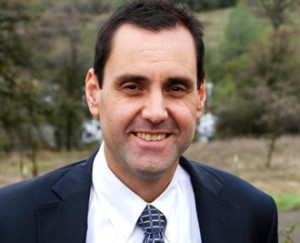
“They have the right to do the things on their land that they choose to, but they try to work with the county as much as possible.” — CAO Don Ashton

Amendments change the MOU

The impacts of the casino on Highway 50 had been less than expected the 2012 amendment said, and other funding had been found to construct the HOV lane. In place of paying for the HOV lane, the tribe agreed to give the county $5.2 million annually to be used for “qualifying public improvements,” including but not limited to road improvements or maintenance within the boundaries of a map drawn outward from the rancheria. The boundaries extended south from the rancheria just below Highway 50 in Cameron Park, and north to include the Missouri Flat area and just above.

The county agreed to give the tribe $2.6 million annually for its health clinic “in consideration of the increased expenses to the tribe’s health program for caring for non-Indian citizens of the county ….” The tribe was required to submit a detailed annual report showing how these funds were spent.  

Uses of tribal funds are expanded

At its June 6, 2017, meeting the Board of Supervisors approved a second amendment to the MOU. It removed all geographical restrictions on where the “qualifying public improvements” money could be spent within the county. It says, “The parties recognize that spending flexibility will enable the county to utilize the MOU funds in a more effective and efficient manner which will benefit both parties.” The 2016-17 grand jury report came out before the 2017 amendment to the MOU so it is not referenced in the report.

Concerns have been expressed by residents with property near the casino that the impacts to those living in this area need to be more fully mitigated before money from the tribe is spent elsewhere. County resident Lori Parlin has been actively involved with this issue. She has discussed additional mitigations for impacts in the area around the casino with Ashton. At the June 6 board meeting she told county supervisors, “… the expectations (of residents near the casino) have not been met. A fraction of the money (the tribe gives the county) should be spent to help local residents. That’s what the intent of this money was originally.” Ashton was the negotiator for the county with the tribe for the second amendment.

Where should the money be spent?

“We have a board policy that they have as much flexibility over spending money as possible, and the map from the 2012 MOU Amendment did not allow for this,” Ashton told Lake Tahoe News. The board can use the money from the tribe, he added, as it sees fit. Right now, as in many California counties, roads are the priority. Raising the sales tax to fund road improvements, Ashton noted, is most likely not a viable option.  “(The tribe) gives us over $7 million each year and I can’t give up that $7 million. It is important to the county.”

According to Ashton, the roads in the area defined by the MOU map drawn in 2012 have an overall pavement condition index (PCI) of 70, while those in other areas of the county are at 60. Roads in the Tahoe basin can be as low as 40. The PCI is a numerical scale from 0 to100 that identifies the condition of roadways; 0 is worst, 100 is best. “Nobody would dispute,” Ashton said, “that road maintenance is a qualifying public improvement.” Because qualifying public improvements are not well defined in the MOU, “it leaves a lot open to interpretation.”

It remains difficult for some to accept that using money from the tribe to fix roads in Tahoe, miles away from the casino, is an appropriate use of those funds. Ashton said there is $3 million in the current year budget for road maintenance in the Tahoe basin. “The casino has drawn many visitors away from Tahoe,” he explains. “The revenue that they lost could have been used to fix the roads in Tahoe.” District 5 Supervisor Sue Novasel, who represents the Tahoe area, agrees. She strongly favored the second amendment to the MOU. “Because the casino was built down here, it has had a terrible financial impact on the South Shore of the lake.”

A failure in administration

The 2016-17 grand jury’s concerns are only with the county’s failure to properly administer the 2012 MOU amendment. Its report notes the county did not designate a point of contact for administration of the amended document and it did not keep a centralized file for it. Their investigation showed that the board had been relying on the county’s CAO to deal with matters related to the agreement. The board itself had limited knowledge of the terms of the agreement and the turnover rate for CAOs in the county had been high. This made it difficult to ensure compliance with the MOU. Ashton became county CAO in May 2016. He told Lake Tahoe News that there was no central file before he assumed the position, but that he has since created one. He found it difficult to find anyone who had been involved in the creation of the original 2006 MOU. “I started from the hand that was dealt to me.” Ashton is the county’s contact with the tribe regarding administration of the MOU.

The amendment’s terms

Under the MOU, the county is to audit the number of gaming machines at Red Hawk Casino to see if there are more than 2,000, but no audits have been done. The grand jury interviewed county officials and found they, “… had no knowledge of any monitoring of the number of machines. There is no process or oversight in place that follows up on annual changes in machine count.” The tribe did pay the county twice for extra gaming machines—$100,000 in February 2014 and $300,000 in December 2015. Ashton confirmed that the county had not performed any prior audits of gaming machines at Red Hawk Casino.

The latest amendment to the tribe’s compact with the state allows for up to 4,000 gaming devices after June 30, 2020. If Red Hawk Casino reached this number of machines, it would mean an additional $2 million for the county. The casino currently has approximately 2,100 gaming machines.

Show us the money

The tribe is to report annually on how it has used the $2.6 million from the county. The grand jury said the tribe’s one-page reports “have been inconsistent and lacking in detail. The use of these funds needs to be in compliance with the intent of the amended agreement; it is difficult to ascertain the use based on the limited reports provided.” 

Several of the tribe’s reports said the funds were applied to “the general operating budget for the Shingle Springs Health and Wellness Center.” Page 21 of the grand jury report entitled, “Shingle Springs Band of Miwok Indians (Governmental Activities and Funds)” does contain what appear to be financial figures, but they have all been redacted. The grand jury report states that no one at the county “could explain exactly what the above provision meant or how it was to be implemented.”

The bigger issue the grand jury addressed was whether “the payment may not be justified in terms of direct dollar benefits for the increased expenses associated with caring for non-Indian citizens of the county.” It noted that the tribe had been serving both Indian and non-Indian communities since 1995 and that their health clinics get a significantly higher reimbursement rate for Medi-Cal and Medicare patients than some other county health care providers do. In its findings, the grand jury noted, “None of the reports submitted by the tribe provide any detail about the increased expenses associated with caring for non-Indian residents of the county as required by the 2012 amendment.” It recommended the county adopt a policy requiring the tribe to provide a detailed report of the use of the county’s “qualifying healthcare contributions.”

“However, we have a government-to-government relationship that respects the sovereignty of each body to spend the funds as needed.” — AmyAnn Taylor, Miwok tribe

Not a new concern

In March 2015, Parlin had sent a letter to county Auditor-Controller Joe Harn requesting that he “perform an audit of the $2,600,000 that El Dorado County donates annually to the Shingle Springs Band of Miwok Indians for qualifying healthcare contributions ….”

She noted, “The letters (provided by the tribe) do not meet any standards of a detailed summary of expenditures, and do not give the county of El Dorado taxpayers enough information to assess whether the $2,600,000 is a worthwhile investment of county funds.” Parlin told Lake Tahoe News that her request “fell on deaf ears.”

At the August 15, 2015, board meeting, Parlin brought up the issue again and asked the board if the county had received a detailed summary in July from the tribe and if the county had sent the tribe a check. “I would like to ask that the payment be withheld until we receive a detailed summary of expenditures.”

A detailed financial audit would give dollar figures for the tribal health clinic’s “unreimbursed expenses” from the treatment of non-Indian patients. Unreimbursed expenses are those not covered by any payment sources. These payment sources include Medi-Cal — California’s expanded version of Medicaid —, Medicare, private insurance, a sliding fee scale, straight charity and grants. Critics of the county’s payment to the tribe want the board to require the tribe to provide the clinic’s actual income and expense amounts.

Harn told Lake Tahoe News, “As for the public demands that I perform an audit of the Shingle Springs Health & Wellness Center (clinic), I do not have the authority to perform an audit of the clinic … or IBM or Burger King.” He added that the clinic is audited each year by their independent auditors. “Tribal Administrator Ernest Vargas has shared portions of the clinic’s (independent) audit with us,” Harn said.  “The reports indicate that the tribe expends more than $2.6 (million) on the clinic each year.” 

El Dorado Community Health Centers (EDCHC) also expressed reservations about the $2.6 million payment to the tribe. In a letter to the board in February 2016, the agency commended the county for its commitment “to support healthcare for county residents,” but had issues, “surrounding the manner in which these county funds are being used.” They requested an independent audit of the county’s financial contributions to the tribe’s health clinic.

They referenced a Nov. 7, 2012, report from then-County Counsel Ed Knapp to the board supporting the 2012 amendment. That report said the tribe’s new facility was, “the only medical facility in the area which serves indigent and Medi-Cal patients.” EDCHC board treasurer Stan Stailey told LTN that the county should have known this was incorrect. It was El Dorado County that provided the $300,000 start-up loan to the El Dorado Community Health Center in 2003 from state tobacco funds. It was intended to help take the burden off the ER at Marshall Hospital for the treatment of indigent and Medi-Cal patients. EDCHC currently operates four health facilities in the county.

Stailey said they did not receive a response to their 2016 request for an audit. He also believes that recent conversations with Ashton and members of the Board of Supervisors have not adequately addressed his health care organization’s concerns. Ashton said that even though “the spirit of the MOU is open to interpretation, we have to live by what the MOU amendments say now.” The MOU itself, Ashton added, does not require the level of financial detail that some are demanding.

The tribe’s view

AmyAnn Taylor explains, “Non-Indians have access to all of the services available to Indians at the Shingle Springs Health & Wellness Center. Since 1996, we have had an increase of 1,134 percent of non-Indian patients, some of which is due to increased capacity.” She indicated that 75 percent of the patients at their clinic are currently non-Indians.

With regard to the tribe’s annual reports, Taylor added, “The tribe has worked with the county to be more specific. However, we have a government-to-government relationship that respects the sovereignty of each body to spend the funds as needed. The tribe doesn’t ask El Dorado County for information on how the county uses money provided by the tribe.” Asked if the tribe plans on providing more detailed reports on the use of the $2.6 million in the future, she said, “The tribe’s reports will be similar to the one provided this year.” County CAO Ashton said that the county has kept an accounting of how the money is being spent but the tribe has never asked for one.

The path forward

Whether or not the county will follow the grand jury’s recommendation and require more detailed financial accountings from the tribe or look to make any further modifications to the MOU is something Ashton could not answer now. He confirmed that the county is still in the process of preparing its formal responses to the grand jury report. These are due in August and will provide detailed answers to the issues raised by the grand jury.

Both Ashton and Harn agree the county has made mistakes since the MOU with the tribe was first signed in 2006. They believe the relationship between the tribe and the county is now on solid footing. “The tribe’s enormously positive economic impact on the county is indisputable,” Harn stated. “If there was poor communication between the county and the tribe in the past, that was 100 percent the county’s fault. We had the wrong individuals in the CAO’s office.”

Some remain skeptical. “I was pleased to see the grand jury make the same recommendations I had asked for years earlier,” Lori Parlin said. “I am happy that I am not the only one who has remained concerned.”  The county’s response to the grand jury report next month should give more insights into where the relationship between El Dorado County and the Shingle Springs Band of Miwok Indians goes from here.



Californians may pay more to build affordable housing

By Angela Hart, Sacramento Bee
 
Gov. Jerry Brown and Democratic leaders last week touted their “shared commitment” to reach a deal to address the state’s housing crisis, after securing the supermajority needed to extend California’s cap-and-trade program to 2030.

But there are early signs that hammering out a deal could be tricky. The Legislature went on a monthlong summer recess without outlining a potential legislative package to deal with the problem, after Democrats said for weeks that they hoped to be further along by the break.

The biggest problem? Reaching a deal on an annual source of funding for affordable housing.

Read the whole story