Fire fee for rural Calif. homeowners suspended

By Eli Stillman, Paradise Post

Thousands of rural residents including many homeowners in El Dorado County will no longer be paying an annual fire prevention fee that was enacted in 2014.

The fire prevention fee of more than $153 for homeowners in the state responsibility area totals $83 million annually for state government. The fee has been suspended until 2031 under a cap-and-trade bill that was passed by the Legislature last week.

Under AB398 the fee will now be supplemented using proceeds from the state’s cap-and-trade auctions.

Read the whole story


Etheridge’s lyrics continue to resonate with fans

By Susan Wood

SPARKS – From her gritty heartland rock to the resurging heartfelt soul, Melissa Etheridge’s love of her craft has stood the test of time.

It shows in concert when she switches guitars, engages her audience with a wink, a nod and a roll of the eyes as well as those times she belts out those confessional lyrics with that signature raspy voice.

Once again, she proved it in front of hundreds of adoring fans at the Nugget Saturday night in Sparks with a four-member band. At one point near the end, the singer-guitarist-songwriter clad in blue jeans and a black leather coat even joined the drummer with synchronized percussion.

Always dancing to her own drummer, Etheridge from the opener to the end gave the audience a taste of her diversity between light beams on stage with a few classics like “Hold On, I’m Coming” off her current album “Memphis Rock and Soul,” a follow up to the more contemporary “This is M.E.” compilation.

“I have so much music to play for you tonight,” she said, with a coy smile in the beginning.

And the crowd reciprocated, raising phones to chronicle the moments. Throughout the night, many rocked out with abandon when she knocked out some of her biggest hits “I’m the Only One,” “The Way I Do,” “Come to My Window,” “I Want to Come Over,” “Resist,” “If I Wanted To” and her career-launching “Bring Me Some Water.”

With the help of good acoustics, the concert was delightfully refreshing and certainly nostalgic. After all, Etheridge is more than a singer in these last 30 years.

Melissa Etheridge delights hundreds of fans at the Sparks Nugget on July 29. Photo/Kathryn Reed

She’s a songwriter with 15 Grammy Award nominations – winning two in 1993 and 1995. She’s an accomplished guitarist, who can lay down the blues to accompany the searing rock anthems she’s known for. She’s a no-holds-barred activist, who has collaborated with other artists and organizations ranging from her contributions to gay causes and participation in the environmental movement. The latter led to an Academy Award for Best Original Song “I Need to Wake Up” for Al Gore’s documentary “An Inconvenient Truth.” 

All of this is a far cry from those young days at age 8 when she first started strumming the guitar in Leavenworth, Kansas.

I wondered if she expected the extent of success and fame, so I asked her in an interview before the Sparks concert.

“That was the dream growing up, but it certainly was not what I thought it would be,” she told Lake Tahoe News.

I saw her play at the 3772 Club in Pasadena.

“Yeah, but back then we called it Vermie’s,” she said, snickering.

It was the mid-1980s. She sat on a stool with a microphone and a guitar in front of about 30 people. I couldn’t understand it. People were talking over her, and I kept urging them to be quiet. They didn’t realize they were witnessing the early stages of musical greatness.

Etheridge met a record executive through a friendship at that tiny bar.

I also followed her outdoors.

During the West Coast Women’s Music Festival in the mid-80s outside Yosemite National Park, the announcer took the stage to announce “a special treat” of a performer. When the announcer yelled “Melissa,” most in the few thousand gathered didn’t know who she was.

But after that, I’m sure they remembered who they saw. She belted out “Piece of My Heart” in pure Janis Joplin style. The audience went crazy.

Her career hit full throttle.

And in the midst of it, I witnessed it again at the 5,000-seat arena of the Harveys Outdoor Summer Concert Series about a decade ago. 

There’s only one Melissa. She has such a sense of a longing spirit. She is someone who knows the fragile state of love, writing about the angst like a poet. She also provides the impression of someone who would overcome life’s hard knocks. This especially became apparent when she was diagnosed with breast cancer about a dozen years ago.

But don’t call her a survivor.

“I’m a thriver,” she told Lake Tahoe News. “I never thought I would be battling anything other than myself.”

It makes sense. Much of her chronicling her music history Saturday night involved “redemption and resurrection.” She sings it because she lived it – through failed relationships that have taken her on a journey leading to the best time of all. She’s content, married with children, and still playing her music.

Indeed, she gets her strength from internal forces – but gives it out externally to others.

“I’m downright happy,” she said. “I’m proud of my life’s choices. They weren’t always the best choices. But they’re the best I could ask for.”

This is what they mean by “live and learn.”

She gravitates toward the intimacy of the smaller venues, recalling with affection those early days before being discovered. But the party and ride have been fun along the way. 

“I’ve done it all. There’s certainly a joy when playing to 30,000 people, but there’s certainly a distance,” she said.

She keeps touring because the opportunities arise, declaring her favorite venues are in Amsterdam, Montreal and Chicago, but she would agree to play in Lake Tahoe again.

Then, there are personal reasons.

“I’ve had two marriages and four children,” she said, hinting at the financial aspect.

 “This is what I love to do,” she said, further admitting to having no plans “to slow down.”

As long as she continues to approach new projects and more opportunity for music exploration to match her life’s exploration, she intends to chug along and fight the good fight.

Her music catalog spans 13 albums since 1988.

The compilations exemplify times in her life, and she touched on those times by addressing the crowd on July 29 with an understanding of getting your heart ripped out such as the stirring “Stronger Than Me” from the aptly named “Breakdown” album of 2000.

Throughout the highly personal setbacks and challenges, Etheridge has always used her life’s experiences as an opportunity to professionally share insight.

She even used a selfie stick to record her audience connection.

“Say hi to Twitter,” she yelled to the crowd, adding her extra fascination with Northern Nevada: “This is Reno Sparkssssss.”

She left with the most obvious words of wisdom from a life bent on peaks and valleys.

“Choose love, spread peace,” she called out.

Melissa Etheridge continues her musical journey, playing tonight at the California State Fair and onto the legendary Fillmore concert hall in San Francisco Aug. 1.
Poll: Californians put high priority on environment

By Kurtis Alexander, San Francisco Chronicle
 
As California emerges as a force on climate change and a counterweight to President Donald Trump, residents of the green-minded state widely support environmental actions taken by leaders in Sacramento, according to a survey released Wednesday.

Fifty-one percent of California adults approve of the way Gov. Jerry Brown and the Legislature are handling environmental issues, the Public Policy Institute of California survey shows, even as state climate policies threaten to raise gasoline and electricity prices.

According to the survey, approval for Brown’s handling of the environment is up 16 points since he took office in 2011, while the state Senate and Assembly have seen a 20-point spike in their approval over the same period. Just 28 percent of people frown on Brown’s environmental performance, while only 33 percent disapprove of the Legislature’s record.

Read the whole story


Hot Tahoe weather may break records

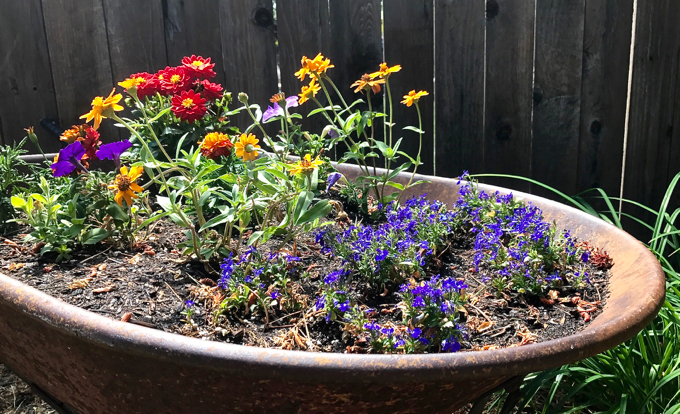
It might be necessary to give flowers extra water this week as temps soar. Photo/LTN

By Lake Tahoe News

Hot, hot, hot. That’s the forecast for Lake Tahoe.

“For the end of July and early August we are definitely going to be flirting with near record temperatures,” Evan LaGuardia, meteorologist with the National Weather Service in Reno, told Lake Tahoe News.

Temperatures are forecast to reach the 90s in parts of the Lake Tahoe Basin early this week, with Reno topping the century mark. It’s possible record high temps could fall throughout the region.

A high pressure system sitting over the area is responsible for the hot weather. The stable air and lack of wind will mean hot weather for a few days.

Mid-week there could be a break. It all depends on where the high pressure goes. Afternoon thunderstorms are in the forecast for now for later in the week, but the Weather Service said the confidence in those developing is low.

The problem with thunderstorms is they come with lightning, making for dangerous fire conditions.

Lightning sparked hundreds of fires of various sizes throughout Northern California and Northern Nevada in the last week.


Calif. counter-attack could stop federal land transfers

By Tay Wiles, High Country News

The morning after the 2016 presidential election, California’s legislative leaders issued a message that has set the tone for the state under the new administration, under President  Trump. “Today, we woke up feeling like strangers in a foreign land,” it said.

Since then, many Californians have pushed back against conservative policies on everything from immigrant rights to the environment. One of those offensives is Senate Bill 50, which, after sailing through committee this spring and summer, aims to stop the federal government from transferring or selling off public lands to corporations.

The Public Lands Protection Act is part of a series of three bills introduced in late February called the “Preserve California” package, meant to preempt any efforts by the Trump administration to weaken environmental laws. The bill would allow California’s State Lands Commission first dibs on lands the federal government wants to sell, and would let the state have a say in transferring to a new owner.

Read the whole story


Breezy Jack Johnson makes Tahoe connection

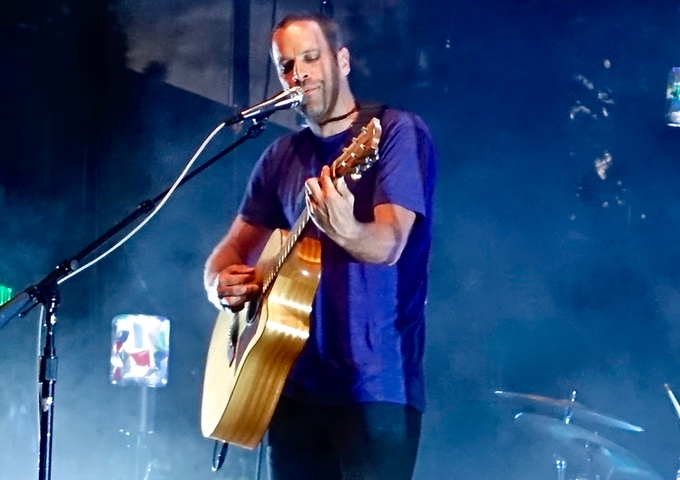
Jack Johnson will return July 29 to the stage at Harveys for his second consecutive sold-out show. Photo/Kathryn Reed

By Susan Wood

STATELINE – Donning a Keep Tahoe Blue T-shirt, singer-guitarist Jack Johnson made his priorities clear early on to the environmentalists and fans on hand for the Harveys Summer Outdoor Concert Series Friday night.

Booths to support his philanthropic, eco-friendly messages, soft rock smooth enough to provide the urge to swing in a hammock to gentle breezes, and a painter’s palette sky marked the evening.

“They told me you’d be kind, and a beautiful sunset was happening,” Johnson told the crowd after the opening number from his four-member band. He was referring to ALO — Animal Liberation Orchestra – that first took to stage July 28.

Johnson isn’t your average rock singer-songwriter. For starters, even before he started playing, the Johnson Ohana Foundation he created with wife Kim donated $4 million to 400 nonprofit agencies around the planet. Among them are the League to Save Lake Tahoe, Sugar Pine Foundation, Sierra Watershed Education Partnerships, Clean Tahoe and Tahoe Rim Trail Association.

Johnson puts his money behind his claims of caring about the environment. In 2008, he adopted the concept of “greening” meaning reduce and reuse – applying the concept to the 2010 tour.

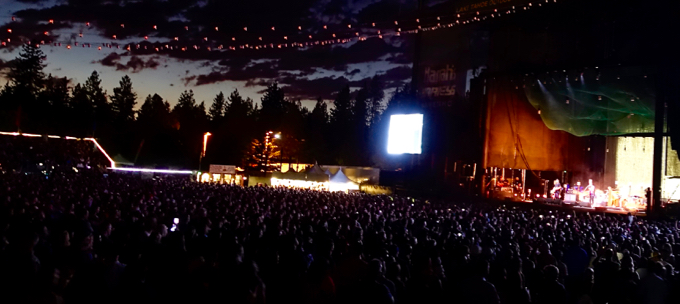
The musician, who was also a professional surfer in Hawaii, has developed quite a following. A mass of people showed up Friday night — general admission style – standing and dancing most of the time in the Harveys back parking lot.

The cool vibe was accentuated by the show the night sky was giving, as well as the melodies and effects on stage.

During his landmark love-lorn tune “Sitting, Waiting, Wishing” off the “In Between Dreams” album of 2005, smoke billowed from the machine on stage. It was as if Johnson sent his audience to the Na Pali Coast of Kauai, where the fog rolls into the valleys in a dream state.

Thousands of fans sway to the music of Jack Johnson on July 28 at Harveys. Photo/Kathryn Reed

“This is the kind of music that transports you,” South Lake Tahoe City Councilwoman Wendy David summed up, while embracing the free-flowing style of the artist with her husband, Kerry, from the bleachers.

When he broke into his hit single “Upside Down,” the crowd roared as he sang “I don’t want this feeling to go away.”

He urged the concert-goers to raise their kids in the air to get the full effect of the vibe, which was essentially created for them since the song comes off the album “Sing-A-Longs and Lullabies for the Film Curious George.” The kid-friendly band at one point even brought a stunned boy in the front on stage to use his light sabers to spur audience participation.

Coco McCue of Gardnerville thought of her grandson, who couldn’t make it that night.

“He loves Jack Johnson,” she said, citing the youngster’s love of Curious George. McCue, who owns a few of Johnson’s albums, sat in the bleachers enjoying the high view over the sea of people crushed in to make their connection with Johnson. 

Johnson also helped with that connection by enlisting a drummer straight out of Tahoe, introducing Adam Topol. Topol called out to North Tahoe High School graduates and asked who’s been to Tahoe City hangouts like Rosie’s. The audience responded with vigor.

Johnson and Topol apparently joked with each other about Tahoe’s high elevation.

“Man, do you feel this altitude?” Johnson recounted asking Topol.

In turn, Topol supposedly told Johnson it was “nothing” and that’s because he “grew up here.”

The drummer consequently showed off his specific jazzy, Afro-Cuban percussion fundamentals throughout the night. His journey demonstrated it was a far cry from when he started out touring school talent shows, while later discovering at USC that people actually pay to hear bands. He recalled playing cover songs at a party with a homegrown band, in which “someone gave me $50, and I got this girl’s phone number,” the band’s website read.

The perform-for pleasure, laid-back-surfer lifestyle and mentality of Hawaii and Santa Barbara permeated the whole evening with Johnson’s band as well as California-based ALO. The ensemble joined Johnson on stage for a set, highlighted by the sensuous “Girl I Wanna Lay You Down” and “Big Sur” that the front man said “because this song is about that.” He described the beach scene around a campfire where a pick-up band would improvise music.

Johnson’s small band had highlights of its own – in particular his keyboardist Zach Gill, who occasionally brought out his buka for accompaniment. The Japanese wind instrument provided a bellowing style to tunes.

And in pure Hawaiian style, Johnson added to the latest craze among wannabe musicians by pulling out his ukulele for the sweet, sentimental “Breakdown.”

Within a long encore, Johnson even launched into a special song about gambling with Willie Nelson, declaring the legendary country singer “got stoned and took my cash.”

Diverse and eclectic, Johnson and his band not only delighted the concert-goers with other fan favorites like the cute “Banana Pancakes,” in addition to “Better Together” and “Good People.” The latter two have a social conscience message about the quest for a tender goodwill and respectable humanity.

He received a rousing applause near the end of the night with “Home,” citing it’s “wherever we are,” a song he wrote for his three children on the North Shore of Oahu.

“You guys made us feel at home,” he told the crowd.

Harveys shares the love a little longer this summer with more shows to come, including: the second Johnson show tonight; Slightly Stoopid on Aug. 4; The Who on Aug. 16; and performances by Eric Church on Sept. 2-3. 


Recently discovered toad species in Nev. face threats

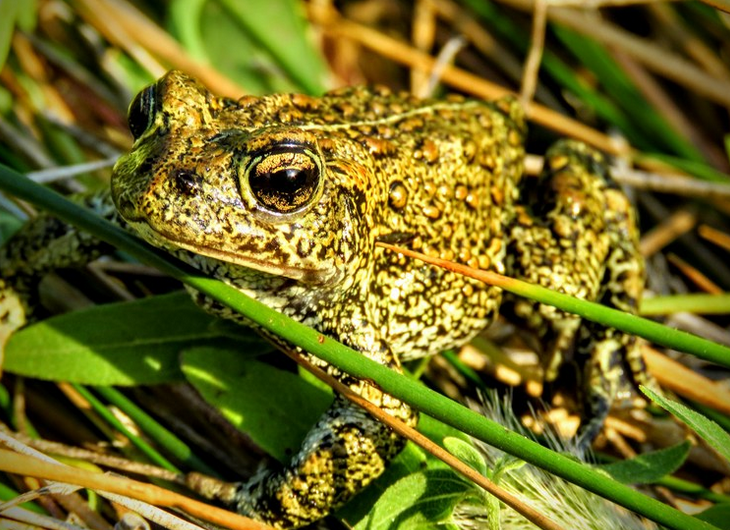
Dixie Valley toads inhabit Nevada’s Great Basin. Photo/Patrick Donnelly/Center for Biological Diversity

By Maya L. Kapoor, High Country News

Researchers at UNR have named three new toad species: the Dixie Valley toad, the Railroad Valley toad and the Hot Creek toad. This is an especially exciting feat because it’s rare to find new species of any amphibians, the class of animals that includes toads, frogs, newts, salamanders and caecilians.

The most recent toad discovery north of Mexico, the Wyoming toad, was found almost half a century ago in 1968, and it has since gone extinct in the wild.

And while it’s rare to find new amphibians anywhere, these toads are particularly intriguing because they live in the Great Basin region of Northern Nevada, which is one of the driest parts of the country, averaging slightly more than 13 inches of rain per year. The toads thrive in tiny, naturally occurring oases such as small springs, wetlands or seeps, where thick vegetation makes them hard to spot during the day, according to a statement by researchers.

Read the whole story


Climate change taking toll on Lake Tahoe

By Linda Fine Conaboy

INCLINE VILLAGE – Despite all its beauty, Lake Tahoe is sick.

Climate change is the overriding factor for warming water, dying trees and the proliferation of invasive species. It’s an uphill battle for scientists trying to keep the balance or even tip the scale into the healthy realm.

Geoff Schladow, director of the Tahoe Environmental Research Center, on July 27 presented the annual State of the Lake, touching on factors vital to Lake Tahoe’s clarity.

Schladow gave a snapshot of the lake’s health in 2016 using just-released data from TERC and the Tahoe Regional Planning Agency. He added humor to a fairly dismal look back, interjecting some of Shakespeare’s droller quotes and riffing off the Bard’s more waggish side.

Although the audience appreciated a nod to the humor of Shakespeare, Schladow’s talk was a serious one not dissimilar from his 2015 review.

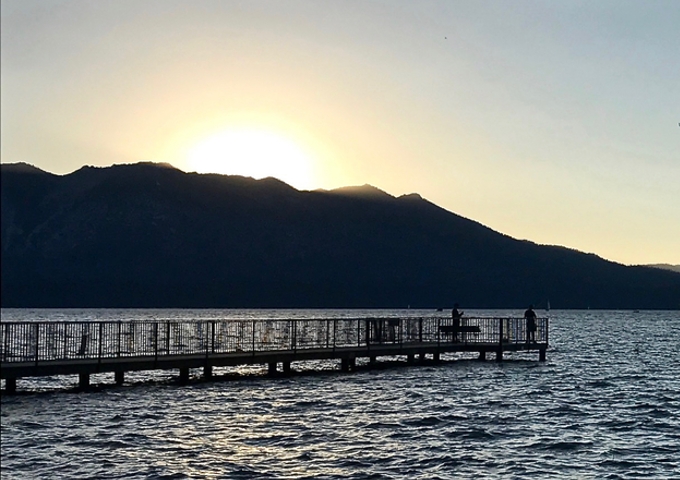
Scientists hope the sun has not set on their ability to combat the impact of climate change on Lake Tahoe. Photo/Kathryn Reed

Water temperatures continue marching upward, not good for a pristine high-elevation lake, he said. “This is climate change. Since 1968, the days of stratified water (warm water above cold water) has increased by 26 days.”

In layman’s terms, this stratification precludes the normal deep mixing of the lake’s waters, a process vital to Lake Tahoe—it’s the way the lake renews itself. The absence of a deep mixing of nutrients leads to warming water, contributing to a build-up of nutrients at the lake’s bottom. According to Schladow, deep mixing has not taken place for at least six years.

“Normally the deep mix occurs in March, but it’s still not happening. The nutrient levels are going up, nothing is moving them. Every day, the bottom of the lake is losing air,” he said.

Some organisms find this state of the lake favorable; these, Schladow calls bad hombres. For example, cyclotella gordensis is flourishing, cloning itself in vast numbers, especially in 2016.

“As soon as it starts increasing, algae starts growing and clarity goes down. This is not the first time this has happened,” Schladow said. However, he added, the good news is for many years there have been no new destructive species introduced to the waters of Tahoe.

However, those that are here now are not good, he said, citing an invasion of Asian clams in Marla Bay, discovered by what he calls, “citizen scientists.”

Asian clams can relocate themselves to other areas via circulation cells within the lake, and are now located in Zephyr Cove and even Sand Harbor, where the thinking is that they arrived there by boat.

Schladow posed the questions: Is it a big deal to have clams in Lake Tahoe? What will happen if nothing is done?

Clams will reproduce, laying at the lake’s bottom, causing algae to grow, which litters the shore. Clams then eat the algae, sluffing off nutrients in their waste, which causes more algae to grow, causing the lake to turn green instead remaining blue.

Asian clams are succumbing in large numbers due to rubber mats placed on the lake’s sandy bottom. These are incredibly effective, Schladow said. In areas overtaken by destructive milfoil weeds, herbicide usage is under discussion and ultraviolet light is being tested as a means of eradication.

“The collaboration that exists between the science community and the various Tahoe agencies is probably at an all-time high. This is important at this point in time when we are entering a period when we can no longer rely on what has worked in the past,” Schladow told Lake Tahoe News. “The past is in the past, and the future as far as climate, hydrology and ecology are concerned is far from understood. Scientists are helping to keep agencies informed, and at the same time the agencies are letting the science community know what their major questions are.”

A never-ending circle of destruction it seems, Schladow said, adding that Lake Baikal in Russia currently is facing its own algae invasion with huge amounts of the stuff on its shoreline. Baikal and Tahoe are like twin lakes in many ways.

“Suffice it to say, water temperatures are warming at the bottom of the lake, because of a lack of mixing,” he said.

On Tahoe’s shores, Schladow said tree mortality has doubled from 35,000 dead trees in the basin in 2015 to more than 72,000 in 2016. Drought and beetles are vying for first and second place as the leading causes for the die off.

In an effort to combat this situation, TERC and NASA are collaborating to measure plant stress from space at different times of the day, while helicopters and drones are surveying the entire shoreline to glean data.

There is some good news. While average water temperatures have continued to warm, in July 2016, they fell by 2.9 degrees due to increased winds and cooler than usual temperatures.

“The improvement in winter clarity was very encouraging of the agency efforts, and helps justify the expenditures that have been made to date,” he said.

In addition, the lake level rose by more than 20 inches, bringing it back above its natural rim and allowing it to flow into the Truckee River during the epic 2016-17 winter. And the Upper Truckee River floodplain is doing what it should be doing now by effectively accommodating the huge runoff from the recent blockbuster winter.

“We have come a long way in the last 15 years in instrumenting the lake. What this means is that we have made a lot of the investments needed to ensure that the right types of data are being collected,” Schladow told LTN. “These are critical to understanding how the lake is changing.”


Stateline casinos help spur state to positive fiscal year

By Ken Ritter, AP

Casinos in Nevada won 2.9 percent more from gamblers in the fiscal year that ended in June, compared with the year before, the Nevada Gaming Control Board said Thursday.

For the 12 months from July 2016 to June 2017, so-called “casino win” in Nevada totaled more than $11.4 billion, according to a monthly regulatory report. That was up from $11.1 billion the previous year.

The biggest percentage increases for the fiscal year were in downtown Las Vegas, where casino gambling win was up nearly 11 percent, and at casinos in Stateline, up 7.4 percent.

Read the whole story


Truckee performing arts venue makes progress

The Stages at Northstar is inching closer to reality. Rendering/Provided

By Carole Jablon-Bernardi

When Abraham Lincoln ordered the completion of the Dome of the Capitol Building while the Civil War loomed, critics loudly protested. Franklin Delano Roosevelt, in the middle of World War II, dedicated the National Gallery in Washington, D.C. John Kennedy asked for legislative support of the arts in 1962 while relaying both presidential acts mentioned above, adding, “The life of the arts, far from being an interruption or a distraction in the life of a nation, is closer to the center of a nation’s purpose – and a test of a nation’s civilization.”

While Lake Tahoe cannot be categorized as a large city heavily populated by political critics or lobbyists, it seems to support a trend of community performing arts centers that continue to surface in mountain resort areas, and small towns throughout the country. This effort is now happening in North Lake Tahoe with The Stages at Northstar.

In 2015, the Tahoe Regional Arts Foundation (TRAF is now a 501(c)3) introduced a conceptual project for a multi-faceted indoor-outdoor performing arts center built on 17 acres of Northstar’s Castle Peak area. The land, provided by Vail Resorts under a 75-year sublease (no fee) plan, would make the facility a tenant of Northstar but managed by TRAF.

At that time, the plan called for an outdoor amphitheater (potentially 3,000-plus seats), two indoor theaters, and a main theater that would seat 500 at 33,000 square feet.

Fast forward to the most recent update on the project.

On July 24 TRAF signed a consultant agreement with USC’s School of Dramatic Arts.

“USC’s SDA will consult with us during the predevelopment and construction phases of the theaters. Post construction the Tahoe Regional Arts Foundation will work with the USC SDA on cooperative educational programming,” TRAF’s board Chairman Keith Vogt told Lake Tahoe News.

Vogt this month spoke to an interested and somewhat anxious community audience.

As with any conceptual project, the design has been tweaked and is still waiting for final approval by the board of directors. Securing funding has not changed greatly with a goal of $50 million still the big target, and an endowment to help ensure its success. TRAF has secured its first seven figure grant donated as start-up funding. Down the road there will be “donor naming opportunities” for specific structures and areas of the center.

A feasibility study was completed in 2014 and was updated this year. Changes were due to the difference in the economy in the last three years, reflected in the contributions to the county from theater activities.

Traffic and noise impact studies are in the works.

Fiscal impact has remained the same, projected at $4 million. Vogt assured the audience that numerous businesses in the North Lake Tahoe community should feel a positive impact from the project’s completion.

Once funding has been met it will take two building seasons to construct (possibly in stages), with the earliest completion being 2021.

“The basic issue for all the arts in the Tahoe region is a severe lack of space. We want to fill that void and provide an iconic theater space for our high school and community college students to learn how the theater works,” Vogt said.

TRAF will ultimately manage and operate the center, with a starting staff of approximately five administrators.

Performing arts centers have the ability to become cornerstones of the creative life of their communities, but they cannot succeed without support from their communities. TRAF has “supporters” which include the Truckee Community Theater, Innerrthyms, Reno Philharmonic, the Economic Development Agency of Western Nevada (EDAWN), North Lake Tahoe Resort Association and Placer County. At the Truckee gathering this month, numerous accolades were voiced on the positive aspect the project could have on the community. One attendee even shouted, “How soon can you build it?”

Improving the quality of life for the communities they serve is certainly a priority when soliciting support from residents, and business owners alike.

Bob Taylor, executive director of the long standing Lake Tahoe Shakespeare Festival at Sand Harbor, said, “The most important factor in the success of any artistic project (such as this) is tremendous wide-spread community support. All three of the theaters I work for, in Lake Tahoe, Boise, Idaho, and Cleveland, Ohio, began as community driven efforts … and they are all thriving, vital organizations 45, 40 and 56 years, respectively, thanks to those visionary leaders.”

In March, President Trump, in his first federal budget, took a different approach than his predecessors. He proposed eliminating the National Endowment for the Arts, and the Humanities. But many in Tahoe-Truckee are no longer taking their lead from Washington.

While it’s hard to argue against the arts as a whole, like all development in the greater Lake Tahoe area it needs to be scrutinized. How will this affect traffic in Truckee as well as the Lake Tahoe Basin? What about the height of the structure. And noise? While the project is outside the Tahoe Regional Planning Agency’s jurisdiction, the impacts will be felt in the basin. Some would like the Governing Board to at least be given a briefing on the project.