Report: Full-time jobs tough to find in Nev.

By Nicole Raz, Las Vegas Review-Journal

Nevada is the third-hardest state in which to find full-time work, behind New Mexico and Alaska, according a report by the news and opinion website 24/7 Wall St.

The state had an 11.9 percent underemployment rate, compared to the national rate of 9.5 percent, during the 12-month period analyzed through the first quarter of this year, according to the report released Tuesday.

The underemployment rate is a combination of workers who are highly skilled but working in low-paying or low-skill jobs, along with part-time workers who would prefer to be working full time.

Nevada officials chimed in with several notes of caution on the report.

Read the whole story


Resistance to expansion of cell transmitters

By Rennie Svirnovskiy, Sacramento Bee
 
Dave Roberts has seen plenty of calamitous fires, and the lingering thought after they’re extinguished always is, “If we’d only been there sooner.”

The El Dorado Hills fire chief knows well that for every minute a structure fire burns, it doubles in size, putting both civilians and his firefighters at risk. He also knows there has to be a way to cut response times.

That’s why he and the California State Sheriffs’ Association have joined with California telecommunications companies and chambers of commerce to back legislation aimed at providing a more robust system of cellular telephone service. Senate Bill 649 would make it easier and cheaper for the companies to place small transmitters in cities and counties. More cells, they argue, will improve service and add critical redundancy to phone systems in areas affected by wildfires or other natural disasters.

But as the bill breezes through the Legislature with few dissenting votes, hundreds of city and county governments are pushing back.

Read the whole story


Array of venues put out welcome mat for dogs

By Kathryn Reed

Dogs are better than children to go out to eat with. They clean up after you instead of being the ones to make a mess.

This is the season to eat outside with your four-legged family member. The following is a smattering of places that are dog friendly.

The Tavern inside the Tahoe Beach Retreat in South Lake Tahoe has an entire day devoted to dogs. Canines & Cocktails is happening every Tuesday from 4-9pm. Show up with a dog and you get a 25 percent discount. AJ was loving it because not only did she get to be inside, she also was given a doggie treat.

Dexter and AJ relax at Artemis at Ski Run Marina. Photo/Kathryn Reed

She also got to be inside at Artemis at Ski Run Marina in South Lake. This might have been because she was with Dexter who is a legitimate, super-certified therapy dog. They were given his and her water bowls. Carole brought Dexter, her golden retriever, down from Incline for lunch. It was cool this particular June day, so eating in seemed like a better option. There is plenty of outdoor space, though, for canines.

We tried to eat outside at the Cantina in South Tahoe, even got let in the back gate to the patio. But we got tired of sitting there without service so we went to the bar. No one said anything, so she just laid on the floor at our feet.

Julie and I started outside at Revive near Lakeview Commons, but the rain in July chased us indoors. No one seemed to mind; AJ was as close to the door as she could be without actually crossing the threshold. This would be a great place for a dog because of the vast front yard area.

Appropriately, I was with two brothers while eating outside at Brothers Bar and Grill in South Tahoe. Dogs are OK there if they sit in the far back near the horseshoe pit area. It’s dirt/sand back there. It’s possible to enter through the back and not have to go through the restaurant.

It’s practically a dog party at South Tahoe Brewing Company. Photo/Susan Wood

While the tables outside are somewhat close together at Fireside Pizza at the Village at Squaw Valley, there is still room for dogs. Waitresses will bring your furry friend a bowl of water upon request.

Dogs are welcome on the tram at Squaw, as well as on the deck at High Camp, and throughout the village.

What set Heavenly Village apart was AJ’s water coming in a recyclable to-go container. I liked the idea of a single-user water bowl. Azul and The Loft each did this. The concrete at Azul was ideal for AJ to spread out on after a long hike. She was more restless at The Loft; the fake turf wasn’t to her liking but she did enjoy watching everyone play mini golf.

AJ looks out from under the table at The Loft to the peewee golf course at Heavenly Village. Photo/Kathryn Reed

At AleWorX in the Crossing at the Y in South Tahoe there are almost as many dogs at people. Everyone was getting along great. However, if your dog can’t stomach pizza, beware because the people are a little sloppy. Water for dogs is provided if you ask.

South Lake Brewing Company is another venue where dogs almost outnumber the people. One pup was so well trained it could jump onto a bar stool. This gave him the advantage to see the doggie treats in the beer glass.

At Blue Angel Café in South Lake dogs have the choice of being on grass or wood chips. The food that has fallen is a bit hard to see in the wood chips. Sue ordered three waters; and appropriately two glasses and a bowl were delivered.

Steamers in South Lake Tahoe has a ton of outdoor space. AJ only had to share it with a toddler. The artificial turf was clean, so no worrying about what she might nibble on. Access to the back is through the restaurant.

Another clean spot was Classic Clue in South Lake. There was no random food on the ground for AJ to munch on. (As usual, she did share in the fries that Kim and I were having for dinner.) While AJ had to stretch out on hard asphalt, at dusk it provided her some warmth.

AJ loved being on the lawn at X Crows, the restaurant at Hotel Becket in South Lake Tahoe. Our picnic table was on the edge of the grass and patio. She lapped up the water from her bowl to cool off as the sun was setting.

It was all grass for AJ at the Bear Beach Café in South Lake. Along the outdoor wall is an assortment of self-serve doggie water dishes and a hose to fill them up.

Down the street at MacDuff’s Pub the large umbrellas provide plenty of shade, keeping the wood deck cool for those lying on it. AJ lapped up the attention from the foursome at the table next to us as they kept complimenting her.

At the Getaway Café in Meyers half of the outdoor tables had a dog along for breakfast. The soft rocks appeared to be to all of their liking. And there were plenty of water bowls to go around.

It’s not just restaurants with outside tables that welcome dogs. Seldom does a Bank of the West teller forget to offer AJ a treat.

Almost all pet stores allow dogs. At Pet Supermarket in South Lake Tahoe it’s like nirvana with all the smells. It’s hard to get out of there without buying an individual treat at the front counter. I’m a sucker. At Hot Diggity Dog & Cat in Kings Beach the store dog is stretched out in the doorway, not even a sniff or a wag of the tail as AJ goes by. The two younger dogs want to be let out from behind the gate. Not happening, though. AJ loved their Giants decorated bones.


Clean Air Act changes would test Calif.

By Evan Halper, Los Angeles Times
 
California is confronting the limits of its power to save federal environmental protections as Congress and the Trump administration take aim at a landmark law the state has relied on for decades to clean the air of noxious smog.

A push by Republicans to roll back parts of the Clean Air Act would affect California more than any other state, rattling its lawmakers and regulators. And their legal authority to pick up the fight against California’s smog on their own is constrained.

The House last month passed a bill fiercely opposed by doctors and public health groups, including the American Lung Assn. and the American Academy of Pediatrics, that would delay for years new anti-pollution standards aimed at ultimately preventing 160,000 childhood asthma attacks and as many as 220 premature deaths in California each year.

The Trump administration had already tried using regulatory authority to put the standards on hold for a year, but walked back that action Wednesday after California and 14 other states filed suit against the delay.

Read the whole story


Federal pot task force offers little on new policies

By Associated Press

WASHINGTON — The betting was that law-and-order Attorney General Jeff Sessions would come out against the legalized marijuana industry with guns blazing. But the task force Sessions assembled to find the best legal strategy is giving him no ammunition, according to documents obtained by The Associated Press.

The Task Force on Crime Reduction and Public Safety, a group of prosecutors and federal law enforcement officials, has come up with no new policy recommendations to advance the attorney general’s aggressively anti-marijuana views. The group’s report largely reiterates the current Justice Department policy on marijuana.

It encourages officials to keep studying whether to change or rescind the Obama administration’s more hands-off approach to enforcement — a stance that has allowed the nation’s experiment with legal pot to flourish. The report was not slated to be released publicly, but portions were obtained by the AP.

Read the whole story


Heavenly’s chief easing into new role

By Kathryn Reed

STATELINE – Arizona and skiing? You, bet. Just ask Mike Goar.

Goar is settling into his new job as chief operating office for Heavenly Mountain Resort. The job responsibilities also come with overseeing Kirkwood Mountain Resort and Northstar.

His office has pictures on the wall of those resorts that were left from his predecessor. Right now the personal touches are missing. Decorating is a distant priority to figuring out who’s who at the resorts and in the community.

This 59-year-old grew up skiing at Sunrise Ski Resort in the White Mountains of Arizona. It has a base elevation of about 9,000 feet. Goar started out as a patroller and groomer at his home mountain while he was in his teens. It was those early years that gave him the skiing bug and desire to have a career in the industry.

The bulk of his career – 27 years – was spent at Solitude in Utah.

Mike Goar is eager to be part of the Lake Tahoe community now that he is COO of Heavenly ski resort. Photo/Kathryn Reed

His tenure with Vail Resort began in 2013 when the company bought Canyons in Utah. He had been general manager of that Utah resort for six years. (Canyons and Park City have since merged into one Vail-owned property.) Goar moved to Keystone in 2015 to be COO of that Colorado resort.

One main difference from his last job is that it was just one resort; in Tahoe he has the responsibility of three, even though Heavenly is his hub.

Goar is taking over for Pete Sonntag, who left earlier this summer to run Whistler Blackcomb. Vail Resorts bought that ski area in 2016.

No big changes are planned for any of the Tahoe area resorts – at least not for the 2017-18 season. Goar plans to meet with local leadership teams and confer with corporate on setting priorities for future capital improvements.

Whatever future changes are made, he told Lake Tahoe News there is no desire by anyone to alter the vibe of each resort.

“They are going to be different for the right reasons,” Goar said. “We are mindful of what each resort stands for.”

Addressing guest concerns about lift lines and what can be done during times of wind hold are being worked on before the start of next ski season.

Goar has skied at all three of Vail’s Tahoe resorts. Other Tahoe area resorts he’s been to include Squaw Valley, Alpine Meadows and Mount Rose.

With the finalization this week of the KSL-Aspen Skiing deal, Goar sees this as a good thing for the industry. He believes it will attract more people to skiing and snowboarding, which is good for all resorts.

While in many ways running a ski resort is the same no matter the location, Goar is cognizant each location has its own idiosyncrasies. He is looking forward to getting to understand the agencies that govern in the greater Lake Tahoe area, and the community members who call this place home.

Goar will be living here with his wife. They have three adult children and two grandchildren. He’s already discovered housing is an issue.

Goar is well aware it’s also an issue for his employees and others in the area. When he was in Keystone it was something he was involved in.

“While there is no project in the pipeline that we are talking about publicly, we are looking at partnerships on employee housing,” Goar said.

Nothing is off the table. It could be new development, refurbishing an existing property or combining resources with other entities desirous of providing housing for workers.

Legalization of recreational marijuana was something he had to contend with in Colorado and will likely be an issue as California allows it starting in January. With the use being illegal on federal land, that makes it easy for the resort operator to just say no. Vail Resorts has a companywide policy banning marijuana use at all of its resorts. He anticipates it will take some education of riders to let them know the rules.

While Keystone has mountain biking in the summer, it does not have the Epic Discovery activities like Heavenly has at the top of the gondola. Goar has experienced a few of the amenities and expects to have tried all the ropes courses, zip lines and other attractions before summer is over.

Beyond work and skiing, Goar is passionate about baseball and is a devout Yankees fan. Hiking, mountain bike riding and golf are the sports he participates in when the snow is gone. He’s looking forward to exploring the local trails.


Legal scholars dispute permanence of monuments

By Elizabeth Shogren, High Country News

No president has ever abolished a national monument, and it has been more than 50 years since a president shrank one. Nor has Congress revoked any significant monuments. The high regard given these special places is part of what makes President Donald Trump’s order to review all large monuments designated since 1996 so extraordinary.

Courts have never decided whether a president has the legal authority to change or undo a designated monument, and now this uncertainty has sparked a clash of legal titans.

A multitude of legal experts — including 121 law professors — argue that presidents lack the power to alter or revoke monuments. Meanwhile, a much smaller but no less adamant group asserts the opposite. These opponents are waging a tug of war in opinion pieces, blog posts, law journals, comment letters and at scholarly conferences. Both sides cite the 1906 Antiquities Act and decades of legal opinions and obscure congressional documents.

Read the whole story


Collecting trash on the country’s longest trails

By Elgin Stallard, Outside

Two young men set off last year on an unthinkable task: pick up, haul out, and dispose of every single piece of trash they saw on the 2,650-mile Pacific Crest Trail.

It’s a Herculean job when you consider that people leave everything from used toilet paper and diapers to spent batteries and box springs on trails across the country, and that much of the PCT wends through wilderness and large stretches are inaccessible to roads and motorized vehicles.

The final weight of junk the two men pulled off the trail: 720 pounds. Among the highlights: a mattress, a 35-pound metal-and-broken-glass television stand, children’s toys, and 26 Mylar balloons.

Read the whole story


Grand jury critical of STPUD-Alpine County deal

South Tahoe PUD’s wastewater ends up in the Harvey Place Reservoir in Alpine County. Photo/LTN file

By Kathryn Reed

The validity of a contract between Alpine County and South Tahoe Public Utility District as well as the amount of money involved in the document were the subject of a grand jury investigation in the last year.

The 2016-17 Alpine County Grand Jury report that came out this summer concluded that the consolidated agreement from 2002 is not valid because only two members of the Board of Supervisors voted on it. This would be a violation of the Government Code.

The other main concern is the amount of money South Tahoe PUD pays the county for the right to discharge treated wastewater in the county. The $100,000 annual fee does not rise with inflation. It has gone up to about $117,000 based on additional hookups in the district, with the assumption more water is being discharged.

STPUD General Manager Richard Solbrig on Aug. 3 gave a brief update on the report to his board. The district does not have to respond to the report.

The county does have to respond. The report is expected to be a topic on the supervisors’ Aug. 15 agenda.

“Even if the current consolidated contract is not valid, the previous agreements are still valid,” Supervisor Don Jardine told Lake Tahoe News.

The original document was signed in 1967 and there have been six amendments since then. The consolidated document was to bring all of those previous agreements into one contract.

STPUD per federal law, which is the same for all sewer districts in the Lake Tahoe Basin, must export the treated wastewater. This is to protect Lake Tahoe. Nevada law does not allow wastewater from another state on its lands. This is why all the wastewater from STPUD goes to Alpine County.

It was easier and more cost-effective to pump it over Luther Pass than to go over Echo Summit.

Jardine, who has been a supervisor for 30 years, said none of his colleagues has brought up the contract in recent memory.

“I have not been approached by other board members to increase fees,” Jardine said. He is the chair of the board.

The grand jury report says, “It is recommended the BOS request to have annual adjustments for inflation added to the agreement. Alpine County would be receiving about $248,000 if the 1983 figure had been adjusted for inflation. The 1995 Alpine Grand Jury made this exact same recommendation which was never acted upon. If the 1995 recommendation had been acted upon, Alpine County would be receiving about $185,000 annually if the annual adjustment for inflation took effect in January of 1996.”

Jardine and Solbrig were part of a meeting earlier this week in which the grand jury report was discussed. They are on an advisory commission to the Alpine County Board of Supervisors. No one from the public or grand jury was at that meeting.

What was discussed more in depth was what might be in that wastewater; of particular concern was whether pharmaceuticals or chemicals from personal care products might be leaching into the soil or groundwater. This has been an issue in other parts of the country.

“The USGS has been in the basin sampling for those contaminants,” Solbrig said Thursday. “There have been no findings in Lake Tahoe or through exports of water.”

At the commission’s November meeting, it meets quarterly, it’s possible there could be a recommendation for some of the money STPUD gives Alpine County to be used on testing for contaminants. This will ultimately be up to the supervisors.


Work to preserve Independence Lake continues

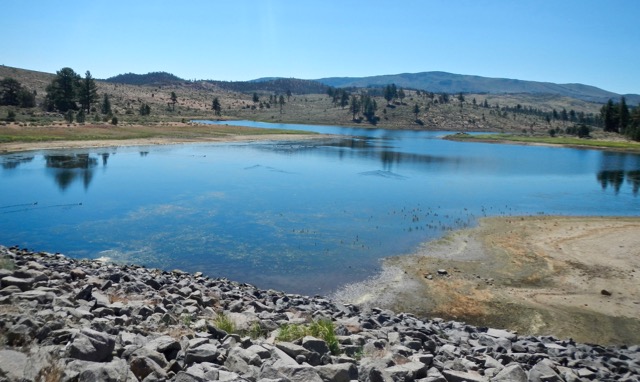
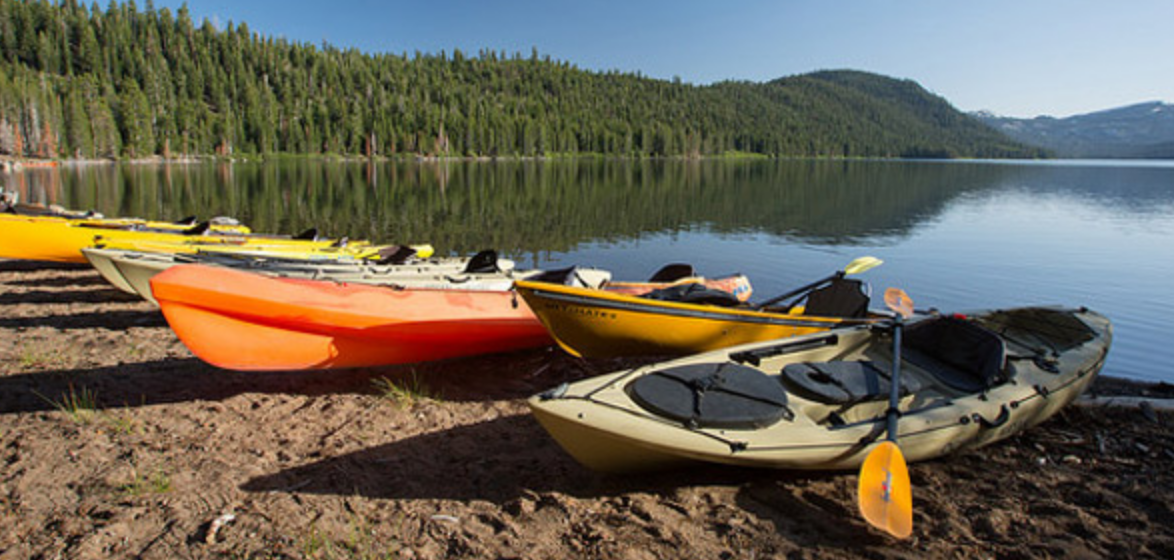
The Nature Conservancy is a key player in the preservation of Independence Lake. Photo/Nature Conservancy

By Paul Nelson, KTVN-TV

About a half-hour north of Truckee, down a rough, dirt road, you will find Independence Lake. It has been described as a small version of what Lake Tahoe looked like 100 years ago, with very little development.  The Nature Conservancy is trying to keep it that way.  It paid $15 million for 2,300 acres around most of the lake, in 2010. 

“By buying the land, we could protect the habitat, the watershed of the lake,” Chris Fichtel, Independence Lake Project Manager with the Nature Conservancy said.

Its goal is to conduct forest restoration, prevent aquatic invasive species, and maintain native fish populations.

“It has the full compliment of native fish that it always had, and in particular, it had one, the Lahontan Cutthroat Trout,” Fichtel said. “This is only one of two lake populations of that trout remaining. The other is Summit Lake, Nevada.”

Read the whole story