French winery puts the good stuff in a can

By S. Irene Virbila, Los Angeles Times

Making its debut at the prestigious Vinexpo beginning Sunday in Bordeaux: French wine in a can!

Will Winestar’s single-serving cans create a riot in the hallowed halls of the international wine and spirits fair? Maybe not.

The Paris-based company isn’t dealing in the generic swill those adorable single-serving bottles typically hold. Their wines are all A.O.C. (Appellation d’Origine Contrôlée). Each 187-milliliter can (one-fourth the size of a typical 750-milliliter bottle) lists the wine estate, the appellation and the grape varietals as well as the vintage. Working with the European office of Ball Packaging, Winestar founder Cédric Segal developed a can with a coating inside “to make total isolation between the wine and the can.”

Wine now comes in a can. Photo/Winestar

Wine now comes in a can. Photo/Winestar

The first series hails from Château de L’Ille from the Corbières appellation in the Languedoc region of southern France. The white is a blend of the local Rolle (Vermentino) grape, vintage 2011. The rosé is Syrah and Grenache, vintage 2012. And the red is a blend of Syrah, Mourvèdre and Grenache from the 2011 vintage. The cans sell for about $3.30 to $4.

Segal says he got the idea when he was traveling in Asia and saw that Australia was selling quality wine there in cans. Why couldn’t that work just as well with French wines?

He realizes that the French have a very strong tradition with the bottle and doesn’t expect the can to be adopted immediately in France. “Most export markets, though, have already accepted the screw cap and synthetic cork, so it’s not such a big leap,” Segal said.

Winestar cans are essentially aimed for the at-home market when you want a little wine with dinner but don’t want to open a whole bottle. “You can use it for picnics, or on the train or on your boat.”

He cautions that it’s not cheap wine and should ideally be drunk from a wine glass. So don’t expect to see hipsters sitting at the edge of Canal Saint-Martin in Paris knocking back rosé straight from the can.

Right now, the firm’s tinned wines are sold in wine shops and in supermarket snack sections. Segal is in talks with airlines, small supermarkets at train stations and also the French train company about carrying the wines.

Since Winestar only launched last week, it’s early yet. By the end of the year, the company will release wines in cans from Bordeaux, Burgundy and the Rhone Valley. Segal also plans to introduce a premium line of wines in cans called Crus Etoiles at a higher price point. The first one will be a Sauternes. Sauternes? Now that’s radical.

“The idea is to give the consumer the wines that they really want to drink at any time whether it’s red, white or rosé, whether full-bodied or light,” Segal said. “What Nespresso did for the coffee market with single servings of high-quality coffee, we want to achieve for the wine market.”

Think we’ll be seeing folks pick up a six-pack of Bordeaux for the Hollywood Bowl any time soon? Depends on how it goes at Vinexpo next week.


Book changes conventional thinking about fruits, veggies

By Kemp Minifie, Epicurious

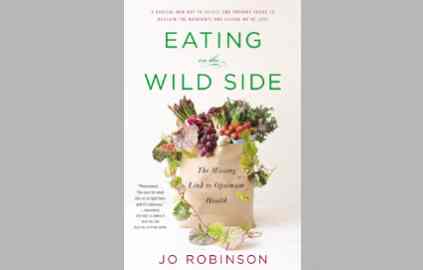
With “Eating on the Wild Side: The Missing Link to Optimum Health”, Jo Robinson has written the next “Omnivore’s Dilemma” — a book of revelations that food lovers and home cooks everywhere will be reading, recommending, quoting, and living by. Robinson may not be a household name yet, but her groundbreaking work will turn much of what you thought you knew about food upside down and inside out. Chew on this amazing fact, for starters, one of hundreds in the book: Berries have four times more antioxidant activity than the majority of other fruits, 10 times more than most vegetables, and 40 times more than some cereals.
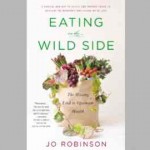
book“Eating on the Wild Side” explains the fascinating changes that have taken place in our food in the 10,000 years since man’s adoption of agriculture, and the unintended consequences of those changes. Generations of farmers, following in the footsteps of our distant ancestors, selected what plants to grow based on flavor, ease of harvest, and the simple economics of what would sell, and not on the plants’ beneficial nutrients, something they had no way of knowing until very recently. The upshot: What we eat today is actually far less nutritious than what our hunter-gatherer forebears ate.

As alarming as all this may sound, there is lots of good news here, too. Robinson, an investigative journalist and author or coauthor of several best-selling books, pored over more than 6,000 scientific studies to uncover the most nutritionally powerful foods available to us—many of which can be found in your supermarket, farmers’ market, or home garden. For instance, when it comes to apples, the Granny Smith is the most nutritious of the 12 most common varieties (surprise!).

If the mere mention of nutrients and scientific journals makes your head spin, rest assured that Robinson’s book is an entertaining read full of unforgettable stories — the kind you’re likely to repeat at cocktail parties. Each chapter ends with a clear, concise list of the take-away points, along with charts of the best varieties of each type of produce to choose at the supermarket, the farmers’ market, and from seed catalogs. It’s the new food bible for the 21st century.

We caught up with Robinson between food conferences to find out more about how to eat on the wild side. In addition, she shares two super-nutritious recipes from her book, Armenian Lentil Soup and Apple Crisp with Apple Skins.

Epicurious: In your last book, “Pasture Perfect”, you showed how beneficial it is on so many levels to confine our consumption of livestock and dairy products to animals raised on grass. What was the impetus to investigate and write about fruits, vegetables, grains, and pulses in your latest book, “Eating on the Wild Side”?

Jo Robinson: Since 2000, I’ve been investigating the nutritional differences between our present-day diet and our original diet of wild game, plants, and seafood. I spent five of those years focusing on animal products and developing the EatWild.com website. Then, I began researching fruits and vegetables so I could cover more of the food on the plate.

Epi: The information you unearthed about so many of the fruits and vegetables we take for granted is truly amazing, even shocking at times. When you started your research for the book, what did you expect to find, and what was the discovery that surprised you the most?

JR: My intuition was that wild plants were more nutritious than the plant food we eat today, but I wasn’t prepared for the extent of those differences. Some wild tomatoes, for example, have 30 times more of a heart-protective compound called lycopene than our supermarket tomatoes. The wild dandelions in our lawns have eight times more antioxidants than spinach, which we regard as a superfood. Unwittingly, we have bred a wealth of nutrients out of the human diet. We didn’t start 50 or 100 years ago, as many people assume, but 10,000 years ago when we first became farmers.

Epi: You write that the most beneficial bionutrients have a sour, astringent, or bitter taste, but that human beings are wired with a preference for sweet, starchy, and fatty foods, so that we selected plants for the qualities we like, and in the end created plants significantly deficient in the bionutrients contained in their wild ancestors. From an evolutionary biology point of view, is there a logical theory or explanation for this?

JR: There is. In the wilderness, most plants are low in sugar, starch, and fat. Our hunter-gatherer ancestors needed lots of calories to fuel their active lifestyle. Nature, obligingly, gave them taste buds that were linked to reward centers in their brains, infusing them with feel-good chemicals whenever they consumed sugary, oily, and starchy food. Today, we have the same wiring, but we’ve turned our food supply upside down. We are now awash in fat, sugar, and starch. Unfortunately, we still get blasts of dopamine when we eat dessert after a full meal.

Epi: I was amazed to learn from you that berries increase their antioxidant profile with cooking, so that canned blueberries have more phytonutrients than fresh. Does that really mean that the wild blueberries I pick in northern New Hampshire and immediately pop in my mouth aren’t as nutritious as a can of cultivated blueberries from the supermarket?

JR: Those fresh wild blueberries are likely to be better for you than canned cultivated blueberries because the wild varieties are so much higher in antioxidants. But, canned wild blueberries have more antioxidants than fresh wild blueberries, provided you drink the canning liquid. Bizarre but true. However, you get plenty of phytonutrients from fresh berries — and they taste better! I, for one, eat them fresh.

Epi: Your storage recommendations for various produce were surprisingly varied. Some fruits and vegetables need to be eaten soon after purchase while others will last longer when stored in the crisper section of the refrigerator or in plastic bags perforated with a few pinpricks. Many people tend to shop for food only once a week. If they can’t consume their produce at its optimum time, what’s the best way to deal with it?

JR: You can still shop once a week, if you like. But eat the foods that lose their nutrients most rapidly in the first two days. “Eat Me First” foods include artichokes, asparagus, broccoli, kale, leeks, lettuce, and spinach. Interestingly, they are also among the most nutritious.

Epi: Are frozen fruits and vegetables a potentially better source of phytonutrients than fresh produce that’s been picked and trucked across country?

JR: There’s a better alternative to eating frozen food or food that’s languished for days and weeks in a warehouse: Get more of your fruits and vegetables from the farmers’ market or grow it in your backyard, which is the healthiest choice of all. Join the 35 million Americans who have home gardens. If you must buy frozen food, cook it before thawing it. The thawing process destroys more bionutrients than freezing.

Epi: In your research did you find there was a difference between the phytonutrient content of organic foods versus conventionally grown ones?

JR: This is an area of research that needs much more attention. To date, some studies show that organic production enhances phytonutrient content, some show no effect, and some show that conventional production yields more bionutrients. Even though the verdict is mixed, I eat organic food and recommend that other people do as well. It reduces your intake of unwanted farm chemicals, keeps toxic chemicals out of the environment, and protects the health of farmworkers.

Epi: A surprising amount of your research seems to point toward a phytonutrient improvement for humans with cooked foods. The raw-foods enthusiasts maintain that cooking destroys beneficial enzymes. Do the benefits of cooking trump the beneficial action from the enzymes in raw food?

JR: Heat makes many bionutrients more available and potent. Cooked carrots, for example, give you twice as much beta-carotene as raw ones. But raw broccoli gives you more cancer-fighting compounds than cooked broccoli. This is not a one-size-fits-all situation. Heat does destroy enzymes, of course, but I have not researched the health effects of getting rid of them.

Epi: If people can only manage to adopt a few new practices from your book, what do you consider to be the three most important and effective ones for their general well-being?

JR: I believe that people should eat more berries — a half a cup a day is a reasonable goal — more leafy greens and reds [beet greens, red kale, red cabbage, red lettuces, and radicchio, particularly radicchio di Treviso], and eat the skins of fruits and vegetables, provided they’re organic.

Epi: Since researching and writing the book, how have you changed your diet and the way you shop and cook? Have you given up eating anything? Have you embraced certain produce, grains, or legumes that you ignored before? Are you trying to grow or forage all your food?

JR: Everything about my diet has been transformed by my research. Many of the changes are not radical. I get a big boost in nutrition simply from knowing which varieties of fruits and vegetables to buy in the store, information that I share in my book. Knowing the most healthful ways to store and prepare food is just as important. I’ve included that as well. I have a wonderful garden where I grow the most nutritious varieties of fruits and vegetables I’ve discovered.


K’s Kitchen: Begging for a recipe

By Kathryn Reed

One of the fun things about going to dinner where everyone is asked to bring something is that there will be a variety of food.

k's kitchenSuch was the case last week. Everyone was asked to bring an appetizer. Unfortunately I didn’t have much time to come up with something original. But others did. And that was a yummy treat.

Renee’s beet dish was incredible. I asked her if I could have the recipe. She said she doesn’t have one. Just throw X, Y and Z together. I wasn’t letting her get away with that.

I begged a bit and that worked because she sent me directions. While I  haven’t made them yet, I can tell you they are super tasty. Below is what Renee emailed.

Roasted Golden Beets

Roast golden beets in oven. (I started with some water; halfway through added olive oil.) About an hour, 400 degrees.

Cool and cut up beets.

Add diced red onion, tomato and fresh basil.

Add salt, pepper, garlic, olive oil, toss.

Taste and adjust spices.

Add fresh lemon juice.

Toss.

Chill some.


Study: Vegetarians live longer than meat eaters

By Avery Johnson, Wall Street Journal

Vegetarians live longer than meat-eaters, according to a study published this week in JAMA Internal Medicine, a Journal of the American Medical Association.

The authors tracked 73,308 members of the Seventh-day Adventist Church for almost six years. The church is known for promoting a vegetarian diet, though not all of its followers adhere to that teaching. Researchers found out what type of diet participants ate, then followed up to find out how many of those participants had died and how.

Vegetarians in the study experienced 12 percent fewer deaths over the period. Dietary choices appeared to play a big role in protecting the participants from heart disease, from which vegetarians were 19 percent less likely to die than meat-eaters.

There also appeared to be fewer deaths in the vegetarian group from diabetes and kidney failure.

Caloric intake didn’t seem to matter. The different participant groups generally ate around the same amount of calories daily. Researchers found that the beneficial associations weren’t related to energy intake.

The advantage appeared stronger in men than women, whose diet didn’t seem to make as much of a difference. Eating plant foods didn’t seem to protect participants against cancer, which struck both the vegetarians and non-vegetarians in roughly equal measure.

The paper, written by researchers at Loma Linda University in Loma Linda, California, is larger and includes a more diverse population than previous research, says lead author Michael Orlich, director of the preventive medicine residency program there. “People are confronted with all sorts of nutritional information, but the bottom line is, ‘How will your diet pattern affect your risk of dying?'” he says.

Researchers don’t know why a plant-based diet seems to have a protective effect, but one likely reason is the nutrient profile of vegetarian diets, which tend to be higher in fiber and lower in saturated fat. Vegetarians tend to be thinner, another factor known to have an effect on health outcomes, Dr. Orlich says. He adds that the study benefited from examining a group whose rates of alcohol and tobacco use are low.

Of course, just eliminating meat from the plate doesn’t always equal a healthy meal. Vegetarian dishes—for example, a vegetable spring roll—still can be high in fats and calories. And certain meats are healthy.

Loma Linda University is a Seventh-day Adventist institution specializing in health care. The church recommends a diet with “generous use of whole-grain breads, cereals and pastas, a liberal use of fresh vegetables and fruits, a moderate use of legumes, nuts and seeds,” according to a statement on its website. The study published Monday was funded by the National Institutes of Health.

When adopting a vegetarian lifestyle, nutritionists recommend watching closely to make sure the intake of key nutrients is sufficient. These include iron and zinc, frequently found in meat, and calcium and vitamin B12. Roughly 5 percent of Americans consider themselves to be vegetarians, according to a survey published last year by Gallup.

The Loma Linda researchers used a questionnaire to categorize participants into groups based on their diets.

The categories include nonvegetarians and people considered semi-vegetarians, who eat meat more than once a month but less than once a week. In addition to meat, vegans eliminate dairy and eggs from their diets.

Others eat fish, in addition to the cohort that eats no meat but consumes dairy and eggs. For many of the analyses, the researchers lumped all of these subsets of people together as simply “vegetarians.”


Mountaintop dinners planned at Homewood

Homewood Mountain Resort has planned two mountaintop farm-to-table summer dinners.

Guest chefs Breana Greene and Kellan Hori will create locally-sourced meals served atop Homewood’s slopes overlooking Lake Tahoe.

The five-course dinners will be July 6 and Aug. 31.

Each dinner is $150 per person, with a limited number of reservations available. Advance reservations are required at least two weeks prior to each event.

Guests will meet at Homewood’s South Lodge (105 Tahoe Ski Bowl Way) and will begin the chairlift ascent up the mountain between 4-4:30pm. Dinner service will begin promptly at 5pm and conclude by 9pm. Vegetarian options are available upon request.

For reservations, call (530) 584.6849.


K’s Kitchen: Pesto pizza with squash

By Kathryn Reed

We all get in ruts with things we make or want to eat. My favorite homemade pizza is Sue’s spinach pesto.

But I knew one pizza would not be enough for four – especially if that was all that was being served. Lucky for me my sister, Tami, shared the recipe below via Facebook. She posted the link from MyRecipes.com, which got it from the September 2002 issue of Cooking Light magazine.

k's kitchenIt’s a combination of ingredients that I would have never put together. It’s also a recipe that Pam, Tom, Sue and I all say is a keeper.

I used butternut squash and fontina. I was lazy and used a prepared crust instead of making my own. But I did use my own pesto. I blend up a ton in the fall and then freeze it so I have plenty on hand until the farmers’ markets start. I’m down to my last bag, so it’s a good thing it’s farmers’ market season.

I would think fresh tomatoes when in season could be substituted for the canned. But canned have more flavor than the waxy things sold in supermarkets in the winter and spring.

Pesto Pizza with Butternut Squash

6 (1/4-inch-thick) slices peeled butternut squash or pumpkin (about 1/2 pound)

2 teaspoons sugar

¾ tsp olive oil

Cooking spray

½ C (2 ounces) shredded fontina or Gouda cheese

Pizza dough

1 (14.5-ounce) can finely chopped tomatoes, drained

½ tsp dried oregano

¼ C pesto

½ C (2 ounces) grated fresh Romano or Parmesan cheese

Preheat oven to 400 degrees.

Combine first 3 ingredients in a medium bowl. Place squash mixture on a baking sheet coated with cooking spray. Bake at 400 degrees for 20 minutes or until squash is tender.

Increase oven temperature to 450 degrees.

Sprinkle fontina over dough, leaving a 1/2-inch border; top with squash mixture, tomatoes, and oregano. Drop pesto by level teaspoons onto mixture; sprinkle with Romano. Bake at 450 degrees for 20 minutes or until lightly browned.


FDA not thrilled with surge in caffeinated foods

By Brady Dennis, Washington Post

Who needs coffee for breakfast when you can pour Wired Wyatt’s caffeinated maple syrup over your Wired Waffles? Remember Cracker Jack? This year saw the advent of Cracker Jack’d Power Bites, with as much caffeine per serving as a cup of coffee.

Americans, it turns out, are willing to gobble up caffeine in all kinds of foods — from potato chips to sunflower seeds to beef jerky. Not to mention gummy bears and marshmallows. ­Energy-boosting foods racked up more than $1.6 billion in domestic retail sales last year, up nearly 50 percent from five years ago, according to the market research firm Euromonitor International.

The trend, experts say, reflects a rush by food manufacturers to cater to consumers’ increasingly frenetic lives — and to cash in on the popularity and profitability of high-caffeine energy drinks.

“This is something that’s going to continue to grow,” said Roger Sullivan, founder of Wired Waffles, based in Marysville, Wash. He says his product is popular with endurance runners, long-haul truck drivers and ­sleep-deprived college students. “It’s definitely a market where I think a lot of large companies are figuring out how to jump in.”

But the growing interest of big food companies might mean the party is over, at least for now.

The Food and Drug Administration threw a wet blanket on the caffeine-laced food craze recently when it asked foodmakers to take a timeout. Concerned about the potential health effects on children, as well as Americans’ cumulative caffeine intake, officials said they want to investigate whether new rules are needed to govern caffeine in foods.

“It’s a trend that raises real concerns,” Michael Taylor, the FDA’s top food safety official, said in an interview. “We’re not here to say that these products are inherently unsafe. We’re trying to understand, what are the right questions to be asking? … We have to figure out, what are the right ways to approach this?”

The agency, which has watched the proliferation of caffeinated foods with increasing alarm, took action after Wrigley launched a caffeinated gum, Alert Energy, in late April with full-page newspaper ads, a promotion at 7-Eleven stores and a NASCAR car plastered with the gum’s logo. Each stick contains the caffeine of half a cup of coffee.

“When you start putting [caffeine] in these different products and forms, do we really understand the effects?” Taylor said, describing the concerns he and others shared with Wrigley executives who met with FDA officials shortly after the rollout of Alert Energy gum. “Isn’t it time to pause and exercise some restraint?”

The company, which declined an interview request, quickly pulled its new gum from the market. While noting that it had put the caffeine content on the label and marketed Alert Energy only to people over 25, Wrigley said in a statement that it was halting production “out of respect for the FDA” while the agency developed “a new regulatory framework” for caffeinated food and drinks.

Taylor said FDA officials have long been aware of smaller manufacturers making niche caffeinated food. He said the agency became concerned when food giants such as PepsiCo — which owns Frito-Lay, the maker of Cracker Jack’d — and other companies began dipping their toes into the caffeinated food market.


Outrageous food at Reno, Sac minor league baseball games

By Zoe Zellers, TheDailyMeal.com

“Take me out to the ball game, take me out with the crowd, buy me some … Twinkies split down the middle, stuffed with a hot dog, and topped off with whipped cream and rainbow sprinkles with a cherry on top … It may be an edible heart attack, but I don’t care if I never get back…”

Those might not be the classic song’s original lyrics, but that’s the ballpark snack you’ll be singing about at a Battle Creek Bombers’ minor league game in Michigan. The team introduced the salty and sweet treat this year and made a round of television appearances promoting the sensational snack, which players are calling “dessert and dinner all in one.”

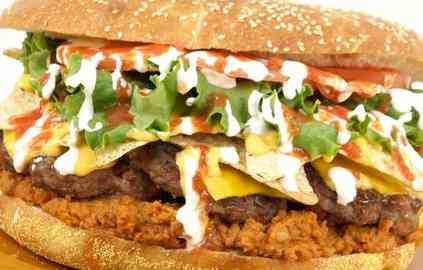
er: The Western Michigan Whitecaps fans bask in indulgence with their $20, 4,889-calorie, 4-pound specialty burger. It features five burgers (each weighs in at one third of a pound), topped with chili, cheese, chips, salsa, lettuce, and sour cream, all wedged between a giant sesame-seed bun. While you’re there, you might as well order a side of the fried Mac and Jack Cheese Bites.(Photo: Benjamin Hill)

The Western Michigan Whitecaps fans bask in indulgence with their $20, 4,889-calorie, 4-pound specialty burger. Photo/Benjamin Hill/DailyMeal

Since Hostess announced its bankruptcy this year, the world awaited the fate of America’s beloved Twinkies, which were ultimately saved by the Metropoulos brothers (the same family who brought Pabst Blue Ribbon back in the spotlight). And now, Twinkies are enjoying the limelight of being repurposed — and at baseball stadiums they have become the new hot-dog bun.

Keeping with the trend of wild ingredient repurposing, the West Michigan Whitecaps have taken America’s bacon craze to the next degree with their Bacos; the Fifth Third Ballpark in Comstock Park, Mich., serves up a twist on the traditional taco with a shell made from bacon.

And on the West Coast, this season the Sacramento River Cats have brought in the Wicked ‘Wich, one of the city’s favorite food trucks, which serves your locally sourced meat of choice topped with provolone cheese, homemade seasoned fries, and signature oil and vinegar slaw, all stuffed between fresh, thick-cut slices of bread.

Check out The Daily Meal’s countdown of the top outrageous baseball bites to find out where you can get BBQ nachos, a foot-long with 20 toppings, and a peanut-butter-and-jelly bacon burger.

1. Twinkie Dogs

The salty and sweet treat served at the Battle Creek Bombers’ minor league games in Michigan is gaining such attention from the media and fans, it’s clear Twinkies have found a new market. To assemble this insane creation, hot dogs are stuffed inside a Twinkie and topped off with the usual ketchup or mustard. For the ultimate experience, though, fans eat them with whipped cream and rainbow sprinkles with a maraschino cherry on top.

2. Bacos

The Baco, a taco served inside a bacon shell, will be served this summer at the Whitecaps games at Fifth Third Ballpark in Comstock Park, Mich. Expect taco trucks nationwide (and maybe even Taco Bell?) to catch up with this idea soon, because, really, who doesn’t love bacon?

3. The Fifth Third Burger

The Western Michigan Whitecaps fans bask in indulgence with their $20, 4,889-calorie, 4-pound specialty burger. It features five burgers (each weighs in at one third of a pound), topped with chili, cheese, chips, salsa, lettuce, and sour cream, all wedged between a giant sesame seed bun. While you’re there, you might as well order a side of the fried Mac and Jack Cheese Bites.

4. The Funnel Dog

This is the slightly tamer older sister to the Twinkie Dog. At Arvest Ballpark’s Cider Shack BBQ Pit, a juicy hot dog is battered and fried with funnel cake and coated with powdered sugar. It’s the Northwest Arkansas Naturals’ perfect marriage between two ballpark staple snacks, and at $3.50 a pop, it’s an affordable splurge. Who says you can’t teach an old dog new tricks?

5. Baseball’s Best Burger

In southern Illinois, fans flock to see the Gateway Grizzlies’ games, but the food is half the fun at this ballpark’s creative concession stands. The Grizzlies opt for a sweet and savory combo with GCS Ballpark’s “Baseball’s Best Burger” (also called “The Luther Burger” after crooner and yo-yo dieter Luther Vandross). Their juicy quarter-pound hamburger, topped with two slices of bacon and sharp Cheddar, is stuffed between a split Krispy Kreme Original Glazed grilled doughnut. The burger has been featured on Travel Channel’s Man v. Food along with the Grizzlies’ Philly cheesesteak nachos.

6. Philly Cheesesteak Nachos

The popularity of the Gateway Grizzlies’ Best Burger is challenged by the team’s sensational Philly cheesesteak nachos, a far cry from the ordinary stale chips dipped in neon yellow Cheese Whiz. These nachos are made with crisp tortilla chips loaded with slow-cooked shredded chicken, Monterey Jack sauce, and grilled green and red peppers and onions.

7. The Peanut Butter and Pepper Jelly Jalapeño Bacon Burger

Head over to The Joe to catch a Charleston RiverDog game and a serious, free-reign approach to the burger. The Joe has attracted culinary celebrities like Rachael Ray and Adam Richman with its sensational and oversized Homewrecker (daring eaters can add up to 20 toppings to this 1-pound all-beef “build-your-own” hot dog). But this season the RiverDogs have taken it to the umpteenth degree with their new peanut butter and pepper jelly jalapeño bacon burger. What a mouthful, literally. Cool down with a Firefly Moonshine margarita or try the other new kid on the block, beer shakes, available in Palmetto Espresso Porter Chocolate, Guinness Caramel, and Sweetwater 420 Strawberry flavors.

8. BBQ Nachos

Year after year the Memphis Redbirds’ AutoZone Park ranks as the nation’s only ballpark where hot dogs are not the top-selling food item. That’s because the Redbirds’ Rendezvous barbecue nachos have become a local tradition. Load salty corn tortilla chips with Rendezvous pulled pork, oozing spicy cheese sauce, and sliced jalapeños and you’ve got one happy Redbirds fan. You’ll need a Malibu rum cocktail to kill the heat.

9. Red & White Hots

This is as local of a ballpark concoction as you can get. The Rochester Red Wings’ Frontier Field serves up a combo of red and white hot dogs from Zweigle’s, the only hot dog brand served at the stadium since the ’20s. The white hot, a cheaper alternative to the red hot, was invented in the ’20s by Germans in Rochester, N.Y. This spin on the classic is made of uncured and unsmoked pork, beef, and veal mixed with mustard and other spices. Because it’s uncured, the hot dog retains a white appearance. Top off local red and white hots as you like and enjoy with a side of fried pickles.

10. Wicked ‘Wich Sandwiches with Fries and Slaw

The Sacramento River Cats change up their menu every year, and this season Raley Field welcomed the city’s Wicked ‘Wich mobile food truck, a sort of DIY local joint that features predominantly locally sourced ingredients and homemade sauces (so California). Essentially, the customer picks the meat, from pastrami to turkey to BBQ tofu to salmon and more. Then, thick-sliced, deli-style bread is loaded with your meat of choice plus Wicked ‘Wich’s signature combo of provolone cheese, fresh-cut seasoned fries piled high, and its oil and vinegar slaw — the food truck chefs strongly suggest trying it their way.

11. The Triple Play

The Renos Aces throw down with the Triple Play sandwich, which was invented in 2009 to celebrate the opening of Aces Ballpark, but has remained a favorite of fans each year. The triple-decker is made with grilled slices of Pullman bread paired with pulled pork and brisket and a heaping portion of coleslaw. The colossal sandwich is topped with a stack of barbecue meatballs, pickles, and cherry peppers and held together with skewers. Since you’re already in line, order the carnitas tacos, too.

12. Country Bob’s Chicken Sandwich

The Gateway Grizzlies’ secret sauce, for its popular chicken sandwich isn’t so secret — it’s Country Bob’s apple-chipotle sauce from Centralia, Ill. Add the all-purpose sauce, bacon, and melted provolone cheese to a hearty chicken breast and wash down the heat with a cold beer.


Squaw makes list of unique Starbucks locations

By Marcy Franklin, TheDailyMeal.com

It’s been said that you’re never farther than 170 miles from a Starbucks in America — and we can assume that will become only more true as Starbucks continues its global domination. As of July 2012, there were 17,651 Starbucks locations worldwide, with an additional 1,500 slated to open in 2013. In fact, the company just recently announced that it would be opening its 1,000th location in Japan this summer.

And while a Starbucks location has a certain aesthetic — dark wood paneling, Pantone-green accents, chic and comfortable seating for a true coffeehouse vibe — we can all admit that our Starbucks locations have a big-box store, cookie-cutter feel to them. So when we find uniquely designed Starbucks stores from Singapore to Amsterdam, we get excited for the unusual. With innovative design, unique architecture that fits within the city’s landscape and unusual concepts, these are the Starbucks worth visiting.

Ski-in/ski-out Starbucks (Squaw Valley)

When it opened last February, the Squaw Valley location earned the distinction of being the world’s first ski-in/ski-out Starbucks. Located at a staggering elevation of 8,000 feet, it’s essentially the skier’s answer to a drive-through Starbucks. Upon its opening, Squaw Valley President and CEO Andy Wirth explained the concept’s appeal: “Nowhere else in the world can skiers and riders enjoy a delicious Starbucks coffee without missing a beat on the slopes.”

Other unique locations:

Kobe, Japan

Starbucks Flagship (New Delhi, India)

Starbucks Porto Chino (Bangkok, Thailand)

Starbucks Cineleisure Orchard (Singapore)

Starboxer, USS Boxer (California)

Starbucks Xintiandi (Shanghai, China)

Starbucks The Bank (Amsterdam)

Shipping Container Starbucks (Tukwila, Wash.)

Fukuoka Starbucks (Fukuoka, Japan)

Allure of the Seas Starbucks (Royal Caribbean International)

Xi’an Starbucks (Xi’an, China)

Starbucks at the Ibn Battuta Mall (Dubai, United Arab Emirates)

Breckenridge Starbucks (Breckenridge, Colo.).


Light pasta dish a definite winner

By Kathryn Reed

Sue came waltzing in the front door and said she was making dinner. No arguments from me.

She said she was going to make a pasta dish so I would have ample carbs before my tennis match the next day. While I can’t promise this recipe will increase your athletic endeavors after eating it, I did win my match.

k's kitchenSue said it was pretty easy to make. I know it was easy for me to ask for seconds.

It’s a light dish and is healthy. It’s from the June 2013 Cooking Light magazine.

Penne with Herbs, Tomatoes, and Peas

8 ounces uncooked penne pasta

1 C frozen green peas, thawed

3 T extra-virgin olive oil

6 garlic cloves, thinly sliced

3 C cherry tomatoes, halved

½ tsp kosher salt

¼ tsp freshly ground black pepper

1/3 C thinly sliced fresh basil leaves

3 T chopped fresh flat-leaf parsley

1 ounce fresh Parmesan cheese, shaved (about 1/4 cup)

Cook pasta according to package directions, omitting salt and fat. Add peas during last 2 minutes of cooking. Drain.

Heat a large nonstick skillet over medium-low heat. Add oil; swirl to coat. Add garlic; cook 4 minutes or until garlic begins to brown, stirring occasionally. Increase heat to medium-high. Add tomatoes to pan; cook 1 minute. Add pasta mixture, salt, and pepper to pan; cook 3 minutes or until thoroughly heated, stirring occasionally. Stir in basil and parsley. Sprinkle with cheese.