Wine event at Squaw benefits MS group

Wine lovers can enjoy early fall in the Sierra at the 25th annual Alpen Wine Festival on Sept. 1 from 2-5pm at the Village at Squaw Valley.

All proceeds from the festival benefit Can Do Multiple Sclerosis, a national nonprofit organization sponsoring lifestyle empowerment programs for people with MS and their support partners.

For a $40 donation, guests may enjoy wine from more than 30 Northern California vineyards. Lady & the Tramps and Milton Merlos will perform on two stages to accompany the festival.

Amidst the background of wine and music, guests may peruse the silent auction and raffle.

Last year, the Alpen Wine Festival raised $18,000 for Can Do MS.

Tickets for the event will be available on site starting at 1pm that Sunday or in advance online.


Lobster — from fertilizer to delicacy

By Megan Willett, Business Insider

It’s time to eat all of the fresh lobster, seafood, and summer fare we can before Labor Day.

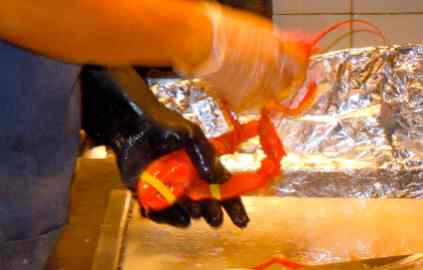
But here’s something to think about while downing every lobster roll in sight before summer’s end — our beloved shellfish was once a throw-away food.

Lobster is everywhere in Boston. Photo/LTN file

Lobster is everywhere in Boston. Photo/LTN file

Back when the first European settlers reached North America, they wrote that lobsters were so plentiful that piles up to two feet high would wash ashore in Massachusetts Bay Colony.

Instead of this leading to epic clam bakes with buckets filled with butter, the colonists were embarrassed by these unsightly “cockroaches of the sea.”

In fact, lobsters were so plentiful and undesirable that they were commonly used as fertilizer and fish bait by Native Americans and colonists alike.

Their abundance also meant colonists had easy access to protein during bad seasons or harvests, so lobster quickly garnered a reputation as the poor man’s meal. They were fed to prisoners, apprentices, and slaves as a way to save money.

Read the whole story


Truckee Wine Walk celebrating 10th year

The 10th annual Downtown Truckee Wine, Walk & Shop is Oct. 5 from noon to 4pm.

For $45 ($40 in advance), attendees will receive a special anniversary commemorative wine glass, a program and map to participating venues and five tickets for food tastings at any of the participating locations in the heart of downtown Truckee. Additional food tickets may be purchased for $2 per ticket. There will be more than 30 wineries participating.

Tickets are available online.

In the last nine years, the Downtown Truckee Wine, Walk & Shop event has donated more than $25,000 to local nonprofit organizations. This year’s Downtown Truckee Wine, Walk & Shop nonprofit partner is the Humane Society of Truckee-Tahoe.


Coffee: 4 cups of coffee a day could be fatal

By Tracy Miller, New York Daily News

If you’re under 55, you might want to re-think that fourth, fifth or sixth cup of Joe: A new study holds troubling news for younger coffee lovers.

Drinking more than 28 cups of coffee a week – about four per day – was linked to a 21 percent higher mortality rate in men and women of all ages, and a 50 percent higher mortality rate in people under 55 years old, according to a study of 40,000 people published in Mayo Clinic Proceedings.

The findings come from an analysis of data from the Aerobics Center Longitudinal Study cohort, which followed a group of men and women over an average of 16 years between 1979 and 1998. Study subjects ranged in age from 20 to 87 years old, and were asked to estimate their weekly coffee consumption at the outset.

Over time, the heavy coffee drinkers were more likely to have died from any cause than the moderate or non-coffee drinkers. This was particularly significant among people under 55: Younger men who drank about 28 cups of coffee a week had a 56 percent increased risk of death compared to non-coffee drinkers, and younger women had double the risk of dying.

Read the whole story


Seed savers and their tomatoes

By Eliza Barclay, NPR

Fortunately for those of us who are suckers for novelty, every year fruits and vegetables seem to come in more bewitching colors, shapes and flavors. Lately, we’ve been tickled by the cotton candy grape and the vibrant orange Turkish eggplant.

If you go to the farmers market this time of year, tomatoes are strutting their stuff in all sorts of glorious and quirky hues: green striped, white, pink and even purplish-brown. They boast intriguing names, like Mortgage Lifter, Arkansas Traveler and Pink Berkeley Tie Dye. Some are true heirlooms, passed down over decades or centuries. Others are brand new to the world, the progeny of the latest cross-breeding experiments.

We got to wondering just who, besides farmers, is to thank for this expanding panoply. And we learned that while there are many professional breeders tinkering with the desirable traits that show up in the new varieties, amateur breeders — passionate seed savers and collectors — also play a vital role in discovering fruit and vegetable varieties guarded and nurtured by families over generations. Every now and then, these amateurs convince seed companies that the rest of the world will want to enjoy something they’ve discovered.

Read the whole story


Study: Alcohol consumption leads to bad food choices

By Sumathi Reddy, Wall Street Journal

It isn’t just the beer that contributes to beer bellies. It could also be the extra calories, fat and unhealthy eating choices that may come with moderate drinking.

A recent study found that men consume an additional 433 calories (equivalent to a McDonald’s double cheeseburger) on days they drink a moderate amount of alcohol. About 61% of the caloric increase comes from the alcohol itself. Men also report eating higher amounts of saturated fats and meat, and less fruit and milk, on those days than on days when they aren’t drinking, the study showed.

Women fared a bit better, taking in an extra 300 calories on moderate-drinking days, from the alcohol and eating fattier foods. But women’s increase in calories from additional eating wasn’t statistically significant, the study said.

“Men and women ate less healthily on days they drank alcohol,” said Rosalind Breslow, an epidemiologist with the federal National Institute on Alcohol Abuse and Alcoholism and lead author of the study. “Poorer food choices on drinking days have public-health implications,” she said.

The findings dovetail with controlled lab studies in which participants generally eat more food after consuming alcohol. Researchers suggest that alcohol may enhance “the short-term rewarding effects” of consuming food, according to a 2010 report in the journal Physiology & Behavior that reviewed previous studies on alcohol, appetite and obesity.

Read the whole story


K’s Kitchen: Ribs with a sauce from scratch

By Kathryn Reed

Sometimes I wonder why I hang on to emails. Some just sit in the in box, others are filed into categories.

And every now and again there’s a nugget hiding there.

k's kitchenWhile doing some cleansing of an email account I came across correspondence from John MacCready, owner and winemaker at Sierra Vista Winery in Placerville. The email contained some recipes that he thought were worthy of sharing.

I have not tried the ribs, but I remember when I ate meat of thinking ribs were such a fun summer food. It’s something about eating with your hands, licking your fingers and going through multiple napkins.

Plus, I liked that this combo uses a dry rub and sauce. And even better, the marinade is not coming out of a bottle.

The winemaker suggests paring the ribs with a Sierra Vista Zinfandel.

Sierra Vista’s Fabulous Barbecued Ribs

Dry Rub

1 T cumin

1 T curry powder

1 tsp cinnamon

½ tsp ground cloves

1 T ground coriander

1 T Kosher Salt

Whisk together to blend. Rub spice mixture all over ribs. Refrigerate with rub on for 24 hours before grilling.

Barbecue Sauce

1/3 C finely chopped yellow onion

4 garlic cloves, minced

2 T olive oil

¾ C tomato paste

1 2/3 C water

½ tsp celery seeds

1 tsp thyme

3 T red wine vinegar

2 T prepared Dijon style mustard

¼ tsp ground cinnamon

2 T granulated sugar

2 T packed golden brown sugar

1 T instant espresso powder

1 tsp each salt and freshly ground black pepper or to taste

Saute chopped onion and minced garlic in olive oil in a small saucepan until tender and golden, about 15 minutes. Add tomato paste and water and blend well. Add celery seeds, thyme, vinegar, mustard, cinnamon, both sugars and espresso powder. Season with salt and pepper to taste.

Simmer, partially covered, for 20 minutes, stirring occasionally. Taste, correct seasoning if necessary.

Brush barbecue sauce on ribs and grill. Serve extra sauce on the side if desired.


K’s Kitchen: Spicy topping for vegetables

By Kathryn Reed

It seems like so many of the food magazines I was reading at the start of summer had a slew of recipes for burger toppings, dips and spreads. They all sounded so yummy, but I never made any of them.

This weekend Sue was barbecuing corn and I thought something other than butter would be good. I went searching for the recipes. I found torn out pages for burger toppings. They either sounded horrible for corn or I didn’t have the ingredients.

k's kitchenSo, off to the kitchen I went to peruse what was in the fridge and cupboards. Below is the concoction I came up with.

It was good on the corn, but I have to agree with my mom when she says that sweet corn this time of year doesn’t really need anything – not even butter.

But a couple days later hot off the grill came portabella mushrooms and cauliflower. By this time the flavors of the spread had come together and tasted even better.

When you first mix everything together, stop if it seems a little mild. If you can chill the mixture overnight, that is best. But even a few hours would be good. Taste it along the way and add whatever you think it needs to have the level of spiciness you like.

Spicy Vegetable Spread

6 ounces Nonfat Greek yogurt

¼ C low fat mayonnaise

1 T lemon juice

Hot sauce (to taste)

Cayenne pepper (to taste)

Garlic salt (to taste)

Mix all the ingredients. Adjust seasonings to your liking.


Lettuce, other crops increasing in price

By David Pierson, Los Angeles Times

Heavy rains and persistent heat in the Eastern U.S. have devastated that region’s lettuce crop. So buyers are turning to America’s salad bowl: California.

Growers in the Golden State are seeing wholesale prices for their leafy greens and other vegetables soar because of demand on the other side of the nation.

Iceberg lettuce is leading the charge, with shipments going for double the price of a year ago at about $22 for a standard carton of 24 heads, according to the U.S. Department of Agriculture.

Prices for broccoli, cauliflower and spinach are also on the rise.

Read the whole story


Vineyard managers expect early grape harvest

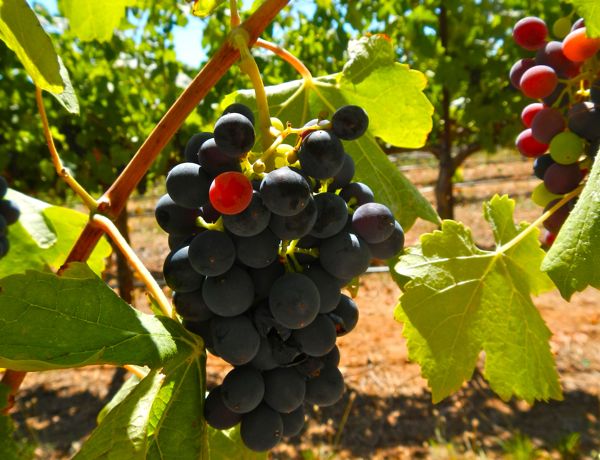
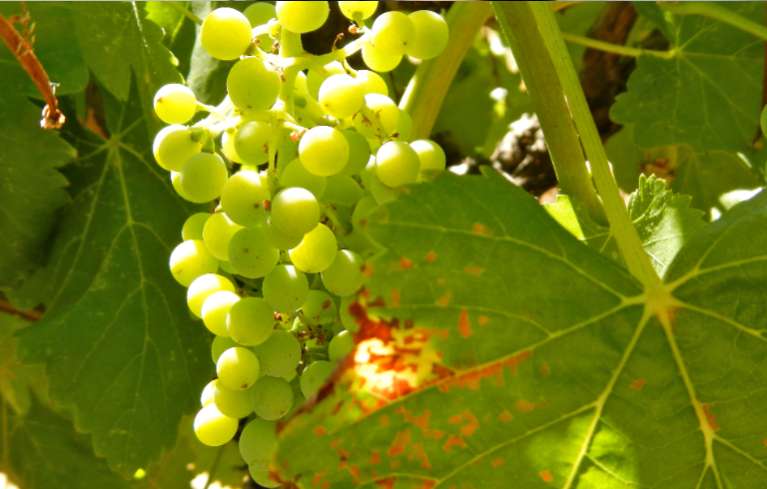
The wine grape harvest is expected to be early this year in El Dorado County. Photos/Kathryn Reed

The wine grape harvest is expected to be early this year in El Dorado County. Photos/Kathryn Reed

By Kathryn Reed

PLACERVILLE – Coming off one of the warmest Julys on record, a June that saw several triple digit days and an August that has a forecast for the 80s later this week – being a winemaker can cause one’s head to spin or the need to open another bottle to take off the edge.

No one said growing grapes was easy. Mother Nature makes sure of that.

But with all the heat that has been absorbed by the grapes in El Dorado County, it’s looking like the harvest will be early this year. And that means some of the white varietals will be picked this month.

What the end result will be remains to be tasted.

The last time temps were like this was in 2007. And oenophiles remember that year for California wines – especially the reds. There are not enough positive superlatives for many of those bottles.

Wine is big business throughout the state. In 2012, the grapes were worth $3.2 million, which became $34 billion worth of wine.

Debbi Bogen, tasting room manager for Fenton Herriott Vineyards in Placerville, told Lake Tahoe News, “This is going to be a phenomenal harvest. Everything is perfect. The grapes are looking fantastic.”

Veraison is already occurring. This is the “onset of ripening” when the grapes begin to turn red.
Veraison -- when grapes turn red -- is happening at Fenton Herriott and other vineyards.

Veraison — when grapes turn red — is happening at Fenton Herriott and other vineyards.

Vineyard managers will soon start to use a refractometer to check the brix – or sugar content – of the grapes. It must be at a certain degree for optimum flavor. The brix changes. So one day a vineyard might be ready to pick and the next it isn’t.

With the slope and elevation variations of many vineyards in the county, it means the harvest can be staggered. It already is when it comes to varietals. And depending who grows what where, the “normal” time to harvest already varies.

Mari Wells Coyle, winemaker with David Girard Vineyards in Placerville, said it could be the third week of August when the first grapes are picked.

“The warm weather is helping grapes that grow in this climate,” Coyle told Lake Tahoe News.

But too much heat can be a problem. That stops the grapes from continuing to ripen.

Diane Stading, co-owner of Auriga Wine Cellars in Placerville, said there were seven days in June when the mercury topped 100 degrees, with one day hitting 114.

“The heat has not been nice to us. They won’t take up water when it’s 100-plus degrees,” Stading said while pouring wine on Saturday.

She said this could lead to there being no canopy to protect the grapes, which causes the grapes to be burned by the sun and shrivel like a raisin.

Auriga typically starts harvesting at the end of September, but this year it’s more likely to be early next month.

At Narrow Gate they’ve been known to pick a vineyard twice if clusters don’t come in evenly. While it’s twice the work, their philosophy is quality is of the utmost importance. The Viogner was picked in stages last year.

Besides dealing with the heat this summer, the valley that Narrow Gate sits in in Placerville sustained a major frost on May 24 that overall damaged 35 percent of its vines. It took out at least 50 percent of the Primitivo.

Most vintners point to 2010 and 2011 as being difficult years because of the coolness that delayed the ripening process.

Two years ago Fenton Herriott was wrapping up its harvest as snow was falling.

If the grapes crack they are useless because mildew can ruin the fruit.

With the harvest expected to be early, it also means a lot of bottling is going on now to free room for the next vintage to begin its fermentation process.