Passport to Dining tickets on sale

Passport to Dining returns to the North Shore on Nov. 14.

The popular social gathering features food and beverage tastings from up to 35 local restaurants, caterers, breweries, wineries and distilleries.

Tickets are $35 in advance and $45 day of event. For info and to buy tickets, call (530) 546.9000.

The 6–9pm is at the North Tahoe Event Center, 8318 N. Lake Blvd., Kings Beach.


Food waste a contributor to green house emissions

By Kiera Butler, Mother Jones

A full third of the world’s food is wasted. According to a report from the UN’s Food and Agriculture Organization, discarded food accounts for a staggering amount of planet-warming greenhouse gas emissions. In fact, if food waste was a country, its 3.3 gigatonnes of emissions would make it the third highest-emitting country in the world, after China and the United States.

What exactly makes all that waste and its emissions?

It’s not just consumers throwing dinner scraps away. Some food spoils before farmers can harvest it, other food goes bad on its way from the farm to the market, and still more food ends up rotting on supermarket shelves. Looking at emissions of uneaten food from farm to table, the researchers found that food wasted at the consumer phase had the highest carbon footprint. That’s because by the time food gets to that stage, it’s already accumulated emissions from production, harvest, and distribution.

In other words, when chuck food that you buy at the supermarket, you’re throwing away every part of the process that has gotten it there, as well.

Some kinds of food waste create more emissions than others. Wasted fruit, for example, has a relatively small ratio of food waste to carbon emitted. Meat’s ratio is much larger. That’s because meat production is exceptionally carbon intensive.

Read the whole story


Food choices tied to scoreboard

By Jan Hoffman, New York Times

When Vinnie Richichi started watching the Pittsburgh Steelers’ home opener against the Tennessee Titans a week ago, he was feeling great. After all, the Steelers had won their first home game six years in a row.

Then things indeed went south.

“The worse they looked, the more I kept going to the fridge,” recalled Richichi, a co-host of a sports talk show on KDKA-FM in Pittsburgh. “First a couple of Hot Pockets. By the second quarter I threw in a box of White Castle hamburgers. As the game progressed, I just went through the refrigerator: the more fear, the more emotion, I’m chomping down. But I’m not going near the salad or the yogurt. If it doesn’t have 700 calories, I’m going right past it.”

The aftereffect of the Steelers’ ignominious defeat by a score of 16-9 clung to Richichi on Monday, when he rejected his regular breakfast of yogurt and strawberries in favor of a bagel sandwich with sausage, eggs, cheese, peppers and hot sauce. Then, his mood hardly improved after spending four hours on the air railing and commiserating with Steelers’ fans, he had pizza for lunch.

“My weight goes up and down with my teams,” said Richichi. “My team does well? I’m 40, 50 pounds lighter.”

Richichi’s eating habits, joined at the waistline with the NFL, were reflected in a recent study that investigated whether a football team’s outcome had an effect on what fans ate the day after a game. Although the study did not look at weight fluctuations, researchers found that football fans’ saturated-fat consumption increased by as much as 28 percent following defeats and decreased by 16 percent following victories. The association was particularly pronounced in the eight cities regarded as having the most devoted fans, with Pittsburgh often ranked No. 1. Narrower, nail-biting defeats led to greater consumption of calorie and fat-saturated foods than lopsided ones.

Read the whole story


Foodies converge at Northstar

The 28th annual Autumn Food and Wine Festival ended Sept. 8 with more than 30 restaurants, wineries, brewers and distillers from across the region pouring more than 90 wines poured and cooking an assortment of food dishes as diverse as octopus soppressatta, rabbit and wild boar roulade and elk patty melts.

The winners are:

Blind Judges’ Awards

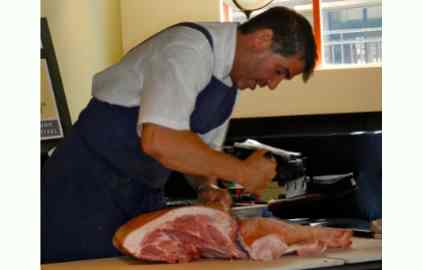
At the 2012 Northstar food and wine event Mark Estee gave a butchering demo, this year he won the cooking competition. Photo/LTN file

At the 2012 Northstar food and wine event Mark Estee gave a butchering demo, this year he won the cooking competition. Photo/LTN file

Best Marriage of Food and Wine

Gold: Village Pizzeria (Meatballs Marinara/Kenwood ’10 Zinfandel)

Silver: Moody’s Bistro (Rabbit and Wild Boar Roulade/Paul Hobbs ’11 Pinot Noir)

Bronze: Jake’s on the Lake (Duck and Mushroom Tart/Handley Cellars ’09 Pinot Noir)

Best Pairing Food and Beverage

Gold: North Lake Tahoe Catering Gazpacho/Charbay

Best White Wine

Gold: Cristo di Campobello 2012 Grillo, Chard Insolia & Catarotto (Favorotta)

Silver: Long Meadow Ranch 2011 Sauvignon Blanc (Rutherford)

Best Red Wine

Gold: Orin Swift “Abstract” 2011 Red Blend (CA)

Silver: Paul Hobbs 2011 Crossbarn Pinot Noir (Sonoma County)

Bronze: Handley Cellars 2009 Pinot Noir (Anderson Valley)

Best Food

Gold: Village Pizzeria (Meatballs Marinara)

Silver: Moody’s Bistro (Rabbit and Wild Boar Roulade)

Bronze: PJ’s at Grey Crossing (Roasted Beef Canape)

People’s Choice Awards

Best Pairing

Northstar California/Stanger Vineyards

Best Food

Northstar California

Best White Wine

Frank Family Vineyards

Best Red Wine

Stanger Vineyards

Best Other than Wine

Charbay Winery & Distillery

Best Table Presentation

North Tahoe Catering/Charbay Winery & Distillery

Saturday was the competitive event between two top chefs in the region. The Blazing Pans Mountain Chef Cook-Off featured 2012 champion Elsa Corrigan, chef/owner of Squaw Valley’s Mamasake, against challenger Mark Estee, chef/owner of Campo Reno. After an hour-plus long battle using goat as the secret ingredient, Estee emerged victorious.


FDA: Arsenic in rice OK to eat

By Sabrina Tavernise, New York Times

WASHINGTON — The Food and Drug Administration announced Friday that it had found no evidence that current levels of arsenic in rice pose an immediate health risk.

The finding comes two months after the agency proposed new limits on arsenic in apple juice. A public outcry had caused the agency to look at the issue more closely.

The agency tested more than 1,300 types of rice and rice products, like rice cakes and infant cereals, and found that arsenic levels ranged from 3 to 7 micrograms per serving, amounts that the agency said were not hazardous to human health in the short term.

Most rice contains much higher levels of arsenic than apple juice does, said Keeve Nachman, a scientist who studies arsenic in food at the Center for a Livable Future at Johns Hopkins University, but because there is such a wide variety of products made with it, and because it is present at such different levels, the analysis for rice is more complicated.

Read the whole story


U.S. consumers won’t know if chicken is from China

By Maria Godoy, NPR

Here’s a bit of news that might make you drop that chicken nugget midbite.

Just before the start of Labor Day weekend, the U.S. Department of Agriculture quietly announced that it was ending a ban on processed chicken imports from China. The kicker: These products can now be sold in the U.S. without a country-of-origin label.

For starters, just four Chinese processing plants will be allowed to export cooked chicken products to the U.S., as first reported by Politico. The plants in question passed USDA inspection in March. Initially, these processors will only be allowed to export chicken products made from birds that were raised in the U.S. and Canada. Because of that, the poultry processors won’t be required to have a USDA inspector on site, as the New York Times notes, adding:

“And because the poultry will be processed, it will not require country-of-origin labeling. Nor will consumers eating chicken noodle soup from a can or chicken nuggets in a fast-food restaurant know if the chicken came from Chinese processing plants.”

That’s a pretty disturbing thought for anyone who’s followed the slew of stories regarding food safety failures in China in recent years. As we’ve on The Salt, this year alone, thousands of dead pigs turned up in the waters of Shanghai, rat meat was passed off as mutton and — perhaps most disconcerting for U.S. consumers — there was an outbreak of the among live fowl in fresh meat markets.

Read the whole story


Freshness of beer impacts its taste

By Blair Anthony Robertson, Sacramento Bee

The folks at highly regarded Russian River Brewing stress one thing that may surprise you: freshness. It’s practically a mantra for this famed Santa Rosa brewery.

They want you to enjoy their Pliny the Elder, a world-class double India Pale Ale, as soon as possible. It’s not something to stock up on for the big barbecue in six months. It’s definitely not something to collect and break out in a few years for a special occasion.

“Beer is a perishable product. The way we make our IPAs, they’re not meant to age,” said Russian River co-owner Natalie Cilurzo. “The fresher they are, the better they are.”

The emphasis on due dates and spoilage isn’t necessarily new, but not a lot of beer aficionados paid much attention to fading flavor profiles and staleness when it came to Budweiser and its “Born on” campaign.

The renewed emphasis on drinking sooner than later tends to highlight the quality-driven appeal of craft beer.

Read the whole story


California celebrating its rich viticulture history

Publisher’s note: The following is California Gov. Jerry Brown’s proclamation declaring September California Wine Month.

By Jerry Brown

The first vineyard in Spanish California was not planted within the area that would become our state, but rather at the short-lived Misión San Bruno in what is now the Mexican state of Baja California Sur. The Italian Jesuit priest Eusebio Francisco Kino established this mission in 1683 at the beginning of his long career exploring and proselytizing in the region that would become the Southwestern United States.

Although a drought caused him to abandon San Bruno less than two years after its establishment, the vines that Padre Kino planted — optimistically, perhaps — speak to the great cultural and religious significance of grapes and wine in the Mediterranean cultures that produced our state’s first European settlers.
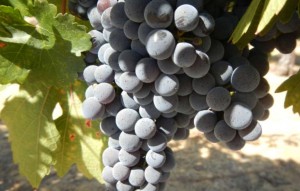
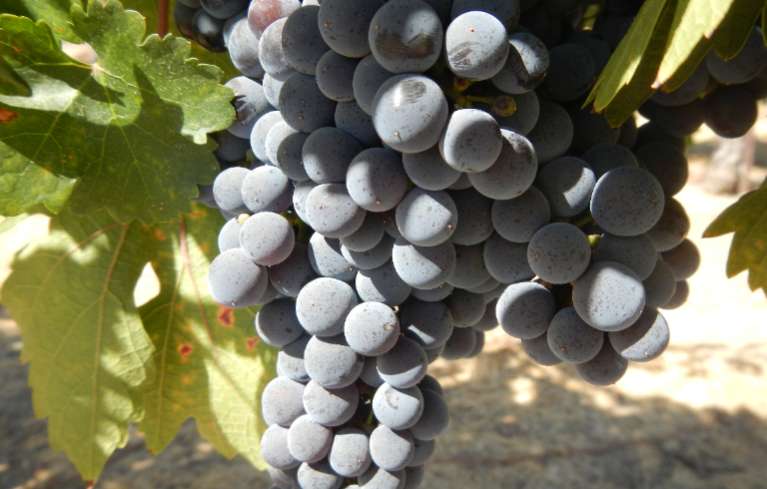
Grapes are being harvested in California this time of year. Photo/LTN file

Grapes are being harvested in California this time of year. Photo/LTN file

In 1768, King Carlos III expelled all Jesuits from New Spain, and administration of the Baja California missions passed to the Franciscan order. That same year, the Catalan Franciscan friar Junípero Serra, beatified by Pope John Paul II in 1988, embarked on his historic expedition to Alta California and established the first mission in the future Golden State at San Diego in 1769. While there is some dispute as to when and where the first vines were planted, it is clear that California viticulture was flourishing by the late 1770s. The first winery was established at Mission San Gabriel during this period.

Nearly all grapes grown in California at the time were of a hardy, disease-resistant strain that came to be known as the “mission grape,” a mainstay of the early commercial industry that is still used in some fine California wines and sherries today.

In the 19th century, Americans and Europeans arriving in California expanded viticulture beyond the missions and brought grape varietals and winemaking traditions from various parts of the Old World.

The “good pirate” Joseph Chapman, who was captured in a raid on Monterey in 1818 and settled in California after his release from prison, founded the territory’s first commercial vineyard in Los Angeles in 1824.

The Frenchman Jean-Louis Vignes was first to introduce French vines in the 1830s, and his products quickly surpassed the mission-grape wines in quality.

However, much of the credit for the amazing diversity of Vitis vinifera grapes grown in our state today goes to the Hungarian Count Agoston Haraszthy, who introduced scores of varietals that may have included Zinfandel, one of the most iconic California wine grapes. Haraszthy was the founder of the Buena Vista Winery — the oldest winery in the state that still makes wines — in Sonoma in 1857.

The first cultivated grapevines in Napa Valley are thought to have been planted in 1836 by the early settler George Calvert Yount, in the area that would come to be called Yountville. Noticing a large number of native Californian grapes growing on his property, Yount decided to try his hand at viticulture, setting in motion the chain of events that led to the establishment of one of the world’s most acclaimed wine-growing regions. Some of the best-known names in the valley today date back to this era, beginning with Charles Krug, a former employee of Haraszthy, who is credited with founding the first commercial winery in Napa Valley in 1861.

By then, the Gold Rush and subsequent population booms had created a large market for wine within the young state. As the quality of our industry’s products improved, foreign markets took note, setting California on the path to becoming one of the world’s top exporters of wine. A Frenchman, Capt. Gustave Niebaum, founded the Inglenook Winery in Rutherford in 1879 to produce the state’s first Bordeaux, and 10 years later these wines won gold medals at the World’s Fair of Paris. By the turn of the 20th century, California wines were already world-renowned and had won medals at numerous European and other international competitions.

The greatest setback in the development of our modern wine industry occurred during the federal prohibition of alcohol from 1920 to 1933. Much of the diversity and quality that the industry’s founders had built was lost during this period as growers replaced wine varietals with table grapes. Others shipped concentrated products for the home production of grape juice, accompanied by “warnings” detailing the steps one would avoid if one did not wish the product to ferment into wine.

The industry also returned to its religious roots, in a way, as shipments of sacramental wine increased substantially under the new laws. Some California vintners were able to remain in continuous operation by shifting production to this market.

After the repeal of Prohibition, the industry did not recover quickly. The majority of Americans drank beer or spirits, and fine wine was still the province of high society on the one hand and, on the other, ethnic and religious groups that maintained their Old World traditions. Even as the industry made great technical strides and the quality of some California wines became superb in the mid-20th century, the bulk of sales were still of low-quality fortified wines.

It is a testament to the pioneering efforts of industry leaders like Robert Mondavi that today, the number of Americans identifying wine as their alcoholic beverage of choice is on a par with the number who choose beer. Our public universities have also played a prominent role in advancing the science and technology that have helped make wine one of the Golden State’s most successful and beloved industries.

This month, millions of tourists will come to our state from around the world to sample our vintages and enjoy the many other attractions that our several distinct wine regions have to offer. I hope that many Californians will join me in raising a glass to the pioneers, beginning with Padre Kino, who helped bring this amazing bounty to California, and the many diligent and innovative workers today who help the industry continue to thrive.


Yogurts compete for space on store shelves

By Sarah Nassauer, Wall Street Journal

These are dark days for fans of regular yogurt.

The creamy snack is being edged out on grocery store shelves by its thicker, tarter, higher-protein sibling, Greek yogurt.

Over a third of the yogurt in a typical grocery store is now Greek, in varieties from low-fat to fruit-on-the-bottom to tubes for kids. Because shelf space is limited, the Greek squeeze means consumers have had to say goodbye to some varieties of traditional-style yogurt and more obscure flavors. (R.I.P. Stonyfield Farm’s Whole Milk White Chocolate Raspberry and Strawberry Acai flavors.) Pudding cups, margarine and other products with the misfortune of usually sitting near yogurt also are harder to find.

“It certainly has crowded out everything I like to eat,” says Kimberly Davis, a 38-year-old resident of Plattsburgh, N.Y., who doesn’t like the taste of Greek yogurt but eats traditional yogurt often.

Read the whole story


Sustainable fish that are good for you

By Russ Parson, Los Angeles Times

Sustainable seafood is one of the big buzzwords in food these days. And it is important: So many of our most popular fish are close to being overfished. The trick is expanding our palates, finding fish that we aren’t already loving to death.

But finding alternatives is daunting – most of us didn’t grow up with great markets, so the range of fish we know is limited. Still, there are great fish out there. So I put the question to a panel of seafood experts at Saturday morning’s “Field to Fork” segment of the Taste: What one fish would you want to put in people’s hands that is both sustainable and delicious?

Lisa Hogan, a vice president of Santa Monica Seafood – one of the leading seafood wholesalers on the West Coast – chose Santa Barbara spot prawns. They’re trapped off the Southern California coast and sold live from tanks. “They are so sweet and so delicious,” she said. “I guarantee you that once you taste these, you’ll never go back to farmed tiger or white shrimp again. They’re just amazing.”

Read the whole story