K’s Kitchen: Time for comfort food

By Kathryn Reed

With the change in seasons, so comes the change in what I’m cooking. The cooler temps make me want to whip up foods that are more comforting.

Below is a recipe I don’t make often, but I don’t know why. And it’s one that is good for guests.

It is from the cookbook “Cucina Viansa”. It’s a cookbook I bought several years ago at the winery. Sam and Vicki Sebastiani owned Viansa Winery at the time – they’ve since divorced – and someone else owns the winery. He ran the winery; she ran the eatery and wrote the cookbook.

k's kitchenI like that the cookbook suggests wines to serve with each dish. This particular one calls for a Chardonnay or Nebbiolo. Since the recipe needs red wine and I didn’t have any Nebbiolo in the house, I cooked with Merlot and finished the meal with a Cabernet.

I took the easy route and bought cannelloni (manicotti does the trick too) shells. I lightened the fat content with reduced fat cheeses. And I really did grate the Parmesan, but pre-grated (not the stuff in a green can found on a shelf) should suffice. I didn’t save any liquid from the tomatoes, and I couldn’t find this variety in that size can so I bought something similar that worked just fine. I had filling left over and just put it on top of the stuffed shells. You might want to put foil under the pan in case the marinara sauce overflows.

I served it with a salad and bread.

Cannelloni di Formaggio e Erbe con Salsa Marinara (Cheese and Herb Cannelloni with Marinara Sauce)

 Crepes:

2 large eggs

1 tsp salt

1 T sugar

¼ C chilled white wine

¾ C flour

1¼ C milk

Olive oil

In a medium bowl, whisk eggs until frothy. Add salt, sugar and wine and whisk thoroughly. Add flour and milk alternately, beating well after each addition. Cover and allow the batter to rest one hour in the refrigerator. Whisk again to mix.

Spread a very small amount of olive oil with a brush (or paper towel) on a 6- to 8-inch non-stick crepe pan or skillet. Pour 3 tablespoons batter into the skillet for each crepe (use a large cooking or serving spoon that holds 3 tablespoons, so you can pour the batter all at once). Quickly swirl to spread the batter to a 6-inch circle. Brown lightly on the underside over medium heat, turn to briefly brown the second side (use a rubber spatula to loosen the crepe around the edges, slide it under and flip the crepe over). Slide each crepe onto waxed paper. Crepes can be stacked between layers of waxed paper until ready for use. If preparing well ahead of time, wrap the stack of crepes in plastic wrap and refrigerate.

Makes 12 to 14 crepes.

Filling:

2 C ricotta cheese

¾ C freshly grated Parmesan cheese

2 packages (8 ounces each) cream cheese at room temperature

2 eggs slightly beaten

½ C minced green onions, including green tops

2 T minced Italian parsley

2 T minced fresh basil

¼ tsp salt

Dash pepper

Combine the ricotta, grated Parmesan, cream cheese and eggs in an electric mixer or food processor and mix until well blended. Add the remaining filling ingredients and mix to combine. Spread about 1/3 cup of filling down the center of each crepe. Fold the sides of the crepe over the filling to form a roll. Place filled crepes, seam side down, in a single layer in shallow 9 x 13 inch baking dish.


Marinara Sauce:

¼ C olive oil

4 cloves garlic, minced

2 medium yellow onions, chopped

2 cans (28 ounces each) Italian plum tomatoes

½ C red wine

1 tsp minced fresh oregano

1 tsp minced fresh basil

½ tsp salt

¼ tsp pepper

¾ C freshly grated Parmesan cheese

Preheat oven to 350 degrees.

Heat oil in a large skillet and sauté garlic and onions for 10 to 12 minutes, until tender. Drain 1 cup of the liquid from the canned tomatoes and discard or save for another use. Stir the tomatoes (mashing with a fork or spoon to incorporate), remaining tomato liquid, wine, oregano, basil, salt and pepper into the onions. Bring to a boil, reduce heat, and simmer 20 minutes, stirring occasionally. Pour the marinara sauce over the cannelloni and sprinkle Parmesan over the top. Bake 40 minutes. Makes 6 cups sauce.


U.S. receives a C on diet report card

By Jenn Harris, Los Angeles Times

With Cronuts, ramen burgers and calorie-laden mash-ups dominating our current food culture, it should come as no surprise that as a country we’re not scoring high marks for healthy diets.

According to the Center for Science in the Public Interest’s new American diet report card, we’re barely passing.

The organization used data gathered by the U.S. Department of Agriculture to give U.S. eaters a grade. The healthier the diet, the higher the grade. Americans have a GPA of 2.42 or as a letter, a C.

Read the whole story


Famous South Tahoe chocolate cake lives on

By Kathryn Reed

Some of the best cookbooks are ones that practically read like a novel because they tell stories that weave food into our everyday lives. Others offer so many tips that they eliminate the need for some other “how to” books. Some are compilations and not just the recipes of one chef.

“Favorite Recipes from the South Tahoe Garden Club” is a little bit of all of those types of cookbooks.

And while it doesn’t have the stories per se, the ads, ingredients and advice are insights into Lake Tahoe in 1969 – the year the book was published. The cookbooks were a moneymaker for the club.

Lake Tahoe News Publisher Kathryn Reed celebrates her birthday with an Ethel Clarke chocolate cake made by Susan Wood. Photo/Susan Wood

Lake Tahoe News Publisher Kathryn Reed celebrates her birthday with an Ethel Clarke chocolate cake made by Susan Wood. Photo/Susan Wood

Some of the businesses that advertised are still here. Some are just memories.

One of the funniest ads is for Tahoe Valley Pharmacy. It says, “If your experimental recipe does not work, come see us.”

The book has tips for high altitude cooking and gardening. All sorts of different conversions are in it – like how 2 pounds of fresh peaches will become 1 quart when canned.

What to do with leftovers, ideas for kids’ lunches, what to grill, suggestions for losing weight and the nutritional value of foods are all part of the cookbook.

While the cookbook is comprehensive, it’s not very big – 128 pages. But the type in places is super small.

Tucked into this cookbook is a recipe made famous by Ethel Clarke. She was notorious for delivering her famous chocolate cakes to houses when there was a birthday.

“I have never tasted so much chocolate in my life,” Del Laine said. With six kids in the Laine family, they were well stocked with cakes every year.

Clarke never sold a cake for profit, but plenty of money was made off of her baking skills. That’s how people became familiar with her chocolate cake. She would bring them to different bazaars. Sometimes they were sold by the slice, other times the whole cake was purchased.

“The chocolate cake was a treasure. It was made with real butter. It was so moist,” recalls Brenda Stewart.

With all of her civic involvement, there were plenty of opportunities for cake making. Clarke was secretary of the Lake Valley Community Club, organizer-president of the American Legion Auxiliary, charter president of Soroptimist International of South Lake Tahoe, first secretary of South Tahoe Public Utility District, board member of Lake Tahoe Community Concerts, charter member of Lake Tahoe Historical Society, and member (chair for five years) of the South Tahoe City-School Recreation Commission. (Plus she owned the first insurance agency and built the first local office building in South Lake Tahoe.)

Clarke died in 1987, but her recipe lives on. It was part of a birthday celebration last weekend.

 Chocolate Cake by Ethel Clarke

Cream 1 cube of butter. Add 1½ cups of sugar; beat. Add 4 egg yolks; beat. Add 2 squares of Baker’s unsweetened chocolate melted over hot water – beat. Have ready 2¼ cups of flour (sifted 3 times). Into 1½ cups of buttermilk stir 1¼ teaspoons of soda.

When buttermilk is well mixed with soda, add ½ to batter. Next, add one half of the flour, then the balance of buttermilk and balance of flour. Add 2 teaspoons of vanilla and fold in 4 stiffly beaten egg whites. Bake at 325 degrees for 35 minutes.

Batter should be very stiff, makes 3 round or 2 large square layers.

Ice with:

1 cube butter

milk to moisten

2 tsp vanilla

1 package powdered sugar

2 squares Baker’s unsweetened chocolate melted over hot water

Do not use a butter substitutes – will not work.


Beer makers to convene in Reno

The second annual Nevada Craft Brewers Festival is Oct. 5 from 3-7pm at Wingfield Park near the Truckee River in downtown Reno.

Fifteen breweries across the state will pour two to four beers and ales.

Brewers from both ends of the state will compete against each other.

The $25 tickets may be purchased at Great Basin Brewing Company, Silver Peak, The Brewer’s Cabinet, Sierra Tap House, Stoneyhead Brewery, the Reno Homebrewer and High Sierra. Tickets will be $30 at the gate. Tickets include a souvenir tasting glass and unlimited beer. Must be 21 to attend.


K’s Kitchen: Turning tomatoes into soup

By Kathryn Reed

Sue scored us a huge bag of homegrown tomatoes. The weather forecast was for overnight lows in the 30s. I knew those tomatoes would soon be soup.

In March 2008 we took a soup class taught by Steve Fernald at Lake Tahoe Community College. The following recipe is my favorite one from the class.

k's kitchenI correctly remembered it was a bit involved to make. Where were my classmates when I needed them? I soon realized why I had never made it in all these years.

But then I tasted it … and again two days later. It really is a delicious soup. It’s just a bit labor intensive.

I’m so glad I made extra because it’s going to be part of my dinner when we go on our girls’ camping trip.

But I was concerned about the cream, so I emailed Fernald and asked him about freezing the soup.

“There isn’t any reason it couldn’t be. If I remember, there is a little cream or dairy that is added toward the end. Even if you substituted almond milk or something similar – dairy and milk-substitutes don’t freeze well so better to not add those things before freezing. They can be added at service,” Fernald said.

The recipe is from Anna Thomas’ “New Vegetarian Epicure.”

Wild Mushroom and Charred Tomato Soup

2 ounces dried porcini

1 T plus 1 tsp olive oil

2 T butter

3 large onions (1½ pounds) quartered and sliced

4 cloves garlic, chopped

1 bay leaf

Salt and pepper to taste

½ tsp dried whole thyme, or 1-2 tsp fresh

3 pounds ripe tomatoes

4 ounces fresh shiitake, or other wild mushrooms

1 C dry red wine

3 C vegetable broth

½ C cream

Cover the dried porcini with boiling water, set them aside to soak for at least 30 minutes or longer, until soft.

Heat half the olive oil and half the butter in a large nonstick sauté pan, and add the sliced onions, three-quarters of the garlic, bay leaf, some salt, and the thyme. Regulate the heat and cook slowly, stirring occasionally, until the onions are gold brown – an hour if needed.

Meanwhile, scald and peel the tomatoes, cut them in halves or quarters, and mix them in a large bowl with remaining olive oil, sprinkle with salt, and the remaining chopped garlic. Spread them on a baking sheet with edges, and roast in a hot oven (425-450 degrees), turning once or twice, until charred spots are appearing around their edges.

Check the tomatoes every 10 minutes or so, then more frequently when they begin to color – you want them subtly charred, not burnt. When they are ready, allow them to cool a little on the pan, and then scrape them into a blender and process for a few seconds. They should be roughly chopped.

When the porcini feel soft and flexible, drain them, reserving the liquid. Rinse them carefully to get rid of all the sand and chop any large pieces. Add water if needed to make 3 cups. Wash the shiitakes, cut off stems and slice.

Melt remaining tablespoon of butter in nonstick pan, sauté all the mushrooms until shiitakes begin to color. Deglaze pan with wine, then combine mushrooms and wine with the caramelized onions in a soup pot.

Add the soaking liquid from the porcini, the vegetable broth and the tomatoes and simmer everything for about 10 minutes to marry the flavors. Taste, and correct the seasoning with salt or pepper if desired. Stir in the cream.

Makes 8-10 servings.


Cocoa bean shortage has chocolate prices soaring

By Leslie Josephs and Neena Rai

Consumers from California to Switzerland are developing a taste for dark chocolate, taking a bite out of global cocoa supplies and driving up candy prices in both high-end boutiques and mass-market drugstores.

The cost of one kilogram of chocolate in the U.S. is expected to hit a record $12.25 this year, a 45 percent increase from 2007, according to market-research firm Euromonitor International.

Prices are on the rise due to a shortage of cocoa beans, which are roasted and ground to make chocolate. Market experts estimate that supplies will fall short of demand this year for the first time since 2010 and dry weather is expected to hurt the next harvest in West Africa, where 70 percent of cocoa beans are produced.

The supply shortfall is emerging just as Americans and Europeans are buying more chocolate, particularly the darker varieties, for both health and economic reasons. Dark chocolate often requires more cocoa beans per ounce than milk chocolate, which means that even small shifts in buying trends can have a big impact on the $5.4 billion cocoa-futures market, traders and investors say.

Cocoa prices are up 21 percent so far in the third quarter, outperforming broad commodity indexes. Hedge funds and other money managers are making bullish bets on cocoa futures in unprecedented numbers, wagering that steady economic growth in the world’s developed economies will continue to fuel the rally. Big consumption gains in emerging markets such as Brazil also are lending support to prices.

Read the whole story


Home canners should have equipment inspected

With people choosing to grow more of their own food, they are also doing their own canning. And, “pressure-canning,” using a pressure canner, is becoming increasing popular.

However, in order to ensure food safety and prevent botulism, those using this canning method should have their pressure canners inspected each year, including having the canners’ dial gauge that measures the pressure tested.

University of Nevada Cooperative Extension encourages those using pressure canners to have their canners inspected to ensure food safety. Call 775-336-0274. Photo/Melody Hefner.

University of Nevada Cooperative Extension encourages those using pressure canners to have their canners inspected.  Photo/Melody Hefner

This fall, University of Nevada Cooperative Extension is offering this service at its Washoe County office.

It is recommended that those using pressure canners make an appointment with to have canners inspected and the canner’s pressure gauge tested.

If a pressure gauge is found to be faulty, the canner can make adjustments in cooking time to make up for the inaccurate gauge; or, better yet, the canner can replace the gauge for about $10 to $20. Pressure canners can also have other problems, such as cracked seals.

The inspection and the testing of the pressure gauge takes five to 10 minutes.

The inspection and pressure gauge testing costs $5 and is conducted at the Washoe County Cooperative Extension office, 4955 Energy Way in Reno. Call (775) 336.0274 or email turnerc@unce.unr.edu for an appointment.


Community food garden proposed for Bijou park

By Kathryn Reed

Anyone who has tried to grow produce in the Lake Tahoe Basin has at least one story of failure to tell. But if gardening advocates have their way, more positive stories are about to be told.

“The whole purpose is to teach how to grow in an alpine environment,” Gerri Grego told the South Lake Tahoe City Council last week.

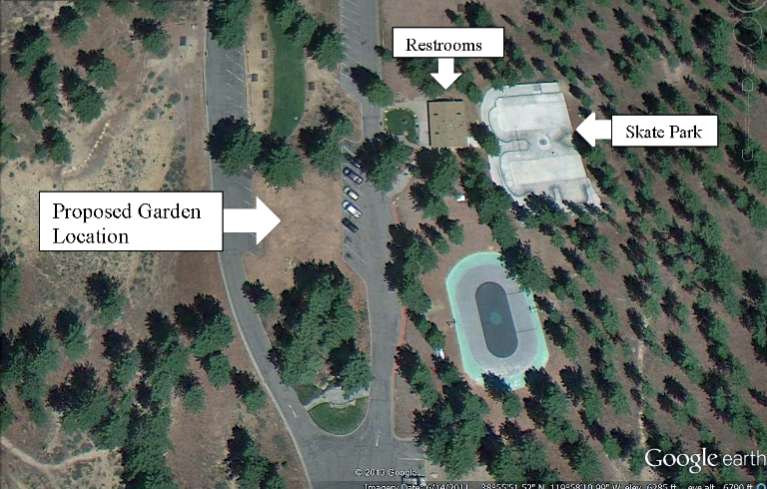
Grego and other members of the Lake Tahoe Sustainability Collaborative want to turn a 30-foot-by-80-foot plot of land in Bijou Community Park into a community food garden.

Proposed location for a community garden in Bijou Community Park. Photo illustration/Provided

Proposed location for a community garden in Bijou Community Park. Photo illustration/Provided

While the council embraced the idea, it did not want to give the go-ahead when there is no policy on the books for how non-government groups can use the city’s land.

Peter Fink, who is on the city’s Parks and Recreation Commission, said that group is in the process of devising such a policy that would then be approved by staff. It’s expected to be completed at the commission’s October meeting.

The commission did approve a trial run for the food garden at its September meeting, but that is on hold for now.

The council directed the sustainability collaborative to go back to the parks commission once the public use policy is completed. Then the parks commissioners will rehear the proposal.

Grego said she didn’t want the agreement entered into until April 1 to give her group the time needed to get insurance and other details settled. The goal is all the paperwork will be done by the spring so planting would begin next season along with 2014 being the first harvest.

The garden is proposed to go between the circle of roads before the snack shack.

Brian Hirdman, a certified permaculture design consultant, is working with the group.

“A garden is needed in Tahoe to demonstrate how you can grow food here,” Hirdman told the council Sept. 17. “The location is perfect because it is a central location.”

The plants will be in containers, so no digging is involved. And no permanent structures will be built. Water for the drip irrigation system will be paid for by the collaborative. Minimal temporary signs will be installed.

It will be an organic garden – meaning no pesticides or herbicides.

To begin with, the food would be given to low-income people in town through various charities. As the harvest grows, the distribution will grow to include alternative food sources, Barton Memorial Hospital, schools and restaurants.

Rebecca Bryson, who is part of the collaborative, said the group is working with the schools when it comes to nutrition standards. She pointed out how studies show kids who are involved with knowing where their food comes from tend to eat more healthy foods.

Throughout the growing season the goal is to teach people how they could have a garden in their yard or develop a garden for particular neighborhoods.

Hirdman also teaches at Lake Tahoe Community College. He plans to incorporate the garden into his curriculum.


Dates on food products confuse consumers

By Mary MacVean, Los Angeles Times

Ted Labuza ate sour cream on Tuesday that was two weeks past its due date. And lived to tell the tale.

Dana Gunders went to the market and found fat-free milk in quarts that had no date label; the half-gallon had a “sell-by” date, and another container from a different brand had a “best-by” date.

Even though nearly all consumers make some decisions about what to throw away based on those stamped dates, they cannot rely on them, said Gunders, food and agriculture staff scientist at the Natural Resources Defense Council.

She is the coauthor of a report issued Wednesday by the NRDC and the Harvard Food Law and Policy Clinic.

Those dates are manufacturers’ suggestions for when an item is at its peak, or are efforts to help stores manage their inventory — not indications of food safety, the report says.

Read the whole story


Certain foods may combat Alzheimer’s

Today is World Alzheimer’s Day.

Studies continue to show a healthy diet and exercise can reduce the risk for Alzheimer’s, in some cases by more than 50 percent. Blueberries, a top brain food, are rich in anthocyanins and shown to improve learning and recall in studies at the University of Cincinnati.

Clinical researcher Neal Barnard is an advocate for starting the day with foods that strengthen memory. The following recipe is from Jason Wyrick.

Breakfast Smoothie (Serves 2)

1 very ripe banana (with plenty of brown speckles)

2 C frozen fruit (such as berries, mangoes, strawberries, banana, orange, and pineapple)

1 C nondairy milk (almond milk or soy milk)

Combine all the ingredients in a blender. Start your blender on the lowest setting and slowly crank it up as the smoothie starts to puree. If you start with your blender at high, you’ll end up with smoothie splattered all over the top of your blender and probably will have to stop your blender several times to get the smoothie ingredients to rest back on the blades. Once you’re up to optimal speed, blend for about 2 minutes to get everything smooth.