Supreme Court won’t hear Monsanto seed case

By Diane Bartz and Carey Gillam, Reuters

The U.S. Supreme Court upheld Monsanto Co’s biotech seed patents on Monday, dealing a blow to a group of organic farmers and other activists trying to stop the biotech company from suing farmers if their fields contain a few plants containing the company’s genetically modified traits.

The Organic Seed Growers and Trade Association and a group of dozens of organic and conventional family farmers, seed companies and public advocacy interests sued Monsanto in March 2011. The suit sought to prohibit the company from suing farmers whose fields became inadvertently contaminated with corn, soybeans, cotton, canola and other crops containing Monsanto’s genetic modifications.

Monsanto has genetically engineered its specialty seeds to withstand dousings of glyphosate, the main ingredient in the company’s Roundup herbicide.

Read the whole story


Sweet cravings can be body’s stress response

By Erin Beresini, Outside

Researchers have fingered several things as sources of sweet cravings. Stress, caffeine, and lack of sleep can all over stimulate your HPA (hypothalamic-pituitary-adrenal) axis, the body’s stress response system. Researchers believe chronic overstimulation of that HPA axis can impair its function, leading to poor immune activity, memory, and metabolism.

Calorie-dense food like sweets, researchers believe, stimulate the body’s endogenous opioid system, which releases endorphins and has a pain-relieving, analgesic effect on the body. It may also help decrease the activity of the HPA axis, helping to calm that overstimulation. If you’re constantly craving sweets, it could be your body’s way of telling you to chill out, get more sleep, or cut the caffeine.

Of course, there are other reasons why you may crave sweets, particularly right after a meal when you’re presumably full. A poorly fueled workout is one of them.

Read the whole story


Brewery brings Old World style to Tahoe-Truckee

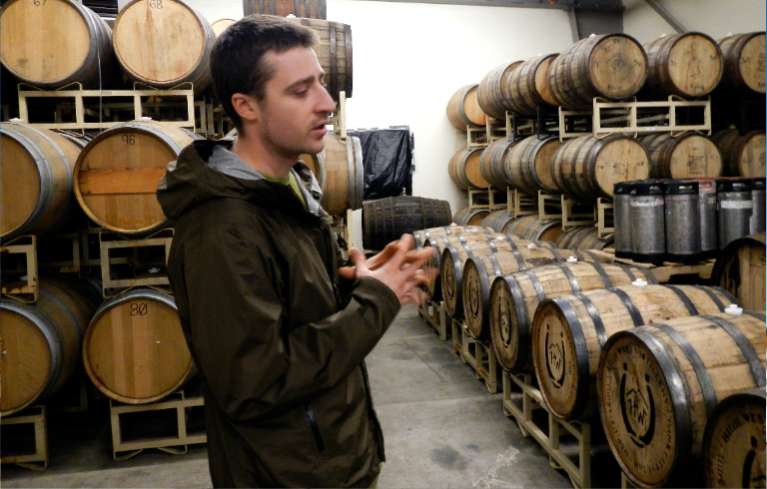
Eli Pasciak, Tahoe Mountain Brewing Co. brewmaster, explains the significance of barrels. Photos/Kathryn Reed

Eli Pasciak, Tahoe Mountain Brewing Co. brewmaster, explains the significance of barrels. Photos/Kathryn Reed

By Kathryn Reed

TAHOE CITY – Some were blondes, others a rich red, some were full bodied, others were classic. All were 3 ounces of liquid enjoyment.

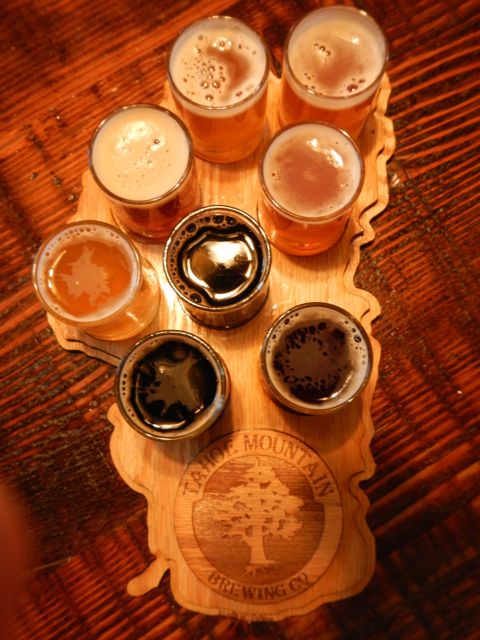
The sampler at Tahoe Mountain Brewing Co. introduces people to eight of the more than 20 varieties of beer at the Tahoe City pub. A few miles away in Truckee these concoctions and others are being made.

“Our goal is to create a more dynamic drinking experience,” Eli Pasciak, head brewer at Tahoe Mountain Brewing Co., told Lake Tahoe News. “We want to accentuate aromas. We don’t want a one-note experience or drink.”

A sampler of beers.

A sampler of beers.

Based on the variety of samples – which come in tiny glasses that are placed on a serving board in the shape of Lake Tahoe – Pasciak has achieved his goal.

Sue liked the Paddle Board, a well-balanced pale ale with hints of fruit. I was most enamored with the Sugar Pine Porter that has a chocolate finish.

The Viejo Rojo is their top seller. It’s a barrel aged sour.

Aaron Bigelow and Tanya Thayer opened the pub on June 2, 2012. There is a small brewery upstairs, but the bulk of the beer is made off-site. Only their beer is sold at the pub. They also run a bottle shop in Truckee that carries 400 beers from around the world. The main brewery, which offers tours by appointment, also has a tasting room.

The couple quit their jobs – he was a custom homebuilder and she a dental tech – to open Tahoe Mountain Brewing Co. The seasonality of the business has been one of the harder things to cope with. But on Saturday the place was packed as snow and rain drove people indoors.

“Even if all the locals came in every day, it’s not enough to support what we are doing. We rely heavily on visitors,” Bigelow said.

The pub is across from Commons Beach in the Cobblestone center. The large picture windows, and interior of wood and rock give it a definite Tahoe feel. TVs in the bar and dining area are muted, but it is definitely loud with just the cackle of conversations. The openness is casual and inviting.

The menu is typical pub food, with limited choices for a vegetarian. Cutting back on the number of items was something the couple had to learn so the kitchen didn’t get backed up. (Neither one had prior restaurant experience.)

The service was excellent. And that’s one thing Bigelow lamented about – the seasonality often means having to lay off quality employees who may have moved on when he is ready to put them back on the payroll.

A pub wasn’t even in the original plans. The couple looked for a place in Tahoe City to start the brewery but could not find the right parcel, so they ended up in Truckee. But when the restaurant space became available they jumped at it. So now they have the dual operation.

Bigelow’s interest in a brewery started with creating beers at home. But he knew he needed to hire experts if he were to be successful. Two brewmasters and an apprentice work in Truckee coming up with beers that are made in the Old World – Belgian style. Maybe a dozen craft beermakers are doing this in California. (Not all the beers are made this way; there are traditional lagers and IPAs.)

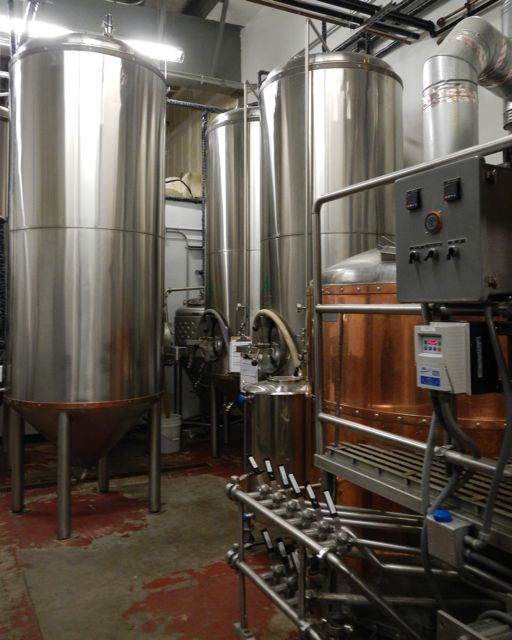
Tanks at the Truckee facility.

Tanks at the Truckee facility.

“They call them the Burgundies of Belgium. They are called sours because of the yeast strains,” Bigelow told Lake Tahoe News. “We are the only all grain from scratch not from extract brewery on the lake.”

It takes longer to create this type of beer. But the richness is evident in each sip.

“They drink more like wine. They are more complex, much dryer, have low pH levels like in the 3.2, 3.6 range. That would be similar to a dry brute Champagne,” Bigelow said. “A lot of times we back blend fruits. Maybe for two or three months it sits on fruits – cherries, blueberries, strawberries.”

Pasciak’s experience as a chef contributes to his awareness of what works on the palate. He wants to blend flavors to create complex beers, but also beers that will pair well with food.

“We like different brews from course to course,” he said. It’s much like pairing wine with food.

On the status board at the brewery is a list of what needs to be done, what beers are in which vat, and other details.

Pasciak had been out shopping for the bacon that morning for what will become Bacon Baltic Porter. It will require a longer fermentation process and need to be kept cooler – more like 50 degrees. (An ale is usually at 60 to 70 degrees.)

The 11 tanks are mostly stainless steel, though copper is also used. Some are cone-shaped which allows the yeast to filter out.

In a neighboring building are the more than 300 barrels. Some are from wine, others from Cognac, Bourbon and Muscat. Soon a trip will be made to France to inspect nine Fudore barrels that can store 3,000 to 5,000 gallons.

Bigelow called this a rare find.

“The idea is with less surface area of the oak the oak influence becomes smoother,” he said.

Each barrel has its own peculiarities. For Pasciak he wants to know the entire history of the barrel so he will have better knowledge of what it will do to the beer.

“A barrel to me is an ingredient,” Pasciak said.

French oak offers more spice, sometimes coconut, whereas vanillans come out of American oak.

Each barrel has a different flavor profile.

In trying to be as sustainable as possible, Tahoe Mountain sends its spent grains to a farmer in Reno. It’s fed to his livestock and mixed with fertilizer for the fields. Produce and eggs are delivered to Tahoe Mountain, and some of the farmer’s goods are incorporated into the beer.

About 5,000 barrels, each containing 31 gallons, are produced annually. Capacity is about maxed out. And that’s fine for Bigelow – at least for now.


U.S. butter consumption spreading

By David Pierson, Los Angeles Times

For generations, butter got a bad rap. It was thought to be cloying, fattening, dangerous for your arteries, and it took a creaming from oil-based substitutes like margarine.

Now with the trans fats in those alternatives under fire, everyone from iron chefs to home cooks is reexamining butter’s place on the refrigerator shelf.

That shift toward natural ingredients and the backlash against trans fats pushed butter consumption in the U.S. to a 40-year high in 2012, according to the latest statistics. Americans now eat 5.6 pounds of butter per capita, up from a low of 4.1 pounds in 1997. In the last decade alone, butter consumption has grown 25 percent.

Read the whole story


Study: Color-coded food changes eating habits

By Michaeleen Doucleff, NPR

Could a little red circle really make me bypass short ribs and mashed potatoes for some cod and rice instead? You’ve got to be kidding.

Well, a team of doctors at Massachusetts General Hospital sure think so — at least sometimes — and they have a study that backs them up.

After six months, people started changing their eating habits, the researchers found. The number of red, unhealthy items purchased in the cafeteria dropped by 20 percent, while green purchases rose by 12 percent. But the biggest change occurred when it came to drink choices: Consumption of sugary sodas dropped by nearly 40 percent.

Read the whole story


K’s Kitchen: Feasting on nachos

By Kathryn Reed

Sometimes it is better not to be a statistic – like being one of the U.S. households that throws out $1,200 worth of food a year.

I try to discard as little food as possible. I do this partly because I’m cheap, partly because I usually only buy food when I’m going to cook with it and partly I try to be a little creative in the kitchen.

Composting is one way to re-use food. I did this when I lived in Sonoma County, but I have not tried it in Tahoe. I know others have been successful here.

k's kitchenVeggies on the wilted side are good for soups or dishes where presentation doesn’t matter. Pureeing veggies is a sure way to make sure no one knows what they looked like to start with.

Nachos are a meal I like to make when I don’t really want to cook. It’s also a way for me to clean out the fridge. No two concoctions are ever the same. They are also great to nosh on during football playoffs.

I usually start with onion and garlic, add whatever veggies I have. I can’t think of a vegetable I wouldn’t use. I try to use fresh. But I have corn kernels in the freezer from last summer’s farmer market that can be used.

Sometimes a can of diced jalapenos is thrown in. I like fresh cilantro in the mixture as well as distributed on top when the nachos are done cooking. I add two cans of black beans, sometimes refried beans, and I’ve mixed pinto and black beans, and red and black beans.

I make a huge batch each time. I like to reheat them for breakfast or lunch. Making one meal and living off of it for a few days is perfect for me. If you don’t do leftovers, then make them on a plate to better judge the mound you are creating.

The amount and kind of cheese is up to you.

Kitchen Sink Nachos

1 bag tortilla chips

Grated cheese

2 cans beans

Olive oil

Onion, diced

Minced garlic

Vegetables, diced

Cilantro, fresh or dried

Salsa

Preheat oven to 250 degrees.

Lightly coast a pan with olive oil. Once it’s hot, toss in onion and garlic. Add vegetables based on what takes the longest to cook – which is usually hardest to softest. Add beans. Cook over medium heat until mixture is hot. Season to your liking – herbs, hot sauce, red pepper flakes, salt and pepper.

Pour half the bag of chips onto a jelly roll pan – the ones with a side so stuff doesn’t ooze out. With a slotted spoon, spread half of the bean mixture across the chips. Cover with a layer of cheese. Add the rest of the chips, beans and cheese.

Bake until cheese is melted.

Remove from oven – time to add salsa, avocado/guacamole, sour cream.

Dive in.


Full moon yurt dinners in Tahoe City

The Winter Discovery Center at Tahoe Cross Country is putting on two full moon yurt dinners.

The evening starts with a moonlit hike, ski or snowshoe from the Tahoe XC trailhead where there will be hot mulled wine and hot chocolate next to a roaring fire. The terrain is gentle. A three-course hot meal awaits in the dinner yurt.

Chef Douglas Dale of Wolfdale’s will providing the meal on Jan. 17 and Jan. 18, 6-9pm.

The dinners are fund raisers for the facility’s 30-foot Pacific yurt.

Call (530) 583.5475 or email valli@tahoexc.org to make a reservation. Tickets are $70 per person.


Expect food costs to be higher in 2014

By Jenn Harris, Los Angeles Times

Eating well in 2014 could get more expensive. Items such as chocolate, beef, bread and cereal are expected to experience price hikes in the new year.

According to a U.S. Department of Agriculture report, all food prices are expected to increase by 1.25 percent to 1.75 percent and food-at-home prices are predicted to increase by 0.75 percent to 1.25 percent.

A rise in wheat and wheat flour prices will lead to increases in prices on your favorite morning cereal or sliced bread. Beef prices will continue to stay high for the next couple of years due to the amount of time it takes to prepare cattle for sale, and the need for pasture recovery.

Read the whole story


Frozen food trying to revamp its image

By Sarah Nassauer, Wall Street Journal

In winter’s depths, family cooks often finds themselves facing a produce dilemma: Buy “fresh” produce out of season, which may have spent days or weeks getting to the local supermarket, or begrudgingly turn to the freezer aisle to find a bag of frosty peas, broccoli or blueberries.

Frozen produce is convenient, and often it is nutritionally comparable to fresh produce. But it has an image problem. Often, “there is a perception that if you are using a frozen vegetable you have taken a shortcut and you are not trying to help your family,” says Kate Gallager, research and development manager for Green Giant, a big producer of frozen produce and a unit of General Mills Inc.

Frozen food companies are going on the offensive, aiming to make products that look better, taste better and offer enough convenience to overcome frozen-food phobia.

Read the whole story


Sugar guidelines may be altered

By Pam Foxx, Outside

Next time you reach for that Red Bull, reconsider. The World Health Organization is currently thinking about halving the daily recommended sugar limit.

The new guidelines would advise adults to consume just five teaspoons of sugar a day, rather than 10. This is bad news for the average American, who eats approximately 40 teaspoons of the stuff daily.

Health experts fear that an excess of the carbohydrate contributes to heart disease, tooth decay, and obesity. And sugar is pervasive. A single can of soda can contain 10 teaspoons of sugar, while a bowl of sweet cereal has about four.

If the WHO does change the recommended limit, many food companies might have to lower the sugar content in their products.

Read the whole story