Study: Sugar is killing Americans

By Karen Kaplan, Los Angeles Times

Americans consume too much sugar, and our collective sweet tooth is killing us.

So says a study published Monday by the journal JAMA Internal Medicine. It finds that 71.4 percent of U.S. adults get more than the recommended 10 percent of their daily calories from added sugars in foods and drinks – and that higher levels of sugar consumption are correlated with higher risk of death due to cardiovascular disease.

Researchers used data from the National Health and Nutrition Examination Survey, or NHANES – a large study updated each year by the Centers for Disease Control and Prevention – to measure changes in sugar consumption over time and to see its effect on health. Added sugars were defined as “all sugars used in processed or prepared foods, such as sugar-sweetened beverages, grain-based desserts, fruit drinks, dairy desserts, candy, ready-to-eat cereals, and yeast breads, but not naturally occurring sugar, such as in fruits and fruit juices.”

Read the whole story


Billions of cheap chicken wings for Super Bowl

By Elizabeth Campbell, Bloomberg

At Donovan’s Pub in Woodside, N.Y., this season’s record corn crop means owner Dan Connor is offering a new special for football fans: free chicken wings.

“Normally during football season, there’s such a spike in prices for wings that it directly affects us,” said Connor, who expects to serve as many as 2,000 chicken wings during this year’s Super Bowl and will offer a free 8-piece order for patrons who buy a bucket of beer. “This year, it hasn’t been so much of a concern.”

Chicken wings are at the lowest price heading into the National Football League’s championship game since 2011. The biggest ever U.S. corn crop cut feed costs for farmers and allowed them to ramp up production of the meat. That’s good news for Americans who will eat 1.25 billion wings during this year’s Super Bowl on Feb. 2, the National Chicken Council estimates. Consumers will pay less at the grocery store and get more discounts and specials at bars and restaurants.

Read the whole story


K’s Kitchen: Mushroom lasagna perfect for guests

By Kathryn Reed

My sister, Pam, just rolled her eyes when I told her she was going to be helping me with a new recipe. She’s rather used to being put to work in the kitchen when she visits as well as a guinea pig of sorts. And it didn’t matter that we were spending the weekend celebrating her birthday.

k's kitchenThe recipe below, from the October 2013 issue of Sunset magazine, is a definite keeper. It is hearty enough that the three meat eaters at the table didn’t leave anything on their plate and two of them had seconds. It also stands up to having a full-bodied red wine as a complement.

There were several moving parts, so it was nice to have another pair of hands in the kitchen. But much of it can also be made ahead of time, so if you were to make this for a group or for people who aren’t into helping, that would be a way to take away some potential stress.

We put in more garlic than it calls for. Pam and I believe garlic is a food group. And we only used one leek because that’s all I bought. I’m not sure another would have made much of a difference.

All of the flavors come together without one being too dominant. It is a definite recipe for the mushroom lovers at your table.

Mushroom and Fresh Herb Lasagna

12 no-boil lasagna noodles (½ pound)

1 quart milk

½ C unsalted butter

½ C flour

About 1½ tsp kosher salt

About ½ tsp pepper

½ tsp nutmeg

3 garlic cloves, minced

3 T chopped parsley, divided

1 T chopped fresh thyme leaves, divided

About 3 T olive oil, divided

2 medium leeks, sliced into thin rings

1½ pounds portabella mushrooms, sliced

½ pound shiitake mushrooms, stemmed and sliced

1 C finely shredded Parmesan cheese

1 C plus 2 T coarsely shredded Asiago cheese

Soften noodles in a pan of very hot water while you prep the other ingredients.

Make béchamel (white sauce): Bring milk to a simmer in a saucepan and remove from heat. Melt butter in a large saucepan over medium heat. Add flour and cook, stirring, until slightly darkened, 2 minutes. Whisk milk into flour mixture all at once and whisk until smooth. Add 1½ tsp. salt, ½ tsp. pepper, and the nutmeg. Sauce should be thick enough to coat a spoon; if it isn’t, cook over medium-low heat, stirring, until thickened, 2 to 3 minutes. Remove from heat and stir in garlic, 2 T parsley, and ½ T thyme. Keep covered.

Preheat oven to 375 degree. Heat a deep, wide pot over medium-high heat 2 minutes. Swirl in 1 tbsp. oil and add leeks. Cook until tender but not browned, 3 to 4 minutes, stirring occasionally. Scoop leeks into a bowl and set aside.

Swirl 2 T oil into pot. Add mushrooms, season lightly with salt and pepper, and cook over medium heat, covered, until mushrooms are tender and beginning to release juices, about 5 minutes. Uncover and cook until edges start to brown. Stir in leeks and remaining ½ T thyme. Remove from heat.

Mix Parmesan with Asiago.

Assemble lasagna: Oil a 9-by-13-inch baking dish. Spread a few spoonfuls of béchamel over bottom. Arrange 3 noodles crosswise in dish, then spoon on about ½ C béchamel, followed by a third of the mushrooms and 1/3 C cheeses. Repeat layers twice more. Top with a final layer of noodles and béchamel, and sprinkle with remaining cheese.

Bake lasagna until browned and bubbling, about 45 minutes. Sprinkle with remaining 1 T parsley and let sit at least 15 minutes before slicing.

Make ahead: Through step 6, 1 day, chilled, or up to 3 months, frozen. Let chilled lasagna sit at room temperature 1 hour before baking. Frozen lasagna can either be thawed in the refrigerator overnight and then baked, or baked straight from the freezer for 1¾ hours (cover for first hour).



Better nutrition leads to better sports performance

By Tamara Jacobi, MindBodyGreen

You’ve been training for months, maybe even years, for the big race. Yet, a quick snap, crackle or pop and it’s game over. Instead of heading to the starting line, you’re sitting on the couch.

Did you know that sports injuries are often a sign of nutrition imbalance? Many athletes have come to think of injuries as simply part of training and being “sporty.” At the same time, athletes have a tendency to focus their diet on a basic set of sports nutrition “rules” that concentrate on specific ratios of proteins, carbs and calories, with little attention to nutritional quality. Coincidence? I’m not so sure.

Knee pain, pulled muscles, tweaked backs — the list goes on, and once injury strikes, few us have the time or the patience to sit around and let our injuries heal properly. The result? Significant pain, inflammation, a serious interruption in training and sometimes long-term damage.

Read the whole story


Cooking methods may be causing cancer

By Brian Palmer, Slate

Grilling meats is an American tradition, but it’s not the healthiest thing to do. A growing body of research suggests that cooking meats over a flame is linked to cancer. Combusting wood, gas, or charcoal emits chemicals known as polycyclic aromatic hydrocarbons. Exposure to these so-called PAHs is known to cause skin, liver, stomach, and several other types of cancer in lab animals. Epidemiological studies link occupational exposure to PAHs to cancer in humans. When PAHs from a flame mingle with nitrogen, say from a slab of meat, they can form nitrated PAHs, or NPAHs. NPAHs are even more carcinogenic than PAHs in laboratory experiments. The reasonable conclusion is that grilling meat may be hazardous to your health.

The evidence linking cancer to cooking meat over a combustion source has been accumulating for decades. Epidemiologists first noticed a connection between the consumption of smoked foods and stomach cancer in the 1960s. Japan, Russia, and Eastern Europe, where smoking is a popular way to preserve meat and fish, became laboratories for gastric cancer research. Newer studies suggest that eating smoked meats may lead to cancer even outside the gastrointestinal tract. A 2012 study, for example, linked smoked meat consumption with breast cancer.

In subsequent decades, it has become clear that smoking isn’t the only problematic cooking method. Frying bacon, for example, produces significant levels of PAHs, probably due to volatilization of carbon in the bacon itself. An Iranian study published last year found that people who develop certain kinds of gastrointestinal cancers are more likely to have a diet high in fried rather than boiled foods. (The researchers linked level of browning to cancer incidence, thus reducing the likelihood that oil consumption was the culprit.) The FDA and WHO also remain concerned about the presence in food of acrylamides, a known carcinogen that forms from sugar and amino acids when cooked at high temperatures. Long-term studies are currently under way. The worrying implication is that cooking foods at high heat, even without active combustion, may be dangerous.

Read the whole story


K’s Kitchen: Pasta with butternut squash

By Kathryn Reed

One reason I sometimes hesitate to cook butternut squash is the time involved. The recipe below made me a believer in fast cooking squash.

However, it did take longer than what the recipe said it would.

k's kitchenIt’s not one of those “wow!” recipes that you want to make when people are coming over, but is a good quick, tasty meal.

I didn’t used pappardelle pasta because I have so much spaghetti in the house. But the photo in Rachael Ray magazine (November 2013) where this came from looks great with the wider noodles. It’s not going to change the flavor, though.

The photo also shows what looks like pepper on top of the plate. I added some from flavor.

And while the recipe says to add the sage and cheese to each individual serving, I mixed it all in. For one, this will give a more consistent flavor. The other reason is that when it comes to leftovers, it’s easier not to be adding things.

Butternut and Sage Pappardelle (Serves 4)

8 ounces fresh or dried pappardelle

1/3 C butter

1 lb. butternut squash-peeled, seeded and shaved into ribbons with a peeler

2/3 C shaved Parmesan

1/3 C thinly sliced fresh sage

Cook pasta; drain, reserving 2/3 cup cooking water. In skillet, stir butter over medium until it browns, 3 minutes. Add squash and cook, stirring, until just tender, 5 minutes. Gently stir in pasta, adding pasta water as needed to moisten; season. Divide among plates and top with cheese and sage.


‘Expired’ food to get a second life

By Lindsay Abrams, Salon

The former president of Trader Joe’s thinks he can sell the food that other stores throw out.

At first glance, that sentence looks like it tells you everything you need to know: Like Jeff Bezos’ vision of delivery-by-drones, or Elon Musk’s proposed hyperloop, Doug Rauch’s new venture sounds at once promising and kind of out-there, and like it’s possibly just a publicity stunt.

In interviews with NPR and the New York Times magazine, Rauch laid out the basics: The Daily Table, due to open in May, will be part grocery store and part cafe, specializing in healthy, inexpensive food and catering to the underserved population in Dorchester, Mass. What makes it controversial – at least at first glance – is Rauch’s business model: His store will exclusively collect and sell food that had crept past its “sell-by” date, rendering it unsellable in other, more conventional supermarkets.

As it turns out, so-called expired food is something of an overlooked commodity. At some point along the chain of production, from when it’s grown to when it’s left on a consumer’s dinner plate, 40 percent of the food produced in the U.S. each year is wasted, and $165 billion goes in the trash.

Read the whole story


Lack of moisture threatens El Dorado vineyards

By Kathryn Reed

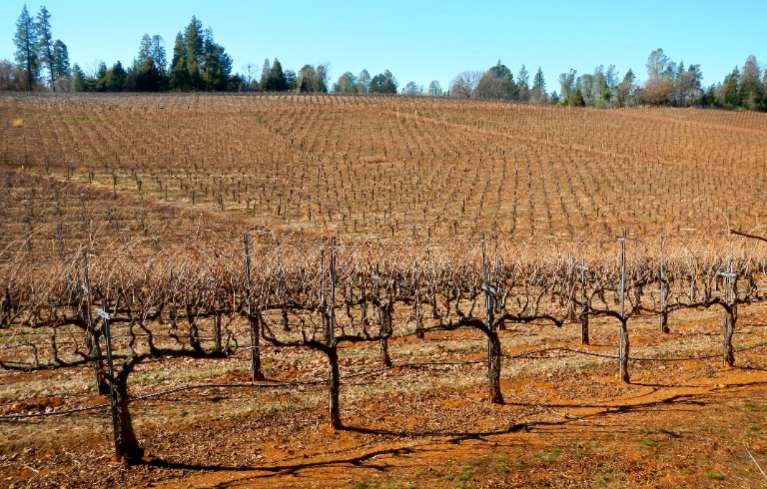
PLACERVILLE – Brittle brown. That’s what the El Dorado County wine country looks like.

While the vines are normally dormant this time of year, the ground between them is usually a lush green. Instead, it’s barren.

Rick Wickham has never seen is so bad in the 30 years he has been in the vineyard management business. Meyers Ranch Vineyards Services Co. based in Somerset manages nearly 800 acres. Most are in El Dorado County, with some in Amador County. The acreage covers 34 vineyards for about a dozen wineries.

“In El Dorado County our aquifer is recharged from snowpack and that doesn’t look good. Most in El Dorado County are on well water and well water is affected by the gallons per minute you can pump,” Wickham told Lake Tahoe News.

Vineyard manager in El Dorado County are worried because of lack of rain this winter. Photo/Kathryn Reed

Vineyard managers in El Dorado County are worried because of lack of rain this winter. Photo/Kathryn Reed

Eldorado Irrigation District supplies many vineyards with water. A drought stage has not been enacted – yet. But with Gov. Jerry Brown declaring last week that the state is in a drought, water districts are apt to follow suit. This could be especially troubling in the heart of the summer when Mother Nature could decide to unleash a heat wave.

In a meeting of vineyard managers on Jan. 13 the talk was about how everyone is worried about water.

Lynn Wunderlich, a UC Cooperative Extension farm advisor, is giving a drought seminar for farmers on Feb. 20 at UC Davis. Wickham is sending several of his people to it.

January 2014 is set to go down in the books – for many locations in California – as one of the driest and warmest on record.

Charlie Jones, owner of Lava Cap Winery in Placerville, said in a normal year about 38 inches of rain falls. Last year about 25 inches fell. To date about 5 inches have accumulated. He, too, has been in the business for 30 years and has never seen it so bad.

Soil in El Dorado County is alluvial and granitic so it does not hold water well. This is the opposite of Amador County where it is more like clay and traps water better.

One way to test the soil for water is with a neutron probe. Usually this is done in early June, with the presumption irrigation will start in mid-June if need be. But Wickham started probing this month and is finding alarming results.

“It’s as low as it normally would be in September,” Wickham said.

Jones knows of people who are watering the vines so the water will freeze to the plants. This forms an insulation.

It’s not just El Dorado County vineyards that are threatened by the lack of rain. Paso Robles has an ordinance that bans planting of new crops that need irrigation.

The soil is also warm. This is a prelude to bud break. One way to combat that is to water now so the soil gets colder.

“We are very fearful they are going to start sprouting,” Davell Hays of Chateau Davell in Camino told Lake Tahoe News.

As a micro-winery with less than 5 acres, there is even less wriggle room for Chateau Davell if winter never comes.

If buds start sprouting now or in the coming weeks, it’s likely the fruit would be damaged or wiped out with a hard freeze. Freezes often come to the foothills as late as May.

One thing Jones has going for his vineyards is that the slope allows for a great deal of air movement, which helps prevent frost.

Deciding when to prune is on everyone’s mind. Typically pruning is done later in El Dorado County because of the threat of a hard frost.

Jones is considering a double prune, which could buy him two weeks.

“The other thing that affects us is weed control. It requires rain within 22 days of application,” Wickham said. “We should be doing weed control now and we are holding off for a little better precipitation in the weeks to come.”

But the forecast is not looking like anything different than what has been the norm for weeks — sun and warmth.


Cork still matters in the wine business

By Will Lyons, Wall Street Journal

In a temperature-controlled cellar with little damp, a good cork will be able to protect wine for several decades. The problem arises on those rare occasions when it doesn’t. Anyone who has built up a collection of fine wines over, say, 40 years will know that perhaps the biggest factor in maintaining their quality is the longevity of corks. At what age does one wear out and have to be replaced?

The answer lies in the quality of the cork. There are three main types. Regular corks are made from bark that’s stripped, without harm to the trees, from the cork oak, found in Portugal and the western Mediterranean. They come in a range of lengths, with the finer wines opting for a longer cork. Second is the agglomerated cork, made of fragments of ground-up cork bound together, either by the bark’s natural resins, released by heating, or with some added adhesive. Thirdly there are synthetic corks, made of plastic foam: Like screw caps and glass closures, these are really only used for wines with a short life-span.

Cork is an excellent material for stoppering wine. The Romans knew a thing or two about viticulture, and cork was used to seal amphorae throughout the Roman Empire. It’s impervious to liquid, long-lasting and doesn’t rot. There is, of course, the problem of cork taint. This arises, usually, through the contamination of the cork with a chemical compound called TCA (2,4,6-trichloroanisole). TCA is produced in the cork when airborne fungi encounter chlorophenols (perhaps deposited by industrial pollution), and it imparts to the wine an unmistakable pungent, moldy odor that I have heard described as anything from mustiness to a dank swimming pool.

Read the whole story


U.S. not one of the top countries to find a healthy meal

By Michaeleen Doucleff, NPR

The Dutch are known for their lax drug laws, tall statures and proficient language skills. Perhaps we should add stellar eating habits to that list, as well.

The Netherlands ranked as the easiest country in the world to find a balanced, nutritious diet, the advocacy group Oxfam Tuesday.

France and Switzerland shared the second slot. And Western Europe nearly swept the top 20 positions, with Australia just edging into a tie for 8th.

The United States tied with Japan for 21st place, despite the fact that we have the most cheap food available worldwide. Our friendly neighbors to the north, Canada, took the 25th position out of 125 countries.

Read the whole story