Calif. restaurants score with Wine Spectator

By S. Irene Virbila, Los Angeles Times

Practically every high-end restaurant you’ll ever go into has an award from Wine Spectator posted prominently on the wall. The venerable wine magazine gives out a lot of them. This year, 3,748 restaurants around the world, representing all 50 states and 81 other countries and territories, have earned Restaurant Awards.

But only 72 restaurants across the country can boast a Wine Spectator Grand Award. It doesn’t pass those out like peanuts. Only six restaurants were added to the roster for 2014, and four of them are from California.

In Northern California, the much lauded Saison in San Francisco, with one of the country’s most expensive tasting menus, got the nod. I was happy too, to see La Toque in Napa Valley added to the list. Ken Frank is one chef who’s always had a strong interest in wine.

Read the whole story


K’s Kitchen: Roasted beet salad

By Kathryn Reed

Salads of all kinds are a staple in our house during the summer. But sometimes I need to get out of my rut.

That rut was broken with the salad below. This would be good with any kind of greens, including spinach. Many farmers’ markets sell lettuce and/or spinach, which is where I got mine. The beets and red onion were also from the market.

While the beets need to be roasted, ideally try to do this when cooking something else so you aren’t powering up the oven or barbecue just for the beets. Yes, barbecuing them would be a great option.

It used to be the only time I would like beets in a salad would be if I were at Skipolini’s Pizza. I grew up eating at the original one in Clayton. It is still my favorite pizza of all time. And while the pizza at the Folsom restaurant is the same, the salad is not. They don’t serve the original one there. It’s such a disappointment.

Even though the salad below is nothing like the one at Skip’s, it more than satisfies my desire for beets in a green salad.

Only dress the salad you are going to eat. Otherwise the lettuce will wilt, and be soggy and nasty.

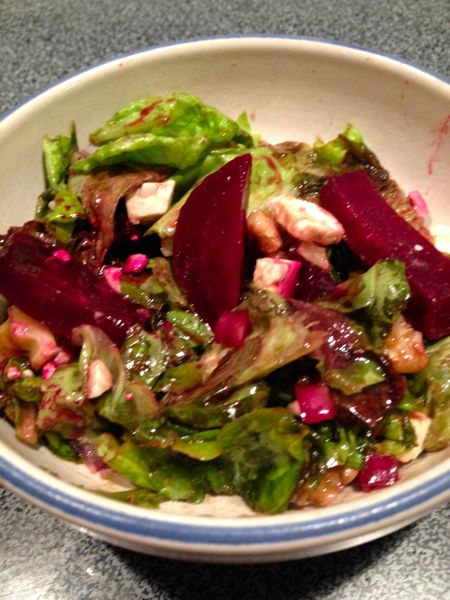
beet salad Roasted Beet Salad

3 medium beets

¼ C olive oil

2 T balsamic vinegar

1 T honey

2 T red onion, minced

½ tsp Dijon mustard

½ C crumbled feta cheese

½ C walnuts, chopped

Lettuce or spinach to serve six

Wrap beets in foil and cook for 1 hour in 400-degree oven. Let cool. Take skin off.

In small bowl, whisk together olive oil, vinegar, honey, onion and mustard.

Pour over greens, mix well. Top with cheese and nuts.


Craft brews taking over grocery store shelves

By Mark Glover, Sacramento Bee

It’s a job that many might thirst for: official beer taster.

As the wine, beer and spirits buyer for the West Sacramento-based Raley’s grocery chain, Curtis Mann’s typical workday entails visiting wineries and brew pubs to sip, sample and evaluate various alcoholic beverages. Increasingly, those official tastings are for a special category: craft brews.

“All of our potential growth is in craft (beers),” said Mann, 35, who started with Raley’s last August.

As the craft brew scene has exploded over the past decade, both here and nationally, major grocers are increasingly stocking their shelves with more locally brewed beers. In Northern California, larger chains such as Woodland-based Nugget Markets and Pleasanton-based Safeway, as well as mom and pop stores, have devoted staff time – and shelf space – to craft beers.

They’re doing so to meet consumer demand. In 2013, U.S. craft beer sales soared more than 17 percent over the prior year to more than 15.3 million barrels, according to the Boulder, Colo.-based Brewers Association. In an overall beer market of $100 billion in 2013, craft sales totaled $14.3 billion.

Locally, bottles of Coors and Budweiser are increasingly sharing shelf space with regional brews with quirky names such as Elevation 6225 Pale Ale, a shout-out to Lake Tahoe’s elevation, or Rusted Butte Red Ale, named after Sutter Buttes, the Sacramento Valley’s mini-mountain range.

Read the whole story


Use of caffeine powder a growing trend

By Erin Beresini, Outside

On May 27, an Ohio teenager was found dead in his home, the victim of a caffeine overdose. The tragedy could have fueled the energy drink debate, which has spiked in recent years and rages on due to recent lawsuits alleging drinks like Red Bull contain unsafe levels of stimulants. But no mention of these. That’s because the teenager, Logan Stiner, didn’t chug a Red Bull or a Monster Energy Drink before he died; he ingested caffeine powder.

Caffeine powder is your favorite stimulant in its purest form, either produced synthetically or extracted from foods that naturally contain caffeine, like coffee beans and kola nuts. It’s easy to buy the fine, white powder in bulk on the Internet. It’s completely legal, and there’s no age restriction. One hundred grams of the stuff costs just $9.50 on Amazon.

Why the heck would anybody buy pure caffeine? Mother Nature Network reports that it can “increase alertness, improve concentration, and enhance mood.” Caffeine has also been shown to improve athletic performance by warding off mental and physical fatigue, and reducing the perception of pain.

As the Washington Post reports, “energy-boosting foods racked up more than $1.6 billion in domestic retail sales” in 2012, up nearly 50 percent from 2007. But consumers know those are jacked-up prices, and some try to make their own. Enter caffeine powder.

Read the whole story


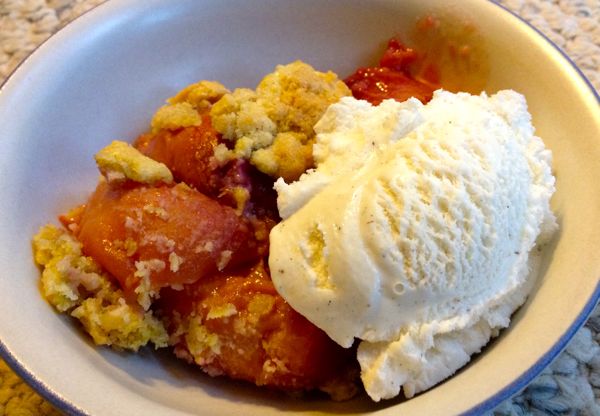
K’s Kitchen: Roasted peach cobbler

By Kathryn Reed

Peaches are so delectable right now that I bought a flat of them at last week’s farmers’ market.

When buying peaches, consider what you are using them for and when. I looked for ones that were slightly firm because I knew I would not be using them for a few days. But I never let peaches go bad. If I can’t eat them fast enough, I cut them into pieces and put them into freezer bags to use down the road for smoothies.

Most of the ones bought last week ended up in a peach cobbler on July 4. One nice thing about cobblers is that they are a bit easier to make than a pie. This mostly has to do with not having to make a crust.

Cobblers can also be made in ramekins so people may be served individual desserts. This, though, means seconds are not an option without looking a bit piggish. However, ramekins are good for guests; in large part for presentation.

I made enough so we’d have this for breakfast for a few mornings. Yes, really. It’s healthier than a lot of foods that pass for breakfast.

 peach cobblerRoasted Peach Cobbler

12 small/medium peaches, cut into bite-size pieces

¼ C brown sugar

¾ C flour

3/8 C sugar

3/8 tsp baking soda

3/8 tsp kosher salt

6 T cold unsalted butter, cut into pieces

2 large egg yolks

¾ tsp vanilla extract

2 lemons, juiced

Vanilla ice cream, optional

Toss peaches and brown sugar in bowl.

On rack about 6 inches from top, broil peaches on rimmed baking sheet for about 8 inches, turn peaches and broil another 8 inches. They should be juicy and caramelized.

Let peaches cool. Reduce oven temperature to 375 degrees.

In bowl, combine dry ingredients. Cut in butter. Stir in vanilla and egg yolks.

Spread peaches, including juice, in 9 x 13 baking pan. Drizzle lemon juice on peaches. Sprinkle topping across peaches. Bake for 25 minutes or until topping is golden and juices are bubbling.

Serve with vanilla ice cream.


Ritz takes local, seasonal foods to a higher level

Manzanita at the Ritz-Carlton, Lake Tahoe is serving up season cuisine that is locally sourced. Photos/Kathryn Reed

Manzanita at the Ritz-Carlton, Lake Tahoe is serving up seasonal cuisine that is locally sourced. Photos/Kathryn Reed

By Kathryn Reed

TRUCKEE – “I’ll be taking my plate out back and licking it.” “Brown butter is like my crack.” “The pork was out of this world.” “I can’t eat enough apricots right now.” “With the rosemary, it doesn’t make the ice cream too sweet.”

Those were some of the comments as guests devoured a four-course dinner at Manzanita restaurant at the Ritz-Carlton, Lake Tahoe.

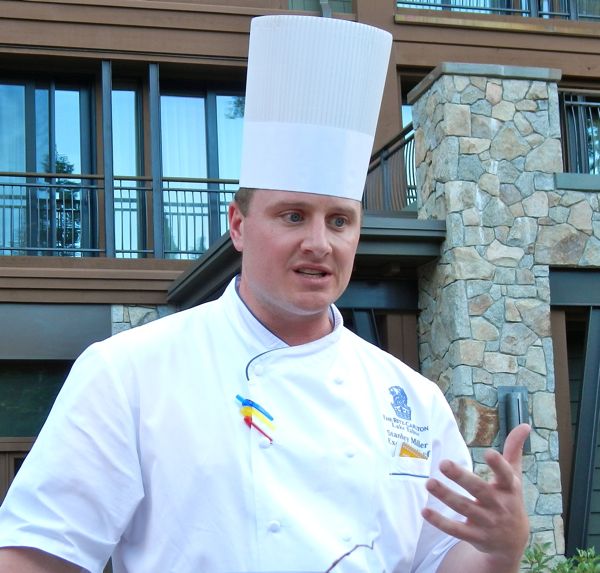
It was a night for Chef Stanley Miller to show off what is in season, what is new and that he has more than filled the shoes of Traci Des Jardins. Des Jardins opened the restaurant in December 2009. Miller took over executive chef duties a year ago this month.

" share recipes because if you don’t know how to make it, it doesn’t matter.”  -- Chef Stanley Miller

“I share recipes because if you don’t know how to make it, it doesn’t matter.”  Stanley Miller

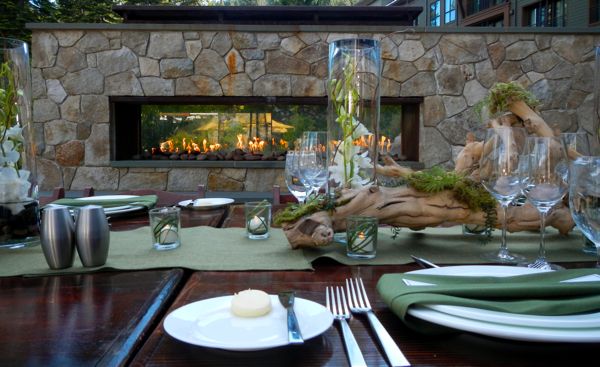
Sitting outside at the “long table”, the backdrop is of the slopes at Northstar. The table is exquisitely set – giving it a mountain feel with carved wood, plants in cylinder vases and muted colors. Warding off the cool evening temps are heat lamps, including a long gas fireplace not far from the dining table.

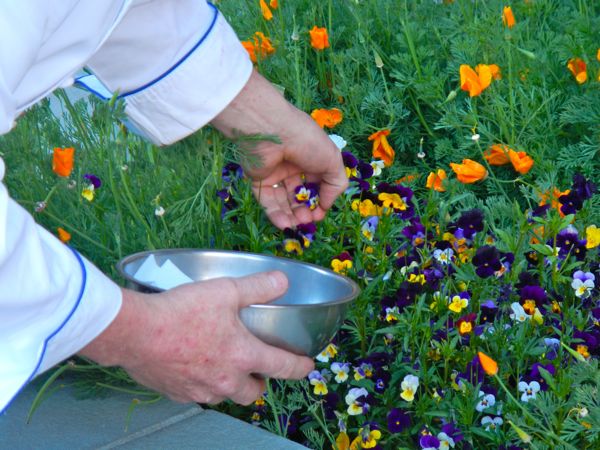
An herb garden on the back patio includes things like purple sage, lemon balm and edible flowers. Chefs are picking them as guests mill about. Soon they will be incorporated into various dishes.

Miller uses 10-year-old starter for his sourdough bread. He had it shipped to California when he moved here. Before being hired he told management he would not buy bread.

His first course is a salad. It has greens from Del Rio Botanical in West Sacramento that were not ordinary. One diner said she had been pulling those same greens from her garden because she thought they were weeds.

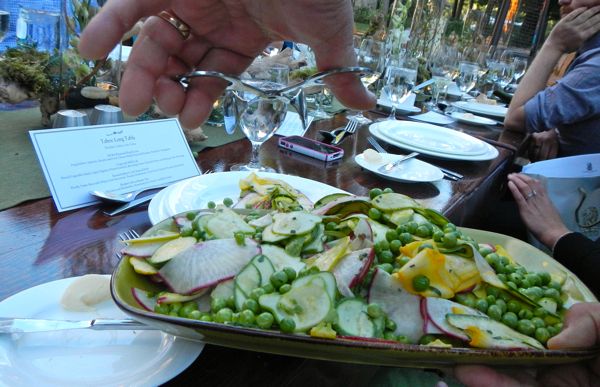
Frog Hollows apricots, ricotta and goat cheese stuffed squash blossom, with a pistachio vinaigrette topped the salad. The blend of flavors and earthiness of greens make it so the salad could be a meal unto itself.
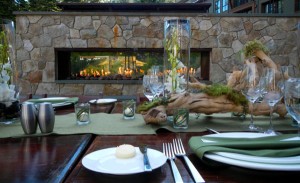
The "long table" at Manzanita.

The “long table” at Manzanita.

It is complemented with a Viognier from Terre Rouge in Plymouth. The rest of the meal is paired with a delicious Barbera from Nevada City Winery.

A crispy soft shell crab on top of a shaved vegetable salad with Capay Organics potato gnocchi, Riverdog Farms charred onion and spring garlic dressing was the next course.

Miller said tomatoes and berries would be sweeter this summer because of the drought.

He got his start in the food industry as a teenager in Ohio working in his family’s butcher shop. Miller grew up where food was strictly for nourishment. He was one of the first boys to take a home ec class.

“I remember sewing my first apron. Baking was very easy for me,” Miller said. Winning a baking award in high school made him realize maybe he could do something more with his skills.

To this day, he says, “Cooking for me is fun.” Plus, he no longer has to wash dishes.

He started the third dish long before the guests arrived. The pork is slow roasted for three to four hours.

“It’s so good with the richness of corn and peaches,” Miller said.
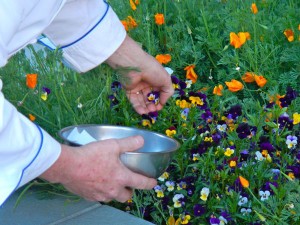
Fresh herbs are part of many dishes.

Fresh herbs grown on site are part of many dishes.

The roasted Salmon Creek natural pork was served with Dwelly Farms bean and white corn succotash, porcini mushrooms, and Twin Peak Orchard peach chimichurri.

“The mushrooms are my favorite. They are like candy. It’s rare for people to use fresh porcini,” Miller said.

Some called the ensemble earthy. Most agreed the pork was incredibly tender and just melted in their mouths.

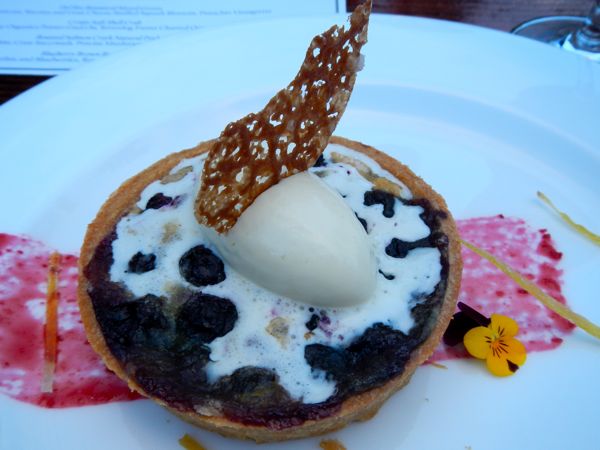
Dessert was a blueberry brown butter tart with rosemary ice cream and candied lemon.

Had people not been so full, seconds would have been in order.

Other seasonal dishes at the Ritz include grilled Monterey calamari, watermelon salad, Tuscan kale salad, heirloom tomato salad, king salmon, flatbread pizzas with summer vegetables or smoked tomato and mozzarella and more.

“I share recipes because if you don’t know how to make it, it doesn’t matter,” Miller said. “Plus, I keep making new ones.”

He said he has volumes of recipes, but no book – yet – to show for it.
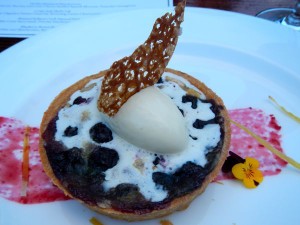
The blueberry brown butter tart was the perfect finishing touch.

The blueberry brown butter tart is the perfect finishing touch.

The Ritz this summer is putting on various food and wine events so people can have experiences beyond eating at the hotel’s various restaurants.

Winemaker dinners will be on select Thursday evenings at Manzanita. They will feature Northern California wineries and a five-course meal prepared with fresh, local ingredients by chef de cuisine Jeremy Grossman.

A six-week, themed cooking class series hosted by the hotel’s culinary team will be offered on Fridays  from 3:30-5pm starting July 11 and concluding Aug. 15. Classes include grilling, summer entertaining, super foods and healthy foods, date night cooking, sweets and treats and farm-to-table.

For more info about the Ritz’s culinary options, go online.


Study: Pretty food tastes better

By Jenn Harris, Los Angeles Times

Some chefs spend a good amount of time in the kitchen making sure your dish looks beautiful before it reaches the table. And, according to science, it’s not just about the aesthetics.

A study by the Crossmodal Research Library at the University of Oxford found that the prettier a dish looks, the better it seems to taste. Researchers served 30 men and 30 women one of three salads containing the exact same 17 ingredients, all prepared the same way. The only difference was in the presentation.

Participants were asked to answer questions regarding appearance before eating a salad, then regarding taste after finishing the salad. The researchers found that participants rated the Kandinsky-inspired salad as tasting better than the other salads. It also received higher ratings for artistic presentation and complexity.

Read the whole story


The science of turning plants into booze

By Chris Mooney, Mother Jones

It’s the 4th of July, and you love your country. Your likely next step: Get ready for the fireworks and drink a lot of beer.

But that last word ought to trouble you a little. Beer? Is that really the best you can do? Isn’t it a little, er, uncreative?

Amy Stewart has some better ideas for you. Author of the New York Times bestselling book “The Drunken Botanist: The Plants That Create The World’s Great Drinks”, she’s a master of the wild diversity of ways in which, since time immemorial, human civilizations (virtually all of them) have created alcoholic drinks from the sugars of their native plants.

“We have really good evidence — like analyzing the residue on pottery shards— really good evidence of people making some kind of alcoholic beverage going back at least 10,000 years, and probably much longer than that,” says Stewart on the latest episode of the Inquiring Minds podcast.

In other words, human beings pretty much always find a way when it comes to getting hammered. Indeed, you could argue that learning how to do so was one of the first human sciences. In a sense, it’s closely akin to capturing and using solar energy: Making alcohol, too, hinges upon tapping into the power created by the sun.

“It is not much of an exaggeration to claim that the very process that gives us the raw ingredients for brandy and beer is the same one that sustains life on the planet,” writes Stewart in “The Drunken Botanist”.


Price of July 4 picnic a bit higher than last year

An all-American Fourth of July picnic will cost slightly more this year, but still comes in at less than $6 per person, according to the American Farm Bureau Federation.

Farm Bureau’s informal survey reveals the average cost for a summer picnic for 10 is $58.72, or $5.87 per person. That’s about a 5 percent increase compared to 2013.

Part of the increase has to do with retail meat prices being higher because the nation’s cattle herd is at a historically small level, the Farm Bureau said. The total number of hogs farmers across the nation are raising is also down.

AFBF’s summer picnic menu for 10 consists of hot dogs and buns, cheeseburgers and buns, pork spare ribs, deli potato salad, baked beans, corn chips, lemonade, chocolate milk, watermelon, and ketchup and mustard.


Wood pulp not unusual in fast foods

By Jenn Harris, Los Angeles Times

When you fantasize about a classic burger, you think of a juicy patty, your favorite toppings, a warm bun and maybe a little bacon. Chances are you aren’t dreaming about eating any wood pulp.

But if you eat at some of the nation’s top fast-food restaurants, you could be eating wood pulp. Burger King, McDonald’s, Taco Bell, Carl’s Jr. and Wendy’s all have items on their menus that contain this ingredient.

Instead of seeing wood pulp listed in the nutrition information, you’ll see cellulose. It’s a common food additive, made of tiny pieces of wood pulp and plant fibers.

Cellulose also can be listed by some of its many other names, as noted by the U.S. Food and Drug Administration, as powdered cellulose, alpha-cellulose, flour cellulose, cellulose fiber, Microcrystalline cellulose, cellulose casing and regenerated cellulose.

Read the whole story