Mountaintop dinner complements scenery

Wining and dining at Homewood. Photos/Kathryn Reed

Wining and dining at Homewood. Photos/Kathryn Reed

By Kathryn Reed

HOMEWOOD – Lakeview dining at Tahoe just got elevated – to about 7,000 feet. And the food will have you rethinking your opinion about ski resort fare.

This is no ordinary mountaintop dinner. It’s five courses with a different wine with each dish. And it’s an opportunity to mingle with the people responsible for creating the edibles and liquid refreshments.

Homewood Mountain Resort for the second summer is hosting the Farm to Peak Dinner Series. Chefs and vintners create food and pour wine at the top of the Quail chairlift. Seated at long tables with crisp white linens, guests have a sprawling view of Lake Tahoe for their eyes to feast upon.

Skiers know this resort as being the one place in the Lake Tahoe Basin where it feels like you are about to land in the water as you schuss down the mountain. Dining atop the mountain was not adrenaline pumping, but the setting for this meal far outshines anyplace I’ve eaten in Tahoe.

“We are taking baby steps to make it a year-round resort,” Paul Raymore, spokesman for Homewood, told Lake Tahoe News. “The mountaintop is one of our prime assets. Unless you ski or ride, you don’t have a chance to ride the chairlift.”

Homewood hopes to bring the West Shore resort into the 21st century by modernizing lodges, adding lodging and creating a year-round destination. Legal issues are delaying that, but Raymore said owners hope construction could begin in 2016.

For now, though, the resort is hosting a few Farm to Peak Dinners each summer.

Axel Schug tells guests about his wines.

Axel Schug tells guests about his wines.

Guests on Aug. 9 arrived at the South Lodge where Axel Schug was pouring a 2013 Sauvignon Blanc. Schug and his wife, Kristine, own Schug Carneros Estate in Sonoma. They have a home in Tahoma, and he used to live in Incline Village when he worked in food and beverage at the Hyatt in the late 1980s.

They worked with guest chef Grog Verbeck of Hey Chef! in Truckee to ensure the wines would pair well with his concoctions. Kristine Schug handles the food at the winery. She contributed herbs from her garden to the meal.

Verbeck provides private chef services in Truckee, Tahoe and east to the Reno area.
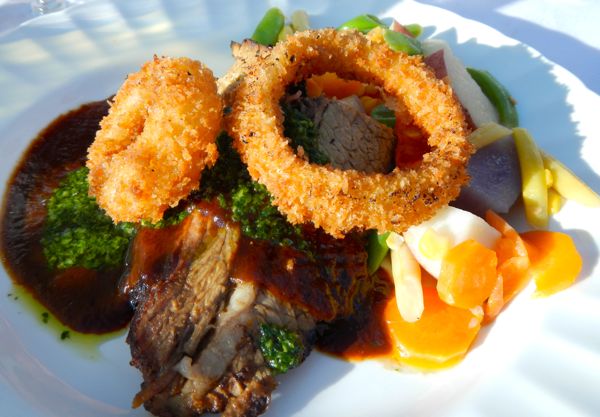
Burgundy Braised Brisket

Burgundy Braised Brisket

The Schug winery has deep roots in the business. Walter Schug established it in 1980 after having been the founding winemaker for Joseph Phelps Vineyards in the 1970s. Schug grew up among the vineyards of Germany.

When he left Phelps he did so with the winery’s permission to use his label for what was then their Pinot Noir. It is that delicate red varietal that is Schug’s signature wine.

The 2012 Pinot was paired with the main course – Burgundy Braised Brisket with Chimmichurri and Summer’s Best Vegetable Succotash.

Sue said the meat was cooked perfectly, a little peppery, but not overbearing. Shawn simply said it was “delicious.”

I had portabella mushrooms substituted for the brisket.

“My god, that’s like a steak,” Sue said of the mushroom. I had to agree. It was one of the best portabellas I have ever had. It was cooked perfectly; and the marinade – well – it was as good as the view.

Both entrees were braised in the Pinot we were drinking.
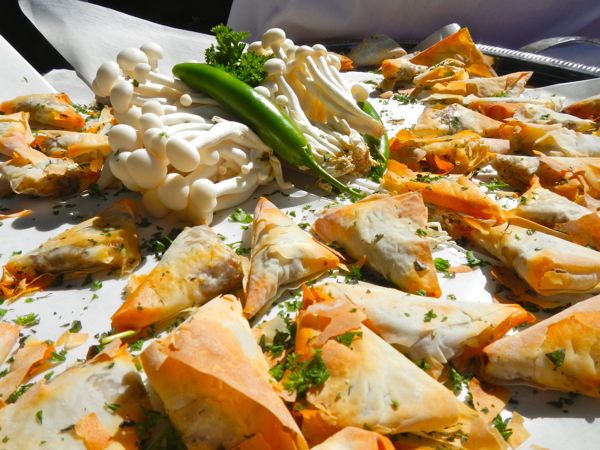
Wild Mushrooms and Smoked Fontina

Wild Mushrooms and Smoked Fontina

Overall, though, Steve and I thought our entrees were a bit on the salty side. The onion ring on top in particular needed a chaser of water to be able to swallow.

But considering one of the challenges to cooking this meal is that part of it is done in the lodge below and part on the mountain, quality control can be hard to manage. Even Chef Robert Irvine of “Dinner Impossible” fame might find this dual cooking arrangement for more than 100 people a challenge.

Still, as the plates went back to the tent, there was nothing left on them.

We started our food venture at the lodge with a Wild Mushroom and Smoked Fontina Phyllo Purse. For someone who loves mushrooms, I could have filled up on these. The pastry was flaky, a perfect complement to the warm, smooth mushroom-cheese filling.
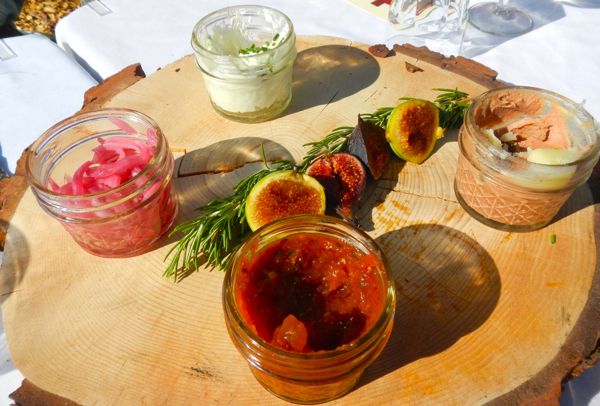
Four spreads

Four spreads

The appetizer made the fruitiness of the Sauvignon Blanc stand out even more. This combo was perfect on a late summer afternoon.

With wine glasses in hand, we then boarded the chairlift.

The second course came served totally Tahoe-style – on a round that in other locales would be used as a stepping stone. It was a creative presentation for the four spreads that were served with bread.

The farm cheese was the favorite of those seated around us. I also particularly liked the pickled onions. So often anything pickled can taste too vinegary – not so with these. The fig and tomato jam tasted just like a sweet jam, which was disappointing to Shawn and me. We were expecting something spicy, with more tomato flavor.
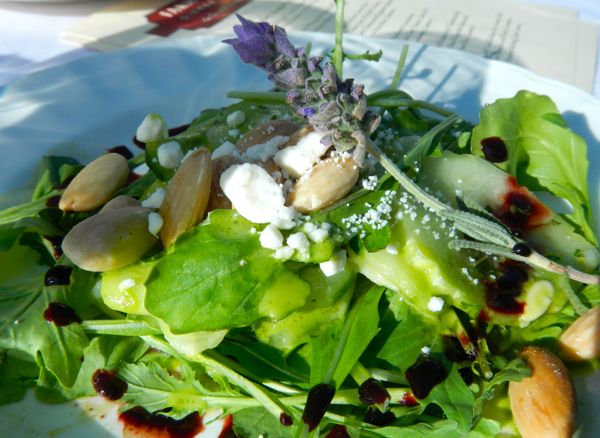
Salad of Heirloom Cucumbers

Salad of Heirloom Cucumbers

The Rouge de Noirs Brut was the least favorite of the wines for those seated by us. As much as winemakers keep professing how wonderful roses are, I’m not buying it.

The Salad of Heirloom Cucumbers, Toasted Almonds, Goat Cheese and Cress Oil was the favorite of the night for Debbie. “The cucumbers exploded,” she said.

They tasted so fresh I would have been surprised if they had not been picked that day. “The salad tastes wild and fresh,” I wrote that night.

On top of many of the plates was a spring of lavender – which some found a bit foreboding to taste. But no chef who is going to stay in business puts food on a plate that is not edible.
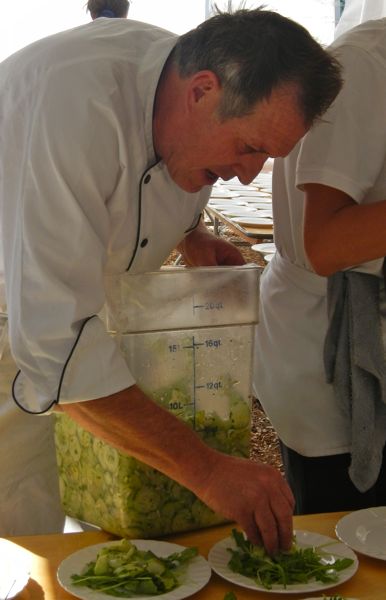
Chef Grog Verbeck

Chef Grog Verbeck

“The lavender flower counteracts the garlic. And there is a little bit of lavender in the dressing,” Chef Verbeck told his guests.

The 2012 Chardonnay was liked, but not everyone thought it went well with the salad. Debbie said no to the pairing, while Shawn thought they were a nice combo.
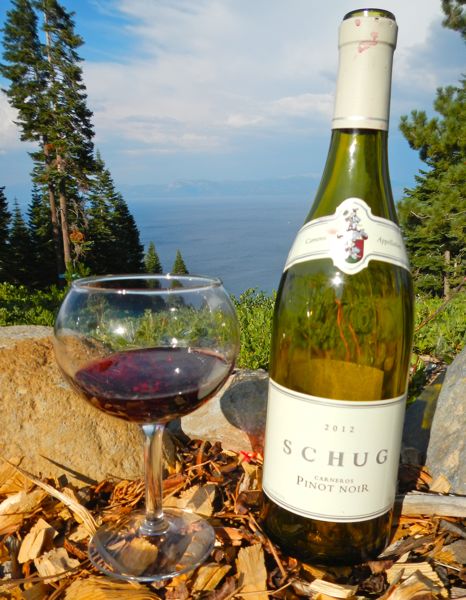
The Schug Pinot Noir was the star of the night.

The Schug Pinot Noir was the star of the night.

“It’s oaky, but it’s still crisp,” Shawn said of the wine. Fifteen percent of the barrels the Chardonnay is processed in are new oak.

“We go easy on the oak,” Axel Schug said.

Wrapping up the dinner was a Hazelnut Dacquoise and Vanilla Bean Ice Cream Cake with Chocolate Ganache and Peach Compote that was paired with a 2012 Late Harvest Riesling.

Sue and Shawn said this was a perfect pairing. Just the peaches and ice cream would have been fine with me – and the wine.

—–

Notes:
• Chef Jessica Stutz of Coastal Culinary personal chef service will be doing the cooking Aug. 30.
• For reservations, call 530.584.6849 or go online.
• Cost is $150 per person.
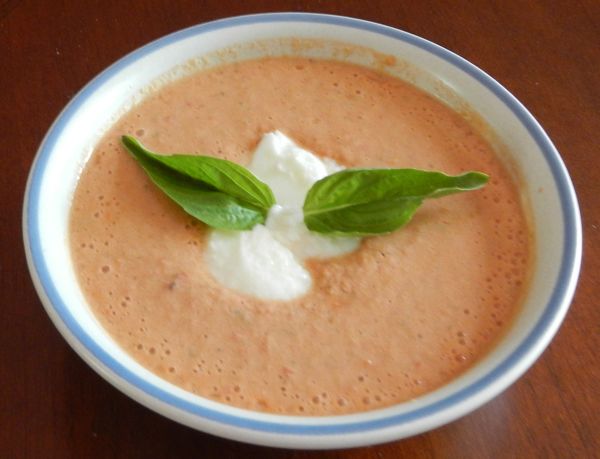


K’s Kitchen: Chilled tomato soup

By Kathryn Reed

Chilled soup has never been one of my favorite meals. I think it’s more psychological than anything else. It probably has to do with hot soups that are served lukewarm don’t taste great so how could a soup purposefully served cold taste good?

I know there are plenty of good soups out there designed to be served chilled. I finally made one.

What is great about the recipe below is that the stove never has to come on. This is perfect for warm days when the last thing you want to do is heat up the house via the kitchen.

The longer you blend the ingredients, the finer it will be. So, I recommend starting slow. You might like more texture and some chunkiness from the tomatoes.

cold tomato soupChilled Tomato Soup

¾ C fat free buttermilk
¼ C fresh basil leaves
2 T olive oil
2 T fresh lemon juice
½ tsp kosher salt
¼ tsp pepper
3 medium beefsteak tomatoes, cored and quartered
1 small onion, quartered
3 garlic cloves
Greek yogurt, optional
Basil leaves for garnish, optional

Combine the first nine ingredients in a blender until smooth. Season to taste.

Serve with dollop of yogurt and basil sprig.


Tips for preserving summer’s harvest

By Melinda Myers

The cucumbers have filled the vegetable drawer, you’ve run out of cabbage recipes and your family is refusing to eat one more BLT. Or maybe you just couldn’t resist that special deal on a bushel of tomatoes, potatoes or apples at the farmer’s market. So what is a gardener or shopper to do with all that produce?

Since properly stored vegetables will hold their flavor and nutritional value longer than those left in a plastic bag or set on the sunny kitchen counter, consider preserving some for the long winter ahead using one of several methods.

Storage orchard racks and slatted crates placed in a cool dark location have long been used to store squash, onions and potatoes. The stackable nature or drawers provide ample storage space so fruits and vegetables do not touch. Keeping stored fruit separated prevents rot from spreading from one fruit to the next. Plus, the slatted sides allow airflow to extend storage longevity.

Those in colder climates can store carrots and parsnips right in the garden. Once the soil gets a bit crunchy, cover them with straw or evergreen boughs for easier digging in winter. Then dig as needed or harvest during the first winter thaw. If this isn’t possible or not your style, try out a root vegetable storage bin. The root crops are layered in sand or sawdust and placed in a cool dark location. Just remove and use as needed. No snow shoveling needed.

Drying is one of the oldest food preservation techniques. Most of us have grabbed a few bundles of herbs to hang and dry. Expand your drying endeavors to include fruits and vegetables. The goal is to quickly remove moisture without cooking the food. You can make your own dehydrator or purchase one. Research has shown that blanching vegetables and fruit before drying helps destroy harmful bacteria. Blanching involves a steam or boiling water bath followed by a cold water bath. Timing varies with the fruit or vegetable you are preparing.

Another ancient food preservation technique, fermentation, is experiencing a comeback. Cultures around the world have fermented fruits and vegetables for thousands of years. Unique flavors, storage options and health benefits have many gardeners revisiting this tradition. Fermenting cucumbers into pickles, cabbage into sauerkraut, and berries into preserves are just a few options. The ingredients can be as simple as water, salt, and spices. All you need is a vessel, vegetables and fermenting culture. You can jump-start your efforts with a fermentation crock kit which includes the crock, cover and weights to make sure your veggies stay safely submerged in water.

Or quickly lock in the flavor and nutrition of your fruits and vegetables with freezing. You’ll need airtight containers or bags that are durable, don’t leak and won’t become brittle in cold temperatures. Some produce does not freeze well and others may need to be blanched before they are packed in the freezer bag or container. But frozen items can easily be retrieved from the freezer and included in your winter meals.

Canning is a bit more involved, but can be lots of fun. This process preserves the food and keeps it safe by preventing the growth of undesirable bacteria, yeast and mold. The sealed jars keep the flavor in and bad microorganisms out. So gather your produce, jars, pressure cooker, canner and friends to create tomato sauce, salsa, jams and jellies to enjoy or give as gifts.

Whatever method you choose, do a bit of research before you start. You’ll have greater success and a lot more fun. The National Center for Home Food Preservation website provides all the basic information for storage and food preservation.

Melinda Myers has more than 30 years of horticulture experience and has written more than 20 gardening books.


U.S. wine market fastest growing in world

By Cathy Huyghe, Forbes

NAPA — “If you’re in the wine business and you’re not making money today, it’s not the industry’s fault. Check your business model.”

That’s Adam Beak, Bank of the West’s managing director of the North Coast Agricultural Banking Center/Premium Wine Group, during a phone interview last week from his office in downtown Napa.

Beak would know. He oversees all winery, vineyard and wine industry related business for Bank of the West’s portfolio of almost 300 clients, which range from large international businesses to small, vertically-integrated ultra premium players. Dealing with clients from distributors and negoçiants to cork and glass producers, Beak’s perspective on the financial health of the wine industry is closer to 360 degrees than most.

The American wine market in particular is the fastest-growing market worldwide, with overall wine sales totaling $36.3 billion. American tastes are also evolving and maturing: quality and consumption across all price points continue to grow, but especially in the premium and luxury wine categories. “Premium” wine is defined as $10-13, “Super premium” as $13 to 25, and “Luxury” as $25 and above.

Most of the growth in recent years has been in the luxury category, whose recovery outpaced even the premium categories since the meltdown of 2008-2009. “What that indicates to me is that we’re seeing a trade-up, an evolution, and a maturation of the US wine palate,” Beak said. “All the trends are moving positively.”

Read the whole story


K’s Kitchen: Citrus infused corn salad

By Kathryn Reed

Summer is definitely the time of year when a variety of salads are easy to make because of the abundance of fresh ingredients available.

Barbecuing the corn gave it an added crunchiness and a hint of charred flavor that you won’t get from boiling the ears. But there would be nothing wrong with dropping the corn in hot water.

The lime adds a wonderful fresh, citrus flavor that with the cilantro is refreshing.

For those who are not big fans of cilantro, start out with less and keep tasting until you get it to your liking.

This salad would be best served a few hours after making it or the next day so the flavors come together more. If you can wait to serve, then adjust the final seasoning later on. This way you are less likely to put too much of something in.

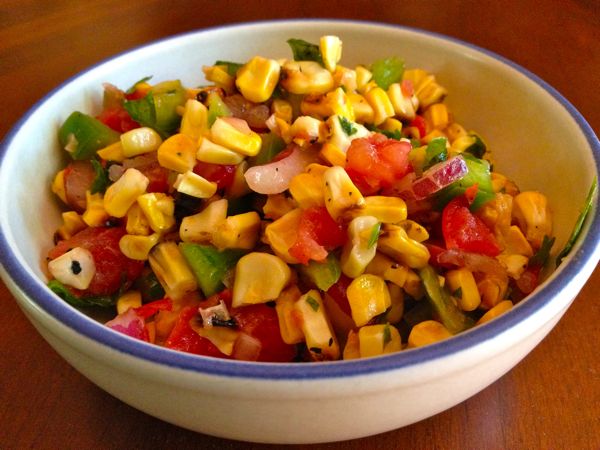
corn saladFresh Corn Salad

6 ears corn, cooked
3 T olive oil
1 large tomato, seeded
1 C fresh cilantro, chopped
1 medium red onion, diced
1 green bell pepper, diced
Garlic salt
Pepper
2 limes

Take corn off kernels with knife. Add tomato, onion and bell pepper. Mix veggies before adding cilantro, oil and lime juice. Season with salt and pepper to taste.


Calif. drought transforms global food market

By Alan Bjerga, Bloomberg

For more than 70 years, Fred Starrh’s family was among the most prominent cotton growers in California’s San Joaquin Valley. Then shifting global markets and rising water prices told him that wouldn’t work anymore.

So he replaced most of the cotton plants on his farm near Shafter, 120 miles northwest of Los Angeles, and planted almonds, which make more money per acre and are increasingly popular with consumers in Asia.

“You can’t pay $1,000 an acre-foot to grow cotton,” said Starrh, 85, crouching to inspect a drip irrigator gently gurgling under an almond tree.

Such crop switching is one sign of a sweeping transformation going on in California — the nation’s biggest agricultural state by value — driven by a three-year drought that climate scientists say is a glimpse of a drier future. The result will affect everything from the price of milk in China to the source of cherries eaten by Americans. It has already inflamed competition for water between farmers and homeowners.

Growers have adapted to the record-low rainfall by installing high-technology irrigation systems, watering with treated municipal wastewater and even recycling waste from the processing of pomegranates to feed dairy cows. Some are taking land out of production altogether, bulldozing withered orange trees and leaving hundreds of thousands of acres unplanted.

“There will be some definite changes, probably structural changes, to the entire industry” as drought persists, said American Farm Bureau Federation President Bob Stallman. “Farmers have made changes. They’ve shifted. This is what farmers do.”

Read the whole story


Crawfish to be star of festival at MontBleu

The second annual Boil ‘n Fry Day Festival is Lake Tahoe’s version of an old-fashioned New Orleans crawdad feed, complete with live music at the MontBleu Outdoor Event Center, carnival games, hot wings, barbecue, cold crafted beer and all the fried, boiled or barbecued fresh water crustaceans festival-goers can eat.

Last year, MontBleu launched the inaugural festival to celebrate Tahoe Lobster Company, the first commercial outfit to harvest crawfish. Tahoe Lobster Company will supply the Aug. 23 batch of crawdads.

The outdoor party starts at noon. Tickets are $15 for adults, $8 for 12 and under, and free for ages 6 and younger. They may be bought at the event, the MontBleu Box Office, or by calling 888.829.7630.


Study: Eating out equals eating more

By Randy Dotinga, HealthDay

A study finds that people who eat out consume an average of about 200 calories more a day than when they cook at home.

They also take in more saturated fat, sugar and salt.

The study has limitations. It doesn’t say anything about whether frequent restaurant diners are unhealthier than at-home eaters, and it doesn’t take into account the potential benefits of eating out, such as socializing and reducing the stress of cooking.

Still, the findings show that “eating out at restaurants should be the exception, not the norm,” said study co-author Lisa Powell, a professor of health policy and administration at the University of Illinois at Chicago.

Powell said the researchers wanted to better understand the role of restaurant food in people’s diets. “We know that parallel to the rising rates of obesity, Americans have been increasingly eating food away from home, and they now take in, on average, about 600 calories a day from restaurants,” she said.

Read the whole story


Sample the Sierra adds Labor Day events

There will be a pop-up dinner and farm-to-fork bus tour to extend Sample the Sierra on Labor Day weekend in South Lake Tahoe.

The dinner is Aug 29 from 6-8pm at Lake Tahoe Community College. The dinner and documentary under the stars at the Demonstration Garden will feature Chef Stephen Moise of The Ridge Tahoe. He will prepare a three-course dinner featuring locally sourced ingredients.

Cost is $75. For more info and tickets, email Michelle@tahoechamber.org.

The bus tour of Apple Valley is Aug. 30 from 9am-3pm. This tour will feature El Dorado County producers and wineries.

The cost is $65. For more info, email Michelle@tahoechamber.org.


Food and wine fest at Northstar

The 29th annual Lake Tahoe Autumn Food and Wine Festival at Northstar is Sept. 5-7.

It is three full days of cooking seminars and demonstrations, culinary competitions, wine tastings and food-themed experiences in the village and on the mountain, as well as in the Ritz-Carlton, Lake Tahoe.

The Culinary Competition & Grand Tasting is Sept. 7. Other highlights include the Farm to Tahoe Dinner at Zephyr Lodge, Gourmet Marketplace Vendor Fair, Village Wine and Brew Walk, Blazing Pans Mountain Chef Cook Off, and 16th Annual Charbay Party. Additional events throughout the three-day event include Pedals & Pinots bike tour and tasting, Beer & Artisan Cheese Pairing and Winemaker for a Day seminars, Petra Winery Luncheon, and Take a Hike guided hike and trailside tasting.

For more info, go online.