El Dorado County wine featured in motion picture

Actor Joseph Cross enjoys a white wine from Miraflores in the movie "Last Weekend." Photo/Provided

Actor Joseph Cross drinks a white wine from Miraflores in the movie “Last Weekend.” Photo/Provided

Miraflores Winery of El Dorado County has a cameo appearance in the movie “Last Weekend”, which was filmed at Lake Tahoe.

The wines got their debut during a lavish end-of-summer party scene at an estate on the shores of Lake Tahoe. Bottles of Miraflores wines can be seen on the dinner table near actor Joseph Cross.

El Dorado County Lake Tahoe film commissioner Kathleen Dodge supplied the film crew with several local products.

“Product placement opportunities are exciting, but there’s no guarantee that any of the products will appear in the final cut,” Dodge said in a statement. “Wine shows off one the region’s best offerings — whether it’s used on set or enjoyed by the crew.”

Matricia Haigood, general manager for the winery, has offered to pour Miraflores during the opening reception in San Francisco in September.
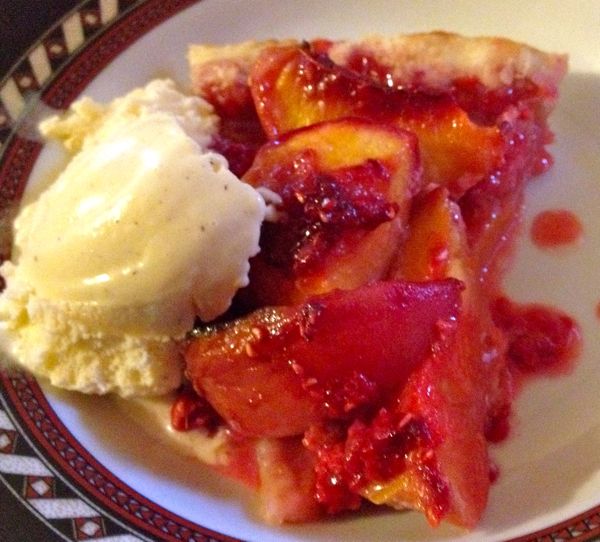


K’s Kitchen: Peach-raspberry dessert

By Kathryn Reed

Galettes are described as free-form rustic tarts. My first one was so free form that it spilled over the sides, smoked up the oven and was not pretty.

It was a good thing this was not a competition because I would have failed on overall presentation.

But the taste. Wow. This really was scrumptious.

Merle in particular liked the crust. Sue liked the combo of fruits, especially since she had not had them together before.

The natural sweetness of the fruits means there is no need to add any sugar to the concoction. While this isn’t health food, it certainly is not the worst dessert in the world for you.

And I was able to get the fruit at a farmers’ market.

I didn’t make the “walls” solid enough, so as it was cooking the juices overflowed. It did not change the flavor, which was a good thing.

This made for a wonderful breakfast the next day.

peach-raspberry galettePeach-Raspberry Galette

Pastry
1½ C all purpose flour
½ C cold butter
4-6 T cold water

Filling
3 T cornstarch
¾ C, plus 1 T sugar
1½ pounds peaches, cut into thick wedges
1 carton raspberries
2 T butter, cut into small pieces
1 large egg white, lightly beaten

Optional
Vanilla ice cream

Mix flour and butter until it resembles coarse crumbs. Add water 1 tablespoon at a time until dough holds together. Form into a disk. Refrigerate in plastic wrap for 30 minutes.

Preheat oven to 425 degrees.

Combine cornstarch and ¾ cup sugar. Add peaches and raspberries. Stir together so fruit is covered with dry ingredients.

Roll dough into a 13-inch round. Put it on parchment paper-lined cookie sheet.

Put fruit filling into the center of the dough, leaving 2½ inches on the border. Fold dough up around fruit mixture to make a border. Coat crust with egg white wash.

Sprinkle crust with remaining sugar. Cut 2 tablespoons of butter onto fruit.

Bake 45 minutes or until bubbling. Crust should be golden.


Organic food — high prices, uncertain benefits

By Leslie Patton, Bloomberg

Organic food sales have gone through the roof. It’s no wonder. It’s widely believed that organic foods are more nutritious and safer than non-organic — they’re even said to fight cancer — even though the evidence is far from clear. Consumers have been paying a lot to eat organic; food certified as organic sometimes costs twice as much as conventional products. T

he premium prices may not be buying everything that’s promised.

About three-quarters of grocers in the U.S. sell organic food, including specialty markets, like Sprouts, and mass-market retailers, like Wal-Mart and Target. While that’s only 4 percent of total food sales, demand in the U.S. and Europe is growing. The trend is driven both by rising interest in locally grown food — more than 80 percent of farmers markets sell organic food — and fears about food safety.

Roughly 48 million Americans every year become sick and 3,000 die from foodborne diseases.

To be labeled organic, the U.S. Department of Agriculture says food must be grown without synthetic fertilizers and must be free of genetically modified organisms; meat must be raised without antibiotics and growth hormones and the animals must have access to the outdoors. There are similar standards in the European Union and Japan. In China, demand for organic food is skyrocketing after a series of scandals over tainted food has consumers willing to pay double for organic kale and other items.

Until the invention of pesticides, all agriculture was organic.

Read the whole story


Breakfast may be overrated

By Gretchen Reynolds, New York Times

For years, we’ve heard that breakfast is the most important meal of the day. But scientific support for that idea has been surprisingly meager, and a spate of new research at several different universities — published in multiple articles in the August issue of the American Journal of Clinical Nutrition — could change the way we think about early-hours eating.

The largest and most provocative of the studies focused on whether breakfast plays a role in weight loss. Researchers at the University of Alabama at Birmingham and other institutions recruited nearly 300 volunteers who were trying to lose weight. They randomly assigned subjects to either skip breakfast, always eat the meal or continue with their current dietary habits. (Each group contained people who habitually ate or skipped breakfast at the start, so some changed habits, and others did not.)

Sixteen weeks later, the volunteers returned to the lab to be weighed. No one had lost much, only a pound or so per person, with weight in all groups unaffected by whether someone ate breakfast or skipped it.

In another study — this one of lean volunteers — researchers at the University of Bath determined the resting metabolic rates, cholesterol levels and blood-sugar profiles of 33 participants and randomly assigned them to eat or skip breakfast. Volunteers were then provided with activity monitors.

After six weeks, their body weights, resting metabolic rates, cholesterol and most measures of blood sugar were about the same as they had been at the start, whether people ate breakfast or not. The one difference was that the breakfast eaters seemed to move around more during the morning; their activity monitors showed that volunteers in this group burned almost 500 calories more in light-intensity movement. But by eating breakfast, they also consumed an additional 500 calories each day. Contrary to popular belief, skipping breakfast had not driven volunteers to wolf down enormous lunches and dinners — but it had made them somewhat more sluggish first thing in the morning.

Read the whole story


Northstar combining golf with food pairings

The inaugural Tees and Tastings tournament at Northstar is Aug. 28.

The tournament will feature a two-game, nine-hole tournament with four beer and cuisine pairings throughout the front green of the Northstar Golf Course. Winners will receive tickets to the Wine & Brew Walk event, which takes place Sept. 6 during the 29th annual Lake Tahoe Autumn Food and Wine Festival.

Tournament players will meet in front of the Northstar Golf Course pro shop at 2:15pm for tee-off at 2:30pm. Pairing stations throughout the front nine offer players craft brews with savory appetizers. The final station will be hosted at the Martis Valley Grille at 6pm for après tournament socializing, awards, and  beer pairings.

Tickets for Tees and Tastings are available for $100 per person, and may be purchased online or at the ticket and season pass office in the village at Northstar.

Specific foursomes may be arranged by calling 530.562.3568.


Drought forces early grape harvest

By Jennifer Chaussee, Reuters

DAVIS — At the University of California’s prized winemaking institute near Sacramento, a sleek metal wine crusher on Thursday morning let out a deep rumble and began to shake, jostling grapes made sweeter by the state’s ongoing drought into sticky juice.

Dry conditions have made this year’s crop ripen early, and winemakers across the state are picking and crushing their grapes weeks ahead of the usual harvest time as the lack of water has caused them to ripen faster than usual.

The early harvest has stoked winemakers’ concerns that ongoing drought conditions could pose a serious threat to wine quality next year, since grapes that ripen too fast can become too sweet for winemaking.

The grape crop has mostly been protected, as many growers have managed to spend extra cash on underground well water to protect the quality of their vines. But well water is an expensive and limited resource, and underground wells throughout the state are becoming drier.

Already, this year’s grapes have reached their peak sweetness faster than last year’s. If the trend continues, it could be difficult to make good wine with the 2015 crop.

California is the fourth-largest wine producer in the world and brings in more than $60 billion in state revenues each year.

Read the whole story


Calif. allows dogs at outdoor restaurants

By Associated Press

Fido can feast with you now when you go out to eat.

Gov. Jerry Brown on Thursday announced signing a bill permitting pet dogs at restaurants with outdoor spaces. It does not force restaurants to allow dogs, but rather implements guidelines for how they can accommodate pets.

Some local public health departments have allowed dogs in outdoor dining areas for years, but the state has banned the practice. Local jurisdictions can still ban it if they choose.

The bill requires a separate entrance for outdoor dining areas and says pets are not allowed on chairs, seats or benches. They also must be on a leash or in a pet carrier under control of the owner.

Owners also must clean up after their pets.

The law takes effect next year.


Soft drink makers thirst for new sweetener

By Karen Robinson-Jacobs, Dallas Morning News

Steps from the lobby of the Dr Pepper Snapple Group headquarters, a row of inauspicious Rubbermaid bins holds the crystallized future of the nation’s third largest soft drink player.

The tubs contain sugar, the artificial sweetener aspartame and similar snowflake-like substances.

Like its competitors Coke and Pepsi, Plano-based Dr Pepper is deep in the hunt for a new sweetener that can replace existing artificial sweeteners. It has to taste like sugar yet be lower in calories. And it has to be natural.

The stakes are high. The Big Three soda makers lead an industry that’s rounding out a decade of declining sales.

As regular sodas, and now diets, lose their fizz, soft drink makers are spending increasing amounts of time and energy looking for ways to sweeten the pot.

Read the whole story


Miraflores Winery embraces vintage varietal

By Mike Dunne, Sacramento Bee

Marco Cappelli is pouring six wines into six glasses lined up on a counter at Miraflores Winery in the Pleasant Valley district of El Dorado County, just southeast of Placerville.

He is about to give a visiting wine writer a lesson in the making of angelica, which just may be California’s rarest wine and almost certainly its most historic.

“This wine, or rather this grape product called wine, dates from the earliest mission period. It was nothing more than unfermented grape juice run off into casks containing spirit. The spirit brought in alcohol to prevent spoilage and the grape sugar gave sweetness and flavor,” wrote Sacramento grocer Darrell Corti in the chapter he contributed to the thick University of California/Sotheby “Book of California Wine,” published 30 years ago. “Some of the finest examples of old California wine that I have tasted have been very old angelicas. Silky, harmonious, and elegant, they have been paragons of liqueur wines.”

Each glass that Cappelli has arranged holds a splash of wine fermented from mission grapes, with five of the six representing a different vintage over the past decade. The sixth contains a taste of the first angelica that Cappelli is releasing under his own eponymous label.

“Angelica is a wine without broad general appeal,” Cappelli is saying as he continues to pour. “It appeals to people who like sweet wines and who appreciate California history.”

Read the whole story


K’s Kitchen: Roasted pepper-goat cheese app

By Kathryn Reed

I went a little overboard with buying bell peppers at the farmers’ market. And there was goat cheese in the fridge that needed to be used. Surely, there must be something I could do with the two of them.

I had Sue roast the peppers on the barbecue. It is important to pay attention to them. She was a bit paranoid about burning them, but that is actually what you want to do. You want the skins to be black and blistered. You won’t be eating them, so don’t worry about all those carcinogens.

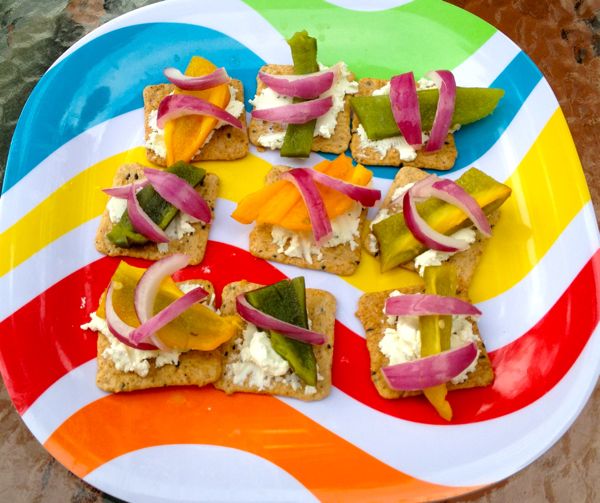
While goat cheese alone on a cracker is just fine, I decided to create something a little more substantive. And they looked pretty. While that wasn’t important for the two us, presentation does make food more appetizing.

roasted peppers

Roasted Peppers with Goat Cheese

2 bell peppers
1 small red onion, sliced thinly
Goat cheese
Crackers
Fresh lemon

Roast peppers on barbecue until charred. Place peppers in sealed plastic bag for a few minutes, allowing steam to create. Once cool enough to handle, remove skins.

Remove seeds. Thinly slice peppers.

Spread cheese on crackers. Top with peppers and red onion. Squeeze a few drops of lemon juice onto each cracker.