Diet soda may alter gut microbes

By Allison Aubrey, NPR

The debate over whether diet sodas are good, bad or just OK for us never seems to end.

Some research suggests zero-calorie drinks can help people cut calories and fend off weight gain.

But in recent years, the idea that artificial sweeteners may trick the brain and lead to “metabolic derangements,” as one researcher has theorized, has gained traction, too.

Now, a study published in the journal Nature introduces a new idea: Diet sodas may alter our gut microbes in a way that increases the risk of metabolic diseases such as Type 2 diabetes — at least in some of us.

In the paper, researchers at the Weizmann Institute of Science in Israel describe what happened when they fed zero-calorie sweeteners, including saccharin, aspartame and sucralose, to mice.

“To our surprise, [the mice] developed glucose intolerance,” Weizmann researcher Eran Elinav tells us.

Read the whole story


Iconic French restaurant in Stateline closing

Chef Camille Schwartz will be closing Mirabelle in Stateline on Sept. 28. Photos/Provided

Chef Camille Schwartz will be closing Mirabelle in Stateline on Sept. 28. Photos/Provided

By Kathryn Reed

The South Shore is saying au revoir to its only French restaurant.

Mirabelle, which has been a tradition here for 14 years, is closing Sept. 28.

“I have been cooking for the last 60 years. It is time for me to stop before it gets too bad … before I use sugar for salt,” chef Camille Schwartz told Lake Tahoe News.

The owner-chef who has never lost his French accent is ready to do new things – including enjoying Tahoe. Working six days a week and maintaining a relationship with his wife who lives in Santa Barbara has been challenging. Now he wants to spend his days hiking and snowshoeing, and getting to Southern California more often. And he wants a dog – something he hasn’t had time for based on his hours.

One thing he is a bit apprehensive about is cooking at home. He never does it.

“I always eat at the restaurant. I don’t have food in the refrigerator,” Schwartz said.

Mirabelle has plenty of regulars who also may have to learn to do more home cooking. This is what some of them have to say about Mirabelle:

• Bob Keller of Zephyr Cove: “I have enjoyed chef Camille’s wonderful cooking almost since the day he opened; many times by myself; many times with just a few friends; and many times with a large number of guests, including for Carolyn’s and my wedding dinner. When out-of-town friends or family have visited, Mirabelle has been a must on our agenda. Chef often would come out of the kitchen to talk with us. Many of the servers have become close friends. It was like going home. Of course, it helped that the food was always fabulous.”

• Carolyn Wright of Zephyr Cove: “Bob took me to Mirabelle during my first Tahoe visit with him. It’s since been an important and weekly part of our relationship – a place where everyone knows our name. Chef’s food always has been delicious, from his pureed soup to after-dinner sorbet. Chef would make a fortune selling his incredible lemon and mint sorbets.”

• Kim Wyatt of Meyers: “It’s our regular date night spot. I love the onion tart, the mushroom tart, the pasta, the soufflé, the care with which the food is made, and the ambiance.”

Schwartz doesn’t have a favorite dish to eat or prepare. He said he likes to change things around, whether it’s making a bouillabaisse, soufflé, foie gras or escargot.

His interest in food started when he was a boy in France.

“I grew up on a small farm. I was always interested in the smells in the kitchen, what my mom was cooking,” the 75-year-old said.

At 14 he was an apprentice cook in another part of France. From there he joined the navy and was a cook for the French fleet. Then he spent six years as a chef on ocean liners. Schwartz was working for a hotel chain in the late 1960s that transferred him to different locations in Canada and the United States. It was in Chicago where he met his wife. She’s American, but speaks French.

For 20 years he had a restaurant in Santa Barbara called Mimosas. He sold in 2005 because it was getting to be too difficult operating it and Mirabelle.

With the number of hours he spends at the restaurant, Schwartz is pretty sure he won’t miss the work.

“I will miss the contact with staff who is family, and with customers who have become friends through the years,” Schwartz said.

He has between five and eight employees depending on the season.

Schwartz knows the finality of it will take some time to sink in.

“I’m going to miss friends. It’s going to hit me later,” Schwartz said.


Camp Rich to turn into Oktoberfest

Seven autumn themed brews will be featured at the 20th annual Oktoberfest at Camp Richardson on Oct. 4-5.
Activities include an owner and dog dress up contest, German food and desserts, craft booths, face painting, pumpkin patch, bouncy house, bungee platform, live music featuring the polka styling’s of the “Gruber Family Band and the event’s ever popular beer and wine garden. It goes from 10am-5pm both days.
There will be a sausage eating contest at 3pm that Saturday on the main stage. Signups will be near the pumpkin patch until 1:30pm.
Other contests during the two-day festival range from beer stein holding to yodeling, with winners receiving gift certificates for food, activities and lodging at the resort. Admission and parking in the Eagles Nest campground is free for Oktoberfest.


Climate change could affect your breakfast

By Lori Popkewitz Alper, Huffington Post

The impacts of climate change can be felt throughout the world. We’re witnessing firsthand hotter summers, extreme weather, droughts and severe wildfires, making the climate crisis something that’s impossible to ignore. Over the past century, the earth’s average temperature has risen by 1.4 degrees and is projected to rise another 2 degrees to 11.5 degrees over the next hundred years. Although those numbers may seem relatively small at first glance, changes in temperature can impact our lives in a big way.

Take for example breakfast, the meal many consider the most important meal of the day. Breakfast could be hit hard by climate change. Our traditional breakfast foods could look very different in years to come if we don’t fight hard to protect our planet.

It’s no surprise that over 54 percent of Americans over the age of 18 drink coffee everyday. A freshly brewed morning cup o’ joe is a daily ritual for many, and a simple way to kick start the day. We’re now even being told that a morning cup of coffee is healthy. That cup of coffee could look very different in a few years if climate change continues on its current path.

Coffee growing regions around the world are temperature dependent and any slight change in average temperature can easily threaten the quality of the coffee we’re drinking, as well as the amount produced.

One of the largest problems coffee crops are facing is a fungus known as coffee rust. Coffee rust infects the coffee tree leaves and essentially make it impossible for the coffee plants to survive. The disease is rapidly wiping out crops and causing financial hardships for the coffee growers.

Read the whole story


Hard ciders making a resurgence in U.S.

By Kathryn Reed

Hard cider was a common drink pre-Prohibition. And while so many varieties of booze have recovered from those dry times, cider until just recently was hard to find in stores and bars.

That is changing.

madeMarionThumbA number of small distillers have cropped up across the country. Even the big guys – like Heineken, MillerCoors and Anheuser-Busch InBev – have launched ciders.
According to research firm IBISWorld, in 2013 $600 million worth of cider was produced in the United States. This is triple what sales were in 2007.

New to the Lake Tahoe market is 2 Towns Ciderhouse. The Corvallis, Ore., company is selling some of its varietals in El Dorado, Placer and Nevada counties – at stores and in bars.

Four of us sampled five of those Oregon ciders.

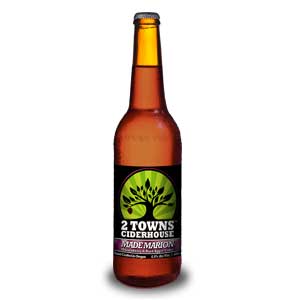
Made Marion was the overwhelming favorite. It is made with fresh-pressed Oregon marionberries and Northwest apples. It is one of the seasonal ciders; available May-September.

Sue said the marionberry complemented the bitterness of the apple.

Pam said this is definitely the one she would buy.

The sourness of the Rhubarbarian had all of us turning up our noses. ’Cot in the Act fell flat, as in it didn’t really have any flavor.

The Bad Apple and Bright Cider are more traditional hard ciders. Bright Cider is definitely the sweetest of the five we tried.

Between these two distinct apple-flavored ciders it would come down to if you like it more sweet or not. I liked the Bright Cider a tiny bit better. The color is light, and with bubbles almost looks like a Prosecco.

Sue definitely would choose the sweet cider.

Tom thought if he had a whole bottle of Bad Apple it would have been like having three beers because of the alcohol content.

Imbibers might want to pay attention to the alcohol content. Most are in the 6 percent range, but the Bad Apple is at 10.5 percent. The Serious Scrump, which we did not taste, has an 11 percent alcohol content rate.

The colder they are served, the better the flavor.

2 Towns boasts of letting the essence of the natural flavors ferment and not adding flavorings.

One thing people with gluten issues will like is that hard ciders traditionally are gluten free. The same cannot be said of all beers.


Scientists figuring out evolution of caffeine

By Carl Zimmer, New York Times

Every second, people around the world drink more than 26,000 cups of coffee. And while some of them may care only about the taste, most use it as a way to deliver caffeine into their bloodstream. Caffeine is the most widely consumed psychoactive substance in the world.

Many of us get our caffeine fix in tea, and still others drink mate, brewed from the South American yerba mate plant. Cacao plants produce caffeine, too, meaning that you can get a mild dose from eating chocolate.

Caffeine may be a drug, but it’s not the product of some underworld chemistry lab; rather, it’s the result of millions of years of plant evolution. Despite our huge appetite for caffeine, however, scientists know little about how and why plants make it.

A new study is helping to change that. An international team of scientists has sequenced the genome of Coffea canephora, one of the main sources of coffee beans. By analyzing its genes, the scientists were able to reconstruct how coffee gained the biochemical equipment necessary to make caffeine.

The study, published Thursday in the journal Science, sheds light on how plants evolved to make caffeine as a way to control the behavior of animals — and, indirectly, us.

Read the whole story


Calif. olive oil producers try to compete with imports

By David Pierson, Los Angeles Times

There’s a war over your salad dressing, and the front line has been drawn in California.

The Golden State is considering first-of-its-kind grading standards for olive oil that could have far-reaching consequences for the $5.4-billion global industry.

The California Department of Food and Agriculture may soon agree to require testing and certification for purity and quality. New labeling could also be introduced that would bar common terms such as “light” and “pure” olive oil.

The proposed standards would apply only to the largest California olive growers and millers, but they drew a rebuke from the European Union and the olive oil importer community, which view the rules as a blueprint for wider trade restrictions.

Read the whole story


U.S. becoming a nation of tea drinkers

By Roberto A. Ferdman, Washington Post

There’s a quiet, and lightly caffeinated, trend brewing in America.

The U.S. market for tea has more than quadrupled during the past twenty-plus years—from just under $2 billion in 1990 to just over $10 billion last year—according to the U.S. Tea Association. Demand for the herbal beverage has now been growing at a healthy clip for decades. By weight, Americans now drink almost 20 percent more of the herbal beverage than they did back in 2000, according to market research firm Euromonitor.

As a result, tea imports, to the benefit of major tea producing nations like China and India, are soaring—they have grown by roughly 40 percent over the past 10 years, nearly 70 percent over the past 20 years, and more than 700 percent over the last 50 years, according to data from the U.S. Department of Agriculture.

Read the whole story


Truckee turning into food, wine walk

Wine lovers, food connoisseurs and dedicated shoppers can once again indulge themselves at the annual Downtown Truckee Wine, Walk & Shop.

It includes wine matched with food samples as people shop and stroll in historic Truckee.

The event is Oct. 4 from noon-4pm.

Tickets are $35 in advance, $40 that day.

For more info, email truckeewinewalk@gmail.com.


Sample the Sierra winners announced

Zephyr Cove Resort, Great Basin Brewing Co. and Nancy’s Green Barn Farm won the Best Tasting Experience based on votes from attendees of Sample the Sierra. Zephyr Cove Resort prepared gourmet grilled cheese with a cold tomato basil soup served with brews from Reno-based Great Basin Brewing Co.

The fifth annual farm-to-fork festival was at Bijou Community Park on Aug. 31 — the first year at this location.

The Sierra Chefs Challenge had last year’s winner Peter Brinckerhoff, executive chef for the Tahoe Restaurant Collective, competing against past participant Jeremy “Boomer” Acuña of Zephyr Cove Resort, and newcomers Stephen Moise of Ridge Tahoe and Jimi Nakamatsu of Kalani’s. Brinckerhoff retained his title.