What to do with leftover Champagne

By Jillian Eugenios, CNNMoney

Here’s the thing about Champagne: It’s only good for drinking when it’s freshly opened, cold and sparkling in its glass.
If the New Year’s Eve celebration got a little out of hand, and you have some opened bottles that lasted longer than your guests, fear not: There are still plenty of delicious ways to keep the party going.

Channel Marilyn Monroe, who was rumored to bathe in 350 bottles of bubbly, taking advantage of the grape’s naturally-occurring antioxidants.

But if you don’t have a few hundred bottles to spare, use a sip’s worth for a natural toner. Michelle Phan, makeup artist and YouTube star, promises it will be “light, cool and refreshing.”

She wrote on her website, “Champagne is a favorite toner of mine for its detoxifying properties and its ability to fight free radicals.”

According to Phan, the acid also helps to even out skin tone. She suggests putting a small amount on a cotton pad and wiping it across the face.

Read the whole story


Is drinking alcohol going to make you fat?

By Jill U. Adams, Washington Post

Are beer bellies a real thing? Do social drinkers really carry around an extra five pounds of weight?

I have avoided investigating the answers to this question for all my adult life — and all my years as a health reporter. Call it denial by someone who likes her wine.

Recently I learned that the caloric content of alcohol is higher (seven calories per gram) than that of proteins and sugars (both four calories per gram), and nearly as much as fats (nine calories).

That sounded very worrying, I’ll admit. But remember that for managing weight, a more important number is the total number of calories in your beer (about 150 calories in a 12-ounce serving of regular brew, a reminder that there’s more to a drink than the alcohol) or your glass of red wine (125 calories in a five-ounce serving). A sugar-heavy 12-ounce cola also carries 150 calories.

And as far as common wisdom on drinking and weight gain goes, I am here to report, the science is murky.

Read the whole story


Prosecco replacing Champagne as bubbly of choice

By Jillian Eugenios, CNNMoney

Even at some of the fanciest parties this New Year’s Eve, the bottles of bubbly that will be popped open won’t be classic French Champagne but its sparkling Italian cousin, Prosecco, instead.

Prosecco sales have been booming in recent years, partly due to its affordability. But that’s starting to change. Higher-end Proseccos have entered the market, with prices of as high as $160 a bottle — and, in some cases, these sparkling wines may even start commanding the same respect as a chilled bottle of Veuve Clicquot.

“Cava and Prosecco are shedding the idea of the poor man’s alternative for Champagne,” said Chris Deas of New York’s Zachys Wine & Liquor, a family-owned wine shop that sells nationwide. “People are becoming more educated and more experienced.”

Deas said sparking wine is a “huge growth area” for his business, especially in cities like New York and San Francisco. “There’s a hip wine culture in places where the sommeliers are able to educate the buyers who are coming in,” he said.

Read the whole story


Chef an advocate of cooking with fire

By AC Shilton, Outdoor

Argentine celebrity chef Francis Mallmann can stand the heat—in fact, he loves it. But he wants to get the hell out of the kitchen. And he thinks you should, too.

“My least favorite place to cook is inside four walls,” he says. Next time you head out on a hike, Mallmann recommends taking along ingredients—a few eggs, a potato, an onion, a sprig of parsley, and some olive oil—for an impromptu, al fresco meal.”Go into the mountains and find a nice stream. Look for a stone with a wedged-out center. Place it over two flat stones and make a fire underneath it,” he says.

Once you’ve cooked in the woods (and no, coffee in a Jetboil doesn’t count), Mallmann swears you’ll never go back to those mush-in-a-pouch meals that many of us resort to in the backcountry.

Mallmann recently released “Mallmann on Fire”, a 100-recipe cookbook with the heft and richness of one of the seared sides of beef that made him famous in South America. The word cookbook feels somewhat inadequate to describe Mallmann on Fire. From the opening spread—a landscape portrait of Mallmann cooking fireside beneath the Andes — it’s clear the book is as much about travel, adventure, and a sense of place as it is about making food.

Read the whole story


Couple duplicates good food, service at Ski Run

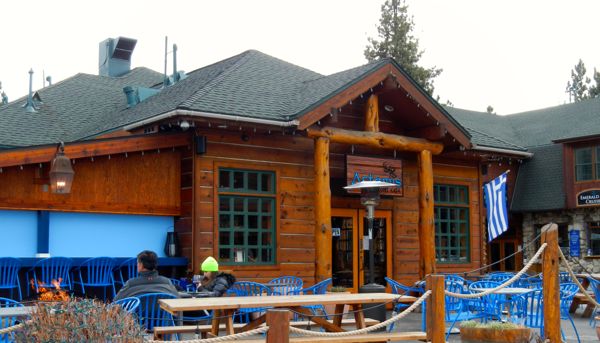
Artemis at Ski Run has fire pits out front and a view of Lake Tahoe. Photo/LTN

Artemis at Ski Run has fire pits out front and a view of Lake Tahoe. Photo/LTN

By Kathryn Reed

Owning and operating a restaurant is said to be a difficult endeavor – even more so in a place like Lake Tahoe because of the ebb and flow of customers as the seasons change or if the snow falls. Double that and people might question your sanity.

But that’s exactly what Brian and Angela Luke did this year when they opened a second Artemis restaurant in South Lake Tahoe.

“It’s been harder than we thought, definitely. But it seems to be working out,” Brian Luke told Lake Tahoe News. “We had some growing pains. We are getting it dialed in.”

Getting a day off – well, that never completely happens.

“Every day there is something,” Angela Luke said. “It hardly feels like work when we are both involved. It’s part of our everyday life. I can’t imagine it not being part of our life.”

But they will be even busier in January when their second child arrives. Still, the restaurants are their babies in a different way.

“Every location brings a different set of challenges. You have to jump in and immerse yourself before you are clear what those challenges are and how to go about tackling them,” she said.

Two restaurants weren’t in their plans when the first eatery in the Kings Trading Center near the Y opened in 2010.

“It was kind of out of necessity,” Brian Luke said. “We outgrew that place in the summer.”

Seating in the back patio was added, but the kitchen was still tiny. This created additional problems – the inability to get food to the table in a timely manner.

So, then the couple wrestled with whether it would be better to get a larger location or open a second restaurant. They looked at several locations, including the old Swiss Chalet.

Then Elie Alyeshmerni, owner of Ski Run Marina, approached the Lukes about taking over a soon to be vacant suite in his center. They jumped at the opportunity and opened that spot in May.
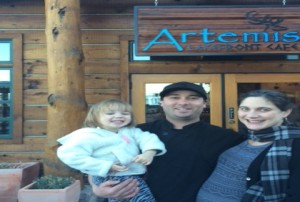
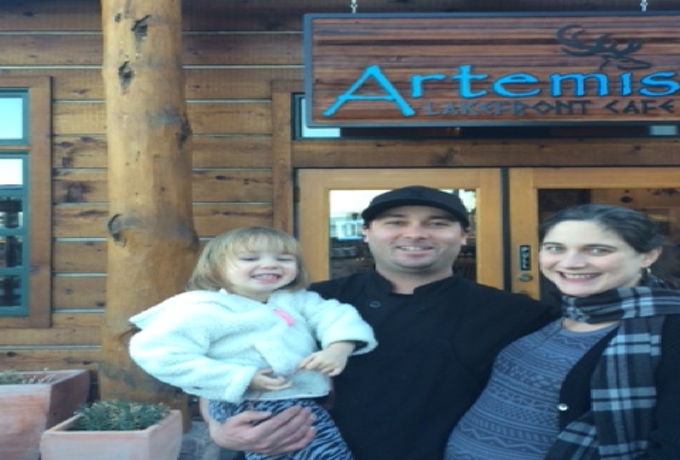
Aubrey, Brian and Angela Luke

Aubrey, Brian and Angela Luke

It’s not visible from Highway 50 like the Y location, but it has a lake view – something the strip mall can’t offer.

The menus are relatively the same, with lunch and dinner offered at both.

Two big differences at the Ski Run location are the full bar and breakfast. The former allows them to offer a comprehensive happy hour every day from 3-6pm. An espresso bar and mimosas are indicative of the variety of morning drinks that are available. Breakfast is a mix of American and Greek dishes.

What the Lukes have noticed at Ski Run is the extremes – super quiet or super busy. A rush comes in before the Tahoe Queen is set to sail. Tourists are finding the restaurant, while locals are more often found at the Y location.

“The first one is definitely very homey. It is very local clientele-based and very comfortable for people who have been coming there for four years,” Angela Luke told Lake Tahoe News. “This one is a lot more tourist driven. One of our main goals is to also make this a place where locals can enjoy. It’s such a great location.”

Next summer the outdoor bar will be operational. This time of year fire pits are keeping people warm outside. Getting into the catering side of the food industry is another goal.

Brian Luke has an extensive background in restaurants, having worked in the Caribbean as an executive chef and in other aspects of the industry before opening Artemis. He knew he was ready to open his own restaurant; he just thought it would be in the Bay Area. Prices, though, made that an unrealistic dream.

As a kid his family made regular treks to Tahoe. One Christmas he came snowboarding and started looking around at various vacancies where he might be able to open a restaurant.

The Greek theme came about by not wanting to duplicate what existed on the South Shore. Plus, he was familiar with Mediterranean food and it ties into the healthy Lake Tahoe lifestyle.

“I was trying to fill a niche that nobody was doing and trying to do it really well – good food at good prices and a great atmosphere, with great service,” Brian Luke said.

(Angela, who grew up in South Lake Tahoe, met Brian as he was opening the first restaurant.)

Beyond the food, the service is one thing that sets Artemis apart from other restaurants in South Lake Tahoe. The staff at both locations is attentive, friendly and knowledgeable.

“Service has been the hardest thing because of the transient nature of town. It’s hard to find good people in this town,” Luke said. “I’ve never had such hard time finding staff that was qualified and would show up and take things seriously and act like professionals.”

Training is critical – so are standards. Luke said if people don’t meet their standards, they are let go.

“We didn’t want to accept that this is just Tahoe,” he said. He isn’t lowering his standards.

His employees have been rewarded, with many who have been with them since Day 1 who have risen to management positions.

“Our goal is to be perfect. We try to get as close as we can on a daily basis,” Luke said.


Nutmeg has a secret story that isn’t so nice

By Allison Aubrey, NPR

Ah, nutmeg! Whether it’s sprinkled on eggnog, baked into spice cake or blended into a latte, this pungent spice can evoke memories of holidays past.

But a lot of blood has been shed over this little brown seed.

“Nutmeg has been one of the saddest stories of history,” says culinary historian Michael Krondl. If you listen to my story, you’ll hear the gruesome, grisly tale of how the Dutch tortured and massacred the people of the nutmeg-producing Banda Islands in Indonesia in an attempt to monopolize the nutmeg trade.

So, why was nutmeg so valuable? Well, Krondl likens it to the iPhone of the 1600s. It was fashionable among the wealthy. It was exotic and potent enough to induce hallucinations — or at least a nutmeg bender, as detailed in this account from the Atlantic.

Read the whole story


Kids’ first sip of booze likely to be in Dec.

By Christopher Ingraham, Washington Post

Here’s a holiday tip for parents of teens: Keep a close eye on the eggnog.

Data from the Substance Abuse and Mental Health Services Administration show that 12- to 17-year-olds are more likely to take their first sip of alcohol in December than in any other month except July.

In December, an average of 11,400 teens try alcohol for the first time each day of the month, which works out to about 353,000 new drinkers by months’ end. By contrast, in February the daily number of new teenage drinkers is less than half of that.

Read the whole story


Menus will sport calorie labels for alcohol

By Mary Clare Jalonick, AP

WASHINGTON — Don’t want to be confronted with the number of calories in that margarita or craft beer? Then avoid the menu and order at the bar.

New menu labeling rules from the Food and Drug Administration will require chain restaurants with 20 or more outlets to list the number of calories in alcoholic drinks, along with other foods, on menus by next November. The idea is that people often don’t know — or even think about — how many calories they are imbibing.

But the rules don’t apply to drinks ordered at the bar or any drinks that aren’t listed on the main menu. The wine list will also be guilt-free — individual calorie amounts aren’t required there either. And unlike other beverages and foods, most bottles and cans don’t have to list full nutritional information.

After years of lobbying for more nutritional information on alcoholic beverages, public health advocates say the menu labeling rules are a first step.

“Alcoholic beverages are a key contributor to the calories Americans are consuming, and most of the time when people have a drink they have absolutely no idea what its caloric impact is,” says Margo Wootan of the Center for Science in the Public Interest. Her group petitioned the government more than a decade ago to require that bottles and cans be labeled with robust nutritional information.

The FDA’s proposed menu labeling rules in 2011 exempted alcohol. But FDA Commissioner Margaret Hamburg said the agency decided to include it in the final rules this year after those who commented on the rule were largely in favor of such labeling because of its potential impact on public health.

The beer, wine and spirits industries objected, arguing that they were regulated by the Treasury Department, not the FDA, a setup that dates back to Prohibition. Treasury’s oversight, which includes minimal input from FDA, has “well served the consuming public,” a coalition of alcohol groups wrote in a 2011 comment asking to be left out of the menu labeling rules.

The new rules are designed to not be too burdensome for the alcohol industries or restaurants. Endless combinations of mixed drinks won’t have to be labeled at bars, unless they are listed on a menu, and the FDA is allowing restaurants to use estimates of calories and ranges of calories without listing the exact amount in every different drink. That means menus will list the average amount of calories in a glass of red or white wine, but won’t list calories by every brand of wine on the wine list. Same with beers and spirits.

So every winery or craft brewery won’t have to pay to have their products’ nutritional content analyzed — for now, at least.

The labeling rules have “more of an indirect effect on our business,” says Wendell Lee of the California-based Wine Institute. Lee says brand-specific menu calorie labels could be especially burdensome on the wine industry, where every vintage and varietal is different.

Craft brewers, with many varied brands and styles, have similar concerns.

The regulations “could have a slight chilling effect” on small breweries if some restaurants decide to go beyond them and list calories for individual beers, said Paul Gatza of the Brewers Association, which represents craft breweries.

The rules could have advantages too, he said.

“The more customers know about a brewery, the more they feel connected with it,” Gatza said.

Off the menu, labeling rules appear further away.

For years, most alcohol companies have tried to put off mandatory bottle and can nutrition labeling as public health advocates have fought for it. Rules proposed in 2007 would have made such labels mandatory, but the FDA never made the rules final.

Last year, Treasury’s Alcohol and Tobacco Trade and Tax Bureau said for the first time that beer, wine and spirits companies could use labels that include serving size, servings per container, calories, carbohydrates, protein and fat per serving. The labels are voluntary and will likely be used mostly by liquor companies touting low calories and low carbohydrates in their products.

Current labeling law for bottles and cans is complicated.

Wines containing 14 percent or more alcohol by volume must list alcohol content. Wines that are 7 percent to 14 percent alcohol by volume may list alcohol content or put “light” or “table” wine on the label. “Light” beers must list calorie and carbohydrate content. Liquor must list percent alcohol content by volume and may also list proof, a measure of alcoholic strength.

Wine, beer and liquor manufacturers don’t have to list ingredients but must list substances people might be sensitive to, such as sulfites, certain food colorings and aspartame.

Tom Hogue of the Tobacco Trade and Tax Bureau said the current goal is to make sure that companies that want to label may do so, and that labeling is consistent. It is important that labels “don’t mislead the consumer,” he said.


Sign up for master food preserver training

The University of California Cooperative Extension is training people to become a master food preserver volunteer.

People will be taught university-based, scientific information and then be able to share that knowledge to others in El Dorado County through free public classes, newsletters, farm day, farmers markets, kids expo, the county fair, and other educational events.

There will be a program overview meeting for anyone interested in becoming a master food preserver on Feb. 3 at 10am at the Bethell–Delfino Agriculture Building, 311 Fair Lane, Placerville. Class size is limited to 12 students.

Classes begin March 3 and meet consecutively for 12 weeks with graduation in May. Classes are Tuesdays from 9am-2pm, consisting  of approximately one hour of lecture and the rest hands-on lab.

The training fee is $95. Highest priority for applicants is given to residents of El Dorado County. Residents from neighboring counties who are willing to volunteer in El Dorado County may also apply.

Complete the online application by Feb. 12.

For more information, contact Robin Cleveland at 530.621.5528 or rkcleveland@ucdavis.edu.


Your virgin olive oil may be an impostor

By Amanda Ruggeri, Outside

More often than not, when you pull a bottle of “extra-virgin olive oil” off a grocery-store shelf, what you’re getting is not, in fact, extra virgin. This is a problem that extends far beyond the label: impostor oils and those past their expiration dates lack the health-boosting elements found in the real deal, leaving health-conscious consumers drenched in grease.

“It basically becomes a liquid fat,” says Patricia Darragh, executive director of the California Olive Oil Council.

Mislabeled and fraudulent oils are rampant. In recent studies, some of which were popularized by The New York Times, the UC Davis Olive Center found that 69 percent of samples of imported “extra virgin” olive oil sold in California supermarkets were not extra virgin, including those made by popular brands like Carapelli, Bertolli and Colavita. (California-made oils fared much better, with nine of 10 samples authentic.) Of 15 “extra-virgin” oils sold to restaurants, meanwhile, 60 percent were not extra virgin.

Read the whole story