Boeger Winery founder receives prestigious award

Greg Boeger has received the 2018 wine lifetime achievement award from the California State Fair.

He and his wife, Sue, started Boeger Winery in 1972. It is the oldest winery in El Dorado County.

Greg Boeger grew up on his grandfather’s Nichelini Winery in Napa. This is where he developed his knowledge of grape growing and winemaking.

In El Dorado, Boeger became a pioneer in experimenting with underdog varietals such as Barbera, Carignane, Refosco, Charbono, and Aglianico. Barbera emerged as the winery’s golden child early on and has garnered 120 medals for this one varietal, including multiple “Best Barbera of California” and “Best Barbera of the Sierra Foothills” at the California State Fair.

He shares the lifetime achievement award with the Bogle family.


Debate continues about what is ‘natural’ in food

By Julie Creswell, New York Times

In recent years, one bright spot in an otherwise lackluster market for packaged foods, beverages and consumer products has been merchandise promoted as “natural.”

Consumers, increasingly wary of products that are overly processed or full of manufactured chemicals, are paying premium prices for natural goods, from fruit juices and cereals to shampoos and baby wipes.

But as a spate of lawsuits and consumer advocacy efforts show, one person’s “natural” is another person’s methylisothiazolinone.

Read the whole story


Sensational soups at Tahoe restaurants

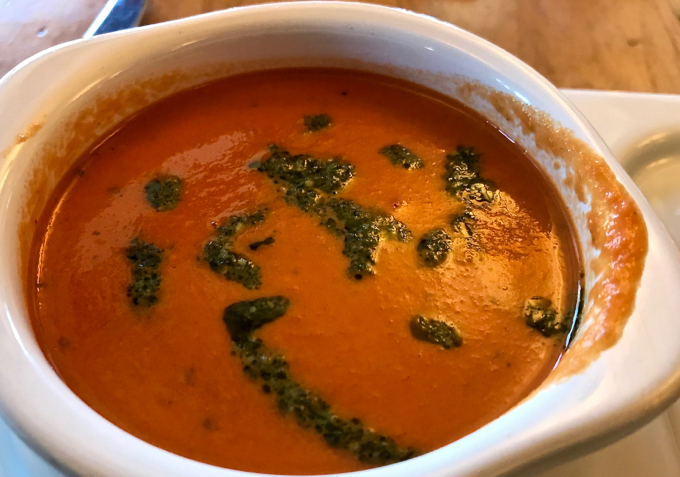
Buffalo wing sauce is the secret ingredient at The Alpine Club’s tomato soup. Photo/LTN

By Kathryn Reed

With the temperatures about to plummet in the Lake Tahoe Basin, it means soup is a good option for staying warm.

There are wonderful  choices in the area. Here is a sampling:

It’s a rarity to find chili on a menu – especially without meat. At Freshies in South Lake vegan tofu chili is a regular item. A bowl ($4.75) is an outstanding bargain. It’s super hearty. It has a good kick, but isn’t too spicy. It could be a meal unto itself.

Azul in Heavenly Village also has veggie chili on the menu — $4.50/cup, $8.50 for a bowl. Sue called it an excellent bowl of chili with added texture from mini tortilla strips on the side. Spices were good without setting her mouth on fire. She tried to detect the sweet flavor, thinking it may have been nutmeg. 

Blue Angel Café in South Lake Tahoe regularly has more than one soup as a special. I’ve never been there when there was not a vegetarian option. On this particular night I had the cream of cauliflower and Sue had the Southwest black bean. Each cup was $5.50. I had never had cauliflower soup. This was a tasty surprise. I’m not sure of the secret ingredient, but something that made it a little sweet. It could have been in the cream. Lots of chunks of the vegetable made it more substantive. The black bean was a little milder than expected, but Sue liked all the beans. My go-to soup that is often on the menu here is the tomato-basil. This is my favorite place for soup – year round.

The spicy lentil soup ($7) at Artemis in South Lake Tahoe is another one of my favorites; it’s on the menu year round. The consistent quality is outstanding – lots of lentils, and wonderful Mediterranean spices – and it is vegan. It can be a meal or a side.

Another lentil soup ($8) worth trying is the one served at The Pub at the base lodge at Sierra-at-Tahoe. It is so thick, much more like chili than soup. Cilantro comes through as a distinct spice. Lots of chickpeas in it, too.

The only disappointment in the soup at Primo’s was that I got a cup instead of a bowl. I had the soup/salad combo, which comes with a cup of the soup of the day. On this particular day it was vegetable pasta, which seemed so appropriate at an Italian restaurant. More veggies than pasta fill the cup – fine by me. They are perfectly cooked – not mushy, as can be the case with some veggie soups. Oregano and basil dominated the flavors. A cup is $6, a bowl is $8 at this South Lake Tahoe restaurant.

At the Loft at Heavenly Village two soups are always on the menu — tortellini in brodo ($7/cup, $10/bowl) and tomato bisque ($6/cup, $9/bowl). Sue had the one with meat, noting the mini meatballs aren’t so mini. “It was a bigger bite than I wanted, but I wasn’t motivated to cut them in the cup. I could tell the meatballs were soaked in the light chicken broth that I would hardly call rich as the menu states.” It was good, but could have had more flavor. The tomato bisque had a nice thickness, but didn’t taste like the tomatoes were roasted as the menu states. It was also a bit on the sweet side for my taste.

A classic is tomato soup and grilled cheese. The Alpine Club at Northstar Village nailed it on both. This is a private restaurant for members of Tahoe Mountain Cub. (I was a guest.) A common problem with tomato soup is that it’s too sweet. This is because sugar is often added to cut down on the acidity, but that’s really not necessary. But this was not a problem with this ski lunch. However, there was an ingredient in the soup I couldn’t put my taste buds on. Come to find out it was buffalo wing sauce. Find a member – this $10 combo is a bargain.


Plastic wine bottles an option for the outdoors

By Mike Pomranz, Food & Wine

We can be honest with ourselves: The glass wine bottle is more about tradition than logic. Glass is heavy. It’s breakable. And though it’s recyclable, the bottle’s weight and shape come with its own carbon footprint issues.

Glass wine bottles clearly have a few problems—but is one of them that glass makes it a pain to take wine on a hike? And would that finally convince you to try out wine sold in a plastic bottle?

Packaging giant Amcor announced it would be showcasing its line of polyethylene terephthalate (PET) plastic wine bottles at the Unified Wine & Grape Symposium.

Though the lighter, less breakable packaging is often touted for its environmental benefits, this time around, Amcor took another, somewhat odd approach, pushing plastic wine bottles as an option for the active wine drinker.

Read the whole story


When Kansas was America’s Napa Valley

By Pete Dulin

Located in the northeastern corner of Kansas, Doniphan County’s eastern edge is shaped like a jigsaw puzzle piece, carved away by the flowing waters of the Missouri River. The soil is composed of deep, mineral-rich silty loess and limestone, making it ideal for farming—and, it turns out, for growing grapes and making wine.

California wasn’t always America’s winemaking leader. During the mid-19th century, that distinction went to Kansas and neighboring Missouri, where winemakers and grape-growers led the U.S. wine industry in production. Bold entrepreneurs, industrious Kansas farmers—many of them German-speaking immigrants—produced 35,000 gallons of wine in 1872. That volume jumped more than six-fold by the end of the decade.

But the growth in Kansas’s wine industry (and its sister industry, brewing) coincided with dramatic changes in the state. From 1860 to 1880, Kansas’s population mushroomed from 107,206 to nearly 1 million people. Kansans battled over slavery in the Kansas-Missouri Border War (1854-1861) and again during the Civil War (1861-1865). Kansas vintners faced a dynamic and challenging moral, social, business, and political climate. The region’s civic and religious leaders railed against the use of alcohol, which they believed contributed to moral decay and spiritual rot, leading them to implement the first statewide prohibition on selling and manufacturing alcohol in the United States in 1881. For more than a century, this ban caused a slowdown from which the Free State’s winemakers are only now beginning to emerge.

For centuries, Wild Catawba, Concord, Norton, and other grapevines thrived, uncultivated, in the rich soil of the territory. When the explorer Étienne de Veniard de Bourgmont ventured to northeastern Kansas in 1724, Indians supplied his expedition with wild grapes from the Missouri River bluffs, which the captain and his men used to make wine. 80 years later, Lewis and Clark encountered summer and fall grapes at the very same site.

Several thousand German-speaking immigrants who settled nearby in the mid-19th-century sought a “new Rhineland,” a fresh start that offered religious freedom, economic opportunity, and refuge from political and military turmoil in their homelands. These immigrants not only brought large numbers of people, but also cash to foster trade in emerging frontier towns and the know-how to grow grapes and produce wine. Several skilled winemakers and vineyard nurserymen came to Doniphan, Kansas, from Deidesheim, a town in the German Palatinate region known for its winemaking and viticulture since the 13th century. Hardworking and entrepreneurial, they transformed small-scale farm vineyards and wineries into a burgeoning industry.

Winemaker Adam Brenner emigrated from Deidesheim and settled in Doniphan in 1857. As proprietor of Doniphan Vineyards, he manufactured native wines and brandies that were known “world-wide” for their “medicinal qualities.” According to William G. Cutler’s “History of the State of Kansas”, Brenner’s vineyards spanned 50 acres and had their own cellars, press houses, warehouses, bottling, and packing rooms. One cellar, used for sales, could hold 30,000 gallons of various wines. Two more cellars stored an additional 30,000 gallons each. Later his brother and his nephew both opened vineyards producing thousands of gallons of wine annually, some of it for sacramental use.

No records indicate what the Brenners’ wines tasted like. Since they were commonly sold for medicinal and sacramental purposes, and sugar was an expensive commodity, the wines were likely dry, sweetened only by natural sugar from the grapes. But whatever their aesthetic qualities, they were clearly highly-regarded. By the early 1880s, vineyards in and around Doniphan produced one million pounds of grapes and 75,000 gallons of wine every year. They grew 24 varieties of native American and American-bred grapes and shipped wine to customers in Kansas, Iowa, Missouri, Nebraska, Colorado, Texas, Michigan, and Montana by steamboat and later by rail.

Other parts of Kansas produced wine, too. In “A History of Wine in America,” a definitive account of winemaking in the United States, author Thomas Pinney noted that a man named A.M. Burns established a nursery specializing in grapevines in Riley County, west of Topeka, in 1856. Within a decade, Burns’ catalog offered more than 150 grape varieties to farmers, including many that he had bred and developed himself.

In 1866, Burns wrote with exuberant optimism about the relationship between Kansas and grapes. “I now think I can with safety predict a glorious future for the grape in Kansas,” he boasted. “It is only a matter of time, and some who, when I commenced to test the vine, sneered at the idea, may yet live to see the day when our bluffs will be teeming with millions of dollars of wealth, while they ought to hang their heads with shame at their own ignorance.” For a time, it seemed that his vision would come to pass. In 1880, the Kansas State Board of Agriculture reported that Kansas produced a whopping 226,000 gallons of wine and reached its peak as a leading producer in the industry.

But just as the optimistic prognostications of A.M. Burns and others seemed to bear fruit, a wave of moral and political action unleashed drastic upheaval in the state. Temperance spread west throughout the U.S., fueled by organizations such as the Woman’s Christian Temperance Union. During its early statehood and explosive population growth, Kansas was awash with wineries, breweries, and saloons—as well as large numbers of gamblers and prostitutes who frequented them. Prohibition proponents, especially women, loathed the lawlessness and vice. Men who drank had a reputation for being abusive, and poor providers. By 1855, the Kansas Territorial Legislature passed a law “to restrain dramshops and taverns, and to regulate the sale of intoxicating liquors.” Citizens voted in special elections on local liquor laws. And in 1871, even the Kansas State Horticultural Society had initiated discussions against the use of grapes for winemaking in the state.

Prohibition also appealed strongly to evangelical Kansans who viewed alcohol as an obstacle toward gaining eternal salvation—and who regarded the German winemakers, some of whom were Catholic, with suspicion. By the late 1870s, Kansans regularly heard anti-alcohol rhetoric at church revivals. Many were swayed to the temperance cause by the fiery, religion-fueled oration of reformed drunk Francis Murphy of Portland, Maine, who addressed a large crowd in August 1879 at a national temperance rally at Bismarck Grove, near Lawrence, Kansas. Kansas Women’s Christian Temperance Union president Drusilla Wilson, who was present at the rally, also won many converts to the cause. An indefatigable speaker and advocate, driven by her Quaker beliefs, she traveled 3,000 miles across Kansas by carriage to enlist support for state Prohibition. She organized 13 temperance unions, led efforts to obtain petition signatures for a prohibitory state amendment, and later worked to ensure the legislature passed the amendment in a general election.

In an address to the state Legislature in January 1879, Gov. John P. St. John framed temperance as an economic, moral, and social issue. “Could we but dry up this one great evil that consumes annually so much wealth, and destroys the physical, moral and mental usefulness of its victims,” he suggested, “we would hardly need prisons, poorhouses, or police.”

Kansas amended its state constitution on Nov. 2, 1880, to prohibit “the manufacture and sale of intoxicating liquors … except for medical, scientific and mechanical purposes.” The statute went into effect from in May 1881 and preceded national Prohibition by four decades. Most Kansas winemakers, brewers, and other alcohol manufacturers went out of business. Some relocated across the state line to Missouri. As late as 1900, 20 years after state Prohibition, grape growers in Kansas continued to cultivate thousands of acres of grapes, selling them to bootleggers in Kansas or to winemakers working legally in Missouri, or for consumption as fruit.

A temperance poster, circa 1903, claimed that Kansas “reduced the annual consumption of intoxicants from the U.S. average of 16 gallons per capita” to less than 2, that the state saved an average of more than $6 million “which otherwise would go to the saloon,” and that Prohibition saved annually “more than 1,200 persons from drunkards’ graves.”

Of course, Prohibition—in Kansas and throughout the United States—did not result in a more morally-driven society. The law unintentionally spawned criminal activity by bootleggers and their customers, and ultimately lost support during the Great Depression. National Prohibition was repealed in 1933. In Kansas, too, people drank. But the state remained officially dry, with its voters in 1934 vanquishing a proposed state constitutional amendment that would have legalized alcohol use. Kansas didn’t repeal statewide prohibition until 1948. Some counties still do not allow liquor sales.

Kansans haven’t exactly raced to revive the state’s wine industry. With the earlier generations of winemakers long gone, and the state’s lingering moral and political distaste for alcohol persistent, there was little incentive for investments in new vineyards or wineries. Meanwhile, grape-growing and winemaking have flourished in Missouri.  

In the mid-1970s, a horticultural research center near Wichita conducted experiments on soil and climate, and planted trial grapevines with promising results. Encouraged, Robert Rizza of Halstead, Kansas, planted a vineyard in 1978 and began advocating for the passage of a law that would allow farms to again produce wines on site. In 1983 the state Legislature finally approved a farm winery law and amended it in 1985 to reduce costly fees and to permit tastings and sales at wineries as well. The state Department of Agriculture established an advisory program on viticulture and enology, and Kansans began to apply for official licenses and established wineries.

Two decades later, 13 licensed farm wineries in Kansas were harvesting 170 total acres of grapes to produce 50,000 gallons of wine. By 2010, wine production had more than doubled to 107,419 gallons. Today winemakers throughout Kansas plant native and hybrid grapes in the same mineral-rich soils that their 19th-century forebears once so fruitfully worked, producing an impressive range of wines from French-American hybrid and native grapes. A long-abandoned way of life, practiced by some of the state’s first frontier entrepreneurs, is on the rise again.

Pete Dulin is the author of “Expedition of Thirst: Exploring Breweries, Distilleries and Wineries Across Central Kansas and Missouri,” and “Kansas City Beer: A History of Brewing in the Heartland.”



Craft beer — a happy economic story in the U.S.

By Derek Thompson, The Atlantic

The monopolies are coming. In almost every economic sector, including television, books, music, groceries, pharmacies, and advertising, a handful of companies control a prodigious share of the market.

The beer industry has been one of the worst offenders. The refreshing simplicity of Blue Moon, the vanilla smoothness of Boddingtons, the classic brightness of a Pilsner Urquell, and the bourbon-barrel stouts of Goose Island—all are owned by two companies: Anheuser-Busch InBev and MillerCoors. As recently as 2012, this duopoly controlled nearly 90 percent of beer production.

This sort of industry consolidation troubles economists. Research has found that the existence of corporate behemoths stamps out innovation and hurts workers. Indeed, between 2002 and 2007, employment at breweries actually declined in the midst of an economic expansion.

But in the last decade, something strange and extraordinary has happened. Between 2008 and 2016, the number of brewery establishments expanded by a factor of six, and the number of brewery workers grew by 120 percent.

Read the whole story


Breeding super-nutritious crops to help solve global hunger

By Heather Ohly and Nicola Lowe

An incredible 155 million children around the world are chronically undernourished, despite dramatic improvements in recent decades. In view of this, the UN’s Sustainable Development Goals include Zero Hunger. But what do we understand by the word hunger?

It may refer to lack of food or widespread food shortages caused by war, drought, crop failure or government policies. But as researchers, we are particularly interested in a different kind of hunger – one that is less visible but equally devastating.

Micronutrient deficiencies, also known as hidden hunger, occurs when there is a lack of essential vitamins and minerals in a person’s diet. This condition affects more than 2 billion people globally, and can contribute to stunted growth, poor cognitive development, increased risk of infections, and complications during pregnancy and childbirth. The wider impacts of micronutrient deficiencies socially and economically are also well established.

Supplementation and food fortification have long been used around the world to alleviate micronutrient deficiencies. Both strategies boast high cost/benefit ratios. But as they require repeated investment, their sustainability is limited. Supplements may be used to treat multiple micronutrient deficiencies, but this is a resource-intensive approach and does not address the cause of the problem – dietary inadequacy.

Food fortification, on the other hand, improves the nutritional quality of food itself. Here, micronutrients are added to commonly consumed foods at the processing stage. This strategy can be implemented at population level, and does not require individuals to change their eating behaviours.

In the UK, for example, flour has been fortified with calcium since World War II, when a reduced supply of dairy products was anticipated. Today, many of our foods are fortified, including bread, cereal products and fat spreads.

In developing countries, food fortification has gained momentum in recent years through the work of organizations like the Global Alliance for Improved Nutrition (GAIN). Large scale food fortification programs have enhanced the micronutrient content of a range of staple foods in over 30 countries. For example, the GAIN/UNICEF Universal Salt Iodization Partnership has protected 466 million people in 14 countries against the debilitating effects of iodine deficiency – such as mental impairment and goitre, a swelling in the neck resulting from an enlarged thyroid gland.

But one major disadvantage of food fortification is that some of the poorest families may not have access to commercially processed foods. And it is these remote rural communities – that grow and process food locally – that are often the most affected by hidden hunger.

Going one step further

An alternative approach is to add micronutrients at the agricultural production stage. This approach, known as biofortification, uses conventional plant breeding techniques to enhance the micronutrient concentration of staple crops. This is achieved by cross-breeding standard varieties with their wild relatives, over several generations.

This innovative strategy was first developed in the 1990s, and is now pioneered by an organization called HarvestPlus, which is supported by the UK Department for International Development. HarvestPlus has focused its efforts on iron, zinc and vitamin A – identified as the three most prevalent micronutrient deficiencies globally.

Biofortified crops include: vitamin A maize, vitamin A cassava, vitamin A sweet potato, iron beans, iron pearl millet, zinc rice and zinc wheat. These crops have been introduced into many countries in Africa, Asia and Latin America. And HarvestPlus aims to reach 100 million people with biofortified crops by 2020.

Biofortification has several advantages over food fortification. After the initial investment to develop the biofortified seed, it can be replicated and distributed without any reduction in the micronutrient concentration. This makes it highly cost-effective and sustainable. Biofortified crops are also often more resilient to pests, diseases, higher temperatures and drought – essential qualities as many countries become increasingly susceptible to climate change. And perhaps most importantly for nutrition, biofortified crops reach the world’s poorest and most vulnerable people.

Each new biofortified crop requires meticulous development and evaluation to ensure the micronutrient concentration is sufficient to make a significant impact on nutritional status, and that farmers and consumers will adopt the new biofortified varieties. Research has shown high levels of consumer acceptance, especially when information and awareness campaigns were implemented.

At the University of Central Lancashire, in partnership with international collaborators, we are currently investigating the impact of biofortified zinc wheat in a rural community in northwest Pakistan – where more than 40 percent of women are zinc deficient. The diet is very limited in this community but wheat flour is used every day to make chapattis.

The zinc concentration of the soil is very low and this provides an opportunity to experiment with “agronomic biofortification”, or the application of zinc enriched fertilizer. Our study will determine the cost effectiveness of these combined strategies.

Of course, biofortification is a partial solution, which must go hand in hand with efforts to reduce poverty, food insecurity, disease, poor sanitation, social and gender inequality. But it has the potential to contribute to the eradication of hidden hunger, and the UN’s aim to end all forms of hunger and malnutrition by 2030.

Heather Ohly is a postdoctoral research assistant in nutrition at the University of Central Lancashire. Nicola Lowe is a professor of nutritional sciences at the University of Central Lancashire.


S’mores becoming a regular event in Kings Beach

North Tahoe Business Association and 12 Kings Beach shops are creating Get S’more Saturdays.

On select winter Saturdays from 3-6pm, attendees may head to participating eateries and shops for something extra and unexpected, track their visits on a play card, then stroll to the outdoor gathering area to redeem play cards for free S’mores and eight chances throughout the season to win valuable raffle prize packages, including a pair of skis.

Get S’more Saturdays will take place on Jan. 20, Feb. 24, March 10 (the same day as the Kings Beach Snowfest Parade), and March 31. Each participating business will offer shoppers and diners something extra and unexpected, such as complimentary beverages and snacks as attendees shop, free appetizer or specialty menu items, complimentary balloon animals, artist demos, and more. The offers vary from business to business and may be subject to change.

Get S’More Saturday participating businesses include Blue Wolf Studios, Jason’s Beachside Grille, Lakeshore Sport Shop, Las Panchitas, Taco Bell, Tahoe Biltmore Trolley, Tahoe Central Market, The Grid  Bar & Grill, The Robin’s Nest, The Stevenson Gallery, Well Being, and Whitecaps Pizza. 

For more information, go online.


K’s Kitchen: Redefining spaghetti dinner

By Kathryn Reed

This is an incredibly unique way to serve pasta.

With the whole milk and all the cheese, it is definitely not light on the calories. And, well, so what? Sometimes it’s good have some fat in your diet. This just isn’t something to have every night or every week.

The flavor is outstanding. It’s a bit rich, but not over the top.

I’m pretty sure this was the first time I’ve use my springform pan for something other than a cheese cake.

Spaghetti Pie

Unsalted butter, softened, for brushing

1 pound spaghetti

3 T olive oil

1  medium yellow onion, minced

5 garlic cloves, minced

1 pound mixed wild mushrooms cut into 1-inch pieces

Kosher salt

Pepper

5 ounces spinach

3 large eggs

1½ C whole milk

3 C Fontina cheese, shredded

1 C fresh ricotta cheese

1 C Parmigiano-Reggiano cheese, grated

1 T sage, chopped

1 T thyme leaves

Preheat oven to 425 degrees. Tightly wrap the outside of a 9-inch springform pan with foil and brush the inside with butter.

Cook the spaghetti until barely al dente; drain.

In a large skillet, heat 2 tablespoons of the olive oil. Add the onion and garlic, cook over moderately high heat, stirring until sizzling. Add the mushrooms, season with salt and pepper; cook until browned. Set aside in a bowl.

In the same skillet, heat the remaining tablespoon of olive oil. Add the spinach, season with salt and pepper and cook over moderate heat until just wilted.

In a large bowl, whisk the eggs with the milk.

Add the spaghetti, mushroom mixture, three cheeses, sage, thyme; mix well.

Pour the mixture into the pan. Place the pan on a baking sheet and bake for about 35 minutes, until bubbling and the top is golden. Let stand for 15 minutes. Remove the ring, cut the pie into slices.


About 90% in U.S. don’t eat enough fruits, vegetables

By Jamie Ducharme, Time

The vast majority of Americans are not eating enough fruits and vegetables, according to a report from the CDC.

The most recent edition of the Dietary Guidelines for Americans recommends that adults consume 1.5 to two cups of fruit per day, and two to three cups of vegetables per day. According to the CDC’s data, however, just 12.2 percent of American adults are meeting the standard for fruit, and 9.3 percent are meeting the standard for vegetables. On average, the report adds, Americans are eating fruit once per day and vegetables 1.7 times per day.

The numbers vary slightly state by state, but even the leading regions fall far short of the guidelines. People in Washington, D.C., eat the most fruit, with 15.5 percent of adults meeting the guidelines, and Alaska leads vegetable consumption with 12 percent compliance.

Read the whole story