Despite drought, produce prices stay stable

By Russ Parsons, Los Angeles Times

California’s drought has driven the prices of some fruits and vegetables up substantially, but others are actually cheaper than they were a year ago. In fact, the U.S. Agriculture Department’s forecast for produce prices predicts modest increases of 2 to 3 percent.

Why aren’t fruit and vegetable prices skyrocketing in these dry times?

There are several reasons, farm experts say. For one, many produce products are grown in coastal areas that have not been as affected by the drought as the Central Valley has been.

Also, they say, it’s partly because the actual cost of growing the produce makes up only about 10 percent of the retail price — the rest covers transportation, handling, packaging and mark-up.

And almost paradoxically, except for the lack of rain, growing conditions have been nearly ideal.

Read the whole story


Morel crop may hit a record this year

By David Smith, Griffin’s Guide

This year could produce a morel mushroom harvest worth millions upon millions of dollars.

2014 experienced a glut of forest fires in the northwest regions of the U.S. and Canada. Multiple fires burned thousands of acres from Northern California on up through the Yukon and Northwest Territories of Canada. That’s good news for lovers and hunters of morel mushrooms, as the mycological word on the street is that this spring is going to produce the biggest morel harvest in years, maybe even of all time.

Morels are arguably the most widely-sought mushroom in North America, thanks to their deliciously earthy flavor, their fairly unmistakable appearance (even a mycological novice can quickly learn to properly identify the distinctive morel), and the fact that they are resistant to domestic cultivation (it’s very difficult, if not impossible, to reliably grow morels on purpose).

They also show up in spring, that wonderful time of year to be in the woods when bugs are relatively few, the air is crisp and cool, and there’s still a dearth of new, green undergrowth to hide tasty mushrooms.

Morels also appear in greater abundance in areas where fire damage occurred the year before.

Read the whole story


Raley’s upping customer service for wine buyers

By Sonya Sorich, Sacramento Business Journal

As competition for local grocery shoppers’ attention increases, Raley’s Inc. is heightening its focus on wine.

So don’t be surprised if you soon see a wine steward in your local Raley’s store, ready to help you decide which adult beverage to serve at your big Saturday night dinner.

“It’s our job to make sure the customer comes in and doesn’t feel overwhelmed,” said Curtis Mann, a wine, beer and spirits buyer for the West Sacramento-based grocer.

The wine stewards are part of an effort that began about two years ago: a decision to transform 20 of the company’s approximately 120 locations into “wine shop stores,” according to Mann. Those 20 stores include Raley’s locations, as well as Bel Air Markets and Nob Hill Foods, which the grocer also operates.

Read the whole story


Sugar — bad for psychological wellbeing

By Carolyn Gregoire, Huffington Post

We know that too much sugar is bad for our waistlines and our heart health, but now there’s mounting evidence that high levels of sugar consumption can also have a negative effect on brain health — from cognitive function to psychological wellbeing.

While sugar is nothing to be too concerned about in small quantities, most of us are simply eating too much of it. The sweet stuff — which also goes by names like glucose, fructose, honey and corn syrup — is found in 74 percent of packaged foods in our supermarkets.

And while the Word Health Organization recommends that only 5 percent of daily caloric intake come from sugar, the typical American diet is comprised of 13 percent calories from sugar.

Read the whole story


SHES students harvest crops at school

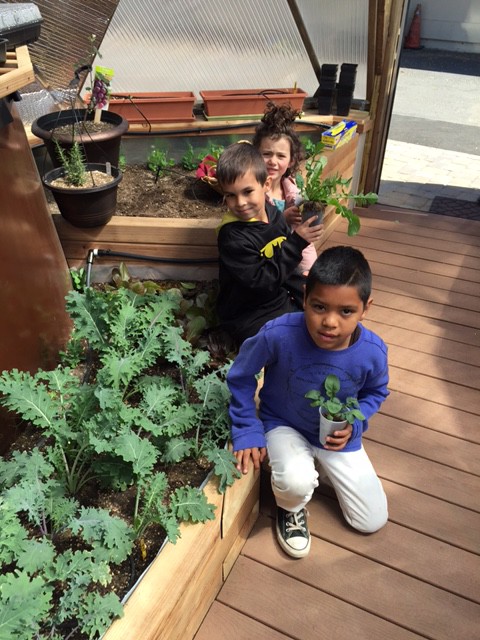
Sierra House students show off what they are growing in the dome. Photo/Provided

Sierra House students show off what they are growing in the dome. Photo/Provided

By Rebecca Bryson

April 2 was a special day for some second-graders in Denise Pillsbury’s class at Sierra House Elementary School. The first to plant their arugula seeds way back in the cold month of January, they were the first class to harvest their bounty from the domes.

Arugula is not typically a kid favorite with its slightly spicy flavor, but the kids were all smiles as parent and community volunteers helped them to harvest their greens. Together the students prepared and ate a strawberry and arugula salad made from the baby arugula that they had grown from seed.

Not a single student refused to taste the meal. What a difference growing your own food can make. When asked what they grew the resounding answer was “arugula” and who grew it “me”. A powerful statement indeed.

Over the next few weeks, classes will continue with work in the domes transplanting their little seedlings. Most of the remaining veggies will be harvested in May and June.

Thursday also marked the culmination of the We Can! Program. As part of this program, Sierra House and all LTUSD elementary students had the opportunity to taste fresh sugar snap peas and dried cranberries.

As part of the We Can! Program a different health and fitness challenge is posed to students for four weeks. Last week’s challenge encouraged students to try a new food. Barton Health, UC Cooperative Extension and the Lake Tahoe Sustainability Collaborative teamed up to purchase and hand out nearly 2,000 servings of snap peas and cranberries. Thanks to Raley’s for providing the food at whole sale prices. This was the highlight of many students’ day.

There will be a community open house at the Sierra House domes on April 15 from 5-7pm. All are welcome to come see what’s growing.


Tree sap headed for beer taps

By Michael Hill, AP

CHATHAM, N.Y. — The maple sap bubbling away in Ron Davis’ upstate New York sugar house is destined for pancakes, waffles, sweets and — for years now — beer kegs.

The local syrup adds a touch of woodsy sweetness to the maple amber beer made by nearby Chatham Brewing, one of a cadre of craft brewers nationwide bridging the gap between tree tap and bar tap. The amount of syrup destined for pint glasses from this spring’s maple run is a relative trickle, but maple beers offer something for the growing numbers of local food lovers and craft beers aficionados.

“It’s not sugary or something like a cider,” said Will Richard, drinking a pint with friends at the brewery’s bar near the Massachusetts line. “You have that almost like a hickory taste that you get from maple syrup but just not the overwhelming sweetness of it.”

Maple beers fit into an artisanal age that sees craft brewers extracting flavor from bananas, oysters, Sriracha sauce and, inevitably, bacon.

Many maple brews are often offered seasonally to coincide with spring maple runs or autumnal leaf falls. In Green Bay, Wis., Hinterland sells its maple bock January through April. Chatham’s maple amber is a year-round offering. And while craft brewers will add syrup at different points in the brewing process, Chatham head brewer Matt Perry pours it into to the maple amber after fermentation so that the syrup flavor comes through. He favors the darker, heavier syrup from later in the run.

In Vermont — the woodsy heart of America’s syrup-making belt — brewer Sean Lawson of Lawson’s Finest Liquids has become a sort of maple maestro with brews like Sticky Ale and Maple Tripple Ale, which is brewed with maple sap.

“It’s amazing the way the maple flavor carries through to the finished beer,” Lawson said.

On a recent day at Chatham Brewing, Perry slowly poured some of Davis’ sticky syrup from a pitcher into a stainless steel carbonation tank, where it dissipated into the bubbling brew. Perry said the maple mixes better with a malty beer as opposed to the assertively hoppy beers popular now among craft drinkers.

“This is a really good gateway beer to craft for a lot of folks,” Perry said. “It’s a little bit more agreeable to the palates that aren’t used to craft beer.”

Chatham Brewery is in a rural area popular with weekenders from New York City and distributes its beers regionally. Davis is a retiree whose Blackberry Hill Farm is close by. He has been tapping trees since the early 1970s, even using metal buckets in the early days.

Maple tappers like Davis log long hours in the sugar house this time of year, when daytime temperatures creep higher amid cool nights. It took a little longer this year because of the frigid winter, but by the end of March, the plastic tubes spider-webbed from some 800 taps were flowing with clear, watery sap.

Davis boils an average of 150 gallons each spring in his sugar house in a wood-fired boiler that fills the small space with billowing steam. Most will still be bottled as syrup for local sales. About 25 to 35 gallons of syrup a year goes to the nearby brewery, an extra flow of business that Davis is happy to have.

“He takes it in five-gallon containers,” Davis said. “So it’s a lot less bottling.”


The real cost of U.S. addiction to cattle

By Simon Worrall, National Geographic

They provide us with beef and milk, the gel coating for pills, soap, ice cream, baseballs, and printing ink. But our dependence on cattle, especially the beef we consume in larger quantities per person than any other country except Argentina and Luxembourg, comes at a cost: industrial feedlots where cattle stand knee-deep in their own feces, pumped full of antibiotics and growth hormones for them; clogged arteries, obesity, and heart attacks for us.

From their home in Seattle, husband-and-wife team Denis Hayes and Gail Boyer Hayes, authors of “Cowed: The Hidden Impact of 93 Million Cows on America’s Health, Economy, Politics, Culture, and Environment”, explain why Julius Caesar feared aurochs; how “ag gag” laws are being used in America to suppress criticism of the meat industry; why a cow called Yvonne became a folk heroine in Germany; and how a ranch in Hawaii offers a sustainable alternative to industrial beef-farming.

Read the whole story


Maple isn’t just for pancake syrup

By Noelle  Carter, Los Angeles Times

Growing up, I associated maple flavor with the pancake syrup found at the breakfast table. It was sweet but mostly flavorless. As if its only purpose was to baptize food in a sticky coating of liquid sugar. I wasn’t the biggest fan.

Today it seems maple is everywhere. It flavors ice cream, candy, coffee, tea, barbecue sauce and more. Thirsty? Hydrate yourself with maple water, now hip enough to be touted as “the next coconut water.”

And maple isn’t just limited to retail products. Go out to eat and you’ll find it added to any number of restaurant dishes. It’s a chef’s Eliza Doolittle.

Read the whole story


K’s Kitchen: Turning spinach into soup

By Kathryn Reed

A creamy soup without any cream. Already it’s healthier than so many others.

I’m not sure I have had a spinach soup before, but in keeping with the spinach kick I’ve be on this year, I figured this would be a new way to ingest this leafy vegetable.

The curry-oil drizzle as well as the mint leaves gives the soup an added punch. It’s still good without the “extras” – which is how I had it as leftovers – but there did seem like something was missing. Plus, the drizzle and mint leaves add to the presentation – always important when being served to guests.

The other great thing about this recipe is that it is easy and relatively quick to fix. It’s also not too heavy. It seems like so many winter soups leave you stuffed. Not this one. It left me satisfied – and wondering why I had never had spinach soup before.

spinach soupCreamy Spinach Chickpea Soup

4½ T canola oil, divided

2 medium shallots, diced

1 T garlic, minced

2 T ginger, minced

2 15-ounce cans chickpeas, drained

5 C vegetable broth

1 tsp kosher salt

6 C packed spinach leaves

1¼ tsp curry powder

1½ T lime juice

2 T small mint leaves

Heat 3 tablespoons of oil in medium pot over medium heat, add shallots. Cook until softened and translucent.

Add garlic and ginger, stirring for 1-2 minutes.

Add chickpeas, broth and salt. Bring to boil. Reduce to simmer and cook until flavors are blended and chickpeas are soft – about 25 minutes.

Add spinach. Cook until partially wilted. Let cool 5 minutes.

Heat remaining oil in small frying pan over medium-low heat. Stir in curry powder and cook until aromatic. Remove from heat.

Use emulsion blender or regular blender to cream soup. Pour into individual bowls.

Just before serving, stir lime juice into curry oil, then drizzle onto soup bowls. Garnish with mint.


Sacramento becoming a beer mecca

By Blair Anthony Robertson, Sacramento Bee

Sacramento is set to host a new beer convention in September that is expected to attract thousands of people, bring millions of dollars to the city and continue the momentum of its “America’s Farm-to-Fork Capital” marketing campaign.

The California Craft Beer Summit will include seminars, demonstrations, hands-on learning opportunities and a beer industry jobs fair, along with scores of tasting events, culminating in the California Craft Brewers Showcase that is expected to feature beers from as many as 200 breweries from throughout the state.

Scheduled for Sept. 11-12 at the Sacramento Convention Center, the summit is still in the planning stages. Pricing, a detailed list of events and attendees, and timing for ticket sales have yet to be finalized. The event will coincide with the third annual Farm-to-Fork Festival, running Sept. 10-27.

Read the whole story