K’s Kitchen: Asparagus stars in lasagna

By Kathryn Reed

I don’t think there has ever been a time that my sister, Pam, has come to visit that she hasn’t helped me with a new recipe. It’s a good thing she’s a good sport. And not all of the dishes have been keepers and some have been rather labor intensive.

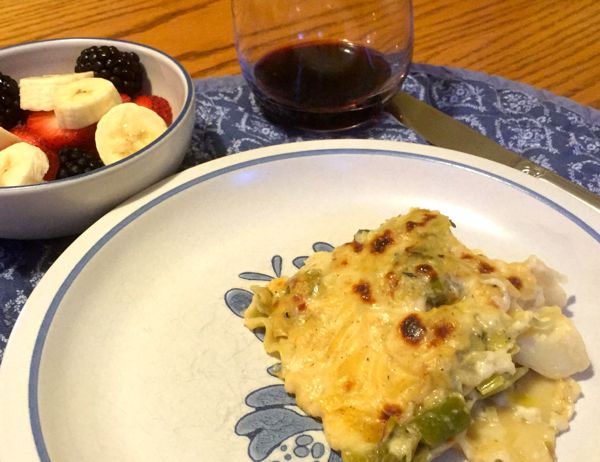
I have to say, though, this is one of the best entrees I have made in a while. All of the flavors came together to make for a wonderful dinner.

The only drawback is when I have milk in the kitchen it’s nonfat. That’s not a great thickening agent. Mix water and flour together to get out lumps and then pour into whatever you need thickened. It just adds to the cooking time, but does the trick. Of course the easier option is to have milk with fat in it.

Don’t skip the lemon rind. It adds tremendously to this recipe.

And don’t use a 9 x 13 pan like I did when Pam and mom were here. It made the lasagna too thin.

With it being asparagus season, make this recipe now or you will have to wait a year.
asparagus lasagnaArtichoke and Asparagus Lasagna

1 T olive oil

2 C leeks, thinly sliced

1 pound asparagus, trimmed and cut into 1-inch pieces

2 tsp garlic, minced

2 tsp thyme, chopped

7 ounces marinated artichokes

1½ C milk, divided

3 T all-purpose flour

1 C vegetable broth

1½ tsp grated lemon rind

½ tsp kosher salt

½ tsp black pepper

1/8 tsp nutmeg

Dash of ground red pepper

4 oz. part-skim mozzarella cheese, shredded

2 oz. Parmesan cheese, grated

Cooking spray

6 cooked lasagna noodles

Preheat oven to 375 degrees. Heat oil in large skillet over medium heat. Add leek; cook 3 minutes, stirring occasionally. Add asparagus; cook 3 minutes, stirring occasionally. Add garlic and thyme; cook 1 minute. Stir in artichokes; remove from heat.

Combine half cup milk and flour in a saucepan, stirring with a whisk until smooth. Stir in remaining 1 cup milk and broth. Bring to a simmer over medium heat, stirring frequently. Simmer until thickened.

Add rind and next 4 ingredients (through red pepper).

Combine cheeses in a small bowl.

Spread half cup milk mixture in bottom of an 8-inch square glass or ceramic baking dish coated with cooking spray. Cut bottom third off each noodle to form 6 large and 6 small noodles. In a single layer, arrange 2 large and 2 small noodles over milk mixture to fit pan.

Top with one-third of vegetable mixture, one-third of remaining milk mixture, and one-third of cheese mixture. Repeat layers twice, ending with cheese.

Cover with foil. Bake for 25 minutes. Uncover lasagna; broil on middle rack of oven for 2 minutes or until cheese is browned. Let stand 5 minutes before serving.
K’s Kitchen: Hearty soup for a cold spring day

By Kathryn Reed

Just when I thought soup season was gone, the temps dropped. Oh, darn.

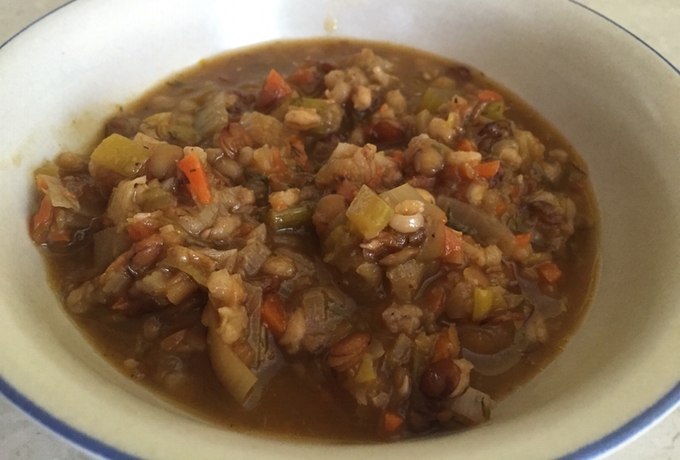
This concoction had me cooking with two ingredients I had never used before – parsnip and barley. I have to admit I didn’t even know what a parsnip looked like. It resembles a carrot, but is wider and white. It is sweeter than a carrot and is a good source for fiber.

I have some left which I will probably use in a stir fry.

Like many soups, this one got better as the days went on. The barley and lentils give it an earthy flavor. The grains also make it hearty.

A small bowl of it was filling, whereas some soups I want a large bowl to be satisfied.

The ease of making this soup is also great.

lentil soupBarley-Lentil Soup

2 tsp canola oil

1 C leek, sliced

3 C vegetable broth

1 C water

1 bottle beer

1 C carrot, chopped

1 C celery, chopped

½ C parsnip, chopped

¼ C fresh dill, chopped

¼ C uncooked pearl barley

½ tsp black pepper

1 tsp fresh thyme

2 bay leaves

½ C dried lentils

½ tsp garlic salt

Heat oil in large saucepan over medium-high heat. Add leek to pan; sauté 2 minutes. Add broth, water and beer; bring to a boil. Add carrot and next 7 ingredients (through bay leaves); return to a boil.

Cover, reduce heat, and simmer for 15 minutes.

Stir in lentils; cover and cook 30 minutes. Discard bay leaves.

Either put 1½ cups of mixture through blender or used emulsion blender on part of the concoction. Then add salt. Bring to boil, simmer for 10 minutes. Adjust seasoning as needed.


Tips for growing tomatoes

By Melinda Myers

Nothing beats the flavor of fresh-from-the-garden tomatoes. Make this your biggest and tastiest tomato harvest yet with proper planting and care.

Reduce pest problems and increase the harvest by growing tomatoes in a sunny location with well-drained soil or in a quality potting mix for container gardens. Improve your garden soil by adding several inches of organic matter to the top 8 to 12 inches of soil prior to planting. Compost, aged manure, and other organic materials help improve drainage in heavy clay soil and increase the water holding ability of sandy soil.

Add a slow release organic nitrogen fertilizer according to label directions at planting. Slow release fertilizers provide a constant diet that is better for your plants and less work for you.  Save yourself more time by mixing the fertilizer into the soil when incorporating the organic matter. Then give your plants a midseason boost as needed.

Once the soil is prepared, wait for the air and soil to warm to plant your tomatoes. Planting too early when the soil is still cool and the nights are chilly can stress the plant and delay your harvest.

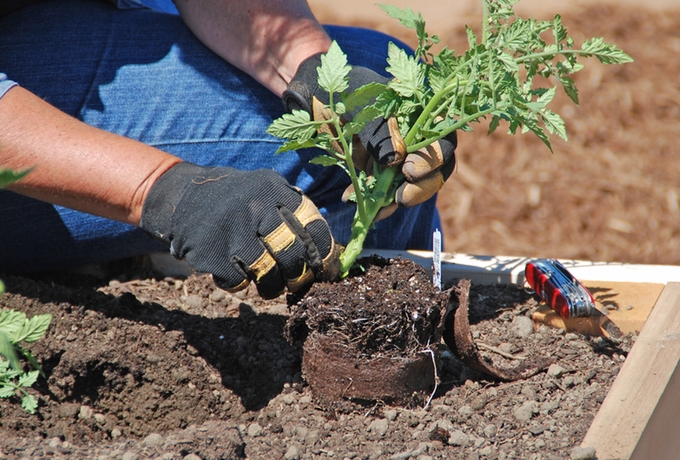
e. Photo credit: "Melinda Myers, LLC."    Photo line:  Myers recommends planting tomatoes slightly deeper or in a trench for better rooting.

It’s best to plant tomatoes slightly deeper or in a trench for better rooting. Photo/Melinda Myers LLC

Plant your tomatoes slightly deeper or in a trench for better rooting.  Trench tomatoes by digging a shallow trench about 3 to 4 inches deep. Remove the lower leaves and lay the plant on its side in the hole. Roots will eventually form along the stem. Carefully bend the stem, so the upper leaves will be above the soil.  Fill the trench with soil and water.

Stake or tower your tomatoes to reduce insect and disease problems and make harvesting easier.  The type of tomato and your schedule will help determine the training system that works best for you.

Determinate tomatoes (look for the D on the tag) grow a certain height and stop.  They work well in towers, containers or even hanging baskets.  Indeterminate tomatoes, labeled with an I, keep growing taller, producing more flowers and fruit until the end of the growing season.  These do best when grown on tall sturdy stakes or extra tall strong towers.

Towering tomatoes is easy. Simply place the tower over the tomatoes at planting. Tomatoes grown in towers produce a larger, but later harvest than staked tomato plants.

Allow a bit more time if you decide to stake your plants. Place the stake in the ground at planting. Be careful not to injure the roots. As the plants begin to grow prune off all side branches, suckers, that develop between the main stem and leaves. Loosely tie the remaining one or two stems to the stake. Cloth strips, twine or other soft ties work well. Keep tying up the plants as they continue to grow. Staked tomatoes produce the earliest and smallest harvest.

Check new plantings every few days and water often enough to keep the developing root system moist. Reduce frequency as plants become established. Water established plants thoroughly whenever the top few inches of soil are slightly moist. Mulch the soil with evergreen needles, shredded leaves or other organic mulch to keep the soil consistently moist and suppress weeds. Consistent soil moisture encourages more flowering and fruiting, while reducing the risk of blossom end rot, cracking and misshapen fruit.

Harvest your tomatoes when fully colored. Leave them on the plant an extra 5 or 6 days for even better flavor. Unfortunately, the animals often move in and feast on the ripening fruit. In this case, you may need to finish ripening tomatoes indoors.

And once you taste that first red ripe tomato, you’ll be looking for more sunny spots for containers or to expand your garden.

Gardening expert, TV/radio host, author and columnist Melinda Myers has more than 30 years of horticulture experience and has written more 20 gardening books, including “Can’t Miss Small Space Gardening” and the “Midwest Gardener’s Handbook”. 


Drought impacting El Dorado County vintners

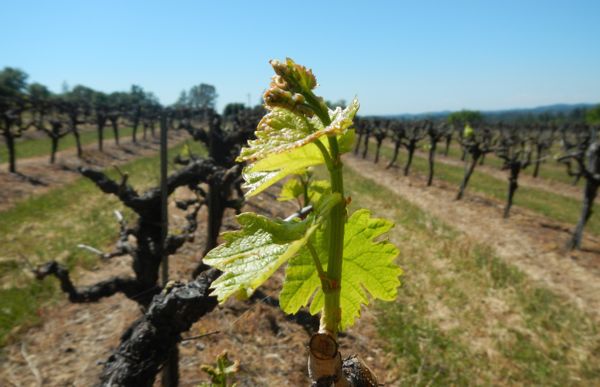
An early bud break will mean an early harvest in El Dorado County. Photos/Kathryn Reed

An early bud break will mean an early harvest in El Dorado County. Photos/Kathryn Reed

By Kathryn Reed

FAIR PLAY – Wells in El Dorado County’s wine country continue to drop because the minuscule snowmelt from the Sierra is unable to recharge the aquifer.

Vineyards relying on surface or ditch water are in tougher shape because of the severe cutback in allocations. However, even those on wells are wondering what will become of their vines if the drought, which is now in its fourth year, extends beyond this season.

There is no Plan B for most of them. It’s not like there is an unlimited supply to tap.

“If the wells dry up, what do you do?” Jonathan Pack, winemaker for Gwinllan Estate, asked. He doesn’t have the answer.

His vines have received 75 to 80 percent of water they normally would in mid-April. He has heard of years when water was trucked in for irrigation.

The good thing about grapes is they don’t need a ton of water to survive. Still, the lack of rain in the region is changing how vineyard managers do business. They are at the mercy of Mother Nature, and as she changes, they must change.

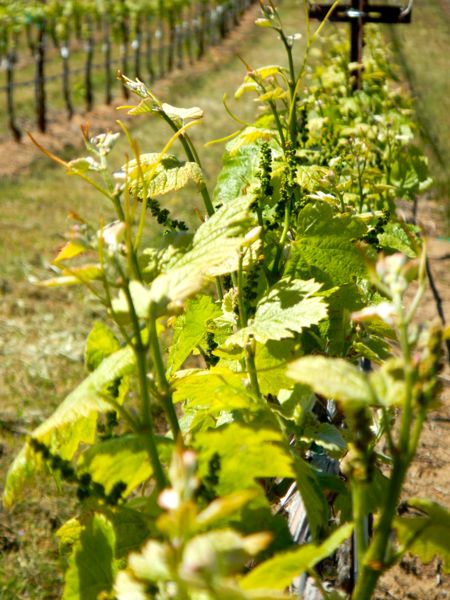
Growth on vines is two months early in some instances.

Growth on vines is two months early in some instances.

“I’m less worried about the drought and more about the time of the year for harvest. I look at the vineyard and I’ve never had leaves on vines this time of year,” Elliot Graham of Busby Cellars told Lake Tahoe News.

Chardonnay vines started to bud in February. Usually it’s April when they do. This could mean harvest will be in July – not August or September.

While dry farming has been around for years, this method still requires Mother Nature to provide moisture – something she has not done in any great measure lately. This style means there is no supplemental water added.

Single Leaf Winery went to this style five years ago when its well stopped producing water. Their Zinfandel has been dry farmed for 54 years.

Zinfandel – California’s oldest varietal – is extremely hearty. This is a good thing since El Dorado County boasts some of the best Zins in the state.

Shadow Ranch had planned to plant an acre of Zin just outside the tasting room two years ago. The drought changed those plans because it takes so much water at the get-go.

Many vintners are relieved their acreage is planted with Rhone varietals  — like Syrah, Viogner and Grenache – that do well in this granite, rocky soil. This soil doesn’t retain water. Those using drip irrigation are able to get the water deeper to the roots.

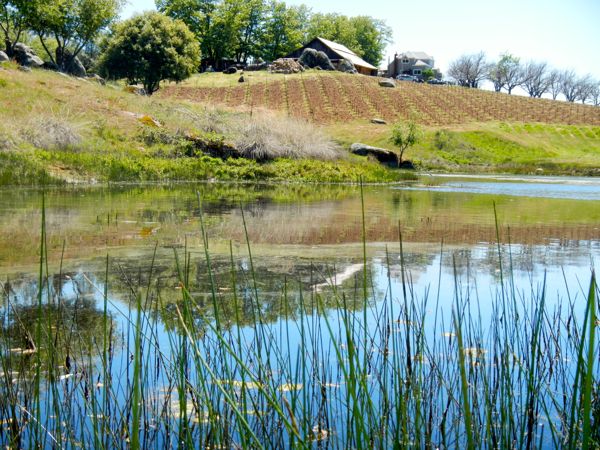
Shadow Ranch staked out an area for Zin across the pond, but the drought has delayed those plans.

Shadow Ranch staked out an area for Zin across the pond, but drought delayed those plans.

MV Vineyard is the smallest winery in Fair Play, producing 1,200 cases. Their 600-foot-deep wells have water at 300 feet, so they aren’t worried about this year. It’s future years that Kristi Mayhew, tasting room manager, said could be problematic.

Fire is her other concern. The July 2014 Sand Fire, which destroyed 20 homes, came close to their property and would have wiped out the vineyard had the winds changed. Last week a smaller fire erupted in the same area.

Stress – as in lack of water – is normally good for wine grapes. The flavor profile is enhanced, though the yield is less.

“We are getting some serious extraction. It’s pretty amazing what we are getting out of the grapes,” Scott Miller with Single Leaf Winery told Lake Tahoe News.

So, while the tonnage of grapes is likely to decline during this time of drought, the quality is destined to increase. Winemakers have always manipulated a certain amount of stress on the vines by cutting back the water so sugar content would increase, which in turn produces more robust flavors. Mother Nature is now doing that in a more extreme manner.

However, it’s not just irrigation water that is needed.

“There is a certain amount of water required in the winemaking process. The only thing to clean oak barrels is hot water,” Stephanie Simunovich with Skinner Winery told Lake Tahoe News.

A sign in the tasting room says, “Save H20 drink Rose.”

According to the Nature Conservancy, it takes 31 gallons of water to make one glass of wine.


School districts, parents at odds over breakfast in class

By Christine Armario, AP

The number of breakfasts served in the nation’s schools has doubled in the last two decades, a surge driven largely by a change in how districts deliver the food.

Instead of providing low-income students free or reduced-price meals in the cafeteria, they’re increasingly serving all children in the classroom. Food policy advocates say the change increases equity, however, it’s fueled a backlash from parents and teachers. They contend that it takes up class time that should be devoted to learning and wastes food by serving it to kids who don’t want or need it.

Lilian Ramos, a mother of two elementary school children in a working-class Los Angeles neighborhood, said she takes offense at the district’s assumption that she hasn’t fed her children: She serves them a traditional Mexican breakfast each day.

“They say if kids don’t eat they won’t learn,” Ramos said. “The truth is that many of our kids come to school already having eaten. They come here to study.”

The Los Angeles Unified School District, the nation’s second-largest with about 650,000 K-12 students, has been aggressively expanding its program, and by the end of the school year, will be serving breakfast in class at nearly every school. That growth mirrors an increase nationwide. Since 1994, the number of breakfasts served has climbed from about 1 billion annually to 2.3 billion, according to the U.S. Department of Agriculture.

Across the country, 51 percent of children are considered low-income, up from 32 percent in 1989, according to the Southern Education Foundation. In a number of school districts, the vast majority of those children qualify for a free or reduced-price meal. In Los Angeles and Detroit, about 80 percent are eligible.

Proponents believe shifting breakfast from the cafeteria to the classroom is the most effective way to make sure all children are ready to learn. Students who come to school hungry, they argue, are likely to have a harder time paying attention.

There’s also a financial incentive for districts to expand breakfast. The federal government reimburses schools for each meal served. At LA Unified, the number of participating children has grown from 29 percent to 81 percent in three years, generating an additional $16 million, according to Laura Benavidez, the district’s deputy director of food services.

At Stanley Mosk Elementary, regarded as having a model breakfast program, teachers help distribute the meal, check off which students are eating and show a video to incorporate a nutrition lesson, all in 10 minutes. On a recent morning, students were given apples, cereal and a small, packaged breakfast sandwich. At the end of breakfast, there was a large cooler filled with uneaten breakfast sandwiches.

“I think it’s a good way for students to eat here because sometimes at home they’re in such a rush,” said Fatima Nassar, 10. “Sometimes I see students throw it away.”

In Los Angeles, parents from wealthier schools organized against it, winning a concession permitting 32 schools with less than 20 percent of children who fall below the poverty threshold to opt out.

Parents at UCLA Community School, where Ramos’ children attend, also organized. They said the initiative took away instructional time from low-income and English-learner students, a group that scores persistently lower in reading and math. They also worried about unsanitary classrooms. The district temporarily delayed implementation but plans to soon start breakfast in the classroom at the school.

LA Unified board member Monica Garcia, who sponsored the breakfast resolution, acknowledged a one-size breakfast solution probably doesn’t fit all.

“Does it help the majority of kids? I think it does,” Garcia said. “Do we still need to figure out what to do when people want to opt out? Probably.”

About a decade ago, school and food policy advocates began drawing attention to the low participation in the nation’s school breakfast program. Some districts didn’t offer it, while others provided it before class, forcing students to arrive early.

“Breakfast in the classroom evolved as a smart response,” said Jim Weill, president of the nonprofit Food Research and Action Center.

A 2013-14 survey by Weill’s organization found 52 of 62 districts nationwide offered free meals to everyone, regardless of income, at some or all schools. Fifty had breakfast in classrooms.

Not everyone has embraced it. In New York City, former Mayor Michael Bloomberg opposed serving breakfast in class over concerns that children would eat twice. Current Mayor Bill de Blasio has expressed support, but it has only been implemented in 301 schools of about 1,600 districtwide.

At the UCLA Community School, parents plan to continue fighting the decision.

“We want them to serve it in the cafeteria,” Raquel Martinez, a mother of three, said. “That’s what the cafeteria is for.”


School-grown food a hit with kids

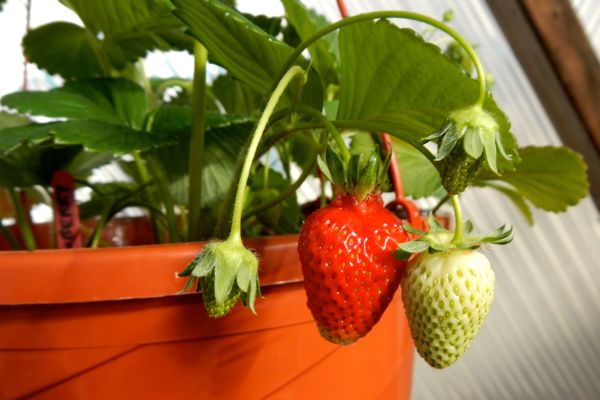
Students learn about the growth cycle of strawberries. Photos/Kathryn Reed

Students learn about the growth cycle of strawberries. Photos/Kathryn Reed

By Kathryn Reed

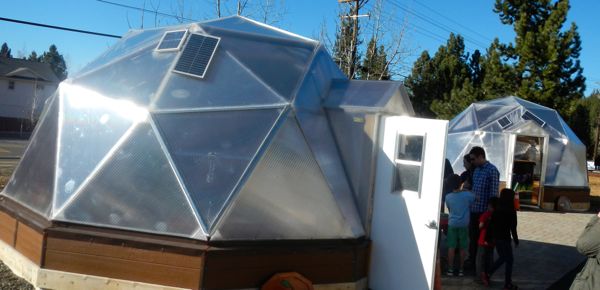
Lunches aren’t ordinary at Sierra House Elementary School. Sometimes produce grown in the domes is on the plates.

That’s third-grader Breck Nealis’ favorite part about the two growing domes – being able to eat some of the food at lunch. She was part of the group that planted the peppers.

Before the school year ends the plan is to have pizza for the students made with spices like basil and oregano that are growing in the domes.

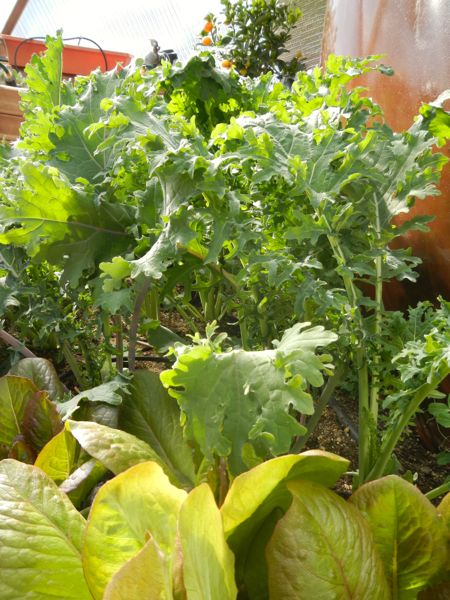
Kale is thriving in the dome.

Kale is thriving in the dome.

For those who don’t attend the school, samples of the produce were available last week. There was sprouted baby broccoli with garlic goat cheese on a cucumber disc, kale with artichoke and Parmesan on a cracker, and olive tapenade wrapped in dome grown green leaf lettuce.

The greens are thriving. The freshness of the produce is nothing like the kids are used to having from the grocery store.

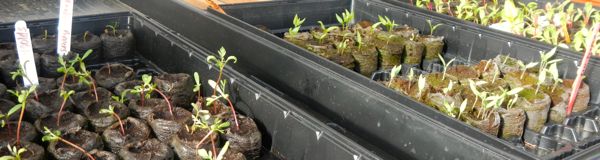
Much of the produce starts as seeds.

Much of the produce starts as seeds.

Last week Breck and her big sister, MacKenzie, were giving their mom a tour of the domes that sit adjacent to the South Lake Tahoe school. The public had a chance to meander through the domes that were the brainchild of parents.

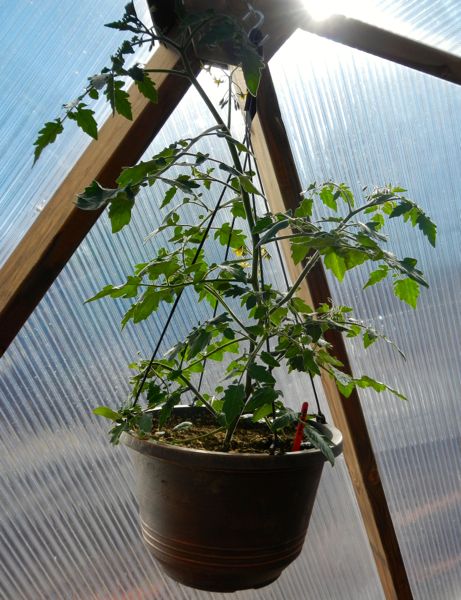
Strawberries and tomatoes are growing in hanging planters. A kumquat tree has fruit ready to harvest. Lettuce, kale, Swiss chard, bell peppers, Anaheim peppers, sweet peas, carrots, radishes, beans and herbs are just some of the items being grown.

Everything was planted by students.

Sun filters in to the dome to help tomatoes grow.

Sun filters in to the dome to help tomatoes grow.

A reflective paneling has been attached to part of the ceiling to attract the sun. Below it is a large almost hot- tub like basin of water. This is the natural heating mechanism so the dome won’t freeze.

The domes have been a bigger success than most people anticipated. And it’s not stopping at the domes. South Tahoe High School students in woodshop are making garden beds. They will be the dividers between the domes and playground.

Principal Ryan Galles told Lake Tahoe News this whole side of the school is likely to have some sort of contraption dealing with growing food. (This area used to be where snow was pushed.)

Soroptimist International South Lake Tahoe and community funds paid for the domes.

Soroptimist International South Lake Tahoe and community funds paid for the domes.

“The kids are so proud and excited,” he said.

First-grade teacher Kristi Wilson is the dome manager. She is spearheading the curriculum for each grade level. In the lobby there are student projects about the life cycle of a plant and how dirt made their lunch.


Searching for mozzarella in the land of processed cheese

By Gina DePalma

My grandmother’s visits from New York City always began with what I call The Great Unpacking, which took place on our dining room table the very second she crossed our threshold. I always wondered if her fellow travelers knew what my nonni was carting in her assortment of tote bags, not to mention the gigantic piece of luggage that was stuffed solely with food. As an Italian-American family living in Virginia in the 1970s, our only chance of getting what we needed to survive rested on Grandma’s small shoulders. Our neighbors thought of an Italian supper as sodden garlic bread from the freezer, mushy spaghetti topped with orange-tinted Ragu, and “cheese” that came from a green cardboard tube. Twice a year, Grandma came to rescue us, bringing the mother lode from 187th Street and Arthur Avenue in the Bronx.

Inside her bags were huge tins of extra-virgin olive oil and gigantic, hand-cut wedges of Parmigiano and Pecorino. There were cans of imported plum tomatoes and foil-wrapped jars of crinkly, oil-cured olives. I dove in frantically to uncover the big, golden balls of dried mozzarella, knotted at the top and stuffed with butter, and the crunchy wheels of toast known as frese. The fresh bread and pastries filled with ricotta and rum-scented cream would be devoured pretty quickly, but the spicy dried sausages made by my mother’s cousins were stashed away to last until the next visit. Most precious to my mother were the cans of espresso to brew in our macchina, which would soon be bubbling on the stove and filling the house with an intoxicating aroma as my grandmother and mother chatted away in Italian. As I sat in between them, munching away on Nonni’s homemade honey cookies and walnut-stuffed figs, the reminder of who we were and where we came from washed over me.

Grandma understood our needs in Virginia because she had experienced the same struggle when she came to the Bronx from her small town in Calabria after marrying my grandfather in 1926. Both accomplished cooks, my grandparents conducted an ongoing search for the right ingredients for family meals. They sought out the most reliable Italian vendors, who provided a small supply of imported foods. From Jewish dairy shops they bought fresh milk with the cream still on top, and scoops of sweet tub butter that was similar to what they had used in Italy. Produce, meat, and fish were purchased from trusted merchantsds. Not to be confused with appetizing shops that had the smoked fish and whatnot. sold dairy products, eggs, and some baked goo in the Italian neighborhoods of the Bronx.

But certain things just could not be duplicated. Back in their village of Carolei, my grandmother used freshly milled wheat and corn flour from the town mill, ground specifically to order for making breads and fresh pasta. (Grandma never stopped complaining about the flour in America, which she said ruined her pasta dough.) She missed the fragrant black anise seeds and oregano from the wild plants growing in the surrounding hills Just outside their doors were porcini and figs to be foraged and vegetables to be picked from the family garden. My great-grandfather raised and slaughtered pigs, making dried sausages and prosciutto, and my grandmother and great-grandmother used the lard for their pastry dough. And there were grapevines, of course, for making homemade wine. In a New York scraping its way out of the Great Depression and on the road to another World War, the family was determined to be Americans, to live out the dreams and desires that had brought them there, but in the kitchen, their hearts remained in Italy.

The kitchen, for my grandparents and so many other past and present newcomers to America, is a place to escape the tasks of assimilation and adaptation and find comfort in food. Even the humblest stove and a few cupboards can offer a safe haven and a way to preserve cultural identity and honor the traditions left behind. This expat yearning for the foods needed to cook family recipes has profoundly influenced the way that we all eat and shop.

My own family played a role in that, not just through our own home cooking, but also by starting successful food businesses. Our cousins, young twin boys who immigrated in 1947, eventually became restaurateurs and merchants of Italian imports. After 60 years in business, Mike’s Deli still thrives in the Arthur Avenue Retail Market in the Bronx, the place I visit every month for the same staples of Italian cooking that Nonni brought to us in Virginia. And it really came as no surprise that I too would become a chef.

Professionally and in my own home kitchen, I’ve reaped the harvest from seeds sown by my grandparents’ immigrant experience. In the 15 years I spent as the pastry chef of Babbo, a groundbreaking Italian restaurant in New York, I often paused and marveled at the abundance of imported Italian products I so easily accessed that they never would have imagined. And as a home cook, I reap the benefits of a local grocery store in my Washington Heights neighborhood that carries fish sauce, kimchi, and Sriracha, along with Danish butter, Spanish pimentón, and Israeli couscous. On weekends you might find me cooking dishes from India or Southeast Asia that feel about a million years from my childhood, when going exotic meant cracking open the Old El Paso Taco Kit.

I, like most Americans, can thank the generations of immigrants — like my cousins — who started out selling ingredients and cooking in small family restaurants as a way to make a living, serving their own communities first, and eventually anyone else with a nose for good food. The indiscriminate power of something delicious landing in a satisfied belly is a reliable way to overcome suspicion and prejudice. Goods cross international borders by boat, over highways, and through the air for the simplest reason: someone from somewhere else really misses them.

The “American melting pot” isn’t just a metaphor. It’s about what we eat for lunch. And when you look at what Americans love to eat, you see that we haven’t just tolerated our immigrant waves; we’ve embraced them. Every major city in America offers a panoply of ethnic delights spanning every continent on earth, and you’d be hard pressed to find a small town that doesn’t have at least a Thai noodle joint or taco shop in the local lineup.

The list of dishes that are indigenous to America is short; almost everything we eat originated elsewhere and evolved, layer upon layer. I think what is means to be an American cook is to appreciate, celebrate, and contribute in a way that enriches our culinary culture and makes it more than the sum of its parts. In restaurant kitchens and as a cookbook author, I devoted myself to using traditional ingredients in my desserts in new ways that would be exciting and expansive to my diners. Food has been one of our greatest triumphs of harmony and acceptance. For proof of this, we need not look farther than our pots, pans, and plates.

Gina DePalma is a James Beard Award-winning pastry chef and author of the cookbook “Dolce Italiano: Desserts from the Babbo Kitchen”. She wrote this for “What It Means to Be American”, a national conversation hosted by the Smithsonian and Zócalo Public Square.


K’s Kitchen: Turning asparagus into soup

By Kathryn Reed

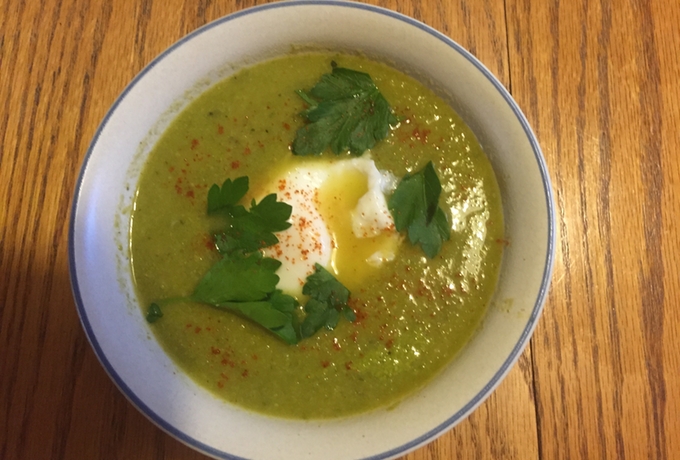
While it’s possible in the United States to get nearly any vegetable any time of year, there is no question eating them in their “normal” season without having been shipped from some foreign country makes a huge difference in flavor.

Asparagus is one of those seasonal veggies that come packed with wonderful nutrients and delicious flavor. Not much has to be done to those long stalks to enjoy them. One of my favorite ways to eat asparagus is to steam it and then squeeze fresh lemon juice and drizzle balsamic vinegar on it.

But with winter having returned – at least briefly – soup seemed necessary to stay warm.

I don’t cook with much salt, so I’m sure some people will want to add more. Just keep tasting it as you make it. I didn’t use an egg for leftovers.

asparagus soupGreen Pea and Asparagus Soup

1½ tsp butter

2 leeks, white part only, trimmed and thinly sliced

4 C vegetable broth

1 tsp chopped fresh thyme

½ tsp kosher salt

¼ tsp black pepper

2 C frozen green peas

1 pound fresh asparagus, trimmed and coarsely chopped

¼ C chopped fresh flat leaf parsley, divided

1 T white vinegar

4 large eggs

2 tsp olive oil

Paprika

Melt butter in large saucepan over medium heat. Add leeks. Stir and cook for about 4 minutes.

Add stock, thyme, salt and pepper. Simmer.

Add peas and asparagus. Cook for 3 minutes.

Add 3½ T of parsley.

Puree mixture in blender or with emulsion blender. Continue to simmer soup.

Fill skillet two-thirds full with water; bring to boil. Reduce heat and add vinegar. Break individual eggs into custard or other small cup. Then gently pour eggs into pan. Cook for three minutes.

Pour soup into bowls.

Remove eggs with slotted spoon and place one into each soup bowl. Drizzle evenly with oil, sprinkle with remaining parsley and paprika.


Scientists question government’s stance on salt

By Peter Whoriskey, Washington Post

For years, the federal government has advised Americans that they are eating too much salt, and that this excess contributes yearly to the deaths of tens of thousands of people.

But unknown to many shoppers urged to buy foods that are “low sodium” and “low salt,” this longstanding warning has come under assault by scientists who say that typical American salt consumption is without risk.

Moreover, according to studies published in recent years by pillars of the medical community, the low levels of salt recommended by the government might actually be dangerous.

But the debate over dietary salt is among the most contentious in the field of nutrition, and other scientists, including the leadership of the American Heart Association, continue to support the decades-old warning.

Read the whole story


Automatic knob reads, controls stove temp

By Russ Parsons, Los Angeles Times

A company called Meld is getting ready to produce a knob it says you can attach to any home stove that will read the temperature of what you’re cooking and automatically keep it stable to within a single degree.

Sound like a good idea? More than 450 Kickstarter backers think so. Meld’s campaign hit its $50,000 goal within seven hours of its launch Tuesday.

It works like this: A temperature probe is clipped to the pot of what you’re cooking and connects via Bluetooth with your smartphone (IOS or Android). Your smartphone then communicates with the temperature dial on the stove, which automatically adjusts to maintain the desired temperature.

Read the whole story