Mobile food bank to be in S. Lake Tahoe

The Food Bank of El Dorado County will be in South Lake Tahoe with its Mobile Food Pantry along with a free farmers market on June 24 from 10am to 11am at the American Legion Hall located at 2748 Lake Tahoe Blvd.

This is for people who are struggling to make ends meet, live in El Dorado County and meet the California Health and Social Services Agency Emergency Food Assistance Program income guidelines. Income guidelines may be found online.  The Food Bank will provide one allocation of groceries per family.

For more information on how to give or get help, call 530.621.9950 or email info@foodbankedc.org.


Study: Chocolate is good for the heart

By Amy Kraft, CBS News

Good news for people who are trying to lower their risk of cardiovascular disease: a new study suggests you don’t have to cut chocolate out of your diet.

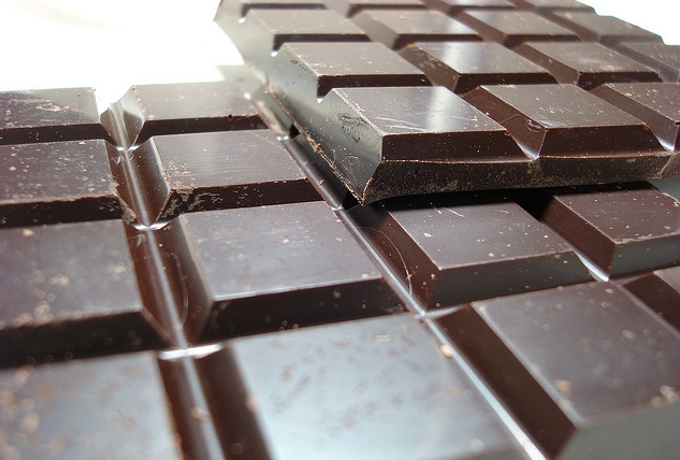
Chocolate may be good for the heart. Photo/John Loo

Chocolate may be good for the heart. Photo/John Loo

In fact, new research published in the BMJ journal Heart says that it may actually be good for your heart.

The researchers looked at long-term health data on nearly 21,000 adults in England. They found that participants who consumed the most chocolate (up to 100 grams a day, the equivalent of almost two and a half Hershey bars) were 11 percent less likely than those who ate no chocolate to have a heart attack or stroke, and 25 percent less likely to die from cardiovascular disease. Results remained the same after researchers adjusted for a number of dietary variables including smoking, age, alcohol consumption and physical activity level.

Read the whole story


Senior farmers’ market booklets available

The El Dorado County Area Agency on Aging has a limited supply of senior farmers’ market check booklets available for qualified El Dorado County seniors.

Each eligible senior will receive one booklet that includes 10 checks redeemable for $2 each to be used at certified farmers’ markets for the purchase of fresh, unprepared, locally grown fruits, vegetables, cut herbs and raw unprocessed honey.

Distribution of the booklets will take place as follows:

July 22 from 8am-noon at the Cameron Park Farmers’ Market, located at Coach Lane and Strolling Hills Road in Cameron Park.

July 25 from 8am-noon at the Placerville Farmers’ Market, Ivy House parking area, located at Cedar Ravine and Main Street in Placerville.

July 28 from 8am-1pm at the South Lake Tahoe Farmers’ Market, American Legion Parking Area, located at 2748 Lake Tahoe Blvd. in South Lake Tahoe.
Aug. 1 from 9am-noon at the Garden Valley Farmers’ Market, Garden Valley Park, located at Garden Valley Road and Marshall Road in Garden Valley.

Farmers’ Market check booklets will be distributed to seniors who are at least 60 years of age and meet income guidelines (one person household with annual income less than $21,775 or two person household with income less than $29,471). Checks are good for all certified farmers’ markets.

Quantities of the booklets are limited and will be distributed on a first come, first served basis.

For more information, or to request a proxy form, call 530.621.6251.


FDA mandates elimination of trans fats

By Sabrina Tavernise, New York Times

WASHINGTON — The Food and Drug Administration on Tuesday gave the food industry three years to eliminate artery-clogging, artificial trans fats from the food supply, a step that health experts said would save thousands of lives a year.

Trans fats — a major contributor to heart disease in the United States — have already been substantially reduced in foods, but they still lurk in many popular products, including frostings, microwave popcorn, packaged pies, frozen pizzas, margarines and coffee creamers.

The FDA first announced its plans to ban the substance in 2013, and its announcement on Tuesday was its final ruling. Companies will have three years to comply. The agency has estimated that banning trans fats completely could prevent 20,000 heart attacks and 7,000 deaths from heart disease each year.

Read the whole story


Taking the mystery out of fresh corn

By Russ Parsons, Los Angeles Times

While winter may be coming on “Game of Thrones”, at the farmers market, summer is here. How do I know? Because I saw fresh corn from the Imperial Valley stacked deep Sunday.

Summer has many signifiers — tomatoes, melons, peaches — but perhaps none ignites a shopping frenzy the way corn does. Buyers crowded around the table, ripping off husks, tossing good ears one direction and less-good another.
In the corner, the farmer whimpered (please, folks, use the tips below for choosing corn rather than shredding through the pile, leaving half of them unsalable).

People believe all kinds of silliness about fresh corn: that it needs to be cooked as soon as its picked or it won’t be sweet; that white corn is better than yellow, or vice versa.

Read the whole story


Study: Most in U.S. could eat food grown nearby

By Roberto A. Ferdman, Washington Post

There are so many mantras of the modern day food movement that keeping track of any one single goal can be a tall task. But no matter whom you ask, there seems to be at least one concern that arises time and time again. The ascent of big food companies, which have allowed Americans to eat more foods, more cheaply, and at more times of the year than ever before, has led to a massive decline in the amount of food we source from nearby farms.

The response to our current, largely commercial food system is often a simple reminder that feeding this many finicky people is a job too big for localized food systems. All the romantic things that come with local food—small farms, seasonal produce, less guilt—are difficult to provide when cities like New York house almost 10 million people.

As much as 90 percent of Americans could eat food grown within 100 miles of their home, according to a new study by professors Andrew Zumkehr and J Elliott Campbell, who teach engineering at the University of California. More than 80 percent of mouths could be fed with food grown within 50 miles.

Read the whole story


Not all processed foods are unhealthy

By Erin Schumaker, Huffington Post

Pop quiz. Which of the following is considered a processed food: Kellogg’s Corn Flakes, homemade greek yogurt, bagged baby spinach? (Answer: All of them.)

The point here, is that “processed foods” includes a much wider variety of products than most consumers typically associate with the term. Secondly, not all processed foods are evil. Processed foods can provide convenience, like in the case of bagged baby spinach, or safety, as in the case of pasteurized eggs, and can even — gasp — be healthy.

“The idea of saying just avoid processed foods is crazy,” Dawn Jackson Blatner, RD, CSSD, LDN, told The Huffington Post. “Yogurt is a processed food. It’s actually been cultured and packaged. Canned beans, with no other ingredient besides beans, is processed because [the beans] have been cooked and they have been canned.” Where Blatner draws the line with her endorsement is with extremely processed foods, which logically enough, is also where things start to get murky for consumers.

Read the whole story


Food Bank farmers’ market to return to SLT

The Food Bank’s Mobile Pantry along with a free farmers’ market will be in South Lake Tahoe June 24 from 10-11am.

The give-away will be at the American Legion Hall (2748 Lake Tahoe Blvd.)

On top of the mobile pantry and the produce distribution, this week a Food Bank truck stocked the shelves of the Family Resource Center, Bread & Broth, Senior Plaza, Kelly Ridge and a backpack program serving South Lake Tahoe schools.

For more information on how you to give or get help, call 530.621.9950 or email info@foodbankedc.org.


Exploring gender stereotypes at the bar

By Aliza Kellerman, VinePair

“Clear liquor is for rich women on diets.”

So says Ron Swanson, one of the most quotable characters on television today. In this case, I find myself disagreeing with his typical wiseness, but the goal of this article isn’t to give a takedown of an internet meme, but rather to ask why? Why are certain spirits and tastes considered feminine while others are considered manly?

Let’s first consider taste. Do women really like sweets more than men? Try to recall food commercials you see on TV. Without thinking too hard, which foods do you associate with women, and which do you associate with men? When it comes to female-targeted commercials, the first thing I think of is chocolate. When was the last time you saw a chocolate commercial geared toward men? In the U.S., they’re nearly always marketed toward women, typically as an indulgence. CollegeHumor parodied this theme in their skit “If Chocolate Ads Were Honest.”

The skit plays off of how chocolate is often advertised as a guilty pleasure, something women should eat in secret, hilariously enough giving the candy both sexualization and shame. The food commercials aimed toward men, however, typically tell a different narrative. First off, they don’t push candy, they push meat. And men aren’t shown nibbling burgers in private, they’re shown chomping down on steaks or grilling proudly. Thus, meat – a savory taste – is shown as “strong,” something to aspire to like, while chocolate – a sweet taste – is shown as “weak,” something to be ashamed of enjoying. I’m afraid to say this line of marketing is more sinister than simply sweet equals weak. It’s also saying sweet equals weak and therefore equals female. This is an idea that’s played ad nauseum in American advertising and media. It must at least partially contribute to why sweetness in a drink is thought of as embarrassing. Perhaps this is why ordering a Margarita is more embarrassing than, say, a Manhattan.

Read the whole story


USDA declines to investigate alleged violations at major organic farms

By Peter Whoriskey, Washington Post

Aerial photographs taken last summer of some of the largest organic egg and dairy farms in the United States showed few animals outside on pasture, but the USDA will not investigate whether these operations are violating rules for organic agriculture, officials wrote last week.

The photographs of the 14 operations, according to the watchdog group that had them taken,  is evidence that these large farms were not really “organic.” Under USDA rules, organic farms must allow animals to engage in their natural behavior and have free access to the outdoors. Cows, goats and sheep are supposed to be able to get to pastures for grazing.

While the investigations will not go on, the photography presented by the group belied the picturesque images of red barns and green fields that organic brands often present to consumers. The photographs show industrial-scaled operations, a distinct contrast to advertising.  The farms – five dairies and nine chicken operations – supply well-known store brands such as Walmart, Target and Costco, according to the group.

Read the whole story