Study narrows worst foods for childhood obesity

By Roberto A. Ferdman, Washington Post

All around the world, child obesity rates are rising. In the Americas, 31 percent of children are now overweight or obese. In Europe, that number is closer to 40 percent. Even in regions where obesity is less of an epidemic, it’s becoming increasingly problematic.

And the trend, no doubt, has a lot to do with whatever it is that overweight kids and teenagers are eating.

Researchers at Duke National University of Singapore took a closer look at the types of food that are associated with overweight and obese children. Using the Avon Longitudinal Study of Parents and Children, which recorded the diets and body mass index (BMI) of nearly 4,500 children in England in the 1990s, they tracked what the kids ate and what happened to their bodies over the course of three years. What they found is convincing evidence that certain foods might be causing disproportionate harm.

Specifically, the kids who regularly ate potato chips tended to gain the most weight.

Read the whole story


K’s Kitchen: Wrapping up a quick dinner

By Kathryn Reed

Quick, easy and healthy don’t always go together. They do with this recipe.

What I like about it is that this could be changed in so many ways with the vegetables that are used as well as what it is wrapped in. And it would be easy to substitute chicken for the tofu.

If you pickle more veggies, that would require more vinegar and sugar. It would also be possible to use water and not just increase the vinegar. Red onion would be tasty. This part can be made a couple days ahead of time. The longer the vegetables marinate, the stronger the flavor.

I had tortillas on hand so that is why I used them. And they don’t have to be warmed. I was having this for dinner, so it seemed better to heat the tortillas. Any bread product would work. All this could also be tossed with greens for a salad.

If you don’t like spicy, then start out with just a little hot sauce with the mayonnaise. Keep adding until you get the heat you want. I used veganaise – it’s what was in the refrigerator.

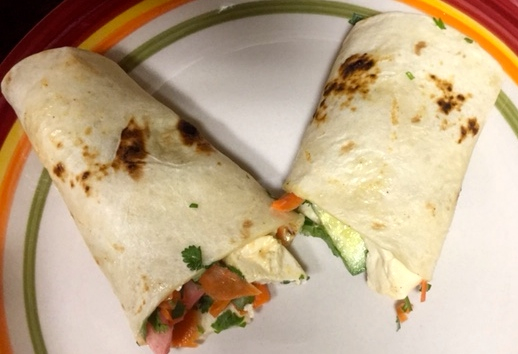
tofu wrap

Tofu Wraps

½ C rice vinegar

2 tsp sugar

2 medium carrots

4 radishes

1/3 cup mayonnaise

4 tsp hot sauce

1 (14-ounce) container extra-firm, water-packed tofu, drained

1 T (or more) canola oil

1 T (or more) sesame oil

4 (12-inch) tortillas

1/3 English cucumber, halved lengthwise and thinly sliced

1 C cilantro

Simmer rice vinegar and sugar in a small saucepan over medium heat until sugar is dissolved.

Shred carrots or cut into thin matchsticks, and thinly slice radishes.

Pour liquid over carrots, radishes. Set aside for at least 30 minutes.

Pat dry tofu. Cut in half length-wise. Cook in canola oil. You want enough oil so it does not stick to the pan. Drizzle sesame oil on both sides of tofu. Cook until there a good sear on both sides.

Mix mayonnaise and hot sauce.

Warm tortillas.

Spread mayonnaise mixture on each tortilla. Fill with sliced tofu, veggie mix, cucumber and sprinkle with cilantro. Roll up and then cut in half.


Study links Champagne to dementia prevention

By Fox News

Red wine usually gets the most praise for its health benefits due to one of its powerful ingredients, resveratrol, which has been linked to improved mental health and a stronger heart. But a 2013 study out of the United Kingdom that has resurfaced recently on social media suggests a similarly buzz-worthy benefit from Champagne. However, health experts say the sparkling drink isn’t the best way to improve memory.

In the original study, an animal model, researchers found that the bubbly has compounds in common with red wine, and argued that those properties may help prevent forms of dementia such as Alzheimer’s disease and promote things like spatial memory.

Study authors at the University of Reading observed that Champagne has relatively high levels of phenolics, which primarily derive from two red grapes, Pinot Noir and Pinot Meunier, and are used to make Champagne.

Read the whole story


K’s Kitchen: Creamy, rich cauliflower soup

By Kathryn Reed

There are many wonderful things to embrace about the changing seasons. In the food world, it means soup.

As a vegetarian it can be frustrating to eat out and not be able to get the soup. So many places use chicken or beef broth even for what otherwise would be a vegetarian soup.

This just means having to make more soups at home. The best thing about this is having leftovers. With this particular soup, it got thicker with time. Adding water would be an option if the thickness is not to your liking. The flavors were still just as wonderful as the first night.

IMG_3095Cauliflower Soup with Feta 

1 medium size head of cauliflower

¼ C olive oil

2 medium leeks, white and light green parts only, coarsely chopped

5 large garlic cloves, minced

Kosher salt

1 large baking potato, cut into 1-inch pieces

1 C dry white wine

1 quart vegetable broth

3 thyme sprigs, plus 2 teaspoons chopped leaves

8 Brussels sprouts, separated into leaves or rough chop

4 ounces crumbled Feta

2 T chives, chopped

½ C heavy cream

Chop one-quarter of the cauliflower into half-inch florets, while coarsely chopping the rest.

In large saucepan cook the leeks and garlic in 2 tablespoons of oil over medium heat. Add pinch of salt.

Add potato and chopped cauliflower, then wine. Cook until half the wine is gone.

Add the stock and thyme sprigs. Bring to a boil.

Simmer for about 30 minutes.

On a rimmed baking sheet toss the cauliflower florets and Brussels sprouts with remaining olive oil and a little salt. Roast at 375 degrees for 15 minutes or until lightly browned, tossing occasionally.

Mix cheese with chives and chopped thyme.

Remove thyme sprigs.

Puree soup until smooth. Slowly stir in cream.

Ladle into bowls and top with roasted vegetables and cheese mixture.


‘Food studies’ elevates subject beyond the plate

By Kristin Reynolds and Julian Agyeman

Well-known New York restaurateur Danny Meyer announced recently that he intends to eliminate tipping at his New York restaurants with an across-the-board increase in prices to fund “hospitality.” Meanwhile, fast food workers, nationally, have been fighting for a $15 minimum wage. A recent series in the Los Angeles Times revealed how farm workers in Mexico—many of them children—have endured rat-infested camps while picking tomatoes.

We are all starting to realize that a plate of food is never just a plate of food. There is a whole set of issues beyond gastronomy or foodie trends—labor, what to do with food waste, water scarcity, and international trade agreements, to name a few. Food touches almost everything in our society today. “Food studies” is a growing academic field that seeks to understand and to improve these systems.

There’s no question that demand is there. The number of undergraduate degree programs in food studies in the United States is growing. One of the first began at New York University in 1996, inspired by a master’s program in gastronomy (the study of relationships between food and human culture) at Boston University that began a few years earlier. By 2013, there were at least a dozen four-year colleges and universities nationwide offering a major, minor, or concentration in food studies. Hostos Community College in the South Bronx will soon launch an associate’s degree in food studies, making it one of the first two-year programs in the country to take a liberal arts approach, rather than one of professional development (e.g., culinary or horticulture training). The study of food is no longer a small specialty interest.

Student interest has often (though not exclusively) driven the development of food studies. UC Davis’ Sustainable Agriculture and Food Systems major, which produced its first graduates in 2013, was designed by a committee of faculty and students drawing inspiration from the campus’ 35-year-old student farm. At the New School in New York, students often design their own food studies projects in elective courses and the school’s new food studies degree program. At Tufts University, the Friedman Justice League, a student organization, has been pushing for more courses in food justice—that is, social justice related to food and agriculture—as well as more student and faculty diversity at the Friedman School of Nutrition and Science Policy.

Such interest points to the double task of good food studies education. It is crucial for students to learn about the complex issues in the food system—say, the controversy over genetically modified organisms (dangerous to human health or the answer to global food insecurity?), or the problems of food production under climate change (extreme weather events like drought and floods make agriculture more economically risky, thereby prompting migration from rural to urban areas or across national borders). But it is equally important to help students develop the analytical, interpersonal, and leadership skills to change food systems for the better. How well do food studies programs position graduates to create change? Do they prepare students for work in the growing sector of “good food”? Are the people enrolled in food studies programs representative of those who work for low wages in the food system? Or those most affected by injustices like racial discrimination? Or those who have experienced the economic challenges of agricultural communities?

Marion Nestle, a public health expert and NYU faculty member (no relation to the Nestlé food company), has written about the parallels between food studies and the food movement, a loose coalition of interests involved variously in a more socially just and ecologically sustainable food system. Scholarly work has been useful to activist initiatives beyond the academy on important issues: for example, improving school food or teaching about corporate influence over agricultural production. In many cases, academics have also engaged with food movements by lending research skills to community-led initiatives, helping to document patterns of food inaccessibility, or providing information needed to successfully advocate for policy change.

If food studies is to continue to be responsive to the growing food justice movement, graduates need to be able to translate concepts of social justice and food to post-college careers. This is all the more important for students of color and working-class students who may have experienced firsthand the food injustices that are examined conceptually in the classroom. Studies of food and social justice should help all students understand the dynamics of injustice while also shifting the demographics of both the movement and the related economy.
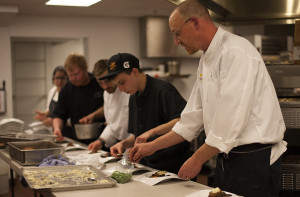
People are thinking about food in ways that go beyond what we eat. Photo/Carolyn E. Wright

People are thinking about food in ways that go beyond simply eating. Photo Copyright 2015 Carolyn E. Wright

Food studies can do three important things to make this happen:

·      First, critical analysis of the food system should be part of food studies courses and programs. Rather than fostering simple mastery of food-system facts (for example, how many more mouths we will have to feed by mid-century), programs should help students develop deep understandings about the social and political structures underlying food and environmental injustices (for example, how global political patterns foster food shortages in low-income countries).

·      Degree programs should also be designed to help graduates obtain and create “good food jobs” – jobs that pay a living wage, offer safe working conditions, promote sustainable economic development, and make healthier food more accessible to all. Food studies graduates may in fact create their own jobs, devising new ways to address food challenges as they evolve. (The New York City Food Policy Center has offered recommendations for how the mayor’s office could create 10,000 new good food jobs in the city by 2020.) Yet while some students may possess the economic and/or social capital to do this, many also face an immediate need to pay the bills. While helping to foster an expanded good food jobs sector, food studies programs should prepare students to identify and obtain jobs that are safe, financially viable, and fair.

·      Finally, food studies should be accessible to students whose communities bear the brunt of food inequities – communities of color and low-income communities in both urban and rural areas – so they can gain skills to lead change. Institutions with a higher proportion of low-income students and students of color should consider creating or expanding food-related degree programs. Colleges and universities with existing food studies programs should strive to make entry more feasible for lower income students through targeted grants and scholarships. Food studies faculty should ensure that curricula address the diverse educational and professional development interests and needs of all students.

Many of the programs cited here are already doing many of these things. And there is also room for growth. Food studies could thus help respond to the broad need for more socially and environmentally just food systems and help communities that have experienced injustices for too long already. This would be transformational food systems education at its best.

Kristin Reynolds is visiting assistant professor in environmental studies and food studies at the New School in New York City, and the author of the forthcoming book, “Beyond the Kale: Urban Agriculture and Social Justice Activism in New York City”. Julian Agyeman is a professor of urban and environmental policy and planning at Tufts University in Medford, Mass.


Beer made from recycled wastewater passes taste test

By Peter Fimrite, San Francisco Chronicle

It was a tough call, but Hugo Von Meijenfeldt thought he detected a hint of astronaut wastewater in the beer that he had just gulped.

The consul general for the Netherlands — who, as representative of the second-largest exporter of beer in the world, purports to know his way around a brewery — declared with some authority that the robust brew he had just tasted was the one made out of recycled wastewater supplied by NASA.

He was wrong.

“I liked the one that was less hoppy, which I thought was not the recycled beer,” said Von Meijenfeldt, one of two people on a five-judge panel at the Meeting of the Minds sustainability convention taste test in Richmond who couldn’t tell one potation from the other.

The blind tasting was an attempt by Maverick’s Brewing Co., an affiliate of Half Moon Bay Brewing Co., to bring attention to the importance of using wastewater as a resource and combat what water officials call the “yuck factor.”

Read the whole story


Food cravings are natural for athletes

By Erin Beresini, Outside

It’s probably happened to you. Deep into a long training day you start craving a bacon cheeseburger and suddenly that pile of ground meat is all you can think about. Turns out, you’re not alone. Even the best athletes lust after certain foods during a race or run. Here are a few of the things athletes crave, plus a biological explanation of why these cravings happen.

The reason for most cravings is simple: you crave what you need. “It’s a good thing—it’s a survivor thing,” says San Francisco Bay Area-based sports nutritionist and ultra-athlete, Sunny Blende. “An ultrarunner wanting something salty, they probably need more electrolytes. If they’re craving sweets, they probably need more calories. Coke probably means they’re tired.”

Jerky, peanut butter, and burgers can signal a protein deficit. “You get those cravings because you’re breaking down muscle,” she says.

Read the whole story


Study: Cheese as addictive as drugs

By Meredith Carey, Conde Nast Traveler

We celebrated when science confirmed our belief that Oreos are addictive. But with this month’s announcement that cheese is as addictive as drugs, we’re shamelessly scarfing down pizza left and right.

A study from the University of Michigan stated that there’s a scientific reason that pizza was found to be the most addictive food in the Yale Food Addiction Scale, and it all has to do with the cheese.

Cheese is especially addictive because of a protein called casein, which releases opiates called casomorphins during digestion.

Read the whole story


Calif. considers adding meat to cancer-alert list

By Tom Polansek and P.J. Huffstutter, Reuters

California is examining new World Health Organization findings to determine whether to add red meat and foods like hot dogs, sausages and bacon to a cancer-alert list, setting the stage for a potential battle with the meat industry over warning labels.

The inclusion of meat and processed meat on the list could reduce consumer demand, hurting major producers and processors like Hormel Foods Corp and JBS USA. It could also open the door wider for litigation against meat companies from consumers diagnosed with certain types of cancer.

California has often been at the forefront of consumer-oriented initiatives, particularly regarding agriculture. It rolled out laws for larger chicken cages and restrictions on antibiotic use for livestock ahead of much of the rest of the country.

Read the whole story


Casey’s catering to locals with laid back feel

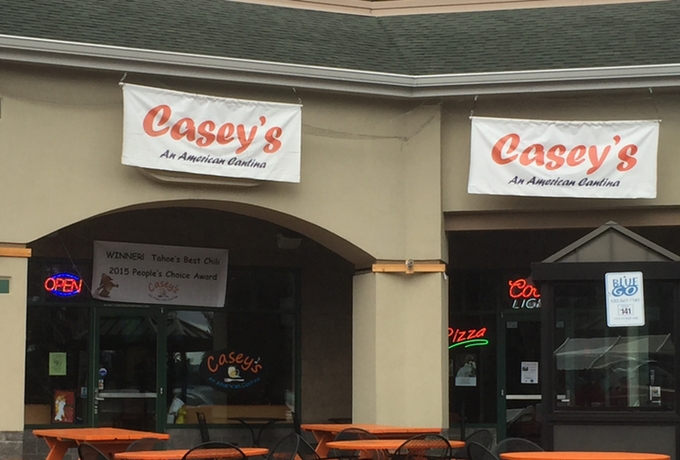
Casey's next to the Round Hill Safeway is becoming a distinct locals' hangout. Photo/LTN

Casey’s next to the Round Hill Safeway is becoming a locals’ hangout. Photo/LTN

By Kathryn Reed

Restaurant, sports bar, entertainment venue — Casey’s in the Round Hill Shopping Center is trying to have a little bit of something for everyone.

And now it can boast of having award-winning chili after chef Jorge Gonzalez won a cook-off last month in the Carson Valley. That same chili, which is a recipe Gonzalez created, is served at the South Shore restaurant.

Every Thursday at Casey’s a different nonprofit benefits from those bowls of chili, as a portion of the proceeds go to the charity.

For Tom Gallatin this is his first foray into the restaurant business. Prior to February, when he took over what was Coyote Grill, Gallatin had been an entrepreneur and an engineer in the tech industry. He has been in Tahoe since 2010 when he retired.

“I never owned a restaurant or small business before, but felt I knew what it was like to be a customer and understood things from the customers’ standpoint,” Gallatin told Lake Tahoe News.

Locals are hanging out at Casey’s regularly, but out-of-towners are also finding their way to the casual establishment.

First order of business for Gallatin was to improve the quality of food by changing suppliers and reducing prices. The menu was also altered a bit. He calls it “American comfort food with a Mexican section.”

The restaurant was remodeled at the get-go, now the bar is about to be overhauled. Starting Nov. 2 the eatery will be closed for a few days while a red granite bar top is installed with cherry wood on the front.

The layout changes are designed to improve service.

The beer system – with 10 taps – will all be new. Beer will be stored in the back with lines overhead in the ceiling, with a special cooling system. An inverted T structure will hang down over the top of the bar. The brass plumbing system will have lights around it so it will be the first thing people see.

Adjacent to where the food and drinks are served is what is called the living room. Down the road it will be revamped, too. This is where McAvoy Layne impersonates Mark Twain on the first Saturday of each month ($20 includes first drink), where on Sundays it becomes an open mic venue, and people can plan their special events.

With eight televisions, multiple sporting events are likely to be on.

The restaurant gets its name from the family dog Casey who died last year at age 23.

—–

Notes:

·       Address: 212 Elks Point Road, Round Hill.

·       Phone: 775-586-1822

·       Hours: 8am-9pm

·       More info is available online.