Drinking coffee tied to lower risk of death

By Kathryn Doyle, Reuters

In a 10-year U.S. study, people who drank coffee regularly were less likely to die of many causes, including heart disease and diabetes, than those who didn’t drink coffee at all.

The more coffee study participants consumed, the lower their risk of dying, and decaf drinkers showed a similar pattern.

“Coffee contains numerous biologically active compounds, including phenolic acids, potassium, and caffeine,” said lead author Erikka Loftfield of the National Cancer Institute in Rockville, Md.

Read the whole story


Ritz-Carlton elevates s’mores to a higher level

 Homemade marshmallows raise s’mores at the Ritz-Carlton Lake Tahoe to gourmet status. Photo/Carolyn E. Wright/Copyright


Homemade marshmallows raise s’mores at the Ritz-Carlton Lake Tahoe to gourmet status. Photo Copyright 2015 Carolyn E. Wright

By Kathryn Reed

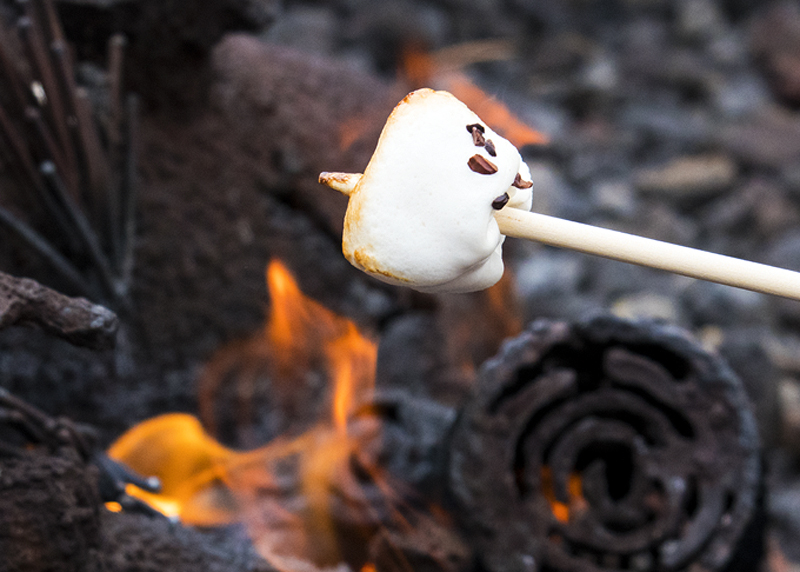
TRUCKEE – Charred. That’s how the chef likes her marshmallows.

Daniella Rinaldi prepares about 2,000 of these gooey squares each week at the Ritz-Carlton Lake Tahoe. Then guests turn them into s’mores.

Rinaldi likes when hers catch fire. That’s what happens when the stick stays static. To get an even golden hue it requires constant turning. Then the inside is totally melted.

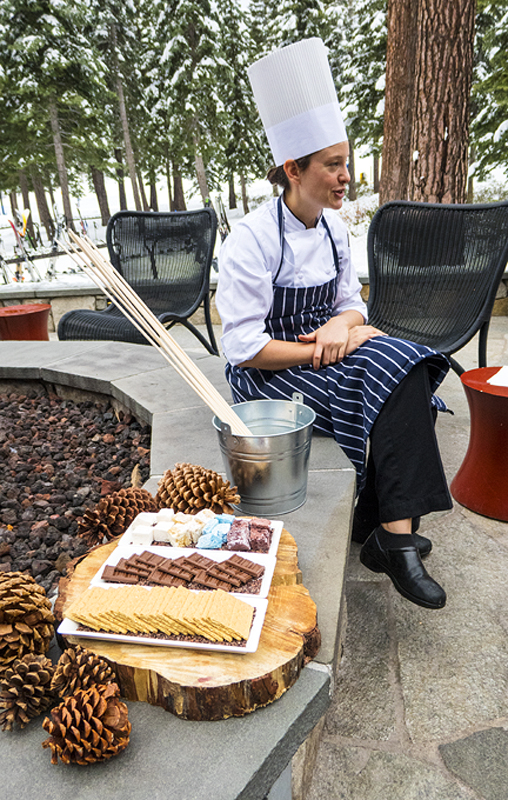
Pastry Chef Daniella Rinaldi says marshmallow trays must rest for 12 hours before they can be cut. Photo/Carolyn E. Wright/Copyright

Pastry Chef Daniella Rinaldi says marshmallow trays must rest for 12 hours before they can be cut. Photo Copyright 2015 Carolyn E. Wright

These are no ordinary marshmallows. Egg whites, sugar, corn syrup, water and gelatin never tasted so good. To this taste tester it seemed like the difference was more than the flavorings. What that extra might be the pastry chef was keeping a secret.

Over the massive gas fire pits on the back patio of the resort hotel guests are invited each day at 4:30 to partake in a free s’mores extravaganza. (If others show up, they won’t be turned away.) Often there is a line before the first marshmallow is speared and set on fire. Each day a flavored marshmallow and regular one are available.

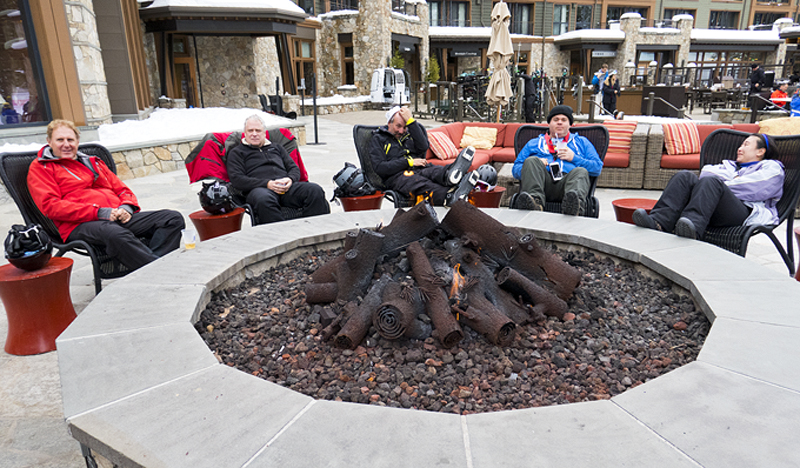
The fire pit beckons people to come make a s'mores each afternoon at the Ritz. Photo/Carolyn E. Wright/Copyright

The fire pit beckons people to come make a s’mores each afternoon at the Ritz. Photo Copyright 2015 Carolyn E. Wright

One outing was not enough for Lei Mikawa and Isreal Nahsohn of Napa. They saw the platter of s’mores ingredients at check-in and made a beeline to the fire pit. The fun of roasting the marshmallow brought them back another afternoon.

They are typical of the usual crowd – adults seem to have more fun; it’s nostalgic for them.

Eleven chairs surround the fire – ideal for hanging out, getting warm or partaking in the fun. While the logs are fake and fire is produced by gas and not wood, the marshmallow doesn’t know the difference.

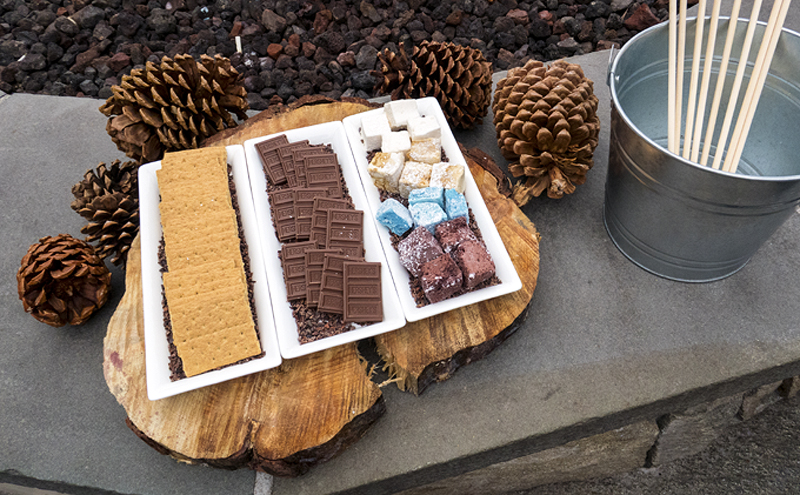
All the fixings for gourmet s'mores. Photo Copyright 2015 Carolyn E. Wright

All the fixings for gourmet s’mores. Photo Copyright 2015 Carolyn E. Wright

The flavors change with the season and the ingredients available. In summer Rinaldi’s inspiration comes from the resort’s garden – fresh herbs like mint and tarragon are used. At Halloween she created Frankenstein flavor and pumpkin spice.

For Lake Tahoe News she shared bubble gum – which was exactly like eating a piece of bubble gum. The blue marshmallow is a hit with kids – adults are a bit more discerning. It brought back memories of when bubble gum ice cream was a favorite.

The vanilla bean lacks that distinct vanilla flavor, and instead tastes more like a regular marshmallow.

The ginger snap is like taking a spoonful of molasses – outstanding if you like that flavor.

The chocolate mint was bursting with flavor. The only problem is the marshmallow is brown so it was more difficult to know exactly when it was done roasting.

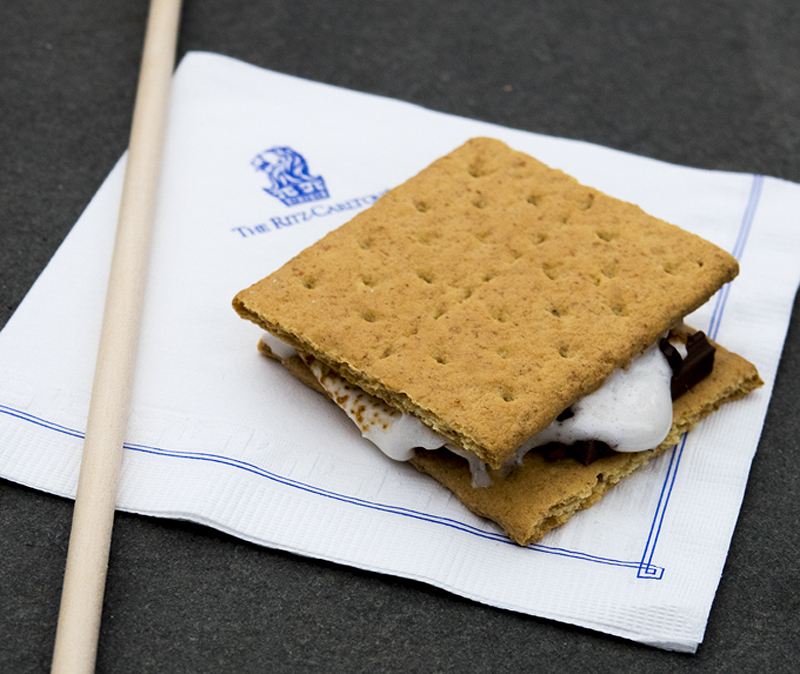
The finished product. Photo/Carolyn E. Wright/Copyright

The finished product. Photo Copyright 2015 Carolyn E. Wright

Ritz employees – one who is called a marshmologist – are at the ready to help turn the marshmallow into a s’mores. Pieces of Hershey’s chocolate are on graham crackers waiting for the hot gooeyness to complete it.

S’mores stands for some more. Credit is given to the Girl Scouts for creating the marshmallow, chocolate, graham cracker treat; with kudos to Loretta Scott Crew for coming up with the combo in the 1920s. They are so popular that there is now a National S’Mores Day – Aug. 10.


Holiday food traditions reconnect us with healthy habits

By Ellie Krieger, Washington Post

At first glance, the holiday season seems to be anything but healthy, with its piles of party food, elaborate dinners and cookies, cookies, cookies. But underneath that candy-cane coating is a surprisingly nourishing core.

You see, good nutrition is much more than what we eat and the grams of saturated fat or sugar a food has. It is also, maybe more importantly, about the way we eat and how we approach food.

If you look a little deeper, you can see how the underpinnings of our holiday food traditions may help us reconnect with healthy habits that would serve us well throughout the year.

Read the whole story


What would Jesus drink?

By Oren Liebermann, CNN

The Bible is full of references to wine: Noah gets drunk on it after the flood. Jesus turns water into wine. It is praised in Ecclesiastes and reviled in Proverbs. Yet nowhere in Scripture is the type of wine identified — until now.

A small but growing number of wineries in Israel and the West Bank are trying to recreate the wine of the Bible, combining ancient grape varietals with modern science to identify and produce the wine consumed thousands of years ago in the Holy Land.

“People are very enthusiastic about drinking a wine that King David had on his table, or for the same matter, Jesus or any other biblical figure,” says Eliyashiv Drori, who started a boutique winery near his home in a West Bank settlement. “They all grew here, they all lived here, and they all ate and drank wine here.”


His research has identified 120 varieties of grapes unique to the region, of which about 20 are suitable for making wine.

Read the whole story


Calif.-caught Dungeness crab off the holiday menu

By Mary Callahan, Press Democrat 

With less than two weeks left in 2015, state health and wildlife officials say chances are slim to none that Californians will be feasting on local Dungeness crab this Christmas or any time before next year.

Though overall levels of a naturally occurring neurotoxin called domoic acid have diminished off the coast, enough crabs are still coming back with concentrations above the allowable limit that the fishery will remain closed at least into January, they said.

Public health representatives have said test crabs must come back completely clean for two weeks in a row before they will lift the advisory that prompted Fish and Wildlife officials to put the season on hold.

Read the whole story


21 eateries signed up for Tahoe restaurant event

Gourmet burgers, handmade pastas, steaks, fresh seafood, small plates, and  desserts are on the menu for the Jan. 8-15 at Tahoe South Restaurant Week.

Participating restaurants to-date include: Artemis Lakefront Café, Beacon Bar & Grill, Bear Moon Bar & Grill, Blue Angel Café, Casey’s, Chart House, Ciera Steak + Chophouse, Echo Restaurant, Edgewood Tahoe, Fire +Ice, Friday’s Station, Getaway Café, Jimmy’s at The Landing, Kalani’s, MacDuff’s Pub, Passaretti’s Restaurant, Primo’s Italian Bistro, Riva Grill, Naked Fish, Toast Tahoe, and Zephyr Cove Restaurant.


Participating restaurants will feature specially-priced and prix fixe menus highlighting the theme “Made with Altitude.” There are no passes, tickets or coupons. Instead, diners simply visit their favorite participating restaurants throughout the week to enjoy the special menus.

Tahoe South Restaurant Week is part of California Restaurant Month.

For more info, go online.


A craft brew language primer

By Blair Anthony Robertson, Sacramento Bee

If you’re looking to become part of the thriving beer scene, it can be a lot of fun. But it can also be intimidating, especially when it comes to the language of beer. What, exactly, does your beer geek friend mean by “hoppy?” And did he say “bread” or “brett” when referring to the yeast? Session beer: Is that a good thing? And are you considered cool if you still love Pliny? Or you’ve moved on?

With excellent brews flowing around all sorts of areas, what follows is an informal primer to get you up to speed and help you feel at home at your favorite brewery or beer-centric pub.

Craft beer: This refers to the little breweries, the underdogs, the up-and-comers. But wait. Aren’t behemoths Sierra Nevada and Lagunitas craft breweries? Well, yes. Craft beer gatekeepers keep changing the definition.

Read the whole story


Grocery chains leave food deserts barren

By Mike Schneider, AP

As part of Michelle Obama’s healthy eating initiative, a group of major food retailers promised in 2011 to open or expand 1,500 grocery or convenience stores in and around neighborhoods with no supermarkets by 2016. By their own count, they’re far short.

Moreover, an analysis of federal food stamp data by the Associated Press reveals that the nation’s largest chains — not just the handful involved in the first lady’s group — have since built new supermarkets in only a fraction of the neighborhoods where they’re needed most.

The Partnership for a Healthier America, which also promotes good nutrition and exercise in its anti-obesity mission, considers improving access to fresh food a key part of the solution. But the AP’s research demonstrates that major grocers overwhelmingly avoid America’s food deserts instead of trying to turn a profit in high-poverty areas.

Among AP’s findings:

  • The nation’s top 75 food retailers opened almost 10,300 stores in new locations from 2011 to the first quarter of 2015, 2,434 of which were grocery stores. Take away convenience stores and “dollar stores,” which generally don’t sell fresh fruits, vegetables or meat, and barely more than 250 of the new supermarkets were in so-called food deserts, or neighborhoods without stores that offer fresh produce and meats.
  • As the largest supermarket chains have been slow to build in food deserts, the so-called dollar stores have multiplied rapidly. Three chains — Dollar General, Family Dollar and Dollar Tree — made up two-thirds of new stores in food deserts.

The dollar store sector is consolidating, too: Dollar Tree merged with Family Dollar this year, creating the largest dollar-store chain in the nation and in the process, less competition and less incentive to diversify what these stores offer.

“The dollar stores are popping up everywhere in the food deserts, but that doesn’t mean anything if the owners don’t give customers the opportunity for fresh produce,” said Norman Wilson Sr., a food desert activist who is pastor of a Pentecostal church in Orlando, Florida.

  • Excluding dollar stores and 7-Elevens, just 1.4 million of the more than 18 million people the USDA says lived in food deserts as of 2010 got a new supermarket in the past four years.

On top of all that, it’s difficult to say how many more people live in newer food deserts created by recent store closures.

Viola Hill used to walk several times a week to a Schnucks supermarket a block away from her apartment in her struggling north St. Louis neighborhood, until it shuttered last year. Now she can only get to a supermarket once a month, when she pays a friend $10 to drive her to one several miles away.

“I have to get enough food to last me a whole month,” said Hill, a retiree who likes to cook chicken and green beans. “It hurt us really badly when they closed.”

The USDA considers a neighborhood a food desert if at least a fifth of the residents live in poverty and a third live more than a mile from a supermarket in urban areas, or more than 10 miles in rural areas, where residents are more likely to have cars.

The first lady’s group’s 2014 progress report, its most recent, says the companies that made the pledges have opened or renovated 602 grocery stores or other food retail locations, well below halfway toward their collective goal.

The partnership counted companies as having met their commitments if the stores they opened or renovated fell within a mile of a USDA-designated food desert in a city, or within 10 miles of a rural one. The AP analyzed which of the new stores that opened lie directly within food deserts.

Research has shown that a lack of access to healthy foods contributes to health problems, such as obesity and diabetes. Proximity to a supermarket can make a big difference in what people eat, especially if they don’t drive, although other factors such as food culture also play a role.

Supermarkets often build stores close to each other to compete in an area and highlight each store’s niche, said Ira Goldstein, president of policy solutions at The Reinvestment Fund, a Philadelphia-based community development firm that has invested in grocery store construction in low-income neighborhoods. But the stores typically look for neighborhoods that can support their format rather than changing their format to fit the neighborhood.

“That brings choice and variety to the market but it doesn’t necessarily solve the problem in an inadequately served area,” Goldstein said.

Large supermarket chains’ rigid formats often miss the nuances of a community, said Jeff Brown, CEO of Brown’s Super Stores in the Philadelphia area. Stores that succeed generally have other amenities, such as a pharmacy, doctor’s clinic or a bank embedded in the supermarket, he said.

Bigger chains often are “not selling what they should be selling because they don’t understand,” said Brown, whose company has seven stores in underserved neighborhoods.

Building stores in low-income neighborhoods comes with unique complications, according to the Food Marketing Institute, a Washington-based trade group for food retailers. A large customer base on food stamps creates erratic flows with a rush of business in the beginning of the month when the food stamps are issued, but slow business at the end of the month. Insurance and security can be more costly in neighborhoods perceived to be high crime, and workers from neighborhoods with high unemployment sometimes need extra training for basic job skills.

The average supermarket operates on a 1 or 2 percent profit margin and must be sustainable for at least a decade to recoup any profit, so retailers can’t afford to pick unprofitable locations, said David Fikes, vice president of consumer and community affairs for the Food Marketing Institute.

“We would love to have a supermarket in every neighborhood across America, whether if it’s a food desert or not,” Fikes said. “But it’s got to be sustainable for all involved.”
Food guru Estee reorganizing restaurant group

By Johnathan L. Wright, Reno Gazette-Journal

After a 2015 he described as “hell, just hell,” chef Mark Estee is reorganizing his restaurant group. Chief among the changes: If a deal proceeds as expected later today, Dec. 11, he will sell a 50 percent stake in Campo, his flagship restaurant in downtown Reno, to a “financial partner.” Estee declined to identify that partner or the amount of the transaction.

In an exclusive interview on the evening of Dec. 10 with Johnathan L. Wright, the food and drink editor of RGJ Media, Estee discussed the state of his restaurant group, which stretches from Mammoth, Calif., to Lake Tahoe to the Biggest Little City. The Campo deal was the first subject of the discussion.

“My financial partner will be running the systems at Campo, the COO (chief operating officer) stuff I’m not very good at,” Estee said. “Campo is my baby.”

Read the whole story


Jack Daniel’s has special blend for Sinatra’s 100th

By Christopher Null, Drink Hacker

Jack Daniel’s is making a second stab at Sinatra’s legendary love of JD with another ultra high-end bottling of its signature Tennessee Whiskey. If you thought Sinatra Select was ostentatious, wait until you get a load of Sinatra Century, which arrives at more than twice the price.

Sinatra Century — bottled in honor of Frank’s 100th birthday — is made from the same type of alligator-charred barrels as Sinatra Select but otherwise offers no particular production information (including, as usual, any age statement). What JD has done, however, is work with the Sinatra family to taste and select the barrels that went into this bottling.

Bottles are individually numbered and come in elaborate gift packaging. They are bottled at 100 proof, perhaps another nod to the Ol’ Blue Eyes’ centennial. He would have been 100 on Dec. 12

Read the whole story