Technology invades restaurant experience

By Howard Riell, Las Vegas Sun

Diners these days expect more from restaurants, and the proof is that digital amenities have gone from futuristic novelties to modern necessities in just a few short years.

Chicago-based market research firm Technomic Inc. reported in a recent white paper that several smartphone-enabled conveniences have become important to restaurant consumers. While digital pioneers like national pizza chains are recognized for well-integrated technology, relatively few consumers strongly agreed that a restaurant they recently visited used technology to improve their experience, indicating a big opportunity across the industry.

According to over 100,000 consumers polled by Technomic’s Consumer Brand Metrics program, nearly 2 in 5 called loyalty and rewards programs important or very important to their decision to visit a restaurant. The percentage was even greater among millennial customers, 50 percent of whom called digital-loyalty offerings important for limited-service restaurants, and 53 percent for full-service restaurants. Millennials also attached greater importance than the overall population to free Wi-Fi, online or mobile ordering, and mobile payment, regardless of restaurant industry segment. The implication is clear.

Read the whole story


People picking Calif.’s tomatoes can’t afford them

By Sara Rathod, Mother Jones

Spring is upon us, which means the weather is finally nice enough to sit outside and munch on a grilled burger slathered with ketchup. Or, if you prefer, a crispy salad topped with strawberries and walnuts. Either way, chances are that at least a few of the ingredients in your meal were grown in California—the country’s cornucopia.

The Golden State cultivates more than a third of all vegetables and two-thirds of all fruits and nuts sold domestically. California is also home to the largest number of farmers markets and, according to the most recent USDA Organic Survey, the highest number of 100 percent organic farms of any state.

But many of the people growing and picking this food would view a fresh spring picnic as a rare luxury. A high percentage of farmworkers in California’s agricultural counties struggle with hunger and diet-related health problems, according to a new report by the policy research group California Institute for Rural Studies.

Nearly half of the workers interviewed in Yolo Count have trouble putting dinner on the table, a rate nearly three times higher than national and state averages.

Read the whole story


Tannins are the backbone of wine

By Bill St. John, Santa Rosa Press Democrat

Michael Twelftree, the proprietor and managing director of Two Hands Wines in Australia’s Barossa Valley, describes the experience of tasting a red wine this way: “The fruit is the engine and rail cars; the acidity is the rails; and the tannins are the brakes.”

When we sip many a red wine, its tannins draw the taste to a close with an astringent, palate-puckering sensation. It’s as if our tongue were sandpapered.

“Tannins don’t have flavor,” says Joel Aiken, winemaker for Amici Cellars in Calistoga and Aiken Wines in St. Helena. “They’re tactile.”

Tannins are phenols. In wine they come from the skins, seeds and stems of the grapes. That’s why they are more prevalent in red wines than whites; red wines receive their color from their grapes’ skins during fermentation.

Read the whole story


K’s Kitchen: Dinner without a plan

By Kathryn Reed

Sometimes I look at a full cupboard and refrigerator, and claim there is nothing to eat.

Hunger has a way of changing my mind.

It was time to start throwing things together to see what might meld together that could be considered dinner. The only problem, so to speak, with what I assembled is that it tasted so much better the next day. That’s why I would either cook this in a crockpot all day (so ignore the instructions), or just reheat it the next day, or have it simmer for a long time the initial day.

This is one of those recipes like spaghetti – it’s just better after all the ingredients have had time to come together. It shouldn’t be rushed. Still, it was good the first day.

This would have been perfect with naan bread. I didn’t have any. Instead I heated a tortilla on the stove for dipping purposes.

The canned products have a good amount of sodium. Taste the final product before deciding to add any salt.

food column

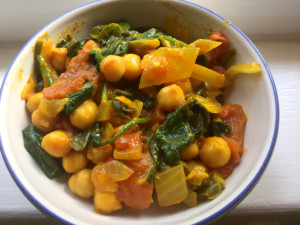
Garbanzo Beans with Spinach and Tomato

2 T olive oil

5 cloves garlic, minced

1 medium yellow onion, diced

5 C spinach, packed

1 15.5 ounce can garbanzo beans, drained

1 14. 5 ounce diced tomatoes

1 tsp (heaping) turmeric

1 tsp curry powder

1 tsp cumin

Coat medium sauce pan with olive oil. Over medium heat cook garlic and onion until translucent. Add spinach, stir until it’s wilted.

Add beans and tomato.

Add spices.

Simmer for 20 minutes.


Barbera Festival highlights versatile grape

Amador County’s sixth annual Barbera Festival showcases more than 80 wineries from all over California, and takes place June 11 at the Terra d’Oro Winery/Montevina Vineyards near Plymouth.

The event provides attendees with the opportunity to compare and contrast this versatile varietal, including four Barberas from Italy selected by Darrel Corti. The festival features extensive wine tasting along with gourmet Barbera-friendly food prepared by the region’s top chefs and purveyors, live music, and hand-crafted works by local artisans.

New this year, a hands-on sensory station enables attendees to learn about the aromas and flavors characteristic of the varietal, and about barrels, toasts and soil compositions.

Barbera originated in the Piemonte region of northern Italy, and today nearly 200 California wineries produce the varietal, which is known for its low tannin and generous acid structure yielding a smooth, food-friendly wine.

The Barbera Festival was founded in 2011 by Brian Miller and Deirdre Mueller, owners of the Amador 360 Winery Collective tasting room.

The Barbera Festival takes place from 11am-4pm. Tickets are $50 ($40 for designated drivers) and must be purchased online in advance.


The truth about hot peppers

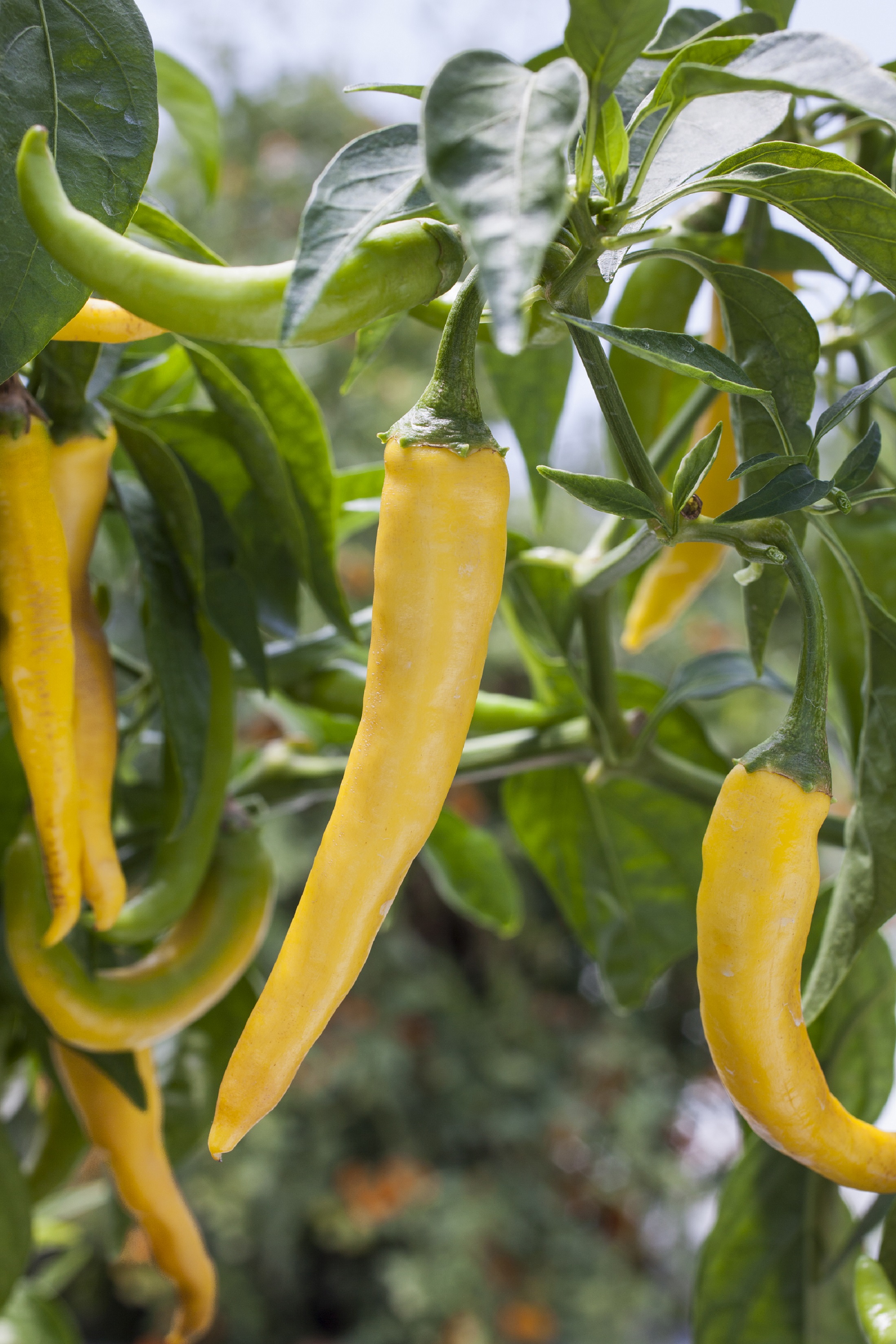
Golden cayenne peppers are hot with a Scoville heat level of 30,000 to 50,000. Photo/Bonnie Plants

Golden cayenne peppers are hot with a Scoville heat level of 30,000 to 50,000.
Photo/Bonnie Plants

By Melinda Myers

Don’t be afraid to add a little spicy heat to your meals this season by growing a few hot peppers in the garden or containers.  It’s easier than you think and many of the hot pepper myths floating around the garden are simply not true.

Don’t worry about your hot peppers heating up your sweet peppers. Peppers are normally self-pollinated. If an insect happens to move the pollen from a hot to sweet pepper, it will not affect the flavor or heat of this year’s harvest. If you save the seeds from a cross-pollinated pepper and plant them in next year’s garden, the plants they produce may have hot or sweet fruit (or a little of both), but only time will tell.

And don’t assume all green peppers are sweet or you will be in for a surprise. Jalapenos are typically harvested when green and others, like habanero, Anaheim and Poblano are hot, whether harvested when green or red.  You’ll also find that hot peppers can be yellow, orange, brown and of course red.

You can turn down the heat when preparing your favorite recipes, too. Contrary to popular belief, all the heat in hot peppers does not come from the seeds. While partially true, the majority of the capsaicin that gives hot peppers their heat is in the white membrane that houses the seeds. When the seeds are growing they may also be coated with extra capsaicin from the membrane. So remove the white membrane and the seeds, just to be safe, if you want to turn down the heat.

The spicy heat of hot peppers is measured in Scoville Heat Units. The ratings are based on the amount of sugar water needed to neutralize the spicy heat in the extracted capsaicin that has been diluted in an alcohol-based extract. A panel of five taste testers decides when the spicy heat has been neutralized and then assigns the rating. Today many companies use a chemical process (liquid chromatography) but translate their results into the popular Scoville heat units.

The Scoville heat unit ratings vary from one type of hot pepper to another, with Poblano rating between 1000 to 2000, jalapenos 2500 to 6000, habaneros at 100,000 to 300,000 and one of the hottest, the ghost pepper, at 1,000,000 to 2,200,000 Scoville heat units.  Check online or the Homegrown with Bonnie Plants mobile app (for iOs and Android) for the Scoville ratings, growing tips and a Pepper Chooser to help you pick the best varieties to grow.  Ratings may also vary from individual plants within a specific type based on individual plant differences and the growing conditions.

Whatever kind you grow, be sure to label hot peppers when planting, harvesting and storing to avoid any mix-ups.  The sweet banana pepper, for example, can easily be confused with hot banana.  This could make for an unwelcome surprise when preparing, serving and eating.

Also, consider wearing rubber gloves and avoid touching your face and eyes when working with hot peppers, as they can burn. Wash your hands, utensils and cutting boards when finished to avoid any future issues.

And don’t worry if you are having a bad day when planting your hot peppers. Contrary to some old adages, planting hot peppers when you’re angry won’t make the peppers hotter, but unknowingly taking a bite of a hot pepper may very well change your mood.

Melinda Myers has more than 30 years of gardening experience has written over 20 gardening books, including “Small Space Gardening” and the “Midwest Gardener’s Handbook”.


Bill would benefit U.S. wine industry

By Bill Swindell, Santa Rosa Press Democrat

North Coast Rep. Mike Thompson proposed a series of federal tax breaks Monday for the U.S. wine industry, including a proposal to slash a tax on sparkling wine that has lingered since the aftermath of Prohibition.

The St. Helena Democrat, who owns a vineyard in Lake County, teamed up with Rep. Dave Reichert, R-Wash., to propose a sweeping overhaul of the laws that brought in $1.07 billion in federal excise taxes from the U.S. wine industry during the last fiscal year.

Thompson and Reichert contend the bipartisan legislation will help spur new and innovative products by modernizing federal excise taxes on wine. While the cost of their bill has not yet been calculated, it would provide a major benefit for the North Coast wine industry, which harvested $1.1 billion in wine grapes for the 2015 vintage.

Read the whole story


Study: Fast-food comes with a side of chemicals

By John Tozzi, Bloomberg

People who reported eating fast food in the last 24 hours had elevated levels of some industrial chemicals in their bodies, according to an analysis of data from federal nutrition surveys.

The study is the first broad look at how fast food may expose the public to certain chemicals, called phthalates, that are used to make plastics more flexible and durable. The chemicals, which don’t occur in nature, are common in cosmetics, soap, food packaging, flooring, window blinds, and other consumer products. The Centers for Disease Control says “phthalate exposure is widespread in the U.S. population.”

Though the health consequences of encountering these substances aren’t fully known, scientists have increasingly focused on their effects on health and development, particularly for pregnant women and children. Research in rats has shown that they can disrupt the male reproductive system, and there’s evidence for similar effects in humans.

Read the whole story


Passport — a trip through EDC wine country

Vineyards in El Dorado County are coming alive. Photo/Kathryn Reed

Vineyards in El Dorado County are coming alive. Photo/Kathryn Reed

By Kathryn Reed

PLACERVILLE – Wine has often been described as its own food group, and yet, most people will agree that all wine tastes better with food.

This theory was put to the test last weekend during the annual El Dorado County Passport event. (The two-weekend shindig continues this Saturday and Sunday.)

“It’s like the Super Bowl of wine weekends,” Tiya Grabowski told Lake Tahoe News. The Citrus Heights woman has been going to Passport for about 20 years.

For her friend Shelly Celio of Georgetown it was the food pairings that impressed her this year. A fun time with friends, while enjoying good wine close to home keeps her coming back.

El Dorado County is celebrating the 25th anniversary of Passport. Photo/Kathryn Reed

El Dorado County is celebrating the 25th anniversary of Passport. Photo/Kathryn Reed

Now in its 25th year, Passport has gone through various iterations. There was a time about 10 years when it was more of a crazy party, with buses and limos clogging the parking lots, people seeming to be more interested in freebies and getting drunk than experiencing a tasting. It was a bit of a cultish type event, with a waiting list. The recession changed that.

The deals on wine fluctuate from year-to-year, as well as winery-to-winery. But a definite trend this year is on the food and wine. Some wineries have a few edibles to go with the flight of wines, while others have individual bites for specific wines.

Busby uses Chardonnay in its mac and cheese. Photo/Kathryn Reed

Busby uses Chardonnay in its mac and cheese. Photo/Kathryn Reed

Passport started as a way for wineries to unload excess bottles before the next vintage was released. El Dorado was one of the first regions to put on such an event. In the beginning it was conducted earlier in the year as a way to get people to come to the region in the off-season. Snow, even in the foothills, started to keep people away so the dates kept being pushed back to where now it’s the second and third weekends of April.

John MacCready of Sierra Vista is one of the few winemakers who has participated in Passport every year. This Placerville winery is the second oldest in the county, with the first grapes planted in 1974. (Boeger is the oldest, having started in 1972.)

“For us, it’s a money-maker,” MacCready told Lake Tahoe News.

MacCready was a pioneer when it came to planting Rhone varietals in the region. Since then many wineries have followed suit.

He’s noticed less of a party atmosphere through the years, especially with people coming with a designated driver.

John MacCready of Sierra Vista pours a rare Cabernet release. Photo/Kathryn Reed

John MacCready of Sierra Vista pours a rare Cabernet release. Photo/Kathryn Reed

Sierra Vista hired Allez out of Diamond Springs to cater the event. The creamy wild mushroom sauté was outstanding. It paired nicely with the 2013 Roussanne. While the wild boar Bourgogne on mashed root vegetables was a hit, especially in conjunction with the 2012 Syrah, the mushrooms on the mash was also delectable. (The boar came from Nevada.)

“The food has been just as much of an experience as the wine,” Jeanne Garman of Sacramento said while sampling the fare at Sierra Vista. This was her first Passport.

At Narrow Gate Vineyards, owner Teena Hildebrand noticed more people from the Bay Area and Sacramento were participating in Passport than locals.

This is the Placerville winery’s 10th year to be part of the event. Being able to introduce people to wine, what it’s all about and the intricacies of it are what appeals to her. Plus, Passport is great exposure for Narrow Gate.

She makes all the food to pair with the wine that her winemaker husband, Frank, produces. The ginger garlic stir fry was good with the Chardonnay, but even better with the Viognier. The house smoked pork Panini went well with the Cabernet and Syrah. A veggie Panini is also available, and paired well with the bold reds.

More than 2,000 acres in El Dorado County are planted with wine grapes. Photo/Kathryn Reed

More than 2,000 acres in El Dorado County are planted with wine grapes. Photo/Kathryn Reed

Elliot Graham of Busby Cellars was putting a different twist on food and wine pairings as he poured some Chardonnay into the mac and cheese he was serving to guests.

This is the 10th year he and his wife, Sherrie, have participated in Passport. He admits there was a time when the event was overwhelming. Participants coming in smaller batches is better for a winery their size.

In the past they paired individual varietals with specific food, now it’s a variety of food to go with their array of wines.

Carrie Bendick with Holly’s Hill told Lake Tahoe News, “It’s nice to do something as a group. It helps distinguish the region, which people are still discovering.”

The El Dorado Winery Association puts on Passport. This year 24 of its more than 30 member wineries are participating. In all, El Dorado County has about 70 wineries.

One thing that distinguishes this area is the elevation – with some vines planted at 3,500 feet. The county is home to more than 50 varietals. While Zinfandel has always been a stalwart favorite, Barbera has created quite a following in the last few years.

—–

Notes:

·      For more information about Passport or to buy tickets for this weekend, go online.


Nutrition expert coaches Tahoe-ites on eating

By Kathryn Reed

What you put in your body has a direct correlation to how you will function. Fad diets are not necessary. Trans fats are poison.

These were some of the words of wisdom Bridget McGrath shared at a recent nutrition talk sponsored by Tahoe Regional Young Professionals. McGrath is owner of Elevated Fitness in South Lake Tahoe. Nutrition coaching comes with the gym membership.

“Everyone’s diet is specific to them. Just eat healthy for you,” McGrath said.

She employs the philosophy of using one’s hand size to determine a portion size. For women at each meal, this means a palm size of protein, one fist size of vegetables, and a thumb worth of essential fats. If carbs are on the plate, no more than one cupped handful worth. For men, it’s twice the amount at each serving.

McGrath is a proponent of getting as many nutrients as possible from food and not from vitamin supplements.

“Since vitamins don’t get synthesized that well, you can do more harm than good,” she said.

Bridget McGrath talks about what constitutes a healthy diet. Photo/LTN

Bridget McGrath talks about what constitutes a healthy diet. Photo/LTN

She also said it’s better to get calories from food instead of liquids. Alcohol and fruit juices have little if any health benefits.

McGrath also stressed how essential fats are necessary. This includes things like nuts and avocadoes.

“If you are on a super low fat diet, you are angry all of the time,” McGrath said.

Food affects more than just one’s weight – nutrients tie into cognitive ability, strength, how internal organs are working and more.

Processed foods are some of the worst things people consume. She had nothing good to say about anything that comes out of a cardboard box, adding that the box is “more nutritious than what it contains.”

Sugar is one of the big issues with processed foods. More than 25 grams of sugar per day is toxic for the body, McGrath said.

It’s not that McGrath said people should never splurge on “bad” foods or drink alcohol, but it all needs to be in moderation. The “bad” items should also be consumed after the good and not on their own because it’s easier for the body to break everything down together.