K’s Kitchen: Zucchini on the barbecue

By Kathryn Reed

Anyone who has ever grown zucchini knows that it is for sharing because there is no way one family, let alone one person, can eat an entire harvest.

Not only that, at some point it seems like you run out of ways to cook it.

But the nice thing about zucchini is that it is so versatile. It can go in Asian, Italian, Mexican and most any ethnic dish.

Barbecuing it is another alternative. The thing, though, about zucchini is that it is rather bland all on its own.

For this recipe, be sure to cut the zucchini the same thickness so the pieces cook at the same rate. You won’t need a super hot grill. While an oven would work for this recipe, there is something about having the grill marks that says summer.

Using the burner on the barbecue for the topping meant it stayed in a spreadable consistency. The concoction would work well on other vegetables, too.

zucchiniBarbecued Zucchini with Feta

1 medium zucchini

2 small yellow squash

¼ C feta, crumbles

2 T butter

¼ C chives, chopped finely

1 large lemon, juiced

Cut the ends off the zucchini and discard. Slice zucchini length-wise.

Melt the butter, cheese, lemon juice and chives together.

Baste one side of zucchini. Grill until there are char marks, baste the other side, then flip to get marks on second side.


‘Lost Recipes’ tells story of bygone restaurants

By Beth J. Harpaz, Associated Press

A new cookbook called “The Book of Lost Recipes” remembers classic dishes from long-gone hotels, iconic restaurants and roadside eateries of yesteryear. But the book is more than a collection of recipes. It also chronicles the evolution of American food culture, telling stories of how and why certain dishes and restaurants became popular when they did.

“A good restaurant, a restaurant that becomes famous or that a community cares about — it has to do with food, but it has to do with so much more,” said cookbook author Jaya Saxena, a writer for the Daily Dot. “The things people are driven to eat are influenced by the economy, politics, immigration trends and all kinds of other things.”

A recurring theme in the book, out this month from Page Street Publishing, is how immigrant chefs took ethnic food mainstream. There are recipes from establishments like Paoli’s Restaurant (Italian) in San Francisco, Ruby Chow’s (Chinese) in Seattle, and iconic Jewish delis like Ashkenaz’s in Chicago and Wolfie’s Rascal House in Miami.

Celebrity culture gets its turn in the book, too, with recipes from Chasen’s, a West Hollywood joint that hosted the likes of Liz Taylor and Ronald Reagan, and the Pump Room in Chicago, which Frank Sinatra referenced in a song. Other dishes in the book were beloved by regular folk, like chicken soup and mac-and-cheese from Horn & Hardart’s, the famed automat.

Many recipes offer a window into travel trends and pop culture. Saxena describes, for example, how tiki culture, a fake, kooky mashup of South Pacific motifs, reigned supreme at the Kahiki Supper Club in Columbus, Ohio. And how a dude ranch in Tucson, Ariz., opened an upscale restaurant called the Tack Room so that its guests — who came to Arizona to escape cold weather — could enjoy fancy meals like veal with chanterelle mushrooms after a long day of riding horses.

Saxena not only pored over old guidebooks to see what restaurants were recommended as worthwhile for diners to seek out on their travels, but she also tracked down descendants of chefs and restaurant owners to get their stories. Once she had an original recipe in hand, she scaled it down from restaurant-size portions to family-size. She has no formal training as a chef, but with help from her mom and others, each dish was tested in a home kitchen.

A few of the lost recipes sound archaic today or involve obscure ingredients, like one for roast venison with currant port sauce from New York’s long-defunct Planters Hotel. But other dishes would be right at home in any hipster cafe in Brooklyn, like bratwurst and sweet-and-sour lentils, created by a German immigrant, Henry Thiele, a famous restaurateur in the Pacific Northwest who was admired by none other than a young James Beard. The sausage-and-lentils dish is one of Saxena’s favorites.

“This recipe from 50 or 60 years ago tasted current, like the upscale comfort food that has become such a big thing,” she said. “I could see people eating this for hundreds of years in Germany but it also appeals to a modern palate.”

—

Ashkenaz’s Blintz Treat

(From “The Book of Lost Recipes” by Jaya Saxena, Page Street Publishing Co., 2016)

Start to finish: 20 minutes

Servings: 6

For the crepes:

1 C all-purpose flour

1¼ Cwater

Pinch salt

Vegetable oil (for cooking)

For the cheese mix:

1 pound dried farmers cheese or dried baker’s cheese

1 egg

6 T sugar

For garnishing:

Sour cream, apple sauce and sugared blueberries

To make the crepes, heat an 8-inch pan over medium-low heat. Whisk together the flour, water and salt, and grease the pan lightly with vegetable oil or butter, using a towel to apply so all corners of the pan are covered. When the pan is hot, pour about half a ladle of batter into the pan, and turn the pan to spread it as thin as possible. When the crepe begins to curl (after about a minute), flip it onto a paper towel.

For the filling, stir together the cheese and eggs, sprinkling sugar on top of the mixture as you turn it in. The mixture should still be firm. Lay about ¼ cup of the mixture on the blintz in a 4-inch row. Fold the sides of the crepe over, and roll the blintz back to front. Heat a half-inch of vegetable oil in a pan. Once the oil is hot, fry blintzes (being sure not to crowd the pan) for 2-3 minutes per side, until they’re lightly golden and crispy. Remove blintzes to a paper towel to drain, and place on a heated serving platter.

Serve with sour cream or apple sauce, and sugared blueberries.

Nutrition information per serving: 234 calories; 72 calories from fat; 8 g fat (4 g saturated; 0 g trans fats); 60 mg cholesterol; 110 mg sodium; 29 g carbohydrate; 1 g fiber; 9 g sugar; 19 g protein.


K’s Kitchen: A sandwich worthy of the barbecue

By Kathryn Reed

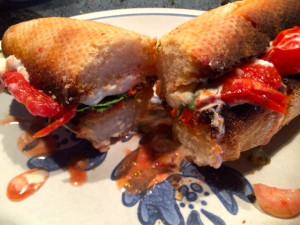
I have found a new favorite sandwich – and it’s perfect for summer.

It’s going to taste even better as tomatoes come into season. Either cherry or grape tomatoes will work. And various colors will just make it that much prettier. Red, though, will keep with the traditional caprese theme.

Ideally, grill the tomatoes in something with a solid bottom. Unfortunately my two grill devices have holes in them. Cleaning up the next day wasn’t hard, but it certainly wasn’t fun.

I used veganaise because that is what I had in the fridge.

The great thing about getting a baguette is that you can individualize the size of the sandwich. For one round of leftovers I used a tortilla. This dramatically cut down on the bread consumption, but it also eliminated the true sandwich aspect.

caprese sandwich Charred Caprese Sandwich

½ C mayonnaise

2 tsp Dijon mustard

1 T fresh lemon juice

½ tsp finely grated lemon zest

Kosher salt

2 large shallot, thinly sliced into rings

4 garlic cloves, finely grated

3 T red wine vinegar

1 baguette, split in half and then cut into desired lengths

Olive oil

3 C cherry tomatoes

Freshly ground black pepper

1 C (packed) torn basil leaves

½ C (loosely packed) parsley leaves

4 ounces fresh mozzarella, torn into pieces

Mix mayonnaise, mustard, lemon juice and zest in a small bowl; season with salt.

Toss shallot, garlic, and vinegar in another small bowl; season with salt.

Prepare a grill for medium-high heat. Brush cut sides of bread with olive oil. Grill until lightly charred.

Drizzle olive oil over tomatoes. Barbecue tomatoes in cast iron skillet or other grill device until they are blistered and lightly charred. Stir so they cook evenly.

Add tomatoes to vinegar; season with salt and pepper. Then add basil and parsley; toss gently.

Spread both halves of bread with mayonnaise mixture. Top with tomatoes and pieces of mozzarella.


Farmers’ market vouchers available for seniors

The El Dorado County Area Agency on Aging has a limited supply of senior farmers’ market check booklets available for qualified El Dorado County Seniors.

Each eligible senior will receive one booklet that includes five checks redeemable for $4 each to be used at certified farmers’ markets for the purchase of fresh, unprepared, locally grown fruits, vegetables, cut herbs and raw unprocessed honey.

Distribution of the farmers’ market check booklets will take place as follows:

  • July 6 from 8am-noon at the Burke’s Junction Farmers’ Market, Coach Lane at Strolling Hills Road, located in Cameron Park.
  • July 16 from 9am-noon at the People’s Mountain Market, Garden Valley Park, located at Garden Valley Road and Marshall Road in Garden Valley.
  • July 19 from 8am-1pm at the South Lake Tahoe Farmers’ Market, American Legion, located at 2748 Lake Tahoe Blvd. in South Lake Tahoe.
  • July 20 from 5pm to dusk at the Main Street Farmers’ Market, near the Bell Tower, located at 385 Main St. in Placerville.

Farmers’ Market check booklets will be distributed to seniors who are at least 60 years of age and meet income guidelines (one person household with annual income less than $21,978 or two person household with income less than $29,637). Checks are good for all certified farmers’ markets.

Quantities of the booklets are limited and will be distributed on a first come, first served basis.


Makeover coming for food nutrition labels

By Darlene Superville and Mary Clare Jalonick, AP

WASHINGTON — Nutrition facts labels on food packages are getting a long-awaited makeover, with calories listed in bigger, bolder type and a new line for added sugars.

And serving sizes will be updated to make them more realistic — so that a small bag of chips won’t count as two or three servings, for example.

“You’ll no longer need a microscope to figure out whether the food is actually good for your kids,” first lady Michelle Obama said. She was announcing final rules for the new labels in a speech at an annual health summit as part of her “Let’s Move!” campaign against childhood obesity.

The changes were proposed by the Food and Drug Administration two years ago and are the first major update to the labels since their creation in 1994. They are now found on more than 800,000 foods.

“The calorie count is in bigger font, so you can actually see it,” the first lady said. “This label will tell you how much of the sugar in your snack was added after processing.”

The overhaul comes as science has changed in recent decades. While fat was the focus in the 1990s when the labels first were created, these days there is more concern about how many calories people eat. The calorie listing will now be much larger than the rest of the type on the label, making it hard to overlook.

Serving sizes will also be easier to see, listed at the top of the graphic. And it will be easier to discern how many servings are in a container as part of an attempt to revise often misleading serving sizes.

Calculations for serving sizes will also be revised. The idea behind listing a whole package of food, or a whole drink, as one serving size isn’t that people should eat more; it’s that they should understand how many calories are in what they are actually eating. The FDA says that by law, serving sizes must be based on actual consumption and not ideal consumption.

Nutrition advocates have long asked for the added sugars line on the label because it’s impossible for consumers to know how much sugar in an item is naturally occurring, like that in fruit and dairy products, and how much is added by the manufacturer. Think an apple vs. apple sauce, which comes in sweetened and unsweetened varieties.

The labels will also include a new “percent daily value” for sugars, meaning the percentage of a person’s recommended daily intake of added sugars in that particular food item. New dietary guidelines announced this year recommend that people get no more than 10 percent of calories daily from added sugars. Since the calculations are based on an average diet of 2,000 calories, that means people should get no more than 200 calories of added sugars a day.

Michael Jacobson, president of the advocacy group Center for Science in the Public Interest, says it’s currently impossible for consumers who look at the labels to know how much sugar in foods is added and how much fits into a reasonable diet.

“Besides helping consumers make more informed choices, the new labels should also spur food manufacturers to add less sugar to their products,” Jacobson said.

Other changes to the labels: They must now list levels of potassium and Vitamin D, two nutrients Americans don’t get enough of. Vitamin C and Vitamin A listings are no longer required but can be included. Iron and calcium will stay.

The food industry has two years to comply.

Reaction to the labels from food companies has been mixed since they were first proposed. While some companies have fought the new line for added sugar, others have supported it. The Grocery Manufacturers Association, which represents the food industry’s largest companies, has supported the larger print for calories.

“This update is timely as diets, eating patterns and consumer preferences have changed dramatically since the Nutrition Facts panel was first introduced,” said GMA’s Leon Bruner.


Battle of the bloody Mary in SLT

On June 12, FNCTN and Tahoe Blue Vodka team up to bring back the chance to earn bragging rights for the best bloody Mary in Lake Tahoe.

Not only are bragging rights and a trophy up for grabs; there is also a $500 cash purse on the line, $250 for peoples’ choice and $250 for celebrity judges choice.

The event is at Steamers in South Lake Tahoe from 1-5pm.

Last years’ contest included garnishes such as homemade bacon straws, cheeseburger sliders, lobster tails, and ghost peppers.

In addition to tasting cocktails, guests can also enjoy live outdoor music from the Connor Party, as well as chances to win prizes from a charity raffle benefitting the League to Save Lake Tahoe. The event is free and open to all ages, with $10 tastings for attendees 21 and over.

Bartender lineup:

Coldwater Brewery – Jacob and Whitney                                                 Mt. Rose Mixers – Tiffany & Josh

Basecamp Pizza – Jillian Raney                                                                 Ninkasi Brewery – Aimi X

Crystal Bay Club – Tyler Taylor                                                                  Turn 3 – Sarah Moss

Brothers Bar – George                                                                                 Gunbarrel Tavern – Christine Riddle

The Loft Tahoe – Jammer                                                                           California Burger Co. – Becca Starkey

BuckaRoos –Chris Patrick                                                                          McPs Taphouse – Brie Stehlic


Low-salt diet may be bad for the heart

By Nicholas Bakalar, New York Times

People with high blood pressure are often told to eat a low-sodium diet. But a diet that’s too low in sodium may actually increase the risk for cardiovascular disease, a review of studies has found.

Current guidelines recommend a daily maximum of 2.3 grams of sodium a day — the amount found in a teaspoon of salt — for most people, and less for the elderly or people with hypertension.

Read the whole story


K’s Kitchen: Perfect protein rich lunch

By Kathryn Reed

After a workout most dietitians recommend athletes consume protein. Unfortunately after most USTA tennis matches I ingest wine and something salty. But that is not the case when I go home after a practice.

As a vegetarian, beans are my staple when it comes to protein.

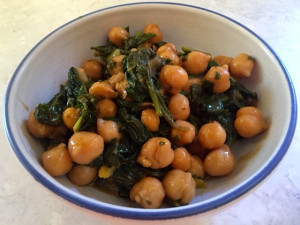
The recipe below is simple and tasty. It is what I made after more than two hours on the court the other day.

What was fun is the scallions came from the back yard. I was given onions and garlic late last fall to plant — and now I’m harvesting at least the onions.

Most people would use this as a side dish. It was my lunch.

chickpea saladWarm Garbanzo Beans with Spinach

2 T lemon juice

Grated zest of 1 lemon

1 tsp Dijon mustard

2 tsp smoked paprika

1 tsp honey

¼ C flat-leaf parsley, finely chopped

2 scallions, thinly sliced

½ tsp sea salt

Black pepper

¼ C extra virgin olive oil

8 ounces spinach

1 14-ounce can garbanzo beans, rinsed

Whisk together the lemon juice, zest, mustard, smoked paprika, honey, parsley, scallions, salt and pepper in a small bowl. Add the olive oil slowly, whisking until combined.

In a medium saucepan over high heat, add the spinach with 3 tablespoons of water. Cook until wilted.

Add chickpeas.

Then add marinade. Cook until dressing is warm. Adjust seasonings to your liking.


Tahoe farmers markets ripe with action

The farmers market in Tahoe City at Commons Beach is already open. Photo/Provided

The farmers market in Tahoe City at Commons Beach is already open. Photo/Provided

By Terra Breeden

Spring is upon us in Lake Tahoe, and with it, farmers markets are springing up all around the basin.

With the growth of the organic food movement, the popularity of farmers markets has exploded. Now, there are markets throughout Lake Tahoe all summer.
South Shore El Dorado County Certified Farmers Market  American Legion parking lot, South Lake Tahoe Tuesdays, 8am-1pm June 7-Oct. 11 Friday Evening Farmers Market at Kahle Community Center 236 Kingsbury Grade, Stateline  Fridays, 4-7pm June 3-Sept. 30 Ski Run Farmers Market 1132 Ski Run Blvd, South Lake Tahoe Fridays, 3-8pm June 3-Sept. 9 North Shore-Truckee Incline Village Farmers Market 995 Tahoe Blvd, Incline Village (Lake Tahoe School parking lot) Thursdays, 4-7pm June 2-Aug. 31 Tahoe City Farmers Market  280 N. Lake Blvd, Tahoe City (Commons Beach) Thursdays, 8am-1pm May 19-Oct. 13 Truckee Community Farmers Market 12047 Donner Pass Road, Truckee (in the Sears and Coffeebar Bakery center) Sundays, 10am-2pm June 5-Sept. 25
South Shore
El Dorado County Certified Farmers Market
American Legion parking lot, South Lake Tahoe
Tuesdays, 8am-1pm
June 7-Oct. 11
Friday Evening Farmers Market at Kahle Community Center
236 Kingsbury Grade, Stateline
Fridays, 4-7pm
June 3-Sept. 30
Ski Run Farmers Market
1132 Ski Run Blvd, South Lake Tahoe
Fridays, 3-8pm
June 3-Sept. 9
North Shore-Truckee
Incline Village Farmers Market
995 Tahoe Blvd, Incline Village (Lake Tahoe School parking lot)
Thursdays, 4-7pm
June 2-Aug. 31
Tahoe City Farmers Market
280 N. Lake Blvd, Tahoe City (Commons Beach)
Thursdays, 8am-1pm
May 19-Oct. 13
Truckee Community Farmers Market
12047 Donner Pass Road, Truckee (in the Sears and Coffeebar Bakery center)
Sundays, 10am-2pm
June 5-Sept. 25

“The markets are made up of a lot of really nice people,” Steve Rozier, who runs the Kahle Community Park and Incline Village farmers markets, said. “People are trying new things, seeing things they like, and buying them at a fair price – that’s why farmers markets are so popular.”

Each farmers market has its own vibe. They range from the relaxed, produce-specific farmers market like the Truckee Community Farmers Market to Ski Run Farmers Market, which is more family-oriented, and street fair like.

Some of the markets have been serving fresh fruits and vegetables to the local community for decades. The Tahoe City Farmers Market and the El Dorado County Certified Farmers Market in South Lake Tahoe are celebrating 21 years in the Lake Tahoe Basin this summer.

“The American Legion farmers market has been going for quite a while and we have quite a following,” co-owner Lois Coalwell said,” co-owner Lois Coalwell told Lake Tahoe News. “We try to do something special for the community and our mission is to sustain small family farms in El Dorado County.”

At the Tahoe City Farmers Market at Commons Beach, owner Bryan Kaminsky displays certified organic produce from his farm in Placer County such as tomatoes, squash, and free-range chicken eggs. Kaminsky began the Tahoe City Farmers Market in 1995.

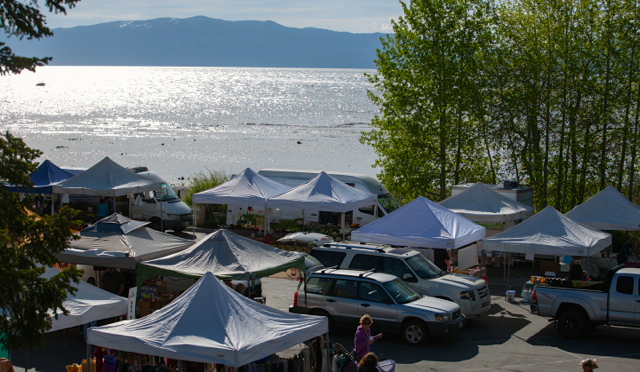
“I wanted to create a place where people could eat good food, enjoy Lake Tahoe, and be with their family. The market is in the most beautiful location, it’s right on the lake and the booths are 100 feet from the water,” Kaminsky said.

A few farmers markets are new to the area. The Truckee Community Farmers Market is starting its second season and is already flourishing.

“Last year was a huge success and we’d love to see more people come out this year. We’re featuring some new vendors like the Kombucha Company, the Lobo Baking Company with artisan pastries and bread, and the Therapeutic Chef with homemade organic broths,” owner Jessie Phillips said.
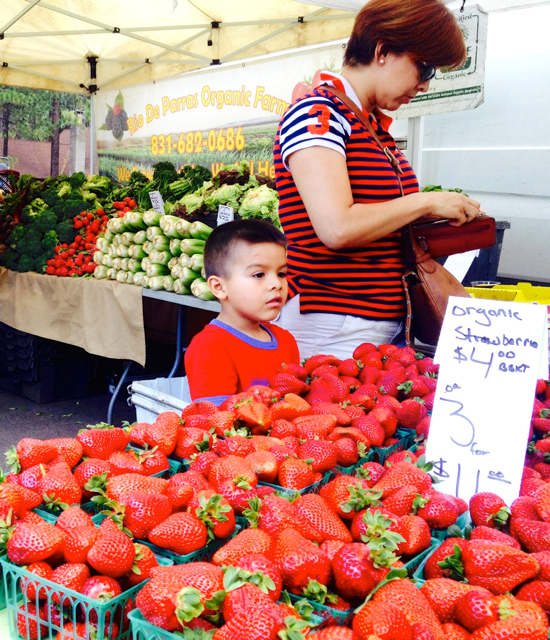
Ski Run Boulevard's market opens June 3 in South Lake Tahoe. Photo/Provided

Ski Run Boulevard’s market opens June 3 in South Lake Tahoe. Photo/Provided

The Ski Run Farmers Market in South Lake Tahoe, now entering its seventh year, is known for its festival atmosphere. This family-oriented market features live music, kids’ karaoke, a bounce house, and face-painting as well as organic produce and craft vendors.

“We’ve been growing every year. We started with five vendors and this year we have 30,” owner Michaela Dickson told Lake Tahoe News. “We want to be more of a community gathering. People can listen to music and show their art. People aren’t just shopping, they are hanging out.”

Recently, Dickson considered moving the Ski Run Farmers Market to a new location because the event was blocking firetruck access from Ski Run Boulevard. However, instead of relocating, a fire lane will be opened alongside the market on Ski Run Boulevard to accommodate firetrucks.

“It’s made the market a little smaller, but we are hoping to expand another block,” Dickson said.
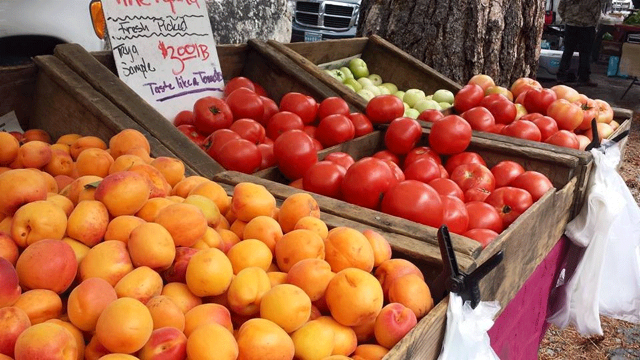
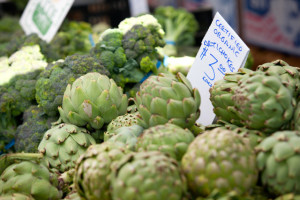
A variety of fruits and vegetables are available at all of the markets. Photo/Provided

A variety of fruits and vegetables are available at all of the markets. Photo/Provided

This year, the Incline Village Farmers Market has moved to the Lake Tahoe School parking lot, but will still be featuring all of the garden-fresh produce it’s known for.

“The Incline Village Farmers Market is geared toward promoting a healthy lifestyle for local people,” owner Rozier told Lake Tahoe News. “It’s a one-stop shop where you can grab organic fruits, veggies and meat.”

According to Rozier, last year was challenging for local farmers because of the lack of water. There were many fruits and vegetables that weren’t available at the markets. Strawberries, blueberries and raspberries growers were especially impacted by the drought because berries require a lot of water.

“When you farm in Nevada or California, you never know what the weather will be like” Rozier said. “Farmers have had to reinvent themselves and find drought resistant produce. Now they are using new farming practices such as drip lines, covering soil to keep moisture in the ground and finding ways to save water.”

However, this year’s wet winter has been good for local and regional farmers, and the selection of organic fruits and vegetables now available at local farmers markets is vast.


USDA adds warning label on beef

By Lydia Zuraw, Kaiser Health News

A new label on some of the steaks in your grocery store highlights a production process you may have never heard of: mechanical tenderizing.

This means the beef has been punctured with blades or needles to break down the muscle fibers and make it easier to chew. But it also means the meat has a greater chance of being contaminated and making you sick.

The labels are a requirement from the U.S. Department of Agriculture that went into effect this week.

Read the whole story