7 food trends for 2017

By Katy Steinmetz, Time

Pristine produce will have less photogenic–and also less costly–cousins in the fresh-food aisles. That’s thanks to a growing effort to reduce waste by farmers and grocers, particularly the waste of wholesome, if somewhat unsightly, fruits and vegetables.

In the U.S., up to 40 percent of food goes to waste–that amounts to a per-household cost of about $2,200. Meanwhile, the U.N. estimates that some farmers chuck 20 to 40 percent of less-than-flawless-looking plants simply because they aren’t pretty enough to meet retailers’ expectations. But now, even large grocery chains are developing an appetite for the ugly stuff.

In early 2016, Whole Foods launched a program with the nonprofit Imperfect Produce to start stocking some of its stores in Northern California with knotty potatoes and blemished oranges. At a Brooklyn location, another Whole Foods started a program selling “ugly greens.” Walmart, the largest grocery retailer in the U.S., has gotten in the game too, selling wonky potatoes and apples with patchy exteriors. Hy-Vee, another chain, has promised to stock all of its 242 locations with aesthetically challenged goods as well. Imperfect produce, proclaims a sign on one of its displays in the Kansas City area, Is perfectly delicious and nutritious.

Read the whole story


Gold Country vintners pick up where prospectors left off

By Mike Dunne, Sacramento Bee

Not all the prospectors lured to the hills and hollows around John Sutter’s sawmill at Coloma in El Dorado County had as much luck finding gold as James W. Marshall.

For that matter, not even Marshall made much of a fortune in digging for color. His celebrity rests largely on his happenstance discovery of small flakes of gold in the tailrace of Sutter’s mill, which he was helping build in 1848, touching off the Gold Rush.

With only sporadic success beyond that, Marshall and many other argonauts began to exploit Coloma’s rich soils, agreeable climate and abundant water to cultivate other sources of revenue, namely flowers, vegetables, fruit and wine. They were so successful that Coloma Valley, aka Coloma Basin, came to be recognized more for its agricultural bounty than its gold. “Coloma is literally a pomological garden,” waxed Placerville’s Mountain Democrat in 1858, according to Eric Costa’s 2010 history of winemaking in El Dorado County, “Gold and Wine.”

Read the whole story


Beware the little green frog logo on sustainable food

By Bernice Yeung, Reveal

That little green frog logo is everywhere: sprawled across chocolate bar wrappers, stuck to the side of tea canisters, perched on banana labels. The web-toed  amphibian is the Rainforest Alliance Certified seal, a signal to consumers that the product is friendly to the planet and to farmworkers.

But when it comes to worker protections, Rainforest Alliance hasn’t always delivered on its promises.

According to a report by the fair-trade watchdog organization Fair World Project, consumers should be skeptical of some certification groups, such as Rainforest Alliance. The popular green frog logo, in fact, was deemed “unqualified to ensure farmworker justice” because of weaknesses in its audits.

This follows on recent accusations that Rainforest Alliance is certifying products sourced from farms where workers have been mistreated.

In 2015, a BBC investigation found that workers on Rainforest Alliance-approved Indian tea estates lived in shoddy housing and received unacceptably low wages. Reporters also found evidence of children working on the plantations. The organization has acknowledged that its auditing process was imperfect, and responded by decertifying one tea estate, reducing the risks that lead to child labor and improving housing conditions.

But additional critical reports about the Rainforest Alliance certification process surfaced this year. Following a 2011 study that found a host of problems on Rainforest Alliance-certified Indian tea plantations, a worker advocacy group re-evaluated some estates this summer. The latest report found improvements, though it also noted ongoing issues related to overtime pay and unions.

The Rainforest Alliance and the Sustainable Agricultural Network, which jointly oversee the green frog label, sent in an audit team to look at these concerns but said it couldn’t corroborate most problems raised in the report, except for a minor issue related to working hours, which it has addressed.

And according to an Oxfam Germany report published last spring, there are problems with the labor conditions at Rainforest Alliance-affiliated banana and pineapple plantations in Latin America, too. Banana workers in Ecuador said that pesticides were sprayed by planes while they worked in the fields below, and pineapple workers in Costa Rica said that after working 12 hours a day, they still could not make ends meet. Rainforest Alliance has launched ongoing investigations into these claims but have not found evidence of these problems.

The recent inquiries focus in on farms that source products such as Lipton teas and Dole pineapples. Brands like Taco Bell, Clif Bar and Naked Juices also bear the little green frog logo.

Representatives of Rainforest Alliance and the Sustainable Agricultural Network said that when they learn of substantiated problems, they make changes.

“What we appreciate is constructive criticism and input, and we realize we do not have a perfect system,” said Andre de Freitas, the executive director of the Sustainable Agricultural Network, which creates the certification standards. “We are working on improving and engaging more with worker organizations. Our commitment is to getting better.”

The Rainforest Alliance certification program operates in 74 countries, and says it promotes sustainability in areas ranging from forestry to tourism. Food businesses can carry the frog logo by sourcing from certified farms, which pledge to follow specific environmental and labor standards. Though the Rainforest Alliance certification program is primarily funded by donations and philanthropy, some businesses pay a small royalty for the right to carry the logo.

The farms themselves pay to be certified. To make sure participating farms aren’t breaking the rules, the program conducts routine audits. The Justice in the Fields report, however, dinged Rainforest Alliance for inspections that were only once-a-year and pre-announced, and where worker representatives weren’t involved in the interview process – something the report says would make them more comfortable coming forward with complaints.

De Freitas said that the program is increasing the number of surprise audits and getting workers involved in oversight. He pointed out that the Justice in the Fields report contained verifiable inaccuracies and flagged issues around wages that the organization had already addressed through new standards announced in September.

Justice in the Fields evaluated seven of the largest certification programs that claim to ensure that products are free from farmworker exploitation. It looked specifically at labor conditions at medium- and large-scale farms, with an eye toward employee housing, wages and the enforcement of labor laws. (Some of these programs also monitor environmental practices, but the Justice in the Fields report only considered job conditions.)

Of seven certification programs, the report recommended four: The Fair Food Program, the Agricultural Justice Project, the Equitable Food Initiative and Fairtrade International.

The remaining three certifications make claims that “speaks to buzzwords around fairness, but their practices are not substantial enough to actually affect workers’ lives in a positive way,” said Kerstin Lindgren, the report’s author.

These weaker programs – Fair Trade USA, Fair for Life and Rainforest Alliance – should be approached with caution because of concerns over whether they pay a living wage or have strong auditing systems, Lindgren said.

But even the certification programs that received high marks from the Justice in the Fields report are not perfect. Florida’s Fair Food Programwas recommended by the Fair World Project, but the program is nevertheless silent when it comes to reducing workers’ exposure to pesticides.

Lindgren said part of the purpose of the report was to show the limits of certification programs. “For consumers, I hope they begin to become more aware and engage on these issues,” she said. In addition to getting involved at a policy level, she suggested that consumers “look for the strongest label and don’t assume that a weak label is better than no label.”


K’s Kitchen: A dip good for any occasion

By Kathryn Reed

I hosted a wine tasting last month where beforehand I was given flavor profiles of foods that would pair well with the wines. Spinach and avocado were to go with the Chardonnay.

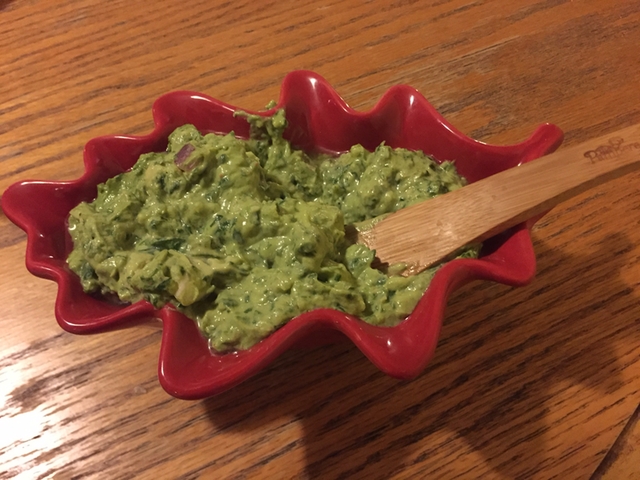
Those are two of my favorite green foods. Combining them was wonderful.

And because they are both in grocery stores year round, this is a dip that is good for all seasons.

The tasting was more about sampling food with the various varietals than providing a meal or even heavy appetizers. This dip went very well with the Buena Vista Chardonnay that filled our glasses.

It took a little patience for the ingredients to get chopped up in the blender. A food processor would undoubtedly have been faster, but I don’t have one of those. Go easy on the hot sauce to begin with. More can always be added.

While this was good the first day, it was even better the second. The dip is great with raw veggies and crackers.

spinach-avocado-dipAvocado Spinach Dip

2 C fresh spinach

1 avocado

½ C reduced fat sour cream

¼ C red onion, rough chopped

1 T fresh lime juice

1 T jalapeno pepper, chopped

4 garlic gloves

Salt and pepper

Hot sauce

Blend all ingredients. Chill at least one hour before serving.


New direction for indoor growers — vertical

By Ginger Hervey, High Country News

Nate Storey looked out his window in China at agricultural workers laboriously threshing grain by hand.

“There has to be a better way to do this,” he thought.

It was 2001, and the Cheyenne, Wyo., native was working in a Chinese orphanage, trying to decide what he wanted to do with his life. At that moment, his vision crystallized: He would make food production more efficient.

Back in the U.S., he enrolled in the agronomy program at the University of Wyoming. For his doctorate in 2012, he designed a structure that turned indoor farming on its head — literally — by growing plants vertically in towers.

Read the whole story


K’s Kitchen: Carrots and beets for one

By Kathryn Reed

One of the great things about cooking for myself is not having to share. Selfish, yes – but honest.

With this particular dish it makes enough for two sides. I ate all of it for lunch. That’s why I was glad no else was around. I just wish I had more for another day.

The butter makes it taste a bit unhealthy. Go easy when adding the salt if you are using salted butter.

It would be a great complement to many proteins.

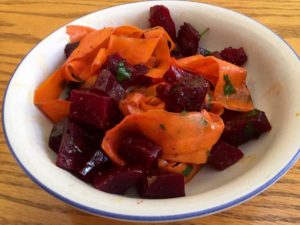
This is a pretty dish with the red and orange, then specks of green.It’s also a fast dish to assemble.

carrot-beetButtered Beet and Carrot Sauté

2 medium beets

1 large carrot

1 T butter

2 T flat leaf parsley

Kosher salt

Pepper

Wrap beets in parchment paper and microwave for about 10 minutes until tender. Let stand for 5 minutes and then peel skin off.

Melt butter over medium in skillet. Add ribbons of carrot. Cook until tender; add parsley, salt and pepper. Then stir in chopped beets. Serve warm.


5 surprises in every bottle of sparkling wine

By Peg Melnik, Santa Rosa Press Democrat

When you uncork a sparkler, the hiss of the cork reminds you that there’s a secret in the bottle.

The frothy, free-flowing bubbly is entirely different than the wine that was originally bottled. But most people don’t have a clue about how the mystery occurs.

With New Year’s Eve in the offing, here are five surprises hidden inside a bottle of bubbly. They will help you understand why early Champagne ads beckoned drinkers with this promise: “Come quickly, I am tasting the stars.”

Read the whole story


Beer in 2016 was bigger, better than ever

By Blair Anthony Robertson, Sacramento Bee

As we take stock of the year in beer, now might be a good time for a bit of context: We’re living in the Golden Age.

There has never been a bigger, better or more creative, productive, socially engaging and delicious year than 2016. There are more beer bars and restaurants emphasizing beer, more breweries and tasting rooms, more brewery dogs wagging and sniffing and snoring, and more kids at breweries playing corn hole and Jenga and learning by osmosis about the wonders of things such as Galaxy hops, brettanomyces and barrel-aged sours as their parents taste and talk among friends.

The good breweries got better and bigger.

Read the whole story


K’s Kitchen: Turmeric is no ordinary spice

By Kathryn Reed

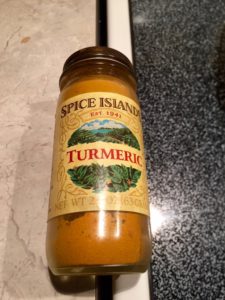
A couple years ago a friend told me about the benefits of turmeric; enhanced memory being one. The irony is that I forget to use it.

Turmeric is the major ingredient in curry. It is a plant in the ginger family. For years, people in India have been cooking with it as well as using it as a medicinal herb.

I have added a teaspoon of turmeric to all kinds of foods. Like a yellow curry, your food is apt to change color. It’s good to remember this, because not all dishes should be yellow.

Hundreds of studies have been done proving turmeric has a whole host of medicinal benefits.

img_5293-1Some of the results include:

·      American Cancer Society – Cancer cells in laboratory tests were killed and it slowed the growth of surviving cells.

·      Annals of Indian Academy of Neurology – Potentially helps with early onset Alzheimer’s.

·      Works as anti-inflammatory.

·      Lowers the risk of heart disease.

·      Treats some symptoms of arthritis.

·      Acts as an anti-depressant.

·      Reduces high cholesterol.

The University of Maryland recommends ½ to 1½ teaspoons of turmeric for cooking.

Turmeric also is sold as a supplement. I’ve never used in this way. I’ve only used it for cooking.

I’m all for using something natural over taking a pill. And if it adds a little flavor to my food, bonus.


K’s Kitchen: Dip will make people eat their veggies

By Kathryn Reed

Sometimes I feel like a kid; I eat more veggies when there is a dip – especially an unhealthy one.

It’s not that I have a problem eating enough vegetables. But they aren’t something I tend to snack on unless there is a dip.

I made the recipe below for some friends. Thank goodness there was left over dip. I scarfed the rest of the raw veggies with the dip the next day in a way that would have been a bit embarrassing had anyone other than the dog witnessed it. I could have just eaten spoonfuls of the concoction.

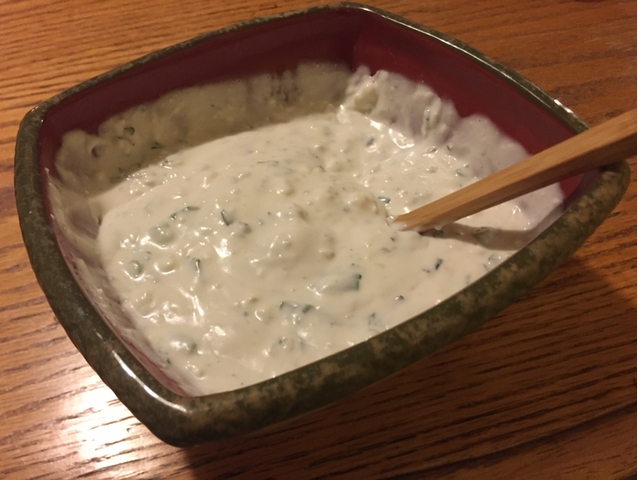
I’ve always loved blue cheese, so it was a no brainer this recipe was going to be to my liking. And while it is a dip, there isn’t any reason it couldn’t be used as a salad dressing.

I used Veganaise only because that is what I keep in the fridge now instead of regular mayo.

blue-cheese-dipBlue Cheese Dip

1 C Veganaise

1 C sour cream

6 green onions, finally chopped

2 T dried parsley

5 ounces blue cheese, crumbled

Garlic salt to taste

Mix all of the ingredients together. Chill in refrigerator until ready to serve.