K’s Kitchen: Fresh asparagus in tacos

By Kathryn Reed

Asparagus is my go-to vegetable this time of year. It is soooo fresh and lovely.

And it’s so versatile. It can be steamed, sautéed, roasted, barbecued; put in soups, salads, stir fries, or be eaten by itself; and served hot, cold or at room temperature.

I had planned to barbecue the asparagus, green onions and mushrooms, but the starter wasn’t working and I didn’t feel like solving that problem at that moment. So, I roasted the veggies at 400 degrees, and then had them under the broiler briefly at the end.

If you barbecue the veggies, leave them whole and cut them into the 1-inch pieces after they are done. And add the cilantro at the end.

Asparagus-Mushroom Tacos

Canola oil

7 cloves garlic, minced

3 tsp chili powder

1 T lime juice

½ C cilantro, chopped

1 bunch green onions, cut into 1-inch segments

½ lb. asparagus, cut into 1-inch pieces

8 ounces portabella mushrooms, sliced and cut in half

Tortillas

Salsa verde

Preheat oven to 400 degrees.

Place onions, asparagus and mushrooms in oven proof glass dish. Add garlic, chili powder, cilantro and lime juice. Drizzle with oil so vegetables are lightly coated. Mix well.

Cook for about 15 minutes. Test by making sure the asparagus is done; it should be tender. Then put under broiler for a couple minutes to char them a bit.

Heat tortillas.

Divide veggie mix into tortillas, add salsa.


EDC wineries open doors to four-legged visitors

AJ could get used to regular trips to wine country. Photo/Kathryn Reed

AJ could get used to regular trips to wine country. Photo/Kathryn Reed

By Kathryn Reed

CAMINO — Wine is always better shared with friends – even if the friend has four legs.

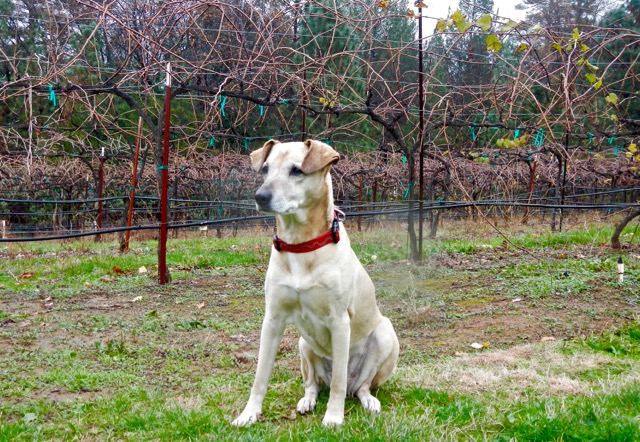
AJ was an instant hit at the handful of El Dorado County wineries she visited. She got treats, was petted and there were water bowls already set out for her.

At Findleton Estate Winery people were showing off pictures of their dogs on their phones. One guy had photos of his pups in his wallet.

Owners Tom and Pam Findleton have always allowed dogs. They even had a sweet 16th party for their dog last year.

Tom Findleton talks dogs and wine at his Camino winery. Photo/Kathryn Reed

Tom Findleton talks dogs and wine at his Camino winery. Photo/Kathryn Reed

Pam Findleton creates all the labels for the winery. A painting is already done with Tom Findleton and their dog Grizzly. It’s likely to show up on future Bordeaux blend label.

Across the way in the Camino Wine Tasting Plaza is the Chic Photo Boutique. They do screen printing of people’s dogs and then Findleton will use it as a personal label for customers on one of their bottles of wine.

The Findletons are such dog lovers that they do an annual fundraising event for the SPCA and El Dorado County Animal Control.

“The more, the better” is Boeger Winery’s philosophy when it comes to dogs.

AJ makes herself at home at Boeger Winery. Photo/Kathryn Reed

AJ makes herself at home at Boeger Winery. Photo/Kathryn Reed

“Dogs make everyone else happy,” Yvonne Kendler, who works at Boeger, told Lake Tahoe News.

She said pet owners are good about taking their dog outside if the animal starts to bark or becomes disruptive in some other way.

With ample acreage, there are many places for wine to be enjoyed outside at Boeger if the four-legged companion would rather be outdoors.

Boeger sells the dog treats they hand out to the animals. AJ quickly gobbled up the goodie from Pawsperity Bakery. The Applegate-based business has treats in a variety of flavors; all made with natural ingredients. She won’t have a problem finishing the bag before the expiration date comes.

Over at Wofford Acres Vineyards it’s a one dog at a time policy inside the tasting room. Once dog No. 2 arrives, it’s time for all of them to go to the patio area.

This is a small tasting room, so more than two would be quite a distraction.
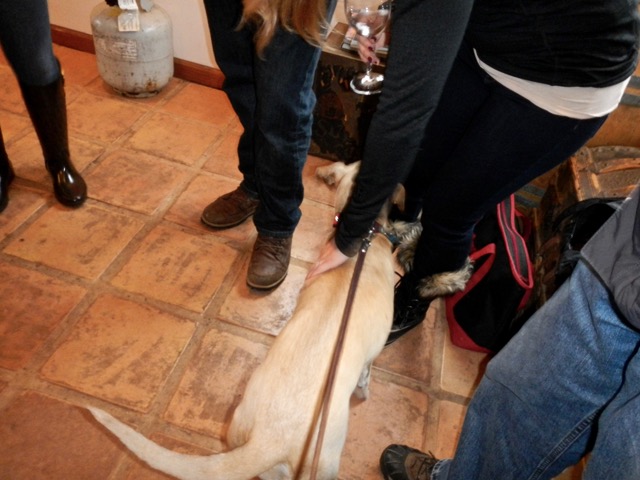
AJ becomes the center of attention at Wofford. Photo/Kathryn Reed

AJ becomes the center of attention at Wofford. Photo/Kathryn Reed

“My goal is to get people focused on wine. As soon as you bring a child or dog in, the focus changes,” Ann Wofford told Lake Tahoe News. She is one of the three owners of the winery.

AJ proved her theory correct. Other tasters started paying attention to her, petting her and then sharing their dog stories. Wine suddenly became secondary.

Even so, AJ got people who might not otherwise have talked to one another to do so. And we all still found time to keep sipping.

Not all wineries allow dogs inside the tasting room. Some allow them only in the picnic area. Check a winery’s website or give them a call to find out before you trek all that way with your four legged family member.


Americans eating more butter than ever

By Leslie Patton, Bloomberg

Hipsters are dropping it into cocktails and coffee. A major food distributor is packing it into a trendy new pastry. Bob Evans Farms Inc. is slipping it into waffles and McDonald’s Corp. onto its signature muffins.

What’s this new craze? It’s none other than your grandparents’ standby, butter.

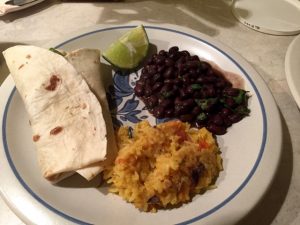
Yes, butter, it turns out, is having a moment. Americans are forecast to eat a whopping 8 percent more of the stuff than last year, reaching 940,000 metric tons, almost the weight of three Empire State Buildings. That’s the most since at least 1967, Department of Agriculture data shows.

Read the whole story


Giving up alcohol not a guarantee for weight loss

By Jane E. Brody, New York Times

People trying to lose weight — or not gain weight — are frequently advised to “lay off the booze.” Although organizations like Weight Watchers offer ways to drink wisely within their plans, alcohol, with seven calories a gram and no compensating nutrients, is commonly thought to derail most efforts at weight control.

After the winter holidays, I often hear people blame alcohol for added pounds, not just from its caloric contribution but also because it can undermine self-control and stimulate the appetite and desire for fattening foods.

Yet you probably know people who routinely drink wine with dinner, or a cocktail before it, and never put on an unwanted pound. Given that moderate drinkers tend to live longer than teetotalers, I’d love a glass of wine or a beer with dinner if I could do so without gaining, so I looked into what science has to say about alcohol’s influence on weight.

Read the whole story


Why women drink more white wine

By Lettie Teague, Wall Street Journal

There’s a true love connection between white wine and women. Everywhere I turn lately I’m meeting yet another woman who is white-wine exclusive for reasons ranging from refreshment to health.

My friend Gabrielle, a freelance journalist, said she converted to white from red several years ago after finding that most reds, especially tannic varieties like Cabernet and Malbec, gave her headaches. White wines did not. Save for the occasional Pinot Noir, she now mostly drinks Spanish whites like Albariño and Godello.

The women I spoke with most often cited health-related issues as their primary reason for drinking white wine. Indigestion caused my friend Kathy to reluctantly shelve her beloved red.

“I had a burning sensation whenever I drank a red,” she said. Kathy, who owns a craft store, found that the only wines that didn’t trigger side effects were whites.

Read the whole story


Doctors can help stop the spread of fake food news

By Kiera Butler, Mother Jones

When journalist and physician James Hamblin investigated the world of gluten-free products, he found a $23 billion industry of “detox courses,” custom blood tests, and specially formulated foods. What he didn’t find was medical evidence that avoiding gluten is good for people who don’t have celiac disease.

In fact, the many gastroenterologists that he interviewed agreed that gluten-free diets can actually be less healthy than those that contain gluten. So how did the craze take hold if there’s essentially no science to back it up?

That’s one question that Hamblin attempts to answer in his new book, “If Our Bodies Could Talk: A Guide to Operating and Maintaining a Human Body,” and during our interview on Mother Jones’ food politics podcast Bite. Hamblin, also a senior editor at the Atlantic, argues that the gluten-free trend—along with many other health fads—is “a symptom of a real problem within the medical establishment.”

Up until a few decades ago, he explains, patients regarded their doctors as the ultimate health authorities—they trusted physicians to make recommendations based on the latest science. But “as the ethical principle of patient autonomy has gained recognition, medicine has lurched toward patient-doctor collaboration,” Hamblin writes.

Read the whole story


K’s Kitchen: Soup — because winter won’t end

By Kathryn Reed

Sometimes it’s necessary to improvise when cooking, especially when living in a small town – no matter the number of grocery stores.

The store only had green Fresno chilis so that is what I cooked with. The red would have made it look so much better. The color is usually a matter of how long the chili was left to ripen.

It’s possible to use a different protein besides tofu. Cook it separately and then add it near the end.

When buying ginger, it’s OK to break off the size you need. The easiest way to take off the outer husk is to use a spoon using the motion you would peel a potato.

Asian Noodle Soup

2 tsp sesame oil

1/3 C green onions, chopped, divided

6 garlic cloves, minced

1-inch piece ginger, thinly sliced

3 C vegetable broth

2 ounces uncooked soba noodles

2 tsp honey

2 tsp chile paste

14 ounces firm tofu, cubed

4 tsp green curry paste

1/3 C mung bean sprouts

1 red Fresno chile, sliced

Heat oil in a medium saucepan. Over medium heat cook half the green onions, garlic, ginger and tofu until tofu is slightly browned. Add stock; bring to a simmer. Reduce heat to medium-low and cook for about 10 minutes. Cook noodles according to package directions. Combine honey, chile paste and curry paste. Stir this mixture into the stock. Add noodles. Ladle into bowls and then sprinkle with green onions, mung bean sprouts and Fresno chile.


Changes to the sell-by dates on food

By Caitlin Dewey, New York Times

The majority of Americans have no clear idea what “sell by” labels are trying to tell them. But after 40 years of letting us guess, the grocery industry has made moves to clear up the confusion.

Last week the Food Marketing Institute and the Grocery Manufacturers Association, the two largest trade groups for the grocery industry, announced that they’ve adopted standardized, voluntary regulations to clear up what product date labels mean.

Where manufacturers now use any of 10 separate label phrases, ranging from “expires on” to “better if used by,” they’ll now be encouraged to use only two: “Use By” and “Best if Used By.”

Read the whole story


Tahoe nutritionist touts plants over animals

By Kathryn Reed

The link between food and health was underscored this month in a nutrition presentation before the South Lake Tahoe City Council.

Registered dietician June Denney promoted a plant-based diet in her talk with physician Greg Bergner. Her message was that food can cause and prevent disease.

Citing the 2015 Global Burden of Disease Study, Denney said, the No. 1 cause of premature death and disease is food.

Diet-related chronic diseases include:

·      Obesity

·      Cardiovascular disease

·      Hypertension

·      Diabetes

·      Cancer

·      Osteoporosis.

Denney provided information from multiple studies showing the benefits of eating vegetables over meat.

Stats included:

·      Strawberries are the most powerful anti-angiogenic food

·      1 serving per month of kale or collard greens reduces the risk of glaucoma by 69 percent

·      Beets and arugula decrease blood pressure, improve COPD, peripheral artery disease and improve fitness performance

·      One banana a day can decreases the chance of stroke by 40 percent.

One of the problems people have in the United States is with serving sizes. Three ounces of cooked red meat is a serving. Most hamburgers, though, are the equivalent of two servings. So, not only are people eating foods that are bad for them, the quantities are more than most people realize.

With most African nations not adopting a Western diet, they don’t have the same diseases at the United States.

Denney shared:

·      1 in 3 Americans die of cardiovascular disease

·      1 in 1,000 Africans die of cardiovascular disease

·      Some hospitals in Africa have not seen a single case of colon cancer

·      Kenya sees 20 times less breast cancer than the United States.

“We are doing something wrong,” Denney said.

The presentation was in recognition of March being National Nutrition Month.


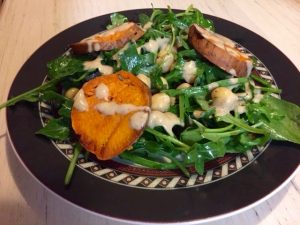
K’s Kitchen: Sweet potatoes on a salad

By Kathryn Reed

Nutritional and pretty. What more could you want?

Sweet potatoes can be cooked in so many ways. Having them as fries is how I am most familiar with them. Clearly, not my healthiest choice.

Adding them to a salad brings a bit of sweetness. The dressing used here is a bit nutty and tangy, which all together provides a lovely complement of flavors.

Any greens for the salad would be fine. Arugula has a distinctive peppery flavor. I miss the days of growing it this time of year when I Iived in Sonoma County. Thank goodness for grocery stores!

Greens with Sweet Potatoes and Chickpeas

2 small sweet potatoes

¼ C almond butter

3½ T warm water

3 T fresh lemon juice, divided

2 T olive oil, divided

1 15-ounce can chickpeas, drained

5 ounces arugula-spinach mix

¾ tsp kosher salt

1 tsp black pepper

Peel potatoes. Prick them all over with a fork; then microwave for about 5 minutes, or until tender. Cut into quarter inch-thick rounds.

Whisk together almond butter, water, and 1 tablespoon lemon juice. Set aside.

Heat a large skillet over medium-high with 1 tablespoon oil. Cook potato slices until golden brown.

In a large bowl combine chickpeas, salad greens, salt, pepper, remaining 2 tablespoons juice, and 1 tablespoon oil. Divide salad mixture between four plates; top with sweet potato slices. Drizzle with almond butter sauce.