Public participation lacking in mapping future of Tahoe park

By Jessie Marchesseau

The turnout for the trails workshop in Incline Village hosted by the Nevada Division of State Parks was underwhelming at best. Eight people showed up to voice their opinions.

“It’s kind of everybody’s backyard; I thought there would be more people there,” said Mark Kimbrough, recreation and trails consultant helping with the development of the new general management plan for Lake Tahoe Nevada State Park.

Hosts nearly outnumbered the attendees, with representatives from the Tahoe Rim Trail Association, Nevada State Parks, Incline Village General Improvement District and the Incline Village trails committee in attendance.
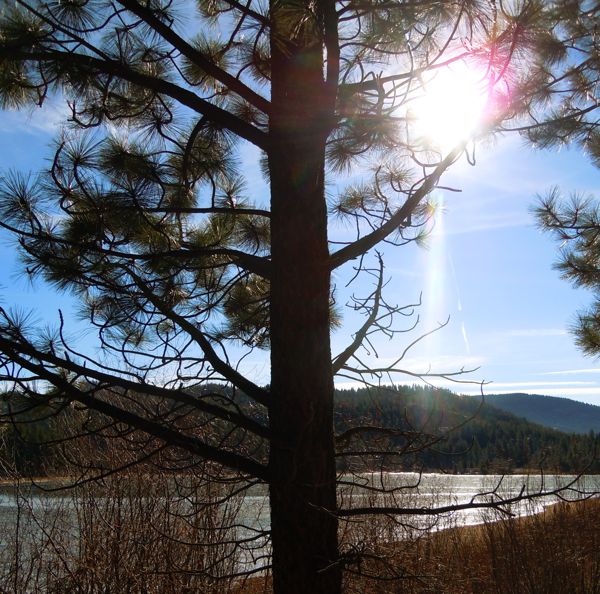
Nevada parks officials are trying to figure out the future of Spooner Lake and other Lake Tahoe entities. Photo/LTN file

NDSP organized the June 7 workshop in an effort to solicit feedback and encourage public input on the new trails map for Sand Harbor, Van Sickle Bi-State Park, and the Marlette Hobart and Spooner backcountry areas.

Initially, the workshop was going to include discussions on the possibility of opening some of the trails currently restricted to foot traffic up to mountain bikes. This has been a contentious topic among trail users and could have resulted in a crowd. But Kimbrough said that plan was recently dropped, something to which he attributes the low turnout.

Park planners were also hoping for some ideas on what people would like to see happen concerning the winter season operation of Spooner Lake. The concessionaire who has been running the cross country ski operation there for the last 27 years has decided not to renew his contract, leaving recreation for future winters at Spooner up in the air.

Jay Howard, park supervisor for Lake Tahoe Nevada State Park said the snow accumulation at Spooner is unpredictable, making a cross country ski area hard to maintain. He was hoping the workshop would spawn some ideas of what to do with the area in the future, however only three of the attendees had even visited the ski area and no one had any new ideas of what to do with it.

For now, it is likely the building will remain in place, but empty, leaving the option for a ski area or something to return in the future.

The new general plan is set to be in place before the end of the year, replacing the current plan developed more than 20 years ago. This was the second of three public workshops for residents to offer their input on the future of Lake Tahoe Nevada State Park.

The third and final workshop will be within a next few months to present the chosen plan alternatives to the public.

Anyone who has ideas or comments concerning changes, additions, facilities or anything else related to the new general management plan is encouraged to send their input to ltnsp.gmpcomments@ascentenvironmental.com.


Union battle moves from Wisconsin to California

By Jon Ortiz, Sacramento Bee

Labor unions and business interests have been quietly raising millions of dollars and testing campaign messages for months, girding for a brawl over a November ballot measure that could fundamentally shift political power in Sacramento.

Now, on the heels of an election that saw unions handed a major defeat last week in Wisconsin, the opposing camps in California soon will launch a campaign battle likely to consume $50 million or more in political spending.

“Unions have just two channels of influence,” said Daniel J.B. Mitchell of the Anderson Graduate School of Management at UCLA, “collective bargaining and the political side, so this initiative is extremely important to them.”

The measure, which has not yet received a proposition number, would ban both unions and corporations from contributing directly to candidates, although both sides could still freely spend money on their own independent efforts.

Another provision forbids both sides from using money gathered from payroll deductions for political purposes. It promises to gut the power of labor unions because they raise nearly all of their money for political and other purposes via payroll-deducted dues from their members’ paychecks.

Corporations, by contrast, raise the bulk of their campaign money from donations given by top executives and drawn from company treasuries.

Last year, public-sector and general-trade unions contributed $2.7 million to California political candidates and causes, according to campaign finance tracker FollowTheMoney.org. Business interests, from the telecommunications industry and hospitals to computer firms and beer companies, gave $4.3 million.

“The public has got to read between the lines on this thing,” said Ken Murch, chief negotiator and lobbyist for the California Association of Psychiatric Technicians. “The deception is that this levels the political playing field. It doesn’t.”

Proponents include conservatives such as former Los Angeles Mayor Richard Riordan and former Univision CEO Jerry Perenchio, who has given $250,000 to the measure. They contend it handcuffs business and labor interests equally by applying the same contribution limitations to both sides.

Read the whole story


El Dorado, Placer counties to receive Caltrans funding

Some of $350 million in grants Caltrans was awarded to improve public transit will be going to El Dorado and Placer counties.

An estimated 80 projects throughout California include upgrading transit service, purchasing eco-friendly buses, modernizing transit stations and creating jobs. The grants are funded through Proposition 1B, the 2006 voter-approved transportation bond, which is providing $3.6 billion over a 10-year period to improve public transit in California.

Some of the projects include:

• El Dorado County — $540,000 for El Dorado County Transit Authority to install electronic fare boxes.

• Placer County — $163,399 for Placer County Department of Public Works for the Placer County bus stop improvements and $1 million for Placer County Transportation Planning Agency to expand the Rocklin Multi-Modal Station Park-n-Ride lot.

 — Lake Tahoe News staff report


Beer and music highlight festival at Northstar

The Beerfest & Bluegrass Festival at Northstar will feature music from the nation’s top bluegrass bands, more than 25 local and regional breweries, special children’s treats and activities on the skating rink.

The festival is July 14 from 3-7pm.

To complement the expansive brew selection, a tasty barbecue will also be available for purchase.

Advance tickets are $30 online. On-site day-of tickets will be available for $38. All tickets include a commemorative pint glass to enjoy the day’s tastings.


Weekly mountain bike rides start at South Tahoe Y

Every Tuesday night TAMBA is putting on a fun ride.

These are low key mountain bike rides open to everyone. Meeting place is 5:30pm every Tuesday at Pearl Izumi on Highway 50 at the Y.

Employees from South Shore Bikes and Pearl Izumi will lead these rides.

Following the ride there will be drink and food specials at Murphy’s Rockwater Pub.

For more info, contact brianabiller@awakenergy.com or laketahoe@pearlizumi.com.


Deadline extended for artists to design Soroptimist wine poster

Soroptimist International South Lake Tahoe is looking for artists to design the 2012 poster for the annual wine tasting.

The original art piece should be 11 x 17, with theme being Tahoe and Wine Tasting.

The artwork will become the property of SISLT and will be used for advertising the event.

Drop off entries at Elevate Wellness Center, 1113 Emerald Bay Road, weekdays between 10am-6pm by July 9.

The winning artist receives $250 and two tickets to the event.

For information, email gina@elevate-wellness.com or call (530) 541.9355.


Weekly art workshops at South Tahoe library

Every Thursday from July 5-Aug. 23 is Exploring Arts Workshops at the South Lake Tahoe library conference room.

The projects will be suitable for children ages 4 through high school. Parents are welcome. All materials will be provided.

Please sign up at the library for each week so staff can plan for project materials. Projects will include weaving, clay, printmaking, painting on canvas, mask making, mosaics and collage.

Each week will feature a different project to be completed during the 1:30-3:3 pm workshop.


League organizing series of educational walks throughout basin

The League to Save Lake Tahoe is organizing a series of educational walk and talk tours throughout the Lake Tahoe Basin.

Each tour will highlight a particular area of interest and provide an opportunity to talk with League staff about the issues facing Lake Tahoe’s clarity and ecological health.

Heavenly Gondola: South Lake Tahoe/Stateline, June 16

Topics: Environmental and fire management history, forest ecology.

Blackwood Creek: West Shore, June 30

Topics: Restoration project, wildlife habitat, wild flowers.

Skunk Harbor: East Shore, July 20

Topics: Forest restoration, cultural history, water quality.

Taylor Creek: South Lake Tahoe, July 28

Topics: Forest ecology, riparian habitat, Tahoe fishery.

Third Creek: Incline Village, Aug. 25

Topics: Stream restoration, forest/ecosystem restoration, water quality monitoring.

Registration is required and space is limited. RSVP to events@keeptahoeblue.org or call (530) 541.5388.


2 SUP events on Tahoe’s North Shore

The 2nd annual Adventure Sports Week Tahoe (June 15-24) includes two standup paddle boarding events.

The Thunderbird Run, produced by the Ta-Hoe Nalu Festival, is scheduled for June 16 at Sand Harbor State Park in Incline Village. Participants will paddle an eight-mile loop along Tahoe’s North and East shores. All ages are welcome to take part. The race begins at 10am.

On June 17 is the inaugural Tahoe Waterman Challenge, produced by the Lake Tahoe Waterman Association, which involves swimming, running and standup paddle boarding. The race kicks off at Tahoe City’s Commons Beach at 10am.

For more information about Adventure Sports Week Tahoe, go online.


Cutbacks would challenge emergency response for the next Angora

By Jessie Marchesseau

If another Angora Fire happened today, would there be enough resources available to fight it?

Angora Fire -- 5 years later

The simple answer is no.

“There would be no number of firefighters that we could employ that would be able to fight that kind of disaster,” said Chief Brian Uhler of the South Lake Tahoe Fire Department.

Representatives from other fire districts in the basin seem to concur.

“That fire was conditions-based; it wouldn’t have mattered if we had helis waiting at the airport,” said Kit Bailey, forest fire chief for the USFS Lake Tahoe Basin Management Unit.

The helicopters that would have been used to attack the fire from the front were grounded. Crews were left to battle the blaze on foot and in engines with winds gusting up to 50 miles per hour. The helicopters eventually made it up, but by then the fire had gone from manageable to massive.

Helicopters from outside the area fight the Angora Fire. Photos/Lake Valley Fire

In the end, 1,900 firefighters, and 12 helicopters fought the Angora Fire, not to mention numerous engines, dozers, water tenders and air tankers. They came from all over the Western United States. And if it happened today, they would come again.

In disaster situations such as the Angora Fire, fire departments rely on mutual aid agreements with other fire districts. They essentially agree to help each other in times of need. In fact, Gareth Harris, fire chief for the Lake Valley Fire Protection District, said those agreements have been improved and streamlined since Angora, and response time from cooperating districts would be even faster today.

An automatic aid agreement within the basin ensures that every firefighter in the Lake Tahoe Basin will be available to help for the first 24 hours. This gives units from farther away time to arrive with no lag in initial response.

However, the help received from neighboring districts may not be what it once was. Recent budget cuts have taken their toll on fire departments. South Shore crews including LVFPD, SLTFD and the LTBMU have managed to keep the same number of firefighters on staff, offsetting the cutbacks elsewhere. While SLTFD did lose four upper management employees, they managed to retain the number of firefighters.

Lines of fire hoses can't extinguish each house on fire.

“The Forest Service hasn’t seen any reduction in capability at the local level or the regional level,” Bailey said. “I think we’re as well positioned as we can be, not just on the federal level, but on the local level, too.”

Other fire districts were not so lucky.

Three years ago, the North Lake Tahoe Fire Protection District had three 20-person wildland fire crews. That number is now cut in half. CalFire has had to reduce its number of seasonal firefighters from up to 3,000 in previous years to 1,700.

But Janet Upton, deputy director of CalFire, told Lake Tahoe News she believes this reduction will not impact their effectiveness.

Upton said the staff reductions are offset by improvements in technology since 2007. The 21 administrative units across the state can now track detailed weather patterns and predict those “perfect storms” like the one during the Angora Fire up to 72 hours in advance. The department can then shuffle resources from an area with low fire danger, to higher risk locations. They can cancel days off and have crews work overtime

“If the threat is there, we are staffed to meet it,” Upton said.

She does admit, however, that staff reductions will likely impact their initial attack on a fire. Transporting crews from the other side of the state takes time, and relying on mutual aid agreements means waiting on crews from other districts.

In the event of another major fire, some districts in the basin may have to rely on improved aid agreements combined with developments in fire and weather technology to combat reductions in manpower caused by budget woes. The South Shore, however, having retained its firefighting forces, can bank on an equal, if not improved ability to launch an attack on the next Angora Fire.