Workshop focuses on guest services

The Customer Connection is an interactive workshop put on by Lake Tahoe South Shore Chamber of Commerce and Tahoe Training Partners on June 20 from 8-11am at the Lake Tahoe Visitors Authority office (169 Highway 50, Stateline).

Laura Moriarty will go over the basics in customer and guest interaction touching on topics such as how you influence the perception of our community, difficult customers, non-verbal communication, phone etiquette, and why everyone’s a concierge.

Hear from Brian Cohen, owner of Overland Meat & Seafood Company, as well as Gary Weigel, senior planner for the TRPA, about what it takes to deliver good service.

Advanced registration is $29 for chamber members or members of the Sierra HR Association. Advanced registration for non-members is $39. Walk in registration will be $39 or $49. Call (775) 588.1728 to reserve by phone.


Neil Young & Crazy Horse to rock Lake Tahoe

Harveys Lake Tahoe and Another Planet Entertainment are are bringing rock ‘n’ roll legends Neil Young & Crazy Horse to the Outdoor Arena at Harveys on Aug. 9 at 8pm.

Crazy Horse is considered by many to be Neil Young’s best band, especially live in concert. They have not toured together since 2004. The band just released

“Americana”, their first new CD in nine years.

Neil Young & Crazy Horse are performing only four shows in August before their scheduled North American tour begins in Canada in October. Young along with longtime Crazy Horse members Frank “Poncho” Sampedro, Ralph Molina and Billy Talbot comprise the band.

Tickets for Neil Young & Crazy Horse go on-sale June 22 at 10am through all Ticketmaster locations.

Tickets are $59.50, $89.50, $125.50 and $150.50 plus applicable service charges.


Lake Tahoe named a top place to retire

Where to Retire, the only magazine in the U.S. geared toward helping people with retirement relocation decisions, has name Lake Tahoe as one of the best places to retire.

The July-August issue will be available nationwide on June 19.

Magazine editor Mary Lu Abbott said Lake Tahoe possesses qualities important to today’s retirees.

“Lakeside communities, such as Lake Tahoe, offer retirees a laid-back lifestyle away from big-city hassles and with all the recreational perks of water access. While our eight featured towns share many similarities, including proximity to health-care services, shopping and entertainment, they vary greatly in climate and setting — from the mountains to the desert. Another bonus: For the water-oriented, retiring around an inland lake is often less costly than a place on the coast,” Abbott said.


Nevada gaming win up, but not in Stateline

Stateline casinos did not pull their weight when it came to April gaming numbers.

Those five properties were down 4 percent, or almost $14 million, compared to 2011. However, Nevada as a whole posted a 6.16 percent increase in year-over-year revenues with $856 million brought in, the state Gaming Control Board said June 12.

Reno numbers were even worse that South Tahoe, with a decline of 19 percent or $38 million.

 — Lake Tahoe News staff report


Opinion: South Lake Tahoe needs to say ‘no’ to loop road

Publisher’s note: The following letter was submitted to Lake Tahoe News by the author.

Dear Mayor [Claire] Fortier and Council Members:

I am writing on behalf of Michael McKeen and business and property owners in South Lake Tahoe who oppose in its present form the project and the application by the Tahoe Transportation District for federal funds to construct the project commonly referred to as the Loop Road. The applicant agency has not done its job in resolving outstanding issues and concerns that I have highlighted below.

1. The project is ill conceived and not ready for funding because it does not have the support of those dozens of property owners who are most impacted by it;

2. The project will displace approximately 80 residential properties and 13 existing small businesses;

3. The project appears to displace dozens of lower-income and minority workers living in the path of the proposed road realignment who do not have many affordable housing options in the area;

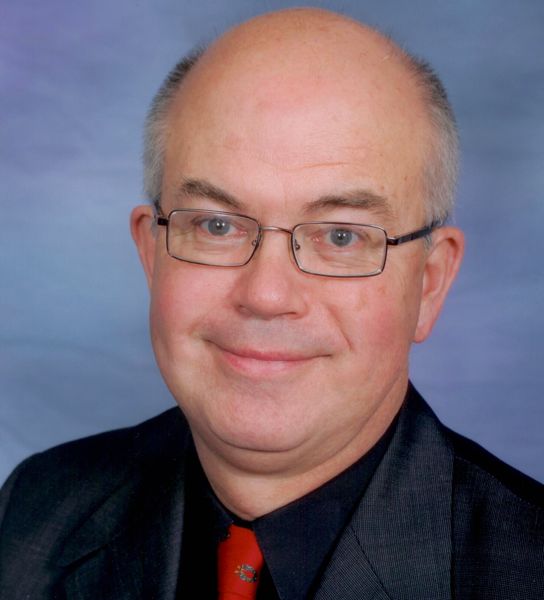
Dave Jinkens

4. The project is bad for the city of South Lake Tahoe tax base and local economy in a city that already has an unemployment rate last reported over 17 percent where small businesses are struggling under a poor local economy and enormous bureaucratic and regulatory control in the Tahoe region;

5. The project will likely require the use of eminent domain to acquire all or a portion of the parcels needed because many owners are not in favor of selling yet there is no agency that has expressed its intent to use eminent domain to acquire the properties. TTD does not have the power of eminent domain. Caltrans will not use eminent domain, and the City Council of South Lake Tahoe, where the project is located, has not expressed its intent to use this extraordinary confiscatory process. I applaud the city for not doing so;

6. Eminent domain is a highly controversial tool that most residents of the city do not favor even if a California public agency chose to use it;

7. The project has not received environmental clearance under the California Environmental Quality Act (CEQA) and is arguably a premature grant application. TTD is proceeding independently as though the project has received all necessary approvals.

8. The project and application for grant funds to implement this incomplete project arguably places a cloud over title of the residential and commercial properties subject to acquisition. This could will discourage investment in the properties by property owners and reduce the likelihood that lenders will make loans available for improvements; and

9. The project arguably creates potential claims in inverse condemnation. Approving a project that does not have the support of owners of property to be acquired who cannot then get loans to improve or repair their properties could create the case and argument of a “taking.”

As you know from the petition in opposition that was submitted to you by Michael McKeen (a directly affected party), there is growing opposition to the project by the people of South Lake Tahoe who are most directly negatively impacted by the Project and by people living in the area.

The Tahoe Transportation District needs to do its homework and leg work with the people most impacted by this project and gain their support before seeking funding for it and attempting to implement it. Opponents do not see the project in its present rendition as a fait acompli.

I would argue as well that even if the project proponents overcame the objections of directly affected property owners, it will have a negative impact on existing business in South Lake Tahoe by dramatically shifting the shopping base to the Nevada side of Stateline. All of us have a high regard for our fine Nevada neighbors, but not to the extent of damaging the business base in South Lake Tahoe. The city of South Lake Tahoe needs to focus its attention and efforts on improving the economy and lives of the people living and working in South Lake Tahoe first.

I urge the City Council to oppose the Loop Road Project in its present rendition and support local business owners and residents who oppose it for the reasons stated above. I ask that the City Council place this matter on the agenda in the near future so that clear direction from the City Council is provided for all to see and hear in advance of the general election in November.

Thank you and best wishes,

Sincerely,

David Jinkens, retired South Lake Tahoe city manager and community advocate


Sand Harbor providing special beach wheelchairs for free

Lake Tahoe Nevada State Park’s Sand Harbor has two new beach accessible wheelchairs for public use.

In order to safely get near the water, these chairs are mounted on large inflatable tires designed for travel on soft sand and include a beach umbrella. The chairs are not motorized and will require assistance from a family member or friend.

The chairs may be checked out at Sand Harbor’s main office. Call ahead at (775) 831.0494 to ensure availability. There is no cost for this service.

The beach accessible chairs were purchased through the Tahoe License Plate grant program. These funds are made possible by citizens who purchase a Lake Tahoe personal license plate for their vehicle.


Douglas County sheriff’s colleagues unknowingly part of kidney swap

By Jaclyn O’Malley, Reno Gazette-Journal

Two and a half weeks ago, four Northern Nevadans traveled to San Francisco to partake in a kidney-swapping transplant surgery that would end their days on dialysis and help them regain their lives.

The donors volunteered to give their kidneys to either their spouse or friend, but their kidney was not a match. So, they were all put in a database at California Pacific Medical Center that matches kidneys according to blood type and best genetic match.

The local groups who entered the program included a married couple from Gardnerville and two good friends from Carson City and Minden. In a conference room Thursday at California Pacific Medical Center, they and other donors and recipients got to meet for the first time.

But Walter Cooling of Gardnerville had actually known his secret donor, David Brady, of Minden, for 17 years. Brady was a reserve for the Douglas County Sheriff’s Office while Cooling had been a deputy.

“I’m gonna pay for this for the rest of my life,” Cooling joked to Brady. “Thanks buddy, you saved my life … I was on dialysis for two years. This man saved my life. It’s a miracle.”

All gave each other big, lasting embraces and endless smiles.

While Diane Cooling, 55, of Gardnerville, was not a match to donate her kidney to her husband, 67, she was able to give her kidney to Christina Abeyta, 43, of Newman, in the San Joaquin Valley.

The women held hands and beamed.

“It’s exciting to be part of this and to help two people at once,” Cooling said. Because she agreed to donate her kidney to a stranger, her husband was able to be in the swapping program.

Steven Katznelson, medical director of the center’s kidney transplant program, said everyone was ahead in their recoveries and were part of creating awareness of the ability of live donation to hasten waiting list times. He said their recoveries should take about six weeks. Brady has already been working out, running.

Diane Cooling said she learned about the kidney swapping program through the hospital. She said the surgery was fairly easy and she’s struggling to do the doctor-recommended “taking it easy.”

“Once I learned about the program, I said, ‘Sign me up,’” she said.

Abeyta’s husband, Gilbert, 40, had wanted to donate his kidney to his wife, but it wasn’t a match. Like Diane Cooling, he knew that if he donated to a stranger in the swapping program, his wife would get matched. His kidney went to Bonnie Morrissey of California.

“I’m blessed,” Christina Abeyta said.

Brady has been friends with Reagan Eilers, 57, of Gardnerville for 27 years, meeting through softball. When Eilers’ kidney began failing, Brady wanted to donate to him. But they weren’t a match. Like Cooling and Gilbert Abeyta, he knew by donating to a stranger his friend would get his much needed kidney.

He never would have imagined his kidney would go to his old friend Walter Cooling.

“We saw each other in the hospital ,and I secretly hoped he would get mine because then he’d owe me,” Brady joked. “I’m thrilled to be able to make a contribution.”

Monterey Morrissey, 61, of Santa Rosa, Calif., had intended on donating his kidney to his wife, Bonnie, 61. But they didn’t match. He was a match for Eilers.

“I feel great,” Eilers said. “Dialysis is no fun. I had too much stuff to do for the next 25 years.”

Eilers said his kidneys began failing within in the last six to seven months.

“When the doctor said I needed a transplant, I talked to Dave, and he said he wanted to donate right away,” he said.

Brady, like Diane Cooling, said the decision to donate was an easy one.

“The opportunity to make a difference in someone’s life was my primary drive,” he said. “Giving it to (Cooling) is like the icing on the cake.”

Dave’s wife, Mary, said his kidney donation was “just like Dave to do. I wasn’t surprised.”

She said that she can see a dramatic change in Eilers, down to his coloring, energy and mood.

“There’s a lightness about him,” she said.

Eilers’ wife said the transplant has ensured that her husband will be able to walk their daughter down the aisle as she marries later this summer. He’s also regained his sense of humor and the couple have been going out on walks together.

“I hope that people hear this story and it encourages others to look into donating,” she said. “It’s life changing. Look at what it does. And it helps more than one person.”

Diane Cooling saw a similar change in her husband.

“I watched my husband the last two years as his kidneys failed, trying to work through dialysis,” she said. “It’s not a great quality of life … this has given him a new opportunity to move forward in his life, because it was on hold. He had no freedom on dialysis. Now he has the freedom to travel and life a normal life. You can’t measure that.”

Fallen Leaf Lake moving on despite lingering voter issue

By Kathryn Reed

FALLEN LEAF LAKE – Who can vote at Fallen Leaf Lake continues to be a murky issue, but clarity was brought to the boat inspection process.

The board of this community services district met Saturday at this lake that sits on the edge of Desolation Wilderness.

What was learned just this month is that the board missed the deadline to be able to appoint two members to fill out the five-member board. Now it is up to El Dorado County to either appoint two people or call for an election. If the latter were to occur, the vote could be on the November ballot.

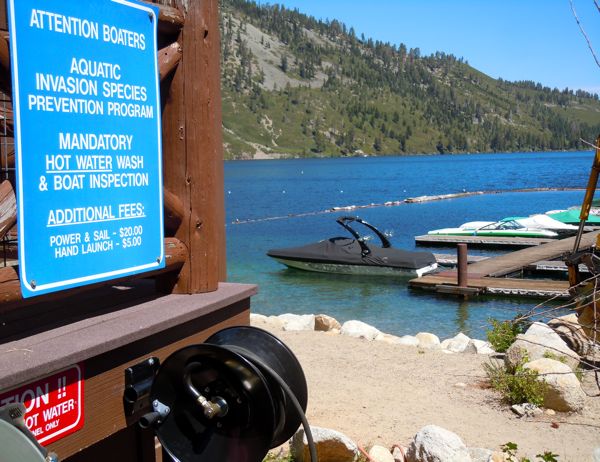
Full decontamination of boats is not offered at Fallen Leaf Lake. Photo/Kathryn Reed

Two people applied for the board – Joan Cathcart and Larry Calof. The board has recommended to the county that these two be appointed.

Mike Cathcart, who is an attorney but was not offering legal advice to anyone at the meeting or to the board, said the main issue with who can vote in the district centers on a local U.S. Forest Service interpretation. Whoever is named as the primary permitee of a USFS parcel is not allowed to vote.

Cathcart said that issue still needs to be resolved, adding that he has calls into Forest Service officials outside the basin.

“We need to make everyone who wants to vote to feel comfortable to do so without the threat of losing their permit,” Cathcart said.

As for the definition of domicile, Cathcart said the district attorney “recognizes that second homes can be domiciles.”

The voting issue has caused much consternation among those who have homes at Fallen Leaf Lake. The differing sides came together last year trying to get Assemblywoman Beth Gaines, R-Roseville, to carry legislation that would determine who had the right to vote. It never came to a vote. And Gaines, after the November election, because of redistricting won’t be the rep in the Assembly for this area even if she wins.

Who can vote also determines who can be on the board. A board members needs to be a registered voter in the Fallen Leaf Lake Community Services District.

While there has been talk of dismantling the CSD and creating a homeowners association, this is easier said than done. Legal settlements from 20 to 30 years ago play a role in what can take place.

But the board is moving forward with the job at hand — to oversee the marina, store and fire department.

Aquatic invasive species

Fallen Leaf Lake will continue to use its apparatus near the boat launch to clean the exterior of all boats. Being able to pump 1 gallon of 140-degree water a minute is sufficient to wash away any potential invasives that are on the watercraft.

However, being able to pump 5 gallons of 140-degree water in a minute is what’s needed to cleanse a motor of any quagga mussels that may have become attached to the vessel.

Because the marina does not have that capability any boat that cannot prove it was last launched at Fallen Leaf or Lake Tahoe will have to be inspected in Meyers – the nearest decontamination station. About 10 boats last season had to make the trip back to Meyers.

Fallen Leaf Lake has zero aquatic invasive species, unlike Lake Tahoe that has Asian clams, milfoil and other undesirables.

In other action:

• Jeanne Lear with South Tahoe Refuse explained how residents can use the blue bag recycling program.

• The preliminary budget for 2012-13 was talked about. Fire Chief Gary Gerren talked about how this fire season is likely to be bad, with conditions much like 2007, so he has requested more funds for more staffing and training. The final budget will need funding for the election if one were to occur.

• The swim platform should be in the water in the next two to three weeks.

• The concessionaire has brought in more than $50,000, with the marina and store open for less than a month. That is $50,000 more than this time last year.


Death Valley road to stay closed to the public

By Louis Sahagun, Los Angeles Times

Inyo County has lost a six-year legal battle for control of “Last Chance Road,” an alleged public highway that starts in a desert wash and peters out at several spots halfway up a small hill on Death Valley National Park’s northern edge.

The county had sought to open the road for public use, but environmentalists had fought to keep it closed.

“This is a great ruling for Death Valley National Park and the wildlife that calls it home,” said Ted Zukoski, an attorney with Earthjustice. “It means that an alleged road through federal wilderness will remain closed to vehicles.”

U.S. District Court Judge Anthony W. Ishii ruled Wednesday that the county failed to prove the half-mile sliver of wilderness terrain was established under a Civil War-era right-of-way law known as R.S. 2477.

Although the law was repealed more than four decades ago, routes established before then were allowed under a grandfather clause.

Read the whole story


Take a tour of historic Al Tahoe neighborhood

New this year is a Walking Tour of Al Tahoe sponsored by the Lake Tahoe Historical Society.

The tour begins at the Lake Tahoe Museum (3058 Lake Tahoe Blvd., South Lake Tahoe) and covers just more than one mile.

A $5 donation for the booklet is requested.

For more information, call (530) 541.5458.