Firefighting helicopter calls Tahoe National Forest home

Tahoe National Forest fire crews are ready just in case a fire breaks out in the region.

Helicopter 514 is in place at the White Cloud station on Highway 20. Other suppression support is also there for the 15-member crew.

The Bell 212 is is a medium size helicopter that can carry water, firefighting supplies and a crew of eight. Advantages to it over the larger tankers is the ability to get into confined spaces as well get personnel to remote locations.


Tahoe Tales — Adoptable Pets in South Lake Tahoe

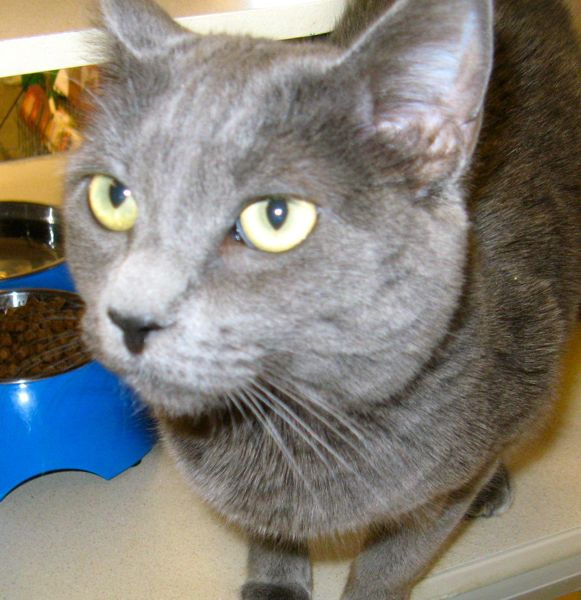
There’s really nothing witchy about this very friendly shorthair cat who has beautiful gray, velvety fur. She is a real sweetheart.

Found as a stray, Witchy loves to be stroked and she’ll play all day with you and other cats.

Witchy is spayed, microchipped, and vaccinated. She is at the El Dorado County Animal Services shelter in Meyers, along with many other dogs and cats who are waiting for their new homes.

Go online to see photos and description of all pets at the shelter.

Call (530) 573.7925 for directions, hours, and other information on adopting a pet.

For spay-neuter assistance for South Tahoe residents, go online.

— Karen Kuentz


Snippets about Lake Tahoe

• Shaun White will not defend his skateboarding title at the X Games in LA this month.

• Best Tahoe West in South Lake Tahoe is now America’s Best Value Inn.

• Kent “Hoop” Hoopingarner is moving from GM of Homewood to executive director of mountain development at JMA Ventures, the owners of the West Shore ski resort. Kevin Mitchell loses the assistant in his title and is now general manager of Homewood.

• The Hardcore Baseball World Series will be played mostly in South Lake Tahoe from July 27-Aug. 2.

• These are the weekly roadwork schedules from Caltrans – El Dorado-Tahoe and Sierra.


California to stop buying electricity from Nevada coal-burning power plant

By Matt Weiser, Sacramento Bee

The state Department of Water Resources will stop buying electricity from a coal-burning power plant in Nevada next year as part of a plan to reduce its greenhouse gas emissions.

The department has been a leaseholder in the Reid Gardner Power Station in Moapa Valley, Nev., for 30 years. DWR holds a two-thirds interest in one of four generating units at the plant, located about an hour north of Las Vegas and owned by NV Energy, a publicly traded utility company.

Electricity from the plant primarily serves DWR’s State Water Project, the nation’s largest water diversion system and the single largest energy consumer in California. The electricity required to pump water out of the Sacramento-San Joaquin Delta and over the Tehachapi Mountains is responsible for 2 to 3 percent of all the energy demand in California, said John Andrew, assistant deputy director at DWR.

DWR will not renew its contract at Reid Gardner when it expires in 2013, Andrew said, one of several measures in a Climate Action Plan released by the department this month.

Read the whole story


Opinion: Legalized online gaming would be good for California

By Richard Bronson

I love to look into the past to find clues to the present and the future. It is amazing how you can connect the dots of history and visualize the road ahead. You can see clues in the rearview mirror that are shaping the world of the Internet and online gaming, the most exciting new technology industry in the world today.

Interestingly, I am seeing more of these bread crumbs dusted along the highways and byways of California, where the prospective gold rush of this new industry is a sleeping giant, ready for its awakening moment of impact.

It was in San Francisco in the 1840s and 1850s that California’s gaming legacy was born – during the boomtown days of the mad dash for rare nuggets in the Sierra Nevada. Card rooms and poker parlors dotted the avenues and you could wager on everything from jumping frogs to arm-wrassling on any corner. Now, more than 150 years later, there are as many types of legalized and regulated gambling in California as in any place in America or the world.

Richard “Skip” Bronson is chairman of U.S. Digital Gaming.

Read the whole story


STPUD changing how water is distributed in Alpine County

By Kathryn Reed

WOODFORDS – Mark Twain was ahead of his time in so many ways, but as it relates to today, his quote, “Whiskey is for drinking; water is for fighting” may be the most important.

To avoid future fights over the clear liquid, the South Tahoe Public Utility District is being innovative in its approach to trying to stay ahead of the curve, while following the state and federal regulations it must comply with.

The Porter Cologne Act of the 1960s mandates all treated sewage and wastewater be exported out of the Lake Tahoe Basin no matter how clean it is. Some say this water from the South Tahoe PUD is better than what comes out of spigots in San Diego that people are drinking every day.
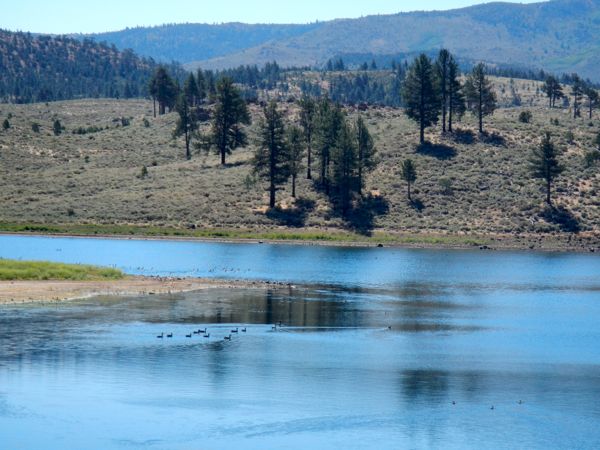
Harvey Place Reservoir in Alpine County is where treated wastewater from South Tahoe Public Utility District is stored. Photos/Kathryn Reed

And while district officials thought one day treated wastewater would be able to be used for irrigation in the basin, that day has not come nor is it likely to happen in the foreseeable future.

Considering recyclable water in Palm Springs sells for $3,000 an acre-foot, this stuff is valuable.

And the district wants to tap into it. For years it has been giving away 2,000 acre-feet of treated water to farmers in Alpine County. It’s been a mutually beneficial arrangement with farmers getting water for free and the district able to unload water for free.

But things are likely going to change when the current five-year agreement expires in 2015. That irrigation water for farmers in the Diamond and Ward valleys may go from free to fee.

(Current law prohibits treated California water from being used in Nevada, but the district is working to change those rules because Silver State farmers are interested in using this water.)

The future for STPUD

This summer begins the first of three phases of a project that will ultimately allow South Tahoe PUD the ability to generate power to run the irrigation system on the land it owns in the Diamond Valley as well as eventually sell power back onto the grid.

“Water is more and more valuable,” South Tahoe Public Utility District spokesman Dennis Cocking said last week while giving Lake Tahoe News a tour of its ranch in the Diamond Valley as well as the farms that benefit from the South Shore’s treated wastewater. “Water is no longer cheap and plentiful.”

The utility district bought the old Heise Ranch seven years ago after seeing the writing on the wall that farmers were starting to divvy up their land and therefore there may not be a place for this treated water. Laws require the treated water be sprayed on 100-acre parcels or larger.

Hal Bird with the district is in large part responsible for having the vision for the district to purchase the land and get on the road of being less dependent on others. The goal is self-sufficiency. He is also behind the improvements to make this land function at its highest level.

The original farmhouse is being restored and will one day be his office.

Most of the roads on the farm are dirt or gravel. It looks much like a working ranch. There is no evidence this land belongs to a water-sewer district and not to a bona fide farmer.

Besides giving water to farmers, for Alpine County to say OK to the STPUD-farmers’ agreement, the district had to make other concessions – like creating a fresh water fishery at Indian Creek Reservoir, stocking it every year with 15,000 pounds of trout and other commitments.

Had it not been for the federal mandate to pump the water away from Lake Tahoe, STPUD ratepayers would not be funding these improvements to Alpine County. Plus, 38.9 percent of each STPUD sewer bill goes to meet the demands of the Porter Cologne Act.

Alpine County residents weren’t thrilled at first with the idea of taking Tahoe’s wastewater. “We don’t want Tahoe’s crap” were common bumper stickers.

Now, though, the relationship between the county and STPUD is amicable.

Before the hydropower project truly gets under way the Army Corps of Engineers must sign off on the old Heise property not being a wetlands. That is expected in the next year. The land is drying out now – proof it is not a natural wetlands.

The pipes are being put in this summer. Inside them will be turbines that generate power. The in-conduit line generates the hydropower, Cocking explains.

“It’s a great way to get our feet wet in hydropower,” he said.

California keeps mandating power companies acquire more and more power from renewable sources. What South Tahoe PUD generates could help Liberty Energy fulfill this mandate.

Power from this project may be generated in 2014.

(In large part the 5 percent sewer rate the board approved in May that will take effect July 1 is paying for this project by being the money needed to pay back a low interest loan the district has secured from the state.)

Along the lines being installed will be three pivot irrigation systems that will allow for some of the acreage to be irrigated. The alfalfa could be sold or used as pasture land for cattle. Even now some of the district’s land is filled with cows munching away on the grasses or just lounging in this fertile valley – looking like they are sunbathing in this idyllic spot of the Sierra.

Transporting wastewater

The export line leading from the plant in the middle of South Lake Tahoe goes into Meyers, then along Highway 89 over Luther Pass, down to Diamond Valley where it comes out into a creek before going into the Harvey Place Reservoir. This effluent travels 26 miles.

The late Hubert Brons – a farmer, Alpine County supervisor, and Lahontan Water Quality Control board member – came up with the idea of the reservoir as a holding pen of sorts for water for farmers.

Devices were created so the treated water from STPUD did and still does not flow back into the Carson River – a main source of water for farmers.

As Cocking said, one would think with 5 million gallons a day of water coming out of the pipes, it would be a turbulent affair. Instead it looks like a good flowing mountain stream. And it looks like any other stream – like fresh water that one could use to fill her water bottle with.

The export line started working April 1, 1968. A lot of leaks sprung in the 1980s, necessitating most of the portions within the basin to be replaced in the 1990s. No longer does it go through Grass Lake, but instead skirts this area near the top of Luther Pass.

Grass Lake is one of a handful of identified peatlands areas in the Sierra, with another being the Sagehen Valley near Truckee.

Getting the wastewater pipeline out of this marshy area was of environmental significance.

In the 1990s, Tim Leslie, who at time represented the Tahoe area in the California state Senate, helped STPUD secure a variance to the Porter Cologne Act that allowed for six fire hydrants to be put in along Grass Lake Road that could be tapped in the event of a catastrophic fire. Lake Valley and U.S. Forest Service fire crews have access to those hydrants.

At the end of that road is the Luther Pass Pump Station where two huge tanks sit empty – and ideally always would. But just in case power and all back up power fails the 400,000 gallons intended for the other side of the hill would flow back into the tanks. This is designed to prevent a spill that would contaminate the Upper Truckee River as well as nearby land.

Inside the pump house is the equipment needed to get the effluent over the pass. This water is going up 1,200 vertical feet in six miles.

From Harvey Place Reservoir the water goes out the Diamond Ditch, which if one looks closely enough can be seen along the hillside. It then flows into the Diamond and Ward valleys for farmers to divert as needed.

ngg_shortcode_0_placeholder (Click on photos to enlarge.)


Opinion: Generation Entitlement has more lessons to learn

By Ruben Navarrette Jr.

I submit that most of us have a commencement address tucked away, containing some choice words of wisdom that we’d love to share with high school or college graduates if we ever had the chance.

This year, David McCullough Jr. – an English teacher at Wellesley High School in Massachusetts and the son of the Pulitzer Prize-winning historian David McCullough – was given that chance. And he didn’t waste an ounce of it. In fact, he turned in an A-plus performance that has talk radio and the Internet buzzing.

Ruben Navarrette Jr.

Commencement speakers usually tell graduates what they want to hear – how great they are, that the world is waiting for them with open arms, that they can accomplish anything in life they set their minds to. McCullough provided the Wellesley graduates a valuable service by telling them what they needed to hear – namely, “You’re not special.”

It’s a simple message. But it’s an essential one. That’s because, as McCullough told the graduates, too many of them have been “pampered, cosseted, doted upon, helmeted, bubble-wrapped” and otherwise protected from the cold, cruel world for too long.

The message must have been difficult to hear for those parents in the bleachers who did the pampering. They did their children no favors by teaching the little darlings that the world revolves around them.

These are the kids who, as infants 18 years ago, prompted us to drive carefully because the little yellow sign in the rear window of the family minivan warned us that there was a “Baby on Board.” These are the students whose self-esteem, we feared, would suffer if teachers graded their papers with a red marker. And these are the young athletes who were all assured a trophy just for showing up.

It doesn’t matter if the world doesn’t see them as special. What matters is that they see themselves this way. Move over, Generation X. This is “Generation E,” and the “E” stands for “entitlement.” And, for many, what they feel entitled to is our undivided attention and constant adoration.

Generation E might not be anything special. But McCullough’s speech certainly was, and it was because of lines such as: “Dream big. Work hard. Think for yourself. Love everything you love, everyone you love, with all your might.” And this: “Climb the mountain not to plant your flag, but to embrace the challenge, enjoy the air and behold the view. Climb it so you can see the world, not so the world can see you.”

This is what I would have added to McCullough’s speech: “Success is easy to handle. But if you’re lucky, as you go through life, you’re going to fail. Maybe a lot. After all, if you get everything you want, it’s a good sign that you’re not setting your goals high enough and you need new ones. You’ll get knocked down. Maybe often. Everyone does. It’s how you respond to the defeats and setbacks – whether you can persevere and press on – that will shape your character and determine your destiny.”

This generation doesn’t need any more coddling. What it needs is straight talk and a reality check. And, in at least one high school, students got both thanks to an English teacher who did his homework.

Ruben Navarrette Jr. is a columnist with the Washington Post Writers Group.


South Tahoe Rotarians looking for professionals to send to India

Rotary Club of South Lake Tahoe is seeking four outstanding professionals to visit Andhra State, in South Eastern India during January and February 2013 as part of the Group Study Exchange program of the Rotary Foundation of Rotary International.

The exact travel dates have not yet been set, but the team is expected to leave in early to mid-January and return about four weeks later.

Through the program, teams of young professionals from two different countries exchange visits. For four to five weeks, team members experience the way of life, customs, and vocational practices of another country, while sharing information about their homeland. If selected, team members will be expected to attend at least three all-day training and orientation sessions in the Reno-Tahoe area in the four months prior to their departure for Brazil. The training sessions are normally conducted on Saturdays.

The purpose of the Group Study Exchange program is to promote international understanding and goodwill through personal connection. While abroad, team members stay in Rotarians’ homes and have the opportunity to meet their professional counterparts. They also give presentations to Rotary clubs and other groups about their home country.

The Rotary Foundation pays for round-trip airfare, and Rotary club members in the host country provide meals, lodging, and group travel in their district. Team members pay for personal and incidental expenses.

Young adults between the ages of 25 and 40 who are interested in applying should be employed full-time in a business or profession, and should be able to travel, with their employer’s permission, for the entire trip. Applicants must live or be employed in Rotary District 5190, which includes north-eastern California and northern Nevada. Team members are chosen through a process that includes an application and interview.

For information or to receive an application, contact John Upton at (530) 541.0525 or rkupton@aol.com or Cynthea Preston at (530) 541.4660, ext. 225 or preston@ltcc.edu. Applications are due by July 20.


TRTA plans slew of hikes in July

With the start of the summer hiking season upon us, Tahoe’s peaks, wildflowers and vistas are beginning to beckon. Enjoy the wonders of the Tahoe Rim Trail with a free guided hikes in July.

These hikes are great for all abilities (shorter hikes are most appropriate for kids).

Advanced online registration is necessary.

July 6 – Van Sickle Family Friday Hike (2.2 miles) – The Tahoe Institute for Natural Science and the Tahoe Rim Trail Association are sponsoring this fun, family friendly interpretive hike each Friday in July. Participants will enjoy interesting facts about the history, flora and fauna of Van Sickle Bi-State Park and Tahoe. This is the perfect hike to take your family out on.

July 6 – Tahoe Mountain Sports Leave No Trace Sunset Family Hike (3 miles) – Tahoe Mountain Sports, the Leave No Trace Center for Ethics and the Tahoe Rim Trail Association are teaming up for a fun and educational hike that will include interactive Leave No Trace activities, night hike games and prizes for the entire family. Tahoe Mountain Sports will also provide a variety of headlamps to demo. Bring dinner for a sunset picnic on a ridge overlooking lovely Lake Tahoe.

July 13 – Van Sickle Family Friday Hike (2.2 miles) – The Tahoe Institute for Natural Science and the Tahoe Rim Trail Association are sponsoring this fun, family friendly interpretive hike each Friday in July. Participants will enjoy interesting facts about the history, flora and fauna of Van Sickle State Park and Tahoe. This is the perfect hike to take your family out on.

July 17 – Hawley Grade History Hike (6 miles) – Join us for a journey into the past as we hike a portion of the original trans-Sierra emigrant route and Pony Express trail through the Sierra. Learn a little of the history of the early settlers as we hike from the Tahoe Valley floor near Meyers and climb to the junction with the Tahoe Rim Trail just past Echo Pass.

July 20 – Van Sickle Family Friday Hike (2.2 miles) – The Tahoe Institute for Natural Science and the Tahoe Rim Trail Association are sponsoring this fun, family friendly interpretive hike each Friday in July. Participants will enjoy interesting facts about the history, flora and fauna of Van Sickle Bi-State Park and Tahoe. This is the perfect hike to take your family out on.

July 21 – Big Meadow to Echo Summit Backpack (about 8 miles/day) – Complete a beautiful segment of the TRT on this overnight backpack trip led by experienced TRTA guides. Beginning at Big Meadow trailhead, this hike will follow a scenic journey through wildflower covered meadows and past the shady shores of Round Lake. Participants will enjoy an overnight at Showers Lake. Hikers must be in very good physical shape and able to carry a backpack weighing 25-35 pounds, plus some group supplies.

July 27 – Van Sickle Family Friday Hike (2.2 miles) – The Tahoe Institute for Natural Science and the Tahoe Rim Trail Association are sponsoring this fun, family friendly interpretive hike each Friday in July. Participants will enjoy interesting facts about the history, flora and fauna of Van Sickle Bi-State Park and Tahoe. This is the perfect hike to take your family out on.

July 30 – PCT Travels the TRT (7 miles) – The Tahoe Rim Trail and the Pacific Crest Trail share more than 20 miles in Desolation Wilderness. Hiking on the PCT/TRT to Lake Aloha from the Upper Echo Lake water taxi, one will hike steadily on rocky terrain. The destination for this hike is the shore of Lake Aloha with its unique landscape of windblown trees and small flat, rock islands. We will enjoy snacks and lunch on the rocky shores of Lake Aloha before returning to the Echo Chalet. Fees: $20 cash for water taxi/person, as well as cash for ice cream and a cold drink at Echo Chalet after the hike.

For further details on what to bring and other dates and locations, visit the Tahoe Rim Trail Association website.


Proposal for El Dorado County coordination committee moves forward

By Carlos Alcalá, Sacramento Bee

Efforts to create an El Dorado County advisory committee for “coordination” will move forward, after the Board of Supervisors on Tuesday gave qualified approval to a proposal by Supervisor Ray Nutting.

Coordination refers to an effort by the county to have an earlier and more effective say in federal and state policy decisions in the county, particularly regarding use of public lands.

Supervisors did not approve establishing a committee, as Nutting has proposed, but asked staff to work with Nutting and Tim Roffe – Nutting’s designated coordination expert – to develop a more concrete proposal.

Nutting and Roffe’s concept would be a committee of local experts who would offer input to the other governmental bodies, based on policies established by supervisors.

The matter is due to return to the board in late July.