Ruling could slow pace of Indian casino development

By Steve Green, Las Vegas Sun

Wall Street analysts say a U.S. Supreme Court ruling could stall development of some Indian casinos around the country — a situation that casino opponents are already seizing upon.

The court on this month allowed a lawsuit to proceed in which a foe of the Gun Lake Casino in Michigan, David Patchak, is challenging the federal government’s decision to take land into trust on behalf of the Gun Lake tribe — a key step in establishment of Indian reservations and casinos.

The Gun Lake casino was developed in partnership with Station Casinos LLC of Las Vegas, which has a 50 percent interest in the casino management company. It opened in February 2011. Gun Lake won’t be affected anytime soon — if at all — by the court ruling since the court didn’t rule on the merits of the casino foe’s lawsuit. It simply allowed his suit to proceed.

Nevertheless, analysts at Fitch Ratings on Tuesday said the ruling could have ”several key credit implications for the gaming sector.”

The ruling is likely to increase challenges from Indian casino foes to land-into-trust decisions for tribes, Fitch said.

That’s partly because it lengthens the statute of limitations for court review of such decisions from 30 days to six years, the Fitch analysts said in a report.

”Raising capital for Native American casino projects could become more difficult/expensive, as investors are likely to have heightened concern about potential challenges regarding land-into-trust decisions,” Fitch said.

But in a bit of good news for established Indian gaming operations, the decision may benefit them by delaying competing projects, Fitch said.

Some of the tribes that could be affected are the Graton Rancheria and North Fork Rancheria in California, Fitch said.

Read the whole story


New TSA security screening showing only generic outline coming to Reno

By Bill O’Driscoll, Reno Gazette-Journal

The Transportation Security Administration is preparing a new screening device at Reno-Tahoe International Airport that will show only a generic outline of a person and not passenger-specific images.

The Advanced Imaging Technology unit will be used at the airport’s second-floor north Concourse C checkpoint only while the airport undergoes a major renovation which by spring 2013 will merge the Concourse B and C security screening areas into one location on the ground floor.

Concourse C is the gateway to US Air, Alaska, American and United airlines. Concourse B, serving 65 percent of all airport passenger traffic, is the route to Delta and Southwest airlines gates.

In a news release today, TSA officials said the agency has installed more than 720 of the full-body scanners at more than 180 airports nationwide to screen passengers for metallic and non-metallic threats, including explosives, without physical contact.

An airport official said the new machinery will reflect more stick-figure outlines, replacing scanners that have been criticized on privacy grounds for showing individual body outlines.

“It makes people feel better about going through with no accurate depiction of their body,” said Brian Kulpin, spokesman for Reno-Tahoe International Airport.


Hired guns stake their ground in Raley’s labor negotiations

By Dale Kasler, Sacramento Bee

On one side is a third-generation union man, leader of a labor empire stretching from the Oregon border to Death Valley.

On the other is a veteran labor-relations consultant and Republican politico with a history of tangling with unions in the public and private sectors.

Little wonder they have trouble getting along.

Jacques Loveall and Bob Tiernan are two of the leading actors in the labor drama that’s gripped Northern California’s supermarket industry over the past few months. They couldn’t come from more radically different backgrounds.

Loveall, 50, a self-described “union man for life,” is president of United Food and Commercial Workers Local 8-Golden State in Roseville. He succeeded his father as local president and signs every message to his membership with the slogan, “Solidarity Works!”

Tiernan, 57, leads the contract negotiating team at Raley’s. A lawyer by trade, he’s a former Republican legislator and state GOP chairman from Oregon. He once helped a small Berkeley supermarket chain dislodge its union. He joined Raley’s about a year ago.

Nine months of bargaining on a new contract have left labor and management in a tense and increasingly bitter standoff. It could lead to the first strike in Raley’s 77-year history.

In a recent memo to his members, Loveall referred to Tiernan as a “small-time union buster,” a reference to Tiernan’s work in Berkeley. Loveall also said Tiernan “is in over his head.”

Tiernan said last week he’s no union buster – just someone trying to help Raley’s regain its competitive edge in a grueling business. He said Loveall “seems either to have a lack of knowledge or refuses to acknowledge that Raley’s needs to control its costs.”

Raley’s has declared an impasse in order to put more pressure on the union. Workers voted to authorize a strike. A walkout doesn’t appear to be imminent, but no negotiations have been held since June 8. Both sides say they won’t let the situation go on for much longer.

“We need it over,” Tiernan said.

Loveall and Tiernan, of course, aren’t the only participants in this rift. Two other UFCW locals are involved, Local 5 in San Jose and Local 648 in San Francisco. And two other grocery chains are struggling to negotiate contracts with the union, Save Mart and Safeway.

Save Mart might actually be closer than Raley’s to a strike. Local 5 officials last week said talks with the Modesto grocer had reached a “crisis situation” and the local has scheduled a strike-authorization vote for this week.

Read the whole story


2 Republicans on November ballot for area Assembly seat

By Jim Sanders, Sacramento Bee

Andy Pugno came from behind Friday to win a spot on the November ballot, but he must decide whether to keep a promise to support his Assembly opponent, fellow Republican Beth Gaines.

Pugno overtook Democrat Regy Bronner by about 800 votes, largely on the strength of Placer County provisional, write-in and other ballots received on Election Day and counted the past two weeks, ending with a final tally Friday.

The 6th Assembly District extends into Sacramento and El Dorado counties, which finished their vote count days ago.

Pugno, a Folsom attorney, won the right to fight Assemblywoman Gaines, of Rocklin, in what could be a rerun of the costly, fiery, no-holds-barred race that rocked the newly drawn Assembly district in recent months.

Gaines, a Rocklin resident, easily finished first in the primary for a seat to represent the largely Republican district, based in Placer County but stretching into Folsom, Fair Oaks, Orangevale and El Dorado Hills. However, this seat will no longer stretch into South Lake Tahoe.

Read the whole story


South Lake Tahoe: A link between the people and the action


By Kathay Lovell

I will never be able to get out of my mind the sights and smells of the Angora Fire. I was at ground zero on the morning of June 25, 2007. I never want anyone to experience that again – the loss of their mementos, personal belongings and their beloved pets. All things lost during the fire that can never be replaced.

Angora Fire -- 5 years later

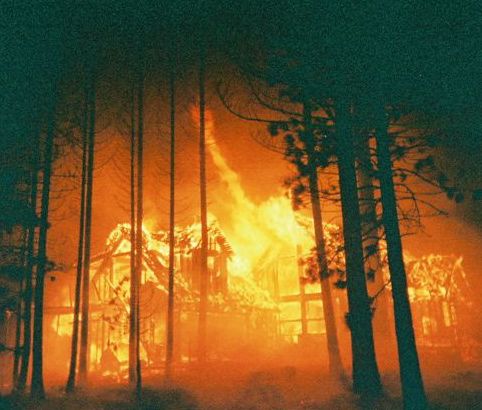
In my opinion, South Lake Tahoe forever changed at 2:15pm, June 24, 2007. I was mayor at the time of what would be later known as the Angora Fire. The events over the course of the next week following the fire were the most difficult times for our community. Others will recount the details of the cause and circumstances of the fire.

For me, the most vivid details started shortly after the fire started. From my house I had a clear view of the initial plume. I knew it was trouble just by the heat, wind, and a very dry previous winter. I snapped a few pictures from my Blackberry and sent them to the city manager who was working that Sunday at the airport. We spoke briefly and he said that this was a significant event. According to the city’s fire chief, the fire at that time was within the jurisdiction of the county but on track to move toward the city. Details were sketchy, but the conditions and location of the fire caused great concern. The city manager and I decided it was imperative to open the Emergency Operations Center (EOC) located at the airport in the City Council chambers just in case the fire escalated.

I left my home for the EOC never imagining how aggressive the fire had become or was about to be. We (the city manager, police chief, city clerk, city attorney, and a few senior staff members and myself) were briefed. The fire wind gusts were up to 50 miles per hour and the fire area was heavily timbered with a dense canopy in the path of hundreds of homes. People were being evacuated. Federal, state, and local fire agencies responded on the initial attack and it quickly became evident that home protection and evacuations were the priorities.

The appropriate staff and other local agencies were notified the EOC was being opened. It seemed like within minutes the room was full. There wasn’t a lot of talking at first, everyone was setting up tables, computers, and phones lines were being drug across the floor. The city’s information technology staff was laying additional lines and setting up fax machines and televisions. Different public safety agencies were flowing in. Staff was soon making arrangements at the Parks and Recreation Center for evacuees. The pre-existing disaster recovery plan was in full swing.

Everyone was very professional and operated in a unified environment. The mission we were tasked with was to gather information as it was coming in and disseminate out to the public as quickly as we could. It was very fluid. I called the El Dorado County sheriff and undersheriff to tell them how serious this fire was and how quickly it was spreading. The sheriff immediately dispatched this county EOC staff. The fire chiefs and U.S. Forest Service had immediately made all the necessary requests for other additional assistance.

Kathay Lovell speaks about the Angora Fire while the governors of Nevada and California, Lake Tahoe Basin fire chiefs and Sen. Dianne Feinstein, D-Calif., listen. Photo/Kevin Chandler

There was an almost immediate intense media presence and their numbers were growing at a rapid rate. The media overwhelmed us. The city had no public information officer, so the city manager and I were the point of contact. The city clerk and the city attorney would gather updated information from our briefing and the city clerk would provide to us, almost every 10 minutes, with updates so we could inform the media and public as rapidly as possible. Every time we got an update we were relieved there were no reported human casualties, but the number of lost homes was unclear. Lives of residents and first responders were constantly a worry.

In the meantime, my son called me while I was at the EOC. He told me he and his wife were evacuating. I told them just go to my house with whatever they could take and safely get out. It was a long night with information coming in quickly.

We had every type of media truck in the parking lot at the airport. The city manager and I did constant interviews with the media most of the night as information was coming in to us. I went home sometime around 3am to return at 6am Monday. As I arrived, I was being updated. The sheriff was on his way up from Placerville. The fire chief was making arrangements to take the sheriff, the police chief, and me to the burn area.

As we drove into ground zero of the burn area, the thick stench of burnt timber and building materials hung in the air. The blue sky Tahoe is famous for was gone and a gray haze of smoke surrounded us. Suddenly we could see the total devastation of homes and forest. Everyone was silent as if to pay reverence to the loss. Cars were reduced to metal hulls. Homes burned to the foundation. Smoldering ashes surrounded us of what was no more.

We stopped the car as the fire chief began to explain the course and intensity of the fire. A few feet from where we stopped there was a child’s bicycle, completely charred. The bike was in front of what used to be someone’s home. I could only think it was a miracle no one died.

That same Monday night was the first of three public meetings. I attended every public and community meeting regarding the Angora Fire during that summer. Not all locally elected attended those public or community meetings. They should have and this bothered me. The community needed all of us, even if to vent or have a shoulder to lean on. I wanted to be there for my community. This first meeting was in the gym at the middle school. The estimated attendance was 1,500. I think all the Angora Fire victims and their families were there; rightfully so, I sensed a lot of fear, anger, and questions.

The Forest Service firefighters, sheriff, CalFire, fire chiefs and others were there to answer questions and provide current information. TRPA Executive Director John Singlaub took questions but was quickly verbally attacked by the audience. It was a pivotal moment. Many in the audience believed that the fire was made worse by regulations forbidding homeowners from clearing adequate “defensible space” from around their properties. Every agency realized there had to be a collaborate effort to deal with defensible space in the future. It was an emotional night and we needed to provide comfort and answers.

Tuesday, I was again at the EOC, and we were briefed about the containment. It was of grave concern because the same conditions as Sunday, with high heat and dry winds, were expected. I went home for an hour to take care of my dogs. While outside with them, I saw a plume of smoke. I took pictures and immediately sent them to the city manager and the fire chief. I was told the fire had rekindled and spread quickly. Due to the conditions, it had broken containment and was heading toward South Tahoe High School, the Gardner Mountain housing tract and Tahoe Keys. A few moments later, while still in my back yard with the dogs, I began to see huge red glowing embers of wood blowing onto my roof and yard. I soon found out I was going to have to evacuate. Now I was experiencing what many others in the path of the fire had already been through.

My husband had been in Alaska since Friday on a fishing trip. He was at a remote lodge with no phones or cell service. I couldn’t contact him during the first few days of the fire. He was of no help. My son, who was able to return to his home that he had previously evacuated, came to get my things and my dogs. I was not organized and ran in a bit of a circle as to what to take and what to leave. My son said, “You have 2 minutes or I will carry you out.” I grabbed my dogs, dog food, leashes, my laptop, a few pieces of jewelry, some jeans and tops, and my son said I was done. As we departed, he grabbed a collage I had with pictures of the family.

We were trying to leave the Tahoe Keys area along with everyone else. We went to 15th Street first only to find it was blocked. After a long wait on Tahoe Keys Boulevard we made it out along with everyone else. Yes, it was a disaster and very frightening. To add to my concern, as my son was driving on Tahoe Keys Boulevard, I realized I had forgotten my pet bird. He would not turn around – it was bumper to bumper. My daughter also resided in the same area and I frantically called her. She left work and gathered her two dogs and a few possessions before evacuating.

My son dropped me off at the EOC. He took my things and dogs to his house. I needed to regain my composer; I needed to do my job. It was another night of horrible fires and valiant efforts to successfully save our high school and surrounding residences. I made my way home around 2 or 3am. I laid my head on the pillow fearing for my community. I could see Gardner Mountain was aglow with flames; we were still under siege. I got a few hours of sleep and then returned to the EOC. The following days brought more containment and resources until finally the fire was out. So many had fought this fire in order to save lives and homes; some that fought the fire lost their own homes in the process.

In the days, weeks, months following the devastation of the Angora Fire, it was clear we had to do everything possible to help our community. For those who lost everything, we had to be there to comfort and help them. We had city employees and we all had friends who lost homes. One of the councilmembers suggested we give up a month’s salary and contribute to employee victims, three of us did. Additionally, the City Council took action on July 12, 2007, to put in place city code changes and purchased supportive firefighting equipment including a wildland fire engine and new programmable radios. These changes along with defensible space clearing around city owned properties were positive steps toward future fire prevention.

In retrospect, the healing process for the community was both grief and joy. The losses were incredible, but so was the community support for the victims. So much so, the victims refused to be labeled anything other than “survivors”. The fire was an emergency. Nothing works perfect in an emergency, but from my viewpoint at the EOC and in the time following all agencies went above and beyond. While personal belongings, pets, and keepsakes were lost during the fire and can never be replaced, not one human life was lost nor was anyone seriously injured as a direct result of the fire. The devastation of homes and the fire damage is insurmountable and still scars our lives.

Kathay Lovell was mayor of South Lake Tahoe during the Angora Fire.


Lahontan: Water issues a concern now, during and after fires

By Lauri Kemper

June 24, 2007, began strangely. My niece and her family were spending their last day of their vacation with us. We set out to hike around Echo Lakes early that morning. The hot, dry winds were so fierce that sand from the trail was blowing into my grandniece’s eyes. It was no fun, so we returned to my home off North Upper Truckee Road to take a walk to Osgood Swamp, instead, because it is more protected behind Flagpole Peak.

Angora Fire -- 5 years later

On our way back, we saw a puff of smoke that I first thought was a lone thundercloud. But quickly the puff became a tower of billowing smoke.

To get back to the subdivision, we had to move toward this tower of smoke before turning away from it. We started running, as if our lives depended on it. My niece and her family had already packed their car, so they jumped in and left the basin, probably reaching Echo Summit before the first fire truck got there.

From my house, we watched the smoke grow in size and density. We watered our yard and hosed down the house, but luckily for our neighborhood, the winds kept the smoke and fire away. Still, we were evacuated, because a change in wind direction would have brought the fire to us.

Two of my water board colleagues lost their homes in the Angora Fire, and several employees were evacuated.

The Lahontan Water Board was not directly involved in the fire suppression efforts. During a fire emergency, the water board is not a first responder. Over the years, the water boards and the USEPA have advised fire suppression agencies to take steps, where possible, not to adversely affect streams and lakes during fire suppression activities. For example, fire retardants contain phosphorus that, if dumped directly into a lake or stream, could cause fish kills and large increases of algal growths. So, fire agencies avoid applying fire retardants directly to streams and lakes.

On Monday, Lahontan water board staff members joined the state’s Emergency Management System, including a multi-agency response team. Lahontan water board staff brought their knowledge and expertise in communication, water quality, science, engineering, and public funding to assist in the effort.

A local assistance office with phone banks was set up to answer the public’s questions and concerns. Lahontan water board loaned a staff person to the office to answer calls and provide information to the public. We were fortunate to have a student intern working for us that summer who was a South Lake Tahoe native, a great communicator and forestry major. As our key staff person at the assistance center, he was instrumental in effectively handling inquiries and linking individuals to the specific resources they needed. Our technical and communications staff participated in regular updates to the multi-agency team so that all current information was shared and collective responses could be prepared to address new information or concerns.

The types of fuel reduction allowed in Angora Creek has been debated. This is the area in May 2012. Photo/LTN

The Lahontan water board’s primary role following the fire was to protect water quality. Water board staff participated on several teams addressing debris removal (from the burned homes), erosion and runoff controls, and water quality monitoring.

We served on the Debris Removal Multi-Agency Committee ensuring that plans were designed and implemented to address the risks to water quality and public health from the debris remaining at the burned home sites. When a home burns, all contents are burned with it, including appliances, carpets, paints, pesticides, cleaning products, automobiles and building materials. The ash and debris remaining may contain toxic levels of chemicals and pollutants that pose risks to public health and safety, and to aquatic life and wildlife. Additionally, the debris itself constitutes a nuisance.

This group of dedicated local and state agency staff persons was instrumental in successfully removing all the debris before the fall rains hit. Many logistics involving property owner approvals, insurance company involvement, health and safety concerns from debris and dead trees, disposal methods, and erosion control/site restoration were resolved by the committee members, including Lahontan Water Board staff. Debris and contaminated soil and ash associated with the burned home sites were removed, and building sites were protected from erosion by a single contractor overseen by El Dorado County and the state’s Integrated Waste Management Agency staff.

Water board staff requested and received approval for $380,000 from the state water board’s Cleanup and Abatement Account funds. This money was used for water quality monitoring of Angora Creek and supported increased county and city road and drainage structure maintenance efforts, and an emergency water treatment system at Angora Creek proposed by El Dorado County. Staff coordinated with the California Tahoe Conservancy, U.S. Forest Service, El Dorado County, and U.S. Geological Survey to plan and coordinate water quality sampling in several locations to assess the impacts on Angora Creek. The Water Board contributed $90,000 to an approximately $350,000 interagency water quality monitoring program.

The U.S. Forest Service implemented its Burned Area Emergency Response Team (BAER) to evaluate the risks to water quality, soils and vegetation resources from the Angora Fire, which was primarily on lands it manages. The U.S. Natural Resource Conservation Service assessed erosion risks on private and county lands. Water board staff advised these teams, providing input to the field reports, risk ratings and corrective action plans. The BAER Team found that 76 percent of the soils within the burn area were hydrophobic (meaning that the soils may resist infiltrating or percolating rain water). If the burn area were not treated, stormwater runoff would carry ash and sediment to nearby streams and to Lake Tahoe. With Lahontan water board’s support and assistance, Forest Service, El Dorado County and city of South Lake Tahoe received resources from state and federal agencies to install runoff control measures such as basins, channels and sand bags, and to control erosion using mulches, seeding and other measures.

“The water board is committed to working with land managers and landowners in the Tahoe basin to facilitate fuel reduction activities while encouraging the restoration and improvement of watershed functions.”       — Lauri Kemper

We believe these efforts to control erosion and manage increased stormwater runoff prevented substantial amounts of sediment and ash from reaching streams and lakes. Additionally, the weather cooperated and delivered below normal precipitation following the fire, reducing the amount of runoff that would carry sediment and debris to streams. Data collected showed some minor increases in sediment, nitrogen and phosphorus to Angora Creek, but the impacts to water quality could have been much worse. The Water Board had provided El Dorado County funds to rent an emergency water filtration system that was stationed at the junction of Angora Creek and Lake Tahoe Boulevard to be operated during runoff periods, where the creek was anticipated to be highly turbid from runoff carrying ash, debris, and sediment. The treatment system was set up and ready to operate, but was not used because the turbidity didn’t increase to the levels anticipated or to the point where treatment would be beneficial.

Following fire response and recovery, water board staff participated in the Bi-state Tahoe Basin Fire Commission. A water board member served on the commission and staff members participated in working groups to identify constraints to fuel reduction projects and to craft creative solutions and improvements to hasten the implementation of fuel reduction projects.

In May 2008, the governor of California issued a proclamation encouraging the water board to take expedited action to implement the recommendations of the Fire Commission or develop findings why any recommendation should not be implemented. Ten recommendations of the commission applied to the Lahontan water board. By March 2009, these recommendations had been implemented or otherwise addressed.

The water board adopted a revised regional waiver of waste discharge requirements for vegetation management activities, including fuel reduction projects. This waiver simplified or eliminated permitting application and reporting requirements for many “low threat to water quality” fuel reduction projects. For defensible space projects and for projects involving hand crews, no application, fee, or water board review is required. Other fuel reduction projects receive expedited review.

The 2009 waiver provides a table listing several types of fuel reduction activities, including the use of mechanized equipment and burning that can be conducted in stream environment zones without separate authorizations from the water board. The water board must separately review and authorize other activities involving soil disturbance in stream environment zones. This review and authorization involves a 10-day public notice and can be approved by the executive officer. The 2009 waiver has been instrumental in protecting communities and hastening fuel reduction efforts throughout the Lahontan region.

The fire commission encouraged all public agencies and private property owners “to work together more effectively to implement fuel reduction projects designed and prioritized to minimize the risk of wildfires.” Water board staff continues to participate in the Tahoe Basin Tahoe Fire Fuels Team meetings, coordinating and cooperating with fire districts, and state and federal agencies to ensure rapid implementation of the highest priority fuel reduction projects. Water board staff also provides input on the design of research projects to address areas of uncertainty related to potential impacts to water quality from more aggressive forest treatments, such as burning piles of slash in stream environment zones, using heavy equipment or innovative low ground pressure equipment on steep slopes and in stream zones.

In 2012, water board staff intends to bring a Basin Plan Amendment to the water board for its consideration to further clarify exemptions allowed for soil disturbance work within stream environment zones to facilitate tree and vegetation thinning. This year, water board staff will also be providing input into TRPA’s Regional Plan updated to ensure agency consistency in the rules and regulations concerning fuel reduction and vegetation management activities.

The water board is committed to working with land managers and landowners in the Tahoe basin to facilitate fuel reduction activities while encouraging the restoration and improvement of watershed functions.

The Lahontan Regional Water Quality Control Board is a California agency established to protect and restore water quality, including restoration of Lake Tahoe’s transparency. The water board regulates discharges of pollutants to water quality.

Lauri Kemper is assistant executive officer of the California Regional Water Quality Control Board, Lahontan Region.


Pets continue to have final resting spot in forest

Where do Tahoe’s animals go when they die?

For some, their remains are in the Angora burn area.

For decades before the 2007 fire, people had been burying their animals not far from the Gardner Mountain neighborhood. Although dogs are the primary pet of choice for those who live on the South Shore, other animals are buried in the forest.

Pet cemetery continues on in Angora burn area. Photos/Kathryn Reed

While this burial site on U.S. Forest Service land is technically illegal, the feds for now continue to allow this expression of grief, remembrance and closure to continue.

How long this pet cemetery has existed is not known. But the fire did not curtail the desire for humans to bury their four legged family members in the forest.

Some markers are new, while others are charred. Some are more elaborate than others. All are a symbol that life is fragile and that the dash is never long enough.

 — Kathryn Reed

ngg_shortcode_0_placeholder (Click on photos to enlarge.)


Building with ‘green’ technology pays off for Angora residents

By Steve Rypins

On June 24, 2007, along with 253 other homes, our little one at the end of Iron Mountain Circle burned in the Angora Fire. I had been working on it steadily since fall 1999 when I bought it with my wife, Michelle. Things slowed down when our son, Clyde, was born in 2002. The house was my big project, and, though I did a few small construction projects (and a little knife sharpening) for others, I was really just a stay-at-home dad.

Angora Fire -- 5 years later

I don’t want to dwell on the story of the fire itself or the immediate aftermath. Suffice it to say that we got out, should have grabbed a few more things, and hoped for the best. As I left, I said the quickest of goodbyes to the house, but I hoped it would be OK. I wasn’t really prepared to see the destruction of what we had created.

It didn’t survive, of course. Though, amazingly, our area remained relatively intact. Along with a few other homes on the street, the large spec house under construction across the street was fine. In fact, the crew there was back at work, painting drywall with a smoke-covering primer, while we were still sifting through our ashes. Luckily, however, many things survived. Our front landscape was more or less intact, as were the large Jeffery pines on three sides of us. Our back shed survived, and the firefighters had rolled my old work truck, a beat up 1973 Datsun, across the street after throwing many of my tools and our bikes into or toward it. On the side of the truck, a firefighter had penciled, “Tried to save it [meaning the house]. Saved your tools for work.”

Steve and Michelle Rypins' rebuilt home in the Angora burn. Photo/Provided

Our house, in fact, represented the southeast corner of burned structures in the fire. With the nearby trees still standing, the fact that we knew the site and loved its sunny south-facing aspect and location at the end of a cul-de-sac)and given my small (perhaps dangerously so) bit of construction knowledge and experience, we really never considered not rebuilding.

One of our earliest meetings was with Bret Alexander and Leslie Ames of Tahoe Solar Designs whom we knew through the backcountry and telemark ski community. Sitting with them near the ruins of our old sunroom, we knew that solar would be a principal element of the design of the new house. Passive was the way to go, while maybe augmenting with a solar hot water system. The large trees that remained across the street meant that solar electric was unlikely to be cost-effective, as those panels require continuous direct sunlight to justify their high initial price.

Less than a month after the fire, SiGBA — Sierra Green Building Association — had a symposium for fire victims at Lake Tahoe Community College on rebuilding green. At the Phoenix Sustainable Re-building Expo we met our architect, David Goldman of Environmental Architecture. Golman had lived in South Lake for more than a decade (in the 1980s and ’90s) but had moved away to further his education and experience in sustainable-energy efficient building. By what I can only call a stroke of fate, he had moved back to Tahoe a week before the fire.

Natural light fills the house. Photo/Sunny Awazuhara-Reed

Early consultation with our insurance company suggested the base rate on the house was very low, but luckily (and through no fault of our own) we had many elements of our coverage that would double in case of a total loss. We were still underinsured, but when the company decided to give us the full cash value of our personal possessions coverage with no required inventory, it seemed that this was a sign that we should proceed and get our project going. Additionally, the county was doing what it could to help get fire victims building quickly. Expedited debris removal (somewhat controversial, I know) and allowing for plans to be submitted in phases (“foundation only” then full plans) also encouraged us to try and get a roof on before the big winter snows.

A plan was taking shape. The big thought was that running the project as an owner-builder (and being on site daily and helping in the construction where I could) would allow us to do something special at the site. And maybe, by creating a network of local builders (and architect Goldman), our project could show that building in a progressive, energy-efficient manner was a viable alternative to traditional construction.

It should be noted that I’ve hesitated thus far to use the term “green building”. It must be recognized that the fire occurred very near the peak of the real estate bubble, when contractors (and homeowners) were promoting all sorts of ways of adding value to real estate. Here in South Lake, the common practice was to buy lots (like the one across from us), ideally with a building allocation, and then build for maximum size and luxury. In other areas (notably the Bay Area), more environmentally sensitive projects were getting popular. An emphasis on energy efficiency and sustainably derived building materials and (sometimes) smaller, more efficiently designed spaces, was promoted under the rubric of “green building”. Of course, plenty of people (especially more traditional builders) noted the other connotation of “green building”, suggesting that you’d better have plenty of it (i.e., money) if that was your goal and you chose to work with “green builders”.

And, indeed, “green builders” do run the gamut. Some we worked with (whom I’ve mentioned) were fantastic. I cannot say enough about David Goldman. The collaborative process and the knowledge and experience he brought to the design were simply outstanding. My hope is that by signing on with Goldman quickly, we helped others make the same choice and that they were equally pleased with his work. Thus far, he has designed four other (completed and occupied) buildings in the burn and is the process of designing a fifth. They may not be to everyone’s taste, but I am sure that they are the most energy efficient structures in the area.

Rebuilding with green design features is paying off. Photo/Sunny Awazuhara-Reed

The hallmarks of his design are beautiful passive solar homes with an appreciation of simple and clean modern design. Most of the homes have wall systems that employ polystyrene (Styrofoam) insulation with cementitious materials (concrete or stucco and plaster) used for structure and/or finishes. One of his biggest innovations was elongating homes along their east-west axis for maximum solar performance. In several cases (not ours), the houses are actually offset from the normal street orientation to maximize this idea. With shallow north-south dimensions and lots of windows along the south-facing sides, these homes (in our very sunny climate) more or less heat up by themselves. And in summer, when overheating is a huge problem, correct sizing of roof eaves for shading is an equally simple solution.

In our house, we have additional energy saving elements, such as a centrally placed laundry and mechanical room with masonry walls to harvest the heat given off by our boiler and our domestic water tank (and the washer-dryer). Moreover, we have an architecturally impressive home with lots of glass out front (including two Trombe walls) and open ceilings and living spaces while still managing to keep the square footage down (1,900 total for the living space). The layout of the house is user-friendly, and, on sunny days at least, it heats (or cools) itself, depending on the season. We will never be able to fully repay Goldman for his great work here, but we did allow him to enter the design in the annual Tahoe Quarterly magazine’s architectural contest, winning for Green Design in 2010.

Likewise, Alexander and Ames of Tahoe Solar Designs were fantastic. I installed our radiant floor heat (as I had in the previous house) and even though there is (currently) no direct connection between that system and our solar hot water system, they provided consultation and direct assistance when I needed it. In the end, we decided on three solar hot water panels that are installed on our garage roof (specifically designed at an ideal angle determined by Alexander, Ames and Goldman) with heat exchange loops to our domestic hot water and our hot tub. The initial cost of the installation was quite modest while the savings are continuous. In particular, I don’t know if I could justify the expense of maintaining a huge pot of hot water (our hot tub) without the knowledge that it is reheated (or nearly so) on a daily basis for much of the year at zero cost.

These were not the only wonderful builders-suppliers and building professionals we worked with on the project. A couple of others, whom I consider more traditional builders (carpenters really) and with whom I particularly enjoyed working, side by side, deserve mention: Lenny Pratt and Eric Arnold.

On the other hand, however, we were extremely disappointed with several builders, building material providers and building consultants, some of who used “green building” as part of their marketing efforts. Many, I believe, had their own pre-existing financial difficulties that “forced” them to charge large amounts of money for poor quality work. In the end, I think it was more a sign of the (desperate) times and the fact that the burn represented a chance (sometimes, perhaps a final one) at a decent payday. Others, I think, were just inexperienced and believed that construction work, particularly if it were “green” or otherwise innovative, deserved (very) high pay for (very) average or even shoddy output. Luckily, by being as involved as I was with the project, we were able to keep these relationships short and the costs of working with these characters relatively low.

One of my biggest disappointments was repeated delays caused by our original engineer. (In the end, we needed three engineers to complete the project, with a special commendation to the final one, Randy Vogelgesang, for negotiating on our behalf with county building to allow us to receive our certificate of occupancy.) Despite all the good work of the county in helping expedite the project, the original engineer (recommended by the company that provided our insulated concrete forms, our primary wall materials) blew off deadline after deadline and delayed our project by seven crucial weeks that first fall. Despite relatively late snows we failed to get the roof on the building until spring. Perhaps if we had been able to roof before the winter, our project might have convinced even more people rebuilding in the burn to try a “greener” approach. (Not to mention saving us a lot of time, money, and snow removal.)

In the end, our building experience, like so many others, was (and continues to be) as big and dramatic an experience as the fire itself. The one event changed our world in a single moment (or day) while the other shaped our views on the community and, of course, the place we now call home: our house. Neither is perfect, of course, but both offer a lot to appreciate.


S. Tahoe dispatch sends units within seconds to Angora

CHP won’t talk about Truckee dispatch investigation

By Kathryn Reed

Within 13 seconds of the first call that came into the South Lake Tahoe dispatch center at 2:09:13pm on June 24, 2007, fire units were alerted.

Angora Fire -- 5 years later

Leona Allen doesn’t know how many calls she received that first day. Working alone in the dispatch center on what was supposed to be a day off, what she does remember is the first call, her husband saying her 90-year-old dad was safely evacuated (his house later burned to the ground), the call not on Day 1 from Barton Skilled Nursing asking her to help move her mom because they were evacuating and having to say she could not leave work – which she didn’t leave for five days.

It wasn’t long into that Sunday five years ago that Allen learned her house was also one of the 254 that was consumed by flames.

Much controversy has centered on whether the flames could have been doused faster had the California Highway Patrol dispatch in Truckee not told callers it was a control burn, which meant those dispatchers didn’t dispatch resources.

An investigation followed, but the results are not known. Allen, who was involved with the investigation, doesn’t even know the outcome. She said a Truckee dispatcher called her asking if there was a control burn, to which Allen said, “No.”

Lake Tahoe News submitted a public records request to CHP seeking the report on the investigation. This is the state agency’s written response, “The department is unable [to] provide you with the requested ‘report from the investigation.’ The investigative reports are personnel documents, prepared as inquiries into the performance of department dispatch personnel. Pursuant to the Public Records Act, disclosure is not required of records that are ‘personnel, medical, or similar files, the disclosure of which would constitute an unwarranted invasion of personal privacy.’ (Government Code Section 6254(c)). The mandatory, rather than voluntary, contribution of involved personnel creates a privacy interest in the information that courts will recognize; see, e.g., California First Amendment Coalition v. Superior Court (1998) 67 Cal.App.4th 159.”

No one in Truckee or at the Sacramento headquarters would say if anyone was disciplined or if any policies were changed. Nor would anyone say why the dispatchers thought there was a control burn on the South Shore at that time.

All agencies on the South Shore that would have had the authority to ignite a prescribed fire say there were no controlled burns on June 24, 2007.

Every 911 call is logged into the computer aided dispatch system.

Residents to this day are still thanking firefighters for their efforts. Photo/LTN

Lake Tahoe News also sought the transcripts of the 911 calls from the Truckee office on June 24, 2007. CHP late last week said a recording could be provided. But FedEx was not able to get the disc to Tahoe by Saturday. When LTN receives it and if the audio is of publishable quality, we will release them.

Where a 911 call goes depends on the phone carrier and if the caller is on a cell or landline. In the past five years, more cell calls go to the area the caller is in instead of the nearest CHP dispatch.

El Dorado County Sheriff’s Office is dispatched out of Placerville.

“They monitor us, so the deputies knew immediately and took on the evacuations. They just reacted. I didn’t even have to call. It’s why we all listen to each other,” Allen told Lake Tahoe News. (Allen eventually left her dispatch job and now works for Lake Valley Fire Protection District as the communications specialist.)

The South Tahoe office dispatches South Lake Tahoe police and fire, Lake Valley fire, and Fallen Leaf Lake fire.

The California Highway Patrol, Tahoe Douglas fire, Nevada Highway Patrol – they all came without being asked.

Allen’s co-workers started showing up without being called in.

In addition to the mounting calls from people reporting what became known as the Angora Fire, during that first hour there were 10 emergency medical calls, including a structure fire that had nothing to do with Angora.

No confusing this plume of smoke with a control burn. Photo/Lake Valley Fire

Two dispatchers had to evacuate, but immediately returned to work. Twelve-hour shifts were the norm for five days. Cots were set up. Food brought in.

“I remember going to the first briefing with the Forest Service on Day 2 and I was still in the same clothes as when I started,” Allen said.

It wasn’t long before the fire was of such a magnitude that it was no longer considered a local event.

“When a fire gets so large that the local dispatch center cannot handle it, it is turned over to an emergency communication center in Camino, Gardnerville or Minden,” Allen explained.

When the feds get involved – which was the case because most of the land belonged to the U.S. Forest Service – and emergency aid agreements are triggered, a dispatch center for that specific fire is created. This happened on that first day of Angora.

Still, the local calls were coming in to the South Lake Tahoe center. All sorts of calls came in — one man said he knew how to fly a helicopter better and that the guys in the air were doing it all wrong. People called wanting to know if they should evacuate.

A big flip chart was set up in the center so the dispatchers could record what callers were offering (things like hotel rooms, a place for horses) and who to contact. Red Cross was provided all this info.

The little details that are huge to people in the middle of a tragedy were being coordinated by these men and women, like finding a home for 12 displaced bunnies.

Firefighters would call in with addresses of houses gone. The dispatchers had to keep working knowing the homes of family and friends were nothing but ash.

Allen says the only thing she would have done differently regarding the fire was to have commended her dispatchers sooner.

“The quality of a good dispatcher is maintaining your composure and quality of work when you know the vortex of fire is just down the road,” Allen said.


Snippets about Lake Tahoe

• Squaw Valley’s tram is free this summer to all active duty members of the military.

• National Alliance on Mental Illness is having a garage sale June 30 starting at 8am, 692 Tahoe Island Drive, South Lake Tahoe.

• Cedar House Sport Hotel’s Stella Restaurant will host “Vinegar 101” by Chef Jacob Burton on June 26, 6pm. This lecture will focus on the different types of vinegar and cooking with vinegar. Cost is $25/person.

• The fields committee of Measure R meets June 25 at 4pm at Lake Tahoe Airport.

• El Dorado County Board of Supervisors meets June 25 at 9am at Lake Tahoe Airport.