Beach cleanup program launches; future of South Shore fireworks still on shaky ground

By Kathryn Reed

Whether the South Shore has fireworks after this summer remains to be seen. But what is known is the public beaches will be cleaned.

After a lawsuit was filed last year by a Marla Bay couple in regards to the debris that washed ashore following the July 4 and Labor Day shows and the potential degradation of Lake Tahoe’s water, Adopt-a-Beach-Tahoe was created.

It won’t be just about tending to the beaches after the fireworks. It’s a seasonlong program that launches today with a party at Edgewood Tahoe Golf Course from 5-6pm.

South Lake Tahoe, Douglas County, Lake Tahoe Visitors Authority, League to Save Lake Tahoe, and U.S. Forest Service Lake Tahoe Basin Management Unit are spearheading the cleanup days that will run June 15-Sept. 15. The goal is to get service clubs, companies and individuals to sponsor a day – which means being responsible for regularly cleaning up one of the public beaches on the South Shore. Or it could be a group of friends taking the lead; or random volunteers showing up to help.

“It’s up to the community to make this idea work,” South Lake Tahoe City Manager Nancy Kerry told Lake Tahoe News.

After all, people said they would do anything to ensure the beaches are clean and the fireworks continue.

This was after the 30-plus year tradition was threatened. Part of the lawsuit settlement  is that better cleanup needs to occur – which includes being more prompt.

While the LTVA has had a cleanup protocol in place, it either didn’t work well enough last year, the winds were unique or non-commercial grade debris found its way onto beaches – mostly in Nevada that are downwind from the show that has been traditionally been shot off from a barge that is anchored in South Lake Tahoe waters.

“Joe and I think the beach cleanup is a super idea. It offers the opportunity for civic groups and individuals to give back to the community in a very meaningful way. It should result in cleaner beaches that will benefit tourism and our locals all year long,” Joan Truxler told Lake Tahoe News.

The Truxlers filed the lawsuit that was settled earlier this year.

As a result of the lawsuit, Tahoe Douglas Fire Protection District will be issuing a permit for the fireworks. This also means they will be shot off in Nevada now, not California.

“As we navigate the requirements of the TDFD permit, which is somewhat based upon the settlement agreement, we are hitting brick walls with the clean up (regarding) access to USFS and private beaches, etc,” Carol Chaplin, LTVA executive director, told Lake Tahoe News. “Suffice it to say that we are looking at the exposure going forward, and whether or not the LTVA will sponsor fireworks in the future is uncertain. We are, as we speak, looking for alternative ways to be supportive and yet not be in that lead role. The important thing is that the events continue, not who gets credit for them.”

There is nothing stopping someone else from filing another lawsuit against the LTVA or any other fireworks that occur within the Lake Tahoe Basin.

—–

Notes:

• Beach cleanup kits are being put together by the LTVA. Supplies will include buckets and trash grabber tools, which will be available at Lake Tahoe Visitor Center in California (3066 Lake Tahoe Blvd., South Lake Tahoe) and Nevada (169 Highway 50, Stateline). Debris will be recorded by League officials who will share them with various agencies so people know what is being left on shore or washing up. For more info about volunteering, call 530.544.5050, ext. 223.


Editorial: Bigger dams won’t make California greener

Publisher’s note: This editorial is from Bloomberg on March 30, 2014.

California’s northern rivers are so low that young Chinook salmon have to be trucked on their journey to the Pacific Ocean. Yet to listen to some farmers and their political allies, you would think the fish, shielded by environmental law, are doing fine, while the state’s $45 billion agricultural economy is being sucked dry by the epic drought.

Their solution: build huge tunnels, expand big dams (federally subsidized, of course) and pipe more water from the relatively wet north to the dry south. But Mother Nature is sending a different message: California can’t count on having bounties of water to meet all the claims on it.

Although some new storage plans make sense — especially small-scale, local projects and repairs to existing infrastructure — no new mammoth public works are going to draw more water from the sky. That 20th-century strategy perpetuates wasteful agricultural practices and antiquated water-rights laws. California’s water future would be better secured through measures that make the most efficient use of every drop.

Read the whole story


Sheriff’s boat sinks in Incline Village

A Washoe County sheriff’s boat sank Monday while moored at the Hyatt in Incline Village.

It is not known why the rescue vessel took on water. It is too soon to know if it can be salvaged. It was towed to Reno on May 27.

Marine 9 is a 24-foot boat. It is one of three boats the department has.

No one was on the boat at the time.

— Lake Tahoe News staff report


Pet owners cooking for Fido from scratch

By April Fulton, NPR

We’re not only obsessed with what we eat. We’re now obsessed with what our pets eat. They make us healthier and happier, so who can blame us for wanting the best?

While the pet food industry has started adding salmon, vegetables and other ingredients humans favor to its products, the store-bought stuff just doesn’t make the cut anymore for some owners. They’re skipping the pet food aisle altogether in favor of cooking up big batches of Fido’s meals.

Veterinarians say these pet food home chefs do it for different reasons.

“For some people, it’s the human-animal bonding. For some it’s the philosophical benefits: they want to keep kosher, or [they’re] vegetarians,” and want to feed their pets the same way, says Sean Delaney, a board-certified veterinary nutritionist who co-authored a textbook on pet nutrition.

Read the whole story


Squaw Valley at a distinct crossroads

By Julie Brown, Powder

I am the product of a Squaw Valley romance. In 1974, my dad moved there to join the ski patrol, a job he had been dreaming of since he was a high school misfit growing up in Sacramento. Six years later, he met my mom, a Chico State college student who spent her winter semester loading chairs. They fell in love over deep Sierra snow and lived happily as newlyweds in a shack on Squaw Valley Road that was so cold the water would freeze in the dog bowl every night. They taught me how to ski at Squaw, and as a result, I’ve pursued a life in the mountains. But the home I know is on the precipice of a radical change.

Ten miles north of Lake Tahoe, the second deepest lake in the U.S., Squaw Valley Ski Resort sits at the far end of a U-shaped valley. A vibrant meadow and a bitterly cold creek run up to the foot of a towering granite wall, the masthead to the five peaks that collectively make up the ski resort. Each mountain stacks up behind the other, higher and higher up the valley, a staircase that rises 3,000 vertical feet until the top of 9,050-foot Granite Chief. In the best of years, storms pound on Squaw’s mountains from November to May and can drop several feet of snow in a day. And after the storm retreats, the sky is the clearest of blues. Meanwhile, chairlifts climb to the tops of all the summits a skier can see, granting them the best access to the steepest terrain around. Gnarled rock is etched into the mountains’ embankments, forming features with names like the Fingers, the Chimney, and China Wall, cliffs that generations of skiers have approached to prove their worth.

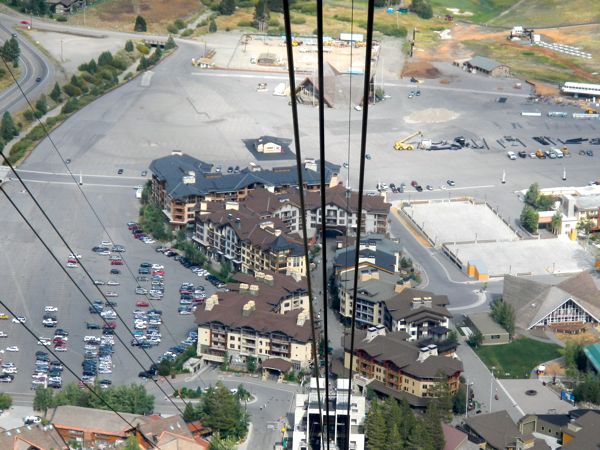
At the bottom of the mountain, vast parking lots stretch to the east and to the north. That’s where Squaw Valley’s development plan, now going through the approval process, would increase the size of the base area sevenfold. The proposal most recently submitted to Placer County outlines a completely revamped village with buildings that could reach seven stories, 1,757 additional bedrooms, and a 90,000-square-foot water-based recreation center that Squaw management said would attract 300,000 annual visitors. In short, Squaw Valley is on the verge of its biggest overhaul since the 1960 Winter Olympics came to town.
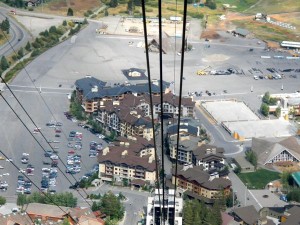
Resort owners want to completely transform Squaw Valley's village area. Photo/Kathryn Reed

Resort owners want to completely transform Squaw Valley’s village area. Photo/Kathryn Reed

On Dec. 6, 2010, Nancy Cushing, the widow of Squaw Valley founder Alex Cushing, sold Squaw Valley Ski Corp for an undisclosed amount to KSL Capital Partners, one of Denver’s largest private equity firms. Eric Resnick, KSL’s managing director and a former executive at Vail Resorts, told the Denver Post that his company had found a “crown jewel.” Along with the ski area’s iconic mountains, the company saw a blank canvas primed for building a resort destination.

“Squaw Valley is the birthplace of the modern mountain resort in the United States, with a heritage, history, amenities, and perhaps most of all, extraordinary terrain that can never be replicated,” Resnick said at the time.

The acquisition added Squaw Valley to a list of well-known hotels, spas, golf courses, and elite clubs that KSL has owned across the globe, including places like the Grand Wailea Resort Hotel & Spa in Maui, the historic Hotel del Coronado in San Diego, and ClubCorp, the largest owner of golf and country clubs in the country. KSL outlines its investment philosophy on its website—they acquire assets in the travel and leisure sector, assign an independent team to manage that asset, pour money into growing the business, and “generate attractive rates of return for its investors,” which include public state and corporate pension funds, private and university endowments, and wealthy individuals, among other sources. In the months leading up to the transaction, KSL named Andy Wirth as the new CEO. Wirth had previously led similar ventures for Intrawest at Steamboat Springs, Colo.

“This mountain, this organization needed new ownership,” says Wirth. “It’s an incredibly soulful mountain, a remarkable mountain. The company itself—the facilities were undercapitalized, poorly marketed, and not very effectively managed. And frankly, virtually everybody in the ski industry knew this.”

In three years, Wirth cleaned house at Squaw. Management focused on customer service and the lifties said hello more often. Starbucks moved in with a ski-in/ski-out coffee stand. Wirth said the resort reduced its environmental footprint by 15 percent. And in September 2011, KSL bought neighboring Alpine Meadows, unifying two of the best ski areas in Tahoe. But the biggest change didn’t roll out until the following December. In an effort to globally compete as a resort destination, Squaw Valley submitted an application to the Placer County Planning Department to build a new village.

The latest draft of their proposal calls for more condos, hotels, and cabins, plazas and courtyards, shops and restaurants. It includes pedestrian-friendly walkways and a world-class training facility called the Mountain Adventure Center, complete with pools, waterslides, zip lines, and a lazy river, according to the latest renderings. Attempting to be a good valley neighbor, Squaw is planning to mitigate its environmental impact. The development plans include restoration of Squaw Creek, which has been listed by the Environmental Protection Agency as an impaired waterway since 2002, and nearly all of the project is infill development, so the structures will be built on property that has already been disturbed, like parking lots. Additionally, Squaw would commit $1 million annually to fund environmental projects. According to the resort, the development would double the resort’s employment capacity, bring in some $20 million in additional tax revenue, and diversify the ski resort’s business so it can be successful year-round, with or without snow, an aspect of the business that’s become glaringly relevant as Tahoe goes through its third drought year in a row.

“We sure as hell have the mountains,” says Wirth. As he sees it, it’s not the skiing that’s holding Squaw Valley back. It’s the lack of places for people to stay. According to Wirth, Squaw Valley has the capacity to move 58,000 skiers an hour on the hill, which is slightly less than Whistler/Blackcomb, but the resort has just 15 percent as many hotel rooms.

“Aesthetically, the parking lots are acres of parking lots,” says Wirth. “I haven’t found a single person, opponent or proponent, to stand with me in the parking lot and do a 360 and tell me there’s a whole lot of soul in these parking lots. They’re parking lots and we think they could be something better.”

Inside Wirth’s office, a large black and white photo of the late Shane McConkey dominates the wall behind his desk. McConkey, a longtime Squaw local who became one of the most influential skiers in history, is skiing Eagle’s Nest, a short but sheer pitch next to the KT-22 chairlift. The photo captured an intense moment when McConkey paused to peer down the steep flutes, a shower of slough spilling out from under his skis. Wirth is no stranger to crucial moments of decision like the one portrayed in the photograph. The day I met with him was one of his first days back in the office after a skydiving accident almost ripped out his right arm and nearly killed him. His quick survival instincts saved his life. Ever the optimist, reflecting back on that incident, Wirth told me life has since been outstanding. “I look at it and say a whole bunch of great things came out of that day,” he says.

Wirth talks fast, but he still takes the time to choose his words. It’s easy to understand his vision: the economy needs stimulus, Squaw Valley is undercapitalized, change is needed. But as is the case in most ski towns, the ski area CEO is controversial. People trust Wirth or they don’t. When he moved to town, he immediately got involved with the community, supporting popular causes and nonprofits like Disabled Sports USA Far West and the High Fives Foundation, both of which recently recognized Wirth with awards for his community service and partnership. Despite that show of civic-mindedness, opponents of the Squaw Valley development tend to see him as the wolf in sheep’s clothing for a corporation that had a plan to execute.

“He seems like a puppet,” says Jamie Schectman, co-founder of the Mountain Riders Alliance, a group dedicated to “creating sustainable mountain playgrounds.” “These guys are so competitive and so driven, they’ll do anything.”

Wirth met the executives at KSL while he was at Steamboat Mountain Resort in Colorado, where he had been working for 20 years, starting as an unpaid intern and leaving as the resort’s top executive. While at Steamboat, Wirth helped bring in more nonstop flights from large metropolitan areas and played a role in building the Steamboat Grand, a large luxury hotel at the base of the ski area. But, as he likes to point out, he wasn’t always the ski resort executive. Wirth worked as a backcountry ranger in Rocky Mountain National Park and fought wildfires on a hotshot crew in northern New Mexico. Wirth now lives in one of Truckee’s wealthiest neighborhoods, but when he was working as an intern at Steamboat, he ate ramen and worked the nighttime audit shift at a local hotel.

“We’re mountain people at the core,” says Wirth. “We’re of that cloth. We think we can create opportunity for employment, to create jobs. We think it can be soulful and be appropriate to the Squaw Valley brand.”

Wirth admits the level of development, growth, and change he intends to bring to Squaw Valley is significant.

“This is not a little bit of change. Not a bucket of change,” he says. “This is a 50-gallon barrel of change. And I think people were caught off guard.”

Read the whole story


Coast Guard teaching safety classes on South Shore

Boating Safety 101 and Suddenly in Command are two classes being taught by the Coast Guard Auxiliary at Lake Tahoe Community College.

The first is May 31 from 8:30am-3pm. Cost is $49. Is about boating safety for adults and youths (grades 6-12) who are operators of personal watercraft, hunters, fishermen and other boaters.

The second class teaches people what to do if the skipper becomes incapacitated. The class is June 14 from 9am-1pm; cost is $39.

To register for either class, call 530.541.4660, ext. 717.


Family bike event in Truckee

Truckee Police Department and Truckee-Donner Recreation are putting on the inaugural Truckee Family Bike Day at River View Sports Park on June 1 from 11am-2pm.

Truckee Family Bike Day features activity stations ranging from a decorate-your-bike booth to exhibitions and introductory clinics at the mountain bike pump track. For a longer family-friendly bike ride, there will be a “Legacy Fun Ride” along the Legacy Trail. Food will be available for purchase from MTN ROOTS food truck.

To ensure riders start their cycling season safely, local bike shops will be offering free bike inspections and the Truckee Police Department will be distributing a limited supply of complimentary helmets.

The afternoon will culminate with a bike parade and awards for most family members, best costume and best decorated bike.


El Dorado County benefits from transportation funds

The California Transportation Commission has allocated $1.3 billion in transportation funding, including $541 million to implement California’s “fix it first” strategy for preserving and maintaining California’s 50,000 lane miles of highways.

Here are some significant projects that will help preserve and maintain California’s existing infrastructure assets:

· Rumble strip safety upgrades: $1.98 million was allocated to place ground-in rumble strips at 17 locations in Butte, Colusa, El Dorado, Nevada, Placer, Sacramento, Sutter, Yolo and Yuba counties to reduce vehicles running off the road and centerline collisions.

· El Dorado County Class I bike path: $250,000 was allocated to Placerville for a Class I bike path from Forni Road/Lower Main Street to Ray Lawyer Drive

· Nevada County bridge painting: $2.1 million was allocated to paint two bridges on Interstate 80 over the Truckee River near Floriston.

Among the $541 million allocated, $10 million comes from the remaining Proposition 1B funds, the bond that voters approved in 2006. Proposition 1B authorized $4.5 billion to improve performance on the state highway system and California leveraged another $4.6 billion in federal, state and local funds while recapturing cost savings during construction.


Attention spans alter word count on news stories

By Paul Farhi, Washington Post

This is a short news article about how news articles are becoming shorter.

The world’s largest independent news organization, the Associated Press, for one, has told its journalists to cut the fat — and keep their stories between 300 and 500 words, a length in which this story (301 words) would easily fit.

That’s 500 words, max, on just about every one of the 2,000 or so stories AP journalists report each day, from ballgames to bomb blasts to the latest political skulduggery.

Read the whole story


Snippets about Lake Tahoe

rib cookoff• Stateline’s Fox & Hound took top honors at the annual San Juan Bautista Rib Cook-Off. This is the largest event owner Matt Grime has participated in. Fox & Hound also took second place for best barbecue sauce. Grime has been competing for three years.

• Tahoe Transportation District’s East Shore Express between Incline Village and Sand Harbor will operate from 10am-8pm every 20 minutes from May 31-June 29, weekends only. Daily operations will be June 30-Sept. 1. Roundtrip fare is $3 per person and $1.50 for children 12 and under, seniors and disabled passengers. Fares include admission to Sand Harbor. For more info, go online.

• Austin’s House night at Aces ballpark is July 8 at 7:05pm. Only 200 right field reserved seats in section 116 are available for $10 each, with $5 of each ticket sold directly benefiting Austin’s House. For more info, call 775.267.6711.

• Douglas County Library is conducting a survey to find out how people use the library’s computers and Internet connection and how this service has made an impact on their lives. This information will help the library improve its technology services and communicate the value of providing free access to computers and the Internet within the community.

• The Placer County Community Development Resource Agency will close its public counters in Auburn and Tahoe on May 30 as part of a project to upgrade the county’s land use software.