1-day workshop focuses on leadership for women

The Zawadisha Fund welcomes author and CEO of the Institute for Women’s Leadership, Rayona Sharpnack, for a one-day workshop designed for women ready to accelerate their personal and leadership development. Using the “Trade Up” principles from Sharpnack’s acclaimed book by the same name, this workshop will support women in:

• Discovering their untapped potential,

• Revealing and removing self-sabotaging behaviors,

• Creating practices for increasing their impact, and

• Learning communication skills that allow individuals to operate at the enterprise level when required to.

Offered at a highly discounted rate, this innovative and action-orientated workshop is designed to provide women with proven—and essential—strategies for developing and strengthening their leadership skills.

The workshop will be at the North Tahoe Event Center in Kings Beach from 8:30am-5pm Aug. 24.

The Zawadisha Fund will arrange optional accommodation in Kings Beach and a Saturday paddleboard session for all interested attendees.

Individuals may register online. The $195 registration fee includes lunch and a signed copy of Rayona’s book, “Trade Up.” Groups of four or more will receive a 10 percent discount. All proceeds benefit the Zawadisha Fund, whose mission is to empower, entrust, and expand opportunities for women and girls globally and locally.

Learn more by contacting Jen Gurecki at (530) 416.5682 or jen@zawadisha.org.


2 men arrested in Douglas County on gun charges

Two Vallejo residents were arrested Friday on weapons charges.

A resident in the 3700 block of Highway 50, which is about halfway between Spooner Summit and Carson Valley, reported hearing several rounds fired from a firearm. The resident also told Douglas County sheriff’s deputies she heard a couple noises outside the home which indicated bullets may have struck the house or ricocheted nearby.

At about 1:20 on July 20 deputies found two men had been shooting rifles, a third had been shooting a pellet gun, and the fourth had not been firing.

Deputies said the suspects had been shooting at trees and did not have a safe backdrop area behind their target; therefore several of the bullets that were discharged from the rifles continued into the nearby rural residential area.

The two males who had been shooting the rifles, 21-year-old Lance Caro and 20-year-old Daniel Dauz, were arrested on charges of discharging a firearm where a person might be endangered; a gross misdemeanor carrying a sentence of up to one year in jail. They were additionally charged with misdemeanor destruction of property.

The rifles used by Caro and Dauz, both medium caliber bolt-action rifles, were collected and booked as evidence.

— Lake Tahoe News staff report


Truckee restaurant hosting event about seafood sustainability

Dragonfly Restaurant and Sushi is hosting an event highlighting seafood sustainability on July 25.

The evening will begin with a free screening of the documentary “Red Gold” followed by an open discussion on what is “sustainable seafood”. For those interested in sampling Bristol Bay’s salmon, a salmon-centered dinner will follow the film and discussion.

“Red Gold” sheds light on the plight of Bristol Bay, which produces the world’s largest sockeye salmon fisheries and one of the largest king salmon runs. As wild salmon populations disappear around the world, Bristol Bay had been largely untouched by development but is now threatened by foreign mining corporations.

The film will begin at 6:15pm, with a half-hour discussion about the sustainability of seafood taking place immediately after. The discussion will be guided by Dragonfly’s chef and owner Billy McCullough as well as representatives from Trout Unlimited. The dinner, starting at 8pm, includes Bristol Bay salmon in three appetizers (cured, seared and in sushi), a cedar plank roasted sockeye salmon entrée, and mango-ginger lemongrass sorbet. Cost is $38.

For more information about the seafood sustainability event in Truckee, call (530) 587.0557. For more information about Bristol Bay, go online.


Delays expected on Hwy. 89 near Squaw

Caltrans this week announced an eight-mile, $7.2 million pavement project on the North Shore.

The pavement rehabilitation project will extend the pavement life by 10 years, restore ride quality for motorists, bicyclist, improve drainage and significantly reduce future maintenance needs.

The project on Highway 89 from the Nevada County line to Squaw Valley Road in the Lake Tahoe area includes in-place recycling and placing a 0.25 foot Hot Mix Asphalt overlay from Squaw Valley Road to Goose Meadows Campground. Dig out and repair areas of severe failure with HMA, seal cracks wider than 0.2 inches and overlay with 0.25 feet of HMS for project limits from Goose Meadow Campground to West River Street.

Roadside message boards will be used to post the latest information.

Motorists can expect delays up to 30 minutes in various locations, and one-way traffic controls from 7pm to 10am Monday through Friday.

The project is anticipated to be finished in late 2012.


Director of California Parks resigns

By Matt Weiser, Sacramento Bee

State Parks Director Ruth Coleman resigned this morning and her second in command has been fired after officials learned the department has been sitting on nearly $54 million in surplus money for as long as 12 years.

The moves come in the wake of a scandal, revealed by The Bee on Sunday, in which a deputy director at State Parks carried out a secret vacation buyout program for employees at department headquarters last year. That buyout cost the state more than $271,000.

California Parks Director Ruth Coleman has resigned. Photo/LTN file

The Bee began inquiring about rumors of a surplus when it learned about the buyout, and submitted a Public Records Act request for the fund data on Wednesday.

John Laird, secretary of the state Natural Resources Agency, which oversees State Parks, told the Bee that investigations have been launched by both the Attorney General’s office and the Department of Finance to figure out how — and why — the Department of Parks and Recreation squirreled away so much money for so long.

“Ruth has stepped up and taken personal responsibility,” Laird said of Coleman, who is the longest-serving director in the 150-year history of the department. “It’s an incredibly troubling discovery.”

Laird emphasized that it remains unclear who is to blame for the surplus, and whether it is linked to the vacation buyout, which sources told The Bee was carried out by Manuel Thomas Lopez, 45, of Granite Bay, who was demoted in October and then resigned in May.

Read the whole story


Massive margarita at California fair sets Guinness record

Entrepreneur Nick Nicora/Ovations Food Services set the Guinness World Record for the largest cocktail ever made – 10,500 gallons – set last year at Jimmy Buffett’s Margaritaville in Las Vegas. He made the “Calarita” at the California State Fair this month.

The name Calarita honors the California State Fair and the margarita. It will take a few weeks for Guinness to certify the record.

Nicora has 134,000 Calaritas to sell from the 30-foot-tall, custom-built chill tank, known as the World’s Largest Cocktail Shaker, located on Palm Avenue between the Main Gate and the State Fair’s landmark fountain.

Nicora super-sized the Hussongs recipe for the record-setting Calarita, and here it is:

2,100 gallons of Jose Cuervo tequila

4 gallons of Cointreau

2,800 gallons of Margarita mix

75 40-pound bags of ice

5,190 gallons of water

50 gallons of lime juice

Ovations’ partners for the world record attempt were Brett Enright of Juicy’s catering services, Jose Cuervo tequila and Joe Belli of Westec Tank and Equipment Co., which built the enormous Chardonnay tank outfitted with five chill sleeves and a spigot.


Panel discussion about liveable communities

In response to the public’s vision for more liveable, walkable and bikeable communities in the Tahoe basin, two panel discussions have been scheduled for July 25-26 by the Tahoe Regional Planning Agency.

Guest experts from Park City and Portland will join local experts in transportation and community planning for a series of educational discussions on the challenges and solutions to creating safer, more pedestrian and bicycle-friendly town centers.

Guest speakers are Myles Rademan, a planning expert from Park City, and Michael Ronkin, bicycle and pedestrian program manager for the Oregon Department of Transportation.

Ronkin and Rademan will also present to the TRPA Governing Board July 25 in Stateline at 9:30am.

The first panel discussion is July 25, 5-8pm, North Tahoe Event Center, 8318 North Lake Blvd., Kings Beach. The next is July 26, 5-8pm, Lake Tahoe Community College Board Room, 1 College Drive, South Lake Tahoe.


Is seasonal eating overrated?

By Katherine Wheelock, Food & Wine

For a couple of weeks last winter, I went on a kale-eating spree. I didn’t do this on purpose, exactly. I was making my way through a list of newish New York restaurants I wanted to try, or to revisit because fall had surrendered to winter and I knew their menus would have changed. Most of these places had Dickensian names, names broken by ampersands, or names that sounded like old Vermont family farms. Many had menus freshly jotted on chalkboards, the provenance of the main ingredient in each dish noted. And every last one of them was serving a kale salad. Not long into my dining tour, right around the time I confronted a version with apple and dry Jack at a restaurant a block away from where I’d just had a version with apple and cheddar, I began to regard kale salad the way, as a kid, I viewed my mom’s second flounder dinner in the same week: with resentment.

My spree came to an end at a perfectly lovely, smart young Italian restaurant in Brooklyn. It’s not that I was looking forward to carciofi—I knew not to expect out-of-season artichokes at a place known for its market-driven menu. But I didn’t expect to be offered a kale salad. I felt betrayed, sitting there on my stool clutching a season-befitting quince cocktail. I felt like a road warrior so disoriented by sameness, I didn’t know what hotel I was in anymore, never mind what city.

What followed my kale bender, as often does benders, was a mild depression. What’s wrong with me? I thought. Of all the things to complain about, I was criticizing chefs for systematically removing stringy asparagus from my winter plate and replacing it with the sweetest, tastiest, most environmentally beneficent produce around. The proliferation of seasonally driven menus, albeit a trend mostly still confined to a certain kind of restaurant in a certain kind of town, promised better dining experiences and a smaller culinary carbon footprint for America—a win-win. Come spring, I could count on more chefs than ever to rain morels, fiddleheads and ramps down on me. And I was dreading it.

“I came back from Rome in the spring of 2004 to a rampapalooza,” recalls journalist Frank Bruni, the former restaurant critic for the New York Times, reflecting on the early days of seasonal fever. “I remember thinking it was great that chefs were exalting the seasons, but also: Do I need to eat this many ramps?”

I remember those days, too. I was practically braiding ramps into headbands, reveling in Mario Batali’s embrace of spring produce, in Dan Barber’s more priestly devotion to seasonal ingredients, and in the way powerful tastemakers like these chefs were beginning to alter menus all over New York City. Ramp season—and rhubarb, asparagus and strawberry season—was like Christmas. But then Christmas started coming every day. And even more distressingly, seasonally driven menus began to feel less like a genuine celebration of good ingredients and more like some kind of manifesto. “Ramps speak to a lot of different restaurant vanities right now,” Bruni says. “They have become more of an ideological, moral statement than a gustatory one.”

To be fair to ramps, they didn’t start this trend. The 21st-century seasonal-food movement began four decades ago, when Alice Waters founded Chez Panisse in Berkeley. She established the hallmarks of seasonal cooking: locally grown ingredients, simply prepared. These days, the “simply prepared” part is what many critics of slavishly seasonal menus lament. It’s not the zeal for seasonal produce that’s the problem, they say; it’s the lack of imagination that chefs bring to the task of cooking it.

Read the whole story


Another complaint filed in land deal involving ‘Beverly Hillbillies’ star

By Reno Gazette-Journal

Attorneys representing former “Beverly Hillbillies” actor Max Baer Jr. filed an amended complaint Thursday alleging that two Carson City car dealers and a former associate defrauded him out of $7 million in a land deal for a proposed casino in Carson City.

The complaint filed in Douglas District Court alleges that Carson City car dealers Michael Hohl and A.M. “Dink” Cryer, along with their former associate Jay Timon, lied to Baer about several aspects of the multimillion dollar land deal in 2007.

Representatives for Timon, Hohl and Cryer could not be reached for comment on Thursday. The RGJ left after-hours messages for the three.

The complaint would be the fifth legal case to originate from the land deal, including a lawsuit that was filed by Douglas County in 2010 and an arbitration case between Timon, Hohl and Cryer, according to Baer’s attorney Sean Brohawn.

Baer played Jethro on the “Beverly Hillbillies,” a 1960s sitcom.


Giving back comes in many forms

By Mandy Kendall

My Soroptimist group had a meeting recently that focused on all the different committees that exist within the club, outlining all that they do and what would be required of someone joining that committee. I can tell you that there are a lot of things to do in that club and it seemed totally overwhelming to think about which committee to join, let alone what to do once you signed up. I think most people would like to do something to contribute to a community, whether locally or globally, but often get put off before they even start; so I decided to focus this week’s piece on how to find the best way for you to give back.

Why give back? Most people probably have very personal reasons for giving back. A great sense of belonging, satisfaction, fulfillment and pride can come with giving back to your community.
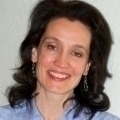
Mandy Kendall

Everyone, especially kids, benefits from giving back. It provides an opportunity to experience cultures, lifestyles and situations you might not come across in your day-to-day life. It teaches tolerance, commitment, responsibility, compassion and shows how one person really can make a difference.

Whether you are getting back into the workforce or would like to make more friends, volunteering can be hugely sociable (if that’s what you want) and may end up helping you while you are helping others. There are often opportunities to learn new skills that will serve you in other areas of your life. Maybe you’re looking for a career change? Community service can be a great way to sample different workplaces and can offer opportunities you may never have thought of. Community service can also be a great education, offering a chance to experience a variety of jobs that will serve you well in any future career choice.

Where do you start?

How much time do you have? — Before you even start investigating how you can give back, first spend some time outlining what works best for you. How much time do you have to spare? I recommend you start with less time than you think you have to spare as you can always commit to more but it’s often very difficult to cut back once you’ve committed yourself to something.

What do you like doing? — I have a colleague that works tirelessly for a local charity but he is very upfront about not doing any of what he calls the touchy feely stuff. So he does all the heavy lifting, driving and logistical things and everyone is happy. Giving back often means donating some of your precious spare time so it’s worth making sure you’re going to enjoy it. Some people prefer group activities; others are more lone-ranger types. Some like planning while others like doing. There will be something that suits your personality and strengths.

Research — Just asking friends and neighbors will often produce lots of good ideas about how to give back to your community most effectively. Alternatively you can go directly to those places most often in need of help and find out what they need. (Community center, hospital, church, halfway house, historical restoration, youth organization, food bank or soup kitchen, neighborhood adoption or cleanup programs, Boys and Girls club, animal shelter to name a few).

Interview them — Find out what’s involved with a particular project and what would be expected of you if you were to join.

Don’t want to take time away from your family? Look into projects you can do as a family. Making baskets to give to less fortunate families at holiday times or helping a neighbor with chores they can’t manage on their own (many hands make light work!). Helping out at a local animal shelter is a great education and fun too. Finding an organization that serves the elderly and taking food to people who are home-bound brightens everyone’s day. Done together, these types of projects strengthen family bonds and offers lessons in commitment and responsibility to the kids too.

There are many different ways you can give back.

Organize — Events/meetings/clean up — a lot of people love doing things but they just don’t like organizing. So if you have been blessed with the planning gene you can often galvanize a lot of bodies into action…most people will help out if they are told what needs to be done.

What can you donate? Giving your time, donating money, offering expertise, loaning equipment or just spreading the word … everything helps.

Share your skills — Most of us have at least one pretty cool skill we could offer to teach a group or an organization or use on their behalf.

Share contacts — You might not be able to help yourself, but you may know people who can or even companies that have services or products needed by a voluntary organization. Making the right connection or introduction can make a huge difference to a project.

Sponsor — Maybe you own, or know, a company that could help out a local charity by sponsoring an event. A win-win situation.

If you can’t find a project that interests you, go ahead and start your own. With a little research you are likely to find a lot of like-minded people who would love to help you.

Until next time.

Mandy Kendall operates Health Connective in South Lake Tahoe. If you have any questions, would like some advice, or would like to request some Qwik-e tips on any health and wellbeing topic, please feel free to drop me an email at healthconnective@gmail.com, visit us on Facebook, or keep an eye out on Lake Tahoe News for regular Qwik-e tips on how to make healthy changes one Quick and Easy step at a time.