El Dorado County DA files charges against consulting firm
By Kathryn Reed
Consultants with ties to a slew of El Dorado County officials, including a Superior Court judge, face civil complaints stemming from a contract with the Pioneer Fire Protection District.
Dan Dellinger and Cris Alarcon, who operate Dellinger Consulting, are the target of El Dorado County District Attorney Vern Pierson’s complaint that was filed July 27.
“Under the terms of the agreement between defendants and PFPD it is abundantly clear that Dan Dellinger and Christopher Alarcon were hired and paid, at taxpayer expense, to expressly advocate a position in favor of a ballot measure to raise taxes,” the DA’s office said in a statement.
The county wants the consulting firm to pay back the early $30,000 it received from the fire district. The DA alleges, as did the grand jury, that Dellinger illegally used taxpayer dollars in a campaign.
While testimony and evidence obtained by a grand jury is usually confidential, because of the nature of the allegations the grand jury made against the consulting firm, Superior Court Judge Suzanne Kingsbury released the evidence to the District Attorney’s Office.
The DA’s complaint requests restitution to the county for the $10,000 which was allegedly illegally obtained by Dellinger and Alarcon; a civil penalty of $1,000 for each day of violation of the government code plus three times the value of the unlawful use of public resources; a civil penalty of $2,500 for each day of violation of the business and profession code; and to enjoin the defendants from any further payments of taxpayer money which may be due under what is being called an illegal contract with Pioneer Fire.
Alarcon has also had recent criminal issues to contend with. Earlier this month he pleaded no contest to nine charges.
Art reception, zine workshop at Bona Fide Books
Bona Fide Books is hosting an art reception for Jared Manninen and his collection “Based on a Dream” on Aug. 1 from 6:30-8:30pm.
Manninen began his art career in 1997 working with oils on canvas, and later worked with other two-dimensional media such as pastel, watercolor, and acrylic. In 2010, he began to work strictly in black and white, largely due to his interest in graphic novels and illustrated stories.
“Based on a Dream” and will be at Bona Fide HQ through August, along with some of Manninen’s other work.
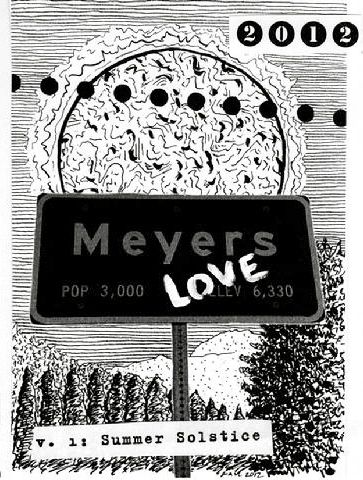
Manninen recently collaborated with Bona Fide Books on a zine about Meyers. It inspired him to learn more about the underground art form.
Manninen will offer a brief, interactive zine-making session at the art reception.
Bona Fide HQ is behind the Getaway Cafe in Meyers at 1069 Magua St., No. 4.
SummerFest classical music concerts kick off Aug. 3
Lake Tahoe SummerFest three-weekend classical music concert series ion the campus of Sierra Nevada College in Incline Village opens Aug. 3 with Dvorak’s Romance Opus 11, and Vivaldi’s Concerto for Violin and Cello.
An evening of Beethoven is on Aug. 10. The Aug. 17 concert is a “Summer in Italy” program, featuring a series from Rossini beginning with “Overture to L’Italiana in Algieri,” the always sentimental Vivaldi with “L’estate” and ending with the finale of Mendelssohn’s Italian Symphony #4.
Chamber music featuring the works of Mozart, Brahms, Schubert and Schumann is planned each Saturday, Aug. 4, 11 and 18.
Tickets are $85 for VIP seating, $50 in the Guest section and $25 in the Friends area, and for a limited time children 12 years and under are half price. VIP tickets and Season Pass holders are invited to backstage access and VIP Receptions with the artistic director/conductor and orchestra after the concerts.
For more information, go online or call (775) 298.0245.
California failing to ensure health and well being of children
By Theresa Harrington, Contra Costa Times
California has the largest child population, but the state ranks near the bottom — 41st in the nation — when it comes to children’s well-being, according to a report released Wednesday.
In fact, California is failing in three of four measures that gauge health and well-being, says a report by the Annie E. Casey Foundation’s 2012 Kids Count Data Book, released in partnership with Children Now, an Oakland-based nonprofit advocacy group. Each state was graded according to 16 indicators of economic well-being, education, health and family and community
California ranked 23rd in health but failed to rise above the bottom 10 in the other categories. It came in last in the percentage of household income available for living necessities other than housing, and last for heads of households with high school diplomas.
“These numbers are particularly disturbing, given over one in 10 of the nation’s children lives in California,” said Ted Lempert, president of Children Now. “The last couple of years have seen California children bearing the brunt of the state’s budget cuts. We must hold the state’s policymakers more accountable for failing to invest in children, because their poor decisions will certainly have a lasting effect on the economic and civic fabric of our state.”
The Golden State earned its lowest ranking — 45th — in economic well being.
According to the research, more than half of California’s children live in households that spend at least 30 percent of their income on housing, leaving many families struggling to pay for food, clothing and health care. Due in part to the economic recession, more than a third of parents lack secure employment, and 22 percent of children live in poverty.
Overall satisfaction with check-in and check-out, food and other hotel services and facilities, such as pools and business centers, has dropped to its lowest level in seven years of surveys, J.D. Power and Associates’ annual survey of North American hotel guests says.
The survey — based on online responses from more than 61,700 guests who stayed in a North American hotel June 2011 through May 2012 — finds that overall guest satisfaction has declined from a year ago. It dropped seven points on the survey’s 1,000-point scale, to 757.
J.D. Power says guest satisfaction with “the underlying experience” at hotels has deteriorated much more than the seven-point decline indicates. Indicative is how satisfaction with rooms has dropped within a point of its lowest level in the past six years.
A drop in satisfaction with check-in and check-out services, and with food and beverage services, could be a result of the continuing impact of cuts in staffing made during the economic downturn, says Jessica McGregor, a J.D. Power senior manager.
Charging for Internet access also is a sore point. Guests who were charged for access had an average satisfaction score of 688 for costs and fees — 76 points lower than those who weren’t charged extra.
The Incline Village and Crystal Bay Community Trail Plan Committee and IVGID Parks and Recreation are hosting a workshop to help plan the future of the trails in Incline.
The goal is to gather community ideas and feedback on the draft plan map.
The plan will address the needs for trails to be interconnected and sustainable, provide transportation routes for residents, safe routes to school, opportunities for visitors or residents to walk or ride through the village and finally provide access to a variety of recreation opportunities in the adjacent U.S. Forest Service or Nevada State Park public lands.
The workshop is Aug. 1 from 5:30-7:30pm at the Chateau (955 Fairway) in Incline.
For more information, email mrkkimbrough@gmail.com or call (775) 720-4732.
Borg to give talk about newest book
Lake Tahoe mystery author Todd Borg will talk about his latest book “Tahoe Trap” on Aug. 1 at 6:30pm.
The event is at the South Lake Tahoe branch library, 1000 Rufus Allen Blvd., South Lake Tahoe.
Bring your books for him to sign.
Great Gatsby Festival at Tallac Site
The Tallac Historic Site’s 27th annual Great Gatsby Festival is Aug. 11-12. The weekend is a celebration of the Roaring 20s, honoring the heyday of the three restored estates on the site.
Weekend activities will include Pope House tours, the annual Great Gatsby Tea, vintage children’s games, vintage automobiles on display, a speakeasy, old-time movies, artists, craftsmen, musicians, and food vendors.
The festival will run from 10am-5pm both days.
The Tallac Historic Site is located on Highway 89 adjacent to Camp Richardson.
Call Jackie or Laurel at (530) 541.5227 for more information.
Marriage in America evolving as people wait to say ‘I do’
By Anita Creamer, Sacramento Bee
She wore a brown floral dress for the ceremony. He wore his U.S. Army uniform, and after all this time, he still worries that it looked too rumpled to pass muster.
When Flo Swanson married Herm Dorion at Fort Lewis, Wash., in July 1942, the future of the world was uncertain – but they were convinced their future meant building a life together. Seven decades later, it turns out they were right.
“We’ve had a wonderful life,” said Herm Dorion, 94, who like his wife is a musician and retired educator. The couple live at the Atria El Camino Gardens senior community in Carmichael.
“I wouldn’t have had another person,” said Flo Dorion, 92. “We’ve had ups and downs, but we’ve been in love the whole time.”
While the Dorions have had an extraordinarily long marriage, it’s not unusual these days for older couples to celebrate 40, 50 or 60 years together. But in the future, marriages of similar duration will likely be rare.
These days, wedding bells are not ringing – at least, not as often as they used to. As a result, marriage in America has evolved. But into what?
For the Dorions’ generation, marriage was a bedrock of stability, the foundation of family life.
“That was the most unusual generation of the 20th century,” said Andrew Cherlin, a sociology professor at Johns Hopkins University. “They grew up in the Depression and the war. Afterward, the American economy was very strong. People were ready to turn toward home and family.
“The effect of growing up in hard times made them more likely to want a stable family life. That’s one reason we see so many long anniversaries now.”
In contrast, the demographic portrait of marriage today shows the upending of tradition.
Only half of American adults are now married, a record low, compared with 78 percent in 1950. While the divorce rate has leveled off, the marriage rate continues to drop: In 2010, 6.8 people per 1,000 entered new marriages, U.S. Census data show, compared with 16.4 per 1,000 in 1946, at war’s end.
And couples today are waiting longer to marry. The national average age of people marrying for the first time is 26.5 for brides and 28.7 for grooms. Researchers suggest the average ages are even higher in urban areas.
Statistically speaking, marriage has become the province of the high-achieving: Two-thirds of adults with college degrees get married, compared with less than half of people with only high school diplomas, the Pew Research Center reported. And people without college degrees are more likely to divorce.
“The people who can get good jobs are marrying and staying together,” Cherlin said. “Those are the college-educated people. Marriage is reflecting the socioeconomic polarization in society.
London — a 3-time Olympic city sparkles in the limelight
By Susan Wood
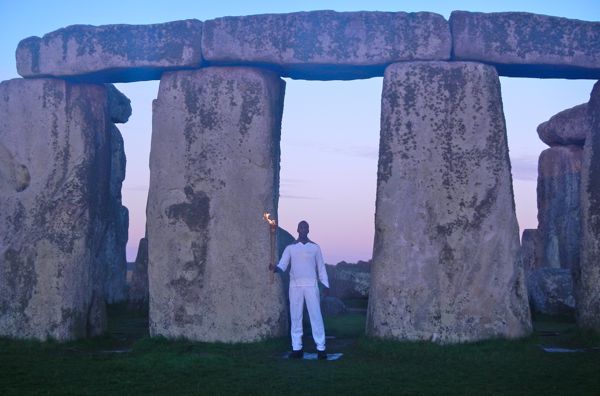
AMESBURY, England – A flicker of flame carried by four-time gold medalist track star Michael Johnson emerged through a rare, cloudless sunrise at Stonehenge, setting a dramatic stage for the planet’s touchstone for goodwill and humanity – the Olympic Games.
With his signature smile and svelte physique, the 44-year-old American athlete brought the torch on July 12 at 5:09am to the ancient National Heritage Site prior to his official, 300-meter torch-bearing “leg” at the Salisbury Cathedral a few hours later.
The world record-holding sprinter, who took gold in 1996 at Atlanta in the 200- and 400-meter events, made an outrageously slow lap around the spiritual, circular stones as the sun beamed over the “heel stone” and through the structural rock formation. It was a magical moment – one the media from around the world wouldn’t have missed. He repeatedly described the event as “an amazing experience” as reporters held onto every word.
When asked by Lake Tahoe News if the lap was his slowest run, he replied: “Pretty close, but well worth it.”
U.S. Olympic track star Michael Johnson with the Olympic torch July 12 at Stonehenge. Photos/Kathryn Reed
Johnson posed with the 31-inch-long, 2-pound torch for the cameras alongside Amelia Clifford, a young Salisbury track star who ran the torch the day before. She was elated, while standing before other gatherers like fellow torchbearer Phil Monk. The local teacher was nominated by his students and colleagues at the Stonehenge School. It was rather appropriate for Monk to be there. He knows the history and magnificence of the Sarsen-stone site built in BC 2400 by hundreds of men over 30 million hours using wooden platforms on rollers and ropes to bury them 6 feet under.
To this day, the burial site that is considered one of the world’s most recognizable attractions makes up a place for reflection and rebirth – including that of the seasons. Thousands of people descend on Stonehenge for the summer solstice each year. The appearance of summer dominated the discussion that morning as much as the arrival of the torch, which is made of gold to represent the qualities of the flame – brightness and the warmth of the light it shines.
“We haven’t had a morning like this in months,” Monk said. England has endured one of its wettest summers in decades.
Spirits were further lifted eight miles away at 7:45am when Johnson arrived to carry the torch in Salisbury in front of thousands lining the streets waving British flags. The town’s celebration the day before brought out 35,000 Olympic fans to witness the spectacle.
The Olympic torch carried by 8,000 people in the relay was designed to touch at least 95 percent of England’s population within a one-hour distance of 1,018 communities on its twisty, 8,000-mile route.
The traditional lighting ceremony took place on May 10 at the Temple of Hera, Olympia, home of the Ancient Olympic Games. The Olympic flame traveled through Greece before a British jet labeled “Firefly” picked it up for its journey through England, which started at Land’s End in Cornwall. The torch also had a one-day appearance in Dublin, Ireland, on June 6. A little more than a month later, it graced the streets of England’s original capital, Winchester – where King Arthur held court with the Knights of the Round Table in the 12th century. The banners were still flying over High Street days later.
Leading up to tonight’s Opening Ceremony, the torch relay will have lasted 70 days and marked 66 evening celebrations, six island visits as well as a variety of types of transports – by foot, plane, train, watercraft and even on a Ferris wheel known as the London Eye.
Each ceremony marked yet another demonstration of rural community pride. In the tiny town of Bowness, more than 10,000 Olympic fans gathered to see the torch transported by a 122-year-old steamboat over Windermere Lake in the Lakes District of northern England, a land of captivating natural beauty.
Jacqui O’Connor, who works for Windermere Lake Cruises, told Lake Tahoe News a regatta of boats flanked the MV Tern steamer with 175 people on board for its journey across the lake which is lined with green meadows, castles and estates. She was among them, along with a group of schoolchildren.
“It was amazing. The kids were so excited,” she said.
Community rural pride represents a common theme on the torch relay route, which culminated with its last stop in Westminster July 26 before making its way the following day into the Olympic Park for the Opening Ceremony.
A record 4 billion viewers are expected to watch a portion of the telecast.
Building a complex Olympic-style cathedral
Signs of London hosting the 2012 Olympic Games blanket one of the world’s most exciting cities.
Posters line the escalators of Underground stations. The London Heathrow Airport has opened a temporary terminal to handle an influx of anticipated passengers descending on the host city. Stands for seating to watch the triathlon and marathon swimming events have been erected at Hyde Park. The park had already staged a number of parties and concerts before the Olympics even started.
The majestic Tower Bridge serves as a backdrop for giant Olympic rings. Inside the tunnel, an educational display highlights other host cities.
London is the only city that has hosted the Summer Games three times – 1908, 1948 and 2012. The vision of this year’s Games is sport, education and culture, a fitting tribute to a city long known for its multi-culturalism. And this year, sports in Britain have captured a world stage – from Bradley Wiggins’ winning the Tour de France to Andy Murray reaching the finals at Wimbledon, where he sent droves of prideful English into the pubs and tea rooms to witness the first British male to make the finals in 76 years.
For the first time, the All England Club at Wimbledon stands ready to host Olympic tennis. The grounds are tastefully immaculate, nearby residents are excited and U.S. tennis greats like the Williams sisters are eager to go for gold in doubles.
The park is the place
Nowhere is the host city more electric than the Stratford neighborhood in East London, an older, industrial area revitalized to become home of Olympic Park.
Helicopters fly overhead as part of the security functions to build the Games’ Olympic Park, which house the stadium, aquatic center, water polo arena, Velodrome and BMX track in eight venues, along with the opening and closing ceremonies. Seating for all the events in just that 500-acre area tops 156,000. A dozen venues have gone up outside the park and 10 outside London.
With the opening, a countryside scene with animals and a Queen Jubilee bell with a quote from the play “Tempest” make up the latest hints to a hush-hush opening put on by Oscar-winning director Danny Boyle, Blue Badge Tour guide Helen Bartolome said, while taking a group of about 30 people around the park’s perimeter. The tour costs 14 pounds and lasts two hours.
The opening will hit a crescendo with the lighting of the Olympic cauldron, following the flame’s 8,000- mile journey. Bartolome said taking the torch all through the country quelled the criticism that the Games were “London centric.” Instead, this was England’s Olympic Games.
On the tour, Sarah Hobbs of Kent County agreed. She not only witnessed the torch relay, she touched it at the McDonald’s after it traveled through her rural homeland.
“It was so inspiring,” Hobbs said, adding she was surprised the torchbearer let her get so close.
With London being awarded the Games in 2005, three components were addressed: The regeneration of the economically depressed end of East London; the making of arguably the “greenest” Games in terms of recycling and reconstruction; and the encouragement of the public to get into sports activities.
“There’s an enormous initiation (for sports) in the schools,” Bartolome said, as wide-eyed tour attendees took in the scenery. Some people have gone on the tour numerous times to see the progress. On this one, the sounds of jackhammers and metal poles hitting the ground marked the ground zero where the Queen Elizabeth Olympic Park now stands.
To pull off such an endeavor, the city had to commit to cleaning up the water and contaminated land, as well as remove 52 electric pylons, bury miles of cable, erect a power station and move companies through the redevelopment process.
To view the area, it’s hard to imagine the place as it was. Now, boats line the canals, ping pong tables stand ready for players, bustling shoppers tour the major Stratford-area complex anchored by the John Lewis department store. The retailer set up a viewing platform so people can see the park being built under their feet.
Some venues like the shopping center represent infrastructure designed to stay long after the Olympics to benefit a host city. Others, such as the water polo arena will come down because as Bartolome put it: “Only two out of 30 people know someone who plays water polo.”
The guide also pointed to the modern architecture from the highway overpass to tell the group how even the stadium – which used only half the steel of Beijing’s Olympic Games to promote energy efficiency — will be scaled down to 25,000 seats.
“We don’t need an 80,000-seat stadium in Stratford,” she said. The group looked out at the skyline in awe of how the construction and deconstruction would come about. Looming overhead was a helter-skelter of a 35-story structure called the Arcelor Mittal Orbit, named after a steel magnate who erected the building with a viewing platform as art meant to enhance the Games.
Nearby, housing for the 13,000 athletes will be transformed into apartments after the Games.
This is one example of London’s venues being designed as sustainable.
With all that is built, whether permanent or temporary, London stands poised to make a difference this year.
Tour attendees stood silently to read the sign outside the gate that is intended to capture the spirit of the grand-scale event and make the monumental effort worthwhile: “There would be no goose bumps, gasps, pounding hearts, tears of joy, records smashed, strangers hugged or whole world together without…”
In two weeks, you finish the thought.
Susan Wood ran the Olympic torch 10 years ago in South Lake Tahoe for the Winter Games staged in Salt Lake City.
ngg_shortcode_0_placeholder (Click on photos to enlarge.)