U.S. employees watching Olympics instead of working

By Charles Passy, SmartMoney

Forget the narrow defeat suffered by the U.S. men’s swim team in the 4×100-meter freestyle relay over the weekend. Or that Jordyn Wieber, America’s best hope for all-around gold in female gymnastics, failed to even qualify for the event.

When it comes to this Summer Olympics in London, the real loss may be felt much closer to home.

Productivity experts are predicting that this year’s games could result in a summer slowdown perhaps unlike any other in history, with millions of American workers devoting portions of their day to track and field instead of, say, tracking customer orders. The wasted time could result in a $650 million hit for U.S. companies, according to an estimate by Captivate Network, a digital media company.

Much of that loss will come from employees watching games during work hours on their computers or mobile devices. Some 12 percent of American workers said they plan on viewing the Olympics at the office, according to a survey commissioned by Captivate. A similar survey by Yahoo! Sports showed a figure as high as 43 percent. In addition, Yahoo! Sports found that 25 percent of workers planned to leave early to follow the games.

Read the whole story


Snippets about Lake Tahoe

• Lake Tahoe author and educator Suzanne Roberts’ latest book “Almost Somewhere: Twenty-Eight Days on the John Muir Trail” is on bookshelves.

• Lakeside Beach Grill in South Lake Tahoe is hosting the Lake Tahoe South Shore Chamber of Commerce mixer Aug. 8 from 5:30-7:30pm. Tickets are $10 for members and $20 for non-members.

• New York Life Insurance agent James Nealis is putting on a wealth seminar Aug. 14. Click on the flyer for details.

• Truckee Donner Public Utility District has hired Trisha Ruby as its conservation program administrator.

• The Tevis Cup 100 mile Horseback Ride is Aug. 4 at 5:15am. Part of the equestrian endurance ride goes through Squaw Valley.


Vitamin D important, but a little goes a long way

By Mandy Kendall

When I was growing up, whenever the sun appeared (which wasn’t always that often in England) I remember my mother telling us to go outside in the sunshine to help us grow big and strong. At the time I figured it was just to get us out of the house and from under her feet, but it turns out she was actually making sure that we grew up big and strong (well, that and she probably really did want us out of the house).

Sunshine is fundamentally important for all kinds of reasons. It is a great natural antiseptic as the ultraviolet light in its rays can kill viruses, bacteria and molds in air, water and on our skin. Sunshine can boost your digestion and metabolism and increase your white and red blood cell count. Sunlight can improve your mood by increasing your serotonin (the happy hormone) levels and also increase the production of melatonin, a hormone that helps you sleep. Sunlight can also improve the function of your liver breaking down toxins in the body. Arthritic joints may also benefit from the healing powers of the sun’s rays.

Mandy Kendall

However one of the most important effects of sunshine for us is the production of vitamin D. The benefits of Vitamin D are numerous but here are a few key ones:

• Helps regulate calcium and phosphorus levels in your blood

• Promotes calcium absorption in your small intestine

• Improves your immune system

• Plays a major role in the life cycle of your cells

• Recent studies show that certain cancers and immune dysfunction are strongly associated with vitamin D deficiency.

How much do we need daily?

The Nutrition Board of the National Academy of Sciences set a standard in 1997 of 200 to 600 International units (IU) per day depending on your age. It is now generally agreed that 1,000 to 2,000 IU per day from a variety of sources (sun, diet and supplements) is closer to what we need for optimum health

So how do we get vitamin D?

The sun is the best source. When exposed to sunlight your body is able to produce this fat soluble vitamin naturally. Your skin uses ultraviolet rays to make the vitamin which is then rapidly absorbed in the blood and fat tissue and can be stored for several months.

How much sunshine is enough?

A Harvard Public Health Review suggests: “A light-skinned person who takes walks in the summer with the face, neck, and arms exposed for 15 minutes gets enough.” The review goes on to say that darker skin needs up to twice as much exposure to generate the same amount of vitamin D and also warns about the dangers of prolonged exposure without sunscreen. Evidence suggests that supplementation may be needed during the months when there is less sunshine.

What are other good sources?

It’s hard to get vitamin D from diet which is why some foods are fortified with vitamin D. The same Harvard Review reported however that although a glass of milk is “supposed to contain about 100 IU … in reality may contain as little as 50 IU on average.”

Fatty fish is considered the best source of vitamin D with a 3.5 ounce serving of cooked salmon providing around 360 IU. Three ounces of canned tuna will have about 200 IU and a 13.4-ounce can of sardines provides approximately 250 IU.

As many of us spend a lot of time indoors, and don’t eat a fatty fish rich diet, supplementation is recommended to fill the gaps. General guidelines suggest no more than 2,000 IU per day using products containing vitamin D3 (cholecalciferol), which is reported to be three to four times more potent than vitamin D2 (ergocalciferol).

Until next time.

Mandy Kendall operates Health Connective in South Lake Tahoe, which aligns wellness seekers with their ideal wellness provider. If you have questions, would like some advice, or would like to request some Qwik-e tips on any health and well-being topic, drop her an email at connect@healthconnective.com or keep an eye out on Lake Tahoe News for regular Qwik-e tips on how to make healthy changes one Quick and Easy step at a time.


View Perseid meteor from 8,200 feet

People can camp under the stars on Aug. 13 and watch the night sky light-up during the Perseid Meteor Shower in Lake Tahoe.

Squaw Valley’s Perseid Meteor Shower Campout will take place at High Camp at elevation 8,200 feet, where guests watch the meteor shower and enjoy amazing views of Lake Tahoe and the surrounding Sierra Nevada.

The Perseids come every year beginning in late July and stretching into August. Among the many nights of the shower, there is always the one night that the viewing of the shower is at its best. This year, that evening falls on Aug. 13.

Perseid Meteor Shower campers can upload Squaw’s Aerial Tram between 4:20pm and 5:20pm. After setting up camp on the mountaintop, there will be an informational briefing on telescopes with meteor shower viewing beginning at 10pm. In the morning campers will have a continental breakfast from 6:45-7:30am before downloading on the Tram.

Reservations can be made by calling 800.403.0206. Prices are $79 for adults and $54 for kids.


Pensions show how California cities courted ruin

By Alison Vekshin, James Nash and Rodney Yap, Bloomberg News

Stockton Police Chief Tom Morris was supposed to bring stability to law enforcement when he was appointed to the job four years ago.

He lasted eight months and left the now-bankrupt city at age 52 with an annual pension that pays more than $204,000 — the third of four chiefs who stayed in the position for less than three years and retired with an average of 92 percent of their final salaries.

Stockton, which filed for bankruptcy protection on June 28, is among California cities from the Mexican border to the San Francisco Bay confronting rising pension costs as they contend with growing unemployment and declining property- and sales-tax revenue. The pensions are the consequence of decisions made when stock markets were soaring, technology money flooded the state, and retirement funds were running surpluses.

“We didn’t have very many people looking out for the taxpayers when these deals were negotiated,” San Jose Mayor Chuck Reed, 63, said in a telephone interview. San Jose, the state’s third-largest city, approved a ballot measure in June to contain annual retirement costs that soared to $245 million from $73 million in the past decade.

Bloomberg News compiled data from the California Public Employees’ Retirement System for more than a dozen cities facing the financial strains of rising pension costs and declining revenue. The data show how local governments struggle to support six-figure lifetime benefits for some retirees even as they cut police and fire services for city residents.

 Intractable costs

Many cities are hobbled by retiree obligations that consume 10 percent or more of revenue. And unlike other expenses, which can be cut or deferred, pension costs are intractable, said Eric Friedland, head of municipal-credit research for Schroder Investment Management North America.

“As their tax revenues go down, they’re stuck with these fixed costs,” Friedland said. “I see this as a major driver of fiscal stress.”

City councils across the state, spurred by then-Gov. Gray Davis’s move to enhance pensions for California Highway Patrol officers in 1999, sweetened retirement benefits for police, firefighters and other workers in the decade that followed. Public-safety employees could retire after working for 30 years, collect 90 percent of their top salaries and take jobs elsewhere while still in their 50s.

Younger retirement

San Bernardino, a city of 209,000, is typical of the phenomenon. Its City Council voted July 18 to approve an emergency bankruptcy filing, about six years after the panel unanimously lowered the retirement age for public-safety workers to 50 from 55.

The council acted in August 2006 even though Aon Plc, the city’s risk-management consultant, had warned it that such a change would add millions of dollars to San Bernardino’s long-term pension costs. In the fiscal year that ended in June, pensions consumed 13 percent of the city’s general fund, up from 9 percent in fiscal 2007.

“I knew it was going to be costly in the long run,” San Bernardino City Councilwoman Wendy McCammack said of the lower retirement age. “However, this city is one of the toughest to police. In order to attract and retain the kind of officers that it takes to police a city like this, that was a benefit that we had to negotiate.”

Cities and counties began boosting pensions for police and firefighters after Davis signed the bill enhancing the benefit for state troopers. The Legislature enacted the measure in a year when CalPERS, the largest U.S. pension fund, had 138 percent of the assets needed to cover projected liabilities.

None understood

“It got out of control,” said Jay Goldstone, who was Pasadena’s finance director from 1996 to 2006 and now is chief operating officer of San Diego. “No one understood the potential impacts of what these increased benefits were and how they were being paid.”

State Controller John Chiang said steps toward bankruptcy taken by Stockton, San Bernardino and Mammoth Lakes within weeks of each other shows the need for greater scrutiny of city finances and pensions.

“You want to have a sound, fair compensation package for your public servants,” Chiang said. “You don’t want them in a vulnerable position where they easily could be lost, but then you also have to make sure that you have a fair system that can make adjustments if a city’s finances are tanking.”

Pension liabilities

Pension liabilities in the cities of Fairfield, Inglewood, Pomona, San Bernardino, Stockton and Vallejo rose 6 percent to $4.3 billion for the year ending June 30, 2010, from $4.1 billion in 2009, according to the most recent data available from CalPERS. In the Northern California municipality of Fairfield, near the famed Napa Valley winegrowing region, 18 percent of the general-fund budget goes toward pension costs, up from 14 percent in fiscal 2008, said David White, the deputy city manager.

Fairfield, Inglewood, Pomona and other municipalities including Compton are on a list of cities “on the precipice” compiled by Matt Fabian, a managing director for Concord, Massachusetts-based Municipal Market Advisors, who cited news reports in identifying them in a July 23 research note.

Fairfield’s White said the city isn’t approaching bankruptcy because it doesn’t have a lot of debt in its general fund. He said he expected pension costs to ease because benefits for new employees are less generous than before.

Six figures

Across the state, former city managers and public-safety employees are collecting six-digit annual pensions for life at taxpayers’ expense as cities slash staff and basic services such as police and fire protection and library hours to keep up with the payments.

In San Bernardino, two former police chiefs are among those who receive six-figure pensions, according to Calpers. Keith Kilmer, who retired last year, gets a pension of $216,581, CalPERS said. He now serves as interim chief of the Seal Beach, California, Police Department. Michael Billdt, his predecessor, who receives $205,014 annually, took a medical retirement in 2009 after two no-confidence votes by officers.

Billdt, who had no college degree, was accused of trying to induce an officer to withdraw a union grievance in exchange for the department dropping an internal-affairs investigation into his conduct. Billdt didn’t return a telephone call seeking comment, and Kilmer declined to comment.

Possible bankruptcy

In Compton, where the treasurer raised the possibility of bankruptcy at a July 17 meeting, former city managers Barbara Kilroy and Charles Evans were fired by their city councils, records show. Kilroy, who worked in government for more than 34 years, is collecting an annual pension of $172,917, while Evans receives $136,712 after almost 22 years in the public sector, according to CalPERS data.

Kilroy, 65, in a telephone interview, said she never received a definitive explanation for her firing. Her pension is fair, she said, adding that there is a property assessment in Compton that provides a dedicated revenue stream for pensions. Evans didn’t return a phone call seeking comment.

On July 24, the new city manager of Compton, Harold Duffey, denied the municipality was considering a bankruptcy filing.

Amy Norris, a CalPERS spokeswoman, said the average pension of someone in the CalPERS system who retired in fiscal 2011 is $3,065 a month, or $36,780 annually.

“For most of our retirees, it’s a very modest retirement,” Norris said in a telephone interview. “People are giving their entire careers to public service.”

National average

Among California’s municipal police and fire workers, the average retirement age is 54 after 25 years of service with a monthly pension of $7,059 a month, or $84,708 a year, Norris said. The average retirement benefit for all public employees nationally is $22,600, according to the Denver-based National Conference of State Legislatures.

Municipalities are moving to counter earlier largesse by reducing pension benefits for new hires, according to a February survey by the League of California Cities. Most that allowed police and firefighters to retire at 50, and collect as much as 90 percent of active-duty income as pensions, have bumped the age back to 55, the survey showed.

Stockton, a city of about 292,000 residents, illustrates the array of benefits that can be combined to maximize employee compensation in retirement, Kathy Miller, the city’s vice mayor, said in a telephone interview.

“In Stockton, we took every bad practice and put it into place,” Miller said. “We have some safety retirees that are actually earning more in retirement than they earned when they were working because they were able to manipulate the system enough in that last year that they could crank that last year’s income and then get 3 percent times their 25 to 30 years.”

Revolving door

The revolving door of police-chief departures began after Edward Chavez retired in October 2003 with 30 years of service to become the city’s mayor. Mark Herder succeeded Chavez as chief, staying just over two years before retiring in March 2006. He collects a pension of $166,890, according to CalPERS.

Wayne Hose was in the process of retiring as an assistant chief in Stockton, then retracted the paperwork to apply for the chief’s position when Herder retired, Miller said. Hose stayed in the position for two years before retiring in March 2008 to collect a pension of $202,398, the second-highest in the city, according to CalPERS.

“The pensions are so fat that it doesn’t pay them almost to stay on the job,” Miller said. “It’s crazy. The system is just completely out of control.”

Highest pension

Morris, now 55, took the post in 2008 after Hose left. Morris collects the highest pension in Stockton. Four months after retiring, he took a job as an investigator at the San Joaquin County District Attorney’s Office, collecting an annual salary of $76,066 in addition to his six-figure Stockton pension. He since has left the district attorney’s office.

Next came Blair Ulring, who retired in September 2011 and stayed on the job until February of this year as interim chief. He collects an annual pension of $193,417, the third-highest in the city, and is one of four finalists for the police chief’s job in Omaha, Nebraska, according to Aida Amoura, a spokeswoman for the Omaha mayor’s office. He also applied for the police chief’s jobs in Spokane, Washington, and Flagstaff, Arizona, spokesmen for those cities said.

Herder, reached by telephone, declined to comment. Morris, Hose and Ulring didn’t respond to requests for comment made through the Stockton police department.

Good faith

Stockton Councilmember Elbert Holman said public-safety employees negotiated in good faith for the benefits they received, and blamed city leaders who agreed to the pensions without making provisions for them.

“It’s the people that were sitting in office who authorized those benefits but did not put the money away to pay for it,” Holman said in a telephone interview.

Stockton’s latest police chief, Eric Jones, is 40 years old and isn’t eligible to retire for another 10 years.

“I would have never expected that I would get the job this early in my career,” Jones, who became chief in March, said in a June interview in his office at the Stockton Police Department.

“What the department and the community and the city leaders wanted was some longevity and stability in this office,” he said. “To build a solid plan and see the solid plan come to fruition, it takes somebody to be here for a little while.”



Opinion: Groundwater needs to be part of state water discussions

Publisher’s note: This editorial is from the July 29, 2012, Modesto Bee.

While it’s crucial to repair the plumbing in the fragile Sacramento-San Joaquin Delta, California has many water needs that are being overlooked.

Largely missing from the debate is the management of California’s groundwater resources, which in dry years provide nearly 40 percent of the state’s supplies. As the state enters a new phase of emphasizing delta solutions, these groundwater resources can’t be ignored.

A recent study by the U.S. Geological Survey warns that the Central Valley aquifer is being depleted at an unsustainable rate, even though the state has enjoyed numerous wet years since the drought of the early 1990s.

“Unless we start doing very large-scale recycling, we run out of groundwater in the valley,” Jay Famiglietti, director of hydrologic modeling at the University of California at Irvine, told The Sacramento Bee. “It might be 50 years or 100 years, but it is going to happen.”

As with other studies, the USGS report finds that the most severe overdrafting of groundwater is occurring in the Tulare basin of the San Joaquin Valley, which is home to irrigated farmland and large dairy operations.

Scientists estimate the annual overdraft of the Tulare basin to be about 1.4 million acre-feet of water yearly — enough to supply more than 2.8 million households. Along with depleting groundwater, agricultural operations are contaminating groundwater with nitrates — a health threat to all those who depend on wells for their drinking supply.

But the San Joaquin Valley isn’t the only place where groundwater is being overpumped, land has subsided and aquifers are in danger of being depleted.

Read the whole story


Mount Rose wants to infuse $23.5 million into ski area

By Kathryn Reed

With Mt. Rose proposing a $23.5 million expansion to the ski resort over 10 years, it could be in the position to be a player if Lake Tahoe-Reno ever gets the Winter Olympics.

In 1960 the resort was the alternate for the women’s downhill when Squaw Valley hosted the Games. Today, it along with Heavenly Mountain Resort, are the only Tahoe area resorts capable of hosting the men’s downhill, Tahoe-Reno Olympic committee officials have told Lake Tahoe News.

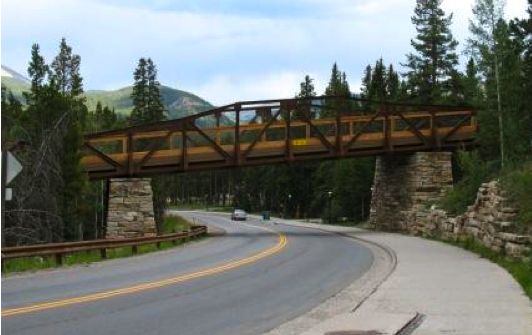
An artist's rendering of what the skier bridge over Mount Rose Highway might look like.

While regional Olympic officials are now eyeing 2026 as the potential year for hosting the Game because the U.S. Olympic Committee won’t go after the 2022 event, Mt. Rose is ready to make improvements that have nothing to do with the Olympics.

The Reno area resort is hoping to start the environmental phase of the process this fall. The U.S. Forest Service will have to sign off on the ski area’s plans. The resort is on the Humboldt-Toiyabe National Forest.

The soonest the plans could be implemented would be next year, though resort officials are saying it could be the following year.

A little work that has nothing to do with the mega plans is going on now.

“Granite Construction is still working on the secondary entrance to the ski area about a half-mile west of the Mt. Rose main lodge. It is being put into place with the future goal of improving circulation into the resort, but entry will not be accessible for the coming season,” Kayla Anderson of Mt. Rose told Lake Tahoe News.

What looks like construction in the main parking lot is actually the staging area for crews working on the erosion control project for highways 28 and 431.

The multimillion-dollar plan includes increasing terrain, more lifts and snowmaking improvements.

Next door, on the north side of Mount Rose Highway is the acreage known as Atoma.

“Mt. Rose looks to expand skiing services onto this 99-acre parcel to complement the beginner terrain on the Mt. Rose side of the mountain. This open, mosaic-glade style skiing would make for a unique lower level snow experience combining open runs with pods of trees intermixed throughout the new area,” the resort said in a statement.

A 3.5-mile run would be created from top to bottom. To make this happen, a bridge for skiers over the highway would be built. This bridge would link Atoma to the existing trails at Mt. Rose. Even the chairlift is proposed to cross the highway.

Ponderosa and Galena chairlifts would be taken out to make way for a high-speed chair going to the top to access runs in the Galena area.

Plans call for lengthening the Lakeview lift, which would provide views of Lake Tahoe as well as easier access to some terrain.

A restaurant near the top of Norwest Magnum 6 is on the books. It would provide 270-degree views of Lake Tahoe and Virginia Peak.


6% drop in snowsports participation in U.S. in 2011-12

By Hugo Martin, Los Angeles Times

Participation in snow sports in the most recent winter season dropped 6 percent, primarily because of a lack of snow and increased work and family obligations for snow sport enthusiasts, according to a study released last week.

The number of Americans who went skiing, snowboarding and snowshoeing, among other snow activities, typically from Thanksgiving to early spring dropped from 21 million to 19.8 million, according to a report by SnowSports Industries America, a nonprofit trade group for snow sports businesses.

The biggest drop in snow sports was among alpine skiers, whose numbers dipped 11% to 10.2 million this winter season, according to the 2012 SIA SnowSport Participation Report. Participation in snowboarding dropped 8 percent to 7.6 million and cross-country skiing declined 5 percent to 4.3 million, the report said.

Among the top reasons snow sport enthusiasts gave for staying off the slopes this winter season were family commitments (33 percent), work obligations (32 percent) and decreased vacation time (20 percent), according to a survey conducted by the trade group.

Poor weather was cited by about 11 percent of snow sports fans as a reason for staying off the mountains, the survey found.

Read the whole story


Caltrans trying to accommodate Hot August Nights participants

Caltrans will limit the work it does on Interstate 80 ( Highway 50 from Aug. 3-13 to avoid delays during the Hot August Night events in Reno-Sparks and South Lake Tahoe.

Caltrans recommends that drivers avoid traveling between 2-9pm on Fridays and 10am-6pm Sundays and Mondays. Motorists are also encouraged to arrive early at their destination and extend their stay, if possible, to avoid traffic delays.

On I-80 from Emigrant Gap to Rainbow, motorists will encounter two 11-foot lanes in each direction. Motorists should be aware that this construction zone has a maximum speed of 55 mph and is posted as a “no passing zone”. Due to the anticipated traffic volumes, the California Highway Patrol will increase enforcement in the construction zone.


Caltrans creates online map for motorists

Caltrans has launched Caltrans QuickMap, an online service that provides California motorists with real-time traffic and travel information that will allow them to make better decisions about how to reach their destination more rapidly.

To access Caltrans QuickMap, visit the Caltrans site.

Visitors to the online interactive travel map can access nearly 1,000 freeway cameras and more than 700 electronic message signs on highways statewide. They can also monitor traffic congestion, California Highway Patrol incidents, travel time information, lane closures due to highway roadwork, and Amber Alerts.

Other helpful features of the service include chain control information and color-coded traffic speed displays for freeways statewide.