Truckee man among 6 presumed dead on Mt. Rainier

By KTVU-TV and AP

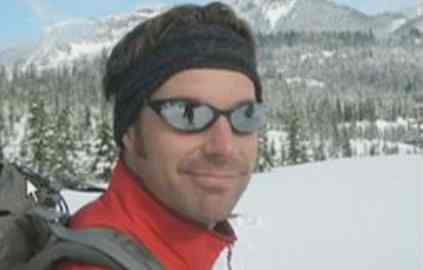
SEATTLE — A Truckee man who worked as a climbing guide for a Seattle company has been identified as one of the six people who likely fell thousands of feet to their deaths in a horrible alpine accident on Washington state’s iconic Mount Rainier.

Matt Hegeman

Matt Hegeman

Matt Hegeman of Truckee worked as a guide for Seattle’s Alpine Ascents International and had climbed Mount Rainier more than 50 times.

A helicopter crew on Saturday spotted camping and climbing gear in the avalanche-prone area. It is believed the group fell 3,300 feet from their last known whereabouts of 12,800 feet on Liberty Ridge, Mount Rainier National Park spokeswoman Patricia Wold said in a statement.

“There’s not a viable chance of survival,” park Ranger Fawn Bauer told the Associated Press.

Read the whole story


Calif. bill would let authorities temporarily remove guns

By Kimberly Kindy, Washington Post

On Wednesday, in response to the Isla Vista shootings, a bill was introduced in the California Legislature that would give families, neighbors, friends and law enforcement the ability to appeal to a judge to temporarily remove firearms while a court determines a person’s competency.

Assemblywoman Nancy Skinner, D-Berkeley, who introduced Assembly Bill 1014, said it would function like a temporary restraining order, providing people who were the subject of the court action with due process rights to make their case to keep their firearms. If they did not prevail, they could also appeal to the court to have them returned at a later date, after the court deems the person to no longer be a threat to themselves or to others.

The bill would not give the court or authorities the ability to remove other weapons, like knives, which were used by Rodger to kill his two roommates as well as a college friend who was visiting the two young men.

“This is a common sense tool that could be used by a family member, a roommate or a concerned friend who saw clear warning signals that a person was a clear threat of violence to themselves or others,” Skinner said in an interview.

The legal language for the bill was drafted immediately after the shooting at Sandy Hook Elementary School last year that left 20 children and six adult staff members dead. It was set aside, in favor of a package of other bills that seemed to have greater support at the time.

Read the whole story


National Guard hosting Flag Day ceremony

Nevada National Guard will pay homage to the United States’ flag and celebrates the U.S. Army’s birthday during the annual Nevada National Guard Flag Day ceremony on June 13 at 10am in the Nevada Capitol Assembly Chambers in Carson City.

The ceremony will also mark the 239th birthday of the U.S. Army. (Note the official date for Flag Day is June 14.)

Brig. Gen. Michael Hanifan, the commander of the Nevada Army Guard, is set to give the Flag Day address. Hanifan, a Douglas County resident, graduated from the U.S. Military Academy in 1986 and now commands the 3,100 Soldiers in the Nevada Army Guard.

The event is free and open to the public. For information, call 775.887.7218.


Sierra river could win wild and scenic protections

By Don Thompson, AP

SACRAMENTO — Part of a river draining the central Sierra Nevada could win new protections from a wild-and-scenic designation under a bill approved by the state Senate on Thursday, despite complaints that the action could aggravate water shortages caused by California’s drought.

The state Senate voted 22-12 to apply the designation to nearly 37 miles of the Mokelumne River in Amador and Calaveras counties.

SB1199 by Sen. Loni Hancock, D-Berkeley, heads to the Assembly over the objections of Sen. Tom Berryhill, who represents the region affected by the proposal.

Berryhill, R-Twain Harte, said the designation would prohibit dams and diversions while restricting land use along the river just when the state needs the water most.

“I just can’t understand why we would ever start taking options off the table,” said Berryhill, noting that water districts and Amador County supervisors are opposed. “With California reeling from a drought, now is not the time to set aside another river district.”

He also objected to Hancock proposing a bill affecting his district.

“I don’t think the author would appreciate me going into Berkeley and doing a bill there,” he said.

Hancock said the 157-mile-long river provides water to 1.3 million residents in counties east of San Francisco. She said the bill protects existing and future water rights of four water districts in Amador and Calaveras counties.

“I am bringing this designation forward as a Californian,” Hancock said. “This is, in fact, all of our river.”

The bill would designate 20 miles of the river’s North Fork as wild, and nine miles as recreational. Three miles of the main stem of the river would be designated as scenic, and 4.6 miles as recreational. The designation would stop at the Pardee Reservoir, about 60 miles southeast of Sacramento.


Worst U.S. measles outbreak in 20 years

By Tony Pugh, McClatchy Washington Bureau

WASHINGTON — After declaring in 2000 that measles had been eliminated from the U.S. through a successful vaccination program, government officials now say the number of confirmed cases has reached a 20-year high as people who get the disease abroad bring it back to America.

Unvaccinated Americans and foreign visitors who traveled to the Philippines, Europe, Africa and Asia are the main culprits in a growing spike of U.S. measles cases that began several years ago and exploded this year.

As of last month, 288 cases have been reported in 18 states, the highest year-to-date total since 1994, when 963 cases were reported by year’s end. Ninety-seven percent – 280 – of the 2014 U.S. cases were imported from other countries.

A highly contagious viral respiratory disease that grows in cells at the back of the throat and lungs, measles is spread through the air by coughing, sneezing and even breathing. It can cause fever and coldlike symptoms, along with a stubborn rash.

Read the whole story


Cash transactions becoming rare

By Bruce Kennedy, MoneyWatch

Have we really, truly turned into a cashless society?

There have been loads of predictions over the years that coin-and-paper currency may soon become museum pieces. And studies agree more and more that financial transactions now involve debit and credit cards — as well as other electronic forms of money transference, such as bank-to-bank transfers or online payment services such as Paypal, which is owned by eBay.

In fact, according to a survey of more than 2,300 adult U.S. citizens by U.K.-based Vouchercloud.net, 57 percent of the Americans polled said they “never” carry cash — compared to the 17 percent who sometimes carry it, and the ten percent who say they “always” have cash on them.

Even Uncle Sam appears to be in agreement that plastic is trumping paper as the American consumer’s preferred method of moving money around.

The 2013 Federal Reserve Payments Study, issued late last year, reported payments have become increasingly card-based — with the number of debit card payments rising more than any other payment system between 2009 and 2012.

Read the whole story


Cancer survivors in the U.S. on the increase

By Marilyn Marchione, AP

CHICAGO — It’s National Cancer Survivors Day, and chances are good that you know at least one of them.

Cancer survivors now number more than 14.5 million in the United States and are expected to grow to 19 million over the next decade, a report finds. More cancers are cured, more people are living longer with the disease and people are living longer in general, which boosts the number of cases and survivors because the risk of developing cancer rises with age.

“They’re living longer and we hope with better quality of life,” said Patricia Ganz of UCLA, whose research focuses on quality-of-life issues.

The American Cancer Society’s report was released today during the annual meeting of the American Society of Clinical Oncology, the world’s largest group of specialists who treat the disease.

Here are five things to know about cancer:

Gender’ influence

Survival varies by gender and cancer type. For male survivors, the most common cancers they faced were prostate, followed by colorectal and melanoma. For female survivors, the most common types were breast cancer, followed by uterine and colorectal.

Diagnosis timing

Two-thirds of today’s cancer survivors were diagnosed at least five years ago, and 15 percent were diagnosed 20 or more years ago.

Long lives

About half of cancer survivors are 70 or older. Only 5 percent are under age 40.

Lung cancer survival poor

Lung cancer is the most common malignancy in men and women, but it is so deadly that it ranks No. 8 among survivors. That may change with promising treatments on the horizon, said Gwen Darien, head of programs and services for Cancer Support Community, a nationwide support group.

The deadly skin cancer melanoma has seen a flurry of new treatments in recent years, and “that gives us hope for some of the other cancers where survival has not improved as much,” she said.

The road ahead

Cancer survivors are at greater risk of second cancers and need to be monitored closely for the rest of their lives. Darien is an example — she survived non-Hodgkins lymphoma 21 years ago and now is being treated for breast cancer.


Snippets about Lake Tahoe

tamba• TAMBA is looking for volunteers to work on Corral Trail on June 8 and June 14. Meet at 9am at the Corral dirt parking lot off Fountain Place Road. Wear long sleeves, long pants, sturdy shoes and bring sunglasses/eye protection and gloves. Lunch will be provided to those who RSVP via Facebook.

• Pioneer Park and Community Center located at 6740 Fairplay Road in Somerset will be closed for parking lot seal coating and striping on June 13-14. All vehicles, materials, and equipment should be removed no later than June 12 at 5pm.

• Lake Tahoe Humane Society just purchased 884 Emerald Bay Road for its corporate headquarters.

• The U.S. Postal Service has issued a Forever Stamp to commemorate Nevada’s 150th anniversary.

• Here are the weekly roadwork schedules for Caltrans for El Dorado-Tahoe and Sierra.


How men can be more stable in golden years

By Chris Orestis

June is Men’s Health Month, a reminder for men to do the things that they generally don’t do as well as women: getting screened for conditions that, detected early, are easily treated; seeking education about health issues, and supporting each others well-being.

If being happier with good health isn’t enough, then men should consider the extraordinarily high medical cost of poor health – especially during the retirement years.

Just one health incident can wipe out an individual’s savings, leaving little money for living expenses, which explains the problem of funding long-term care and offers solutions.

That can mean a major loss of independence, from having to move in with a son or daughter or worse. Baby boomers, who are retiring in droves, have about 8 percent less wealth than those 10 to 15 years older than them, partly because of the recent recession.

In addition to taking care of their health, retired and soon-to-be-retired men can avoid flirting with poverty by exercising some financial options.

Here are some tips:

• Hold off on collecting Social Security until age 70. The life expectancy for men today is 76, an increase from past years, and it’s expected to continue to climb. If you’re worried about outliving your money, hold off on collecting Social Security benefits early (age 62), which results in up to 30 percent less benefits. People born from 1943 to 1959 are eligible for full benefits at 66, and those born in 1960 or later are eligible at 67. However, if you wait until age 70, you can receive up to 8 percent more in benefits.

• Turn your life insurance into a long-term care fund. Instead of abandoning a life insurance policy because you can no longer afford the premiums, policy owners can convert a portion of the death benefit value into a Life Care Benefit – Long Term Care Benefit Plan. The money is deposited into a fund earmarked for paying for private duty in-home care, assisted living, skilled nursing, memory care and hospice care. By converting a life insurance policy, a senior does not have to resort to Medicaid and the many restrictions that come with it, but will still be Medicaid-eligible when the benefit is spent down.

• Consider investing part of your portfolio in fixed-rate indexed annuities: Having all of your retirement savings in stocks exposes retirees and pre-retirees to too much risk. As you get closer to retirement age, it’s important to find alternatives that provide for growth while protecting savings. Fixed-rate indexed annuities – money loaned to an insurance company that guarantees payments over a specified length of time — allows you to forecast the income you’ll generate. Fixed-rate indexed annuities have a ceiling on interest rates, but they also have a floor. Your principal is safe and you can ride an up market without the risk.

Chris Orestis is a nationally known senior health-care advocate, expert, and author is CEO of Life Care Funding.

Then and now: Echo Summit ski resort changes

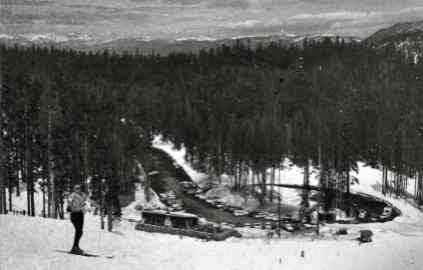
There used to be a ski resort at Echo Summit. Photo/Lake Tahoe Historical Society

There used to be a ski resort at Echo Summit. Photo/Lake Tahoe Historical Society

Historically, the wintertime recreation area atop Echo Summit on Highway 50 was a ski resort with chairlifts and a rope tow, known variously since the 1940s by names such as the early Nebelhorn or the later Echo Summit Ski Area.

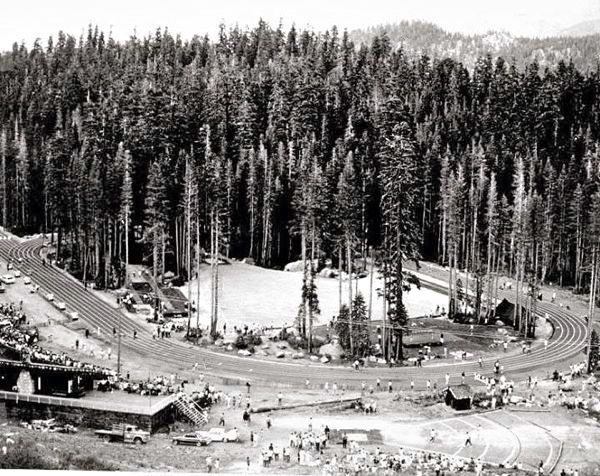
The track was used for training for the 1968 Olympics. Photo/Les Wright

The track was used for training for the 1968 Olympics. Photo/Les Wright

In 1968, it was the site of the Olympic training track to prepare athletes for Mexico City’s similar elevation at 7,300 feet.

It closed as a ski resort in 1988, later becoming home to the California Conservation Corps until 2002.

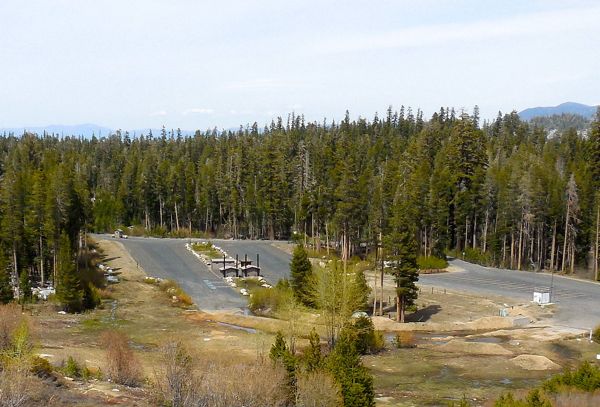
Today it is the new Adventure Mountain.

Adventure Mountain now leases the U.S. Forest Service property. Photo/Bill Kingman

Adventure Mountain now leases the U.S. Forest Service property. Photo/Bill Kingman

— Bill Kingman

A souvenir from the old ski resort. Photo/Dave Wakeman

Souvenirs, above and right, from the old ski resort. Photo/Dave Wakeman

patch