LTN is giving away a copy of ‘Almost Somewhere’

Lake Tahoe News has a copy of Suzanne Roberts’ latest book “Almost Somewhere” to give away.

Roberts, who teaches at Lake Tahoe Community College and Sierra Nevada College, writes about her experience hiking the John Muir Trail.

All you have to do is go onto LTN’s Facebook page now and figure what the picture is of and post your comment there. It will be obvious once you get there.

Publisher’s note: We have two winners. Frances Lord posted the answer on LTN’s FB page and Tim Hauserman posted on Suzanne Roberts’. Congratulations!


Marmot found in Bay Area on its way back to Tahoe

By KTVU-TV

SAN JOSE — A marmot that found himself far from his natural mountain habitat in a residential San Jose neighborhood Tuesday has been captured and wildlife workers intend to return him to the Sierra Nevada range.

Wild animal expert Rebecca Dmytryk said the marmot was finally captured in San Jose’s Willow Glen neighborhood after it hid in storm drains for hours, coming up only to snack on nearby lawns.

Dmytryk, director of the WildRescue, a Moss Landing-based animal rescue group, had earlier placed apples, carrots and nuts inside “a humane trap” to coax the squirrel-like creature, but the animal preferred to dodge onto front lawns to eat and then run and hide.

The yellow-bellied marmot, so named for its mixture of yellowish and brown fur, was first spotted Monday after it emerged from a storm drain. The animal had been jumping from gutter to gutter since, racing through the drainage pipes beneath the streets, said Dmytryk.

Department of Transportation workers finally helped push it out of a pipe using a Gatorade bottle, Dmytryk said, and scooped the marmot with a net once it was pushed free.

Now the cat-sized mammal is headed to the Wildlife Center of Silicon Valley and on Wednesday traveled to Sacramento en route to Lake Tahoe, where animal care workers will give it a checkup before releasing the animal back into the wild before it needs to hibernate, Dmytryk said. “It’s very important he gets back to his own habitat,” she said.

Read the whole story


Free lecture all about running

Alan and Caroline Barichievich, Barton Rehabilitation & Sports Medicine’s husband and wife duo and ultra marathon runners duo, will provide a free lecture titled Running, It’s You Journey.

With years of running and rehabilitation experience, the two will provide advice for runners of all levels. Topics will range from how to improve your running performance, proper gear, attire, as well as injury prevention and treatment.

The lecture is Sept. 5 from 6 to 7pm at Kahle Community Center in Stateline.

For more details, call (530) 543.5537.


High school students not prepared for college

By Kelsey Sheehy, U.S. News and World Report

Nearly 1.7 million high school graduates took the ACT college entrance exam in 2012, testing their knowledge of four core subjects—English, math, science, and reading. But most of those students are not prepped for success in college or the workforce, according to a report released this week by ACT, Inc.

More than a quarter of 2012 graduates fell short of college readiness benchmarks that ACT sets for all four subjects, and 60 percent of students tested missed the mark in at least two of the four subjects, the report states.

Students deemed college-ready in a subject have a 75 percent chance of passing a first-year college course in that area. The nonprofit research and testing organization uses historical testing data to determine the level of expertise students need to succeed in those courses at a college, trade school, or technical school.

Read the whole story


Opinion: More wilderness designations bad for Tahoe basin

To the community,

We are very concerned as we follow the dialogue focused on the U.S. Forest Service Draft Management Plan. Some of the proposals could possibly ban assorted recreational use or allow for increased logging and mining in the Tahoe basin.

For more than 30 years, have enjoyed the incredible beauty of the areas slated to be turned into “wilderness” – funny, we thought much of it was already pretty wild. The lands in question have never needed special signage or designation in order to be enjoyed by those who mountain bike, snowmobile, snowshoe and/or cross country ski. For those who live here, these spectacular areas are our “backyards”. They exist as public lands for all.

Nonetheless, areas have previously been closed without opportunity for public input; eliminating snowmobiling in High Meadows is a perfect example. To think that current and future generations may lose the opportunity to experience these unique areas is truly upsetting. Isn’t that why many of us have chosen to live in this incredible place?

Call us spoiled, but we realize how lucky we’ve been to be able to get on a bike (in town) and ride to many of these trails without ever having to get in a car. There’s enough room for everyone to enjoy these places and it is ludicrous to consider restricting access to the tax-paying public who live and visit here unless they’re willing and able to hike or ride a horse to these areas. Although we’ve become more limited in our own ability to “power ourselves” to some of these remote areas, the proposed restrictions could prohibit us from ever enjoying these places again.

Let’s not forget that in many cases, it has been “locals” contributing their time and sweat equity to create and maintain these trails. We thank you.

No one needs to be reminded that in these challenging economic times, our community must do all it can to support the visitors who come to enjoy the outdoor experience of the Tahoe basin. Like them or not, these same visitors ultimately help support all of us. It is interesting to note that Joanne Marchetta, executive director of the TRPA recently commented (read column on LTN from July 22, 2012) on the various positive impacts of biking in our community. As for motorized sports, one only has to look to our Mammoth Lakes neighbors to see how they have embraced snowmobiling and cross country skiing/snowshoe enthusiasts by developing an incredible system of shared and single use trails.

It requires minimal effort for those who support quiet and/or “no tracks” activities to access thousands of acres of beautiful terrain (think Desolation Wilderness). For those “proponents of increased wilderness designation” who visit Tahoe, do you travel by public transportation to do so? Seems quite hypocritical to say you wish to protect the environment and natural habitats, yet use mass paper mailings to support the cause.

Should a wilderness designation be granted, those who do not or cannot hike or ride a horse will not only have to travel even greater distances than we do now to access the ever-shrinking motor and bike-friendly recreation areas, it will also concentrate too many people in too small an area: how do these actions protect and respect the environment in the long term?

Placing a wilderness designation on more areas in the Tahoe basin will sorely impact recreational enthusiasts of all abilities and interests. It would be foolish to deny that there is a minority who do not respect back country etiquette but please don’t create a situation that would criminalize the majority of us who wish to continue enjoying our “backyards” as we’ve done for many years.

Eddie and Susy Walker, South Lake Tahoe


Downhill skiing no longer just a winter sport

By Laura Vozzella, Washington Post

LYNCHBURG, Va. — It looks like God’s country from high atop the hill they call Liberty Mountain, with sunbeams slicing through puffy clouds overhead and the school that Jerry Falwell built nestled at its foot.

But the hill itself seems to be more of a deal with the devil. Because it’s August. In Virginia. And despite scorching heat, skiers and snowboarders and tube-riders are swooshing down a white slope like it’s winter in Vail, Colo.

The Liberty snowflex center is one of the few places in the world that you can ski or snowboard year-round. Snow isn’t necessary thanks to an astroturf-like material called “snowflex” that replicates the feel of snow.

The Liberty snowflex center is one of the few places in the world that you can ski or snowboard year-round. Snow isn’t necessary thanks to an astroturf-like material called “snowflex” that replicates the feel of snow.

If there’s anything in Leviticus against planting one foot in summer and the other in winter, the pious souls at Liberty University have turned a blind eye.

“We were water skiing in the morning, and now we’re snow skiing in the afternoon,” marveled Jim Gooding, 43, who works in the District as a government contracts administrator. He had just taken his first few runs down the synthetic ski slope at the Liberty Mountain Snowflex Centre.

Blanketing 1.5 acres of steep hillside above the university is Snowflex, a $150-per-square-foot material that looks like a bristly plastic doormat and mimics the “slip and grip” of snow. Liberty is the only place in this hemisphere to build a ski resort out of the stuff, which was invented in Europe and has caught on more there.

That has made Lynchburg, which at the height of winter averages less than five inches of snow a month, the only place in North America besides Mount Hood where it’s possible to ski in the summer. The town has even become an unlikely stop on one professional skier’s globe-

trotting training itinerary.

“I’ll be honest with you: This is not snow,” said Drew Sherwood, the center’s general manager. It would have been an obvious truth on a hot August afternoon if it weren’t for the skiers rushing past.

“We tell people — we’re honest — it’s never going to be as good as snow,” he said. “And the feeling of snow, when you’re out on a fresh powder day, riding through snow — it’s never going to be like that. But when you’re talking spring, summer and fall, when 99 percent of other ski resorts are closed down, it’s the best feeling you can have.”

Read the whole story


Battle of the bands benefits CASA El Dorado

Want to attend a fun and free event and make a huge difference in the life of a child at the same time?

CASA El Dorado in partnership with OnCourse Events is sponsoring the inaugural South Shore’s Best Sunset Band Fundraiser on Aug. 31 at Lakeview Commons from 3-8pm.

Admission is free. There will be $10 paddleboard lessons, a bounce house, trampoline, food, wine and beer garden, and raffle prizes.

Everyone will be encouraged to cast a vote (which is how money is being raised) for her favorite band. All proceeds will go to supporting CASA — making it possible for every child to have a voice in court and life.

For additional information, call (530) 573.3072.


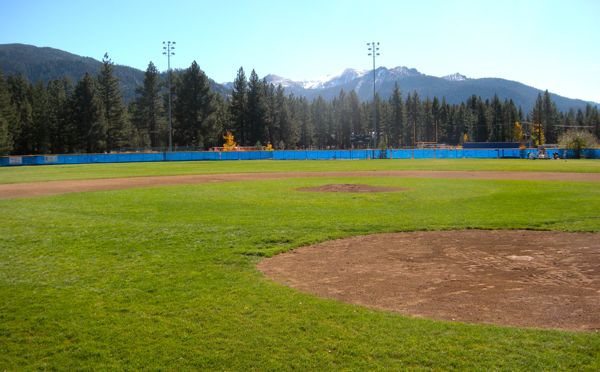
Officials controlling South Lake Tahoe ball fields represent multiple interests

By Kathryn Reed

A clear case of conflict of interest reared its head Tuesday night at the Lake Tahoe Unified School District meeting, but no one put an end to it.

Steve Morales, facilities director for the district, is also a founding member of the Community Athletic Coordinating Council. This group has been overseeing aspects of ball field management in South Lake Tahoe since it incorporated as a nonprofit in 1989. It was also central to an agendized item about fields.

A school district official the night of Aug. 21 told Lake Tahoe News that Morales is merely the district’s liaison to the CACC board.
Adults are making the ball field situation in South Lake Tahoe anything but child's play. Photo/LTN file

However, the 2007, 2008 and 2009 900 forms the nonprofit must file with the IRS list Morales as the president of CACC. No 2010 or 2011 forms were available online. Even if Morales is not a current board member, his history makes his allegiance suspect.

Donice Lenhardt, a former employee with South Lake Tahoe’s Parks and Recreation Department, is listed as the vice president-treasurer in 2009; William Goss had those titles in 2008 and 2007 on the forms. (He listed the city rec center as his address.)

In fact, CACC uses the rec center as its address. At a minimum, this is unethical for city employees to be using taxpayer facilities for personal use even for mailing purposes.

It is not known if CACC work was done on city or school district time by CACC members.

While CACC was formed by district and city staff, it was supposed to be an entirely separate entity.

CFO Deb Yates said at the meeting this week that the district doesn’t need CACC and that it will be up to the city how it deals with this group.

Morales, Lenhardt and Goss report no income from CACC on the forms. However, Morales’ true connection to this group was not disclosed at the meeting. He did, however, act like he was representing CACC and not the district – which does pay him a six-figure annual salary. To avoid conflict, he should have recused himself from the discussion.

The certified public accountant signing off on the forms for those three years was Dave Olivo. Olivo is the elected treasurer for the city of South Lake Tahoe.

At the district meeting this week, board member Sue Novasel questioned the legality of fees collected in California benefiting Nevada. Morales said Douglas County was only involved at the get-go and a few years ago may have had some money given for improvements.

However, current CACC President Chuck Leonard told Lake Tahoe News last November, “(The CACC) maintains a central calendar in conjunction with the South Tahoe Parks and Recreation and the Douglas County Parks and Recreation departments and the Lake Tahoe Unified School District.” That statement proves Nevada is still part of CACC.

It was also revealed this week that the district and CACC have each charged entities for the use of the same field at the same time. Yates said that won’t happen again going forward.

Here is the 2007-CACC 990 form, 2008-CACC 990 form and 2009-CACC 990 form.


Poll: No Child Left Behind did not improve education

By Rachel Lowry, Deseret News

More Americans — 29 percent — believe education is worse because of the No Child Left Behind Act than those who believe it is better off (16 percent).

Another 38 percent said the act of Congress that changed the federal government’s role in public schools by focusing on student achievement has made no difference, according to a Gallup’s annual Work and Education poll.

“Such ambivalence probably gives the Obama administration broad political latitude to modify NCLB through executive fiats, such as the recent decision to grant states waivers from meeting the law’s key benchmarks,” Gallup noted.

A random telephone sample of 1,012 adults, ages 18 and older, living across the U.S. and the District of Columbia, was conducted Aug. 9-12. The poll found that 17 percent were too unfamiliar with the law to rate it.

Congruent with Gallup’s findings in 2009, the poll found that lower-income Americans were evenly divided in their opinions of NCLB, while middle and upper-income Americans viewed the act negatively. Twenty-two percent of adults in households earning less than $30,000 a year are more likely to believe the law has made public education better, while 15 percent did not.

Read the whole story


Local landscape architect joins larger firm with new Tahoe office

Royston Hanamoto Alley & Abey landscape architects and planners has opened a South Lake Tahoe office. Local landscape architect, Brett Long, has joined the RHAA team to head the new office.

Long and RHAA teamed together on the El Dorado Beach project at Lakeview Commons.

RHAA is a 54-year-old landscape architecture firm with additional offices in Mill Valley and San Francisco. RHAA employs sustainable development principles to ensure that design solutions integrate ecological systems, maximize economic benefits, and create places of beauty. The firm’s work ranges from playgrounds to rooftop gardens to streetscapes.