Names of people involved in motorcycle accident released

No charges have been filed in the vehicle accident that sent two people riding the same motorcycle to the hospital.

“So far in the investigation it appears the driver of the involved car was at fault for failing to yield to the motorcycle,” South Lake Tahoe police Lt. David Stevenson told Lake Tahoe News. “Ultimately the only ‘charges’ from the police department would be a citation issued to the at fault driver.”

Sarah Bauwens, 29, of South Lake Tahoe was attempting to turn left onto Highway 50 from Lodi Avenue on Aug. 24 when the vehicle she was driving hit a motorcycle. She was not injured.

Because of health care privacy regulations the condition of the South Lake Tahoe residents who were on the motorcycle is unknown. Even the police could not furnish the information.

The driver was James Estell, 63, and the passenger Corinne Estell, 61. He was taken to Barton Memorial Hospital and she was airlifted to Renown Medical Center.

 — Lake Tahoe News staff report


USFS: Cigarette cause of Tahoe grass fire

A discarded cigarette is being blamed on the Aug. 26 fire near West Way on the South Shore.

“We’d like to remind everyone that, while fall is approaching, the Lake Tahoe Basin remains in high fire danger, and the Forest Service has issued fire restrictions for the lands we manage. In particular, smoking is prohibited in most places on the national forest,” U.S. Forest Service spokeswoman Cheva Heck said.

The fire burned about one-quarter acre. But the dry, grassy area that was charred backs to houses.

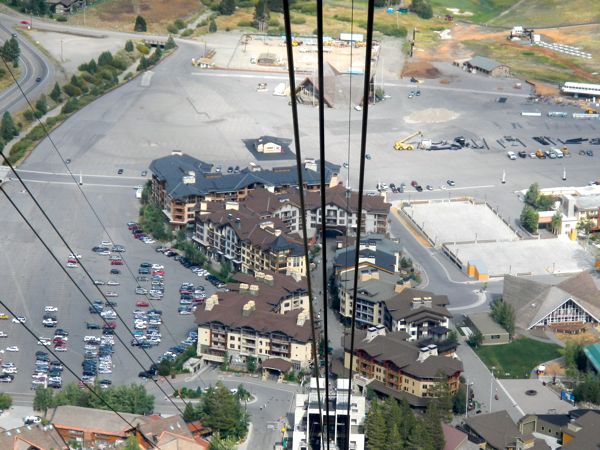
The Gondola Fire of July 2002 proves how one cigarette can cause a major forest fire.

— Lake Tahoe News staff report


Rotarians give back to South Shore community

Tahoe Douglas Rotary Club members recently completed two kiosks for the public to use in the South Lake Tahoe area. One is located at Kahle Community Park in Stateline and the second is at the Van Sickle Bi-State Park.

The kiosks hold information, including maps of trails and topography, as well as pictures and events.

The club took on the projects as part of the worldwide volunteer work day. Every year, Rotarians from around the world hold a Rotarians at Work Day.

For more information about Rotary in the South Lake Tahoe area, email Jenny Buscher at jennybuscher1@hotmail.com.


BlueGo riders won’t have to pay on select routes

In an attempt to keep Tahoe’s air pristine and relieve congestion, some of the South Shore public buses will be free to ride for the three-day weekend and Sept. 8-9.

BlueGo routes 50 and 53 will be free.

The Tahoe Transportation District plans to designate as many as 88 Spare the Air days in the next two years.

“Spare the Air days will coincide with those times of year when visitation and traffic congestion is at its highest, such as long holiday weekends, the week between Christmas and New Year’s Eve and Independence Day,” Curtis Garner, TTD transit manager, said in a press release.

Information about the South Y to Stateline routes are available online.

Regular fares on all routes are $2 one way. For more information or to request a Rider’s Guide, call (530) 541.7149 or email info@bluego.org.


Endurance swimmer to take on Lake Tahoe

By Lou Fancher, Contra Costa Times

To kick off his Labor Day weekend, Lafayette’s Jamie Patrick is taking a 360-degree spin around Lake Tahoe, in Lake Tahoe.

Last year, the 41-year-old athlete swept down the Sacramento River on a 111-mile swimming trek. The year before, it was back-and-forth-and-back across Tahoe. And recently, he swam from Spain to Africa, then came home to spend 12-hour overnights, training in Lafayette’s Springbrook pool.

You could call him fond of water.

Which is why he’s pairing up with the Sierra Club’s Water Sentinel Program.

“In the previous swims, I raised money for Buena Vista, a local literacy program,” Patrick said. “For this swim, I wanted to do something for water. It’s so right up my alley; they help people get out, enjoy water, and want to take care of it.”

A graduate of Miramonte High School and an All-American swimmer while at the University of Hawaii, Patrick has an athletic resume as long as his wingspan.

“I do these things to go beyond what I’ve done before,” he says, shrugging off more complicated reasoning.

He and his 15-person crew have already raised $2,000 in four days since the campaign began. One hundred percent of the donations will go to the Sierra Club.

To make it easy to support his cause, he’s partnered with Metabender, an athletic tracking company, to develop a portal through which people can follow his swim in real time GPS, with stats, crew updates, videos and a comment option.

Read the whole story


Sitting all day is hard on the body

By Mandy Kendall

Well, we have been home for a week now following our amazing trip and not only have I had to pay attention to holding onto that relaxed feeling, I have also noticed how much I sit all day. While we were away there things to go and do, lots of walking and very little sitting. Now back at home I’ve realized how much I sit.

Writing emails, eating, typing articles, reading … lots of sitting. Don’t get me wrong, sitting can be very relaxing, but like most everything else, too much can be a bad thing.

Recent studies have shown that just the act of sitting can have far reaching health implications; an increase in the risk of stroke, metabolic disorders, cholesterol, heart issues and, dare I say it, an increase in the size of our behinds too.

Mandy Kendall

Unfortunately, making trips to the gym or exercising when we are not at work doesn’t totally counterbalance the consistent hours of sitting we do during the day. Conversely, overly long periods of standing aren’t the answer either as they can lead to back, leg and knee issues. (Things are never simple, are they?)

Men’s Health magazine reported that we could burn up to 40 percent more calories when standing rather than sitting. Experts recommendations are that we should stand as long as we feel comfortable (and this may increase over time) but we should generally aim for a 50:50 ratio of standing to sitting. A lot of us have to sit for work, and that can’t be avoided, but there are ways of making sure that we minimize the length of time we are seated. This may require a little modification of our work place, but the results could be well worth the initial inconvenience.

Olivia Hudson reported in the New York Times, “A study of people who sit for many hours found that those who took frequent small breaks — standing up to stretch or walk down the corridor — had smaller waists and better profiles for sugar and fat metabolism than those who did their sitting in long, uninterrupted chunks.”

The following Qwik-e tips will give you some ideas on how to stand up and give your system (and your behind) some respite.

In the office

Get in the habit — Set a reminder on your computer to pop up every 30 minutes or so to remind you to do something that gets you moving.

Stand when on the phone — Ideally on a cordless device so you can walk around. If that’s not possible, just stand in one place, but transfer weight back and forth from one foot to the other and then rise up and down on your toes too.

Stand when reading – As above, just be mindful of where you are walking if you’ve got your nose buried in a document.

Work station treadmill — Although a bit extreme, a treadmill in the office will offer a confined space in which to walk while talking on the phone or reading a document without the risk of tripping over things, or colleagues. Setting the speed to low (one to two miles an hour) is enough to keep you moving without the risk of falling off.

Active sitting — Huffington Post offers some great ways to keep yourself moving, even if you aren’t able to get out of your chair.

Gym ball chair — A great way to keep your core muscles engaged when you are sitting. Just make sure you get advice on the right size of ball for your height.

Standing workstation — Whether using a specially designed table, or just raising your laptop and monitor to a height where you can use it standing will give you the option work standing or sitting.

Standing/walking meetings — Depending on the number of people present, a meeting could be held with everyone standing or even going for a walk if the numbers aren’t too large.

Away from the office

Meeting friends — Try going for a walk instead of sitting (again) in a bar or restaurant

Watching TV — Try standing for some of the program (or definitely during commercials at least) or sitting on a gym ball instead of the couch.

Chatting on the phone — Plug a pair of headphones into the phone, pop it in your pocket and do something while you’re chatting. It’s a great way to multitask and stay moving at the same time.

Until next time.

Mandy Kendall operates Health Connective in South Lake Tahoe, which aligns wellness seekers with their ideal wellness provider. If you have questions, would like some advice, or would like to request some Qwik-e tips on any health and well-being topic, drop her an email at connect@healthconnective.com or keep an eye out on Lake Tahoe News for regular Qwik-e tips on how to make healthy changes one Quick and Easy step at a time.


Opinion: Time to fight the rural fire tax

By George Runner

A fire tax bill is coming soon to a mailbox near you. It’s not fair; it’s not constitutional, but thanks to Gov. Jerry Brown and the Legislature, the bills are coming all the same.

On Aug. 13, California began mailing the first of more than 825,000 Fire Prevention Fee bills to Californians who own property with a habitable structure in a State Responsibility Area- those 31 million acres where CalFire has primary responsibility for fire prevention and suppression.

It doesn’t matter whether you’ve invested time, sweat and money to meet the state’s ever-evolving fire standards. It doesn’t matter whether you experience any benefit from CalFire’s prevention activities. It doesn’t even matter whether you already pay for local fire service – though if you do, you’ll get a $35 discount.

Like it or not, if you live in an SRA, the state is going to start billing you $150 each year. And if you don’t pay within 30 days, you’ll face steep penalties and interest.

The bills are going out in alphabetical order by county between August and early December. That means residents of Alameda, Alpine, Amador and Butte counties will receive their bills in August. Residents of Tuolumne, Ventura, Yolo and Yuba counties most likely won’t see theirs for several months.

The first round of bills is expected to raise $84 million to help pay for the state’s operations last fiscal year. The next round of bills is just around the corner – they’ll be mailed beginning March 2013.

Forget the photos of firefighters fighting fires. This new tax won’t pay for firefighters or put out a single fire. Nor will it do anything to expand the state’s fire prevention efforts. The dollars collected will simply fund existing CalFire programs.

Supporters of the fire tax argue that folks who live in fire-prone areas should pay for increased state fire prevention costs.

Imagine if we funded other state programs similarly. The Legislature would then require property owners in high-crime neighborhoods to pay a “crime prevention tax” to fund the state’s prisons and public safety programs.

After all, these high-crime neighborhoods produce more criminals.

Somehow I doubt urban politicians will extend the same logic to other state programs – especially not if it means higher taxes for the urban areas they represent.

When it comes to the fire tax, there’s no relationship between a taxpayer’s burden and the benefits he or she will receive.

Even so, the governor and Legislature are still trying to pretend this new tax is a fee. That’s because the Legislature doesn’t have constitutional authority to raise taxes without a two-thirds vote. By pretending the fire tax is a fee, the Democrat majority approved it on a simple majority vote.

I intend to join the Howard Jarvis Taxpayers Association in suing to halt this illegal money grab. But before a lawsuit can move forward, at least one property owner must 1) receive a bill, 2) file a written appeal and 3) have his or her appeal denied.

To help inform California taxpayers, I’ve established a website (calfirefee.com) providing detailed information about the new fire tax. Visit this site to find out if you live in an SRA and might soon receive a fire tax bill. You can also find further details regarding the process, timeline and grounds for filing an appeal.

California needs a balanced budget, but we should not balance it on the backs of already overtaxed Californians. As an elected taxpayer advocate, it is my duty and privilege to work each and every day to protect taxpayers from unfair and excessive taxation – including this new illegal fire tax.

George Runner is a member of the state Board of Equalization. His district, which stretches from San Bernardino County to the Oregon border, is home to more than 9 million Californians.


‘The Hunger Games’ at S. Tahoe library

“The Hunger Games” will be shown for free at the South Lake Tahoe branch library on Sept. 22 at 1pm.

In conjunction with California Reads, Friends of the Library is presenting this movie for people to consider the increasing popularity of depictions of dystopian futures in adult and youth fiction.

The library is at 1000 Rufus Allen Blvd.


Squaw Valley’s proposed development upsets residents

By Kathryn Reed

TAHOE CITY – If the owners of Squaw Valley have their way, the last two buildings from the 1960 Winter Olympics will be demolished and in their place will be infrastructure to make the resort one of the top 10 ski destinations in the world.

This is how Chevis Hosea, vice president of development for Squaw Valley, described the mega-undertaking to the Placer County Planning Commission on Aug. 30 at the Granlibakken conference center.

“We’re not proposing to go up the mountain. We are just asking to develop the base. We will tuck parking under the buildings,” Hosea said. “What is void in this valley is the bed base to support this mountain.”
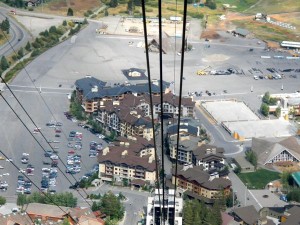
Resort owners want to completely transform Squaw Valley's village area. Photo/Kathryn Reed

Hosea said the hotel-condos and fractional ownerships are estimated to bring in $8 million to $10 million a year to county coffers.

However, build-out, assuming the project is permitted, is years away. The first phase is expected to take five years to complete.

While developers know they want the first phase to include several buildings that would encompass 1.3 million-square-feet on 26 acres, a 150,000-square-foot mountain adventure aquatic center, 84,758-square-feet of ski services and 34,187-square-feet for retail and restaurants, the scrutiny has just begun.

The Squaw Valley General Plan and Land Use Ordinance would need to be amended, a program environmental impact report would be done that includes all proposed phases, with project EIRs for each phase that would provide deeper analysis.

During the scoping and environmental analysis phases the public will be asked to comment. The first phase of project review is estimated to take between 18 and 24 months.

About 40 people attended Thursday’s meeting, with 15 people speaking. Most of those who made comments live in the Squaw Valley and are not happy with what the new owners want to do.

KSL Capital Partners bought the resort in November 2010 from Nancy Cushing, who took over sole operation of the resort after her husband died in 2006. Squaw Valley Ski Holdings Inc. was formed last September to operate Squaw and Alpine Meadows.

Much of what is being proposed would surround the existing village that was built by Intrawest nearly 10 years ago.

Carolyn Chambers, who is a homeowner in the valley, said people are forgetting this is a residential neighborhood.

“Let’s stop calling it a village,” she said. “What is proposed here is a commercial development.” She went on to describe a village as something more than shops for tourists and more like what can be found in Europe.

Traffic, parking, potable water and 10- to 12-story buildings are concerns of those who spoke.

The potential maximum height being proposed for buildings in phase one is 163 feet and 189 feet in phase four. As a comparison, the tallest casino in Stateline is 197 feet. And the current Squaw village is four stories on top of a two-level parking garage.

Hosea said there are no height restrictions at Squaw, but his employer would like to put some on the books.

(The Tahoe Regional Planning Agency does not have a say in this project because it is outside the Lake Tahoe Basin.)

Paul Archer in his 50-plus years as a resident at Squaw has seen the “environmental degradation” and worries more is on the horizon.

Mark Simpson said people come to Squaw to ski no matter how hard people try to make it a year-round destination. He doesn’t want Squaw to turn into another Northstar.

“One of the big failures of Northstar is you can’t get to the resort. Then when you get to the village there is not enough capacity to get up on the mountain,” Simpson said of the horrendous parking at Northstar and the ancient gondola.

Hosea told the group an extensive scientific study of the water system will be done which could cost $1 million. He said rebuilding the supply system could cost between $5 million and $10 million.

“There is no value to provide a faux water supply,” Hosea said. He added that is would not be a good business decision to have people staying in one of the two high-end hotels and have a dry spigot.

Parking for the day skiers will be partly on one level of the lodging establishments as well as at a proposed lot that would be built down the road and serviced by a shuttle.

“There is a real opportunity to reposition this asset globally,” Hosea said. That, and making a place to travel to every season is what the owners want to do.

Alex Fisch with the Planning Services Division of Placer County is the lead public official on the project. He may be contacted at Afisch@placer.ca.gov.



Nevada increasing patrols for holiday weekend

During the Labor Day weekend, from Aug. 31 through Sept. 3, deputies of the Douglas County and Lyon County sheriff’s offices will be conducting increased traffic enforcement patrols on various highways and roadways within the two counties.

The increased patrols will specifically target drivers operating motor vehicles while under the influence of alcohol or intoxicating drugs.

National traffic studies have shown that these types of targeted patrols provide an increased risk of detection of violators, thereby reducing the number of drivers willing to risk committing these violations.

This enforcement detail is partially paid for by a grant from the State of Nevada, Department of Public Safety, Office of Traffic Safety.